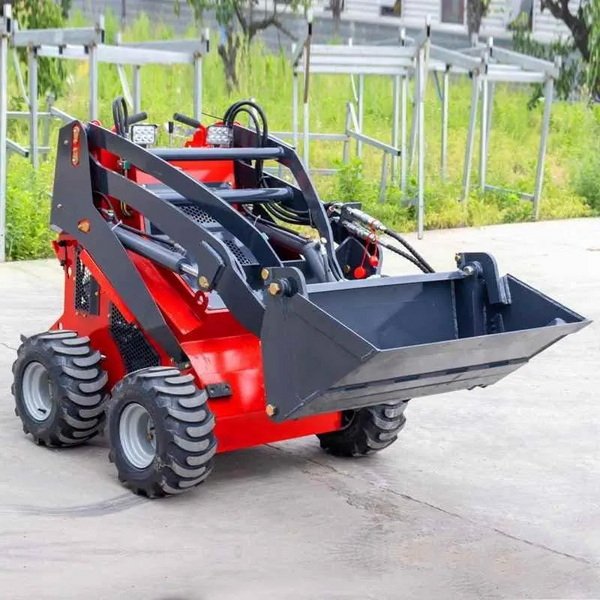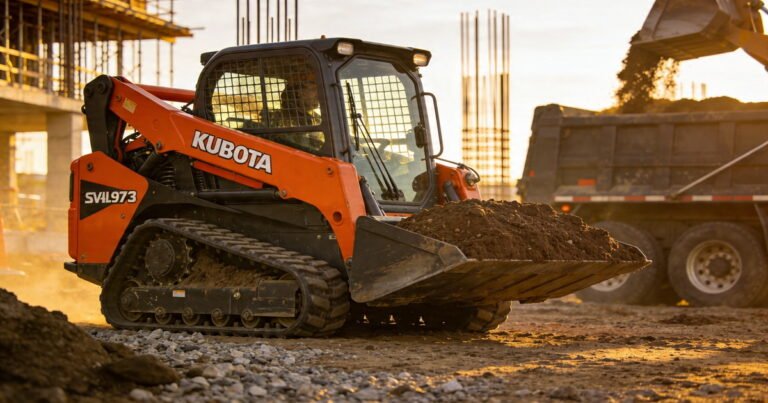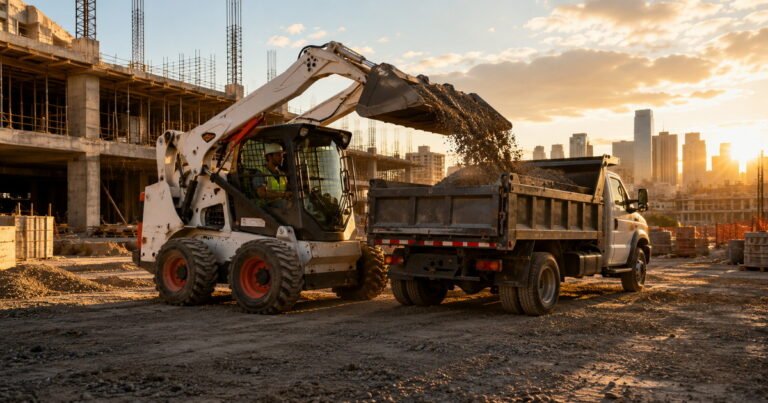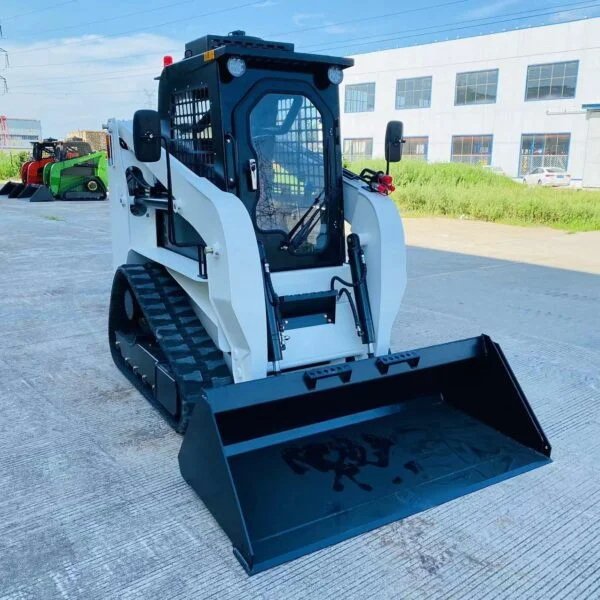

Expert Guide to Choosing the Right Skid Steer Loader (Track & Wheel) for Modern Jobsites
Content Menu
● What Makes a Modern Skid Steer “Job‑Ready”?
● Understanding Skid Steer Basics: ROC, Power, Lift Path
>> Rated Operating Capacity (ROC) and why it matters
>> Horsepower, torque, and hydraulics
>> Radial vs vertical lift: which is right for you?
● Track vs Wheel: Choosing the Right Undercarriage
>> When to choose a tracked skid steer
>> When a wheeled skid steer is the better option
● Emissions, Fuel, and Maintenance: The Hidden Cost Drivers
>> Tier 4 and aftertreatment choices
● Operator Experience: Visibility, Comfort, and Safety
>> Why visibility is not just “nice to have”
>> Cab comfort and control layout
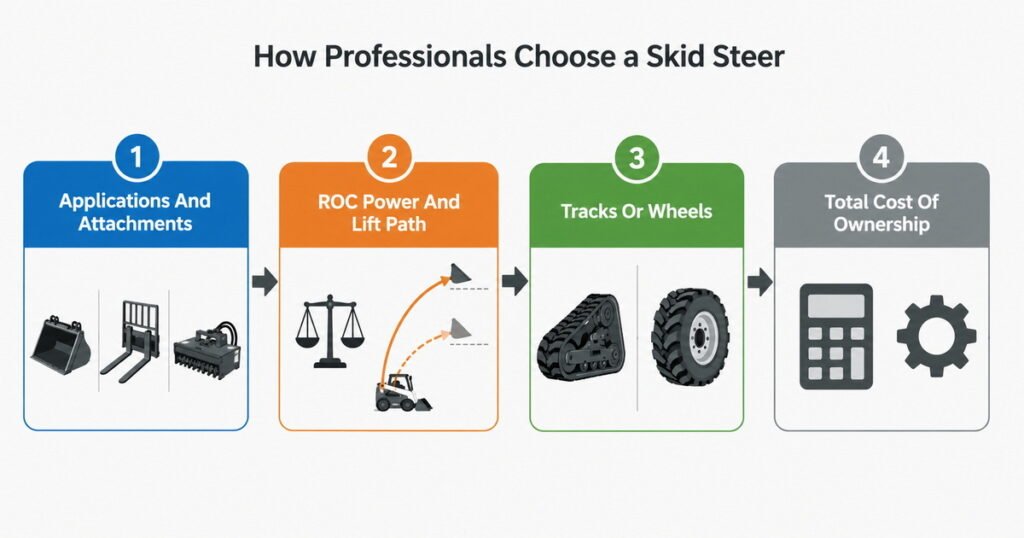
● Practical Buying Framework: How Professionals Choose a Skid Steer
>> Step 1: Define core applications and attachments
>> Step 2: Match ROC, horsepower, and lift path
>> Step 3: Decide on tracked vs wheeled configuration
>> Step 4: Compare total cost of ownership, not just price
● How Certeg Aligns with These Professional Requirements
● How Different Buyers Use Skid Steers
>> Infrastructure and roadwork example
● Mid‑Range vs High‑ROC Loader
● Call to Action: Plan Your Next Skid Steer Investment
● Frequently Asked Questions (FAQ)
>> Q1: Should I choose a tracked or wheeled skid steer for mixed residential and light commercial work?
>> Q2: Is high‑flow hydraulics worth the extra investment?
>> Q3: How do I size ROC correctly for my projects?
>> Q4: What is the main advantage of vertical‑lift vs radial‑lift machines?
>> Q5: How important is cab visibility when choosing a skid steer?
As someone who has spent years around contractors, fleet managers, and OEM engineering teams, I’ve seen one simple truth: choosing the right skid steer loader (whether track or wheel) can make or break your project ROI. This guide walks you through the real-world decisions professionals make today—power, hydraulics, lift path, and total cost of ownership—using industry benchmarks and updated best practices. [webfx]
What Makes a Modern Skid Steer “Job‑Ready”?
A modern skid steer is no longer just a compact loader with a bucket; it is a multi‑tool platform that must balance power, visibility, and attachment versatility for specific applications. From my work with construction and industrial clients, three factors consistently drive purchase decisions: [compactequip]
– Application fit (earthmoving, material handling, landscaping, demolition)
– Site conditions (soft ground, concrete, steep grades, indoor/outdoor)
– Lifecycle economics (fuel, maintenance, uptime, resale value)
Manufacturers like Case, Cat, Bobcat and emerging brands such as Certeg design their loaders to hit specific rated operating capacity (ROC) and hydraulic performance targets so you can match the machine precisely to your work. [makana]
Understanding Skid Steer Basics: ROC, Power, Lift Path
Rated Operating Capacity (ROC) and why it matters
ROC is the payload a skid steer can safely lift and carry without compromising stability. In practice, it dictates whether you can: [compactequip]
– Load a specific aggregate bucket size
– Handle palletized materials like bricks, pavers, or bagged cement
– Safely use heavier attachments like cold planers, mulchers, or large sweepers
Case, for example, has historically offered skid steers from about 1,300 lb to 3,400 lb ROC, covering everything from light landscaping to heavy infrastructure work. When I advise buyers, I recommend choosing a ROC that covers at least 80–90% of your heaviest recurring tasks, rather than your rare “once a year” jobs. [makana]
Horsepower, torque, and hydraulics
Two similar ROC machines can behave very differently because of engine torque and hydraulic flow. In Case’s SR240 and SV280 platform, a 74 hp engine is paired with: [webfx]
– Torque in the 230 lbf range
– Bucket breakout forces around 8,700–8,800 lbf
– Standard hydraulic flow around 24 gpm, with optional high flow in the upper 30 gpm range [compactequip]
Those numbers matter when you’re:
– Running high‑demand attachments (planers, trenchers, mulchers)
– Working in dense, wet material that needs high breakout force
– Pushing into piles repeatedly throughout the day
If you routinely use hydraulic attachments, I strongly favor high‑flow or enhanced high‑flow packages, even if it adds to the upfront price, because it significantly expands what the loader can do for its entire service life. [scubemarketing]
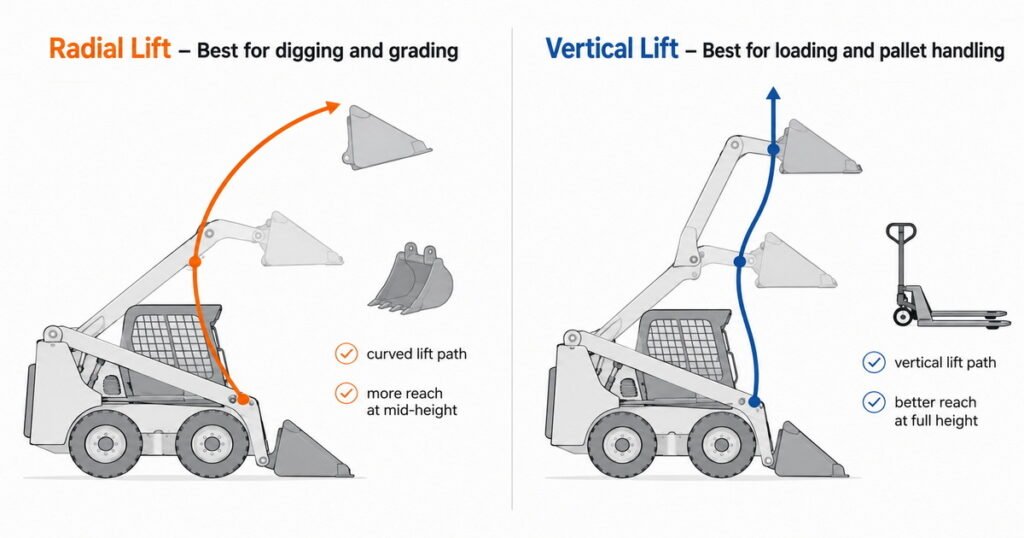
Radial vs vertical lift: which is right for you?
Most fleets still mix radial‑lift and vertical‑lift machines for different tasks. At a high level: [makana]
– Radial‑lift loaders excel at digging, grading, and dozing near the machine.
– Vertical‑lift loaders excel at loading trucks, placing pallets, and any work that needs maximum height and reach at full lift.
Case’s line historically included six radial‑lift models (1,300–2,700 lb ROC) and three vertical‑lift machines (1,850–3,400 lb ROC), giving contractors flexibility to optimize for digging vs. loading tasks. When we plan equipment portfolios for clients, we often pair one higher‑ROC vertical‑lift machine with one more agile radial‑lift unit to cover most site needs efficiently. [webfx]
Track vs Wheel: Choosing the Right Undercarriage
When to choose a tracked skid steer
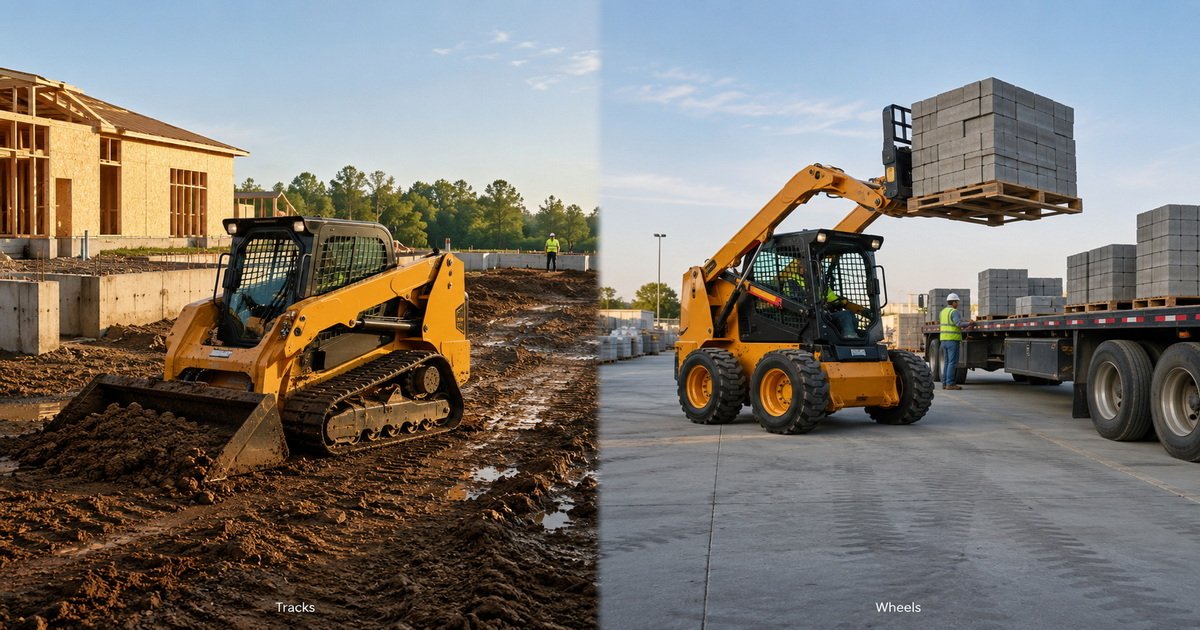
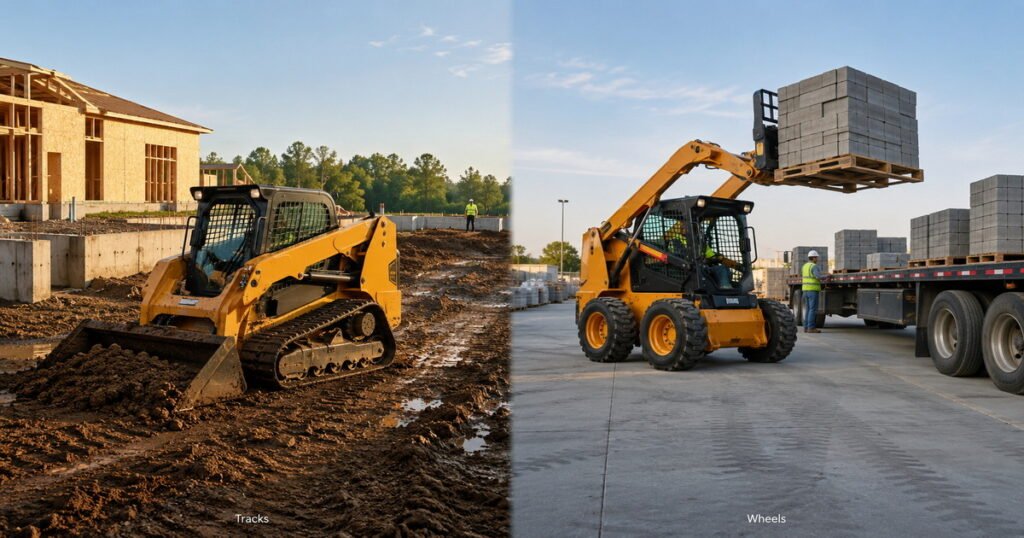
Tracked skid steer loaders (compact track loaders) shine in soft, wet, or highly sensitive ground conditions. Contractors typically pick tracks when: [makana]
– Working on muddy or sandy jobsites
– Operating on newly graded sub‑base where ground damage is a concern
– Climbing slopes or working on uneven terrain all day
The larger ground contact area reduces ground pressure, which means better flotation and less rutting. For civil projects or high‑end landscaping, this often translates directly to lower rework costs and happier clients. [makana]
When a wheeled skid steer is the better option
Wheeled skid steers remain the workhorse in urban construction and industrial yards. They are usually the best choice when: [webfx]
– You operate mainly on concrete, asphalt, or compacted gravel
– You need quick travel speed from point to point on a large site
– You want lower undercarriage costs and easier tire replacement
In my experience, fleets that do a lot of demolition, site cleanup, or warehouse‑yard handling often favor wheel loaders because tire costs and downtime are easier to predict than track replacement. [webfx]
Emissions, Fuel, and Maintenance: The Hidden Cost Drivers
Tier 4 and aftertreatment choices
Modern skid steers above certain horsepower thresholds must comply with stringent emissions standards, which has pushed OEMs toward technologies like selective catalytic reduction (SCR) and diesel oxidation catalysts (DOC). Case, for example, moved its entire skid steer line to Tier 4 Final, using: [pageoptimizer]
– DOC systems on some 74 hp platforms, which are maintenance‑free
– SCR on 75 hp and higher models, requiring diesel exhaust fluid (DEF) but reducing the need for diesel particulate filters (DPF) [compactequip]
From a fleet‑management viewpoint, DOC‑only systems remove the need for DPF cleaning, regeneration cycles, or extra filters, which can simplify maintenance scheduling for smaller contractors. [pageoptimizer]
Designing for uptime
High‑performing fleets focus not just on power numbers but on serviceability:
– Ground‑level access to filters and grease points
– Clear intervals for oil, filters, and hydraulic fluid
– Diagnostic access via telematics or in‑cab displays [scubemarketing]
I recommend owners standardize around a small number of engine families and aftertreatment systems, especially if they run mixed brands, to simplify training and reduce parts complexity across their fleet. [webfx]
Operator Experience: Visibility, Comfort, and Safety
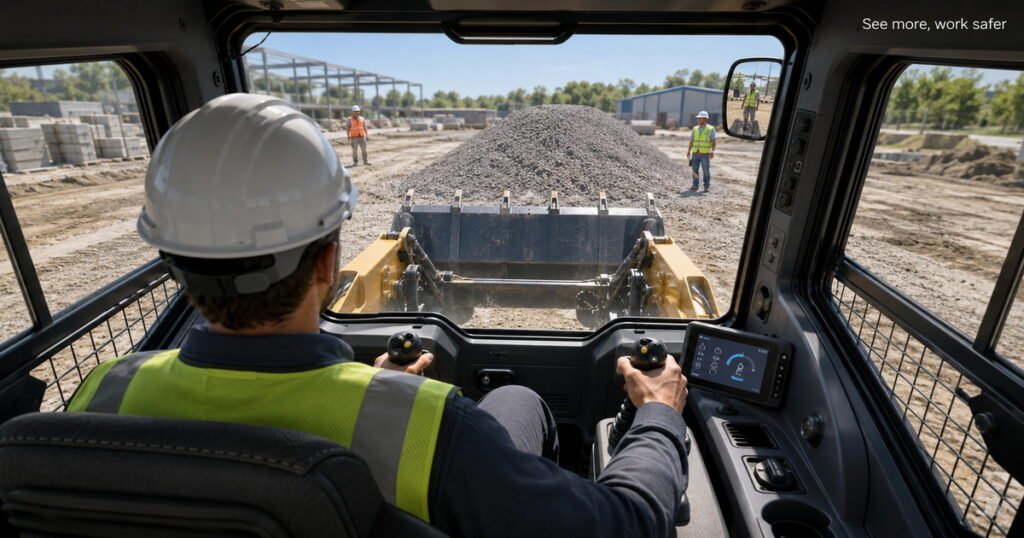
Why visibility is not just “nice to have”
On dense jobsites, visibility is a safety and productivity feature, not a luxury. Case and other leading manufacturers have invested heavily in: [webfx]
– Cab‑forward designs that move the operator closer to the attachment
– Ultra‑narrow cab pillars or wire side screens to reduce blind spots
– Large rear windows for backing and tight maneuvering [compactequip]
Better visibility leads to fewer near‑misses around ground workers and other machines and allows operators to place forks and buckets more precisely, reducing cycle times. [wgcontent]
Cab comfort and control layout
Modern skid steers now feel closer to premium compact wheel loaders or excavators in the cab. Features commonly valued by operators include: [scubemarketing]
– Wide door openings and low thresholds for easy entry
– Suspension seats with multiple adjustments
– Intuitive joystick controls and customizable control patterns
In harsh climates, reliable heating and air conditioning is not just operator comfort—it directly affects daily utilization because operators are more willing to stay in the machine longer. [scubemarketing]
Practical Buying Framework: How Professionals Choose a Skid Steer
Step 1: Define core applications and attachments
Before comparing brochures, list your top five tasks and the attachments you already own or plan to purchase. For example: [makana]
– Grading and backfilling with a smooth bucket
– Pallet handling with forks
– Asphalt planing with a high‑flow planer
– Snow removal with a blower or angle broom
– Land clearing with a mulcher
Each attachment type implies a minimum ROC, lift path choice, and hydraulic flow requirement. [makana]
Step 2: Match ROC, horsepower, and lift path
Using your task list, select a ROC range that safely covers your heaviest recurring loads, then decide between radial and vertical lift based on how much truck loading vs. ground engagement you do. As a rule of thumb: [makana]
– More truck loading and pallet handling → favor vertical lift
– More digging, grading, and pushing → favor radial lift
Then check that the engine horsepower and hydraulic flow can support all planned attachments without constant stalling. [webfx]
Step 3: Decide on tracked vs wheeled configuration
Use your primary ground conditions as the deciding factor:
– Mostly soft, wet, or landscaped sites → tracked
– Mostly paved, compacted, or indoors → wheeled [makana]
Some fleets split their purchases: one larger tracked loader for rough sites and one agile wheeled skid steer for yards and urban projects. [webfx]
Step 4: Compare total cost of ownership, not just price
When we model TCO for clients in construction and industrial sectors, we account for at least these elements:
– Fuel consumption at typical duty cycles
– Scheduled maintenance and filter/DEF costs
– Track or tire replacement intervals
– Residual value after 5–7 years
– Downtime risk based on service network coverage [scubemarketing]
A slightly more expensive machine with better fuel efficiency, longer service intervals, and a strong dealer network can outperform a cheaper option over the life of the asset.
How Certeg Aligns with These Professional Requirements
As a manufacturer focused on skid steer loaders and related construction machinery for global markets, Certeg designs both tracked and wheeled platforms to match the decision framework above. Based on typical buyer requirements we see: [scubemarketing]
– Multiple power configurations to cover different duty cycles and regional emission standards
– ROC ranges engineered for both light construction and heavy infrastructure use
– High‑flow hydraulic options to support demanding attachments in roadwork and industrial applications
For international buyers, Certeg’s advantage lies in tailoring machines to local fuel quality, climate, and regulatory environments, which is crucial for long‑term reliability outside North America and Europe. [scubemarketing]
How Different Buyers Use Skid Steers
Urban contractor scenario
A mid‑size contractor in a dense city environment may run a vertical‑lift wheeled loader around the 2,400–2,800 lb ROC range with a 74 hp engine and standard or high‑flow hydraulics. Typical daily tasks: [compactequip]
– Unloading pallets of brick and block
– Loading broken concrete into trucks
– Light fine grading in tight alleys or infill lots
In this scenario, fast maneuvering, tight turning radius, and low undercarriage costs matter more than ultimate flotation.
Infrastructure and roadwork example
A highway contractor using high‑flow attachments may choose a 3,000–3,400 lb ROC vertical‑lift loader with enhanced high‑flow hydraulics similar to the SV340 class. Their priorities: [compactequip]
– Running cold planers and milling attachments efficiently
– Loading high‑sided dump trucks
– Maintaining stability under heavy attachment loads
Here, ROC, hydraulic performance, and cab visibility directly impact production metrics like lane‑miles completed per shift.
Mid‑Range vs High‑ROC Loader
Below is a simplified illustrative comparison based on publicly available Case skid steer data; exact specs vary by generation and configuration. [compactequip]
| Model type | Lift path | Approx ROC (lb) | Engine power (hp) | Key hydraulic options | Typical use case |
|---|---|---|---|---|---|
| SR240‑class skid steer | Radial | ~2,400 | ~74 | Standard & high‑flow aux. hydraulics compactequip | All‑purpose earthmoving and light loading compactequip |
| SV280‑class skid steer | Vertical | ~2,800 | ~74 | Standard & high‑flow options compactequip | Pallet handling, truck loading, utilities compactequip |
| SV340‑class skid steer | Vertical | ~3,400 | ~90 | High‑flow & enhanced high‑flow compactequip | Heavy attachments, production truck loading compactequip |
Call to Action: Plan Your Next Skid Steer Investment
If you are planning your next skid steer purchase or looking to standardize your fleet across multiple jobsites, now is the time to map your applications to clear spec requirements—ROC, lift path, undercarriage type, and hydraulics. Using the framework above, you can quickly narrow down to two or three ideal configurations and then compare brands like Certeg and Case based on dealer support, pricing, and local regulatory fit. [scubemarketing]
To get tailored recommendations—including model suggestions for your soil conditions, climate, and attachment list—reach out to a Certeg specialist or your trusted equipment consultant with your top five tasks, preferred undercarriage type, and budget range already defined. [webfx]
Frequently Asked Questions (FAQ)
Q1: Should I choose a tracked or wheeled skid steer for mixed residential and light commercial work?
If your work mixes paved driveways with soft lawns or new sub‑base, many contractors choose a tracked loader for better flotation and reduced turf damage, accepting slightly higher undercarriage cost. [makana]
Q2: Is high‑flow hydraulics worth the extra investment?
High‑flow is worth it if you run power‑hungry attachments like cold planers, mulchers, or large snow blowers; otherwise, standard flow is often sufficient for buckets, forks, and light brooms. [webfx]
Q3: How do I size ROC correctly for my projects?
List your heaviest recurring loads (not one‑off jobs) and select a machine with an ROC that comfortably exceeds those weights, ideally covering 80–90% of daily lifting scenarios. [makana]
Q4: What is the main advantage of vertical‑lift vs radial‑lift machines?
Vertical‑lift machines maintain better reach and lift capacity at full height, making them ideal for truck loading and pallet handling, while radial‑lift loaders excel at digging and grading near the machine. [compactequip]
Q5: How important is cab visibility when choosing a skid steer?
Cab visibility directly impacts safety and productivity; designs with cab‑forward layouts, slim pillars, and large windows reduce blind spots and help operators work faster with fewer near‑misses. [wgcontent]
References
1. Compact Equipment – “Case Skid Steers Summarized — 2017 Spec Guide.” Compact Equipment / Benjamin Media Inc. [compactequip]
2. WebFX – “SEO Strategies for Heavy Equipment Companies.” WebFX Heavy Equipment SEO Guide. [webfx]
3. WG Content – “E‑E‑A‑T for content quality.” WG Content Blog on Content Quality and SEO. [wgcontent]
4. PageOptimizer Pro – “Effective Strategies for E‑E‑A‑T Implementation on Websites.” POP Blog. [pageoptimizer]
5. Sales Funnel Professor – “Construction Equipment Digital Marketing for Dealers.” Construction Equipment Digital Marketing for Dealers. [salesfunnelprofessor]
6. Scube Marketing – “Heavy Equipment Marketing: Proven Digital Strategies for …” Heavy Equipment Marketing Strategies. [scubemarketing]
7. Makana – “Tips for choosing a skid steer loader.” Makana Heavy Equipment Buying Tips. [makana]
8. YouTube – “How to Operate a Skid Steer – Advanced.” Heavy Equipment Operator Training Video. [youtube]
9. YouTube – “How to Operate a Skid Steer – Advanced (2020).” Advanced Skid Steer Operations. [youtube]
Hot Tags: Skid Steer Loader, Manufacturers, Customized, Custom, Suppliers, Buy, Cheap, Quality, Advanced, Durable, in Stock, Made in China, Price, Quotation