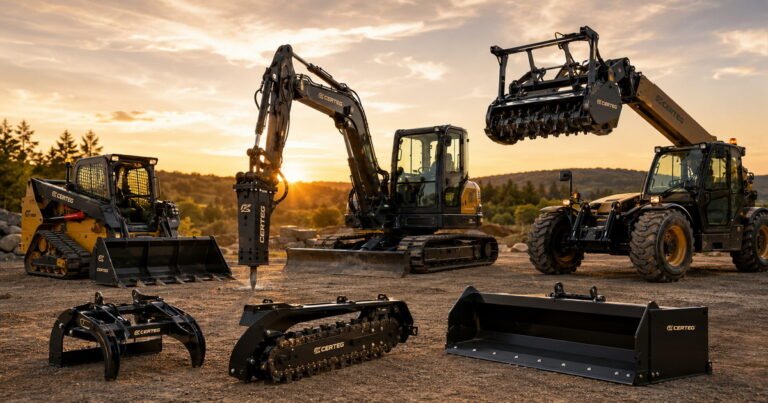

How Modern Mini Excavators Deliver Maximum Versatility on Tight Urban Jobsites
Content Menu
● Why Mini Excavators Are Critical for Tight Jobsites
>> 1. Space Constraints in Urban and Residential Work
>> 2. The Rise of Zero-Tail-Swing and Compact Radius Designs
● CASE’s 2025 Mini Excavator Lineup: More Versatility for Tight Jobsites
>> 1. CASE CX12D – Ultra-Compact Entry-Level Mini Excavator
>> 2. CASE CX19D – Mid-Size Workhorse with Cab Options
>> 3. CASE CX25EV – All-Electric Mini Excavator for Confined Spaces
>> 4. CASE CX60D – Heavy-Duty 6-Ton Mini Excavator
● How to Choose the Right Mini Excavator for Your Tight Jobsite
>> 1. Match Machine Size to Your Typical Work
>> 2. Key Features to Look for in Tight Jobsites
>> 3. Attachment Versatility: Turn One Machine into Many
● Real-World Applications: How Mini Excavators Boost Productivity in Tight Spaces
>> 1. Utility Trenching in City Streets
>> 2. Residential Foundations and Basements
>> 3. Indoor Demolition and Renovation
● How Certeg’s Mini Excavator Range Complements Modern Jobsite Needs
>> 1. Certeg Mini Excavators (0.6–5 Ton Range)
>> 2. Skid Steer Loaders, Forklifts, and Crawler Transporters for Tight Spaces
● Best Practices for Operating Mini Excavators on Tight Jobsites
>> 2. Safe Operation in Confined Areas
● Equip Your Crews for Maximum Versatility on Tight Jobsites
● FAQ
>> 1. What is the best mini excavator size for tight urban jobsites?
>> 2. Are electric mini excavators worth it for tight jobsites?
>> 3. How do I choose between a mini excavator and a skid steer loader for tight spaces?
>> 4. What attachments should I use on a mini excavator for tight jobsites?
>> 5. How can I improve safety when operating a mini excavator in tight spaces?
For contractors, landscapers, and utility crews working in dense cities, backyards, and confined industrial sites, space is the biggest constraint. That’s why today’s mini excavators are engineered not just for digging, but for maximum versatility in tight jobsites.
Leading manufacturers like CASE have recently expanded their mini excavator lineups with new diesel and electric models, giving crews more power, more attachments, and more maneuverability where full-size machines simply can’t go.
As a global producer of excavators, skid steer loaders, forklifts, tractors, and crawler transporters, Certeg understands that modern construction demands compact, multi-role machines that can handle everything from trenching and grading to material handling and demolition in narrow alleys, between buildings, and even indoors.
In this in-depth guide, we’ll break down:
– Why mini excavators are essential for tight urban jobsites
– How the latest models (including CASE’s 2025 lineup) improve versatility
– How to choose the right size and configuration for your work
– Real-world applications and best practices for confined spaces
– How Certeg’s own mini excavator range complements these solutions

Why Mini Excavators Are Critical for Tight Jobsites
1. Space Constraints in Urban and Residential Work
In cities and suburbs, job sites are often squeezed between buildings, fences, and existing infrastructure. Full-size excavators:
– Can’t fit through narrow driveways, gates, or alleys
– Risk damaging walls, foundations, and underground utilities
– Require large staging areas that may not exist
Mini excavators solve this by being:
– Compact in width and length – many can pass through standard gates (often 3–4 ft / 0.9–1.2 m wide)
– Lightweight – easier to transport on small trailers and less likely to damage pavements or lawns
– Highly maneuverable – with zero-tail-swing or minimal-tail-swing designs that allow full 360° rotation without hitting nearby structures
This makes them ideal for:
– Residential foundations, basements, and landscaping
– Utility trenching (water, gas, telecom, electrical) in city streets
– Renovation and retrofit work in occupied buildings
– Indoor demolition and site prep in warehouses and commercial spaces
2. The Rise of Zero-Tail-Swing and Compact Radius Designs
One of the biggest advances in mini excavators is the widespread adoption of zero-tail-swing (ZTS) and compact-radius designs:
– Zero-tail-swing: The counterweight does not extend beyond the tracks, so the machine can rotate flush against walls, curbs, and other obstacles.
– Compact-radius: The tail overhang is minimized, allowing tighter turns in confined areas.
These features are now standard on most modern mini excavators in the 1–6 ton range, including:
– CASE’s CX12D, CX19D, and CX42D models
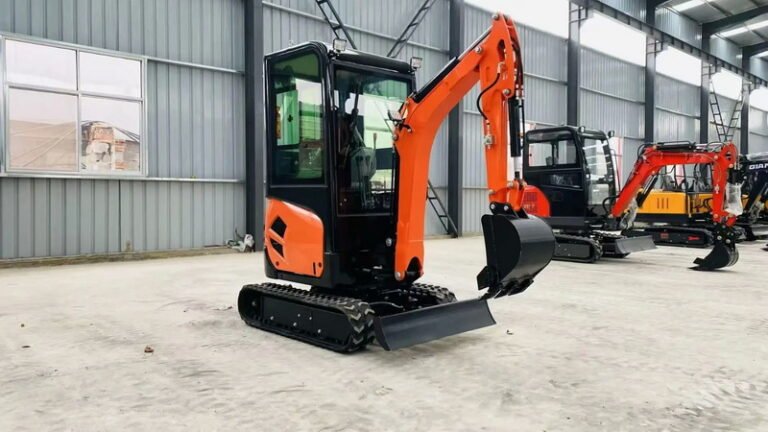
– Many Certeg mini excavators (0.6–5 ton range) with ZTS or minimal-tail-swing options
For contractors, this means:
– Safer operation near buildings and underground utilities
– Faster cycle times because less repositioning is needed
– Ability to work in spaces where even a mid-size excavator would be too risky
CASE’s 2025 Mini Excavator Lineup: More Versatility for Tight Jobsites
CASE Construction Equipment recently expanded its mini excavator lineup with several new models designed specifically for versatility on tight jobsites. Let’s look at the key machines and what they bring to crews.
1. CASE CX12D – Ultra-Compact Entry-Level Mini Excavator
– Operating weight: ~2,932 lb (1.33 tons)
– Engine power: 11.8 hp
– Key features:
– Very small footprint, easy to transport on a pickup trailer
– Retractable tracks and foldable dozer blade for gate access
– Minimal tail swing for working in tight corners
Best for:
– Small landscaping jobs
– Utility work in backyards and narrow alleys
– Light digging and trenching where space is extremely limited
This model is ideal for rental fleets and small contractors who need a simple, easy-to-operate machine for entry-level tasks.
2. CASE CX19D – Mid-Size Workhorse with Cab Options
– Operating weight: ~4,145 lb (1.88 tons)
– Engine power: 18.4 hp
– Key features:
– Zero-tail-swing design for tight urban work
– Optional heated cab or canopy for operator comfort
– Two standard auxiliary hydraulic circuits + optional quick coupler
Best for:
– Residential foundations and basements
– Utility trenching in city streets
– Landscaping and site prep where more power is needed
The CX19D strikes a balance between compact size and real digging power, making it a versatile choice for crews that need more capability than an ultra-compact model.
3. CASE CX25EV – All-Electric Mini Excavator for Confined Spaces
– Operating weight: ~5,159 lb (2.34 tons)
– Power source: 32.3 kWh lithium-ion battery
– Key features:
– Zero emissions and low noise – perfect for indoor work, hospitals, schools, and residential areas
– Short-radius tail swing for tight quarters
– Customizable electro-hydraulic controls and multiple work modes (Power, Standard, Economy)
Best for:
– Interior demolition and site prep
– Work in noise-sensitive areas (urban centers, near homes)
– Applications where diesel fumes or exhaust are prohibited
Electric mini excavators like the CX25EV are becoming essential tools for contractors who want to expand into indoor and environmentally sensitive projects.
4. CASE CX60D – Heavy-Duty 6-Ton Mini Excavator
– Operating weight: ~13,162 lb (5.97 tons)
– Engine power: 59.4 hp
– Key features:
– Long arm and thumb-ready design for grading and lifting
– Premium automotive-style cab with HVAC, air-suspension seat, and LCD display
– Comprehensive hydraulic package for high-flow attachments
Best for:
– Larger residential and commercial foundations
– Road and utility work where more reach and power are needed
– Jobs that require running multiple attachments (breakers, augers, grapples)
The CX60D brings near-mid-size performance in a compact, jobsite-friendly package, making it a strong choice for contractors who need more muscle without sacrificing maneuverability.
How to Choose the Right Mini Excavator for Your Tight Jobsite
Choosing the right mini excavator isn’t just about size – it’s about matching the machine to your typical job conditions, attachments, and transport needs.
1. Match Machine Size to Your Typical Work
| Machine Size (Operating Weight) | Typical Applications | Ideal for Tight Jobsites? |
|---|---|---|
| 0.6–1.5 tons (1,200–3,300 lb) | Small landscaping, light trenching, backyard work | ✅ Excellent – fits through narrow gates |
| 1.5–3 tons (3,300–6,600 lb) | Residential foundations, utility work, light demolition | ✅ Very good – compact radius or ZTS models work well |
| 3–6 tons (6,600–13,200 lb) | Commercial foundations, roadwork, heavier trenching | ✅ Good – choose ZTS/compact radius models for tight spaces |
Rule of thumb:
– For very tight urban or residential sites, stay in the 0.6–3 ton range.
– For larger commercial or utility projects with some space, 3–6 ton models offer more power and reach.
2. Key Features to Look for in Tight Jobsites
When selecting a mini excavator for tight spaces, prioritize these features:
– Zero-tail-swing or compact-radius design – allows full rotation without hitting walls or obstacles.
– Retractable tracks – reduces width for gate access and tight alleys.
– Foldable dozer blade – keeps the machine compact when moving.
– Swing boom (if available) – lets the arm swing left/right for digging around corners.
– Easy-to-access service points – reduces downtime on busy job sites.
3. Attachment Versatility: Turn One Machine into Many
Modern mini excavators are designed as multi-role tool carriers. Look for models that support:
– Quick-change couplers – for fast switching between buckets, breakers, augers, grapples, and compactors.
– Multiple auxiliary hydraulic circuits – 2–3 circuits let you run high-flow attachments (breakers, augers) without sacrificing control.
– Tiltrotator compatibility – for precise grading, trenching, and demolition in tight spaces.
This versatility means one mini excavator can handle:
– Trenching and pipe laying
– Demolition and debris removal
– Augering for posts and foundations
– Material handling and site cleanup
Real-World Applications: How Mini Excavators Boost Productivity in Tight Spaces
1. Utility Trenching in City Streets
In urban areas, laying water, gas, telecom, and electrical lines often happens in narrow streets with limited space. Mini excavators excel here because they:
– Can work in lanes only a few feet wide
– Minimize disruption to traffic and pedestrians
– Reduce the need for manual labor in deep trenches
Best practices:
– Use a mini excavator with a narrow bucket and precise controls.
– Work in short sections and backfill immediately to keep the site safe.
– Use a machine with a compact radius or ZTS design to avoid hitting curbs and parked cars.
2. Residential Foundations and Basements
In backyards and tight lots, space is limited, and there’s often a risk of damaging existing structures. Mini excavators allow contractors to:
– Dig footings and basements with minimal disturbance to lawns and landscaping
– Work close to house foundations and retaining walls
– Handle material loading and site cleanup with the same machine
Best practices:
– Choose a machine with a long arm and good breakout force for deeper digging.
– Use a dozer blade to grade and backfill efficiently.
– Consider an electric model for quieter operation in residential neighborhoods.
3. Indoor Demolition and Renovation
In occupied buildings, warehouses, and commercial spaces, noise, fumes, and space are major concerns. Electric mini excavators like the CASE CX25EV are ideal because they:
– Produce zero emissions and low noise
– Can fit through standard doorways and elevators
– Allow precise demolition and debris removal without damaging surrounding areas
Best practices:
– Use a machine with a compact footprint and low tail swing.
– Pair it with a grapple or breaker for efficient demolition.
– Plan material removal routes in advance to avoid bottlenecks.
How Certeg’s Mini Excavator Range Complements Modern Jobsite Needs
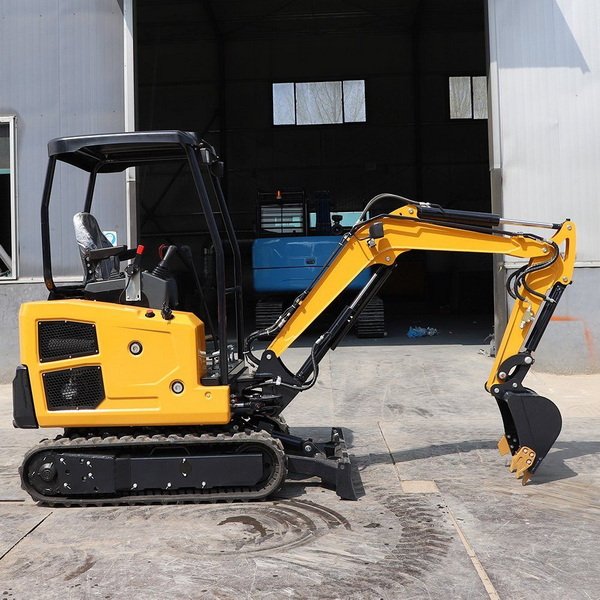
As a manufacturer of excavators, skid steer loaders, forklifts, tractors, and crawler transporters, Certeg offers a full range of compact and mid-size machines designed for global construction, landscaping, and utility work.
1. Certeg Mini Excavators (0.6–5 Ton Range)
Certeg’s mini excavators are built for:
– Tight urban and residential jobsites – compact designs with narrow widths and low tail swing.
– High versatility – compatibility with a wide range of attachments (buckets, breakers, augers, grapples).
– Cost-effective operation – fuel-efficient engines and simple maintenance for lower ownership costs.
Key advantages for contractors:
– Wide size range – from ultra-compact 0.6-ton models for backyard work to 5-ton machines for heavier commercial projects.
– Custom configurations – options for diesel or electric power, open canopy or enclosed cab, and various hydraulic setups.
– Global support – designed for easy parts availability and service in multiple markets.
2. Skid Steer Loaders, Forklifts, and Crawler Transporters for Tight Spaces
In addition to mini excavators, Certeg’s other equipment enhances versatility on tight jobsites:
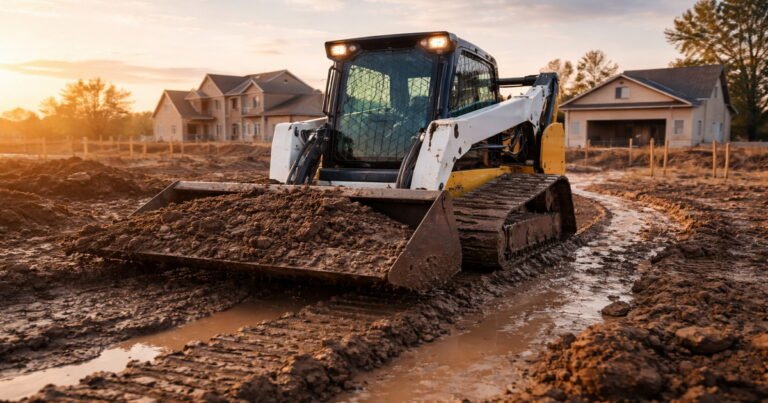
– Skid steer loaders – compact, agile machines for material handling, grading, and cleanup in narrow alleys and between buildings.
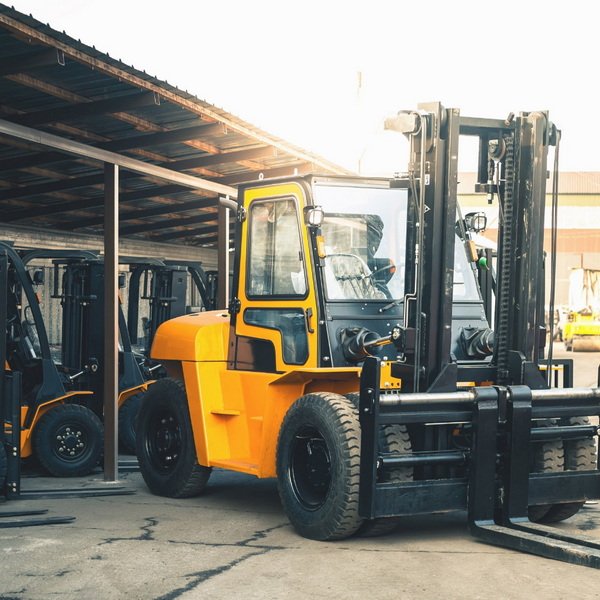
– Forklifts – ideal for loading/unloading materials in confined yards and warehouses.
– Crawler transporters – low-profile, tracked carriers for moving heavy equipment and materials in soft or uneven terrain.
Together, these machines form a complete compact equipment lineup that lets contractors handle almost any task on a tight urban or residential site.
Best Practices for Operating Mini Excavators on Tight Jobsites
To maximize safety, efficiency, and machine life on tight jobsites, follow these proven practices:
1. Pre-Job Planning
– Survey the site – identify overhead lines, underground utilities, and nearby structures.
– Mark clear access and egress routes – ensure the machine can enter, work, and leave safely.
– Plan attachment changes – keep frequently used attachments on site and use quick-coupler systems to minimize downtime.
2. Safe Operation in Confined Areas
– Use the machine’s tail swing design wisely – keep the counterweight away from walls, fences, and people.
– Maintain clear visibility – keep windows and mirrors clean, and use cameras or spotters when visibility is limited.
– Avoid overloading – respect the machine’s lifting capacity and stability limits, especially on slopes or soft ground.
3. Maximizing Efficiency
– Use the right attachment for the job – a narrow bucket for trenching, a breaker for demolition, an auger for posts.
– Optimize work modes – use economy mode for light work and power mode for heavy digging or high-flow attachments.
– Keep the machine well-maintained – regular checks on tracks, hydraulics, and filters reduce downtime and extend life.
Equip Your Crews for Maximum Versatility on Tight Jobsites
If your crews are working in dense urban areas, residential neighborhoods, or confined industrial sites, the right mini excavator can dramatically improve productivity, safety, and profitability.
Now is the time to review your compact equipment lineup and ensure you have the right mix of mini excavators, skid steer loaders, forklifts, and crawler transporters for your most common jobsite conditions.
Contact Certeg today to discuss your mini excavator and compact equipment requirements. Let us help you build a versatile, high-performance fleet that keeps your crews productive on the tightest jobsites.
FAQ
1. What is the best mini excavator size for tight urban jobsites?
For very tight urban jobsites (narrow alleys, between buildings, small backyards), a mini excavator in the 0.6–3 ton (1,200–6,600 lb) range is usually ideal. Look for models with zero-tail-swing or compact-radius designs and retractable tracks to fit through gates and work close to structures.
2. Are electric mini excavators worth it for tight jobsites?
Yes, electric mini excavators are excellent for tight jobsites where noise and emissions are a concern, such as:
– Indoor demolition and renovation
– Work near schools, hospitals, and residential areas
– Projects in cities with strict noise or emissions regulations
They offer zero emissions, low noise, and often lower operating costs, making them a smart investment for contractors expanding into these markets.
3. How do I choose between a mini excavator and a skid steer loader for tight spaces?
– Mini excavator: Best for digging, trenching, grading, and demolition in tight spaces.
– Skid steer loader: Best for material handling, loading/unloading, and site cleanup in confined areas.
Many contractors use both – a mini excavator for digging and a skid steer for moving materials – to maximize efficiency on tight jobsites.
4. What attachments should I use on a mini excavator for tight jobsites?
Essential attachments for tight jobsites include:
– Narrow trenching bucket – for precise utility work.
– Hydraulic breaker – for demolition and breaking concrete.
– Auger – for drilling holes for posts and foundations.
– Grapple – for debris removal and material handling.
– Tiltrotator – for precise grading and trenching in confined spaces.
Choose a machine with quick-coupler systems and multiple auxiliary circuits to switch attachments quickly.
5. How can I improve safety when operating a mini excavator in tight spaces?
Key safety practices:
– Use zero-tail-swing or compact-radius models to avoid hitting walls and structures.
– Keep clear visibility – use cameras, mirrors, and spotters when needed.
– Mark underground utilities before digging.
– Avoid overloading and respect the machine’s stability limits.
– Train operators specifically for confined-space operation and attachment use.
Hot Tags:Case Mini Excavator Lineup, Compact Mini Excavators, Case Construction Equipment, Mini Excavator Versatility, Tight Jobsite Excavators, Small Excavators For Construction, Case Excavator Attachments, Compact Construction Machinery, Urban Jobsite Equipment, Mini Excavator Performance