
How to Rent a Skid Steer or Track Loader Like a Pro in 2026 (Expert Guide for Contractors and Serious DIYers)
Content Menu
● Skid Steer vs Track Loader: Which One Do You Really Need?
● How to Choose the Right Size and Power for Your Rental Loader
>> Key specs to understand before you rent
● Understanding Radial vs Vertical Lift (So You Don’t Over‑ or Under‑Spec)
● Rental Options and Features: What’s Realistic (and What’s Not)
● Attachments: Turn Your Rental Loader into a “Swiss Army Knife”
>> Matching attachments to machine capability
● Safety and Operation: What First‑Time Renters Must Get Right
>> Essential safety practices on every rental job
● Daily Maintenance and Inspection for Rental Loaders
● How Much Does It Cost to Rent a Skid Steer or Track Loader?
● A Manufacturer’s Checklist: How to Talk to Your Rental House Like a Pro
>> Information to share with your rental partner
● Advanced Features to Consider for Professional Fleets and Long‑Term Rentals
● Common Mistakes New Renters Make (and How to Avoid Them)
● Call to Action: Plan Your Next Skid Steer or Track Loader Rental with Confidence
● Frequently Asked Questions (FAQ)
>> 1. Should I rent a skid steer or a track loader for wet, muddy sites?
>> 2. What size skid steer or track loader should I rent?
>> 3. Do I need high‑flow hydraulics for my attachment?
>> 4. How much does a skid steer rental cost per day?
>> 5. What should I inspect on a rental loader each day?
Renting the right skid steer loader or compact track loader can make or break your project schedule, budget, and jobsite safety. As a manufacturer and long‑time partner to rental houses and contractors worldwide, I’ve seen both the “dream rental” that boosts productivity — and the nightmare where the wrong machine, poor attachment matching, or lack of training leads to delays, damage, and added costs. This guide walks you through how to rent a skid steer or track loader like a pro, even if you’re new to heavy equipment, so you can match machine, attachments, and support to your real‑world jobsite conditions. [ezo]
Skid Steer vs Track Loader: Which One Do You Really Need?
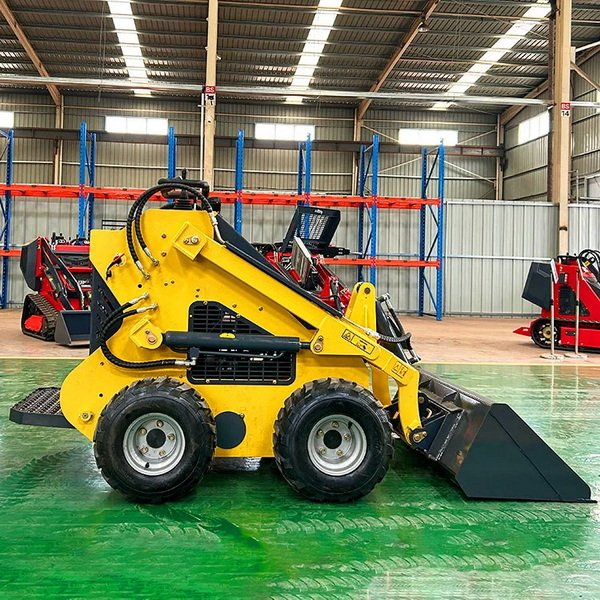
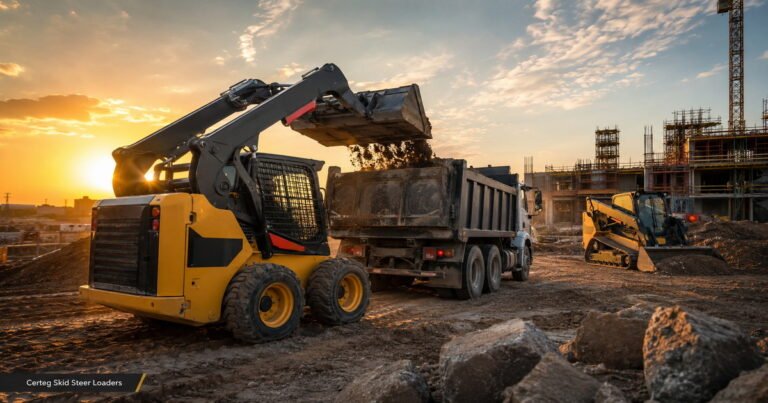
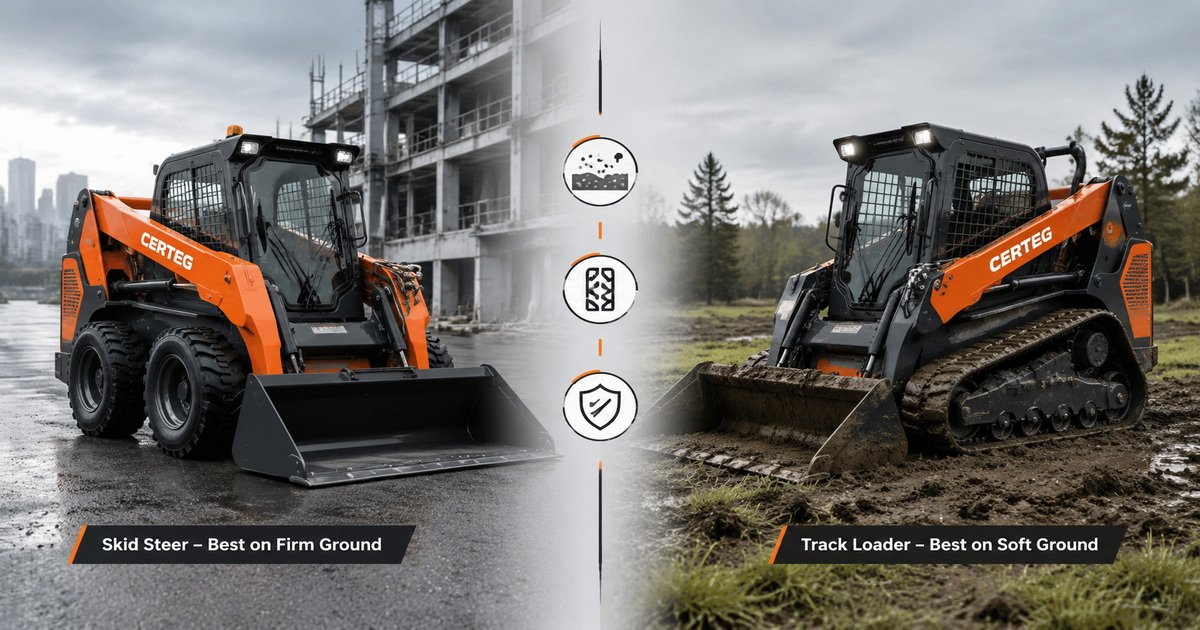
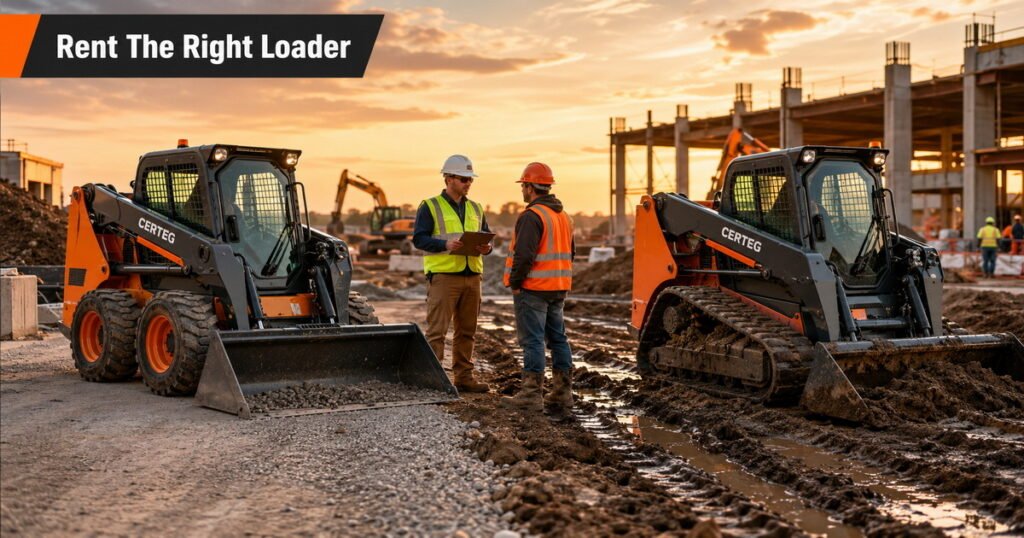
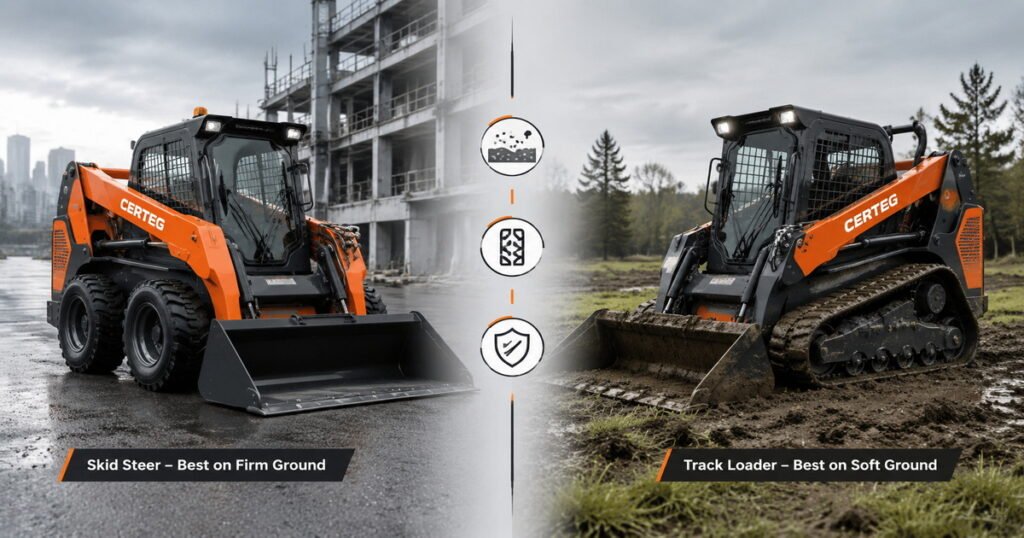
Choosing between a wheeled skid steer loader and a compact track loader is the first big decision you’ll face at the rental counter. Rental experts consistently stress that you should start with ground conditions and application, not price or habit. [ezo]
When a wheeled skid steer is the better choice: [ezo]
– Firm, developed surfaces such as concrete, asphalt, and compacted gravel. [ezo]
– Higher ground speed and frequent travel between work areas on a large site. [ezo]
– Transport flexibility where lower machine weight makes trailering easier. [ezo]
– Applications like snow removal, concrete and asphalt work, and many agricultural tasks. [ezo]
When a compact track loader is the better choice: [ezo]
– Wet, muddy, or loose ground where you need maximum flotation and traction. [ezo]
– Heavy dirt work and site prep where tractive power matters. [ezo]
– Jobs on finished or sensitive surfaces (lawns, landscaping) where you must reduce ground disturbance. [ezo]
– Situations where lower ground pressure and smoother ride improve operator comfort and productivity. [ezo]
In recent years, many rental houses report that requests have “flipped” from skid steers to track loaders, as contractors recognize the productivity and surface‑protection benefits of tracks on modern jobsites. [ezo]
How to Choose the Right Size and Power for Your Rental Loader
Modern skid steers and track loaders come in a wide range of sizes, power ratings, and rated operating capacities (ROC). Rental fleets tend to concentrate in the 2,000–3,500 lb ROC range, which hits the “Goldilocks zone” for many construction and landscaping projects. [ezo]
Key specs to understand before you rent
– Rated Operating Capacity (ROC): The safe load the loader can handle, typically around 35–50% of tipping load. [ezo]
– Tipping load: The point where the machine starts to become unstable; larger units can exceed 10,000 lb tipping load. [ezo]
– Horsepower: Influences hydraulic performance, travel speed, and attachment capability. [ezo]
– Lift path:
– Radial‑lift machines excel in ground‑engaging work (grading, digging, breaking). [ezo]
– Vertical‑lift machines offer better reach at full height, ideal for loading high‑side trucks and feed carts. [ezo]
Real‑world example: A popular rental compact track loader with around 74 hp and 3,700 lb ROC is considered a “sweet spot” — strong enough for serious dirt work but not overkill in rental cost or transport complexity. [ezo]
Understanding Radial vs Vertical Lift (So You Don’t Over‑ or Under‑Spec)
Many new renters don’t realise that lift geometry affects how effective the machine will be for their specific task. [ezo]
– Radial‑lift loaders follow an arcing path: the boom arms rotate on a single pivot point, moving out then back as they rise. [ezo]
– Best for digging, prying, grading, and other tough ground‑engaging tasks. [ezo]
– Often built with slightly more horsepower for these demanding applications. [ezo]
– Vertical‑lift loaders use two pivot points to raise the bucket almost straight up, keeping it closer to the machine. [ezo]
– Best for loading trucks, placing material into hoppers, or feeding high‑side containers where reach at top height matters. [ezo]
Decision checklist: [ezo]
– If your primary task is earthmoving, demolition, or trench backfilling, lean radial‑lift.
– If your priority is loading and material handling with frequent high dumps, lean vertical‑lift. [ezo]
Rental Options and Features: What’s Realistic (and What’s Not)
Rental fleets are built for ROI and durability, not luxury. You’ll usually find rugged, mid‑spec machines rather than fully‑loaded premium units. [ezo]
Typical reality at most rental houses: [ezo]
– Basic cabins with ROPS, often with optional enclosed cab and HVAC. [ezo]
– Standard controls with limited but practical configuration (dual levers, pedals, or joysticks). [ezo]
– Options for different tires or track patterns, depending on jobsite conditions. [ezo]
Advanced features like high‑end suspension seats, Bluetooth radios, advanced grade control, full telematics, and 360‑degree camera packages are more common on owned fleets than rental units, although telematics is slowly entering rental for tracking and maintenance. [ezo]
Attachments: Turn Your Rental Loader into a “Swiss Army Knife”
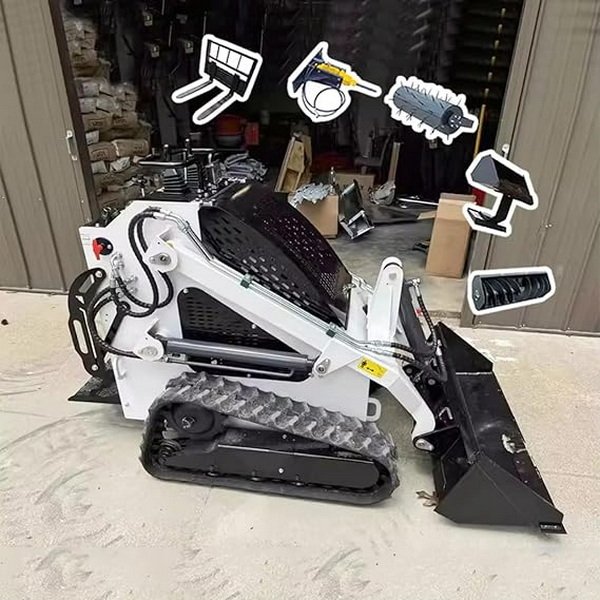
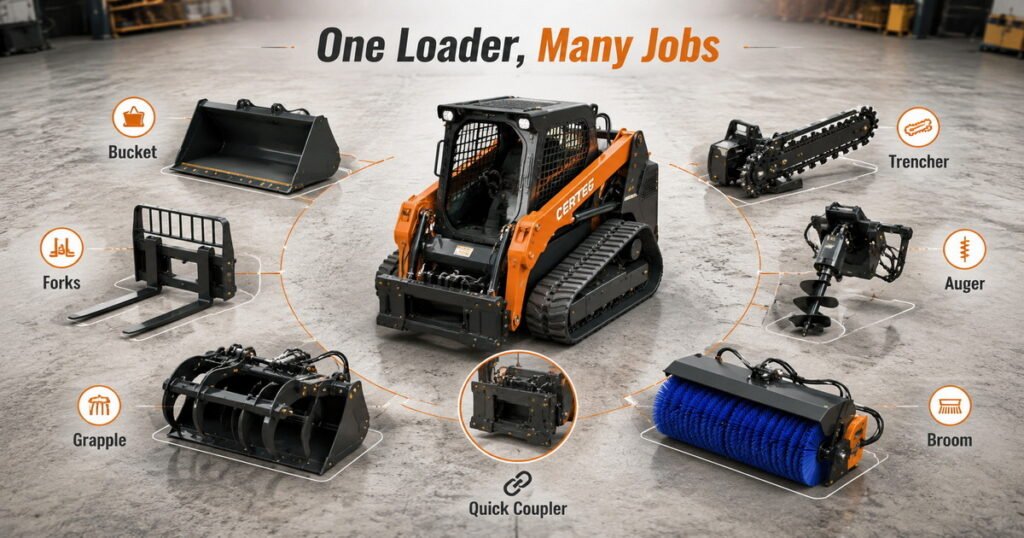
Both skid steers and track loaders are fundamentally tool carriers, and attachments are where you unlock serious versatility and ROI. Rental experts commonly list buckets, forks, grapples, augers, brooms, trenchers, snowplows, breakers, and soil conditioners as the most popular add‑ons. [ezo]
Matching attachments to machine capability
When selecting attachments, you must align:
– Hydraulic flow (gpm) and pressure (psi) of the loader with the attachment’s requirements. [ezo]
– Coupler type and size to ensure safe and secure mounting. [ezo]
– Machine size and stability with the attachment’s weight and torque. [ezo]
Example: For trenchers: [ezo]
– Light‑medium trenching: Standard‑flow units with 2–3 ft dig depth; flows around 8–20 gpm and 1,750–3,000 psi. [ezo]
– Heavy trenching: Deeper trenchers (3–5 ft) with hydraulic side‑shift, dual augers, and high‑flow requirements up to 42 gpm and 4,200 psi on larger loaders. [ezo]
High‑flow hydraulics open the door to demanding tools like asphalt planers and heavy brush cutters, but only if you match the spec correctly. [ezo]
Safety and Operation: What First‑Time Renters Must Get Right
If you have experience with off‑highway equipment, modern loaders will feel intuitive; if not, jumping into a skid steer or track loader without guidance is a risk. Rental managers strongly recommend asking for familiarization or a quick walkthrough before leaving the yard. [ezo]
Essential safety practices on every rental job
– Keep the bucket low while traveling to maintain stability. [ezo]
– Avoid traveling sideways on steep slopes; go straight up or down when possible. [ezo]
– Use three points of contact entering and exiting the cab. [ezo]
– Set up your cab: adjust seat, mirrors, controls, and check your control pattern (ISO, H, or hand‑foot). [ezo]
– Wear your seatbelt and follow any interlock or safety bar procedures. [ezo]
Many modern machines include security measures such as keypads, safety bars, or operator presence switches that must be engaged to start operation. [ezo]
Daily Maintenance and Inspection for Rental Loaders
Rental machines often work harder than owner‑operated units because they experience multiple operators, varying skill levels, and tight schedules. Simple, consistent daily checks dramatically reduce the risk of downtime, accidents, or damage charges. [ezo]
Daily walkaround checklist
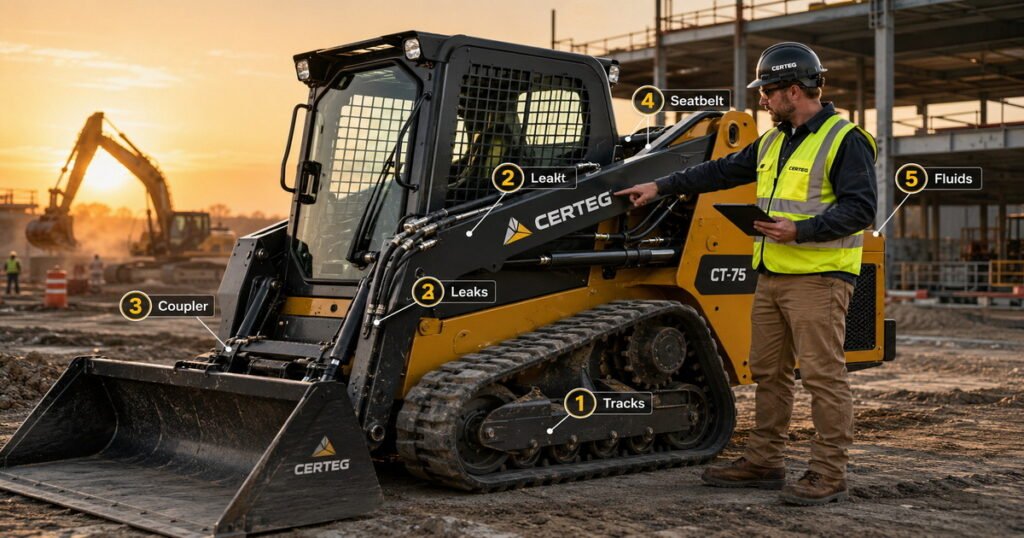
– Inspect for leaks, loose hoses, and obvious structural damage. [ezo]
– Check tire pressure or track tension and look for damaged lugs or sidewalls. [ezo]
– Confirm attachment is securely locked, both mechanically and hydraulically. [ezo]
– Clear debris from radiators, undercarriage, and pivot points. [ezo]
– Grease key lubrication points per decal or operator’s manual. [ezo]
Most modern loaders provide dashboard alerts and warning lights for issues like plugged filters or low oil pressure; operators should stop and contact the rental branch, not ignore the warning. Many fleets also follow predefined preventive maintenance schedules, often displayed via decals or integrated telematics. [ezo]
How Much Does It Cost to Rent a Skid Steer or Track Loader?
Rental pricing varies with region, machine size, attachment selection, and rental duration. Typical ballpark figures cited in the industry for mid‑size skid steer or track loaders are around 300 USD per day, 1,000 USD per week, and 2,500 USD per month. [ezo]
On top of base rates, you may encounter:
– Delivery and pickup fees, often tiered by distance. [forconstructionpros]
– Fuel and cleaning charges if the machine returns dirty or underfueled. [ezo]
– Optional rental protection plans or damage waivers. [forconstructionpros]
– Maintenance and service add‑ons, especially for long‑term rentals. [ezo]
Many rental providers now offer online ordering, no‑contact delivery, and digital paperwork, improving convenience and documentation for both parties. [forconstructionpros]
A Manufacturer’s Checklist: How to Talk to Your Rental House Like a Pro
From our perspective as a skid steer and track loader manufacturer collaborating with global rental partners, the most successful rentals all start with a structured conversation. [forconstructionpros]
Information to share with your rental partner
1. Jobsite conditions
– Soil type (firm, sandy, clay, rocky)
– Surface finish (yard, asphalt, concrete, mixed) [ezo]
2. Primary tasks
– Earthmoving, demolition, trenching, snow removal, pallet handling, etc. [ezo]
3. Material characteristics
– Typical loads (aggregates, demolition debris, pallets, soil, snow). [ezo]
4. Access and transport constraints
– Gate widths, obstacles, slope conditions, available trailer or tow vehicle. [ezo]
5. Operator experience
– First‑time user, occasional operator, or full‑time construction professional. [ezo]
6. Timeline and shift patterns
– Single‑shift daytime, night work, multi‑shift operations. [ezo]
With this information, rental staff can better align you with wheeled vs tracked, radial vs vertical lift, standard vs high‑flow hydraulics, and appropriate attachment packages. [ezo]
Advanced Features to Consider for Professional Fleets and Long‑Term Rentals
While shorter rentals often prioritize base cost, contractors running multi‑month projects or managing multiple sites can benefit from more advanced loader features. [ezo]
Potential options to request or specify:
– Telematics systems for tracking machine usage, location, maintenance intervals, and geofencing. [ezo]
– LED lighting packages to extend productive hours safely. [ezo]
– Ride control or suspension systems to minimize spillage and operator fatigue over long hauls. [ezo]
– Custom tire or track selections tuned for snow, rocky terrain, or turf protection. [ezo]
Some rental houses offer these as premium tiers, especially for contractors who treat rental fleets as strategic assets rather than stop‑gap tools. [quipli]
Common Mistakes New Renters Make (and How to Avoid Them)
Drawing on field experience and rental partner feedback, several patterns emerge in failed or problematic rentals. [forconstructionpros]
Frequent mistakes:
– Renting a wheeled skid steer for a muddy or soft site, leading to constant bogging and downtime. [ezo]
– Choosing too small a machine for heavy pallets or demolition, forcing multiple trips or unsafe overloading. [ezo]
– Mis‑matching high‑flow attachments with standard‑flow loaders (or vice versa). [ezo]
– Underestimating transport needs — discovering too late that their vehicle or trailer is undersized or non‑compliant. [ezo]
– Skipping operator familiarization, resulting in misuse of controls or ignoring warning alarms. [ezo]
How to avoid them:
– Always describe worst‑case ground conditions to the rental house, not just ideal scenarios. [ezo]
– Ask for minimum ROC and horsepower recommendations based on your heaviest expected load. [ezo]
– Confirm hydraulic flow and pressure compatibility when selecting attachments. [ezo]
– Discuss haulage and delivery early; in many cases, it is more efficient to pay for professional delivery and pickup. [forconstructionpros]
Call to Action: Plan Your Next Skid Steer or Track Loader Rental with Confidence
If you’re planning a project that calls for serious earthmoving, precise material handling, or all‑season versatility, renting a Certeg‑equipped skid steer or compact track loader through your preferred rental partner is one of the fastest ways to unlock productivity. [forconstructionpros]
Ready to take the next step?
– Contractors: Share your upcoming project details with your rental house and ask specifically for a Certeg skid steer or track loader configuration matched to your jobsite conditions.
– Rental partners: Contact our team to standardize your fleet spec, add training resources, or explore new high‑demand configurations for your region.
The right machine, attachments, and support turn a simple rental into a strategic advantage on every job. [forconstructionpros]
Frequently Asked Questions (FAQ)
1. Should I rent a skid steer or a track loader for wet, muddy sites?
For consistently wet, muddy, or loose ground, a compact track loader is usually the better choice because tracks provide greater flotation, traction, and a smoother ride with lower ground pressure. [ezo]
2. What size skid steer or track loader should I rent?
Most rental fleets center around 2,000–3,500 lb ROC mid‑size machines, which balance lifting power, stability, and transport ease for typical construction and landscaping projects. [ezo]
3. Do I need high‑flow hydraulics for my attachment?
You only need high‑flow if the attachment explicitly requires it (e.g., certain trenchers, planers, heavy brush cutters); many common tools like general buckets, forks, and light augers run on standard‑flow systems. [ezo]
4. How much does a skid steer rental cost per day?
Industry averages for mid‑size skid steers or track loaders cluster around 300 USD per day, with weekly and monthly discounts available depending on region and machine size. [ezo]
5. What should I inspect on a rental loader each day?
Key checks include leaks, tires or track tension, attachment locking, debris buildup, fluid levels, and dashboard warning lights, along with following any decals or maintenance schedules on the machine. [ezo]
References
1. Compact Equipment. “Let’s Understand How to Rent a Skid Steer and Track Loader like a Pro.”
https://compactequip.com/skid-steers/learn-how-to-rent-a-skid-steer-and-track-loader-like-a-pro/ [ezo]
2. EZO RentOut. “The Ultimate 8‑Step SEO Guide for Equipment Rentals.”
https://ezo.io/ezrentout/blog/seo-guide-for-equipment-rentals/ [ezo]
3. Gandhi Technoweb. “68 Must‑Have Elements for a Heavy Machinery Rental Website to Maximize Bookings.”
https://www.gandhitechnoweb.com/p/blog/68-must-have-elements-for-a-heavy-machinery-rental-website-to-maximize-bookings/ [gandhitechnoweb]
4. Quipli. “7 Essential Elements of a High Performing Equipment Rental Website.”
https://quipli.com/resources/essential-elements-of-a-high-performing-equipment-rental-website/ [quipli]
5. ForConstructionPros. “Digital Marketing Best Practices for Rental Companies.”
https://www.forconstructionpros.com/rental/article/21011120/digital-marketing-best-practices-for-rental-companies [forconstructionpros]
Hot Tags: Skid Steer Loader, Manufacturers, Customized, Custom, Suppliers, Buy, Cheap, Quality, Advanced, Durable, in Stock, Made in China, Price, Quotation