
Properly Equipped Skid Steer & Compact Track Loaders: How Pros Win at Winter Work
Content Menu
● Expert Guide to Using Skid Steer and Compact Track Loaders in Snow
● Skid Steer vs Compact Track Loader in Winter Conditions
>> Strengths of Compact Track Loaders in Snow
>> When a Skid Steer Loader Has the Edge
>> Quick Comparison – Skid Steer vs Compact Track Loader in Snow
● Choosing the Right Tracks or Tires for Winter Work
>> Why Snow Tracks Change the Game for CTLs
>> Tires, Chains and Hybrid Setups for Skid Steers
● Operating Technique: How Experts Run Loaders in Snow
>> Core Driving Principles on Snow and Ice
>> Safety and Operator Training in Winter
● Winter Cab Comfort, Heating and Maintenance Essentials
>> Cab Features That Matter in Winter
>> Cold-Weather Maintenance: Fluids, Batteries and Undercarriage
● High-Value Winter Attachments for Skid Steer and Compact Track Loaders
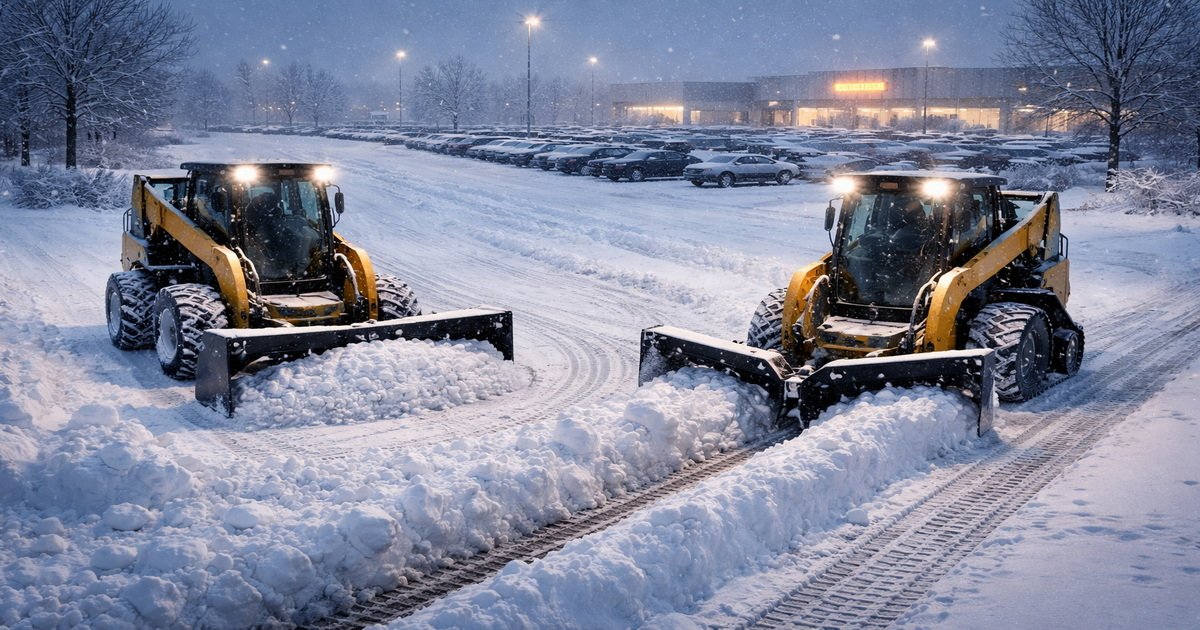
>> Snow Plows, V-Blades and Snow Pushers
>> Snowblowers, Brooms and Spreaders
● Planning, Telematics and OEM Perspective
>> Winter Fleet Planning and Job Costing
>> Using Telematics to Reduce Downtime
>> OEM Perspective – How Certeg Supports Winter Operators
● Step-by-Step Checklist: Get Your Loader Ready for First Snow
● Conclusion – Turn Winter into a Profitable Season
● FAQ: Skid Steer and Compact Track Loaders in Winter
>> Q1: Is a compact track loader always better than a skid steer loader for snow removal?
>> Q2: What kind of tracks do I need for running a compact track loader in snow?
>> Q3: How should I prepare my skid steer loader or compact track loader for the first winter storm?
>> Q4: Which snow attachments should I prioritize if my budget is limited?
>> Q5: Why does my compact track loader feel like it slides more on plowed asphalt than in dirt?
If you set up your skid steer loader and compact track loader (CTL) correctly, winter is not a downtime season – it’s a profit season. [turfandrec]
As a manufacturer like Certeg, you can turn snow, ice and freezing temperatures into a predictable, billable workflow instead of an annual equipment headache. [accio]
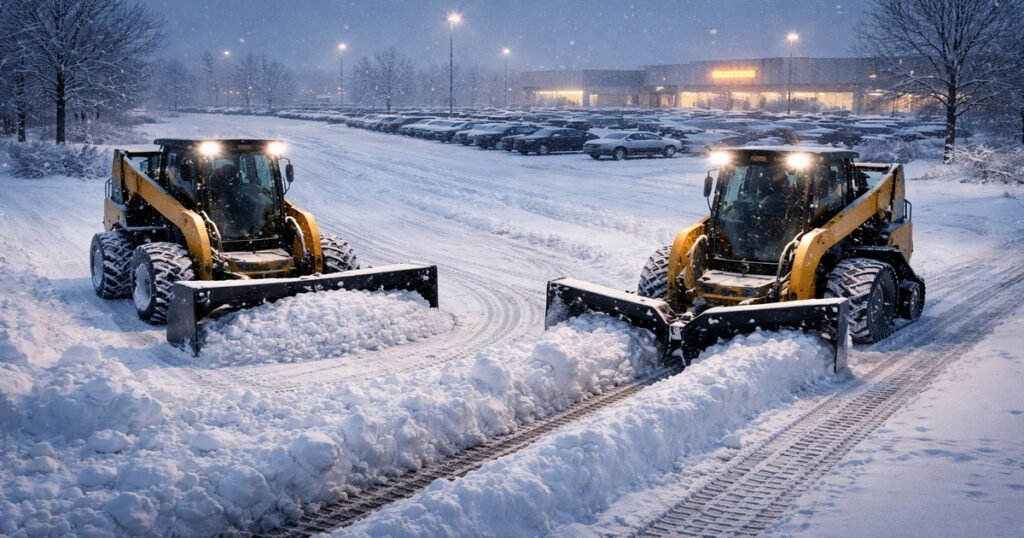
Expert Guide to Using Skid Steer and Compact Track Loaders in Snow
When I first started supporting contractors with winter fleets, I saw the same pattern every year: machines that performed flawlessly in summer suddenly struggled as soon as the first serious snowfall hit. [trackloaderparts]
In almost every case, it wasn’t a machine problem – it was a preparation and configuration problem. [turfandrec]
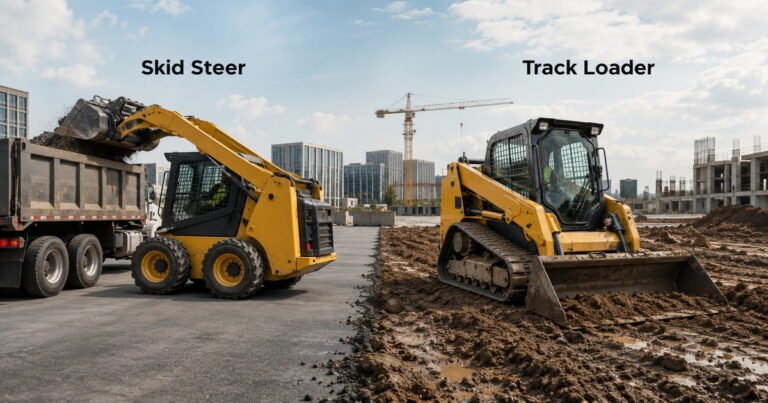
Skid Steer vs Compact Track Loader in Winter Conditions
Contractors still ask a simple question: “For winter snow removal, should I invest in a skid steer loader or a compact track loader?” [forconstructionpros]
The real-world answer depends on surface type, snowfall pattern, and the way you bill your winter work. [skidpro]
Strengths of Compact Track Loaders in Snow
Modern compact track loaders offer low ground pressure and excellent flotation, which means they work earlier and later in wet shoulder seasons and can still excel in winter snow removal when properly equipped. [trackloaderparts]
With purpose-built snow tracks, a CTL becomes a stable platform for high-flow snow blowers, angle brooms and heavy pushers. [rentcoequipment]
Key advantages when correctly equipped: [rentcoequipment]
– High stability on uneven lots and ramps
– Strong pushing power for deep or wet snow
– Ability to run large snow blowers and wide snow pushers
– Reduced surface damage on sensitive or landscaped areas
When a Skid Steer Loader Has the Edge
A skid steer loader with the right tires or chains still has a place, especially on hard, slick surfaces like older asphalt, concrete and tight urban courtyards. [machinestable]
Tire contact and higher ground pressure can sometimes provide better raw traction on polished ice compared to a low-ground-pressure track. [forconstructionpros]
Skid steers tend to win when: [forconstructionpros]
– You work mostly on paved parking lots and streets
– The site has lots of curbs and islands that require tight maneuvering
– You’re doing smaller commercial or residential driveways with frequent transport between jobs
– You prefer quick tire changes over seasonal track swaps
Quick Comparison – Skid Steer vs Compact Track Loader in Snow
| Scenario / Factor | Skid Steer Loader in Snow machinestable | Compact Track Loader in Snow turfandrec |
|---|---|---|
| Traction on pure ice | Often better with chains or snow tires | Can slip without snow-specific tracks |
| Performance in deep, wet or drifted snow | Good, but can bog on soft ground | Excellent with high-flow attachments |
| Surface protection (lawns, pavers, new asphalt) | Higher risk of rutting or scuffing | Low ground pressure preserves surfaces |
| Operator comfort & vibration | More vibration over rough terrain | Smoother ride with quality tracks |
| Seasonal versatility (mud, spring thaw, fall rain) | Limited in mud and soft ground | Works longer seasons due to flotation |
| Maintenance of undercarriage | Tires, hubs, chains | Tracks, rollers, idlers require inspection |
For a manufacturer like Certeg, the practical sweet spot is offering both wheeled skid steers and compact track loaders, with snow-focused options at the configuration level: snow tracks, cold-weather hydraulic packages, and a matched line of winter attachments. [turfandrec]
Choosing the Right Tracks or Tires for Winter Work
Why Snow Tracks Change the Game for CTLs
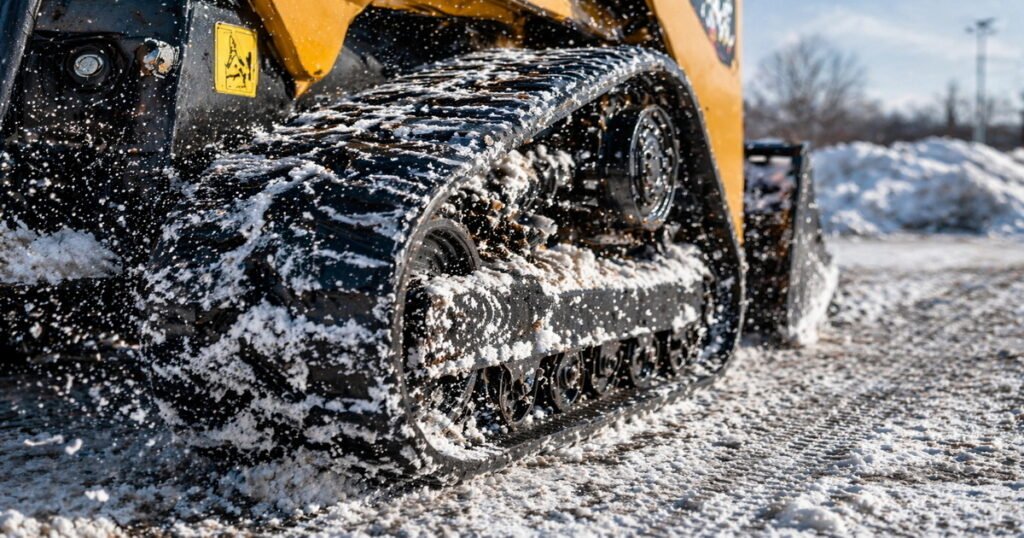
Standard tracks are designed for mixed terrain, but snow tracks are wider and use more aggressive tread patterns, offering both better traction and a smoother ride than simple bar-lug patterns. [trackloaderparts]
Many premium brands now market four-season or all-weather tracks that keep their flexibility in low temperatures, improving grip on ice and packed snow. [blog.koenigequipment]
From an operator’s perspective, good snow tracks should provide: [turfandrec]
– Shorter stopping distance on compacted snow
– Self-cleaning tread profiles that shed snow and slush away from rollers and idlers
– Reduced vibration at transport speeds
– Compatible tensioning and wear indicators for quick morning checks
Tires, Chains and Hybrid Setups for Skid Steers
On a skid steer loader, the right winter tire pattern plus chains can make the difference between smooth plowing and all-night spinning. [machinestable]
Deep-lug snow tires, correctly inflated for the temperature, deliver better lift and push capabilities by maintaining the right contact patch in cold conditions. [skidpro]
Key setup practices: [forconstructionpros]
– Choose snow-rated tires with aggressive tread for ice and slush
– Add tire chains for steep slopes or polished concrete ramps
– Monitor tire pressure frequently, as cold air reduces pressure and affects traction
– Avoid overloading the bucket or snow pusher to keep the machine steerable
Operating Technique: How Experts Run Loaders in Snow
Even with the best loader and tracks, poor operation can ruin tracks, tires, and reputations fast. [skidpro]
The best winter operators treat snow like mud: slow, deliberate movements and careful respect for hidden hazards. [skidpro]
Core Driving Principles on Snow and Ice
Experts follow a few non-negotiable habits: [turfandrec]
1. Use three-point turns instead of tight spins to protect surfaces and reduce track wear.
2. Drive straight up or down slopes, avoid traversing sideways on icy inclines.
3. Keep the load low and close to the machine to maximize stability.
4. Start slow to learn the traction limits of that specific site and snow type.
5. Avoid excessive track or tire spinning, which reduces component life and throws operators off balance.
Snow work also amplifies the importance of visibility: snow piles, drifting and blowing powder hide curbs, bumpers and islands. [skidpro]
Smart contractors walk the site before the first storm and mark obstacles with stakes or flags. [turfandrec]
Safety and Operator Training in Winter
Training matters more in winter than any other season. [machinestable]
Reduced traction means longer stopping distances, while fatigue from night shifts and low visibility can lead to costly mistakes. [skidpro]
Recommended safety habits: [machinestable]
– Always buckle up and use ROPS/FOPS cabs as designed
– Drive at reduced speed and avoid harsh direction changes
– Wear proper PPE: non-slip boots, insulated gloves, high-visibility clothing
– Learn the machine’s emergency stop behavior and master electrical shut-off
– Establish clear communication signals when multiple loaders and trucks share the same lot
Winter Cab Comfort, Heating and Maintenance Essentials
A frozen operator is a distracted operator. [turfandrec]
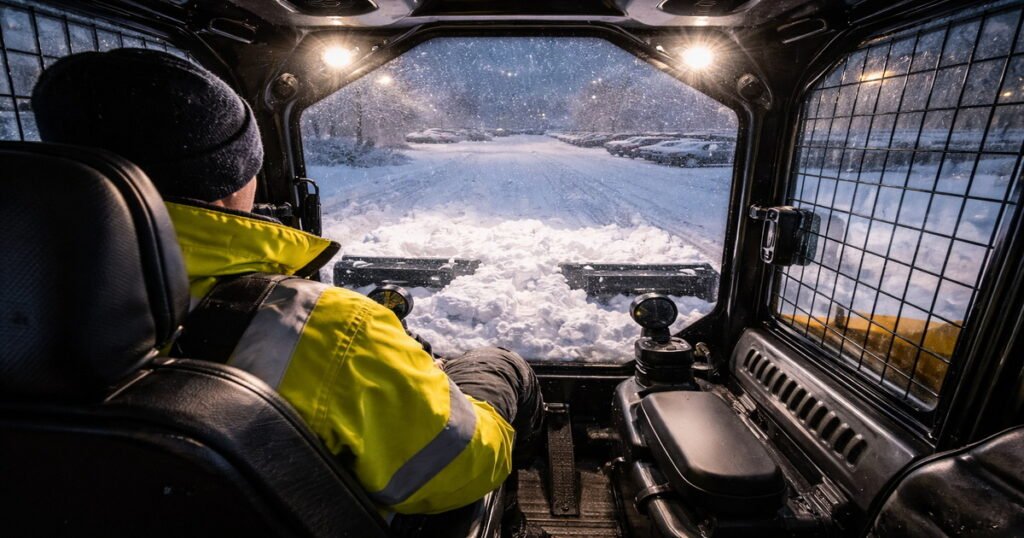
In large commercial lots where a compact track loader can run all day, a fully enclosed, heated cab is no longer a luxury – it’s a safety and productivity requirement. [blog.koenigequipment]
Cab Features That Matter in Winter
Based on both manufacturer guidance and contractor feedback, the following cab features pay for themselves quickly: [blog.koenigequipment]
– Reliable heating and defrost to keep glass clear and operators alert
– Heated seats and armrests to reduce fatigue on long shifts
– Effective door seals to minimize drafts and noise
– Wide-view windows and optional LED work lights for low-visibility storms
Ample warm airflow keeps windows from fogging or icing over, which is critical when working around pedestrians and parked vehicles. [skidpro]
Cold-Weather Maintenance: Fluids, Batteries and Undercarriage
Fluids, batteries and the undercarriage determine whether your skid steer loader or compact track loader starts on the first call-out or sits dead in the corner of the yard. [trackloaderparts]
Key maintenance practices used by experienced fleets: [trackloaderparts]
– Switch to winter-grade engine oil such as synthetic 5W‑40 for easier cold starts, especially below -20°C.
– Use low-temperature hydraulic fluids and verify coolant protection to at least -34°C.
– Perform battery load tests in fall; a battery can lose up to 60% of its capacity in freezing conditions.
– Keep DEF tanks (for machines above 74 hp) protected; DEF will freeze at about 12°F, so integrated tank heaters are valuable.
– Clean ice and packed snow from tracks, sprockets, rollers and undercarriage after each shift.
– Wash off salt as soon as practical to prevent accelerated corrosion.
High-Value Winter Attachments for Skid Steer and Compact Track Loaders
One reason Certeg and other OEMs love winter is that it unlocks a full secondary business around snow attachments. [forconstructionpros]
When your loader is idle, an attachment is missing. [forconstructionpros]
Snow Plows, V-Blades and Snow Pushers
Plows and pushers are still the backbone of snow work. [forconstructionpros]
Common options: [forconstructionpros]
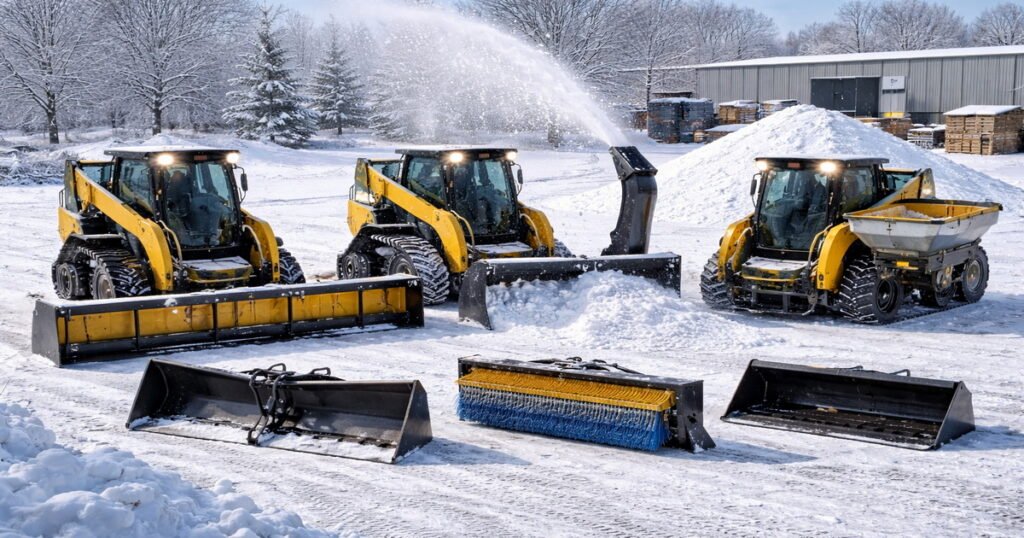
– Straight and angle snow blades (3–10 ft wide) for general plowing
– V-blades that switch between V-plow, scoop, straight and angled modes
– Sectional snow pushers with independent moldboard sections for uneven pavement and fewer passes
Sectional pushers in particular can reduce salt usage, shorten clearing times, and create a more consistent, safer driving surface. [turfandrec]
Snowblowers, Brooms and Spreaders
When snow exceeds 0.6–0.7 m in depth or when you must throw snow far away from the cleared area, snowblowers on compact track loaders become indispensable. [rentcoequipment]
Two-stage hydraulic blowers with adjustable chutes allow operators to place snow up to tens of feet away, keeping stacking areas under control. [turfandrec]
Other high-value attachments: [rentcoequipment]
– Angle and push brooms for light snow, fuel stations, sidewalks and decorative surfaces
– Bulk material buckets for wet, heavy snow and loading trucks
– Salt and sand spreaders, often bucket-style, to rapidly reload and apply material
Planning, Telematics and OEM Perspective
To go beyond basic how‑to guides, serious winter operations now rely on data, telematics and strategic fleet planning. [accio]
Winter Fleet Planning and Job Costing
As a manufacturer and supplier, Certeg often supports customers not just on machine selection, but on fleet composition and job costing. [accio]
The most profitable contractors model their winter business around predictable storms, typical accumulation and site mix. [accio]
Practical planning steps: [accio]
– Map your territory’s average annual snowfall and event frequency
– Match fleet size (CTLS + skid steers) to service level agreements and response times
– Standardize on a core attachment set (pusher + plow + blower + spreader) per machine
– Build a pre-season maintenance and training calendar in early fall
Using Telematics to Reduce Downtime
Modern skid steer loaders and compact track loaders increasingly ship with telematics options. [trackloaderparts]
In winter, this data is incredibly valuable: it helps track utilization, idle time, fuel burn and maintenance needs under harsher conditions. [trackloaderparts]
Examples of telematics-driven decisions: [accio]
– Identifying machines that idle excessively during snow events and coaching operators
– Spotting repeated low-voltage starts that signal emerging battery issues
– Triggering proactive inspections on undercarriage components in salted environments
– Logging attachment use to refine future equipment purchase decisions
OEM Perspective – How Certeg Supports Winter Operators
From an OEM’s perspective, every winter is a chance to build long-term customer trust.
Manufacturers like Certeg can add real value with:
– Factory options for winterized hydraulic systems, heated cabs and four-season tracks
– Bundled snow attachment kits tailored for different customer profiles (municipal, commercial retail, residential)
– Operator training content and quick-start guides focused on winter operation best practices
– Global support for different climates, from temperate coastal regions to extremely cold continental zones
Step-by-Step Checklist: Get Your Loader Ready for First Snow
To make this article immediately actionable, here is a condensed preparation checklist that reflects what high-performing fleets actually do: [rentcoequipment]
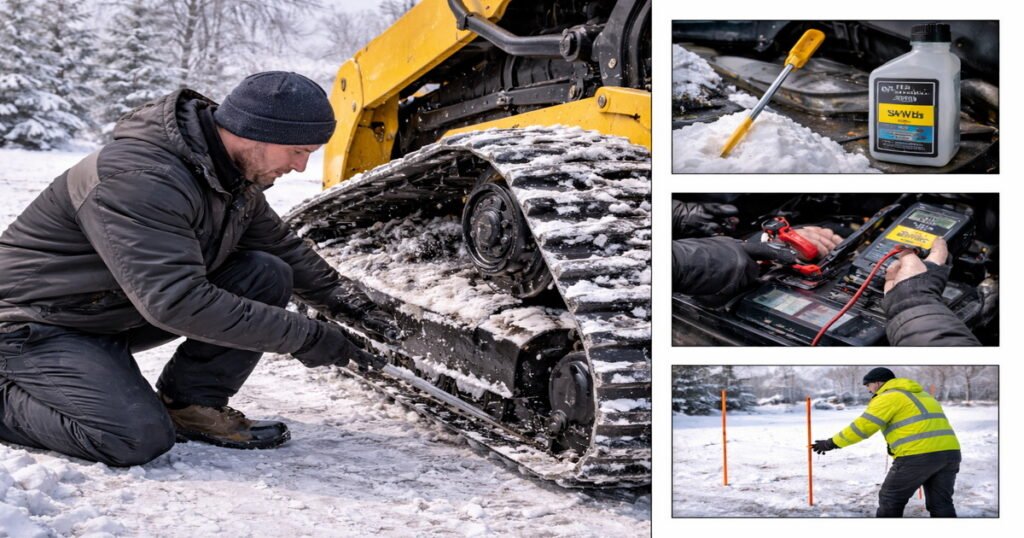
1. Pre-season (Fall)
– Switch to winter-grade engine oil and hydraulic fluids.
– Perform battery load tests; replace weak units.
– Inspect and tension tracks or inspect tires and chains.
– Flush and protect cooling system and verify DEF handling.
2. Before Each Storm
– Walk and mark the site (curbs, drains, islands, speed bumps).
– Check all lights, beacons and wipers.
– Inspect undercarriage; remove packed mud or old ice.
– Test cab heat, defrost and seat functions.
3. During Operation
– Warm up engine and hydraulic system to operating temperature.
– Use three-point turns; avoid aggressive spins.
– Keep loads low; drive straight up/down slopes.
– Monitor for unusual noises, vibration or track slip.
4. After Each Shift
– Clean snow and salt from tracks, sprockets and buckets.
– Inspect cutting edges and blades for damage.
– Park on clean, dry ground to avoid “freeze-down.”
– Log operating hours and any issues for maintenance.
Conclusion – Turn Winter into a Profitable Season
With the right combination of skid steer loaders, compact track loaders, winter-ready tracks or tires, and the proper attachments, winter becomes a structured business season rather than a weather risk. [accio]
Manufacturers like Certeg who help customers configure, train and maintain for snow will not only sell more machines but will also build fleets that stay loyal for years. [trackloaderparts]
At the end of the day, successful winter operations are about three things: correct machine selection, meticulous preparation and disciplined operator habits. [skidpro]
Get those right, and your loaders will excel at winter work – storm after storm. [trackloaderparts]
FAQ: Skid Steer and Compact Track Loaders in Winter
Q1: Is a compact track loader always better than a skid steer loader for snow removal?
A: No. A compact track loader often outperforms in deep snow, soft ground and mixed seasons, while a skid steer loader can have better raw traction on hard ice with proper tires or chains. [forconstructionpros]
Q2: What kind of tracks do I need for running a compact track loader in snow?
A: Snow or four-season tracks with wider profiles and aggressive, self-cleaning tread patterns deliver better traction, shorter stopping distances and improved ride on snow and ice. [turfandrec]
Q3: How should I prepare my skid steer loader or compact track loader for the first winter storm?
A: Switch to winter-grade oils, test batteries, inspect undercarriage or tires, verify cab heat and defrost, and walk the site to mark hidden obstacles before the snow arrives. [rentcoequipment]
Q4: Which snow attachments should I prioritize if my budget is limited?
A: Start with a versatile snow blade or sectional pusher for general clearing and a spreader for salt/sand; add a snowblower later if you handle deep snow or limited stacking space. [forconstructionpros]
Q5: Why does my compact track loader feel like it slides more on plowed asphalt than in dirt?
A: Low ground pressure that helps on soft surfaces can reduce traction on slick, hard surfaces, especially without snow-specific tracks; operators need to move slower and avoid aggressive pushing. [forconstructionpros]
References
1. Compact Equipment – “Tracks in the Snow: Properly Equipped, Compact Track Loaders Can Excel at Winter Work”. [turfandrec]
2. Turf & Rec – “Tips for winter maintenance of compact track loaders”. [turfandrec]
3. MachineStable – “Winter Maintenance and Usage Tips for Skid Steer Loaders”. [machinestable]
4. Rentco Equipment – “How to Use a Compact Track Loader for Snow Removal”[rentcoequipment]
5. ForConstructionPros – “3 Tips to Prepare Skid-Steer Loaders for Snow Removal”. [forconstructionpros]
6. TrackLoaderParts – “Tips for Winter Maintenance of Compact Track Loaders”. [trackloaderparts]
7. SkidPro – “Snow Removal with a Skid Steer: A Guide for U.S. Property Owners”. [skidpro]
8. Koenig Equipment – “5 Tips to Prepare A John Deere Compact Track Loader for Winter”. [blog.koenigequipment]
9. Accio – “Track loader trends 2025: AI, electric models & growth”. [accio]
Hot Tags: Skid Steer Loader, Manufacturers, Customized, Custom, Suppliers, Buy, Cheap, Quality, Advanced, Durable, in Stock, Made in China, Price, Quotation