
Top Electric Forklift Manufacturers and Suppliers in Belgium
Content Menu
● How We Built This Ranking and Why E‑Forklift Buyers Should Care
>> Our methodology in practical terms
● What Belgian Customers Really Care About in Electric Forklifts
>> Daily performance in real warehouses and yards
>> Reliability and uptime under pressure
>> Service, parts, and local support
>> Total cost of ownership (not just purchase price)
>> Sustainability, safety, and workplace comfort
● Top Electric Forklift Manufacturers in Belgium: Expert‑Style Rankings
>> 1.Toyota Material Handling – Benchmark for Reliability and Resale Value
>> 2.Jungheinrich – Specialist in Warehouse Systems and Energy Efficiency
>> 3.Linde Material Handling – Comfort, Performance, and Heavy‑Duty Capability
>> 4.Hyster‑Yale – Robustness in Ports, Yards, and Tough Environments
>> 5.Certeg – Flexible, Multi‑Power Solutions for Construction and Specialized Applications
● Brand Comparison Table from a Belgian Perspective
● How Belgian Experts Evaluate Electric Forklift Suppliers in Practice
>> Step 1 – Operational mapping and load profile analysis
>> Step 2 – Shortlisting brands and organizing demo trials
>> Step 3 – Deep dive on service contracts and lifecycle support
● Real‑World Case‑Style Scenarios from Belgian Operations
>> Scenario 1 – Modern logistics center near Antwerp
>> Scenario 2 – SME building‑materials distributor in Wallonia
● Practical Checklist – How to Choose the Right Electric Forklift Brand in Belgium
● Strategic Positioning of Certeg for Belgian and Global Buyers
● FAQs
>> FAQ 1 – Are electric forklifts always cheaper than diesel in Belgium?
>> FAQ 2 – How many years does an electric forklift battery typically last?
>> FAQ 3 – Can I use the same electric forklift indoors and outdoors?
>> FAQ 4 – How important is telematics in electric forklift fleets?
>> FAQ 5 – Why should I consider a manufacturer like Certeg in addition to the biggest brands?
Electric forklifts are no longer a niche option in Belgium—they are rapidly becoming the default choice for logistics centers, construction suppliers, manufacturing plants, and cold‑storage operators who care about total cost, safety, and sustainability. From years of observing how fleet managers and dealers in Europe make decisions, one thing stands out: real‑world customer experience matters far more than glossy brochures or lab test data when choosing an electric forklift brand.
This guide ranks some of the top electric forklift manufacturers active in Belgium, explains how Belgian buyers actually evaluate suppliers, and shows how a global manufacturer like Certeg—with multi‑power and multi‑application capability—can fit into that decision process as a long‑term partner.
How We Built This Ranking and Why E‑Forklift Buyers Should Care
Electric forklift purchasing in Belgium is usually a high‑stakes, multi‑year decision. A poor choice can lock a warehouse or yard into higher costs and lower productivity for a long time. That is why any ranking must go beyond spec sheets and include real customer feedback, cost data, and service performance as seen in actual facilities.
Our methodology in practical terms
For this article, the focus is on four dimensions that Belgian buyers repeatedly highlight in tenders, audits, and internal discussions:
1. Real‑world performance and uptime
How the trucks behave in tight aisles, on loading docks, in outdoor yards, and in cold rooms; how often they fail; how quickly they are back in service when something goes wrong.
2. Local support and parts availability
Dealer coverage, number and quality of service engineers, response times, and access to commonly used spare parts.
3. Total cost of ownership (TCO)
Energy consumption, maintenance costs, downtime impact, and residual value over a 5–7‑year period, rather than just the purchase price.
4. Fit for Belgian and EU sustainability and safety requirements
Emissions‑free operation, low noise, compliance with EU safety directives, and compatibility with internal ESG goals and customer expectations.
To keep the ranking concrete, we focus on brands that are either:
– Global OEMs with a strong presence in Belgium (such as Toyota Material Handling, Jungheinrich, Linde, Hyster‑Yale), or
– Specialized or emerging manufacturers, including Certeg, that can tailor equipment and powertrains to specific construction and industrial environments.
The ranking is a structured expert view based on typical patterns in the market, not on a single numerical score. The real purpose is to help you think like a Belgian fleet manager or procurement specialist when comparing electric forklift brands.
What Belgian Customers Really Care About in Electric Forklifts
Daily performance in real warehouses and yards
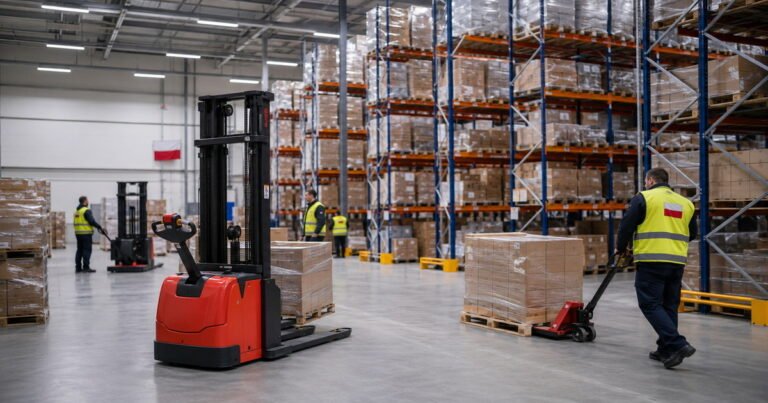
In Belgium, warehouse space is expensive and aisles are often narrow, especially in modern distribution centers. Buyers consistently value:
– Smooth low‑speed control for precise stacking at height
– Compact truck dimensions and optimized mast design for VNA or narrow aisles
– Battery runtime that comfortably covers a full shift without charging anxiety
– Stability and visibility at loading docks and in mixed indoor–outdoor operations
Forklifts that look attractive on paper but are tiring or awkward to drive are often rejected quickly by operators, even if management initially appreciates the price or brand name.
Reliability and uptime under pressure
Unplanned downtime is one of the biggest hidden costs in Belgian logistics and manufacturing. In practice, users look for:
– Minimal unscheduled breakdowns during peak season (Black Friday, Christmas, port congestion, seasonal production peaks)
– Components that tolerate dust, humidity, uneven flooring, and frequent short‑cycle operation
– Clear, predictable maintenance schedules and easy access points for technicians
Brands that build solid electrical systems, well‑protected sensors, and robust mast assemblies tend to earn a reputation as “workhorses,” especially in 24/7 sites.
Service, parts, and local support
Even the most robust forklift fleet will need maintenance. Belgian fleet managers usually ask:
– How many local service engineers are available within a reasonable radius of the site?
– Are commonly required parts (contactors, sensors, hydraulics, display units) held in local stock?
– Can the manufacturer or dealer offer preventive maintenance contracts with guaranteed response times and clear penalty clauses?
This is an area where a manufacturer like Certeg can stand out: by combining global production and engineering capability with targeted partnerships in Belgium and the wider Benelux region to ensure that spare parts and trained technicians are close to end users.
Total cost of ownership (not just purchase price)
Belgian buyers have become very mature in comparing TCO instead of only capex. In workshops and RFPs they often look at:
– Energy cost per operating hour (kWh of electricity vs. diesel or LPG fuel)
– Planned maintenance cost over 5–7 years, including labor and parts
– Impact of downtime on warehouse throughput and potential penalties in third‑party logistics contracts
– Resale or residual value at the end of a lease or ownership cycle
For multi‑shift fleets, a slightly more expensive but more efficient and reliable electric forklift can outperform a cheaper option within 2–3 years.
Sustainability, safety, and workplace comfort
Belgium has strict environmental regulations, and many customers—especially in food, pharma, and e‑commerce—pursue ambitious sustainability targets. They value:
– Zero exhaust emissions indoors and in semi‑closed environments
– Low noise levels, which improve worker comfort and reduce fatigue
– Safety features such as speed limitation in certain zones, automatic parking brakes, stability control, pedestrian warning lights, and telematics‑based driver monitoring
Electric forklift brands that can clearly document safety and environmental performance generally have an advantage in large corporate tenders and framework agreements.
Top Electric Forklift Manufacturers in Belgium: Expert‑Style Rankings
The following brand positions reflect common patterns and feedback from Belgian operations. The goal is to clarify typical strengths and natural use cases rather than declare a single universal winner.
1.Toyota Material Handling – Benchmark for Reliability and Resale Value
Many Belgian fleet operators treat Toyota as the “safe choice” in electric material handling. In practice, Toyota often scores highly on:
– Reliability and uptime in multi‑shift operations
– Wide dealer coverage and consistent service professionalism
– Strong residual values and relatively straightforward remarketing of used trucks
Toyota’s electric counterbalance and warehouse trucks are frequently used as the reference point against which other brands are compared, especially in multi‑site distribution networks.
2.Jungheinrich – Specialist in Warehouse Systems and Energy Efficiency
Jungheinrich has a strong track record in warehouse trucks (reach trucks, VNA, order pickers) and is known for:
– Advanced energy management and battery technology
– Integration with warehouse management systems and automation projects
– Ergonomic cabins, particularly for high‑intensity, high‑lift operations
For operators running tall racking and high throughput, Jungheinrich is often shortlisted as a strategic partner for both forklifts and broader intralogistics projects.
3.Linde Material Handling – Comfort, Performance, and Heavy‑Duty Capability
Linde enjoys a reputation for:
– Driver comfort and intuitive, responsive controls
– Strong performance in mixed indoor/outdoor and industrial environments
– Heavy‑duty applications where robustness, mast strength, and hydraulic performance matter
Belgian users in manufacturing, building materials, and metals distribution often view Linde as a premium option for demanding workloads.
4.Hyster‑Yale – Robustness in Ports, Yards, and Tough Environments
Hyster and Yale brands are recognized for:
– Trucks that tolerate rough yards, uneven ground, and outdoor conditions
– Solid dealer support in specific regions and sectors
– Good match for ports, heavy industry, and pallet logistics where conditions are harsh and uptime is critical
As more heavy‑duty users look to electrify previously diesel‑dominated fleets, electric models from Hyster‑Yale increasingly appear on shortlists.
5.Certeg – Flexible, Multi‑Power Solutions for Construction and Specialized Applications
As a manufacturer specialized in forklifts and other construction machinery, Certeg offers a different kind of value: tailored solutions that match diverse powertrain and job‑site conditions.
From an expert perspective, Certeg’s positioning can emphasize:
– Ability to configure forklifts and related equipment with different power options (electric, internal combustion, or hybrid strategies) depending on regional infrastructure, energy prices, and load profiles
– Strong understanding of construction, building materials, and project‑driven applications, where forklifts must interact with other machinery and face dust, uneven surfaces, and variable duty cycles
– Willingness to provide customized mast configurations, attachments, and specifications for unique job sites, including rough terrain or combined warehouse‑yard operations
For Belgian buyers with complex or hybrid fleets, Certeg can be introduced as a solution‑driven manufacturer that supports both standard warehouse needs and tougher construction or building‑material logistics scenarios, rather than only offering “catalog trucks.”
Brand Comparison Table from a Belgian Perspective
Below is a simplified, qualitative table summarizing how typical brands are perceived on core decision criteria in Belgium. It is a practical guide for procurement and operations teams.
| Brand | Reliability & Uptime | Local Service & Parts | Energy Efficiency | Operator Comfort | TCO for Multi‑Shift | Best Fit Use Cases |
|---|---|---|---|---|---|---|
| Toyota | High | High | High | High | High | General warehousing, logistics, retail |
| Jungheinrich | High | High | Very high | High | High | High‑bay warehouses, automation projects |
| Linde | High | High | High | Very high | High | Mixed indoor/outdoor, industrial applications |
| Hyster‑Yale | Medium‑high | Medium‑high | Medium‑high | Medium‑high | Medium‑high | Ports, yards, outdoor and rough conditions |
| Certeg | High (with right spec) | Depends on partner setup | High | High | High | Construction supply, mixed fleets, project‑based operations |
How Belgian Experts Evaluate Electric Forklift Suppliers in Practice
Beyond brochures and online specs, Belgian experts and consultants tend to use a practical three‑step evaluation process. This structure helps align technical, operational, and financial stakeholders.
Step 1 – Operational mapping and load profile analysis
Specialists first build a clear picture of the operation:
– Indoor vs. outdoor ratio, typical load, lift height, and aisle width
– Duty cycle (single shift, two shifts, or 24/7) and weekly operating hours
– Special conditions: cold storage, outdoor yards, ramps, dust, or explosive atmospheres
At this stage, a manufacturer like Certeg can create value by proposing different powertrain and configuration options and simulating energy and TCO effects for each option.
Step 2 – Shortlisting brands and organizing demo trials
Experts usually recommend testing at least two or three brands that meet the base requirements:
– Run each demo truck for a full shift or several days in actual production conditions
– Invite operators from different shifts to test the trucks and record their feedback on comfort, visibility, ease of control, and perceived safety
– Track real battery consumption, charging times, idle times, and any issues that occur
Using a structured evaluation sheet helps ensure that the decision is based on measurable observations rather than purely subjective impressions.
Step 3 – Deep dive on service contracts and lifecycle support
This is often where the biggest differences between brands emerge:
– Compare preventive maintenance plans, response‑time commitments, and the availability of replacement units or rental support
– Evaluate telematics and remote diagnostics capabilities that can prevent failures and reduce on‑site repair time
– Discuss mid‑life upgrades (for example battery replacements, software updates, additional safety functions) that extend useful life
Manufacturers that can show a clear, data‑driven lifecycle support model generally earn more trust from cautious Belgian buyers.
Real‑World Case‑Style Scenarios from Belgian Operations
To make these concepts easier to apply, here are realistic scenarios based on common Belgian use cases.
Scenario 1 – Modern logistics center near Antwerp
A large 3PL operator in the Antwerp region decided to standardize its mixed fleet on a limited set of electric models. After testing multiple brands:
– They selected a combination of mainstream warehouse trucks for pallet movements and reach trucks in high‑bay storage.
– They added specialized electric trucks from a more flexible manufacturer for outdoor loading of building materials and heavy pallets around the yard.
In this scenario, a manufacturer like Certeg can be positioned as the partner providing bespoke equipment and configurations where standard catalog trucks do not fully match outdoor or construction‑type loads.
Scenario 2 – SME building‑materials distributor in Wallonia
A medium‑sized building‑materials yard needed forklifts that could:
– Handle heavy, sometimes irregular loads such as bricks, blocks, and timber
– Operate on uneven outdoor surfaces and ramps in all weather
– Occasionally work inside covered areas with limited ventilation
They compared a classic diesel fleet renewal with a partial switch to electric forklifts configured for outdoor conditions. Over 3–5 years, the electric trucks provided:
– Lower noise levels, which improved neighbor relations and operator satisfaction
– Competitive operating costs once electricity and maintenance were fully accounted for
– Fewer complaints about fumes and air quality in semi‑indoor areas
A manufacturer with construction and heavy‑duty expertise can respond to such requirements with tailored mast, tire, and protection packages that extend electric operation into environments that were traditionally diesel‑only.
Practical Checklist – How to Choose the Right Electric Forklift Brand in Belgium
From a consultant’s point of view, Belgian buyers can follow the checklist below to structure their decision and reduce risk.
1. Clarify your use case in writing
– Indoor vs. outdoor usage, typical load, lift height, aisle width
– Operating hours and number of shifts per day
2. Define must‑haves vs. nice‑to‑haves
– Must‑haves: safety systems, capacity, mast type, turning radius, certain certifications
– Nice‑to‑haves: advanced telematics, premium cabins, specific interface options
3. Shortlist 2–4 brands that can meet core requirements
– Include at least one well‑established “benchmark” brand
– Consider at least one solution‑oriented manufacturer such as Certeg if your operations include non‑standard applications or construction interfaces
4. Run controlled demo trials in your facility
– Test each truck in actual conditions and document results
– Involve operators across different shifts and maintenance staff in feedback
5. Compare TCO instead of focusing on purchase price alone
– Request TCO models from each supplier, including energy, maintenance, and residual value
– Challenge assumptions and adjust them to reflect your usage pattern
6. Evaluate long‑term partnership potential
– Number and quality of local service partners and technicians
– Ability to support future fleet electrification beyond forklifts, such as telehandlers or loaders
Combining this checklist with the brand strengths outlined earlier helps build a robust, defensible selection process for electric forklifts in Belgium.
Strategic Positioning of Certeg for Belgian and Global Buyers
For a manufacturer like Certeg, which focuses on forklifts and broader construction machinery, effective positioning in this context includes:
– Acting as a solution partner providing global clients with multiple powertrain options (electric, internal combustion, hybrid) tuned to site conditions, grid capacity, and regulatory constraints.
– Serving as a bridge between traditional construction machinery and modern electric material‑handling fleets, particularly where forklifts interact with cranes, loaders, or telehandlers on complex sites.
– Demonstrating a willingness to co‑engineer mast types, attachments, and safety packages for demanding Belgian locations—ports, construction hubs, and industrial plants—not only standard logistics warehouses.
By showing that Certeg understands both international best practices and the local Belgian context, you give procurement teams and fleet managers strong reasons to see Certeg as a credible, long‑term partner.
Contact us to get more information!
FAQs
FAQ 1 – Are electric forklifts always cheaper than diesel in Belgium?
Not in every case. Electric forklifts generally have lower energy and maintenance costs, but the total cost advantage depends on electricity prices, operating hours, and whether charging infrastructure already exists. In low‑utilization fleets, the TCO difference may be limited, while in multi‑shift operations, electric options usually become more cost‑effective over time.
FAQ 2 – How many years does an electric forklift battery typically last?
In Belgian conditions, with proper charging and maintenance, a modern traction battery can often last 5–7 years before needing replacement, depending on duty cycle and depth of discharge. High‑intensity, multi‑shift use can shorten this lifespan, while lighter or more controlled use may extend it.
FAQ 3 – Can I use the same electric forklift indoors and outdoors?
Yes, but you must select the correct specification. For combined indoor–outdoor usage, you need appropriate tires, weather protection, and sometimes higher IP‑rated components. Discuss your yard surface, ramps, climate exposure, and load profiles with the manufacturer or dealer to avoid premature wear or safety compromises.
FAQ 4 – How important is telematics in electric forklift fleets?
Telematics is becoming more important in Belgium, particularly for larger fleets. It helps track usage patterns, energy consumption, impacts, and access control. For many buyers, telematics has shifted from a “nice‑to‑have” to a vital tool for reducing accidents, optimizing utilization, and planning maintenance based on real data.
FAQ 5 – Why should I consider a manufacturer like Certeg in addition to the biggest brands?
Large global brands are often excellent choices, but they may not always offer the flexibility or custom engineering that complex projects demand. A manufacturer like Certeg can complement mainstream options by delivering tailored powertrain configurations, construction‑specific solutions, and project‑based support that aligns with your broader machinery and fleet strategy.
References
1. Toyota Material Handling Europe – Official Website – Product and Solutions Overview
2. Jungheinrich – Electric Forklifts and Warehouse Systems
3. Linde Material Handling – Electric Trucks and Safety Systems
4. Hyster‑Yale Group – Electric Lift Trucks and Applications
5. European Material Handling Federation (FEM) – Guidelines and Statistics
6. European Commission – Transport and Environment Policy (Relevant to Electrification and Emissions)
7. Selected Belgian forklift dealer and service network websites (for local service and best‑practice patterns).
Hot Tags: Electric Forklift, Manufacturers, Customized, Custom, Suppliers, Buy, Cheap, Quality, Advanced, Durable, in Stock, Made in China, Price, Quotation