
Stand-On Skid Steer Attachments: The Ultimate Guide to Maximizing Versatility and Productivity on Every Jobsite
Content Menu
● Why Stand-On Skid Steer Attachments Are Game-Changers for Modern Construction
>> Key Advantages of Attachment-Based Operations
● Essential Stand-On Skid Steer Attachments Every Contractor Should Consider
>> Bucket Attachments: The Foundation of Material Handling
>> Stump Grinder Attachments: Professional Arborist-Grade Performance
>> Backhoe Attachments: Compact Excavation Power
>> Hydraulic Power Fork Attachments: Intelligent Material Handling
>> Power Rake Attachments: Professional Site Preparation
● Advanced Specialty Attachments for Expanded Capabilities
>> Trencher Attachments: Precision Utility Installation
>> Forestry Mulcher Attachments: Land Clearing Power
>> Auger Attachments: Professional Hole Drilling
>> Snow Removal Attachments: Seasonal Revenue Opportunities
● Strategic Attachment Selection: Matching Tools to Your Business Model
>> Understanding Hydraulic System Compatibility
>> Evaluating Rated Operating Capacity (ROC)
>> Quick-Attach Coupler Verification
● Real-World Productivity: Multi-Attachment Workflow Examples
>> Residential Landscaping Project Workflow
>> Utility Installation Project
● Industry Expert Insights: Maximizing Attachment ROI
● Market Trends and Future Outlook
>> Technology Integration Trends
● Maintenance Best Practices for Extended Attachment Lifespan
>> Daily Pre-Operation Inspection
● Making the Right Attachment Investment
● Transform Your Operations with Certeg Stand-On Skid Steers
>> 1. What is the most versatile attachment for stand-on skid steers?
>> 2. How do I know if an attachment is compatible with my stand-on skid steer?
>> 3. What are the most profitable skid steer attachments in 2025?
>> 4. Can stand-on skid steers really replace multiple pieces of equipment?
>> 5. How often should I perform maintenance on skid steer attachments?
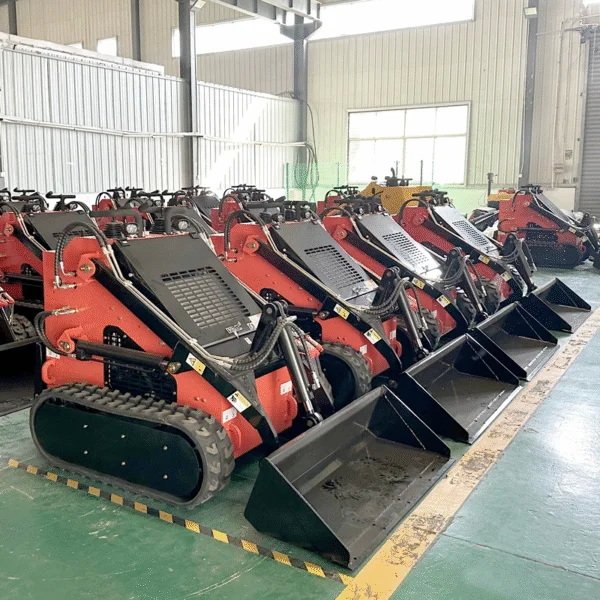
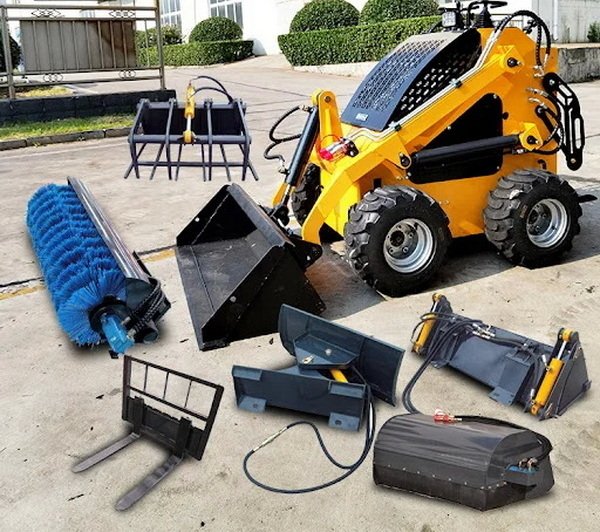
Stand-on skid steer loaders have revolutionized modern construction, landscaping, and utility work by transforming a single compact machine into a multi-functional powerhouse. With the ability to operate over 40 different attachments, these versatile machines eliminate the need for multiple specialized equipment pieces, reducing jobsite congestion, transportation costs, and equipment maintenance expenses. The global compact machine attachments market, valued at $5 billion in 2025, is projected to reach $8.5 billion by 2033, growing at a 7% CAGR—a clear indicator of the industry’s recognition of attachment-based versatility.[1][2][3]
Unlike traditional construction equipment that requires hauling multiple machines to complete diverse tasks, stand-on skid steers equipped with strategic attachments enable contractors, landscapers, arborists, plumbers, electricians, and utility crews to accomplish comprehensive project scopes with remarkable efficiency. This guide explores the most essential attachments, provides expert selection criteria, and delivers actionable insights to maximize your equipment investment and jobsite productivity.[1]
Why Stand-On Skid Steer Attachments Are Game-Changers for Modern Construction
The attachment-based workflow revolution has fundamentally transformed how construction and landscaping professionals approach project planning and execution. Stand-on skid steers with quick-attach systems allow operators to transition between tasks in minutes rather than hours, creating unprecedented operational flexibility.[3][4]
Key Advantages of Attachment-Based Operations
Reduced Equipment Fleet Costs: Instead of purchasing or renting separate machines for excavation, material handling, grading, and demolition, contractors invest in one stand-on skid steer and multiple attachments, reducing capital expenditure by approximately 50%. This cost efficiency is particularly valuable for small to medium-sized contractors operating on tight budgets.[2]
Enhanced Jobsite Maneuverability: Stand-on skid steers feature zero-turn radius steering that enables operation in confined residential areas, urban construction sites, and spaces where traditional equipment cannot access. The compact footprint minimizes site disruption while maintaining powerful performance capabilities.[5][2]
Labor Efficiency Optimization: Construction sites utilizing skid steers with versatile attachments require approximately 40% fewer man-hours for material handling and site preparation compared to conventional equipment approaches. This labor reduction directly translates to improved project margins and faster completion timelines.[2]
Universal Quick-Attach Compatibility: Most modern stand-on skid steers manufactured within the last 10-15 years utilize the Standard Skid Steer Quick Attach (SSQA) or Bobcat-style coupler system, ensuring cross-brand compatibility with thousands of attachment options. This standardization provides contractors with extensive flexibility in attachment selection without vendor lock-in concerns.[4]
Essential Stand-On Skid Steer Attachments Every Contractor Should Consider
Selecting the right attachment portfolio requires understanding your primary applications, hydraulic system capabilities, and project diversity. The following attachments represent the most versatile and profitable investments for multi-discipline contractors.[1]
Bucket Attachments: The Foundation of Material Handling
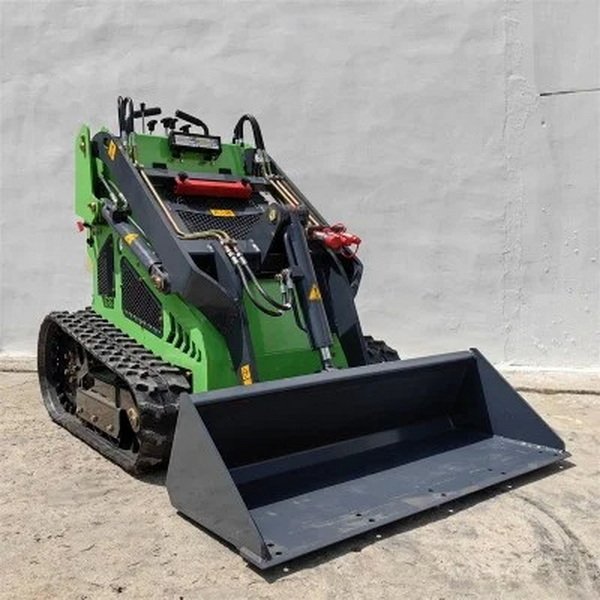
Bucket attachments remain the most popular and universally applicable tools for stand-on skid steer operations. Their versatility spans excavation, material transport, backfilling, and debris removal across virtually every construction and landscaping application.[1]
Types of Bucket Attachments and Applications:
– General Purpose Buckets: Ideal for loading, transporting, and dumping loose materials like soil, gravel, mulch, and sand
– Dirt Buckets: Specifically designed with optimized capacity and contours for topsoil handling and backfilling operations
– Grapple Buckets: Feature integrated hydraulic clamps that secure unstable materials such as brush, logs, demolition debris, and rocks, eliminating spillage during transport[1]
– High-Capacity Buckets: Maximize volume for lightweight materials, reducing the number of trips required for bulk material movement
– Toothed Digging Buckets: Equipped with reinforced cutting edges and teeth for penetrating compacted soil and breaking through root systems
– 4-in-1 Buckets: Combine bucket, dozer, clam, and scraper functions in a single attachment, providing exceptional versatility for contractors managing diverse project types[1]
When selecting bucket attachments, consider your machine’s Rated Operating Capacity (ROC)—the maximum weight your skid steer can safely lift. Machines with ROC under 1,500 lbs should use lighter buckets and smaller capacities, while machines rated 2,500+ lbs can handle larger, heavy-duty bucket configurations.[4]
Stump Grinder Attachments: Professional Arborist-Grade Performance
Stump grinder attachments have become benchmark tools for rugged design, minimal maintenance, and exceptional cutting speed in tree care operations. Before attachment-based solutions emerged, arborists and landscapers were forced to transport both a skid steer and a dedicated stump grinding machine to every job site.[1]
Operational Benefits:
– Elimination of Dedicated Grinding Machines: Stump grinder attachments remove the need for separate stump grinding equipment, reducing fleet size and associated maintenance costs[1]
– Labor-Intensive Task Simplification: Stump removal traditionally required extensive manual labor and time investment; hydraulic-powered attachments complete the same work in a fraction of the time
– Improved Jobsite Logistics: Fewer machines transported means reduced fuel costs, simplified equipment coordination, and faster setup and breakdown times
– Enhanced ROI for Tree Service Companies: The ability to offer comprehensive tree removal services—felling, branch removal, stump grinding, and cleanup—with a single machine platform creates competitive differentiation
Selection Considerations: Ensure your stand-on skid steer provides sufficient hydraulic flow (GPM) and pressure (PSI) to power stump grinder attachments effectively. Most professional-grade stump grinders require high-flow hydraulic systems (22-45+ GPM) for optimal cutting performance in hardwood and large-diameter stumps.[4]
Backhoe Attachments: Compact Excavation Power
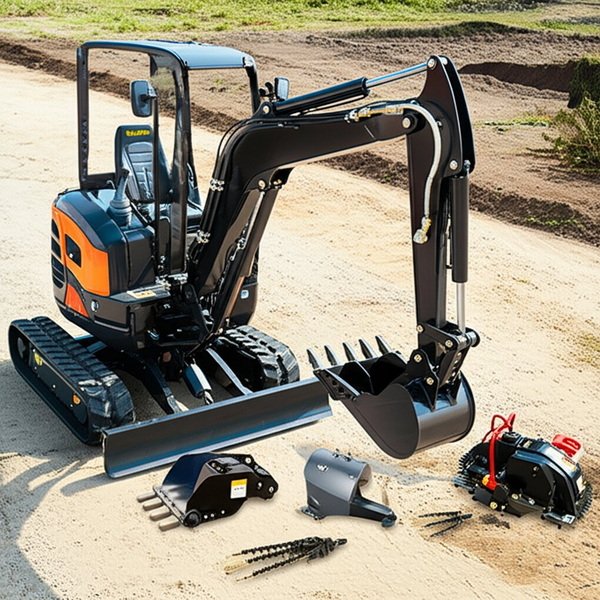
Backhoe attachments transform stand-on skid steers into versatile digging and earthmoving machines capable of trenching, excavation, loading, and precise material placement. This attachment category delivers exceptional value for contractors who occasionally need excavation capabilities but cannot justify purchasing dedicated excavators.[1]
Key Performance Features:
– Variable Bucket Sizes: Backhoe attachments accommodate different bucket widths (typically 8″ to 24″) for applications ranging from narrow utility trenches to wider foundation excavations
– Optimal Digging Depth: Professional-grade backhoe attachments provide digging depths between 6 to 10 feet, sufficient for most residential and light commercial applications[1]
– 180-Degree Swing Radius: Full rotation capability enables operators to excavate and deposit material in opposite directions without repositioning the base machine, significantly improving efficiency[1]
– Elimination of Excavator Rentals: Backhoe attachments provide excavation functionality at a fraction of the cost of renting or owning dedicated excavators, while also eliminating additional transportation and maintenance expenses[1]
Ideal Applications: Foundation digging, utility line installation, drainage system creation, pond excavation, landscaping contouring, and irrigation trench cutting.
Hydraulic Power Fork Attachments: Intelligent Material Handling
Hydraulic power fork attachments represent a significant technological advancement over traditional manual pallet forks, providing operators with instant tine adjustment capability from the machine controls. This innovation eliminates the productivity drain associated with dismounting, manually adjusting fork spacing, and remounting for different load widths.[1]
Operational Advantages:
– On-the-Fly Width Adjustment: Operators adjust fork spacing using intuitive machine controls, maintaining productivity flow without interrupting work sequences[1]
– Versatile Load Handling: Transport diverse materials including palletized sod, brick stacks, balled-and-burlapped trees, ornamental boulders, bagged materials, and equipment
– Challenging Terrain Capability: Stand-on skid steer maneuverability combined with secure fork load control enables material transport across uneven ground, slopes, and obstacles that would challenge forklifts[1]
– Enhanced Safety: Hydraulic adjustment reduces the physical demands and safety risks associated with manual fork repositioning
Professional Applications: Nursery operations, landscape installation projects, masonry work, material yard operations, and loading and unloading delivery trucks and trailers in field conditions.
Power Rake Attachments: Professional Site Preparation
Power rake attachments are heavy-duty, reliable assets essential for landscape professionals performing site preparation, soil conditioning, and final grading operations. These attachments feature rotating drum assemblies with adjustable tines that penetrate, loosen, and level soil surfaces.[1]
Core Capabilities:
– Jobsite Cleaning and Leveling: Remove debris, rocks, and vegetation while simultaneously creating smooth, level surfaces ready for subsequent construction or landscaping phases[1]
– Soil Loosening for Sodding: Break up compacted soil to optimal depth and texture, creating ideal conditions for sod root establishment and irrigation penetration
– Hardpack and Clay Soil Management: Higher horsepower machines generate increased drum torque, enabling effective penetration and breaking of difficult soil conditions[1]
– Efficient Project Progression: Proper site preparation accelerates all subsequent phases—landscaping crews can move immediately to installation tasks without additional manual preparation
Hydraulic Requirements: Most power rake attachments require 10 to 14 GPM hydraulic flow, placing them in the standard-flow category compatible with most stand-on skid steers. However, pairing power rakes with higher horsepower machines significantly improves performance in challenging soil conditions.[4][1]
Advanced Specialty Attachments for Expanded Capabilities
Beyond the five foundational attachments, forward-thinking contractors are expanding their service offerings with specialized tools that command premium pricing and differentiate their businesses in competitive markets.[1]
Trencher Attachments: Precision Utility Installation
Trencher attachments excel at creating consistent-width trenches for electrical conduit, irrigation systems, drainage lines, and communication cables. These attachments rank among the most profitable skid steer tools in 2025 due to increasing infrastructure demands and utility installation projects.[6][1]
Business Impact: Contractors offering trenching services can bid on irrigation installation, low-voltage lighting projects, and utility work that would otherwise require specialized subcontractors, capturing additional revenue streams.
Forestry Mulcher Attachments: Land Clearing Power
Forestry mulchers transform brush, small trees, and vegetation into nutrient-rich mulch material in a single pass. These high-flow attachments requiring 22-45+ GPM provide exceptional productivity for land clearing, right-of-way maintenance, and wildfire fuel reduction projects.[4][1]
Operational Considerations: Forestry mulchers demand significant hydraulic capacity and are best suited for higher-capacity stand-on skid steers with robust hydraulic systems.
Auger Attachments: Professional Hole Drilling
Auger attachments deliver precision hole drilling for fence post installation, sign placement, tree planting, and foundation pier drilling. Available in diameters from 4″ to 36″, augers eliminate manual digging labor while ensuring consistent hole dimensions and depth.[6]
Snow Removal Attachments: Seasonal Revenue Opportunities
Snow removal attachments—including angle blades, snow pushers, and snow blowers—enable contractors to generate revenue during traditionally slow winter months. This seasonal diversification improves annual equipment utilization rates and stabilizes cash flow.[7]
Strategic Attachment Selection: Matching Tools to Your Business Model
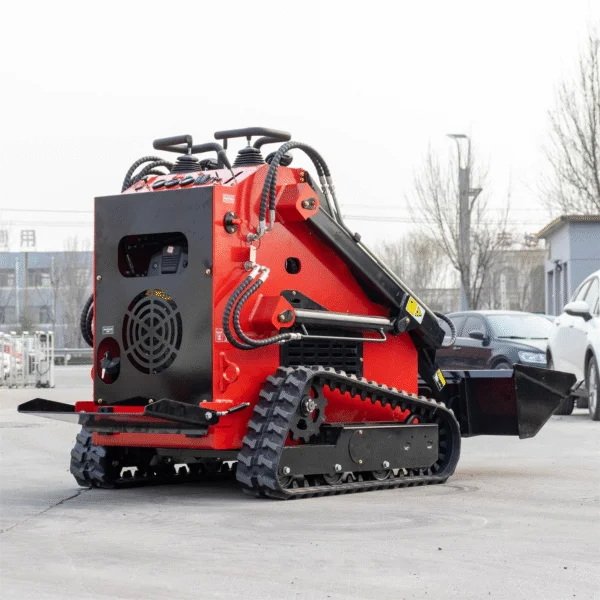
Selecting the optimal attachment portfolio requires analyzing your primary service offerings, target markets, hydraulic system specifications, and growth objectives. A systematic approach ensures maximum return on attachment investments while avoiding compatibility issues.[4]
Understanding Hydraulic System Compatibility
Modern stand-on skid steers feature either standard-flow (15-22 GPM) or high-flow (22-45+ GPM) hydraulic systems. Attempting to operate high-flow attachments on standard-flow machines results in poor performance and potential hydraulic system damage.[4]
Standard-Flow Compatible Attachments: Augers, grapples, mowers, sweepers, standard buckets, power rakes, and standard pallet forks.[4]
High-Flow Required Attachments: Forestry mulchers, cold planers, industrial snow blowers, large stump grinders, and heavy-duty brush cutters.[4]
Action Step: Verify your machine’s hydraulic specifications before purchasing attachments. Consult your equipment dealer or manufacturer documentation to confirm GPM output and PSI pressure ratings.
Evaluating Rated Operating Capacity (ROC)
Your stand-on skid steer’s Rated Operating Capacity determines the maximum safe attachment weight and load combination. Exceeding ROC compromises machine stability and creates dangerous tipping hazards.[4]
ROC Capacity Guidelines:
Best Practice: Maintain safety margin by selecting attachments rated below maximum ROC, accounting for material weight you will be lifting and terrain conditions that may affect stability.[4]
Quick-Attach Coupler Verification
Most modern stand-on skid steers utilize the Standard Skid Steer Quick Attach (SSQA) system, providing broad cross-brand compatibility. However, older machines and certain compact models may use proprietary mounting systems.[4]
SSQA-Compatible Brands: Bobcat, John Deere (newer models), Kubota, New Holland, Case, Gehl, Mustang, Takeuchi, ASV, and Caterpillar (most models).[4]
Specialized Mount Systems: Toro, Vermeer, and Ditch Witch compact models often use Dingo-style plates or Mini Universal mounting configurations.[4]
Verification Process: Check your operator’s manual or measure your existing attachment mounting plate to confirm compatibility before purchasing new attachments.
Real-World Productivity: Multi-Attachment Workflow Examples
The true power of stand-on skid steer versatility emerges when contractors strategically sequence attachments across project phases, maximizing single-machine utilization.[1]
Residential Landscaping Project Workflow
Project Scope: Complete landscape renovation including tree removal, grading, soil preparation, hardscape installation, and final planting.
Attachment Sequence:
1. Stump Grinder: Remove existing tree stumps and large root systems
2. Backhoe Attachment: Excavate areas for retaining walls, create drainage trenches, and dig planting holes
3. Bucket Attachment: Remove excavated soil, spread topsoil, and backfill hardscape installations
4. Power Rake: Level and prepare soil surfaces for sod installation, breaking up compacted areas
5. Hydraulic Power Fork: Transport palletized sod, stone materials, and balled trees from delivery area to installation locations
Result: Single machine completes five distinct task categories that would traditionally require multiple pieces of equipment, reducing mobilization time, equipment rental costs, and jobsite congestion.[1]
Utility Installation Project
Project Scope: Install underground electrical service and communication lines for new commercial development.
Attachment Sequence:
1. Trencher Attachment: Create precise trenches for conduit installation
2. Backhoe Attachment: Excavate equipment pad areas and connection points
3. Bucket Attachment: Backfill trenches after conduit placement, remove spoil material
4. Power Rake: Restore ground surfaces to final grade
Efficiency Gain: Contractors complete comprehensive utility installation with one operator and one machine, eliminating coordination delays and equipment rental logistics.
Industry Expert Insights: Maximizing Attachment ROI
Darrel Anderson, owner and CEO of D2Scapes, a landscape company based in Hot Springs, Arkansas, credits attachment versatility for enabling his crew to manage multiple simultaneous residential projects. “Being able to easily switch attachments is key to helping us accomplish a variety of jobs with just one machine,” Anderson explained. “Since many of our jobs are in residential areas that already have multiple vehicles taking up jobsite space, the ability to bring just one machine to a jobsite is a huge plus”.[1]
Anderson’s forward-looking approach emphasizes continuous attachment portfolio expansion: “In the future, I definitely plan to continue looking into new attachments that can help my crew take on new jobs. I believe that will be the future of how we work”.[1]
This strategic perspective aligns with broader industry trends showing utilization rates exceeding 85% when contractors implement multi-shift deployment strategies across different construction phases.[2]
Market Trends and Future Outlook
The compact construction equipment and attachment markets are experiencing robust growth driven by urbanization, infrastructure investment, and technological advancement.[8][3]
Key Market Indicators
– Global Compact Machine Attachments Market: Projected to grow from $5 billion (2025) to $8.5 billion (2033) at 7% CAGR[3]
– Construction Equipment Attachments Market: Valued at $6.6 billion (2023), estimated to reach $8.2 billion by 2030[9]
– Compact Construction Equipment Market: Expected to expand from $39.62 billion (2025) to $56.21 billion (2032) at 5.1% CAGR[10]
Technology Integration Trends
Smart Attachments with Integrated Sensors: Leading manufacturers including Caterpillar launched smart attachment lines featuring integrated sensors that provide real-time performance data, predictive maintenance alerts, and operational optimization recommendations.[3]
Hydraulic Quick Coupler Dominance: Hydraulic quick couplers have become indispensable for maximizing efficiency, with global unit sales projected to exceed 5 million units by 2033. These systems enable seamless attachment transitions, significantly boosting productivity and justifying higher initial investment costs.[3]
Sustainable Material Innovation: Manufacturers like Kubota have introduced attachment lines constructed with recycled materials and eco-friendly designs, responding to increasing environmental consciousness in construction and landscaping industries.[3]
Automated Control Systems: Strategic partnerships between equipment manufacturers and technology companies are advancing automated attachment control systems that optimize performance parameters based on material conditions and operational requirements.[3]
Maintenance Best Practices for Extended Attachment Lifespan
Proper attachment maintenance directly impacts productivity, safety, and total cost of ownership. Implementing systematic maintenance protocols extends attachment lifespan and prevents costly downtime.[5]
Daily Pre-Operation Inspection
– Visual Damage Assessment: Check for cracks, excessive wear, damaged hydraulic hoses, and loose fasteners
– Hydraulic Connection Verification: Inspect quick-attach couplers for proper engagement and hydraulic line integrity
– Cutting Edge Evaluation: Assess bucket edges, grinder teeth, and other wear surfaces for replacement needs
– Lubrication Points: Apply grease to pivot points, bearings, and wear surfaces per manufacturer specifications
Seasonal Deep Maintenance
– Hydraulic System Flushing: Remove contaminated hydraulic fluid and replace with manufacturer-recommended specifications
– Wear Component Replacement: Proactively replace cutting edges, teeth, and wear plates before complete failure damages base structures
– Storage Preparation: Clean attachments thoroughly, apply rust preventative coatings, and store in covered areas to prevent corrosion
Making the Right Attachment Investment
Selecting optimal attachments requires expertise in machine specifications, application requirements, and compatibility considerations. Partnering with knowledgeable equipment dealers ensures informed investment decisions.[1]
Key Questions for Equipment Dealers:
– What hydraulic flow (GPM) and pressure (PSI) does my specific stand-on skid steer model provide?
– Which attachments will deliver the best ROI based on my primary service offerings?
– Are there used or certified refurbished attachments available to reduce initial investment?
– What warranty coverage and service support comes with attachment purchases?
– Can you provide customer references who use similar attachment configurations?
Rental Options for Testing: Many equipment dealers offer attachment rental programs that enable contractors to test tools before purchasing. This risk-mitigation approach allows hands-on performance evaluation in actual working conditions before committing to ownership.[1]
Transform Your Operations with Certeg Stand-On Skid Steers
Stand-on skid steer versatility powered by strategic attachment selection represents a proven pathway to increased productivity, reduced equipment costs, and expanded service capabilities. The construction and landscaping industries are moving decisively toward attachment-based workflows that maximize single-machine utilization while minimizing jobsite complexity.[2][3]
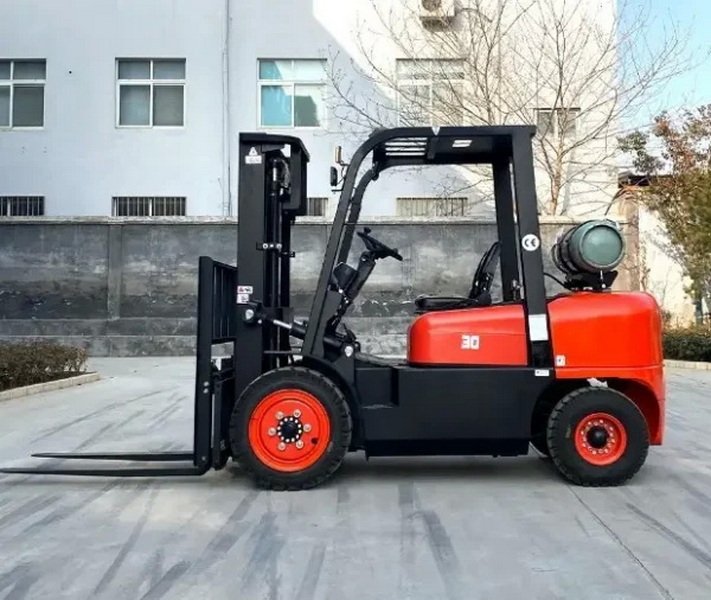
At Certeg, we manufacture premium excavators, skid steer loaders, road rollers, forklifts, tractors, and tracked carriers engineered to meet the demanding performance requirements of construction professionals worldwide. Our stand-on skid steer platforms deliver the hydraulic power, structural durability, and attachment compatibility needed to maximize your operational flexibility and competitive advantage.
Ready to revolutionize your jobsite productivity? Contact your authorized Certeg dealer today to schedule a comprehensive equipment consultation. Our technical specialists will analyze your specific application requirements, evaluate your current workflow challenges, and recommend the optimal stand-on skid steer configuration and attachment portfolio for your business.
Do not let equipment limitations constrain your growth potential. Discover how Certeg’s advanced compact construction machinery combined with strategic attachment investments can expand your service offerings, reduce operational costs, and accelerate project completion timelines. Whether you specialize in landscaping, utility installation, general construction, or property maintenance, Certeg provides the equipment foundation for sustainable business expansion.
Contact Certeg today to explore financing options, request detailed specifications, and arrange hands-on equipment demonstrations at your convenience. Transform your single machine into a complete jobsite solution that delivers measurable ROI across every project phase.
Frequently Asked Questions
1. What is the most versatile attachment for stand-on skid steers?
The 4-in-1 bucket attachment offers the greatest versatility by combining bucket, dozer, clam, and scraper functions in a single tool. This multi-function design enables loading, grading, material clamping, and scraping operations without changing attachments, making it ideal for contractors managing diverse project types and reducing attachment inventory requirements.[1]
2. How do I know if an attachment is compatible with my stand-on skid steer?
Attachment compatibility depends on four critical factors: coupler style (most modern machines use SSQA), hydraulic flow rate (GPM), hydraulic pressure (PSI), and Rated Operating Capacity (ROC). Check your operator’s manual for these specifications, and verify that potential attachments fall within your machine’s capabilities. Standard-flow machines (15-22 GPM) cannot properly operate high-flow attachments (22-45+ GPM), which may cause hydraulic system damage.[4]
3. What are the most profitable skid steer attachments in 2025?
According to industry analysis, the most profitable attachments include augers, trenchers, forestry mulchers, pallet forks, and stump grinders. These tools enable contractors to offer specialized services that command premium pricing, including utility installation, land clearing, tree service, and material handling operations that would otherwise require dedicated specialized equipment or subcontractors.[1]
4. Can stand-on skid steers really replace multiple pieces of equipment?
Yes, stand-on skid steers equipped with diverse attachments can perform over 40 different functions that would traditionally require separate machines. Construction sites utilizing attachment-based workflows report approximately 50% reduction in equipment costs and 40% fewer man-hours for material handling and site preparation. However, extremely large-scale projects or highly specialized applications may still benefit from dedicated equipment.[2]
5. How often should I perform maintenance on skid steer attachments?
Implement daily pre-operation inspections checking for visible damage, hydraulic connection integrity, and proper lubrication. Perform comprehensive maintenance every 50-100 operating hours including hydraulic system checks, wear component assessment, and fastener tightening. Seasonal deep maintenance should include thorough cleaning, hydraulic fluid replacement, proactive wear part replacement, and proper storage preparation. Following manufacturer-specific maintenance schedules maximizes attachment lifespan and prevents costly failures during critical project phases.[5]
Citations:
[1] https://skidsteersdirect.com/blogs/news/top-10-best-skid-steer-attachments-for-2025
[2] https://www.succsun.com/blog/why-a-skid-steer-loader-is-the-most-versatile-equipment-for-construction-sites
[3] https://www.datainsightsmarket.com/reports/compact-machine-attachments-1869231
[4] https://skidpro.com/attachment-compatibility-what-works-with-my-skid-steer-model/
[5] https://wwcm.com.au/skid-steer-loader-benefits/
[6] https://sibomindustry.com/blogs/news/11-types-of-skid-steer-attachments-and-their-uses
[7] https://www.bobcat.com/na/en/attachments/equipment/skid-steer-loaders
[8] https://www.gminsights.com/industry-analysis/construction-equipment-attachments-market
[9] https://finance.yahoo.com/news/construction-machinery-attachment-industry-report-080300864.html
[10] https://www.marketsandmarkets.com/Market-Reports/compact-construction-equipment-market-89115103.html
Hot Tags:Stand-On Skid Steer, Skid Steer Attachments, Compact Construction Equipment, Multi-Tool Skid Steer, Stand-On Loader Attachments, Construction Jobsite Equipment, Skid Steer Versatility, Compact Loader Tools, Landscaping Skid Steer Attachments, Material Handling Attachments