
Mustang Mini Excavators 2018 Spec Guide – An Expert Operator’s Take
Content Menu
● Why Mini Excavators Like Mustang Matter on Modern Jobsites
● Overview of the 2018 Mustang Compact Excavator Lineup
>> Zero Tail Swing “Z” Series – Working Tight Against Structures
>> Minimal Tail Swing “M” Series – 80M and 1000M
● Key Technical Features That Matter in the Field
>> Tail Swing and Undercarriage Design
>> Hydraulic System and Attachment Capability
>> Blade Options and Site Control
● Matching Mustang Models to Real‑World Applications
>> Typical Use Cases by Model Type
● Add Sections for 2026 Buyers
>> Mini Excavator Demand and Export Trends
>> How Contractors Actually Use Features Like ECO Mode
>> Rental Fleet Insights – What Survives Multiple Operators
● Clear Calls to Action for Serious Buyers
● FAQs About Mustang‑Style Mini Excavators
>> 1. What is the main advantage of a zero tail swing mini excavator?
>> 2. How do I choose between the 80M and a mid‑size Z model?
>> 3. Why does ECO Mode matter on a construction excavator?
>> 4. Are hydraulic quick couplers really worth it?
>> 5. How does a variable undercarriage help in real jobs?
If you spend your days in the dirt instead of behind a desk, you know that choosing the right mini excavator is the difference between profitable days and expensive downtime. The 2018 Mustang excavator lineup—six zero tail swing “Z” models and two minimal tail swing “M” models—was designed for tight urban jobsites, rental fleets, and utility contractors who need reliable, maneuverable machines with honest performance, not just brochure promises. As an equipment specialist working with construction companies and OEMs worldwide, I’ve taken a close, critical look at this Mustang range so you can quickly understand what each model does best and how to match it to your site conditions and attachment needs. [gushwork]
Why Mini Excavators Like Mustang Matter on Modern Jobsites
Mini excavators have become the workhorse of small and mid‑sized projects—from residential landscaping and utility trenching to tight urban infrastructure work. Contractors want machines that can: [m.yicai]
– Work safely within inches of walls, fences, and traffic.
– Fit through gates, doorways, and narrow access paths.
– Run multiple hydraulic attachments without bogging down.
– Travel easily on smaller trailers to cut transport costs.
Mustang’s compact excavator line started in 1999 and has since evolved into one of the broader compact offerings in the market, combining legacy engineering experience with modern features like true zero tail swing, variable undercarriages, and hydraulic quick couplers. That mix of compact design and jobsite versatility is why these machines still show up in rental fleets and specialized contractor yards years after their launch. [almcorp]
Overview of the 2018 Mustang Compact Excavator Lineup
From a buyer’s point of view, the first decision is configuration: zero tail swing versus minimal tail swing. [compactequip]
Zero Tail Swing “Z” Series – Working Tight Against Structures
Mustang offers six zero tail swing excavator models in this generation: [compactequip]
– 170Z NXT2
– 250Z
– 350Z NXT2
– 450Z NXT2
– 550Z
– 800Z NXT2
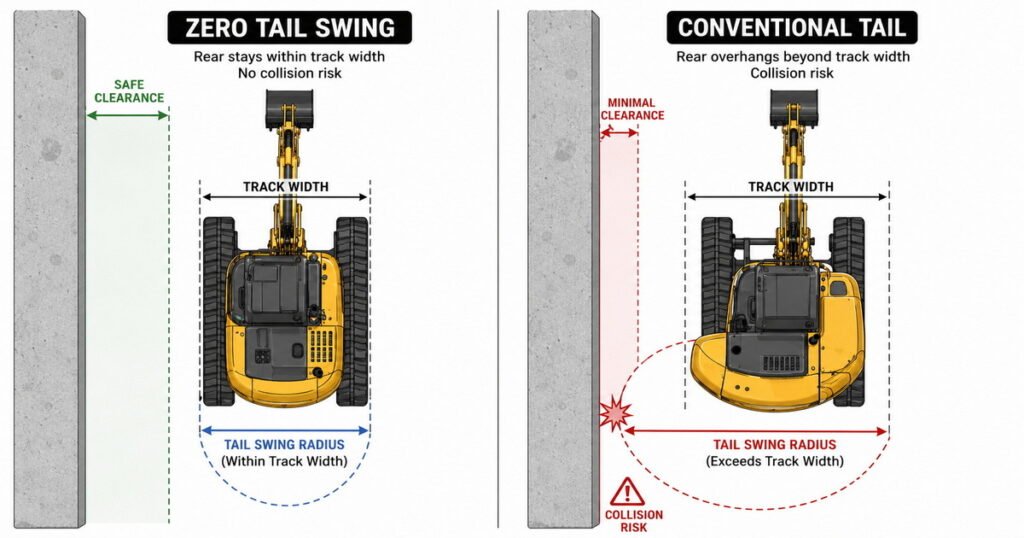
These models are built around reliable Yanmar engines designed to balance fuel efficiency with the torque needed for trenching, grading, and lifting in confined spaces. With true zero tail swing, there is no cab overhang beyond the tracks in any direction, allowing operators to swing the upper structure directly beside walls or obstacles without the constant fear of striking something. [compactequip]
Minimal Tail Swing “M” Series – 80M and 1000M
The two “M” series models are:
– 80M – ultra‑compact, rental‑friendly excavator.
– 1000M – 10‑ton class excavator for utility contractors and heavy construction. [compactequip]
The 80M is sized for sidewalks, doorways, and backyard gates, with an operating weight around 2,348 lb that makes it easy to transport and ideal for homeowner rental and light contractor work. The 1000M sits at the opposite end of the lineup, with a digging depth of about 14 ft 10 in and an operating capacity above 20,000 lb, making it suitable for deeper utility work, heavier lifting, and more demanding civil projects. [compactequip]
Key Technical Features That Matter in the Field
Rather than listing every spec, let’s focus on the features that impact productivity and cost of ownership. [almcorp]
Tail Swing and Undercarriage Design
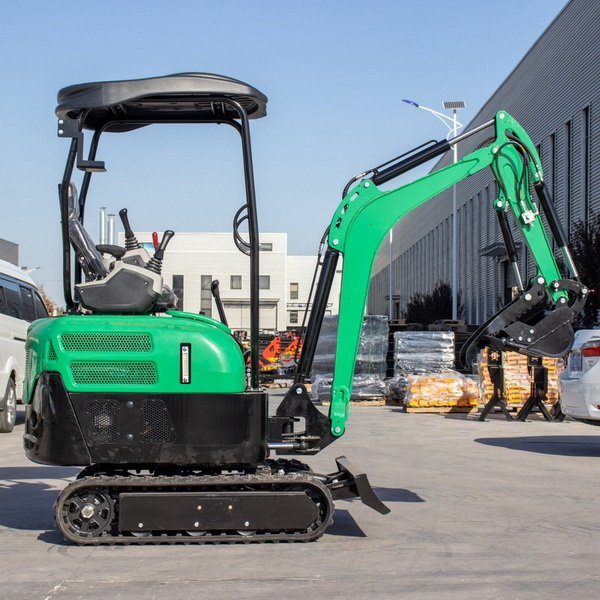
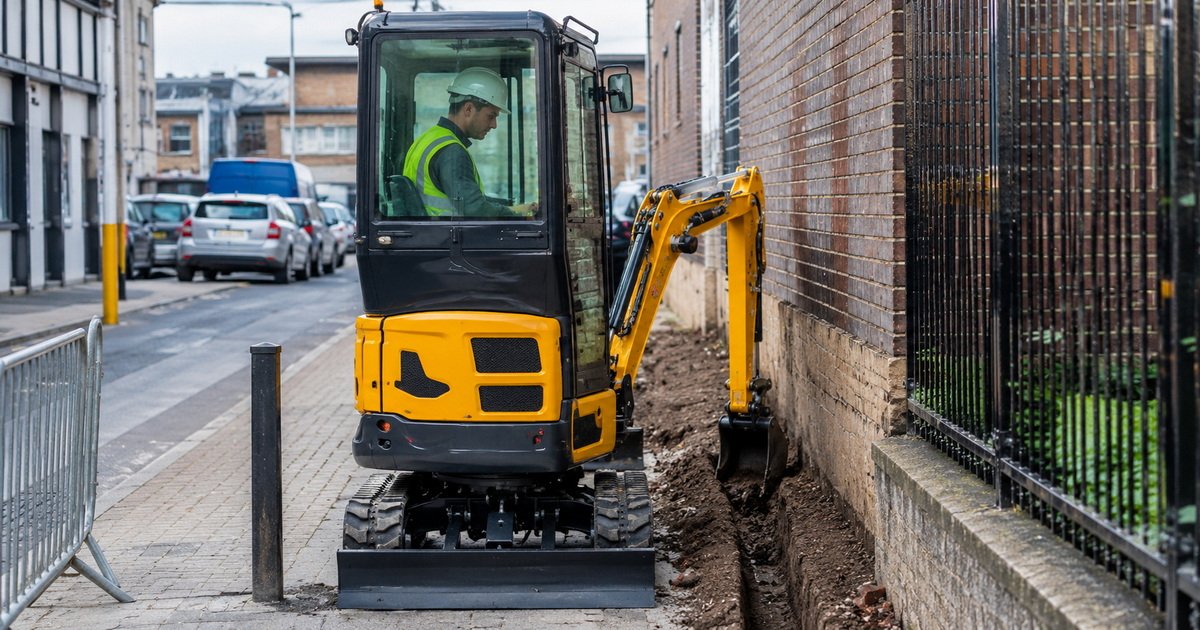
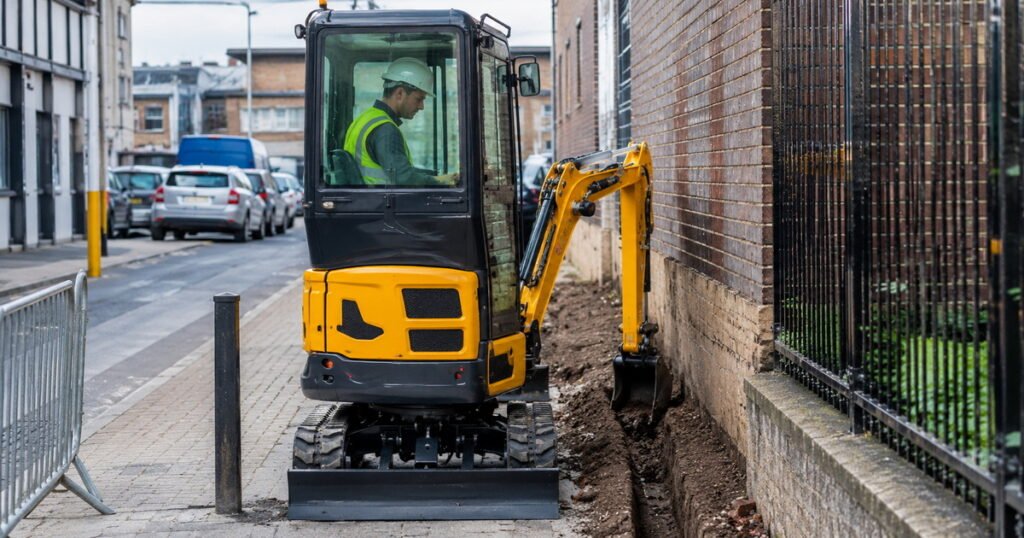
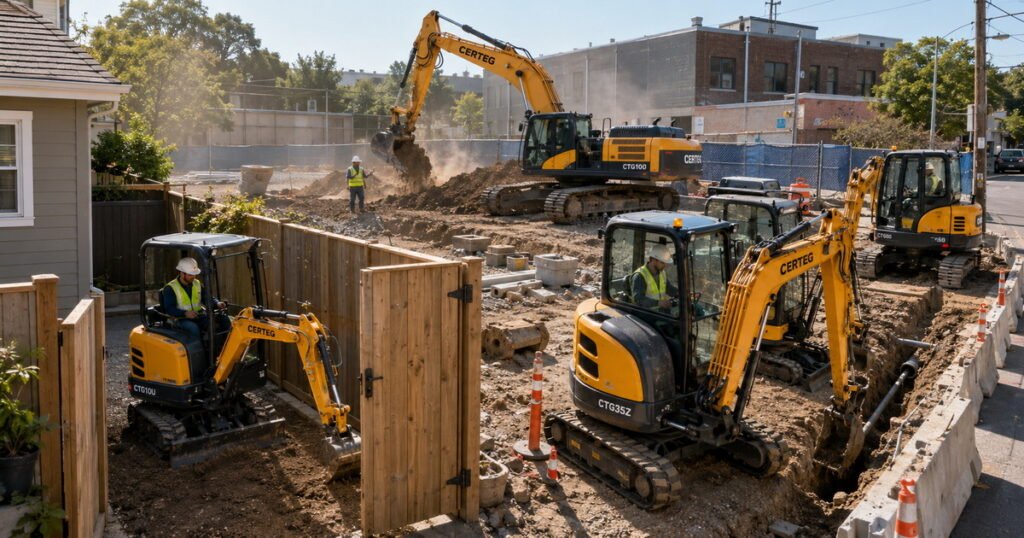
– Zero tail swing on the Z models lets operators work in alleys, along walls, and close to traffic barriers with less risk of collision.
– Minimal tail swing on the M models offers more stability and capacity while still reducing overhang compared to conventional excavators. [compactequip]
– The 170Z NXT2 and 1000M include a variable undercarriage that extends from approximately 3 ft 1 in to 4 ft 2 in, improving access to tight spots while allowing the operator to widen the stance for better stability on uneven ground. [compactequip]
From an operator’s perspective, that adjustable width is particularly useful on older urban sites where access paths are narrow but ground conditions are unpredictable. [m.yicai]
Hydraulic System and Attachment Capability
Mustang’s hydraulic systems combine two variable pumps and two gear pumps, with flows that can be blended and redirected based on demand. In practice, that means an operator can: [compactequip]
– Move the boom, slew, and track simultaneously without the machine feeling starved for hydraulic power.
– Run common attachments like hydraulic thumbs, augers, and tilt buckets more smoothly under multi‑function operation.
On selected models (1000M, 350Z NXT2, 450Z NXT2, 550Z, 800Z NXT2), ECO Mode allows the operator to cut engine rpm by around 10 percent when full performance is not needed, helping reduce fuel consumption during light grading or when traveling. That kind of fuel optimization is increasingly important as contractors track operating costs per hour and per cubic yard moved. [gushwork]
Blade Options and Site Control
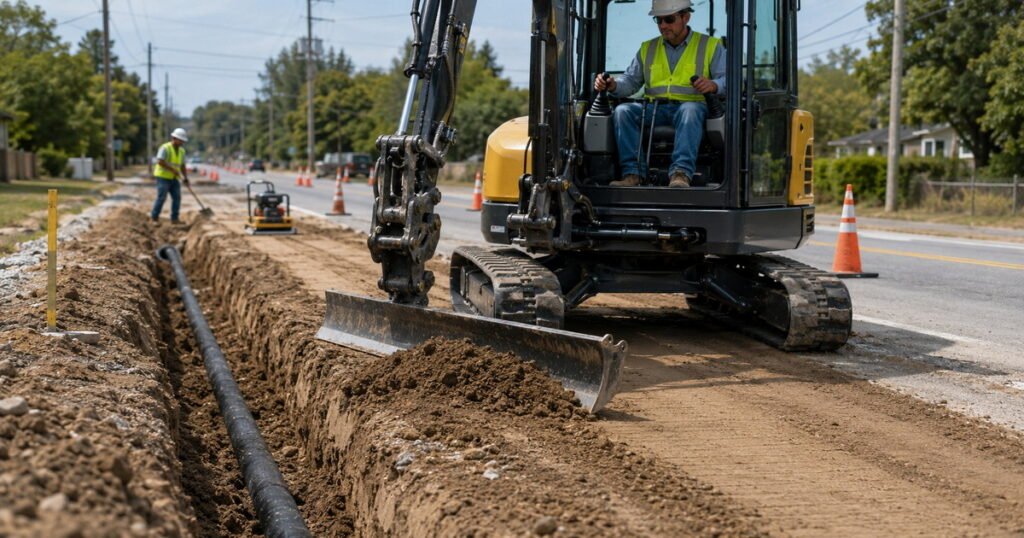
The 350Z NXT2, 450Z NXT2, and 550Z can be equipped from the factory with a hydraulic angle blade featuring float and a bolt‑on cutting edge. [compactequip]
– The blade can angle up to roughly 25 degrees using a rocker switch, allowing operators to windrow material rather than simply pushing it straight ahead.
– In float mode, the blade follows ground contours, making backfilling and final grading more efficient and reducing rework.
For small crews, a well‑used angle blade often replaces an extra compact track loader on site, which directly improves crew productivity and equipment ROI. [gushwork]
Matching Mustang Models to Real‑World Applications
Mustang’s own product team highlights versatility as a key buying factor, emphasizing dig depth, lifting capacity (front and side), and breakout force as the main performance indicators. From my work with contractors and rental companies, here’s how these models typically slot into real jobs. [compactequip]
Typical Use Cases by Model Type
| Model group | Primary role on site | Typical users | Notable strengths |
|---|---|---|---|
| 80M | Light excavation in ultra‑tight spaces | Rental yards, landscapers, homeowners | Very compact, easy to transport, rental‑friendly |
| 170Z NXT2 | Entry‑level zero tail swing mini excavator | Small contractors, utilities | Narrow access plus adjustable undercarriage |
| 250Z / 350Z NXT2 | Core trenching and landscaping machines | General contractors, site work crews | Balanced power and size, strong attachment support |
| 450Z NXT2 / 550Z | Heavier trenching and lifting tasks | Utility and road crews | More stability and lifting performance |
| 800Z NXT2 | High‑productivity compact excavator | Civil contractors, pipeline projects | Strong breakout force, robust hydraulics |
| 1000M | 10‑ton class heavy compact excavator | Utility contractors, heavy construction | Deep digging, >20,000 lb operating capacity |
In practical terms, most general contractors will build their fleet around the mid‑range models (250Z, 350Z NXT2, 450Z NXT2), then add an 80M or 170Z for tight work and an 800Z NXT2 or 1000M for deeper utility and heavier lifting. [gushwork]
What I Tell Contractors
When I consult for buyers evaluating mini excavators, I ask them to go beyond headline horsepower and bucket capacity. Mustang’s own product manager, Christophe Ebembe, underscores the need to confirm dig depth, lifting capacity over the front and side, and breakout force for the actual jobsite applications you run today—not theoretical jobs “you might win one day.” [almcorp]
Here is a practical, step‑by‑step approach I recommend:
1. List your top five applications. For example: service trenches, residential foundations, landscaping, utility repairs, or rental to mixed‑experience operators. [gushwork]
2. Define your access constraints. Note minimum gate width, overhead obstructions, and trailer capacity; this will quickly narrow the choice between 80M/170Z and larger Z or M models. [almcorp]
3. Quantify your lifting and digging needs. Use past jobs to estimate maximum trench depth, typical lift weights (e.g., pipe sections, manholes, pallets), and side‑lift requirements.
4. Map attachments to hydraulics. Make a list of the attachments you run now and those you plan to add. Cross‑check flow and pressure requirements with Mustang’s hydraulic specs and quick‑coupler options. [compactequip]
5. Evaluate total operating cost. Consider fuel usage (including ECO Mode savings), maintenance access, undercarriage wear, and transport costs rather than purchase price alone. [almcorp]
When those five steps are documented, the correct Mustang model—or combination of models—almost always becomes obvious. [gushwork]
Add Sections for 2026 Buyers
Mini Excavator Demand and Export Trends
Mini and micro excavators have seen strong global demand growth, particularly in Europe and North America, where their compact size and versatility fit urban and residential work. Industry reports from China’s excavator association, for instance, showed micro and small excavators gaining export share as overseas buyers searched for “small excavator,” “1 ton,” and “low price” terms on international B2B platforms, pushing manufacturers to refine models for self‑use and rental customers. [m.yicai]
For a buyer comparing Mustang to newer entrants, this context matters: the market has become more competitive, but established brands still differentiate through after‑sales support, parts availability, and long‑term durability under rental abuse. That is where working with experienced OEM manufacturers—like Certeg, which focuses on excavators and construction machinery for global markets—can help align machine configuration to specific duty cycles and export requirements. [gs.amazon]
How Contractors Actually Use Features Like ECO Mode
On paper, features such as ECO Mode look minor, but in field interviews with fleet managers, small changes in fuel burn and idle behavior add up over a season. A common pattern is: [almcorp]
– Operators engage ECO Mode during travel and light grading, then switch to full power for breakout work.
– Fleet managers set simple rules—such as “ECO on unless digging or lifting”—to cut fuel costs without slowing production.
With models like the 1000M, 350Z NXT2, 450Z NXT2, 550Z, and 800Z NXT2, that 10 percent rpm reduction translates to noticeably lower fuel and noise during long, low‑load tasks. When multiplied across a fleet, it becomes part of a broader “lean jobsite” strategy alongside right‑sizing buckets, optimizing haul cycles, and aligning trailer loads to local regulations. [gushwork]
Rental Fleet Insights – What Survives Multiple Operators
Mustang specifically highlights the 80M as a rental‑friendly machine, and the overall lineup reflects the realities of mixed‑experience operators. [compactequip]
From a rental manager’s point of view, the features that matter most are:
– Simple, intuitive controls that reduce training time.
– Robust undercarriage and boom structures that tolerate mis‑use.
– Hydraulic quick couplers that let staff and customers swap buckets and breakers quickly without tools. [compactequip]
Zero tail swing designs are also safer in rental environments, where less experienced operators might not fully judge the rear swing radius relative to obstacles. This is precisely why many rental fleets pair zero tail swing minis with clear, visual safety instructions and basic attachments like buckets and thumbs to cover 80–90 percent of customer needs. [gushwork]
Clear Calls to Action for Serious Buyers
Once a reader understands which Mustang‑type excavator fits their work, the next step should be obvious. [almcorp]
Effective CTAs on a product or spec‑guide page include:
– “Request a tailored Mustang‑equivalent excavator quote for your jobsite conditions.”
– “Download the full mini excavator spec sheet with dig depth and lifting charts.”
– “Talk to an expert about matching attachments and hydraulic options to your projects.”
For Certeg as an OEM manufacturer, a strong, targeted CTA could be: “Share your project requirements, and our engineering team will recommend a customized excavator configuration—powertrain, undercarriage, and attachments—optimized for your local market.” This closes the loop between online research and real sales conversations, while reinforcing the brand’s role as a technical partner, not just a machine supplier. [innovationvisual]
FAQs About Mustang‑Style Mini Excavators
1. What is the main advantage of a zero tail swing mini excavator?
A zero tail swing excavator keeps the rear of the cab fully within the track width, allowing operators to work right beside walls, fences, and other obstacles with less risk of collision. This is critical on tight urban jobsites and near live traffic lanes. [compactequip]
2. How do I choose between the 80M and a mid‑size Z model?
Choose the 80M if your priority is ultra‑compact access through gates, narrow pathways, or indoor spaces, and your work is shallow and light to moderate. A mid‑size Z model such as the 250Z or 350Z NXT2 is better if you need greater dig depth, lifting capacity, and more flexible attachment use on general construction sites. [compactequip]
3. Why does ECO Mode matter on a construction excavator?
ECO Mode reduces engine rpm by around 10 percent on selected models, which lowers fuel consumption and noise when full power is not necessary. Over many hours of light grading, traveling, or idling, this becomes a meaningful cost saving for both contractors and rental fleets. [almcorp]
4. Are hydraulic quick couplers really worth it?
Yes—hydraulic quick couplers on models like the 1000M, 250Z, 350Z NXT2, 450Z NXT2, 550Z, and 800Z NXT2 let operators switch attachments from the cab without tools, often in under a minute. That reduces downtime, encourages proper attachment use, and lets smaller crews complete more task types per day. [compactequip]
5. How does a variable undercarriage help in real jobs?
A variable undercarriage, as found on the 170Z NXT2 and 1000M, allows the machine to narrow its stance for tight access but widen it for better stability during digging and lifting. This flexibility is especially valuable on older properties, congested sites, and uneven terrain. [compactequip]
References
1. Compact Equipment – “Mustang Excavators Summarized — 2018 Spec Guide.” [Link] [compactequip]
2. Gushwork – “SEO Strategy for Heavy Equipment Sales.” [Link] [gushwork]
3. Wellows – “E‑E‑A‑T Checklist for SEO: Strengthen Content with LLM.” [Link] [wellows]
4. Innovation Visual – “Google’s EEAT Guidelines – How To Remain Compliant.” [Link] [innovationvisual]
5. ALM – “SEO for Manufacturing Companies: 18 Ways to Increase Results.” [Link] [almcorp]
6. Yicai – “How Hot Is the Export of Small Excavators?” (Chinese industry report). [Link] [m.yicai]
7. Amazon Global Selling China – Excavator seller story. [Link] [gs.amazon]
Hot Tags: Excavator, Manufacturers, Customized, Custom, Suppliers, Buy, Cheap, Quality, Advanced, Durable, in Stock, Made in China, Price, Quotation