
JCB Skid Steer Loaders and Teleskid Explained: Safety, Visibility and Real‑World Performance for Modern Job Sitescompactequip
Content Menu
● Understanding Modern JCB Skid Steer Loaders
● JCB Skid Steer Lineup: Platforms, Lift Styles and Power
>> Large and Small Platforms at a Glance
● Side‑Entry Cab and Powerboom: Safety You Actually Feel
>> Why Side‑Entry Matters on Busy Sites
>> Single‑Arm Powerboom and Visibility
● The JCB Teleskid: Telescopic Boom Rewrites What a Skid Steer Can Do
>> Key Specs and Unique Reach Capabilities
>> Combining Vertical and Radial Lift in One Machine
● Hydraulics, Attachments and Control Systems
>> Standard and High‑Flow Hydraulics
>> myCHOICE and Operator‑Friendly Controls
● Real‑World Use Cases: Where JCB Skid Steers Shine
>> Urban Construction and Demolition
>> Landscaping, Infrastructure and Utility Work
● Buying Considerations: Matching Machine to Job Profile
>> Operating Capacity and Transport
● Maintenance, Total Cost of Ownership and Telematics
>> Simplified Emissions and Service Intervals
>> Telematics and Fleet Management
● Operator Comfort: Beyond the Spec Sheet
>> Cab Design and Climate Control
>> Visibility Tools and Cameras
● How Certeg Aligns with JCB‑Style Performance
● Recommended Comparison Table
● Frequently Asked Questions (FAQs)
>> Q1: What is the main safety advantage of JCB‑style side‑entry skid steers?
>> Q2: How does the JCB Teleskid differ from a standard skid steer?
>> Q3: When do I need high‑flow hydraulics on a skid steer?
>> Q4: What operating capacity should I target for demolition work?
>> Q5: How can telematics improve skid steer fleet management?
Understanding Modern JCB Skid Steer Loaders
As someone who has spent years working with compact equipment on mixed job sites—from tight urban infill projects to rural utility work—JCB skid steer loaders stand out for one core reason: they rethink safety and visibility instead of just chasing more horsepower. [compactequip]
you’ll find a practical breakdown of JCB skid steer and compact track loaders, how their side‑entry, single‑arm Powerboom and Teleskid telescopic boom translate to real‑world productivity, and what to look for when specifying machines for different applications. [goironhide]
JCB Skid Steer Lineup: Platforms, Lift Styles and Power
Large and Small Platforms at a Glance
JCB’s current skid steer range is typically split into large platform and small platform machines, with both vertical‑lift and radial‑lift options. [equipmentworld]
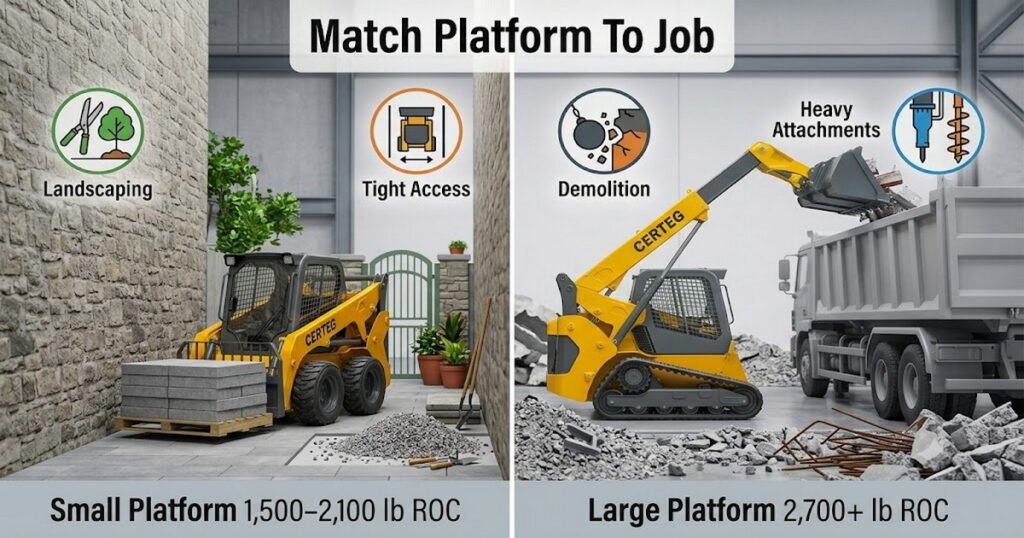
Large platform models such as the 250, 270, 300 and 330 are designed for heavier-duty work, higher rated operating capacities and more demanding hydraulic attachments, while small platform units like the 155, 175, 210 and 215 target tighter spaces and lighter material handling. [fairchildequipment]
Engines and Emissions
Most JCB skid steers and compact track loaders use 74 hp class Tier 4 Final diesel engines, either the JCB EcoMAX or JCB Diesel engines by partner suppliers, and they are notable for not requiring exhaust after‑treatment such as DPF or DEF on many models. [youtube]
For owners, this means fewer consumables, simpler maintenance and reduced downtime—an important consideration if your fleet runs across multiple sites with variable fuel and service quality. [pdf.directindustry]
Side‑Entry Cab and Powerboom: Safety You Actually Feel
Why Side‑Entry Matters on Busy Sites
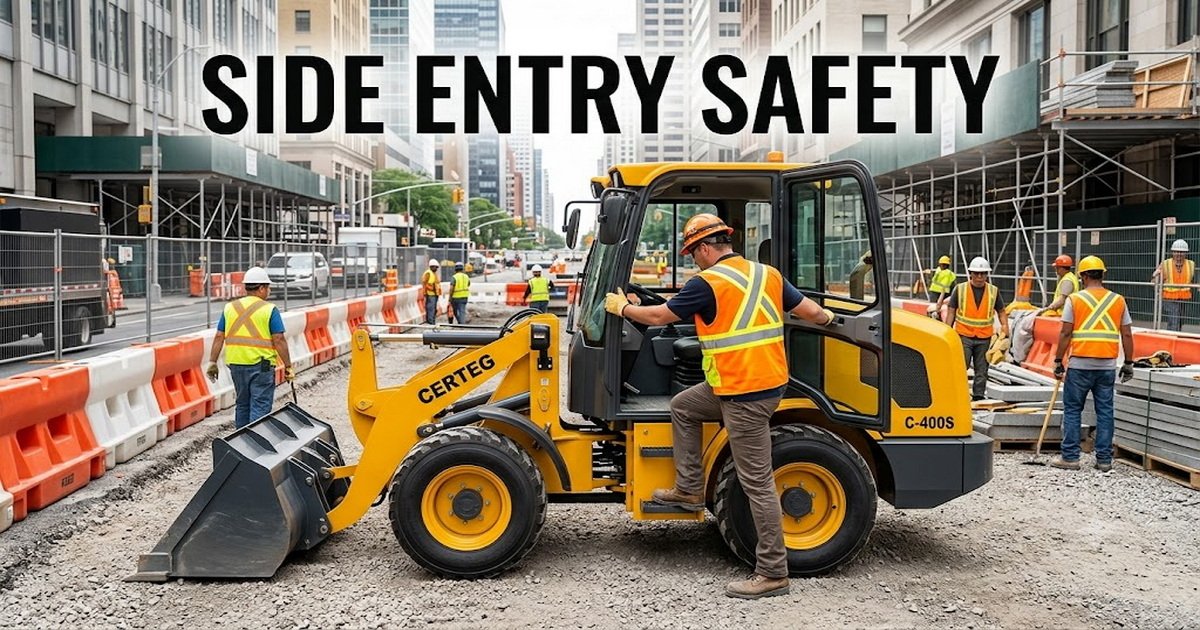
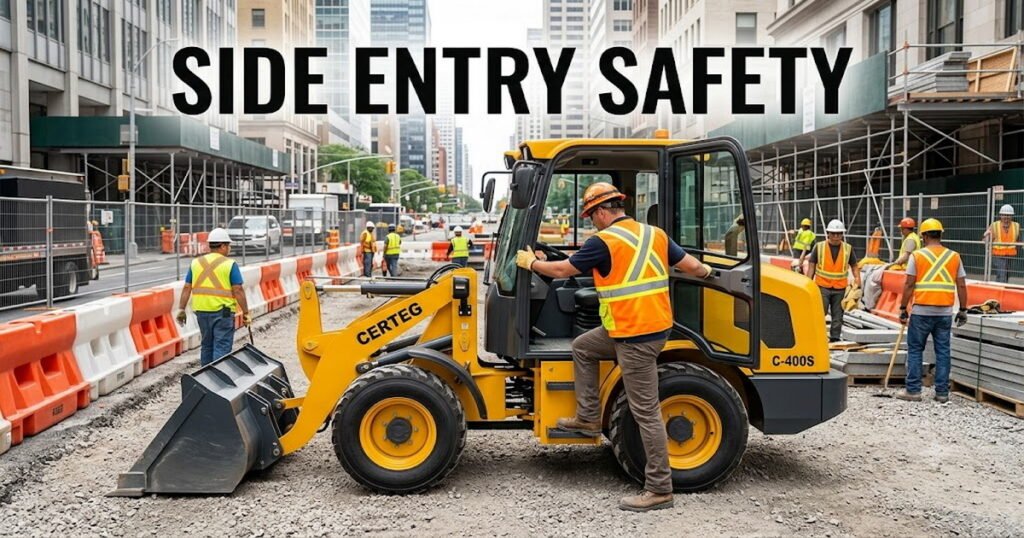
Traditional skid steer loaders force operators to climb over the attachment and under the boom to enter or exit the cab, which can be risky when the attachment is loaded or the boom is raised. [equipmentworld]
JCB’s side‑door entry removes that risk: operators walk in from the side, with the boom and attachment safely in front of the machine. This design has been recognized by safety organizations, and it aligns with modern site safety practices that emphasize controlled access and visibility. [compactequip]
Single‑Arm Powerboom and Visibility
Instead of twin lift arms, JCB uses a single‑arm Powerboom mounted to one side of the machine. This, combined with side‑entry, gives a significantly wider field of view—often cited around 60% better visibility compared to conventional designs. [equipmentworld]
From an operator’s perspective, this isn’t just a marketing claim. Better visibility means:
– Easier spotting of ground workers and obstacles
– More precise loading into trucks and bins
– Less reliance on cameras alone in tight spaces
On complex jobs with mixed trades present, visibility translates directly into fewer near‑miss incidents and smoother coordination. [youtube]
The JCB Teleskid: Telescopic Boom Rewrites What a Skid Steer Can Do
Key Specs and Unique Reach Capabilities
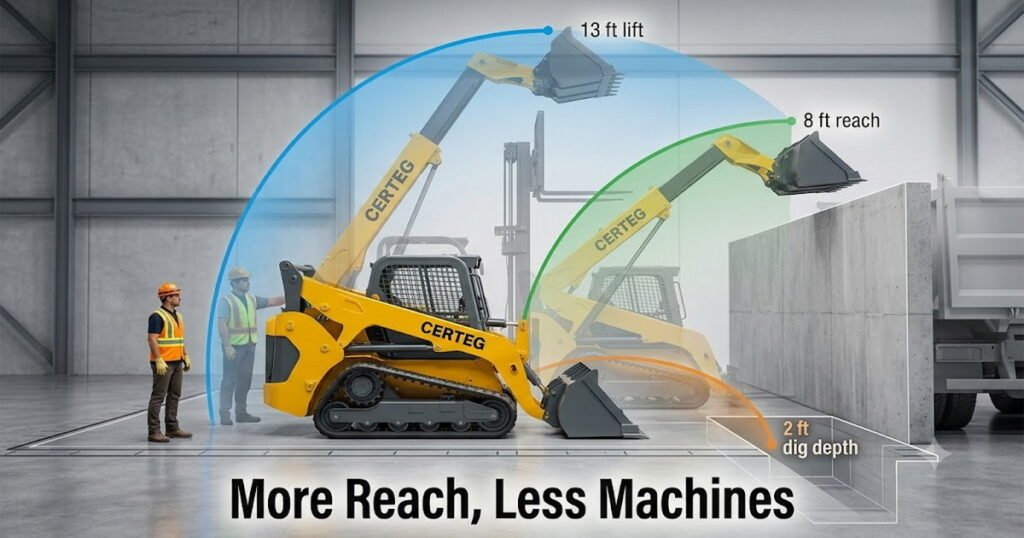
The JCB Teleskid 3TS series combines a skid steer or compact track loader chassis with a telescopic boom, creating a machine that can lift, reach forward and dig below grade—capabilities traditionally associated with telehandlers and excavators. [goironhide]
Typical capabilities for the tracked 3TS‑8T include: [goironhide]
– Lift height: over 13 ft
– Forward reach: up to 8 ft
– Dig depth: down to roughly 3 ft below grade
– Rated operating capacity (tracked): around 3,695 lb retracted, about 1,600 lb fully extended
This means tasks like loading high‑sided trucks, reaching over fences or walls, or digging shallow utility trenches can often be performed without bringing in a second machine. [dozr]
Combining Vertical and Radial Lift in One Machine
The Teleskid is unique in offering both vertical‑lift‑like and radial‑lift‑like advantages in a single machine. [compactequip]
– Vertical lift: greater lift capacity at full height for truck loading and pallet handling.
– Radial lift: better reach and bucket geometry for grading and excavating.
For contractors who can’t justify separate machines for each type of work, this blended capability is a real differentiator in equipment utilization and ROI. [dozr]
Hydraulics, Attachments and Control Systems
Standard and High‑Flow Hydraulics
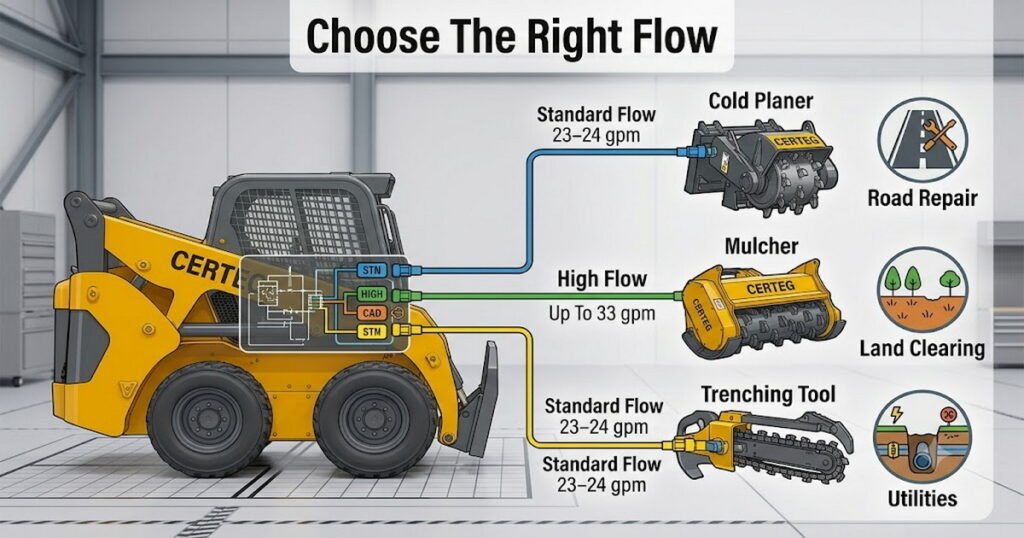
Large platform JCB skid steers typically feature standard auxiliary hydraulic flows around 23–24 gpm, with high‑flow options up to roughly 33 gpm depending on model. [machinestore.jcb]
High‑flow packages are essential if you run power‑hungry attachments such as cold planers, heavy mulchers or large trenchers. By sizing hydraulic output correctly to attachments, you avoid slow cycle times and overheating, which can become hidden cost drivers in intensive applications. [fairchildequipment]
myCHOICE and Operator‑Friendly Controls
JCB’s myCHOICE software allows operators to customize travel and loader responses, tuning the machine for precision work (like fine grading) or fast loading cycles. [youtube]
For mixed fleets and crews, this type of configurable control is critical: newer operators can choose slower, smoother response profiles, while experienced operators can switch to more aggressive settings to maximize productivity. [compactequip]
Real‑World Use Cases: Where JCB Skid Steers Shine
Urban Construction and Demolition
On urban or confined sites, side‑entry and enhanced visibility help reduce incidents when working near pedestrians, vehicles and other trades. The JCB 270, for example, is often positioned as a strong choice for demolition and breaker applications thanks to its vertical lift and operating capacity above 2,700 lb. [equipmentworld]
With compact footprints and robust hydraulic options, these machines can run breakers, saws and grapples efficiently, while still offering cab comfort and climate control for long shifts. [machinestore.jcb]
Landscaping, Infrastructure and Utility Work
For landscaping and general infrastructure work, small platform models offer enough capacity for bulk material handling while staying light and agile on sensitive surfaces. [dozr]
The Teleskid adds another layer of value in utility work—reaching over barriers, placing materials on both sides of a trench, or digging shallow pits—without mobilizing separate telehandlers or mini‑excavators. [goironhide]
Buying Considerations: Matching Machine to Job Profile
Frame Size and Lift Path
When selecting JCB skid steers, start by mapping your core tasks:
– Frequent truck loading and pallet handling → prioritize vertical lift large platform models.
– Grading, backfilling and general excavation → consider radial lift and machines like the Teleskid that optimize reach.
Frame size should match both payload requirements and site constraints; heavy demolition in open yards favors large platforms, while interior renovation or tight alleys call for small platforms with nimble maneuverability. [equipmentworld]
Operating Capacity and Transport
Operating capacity and overall weight determine how your machines can be transported between sites. The Teleskid compact track loader, for example, has an operating weight over 12,000 lb, which typically requires a suitably rated trailer and tow vehicle. [pdf.directindustry]
Balancing operating capacity with transport logistics reduces dead time and compliance issues, especially for contractors working across multiple municipalities. [dozr]
Maintenance, Total Cost of Ownership and Telematics
Simplified Emissions and Service Intervals
Many JCB skid steers run without DPF or DEF systems, reducing consumables and the risk of regeneration‑related downtime. [youtube]
Combined with ground‑level service access and clearly defined service intervals, this design lowers the learning curve for service techs and supports more consistent maintenance in mixed fleets. [pdf.directindustry]
Telematics and Fleet Management
JCB’s telematics solutions (often branded as LiveLink) allow owners to track machine utilization, fault codes, fuel consumption and location from a central dashboard. [equipmentworld]
For fleet managers, this data is invaluable for:
– Scheduling preventive maintenance
– Identifying under‑utilized machines
– Monitoring unauthorized usage or after‑hours operation
These insights support more disciplined capital planning and extend asset life. [equipmentworld]
Operator Comfort: Beyond the Spec Sheet
Cab Design and Climate Control
Large platform JCB skid steers and compact track loaders typically emphasize roomier cabs, improved HVAC systems and better control ergonomics. Some Teleskid cabs are noted for being substantially larger than average, with smooth‑ride systems that reduce operator fatigue. [equipmentworld]
From a UX standpoint, operator comfort is not just a “nice to have”—fatigued operators make more mistakes, slow down and resist overtime, all of which impact project schedules. [equipmentworld]
Visibility Tools and Cameras
In addition to inherently better visibility from the Powerboom and side‑entry design, many JCB machines integrate backup cameras and optional lighting packages. [equipmentworld]
These features help operators maintain awareness in low‑light conditions and dense traffic zones, further reinforcing safety and productivity. [youtube]
How Certeg Aligns with JCB‑Style Performance
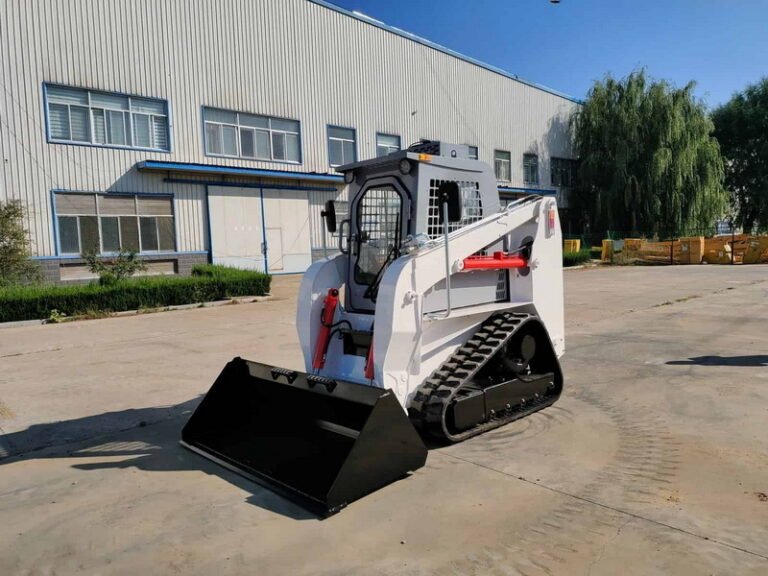
As a manufacturer of skid steer loaders under the Certeg brand—offering both wheeled and tracked variants—there are several key principles that should guide product specification and customer communication:
1. Safety‑first design: Side‑entry philosophies and enhanced visibility should be reflected in cab layout and boom architecture wherever possible.
2. Versatile hydraulics: Standard and high‑flow options must be clearly communicated, with attachment compatibility guides to help buyers choose the right configuration.
3. Application‑driven models: Segment the product range by platform size, lift path and use case (demolition, infrastructure, landscaping, agriculture), mirroring how JCB positions its lineup.
By building and marketing Certeg skid steers around these principles, you create continuity with global best practices while offering tailored solutions to diverse work conditions and power requirements. [compactequip]
Recommended Comparison Table
| Machine Type | Platform Size | Lift Path | Approx. ROC (lb) | Key Use Cases |
|---|---|---|---|---|
| JCB 270 | Large | Vertical | ~2,700 | Demolition, breakers, rock saws equipmentworld |
| JCB 300 / 330 | Large | Vertical | 3,000+ | Heavy material handling, high‑flow tools fairchildequipment |
| Small platform (155–215) | Small | Radial/Vert | 1,500–2,100 | Landscaping, light construction compactequip |
| JCB Teleskid 3TS‑8T (CTL) | Large | Telescopic | ~3,695 retracted | Mixed telehandler/skid steer tasks goironhide |
Clear Call to Action (CTA)
If you’re evaluating skid steer loaders for upcoming projects—or looking to optimize your current fleet—Certeg can help you specify the right combination of platform size, lift path and hydraulic configuration for your exact job profile.
Contact Certeg’s application specialists today to discuss your site conditions, preferred attachments and performance goals, and receive a tailored skid steer specification and quotation.
Frequently Asked Questions (FAQs)
Q1: What is the main safety advantage of JCB‑style side‑entry skid steers?
A: Side‑entry allows operators to enter and exit the cab without climbing over attachments or under raised booms, reducing risk during loading and tight‑space operations. [equipmentworld]
Q2: How does the JCB Teleskid differ from a standard skid steer?
A: The Teleskid integrates a telescopic boom that can lift higher, reach further forward and dig below grade, combining capabilities of a telehandler, loader and skid steer in one machine. [goironhide]
Q3: When do I need high‑flow hydraulics on a skid steer?
A: High‑flow hydraulics are recommended for demanding attachments such as cold planers, heavy mulchers and large trenchers that require higher oil flow to maintain efficiency and avoid overheating. [fairchildequipment]
Q4: What operating capacity should I target for demolition work?
A: Demolition tasks typically require large platform vertical‑lift machines with rated operating capacities above 2,700 lb, such as the JCB 270, to safely handle heavy debris and breakers. [machinestore.jcb]
Q5: How can telematics improve skid steer fleet management?
A: Telematics systems like JCB’s LiveLink provide utilization, fuel, fault and location data, enabling better maintenance scheduling, asset security and capital planning. [youtube]
References
1. Compact Equip – “JCB Skid Steers Summarized — 2018 Spec Guide”
https://compactequip.com/skid-steers/jcb-skid-steers-summarized-2018-spec-guide/ [compactequip]
2. Equipment World – “JCB launches lineup of skid-steer and compact track loaders”
https://www.equipmentworld.com/construction-equipment/article/14969839/jcb-launches-lineup-of-skid-steer-and-compact-track-loaders [equipmentworld]
3. Fairchild Equipment – “JCB Skid Steer and Compact Track Loader Range” (PDF)
https://www.fairchildequipment.com/wp-content/uploads/2022/03/Fairchild-Equipment-jcb-skid-steer-range.pdf [fairchildequipment]
4. Ironhide Equipment – “2018 JCB Teleskid Skid Steer & Compact Track Loader 3TS-8T”
https://www.goironhide.com/Pre-owned-Inventory-2018-JCB-Track-Loader-Teleskid-Skid-Steer-Compact-Track-Loader-3TS-8T-Devils-Lake-North-Dakota-10639733 [goironhide]
5. Equipment World – “Skid Steer Buyer’s Guide 2026”
https://www.equipmentworld.com/construction-equipment/compact-equipment/skid-steer-loaders/article/15819941/skid-steer-buyers-guide [equipmentworld]
6. JCB – Skid Steer Loader Product Page
https://www.jcb.com/en-US/products/machines/skid-steer-loader/ [jcb]
7. JCB Store – “JCB 270 Skid Steer Loader”
https://machinestore.jcb.com/en-US/machines/skid-steer-loaders/270w [machinestore.jcb]
8. DirectIndustry – “Large Platform Skid Steer & Compact Track Loaders Catalogue”
https://pdf.directindustry.com/pdf/jcb/large-platform-skid-steer-compact-track-loaders/19185-401749.html [pdf.directindustry]
9. YouTube – “Meet the JCB Teleskid 3TS-8T: Full Specs & Standout Features”
https://www.youtube.com/watch?v=076AdXDmqvI [youtube]
10. DOZR – “The Ultimate Skid Steer Specifications, Weight, and Dimensions Guide”
https://dozr.com/blog/the-ultimate-skid-steer-spec-guide [dozr]
Hot Tags: Skid Steer Loader, Manufacturers, Customized, Custom, Suppliers, Buy, Cheap, Quality, Advanced, Durable, in Stock, Made in China, Price, Quotation