
Construction Attachment Parts That Actually Move the Needle: A Field‑Tested Guide for Skid Steers, Excavators, Telehandlers and More
Content Menu
● Why Attachments Matter More Than Horsepower Today
● What We Learned from the Attachment Showcase (And What Was Missing)
● Key Attachment Types and the Parts That Make Them Last
>> 1. Hydraulic Breakers and Combi Cutters: Demolition Workhorses
>> 2. Buckets, Root Rakes and Demolition Mining Buckets
>> 3. Vacuum Lifters, Spreaders and Specialty Handling Tools
>> 4. Land Clearing and Forestry Attachments: Mulchers, Brush Cutters, Tree Saws
>> 5. Compact Tool Carrier Attachments: The Hidden Productivity Multipliers
● A Practical 5‑Step Framework for Choosing Attachments and Parts
● What Certeg Brings to Global Buyers of Attachment Parts
● Attachment Types vs. Jobs vs. Critical Parts (Quick Reference Table)
● Call to Action: Plan Your Attachment Parts Strategy with Certeg
● FAQs About Construction Attachment Parts and Certeg
>> 1. What kinds of attachment parts does Certeg manufacture for skid steers and excavators?
>> 2. Can Certeg attachment parts fit multiple brands of machines and attachments?
>> 3. How does Certeg support global buyers in terms of quality and logistics?
>> 4. What information should I provide when requesting a quote for attachment parts?
>> 5. Can Certeg help me upgrade the durability of my existing attachments?
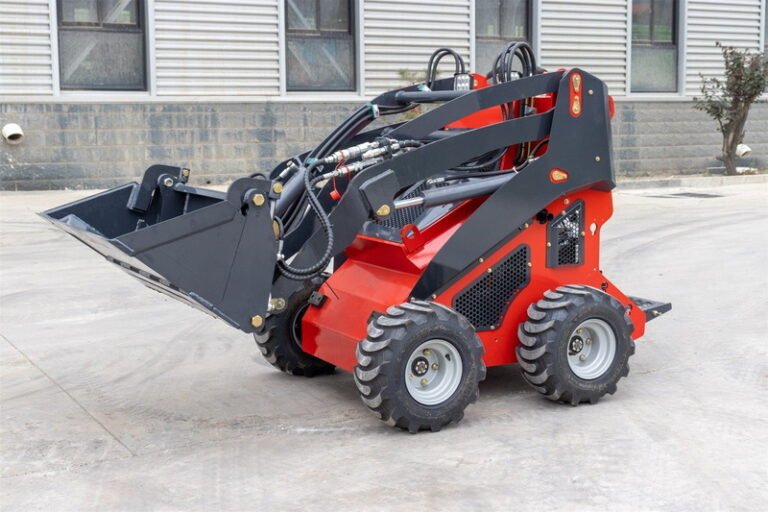
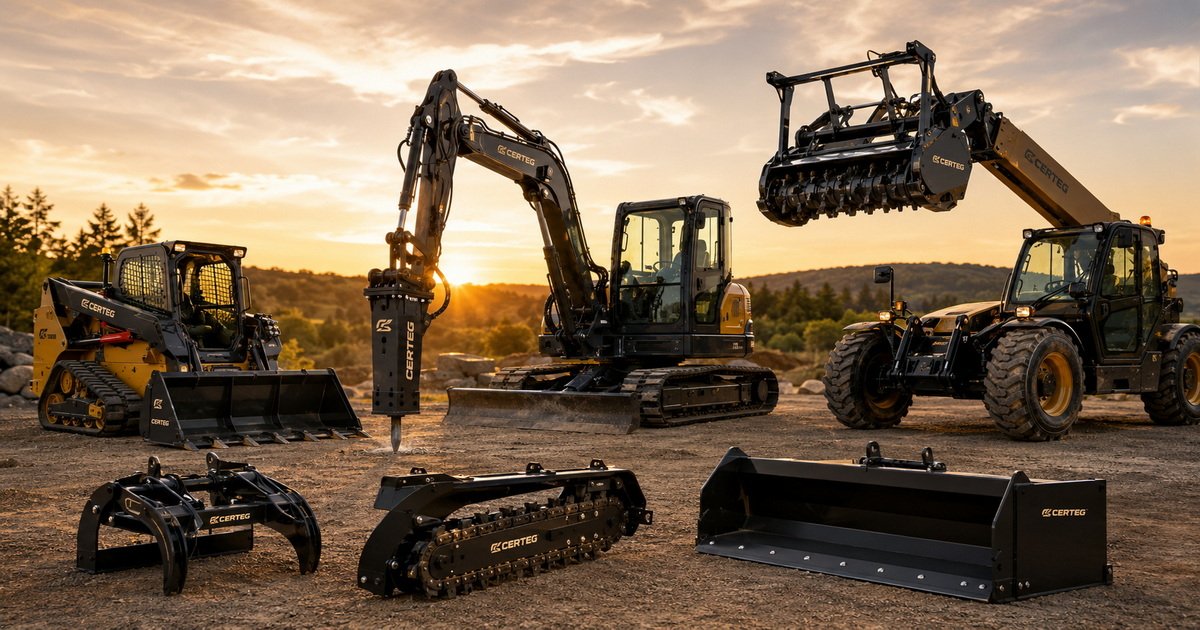
When you have lived on jobsites as long as I have, you stop asking “Which machine is stronger?” and start asking a better question: Which attachment will make this machine pay for itself faster? From hydraulic breakers and vacuum lifters to mulchers and 4‑in‑1 buckets, the right attachment turns a skid steer, excavator or telehandler into a profit‑multiplying tool carrier. [skidsteers]
In this guide, I’m looking at attachments through three lenses — productivity, versatility and total cost of ownership — and connecting them to what we build every day at Certeg, a global manufacturer of attachment parts for loaders and excavators. We design and produce structural components, wear parts and hydraulic‑related parts that let these attachments survive real‑world abuse in construction, demolition, landscaping and municipal work.
Why Attachments Matter More Than Horsepower Today
On modern sites, equipment owners are under pressure to do more with the machines they already own. Instead of buying another unit, they are: [gushwork]
– Extending machine capabilities with specialized attachments
– Swapping tools multiple times per shift to match changing tasks
– Standardizing fleets around highly adaptable tool carriers
A skid steer or compact excavator equipped with the right implements can replace multiple dedicated machines for trenching, lifting, land clearing, snow control and material handling. That level of flexibility is only possible when the attachment’s core components — couplers, brackets, blades, teeth, bushings and hydraulic interfaces — are engineered to last. [hixenmachinery]
From the manufacturer side, this is exactly where Certeg sits in the value chain: we supply the attachment parts that connect power to the ground — pins, cutting edges, adapter plates, reinforcing ribs and other load‑bearing components that determine how long an attachment stays tight, safe and accurate under shock loads.
What We Learned from the Attachment Showcase (And What Was Missing)
The Compact Equipment Attachment Showcase does a solid job introducing a wide range of tools — hydraulic breakers, boring attachments, vacuum lifters, tree saws, box blades, mulchers, spreaders and more. It highlights: [compactequip]
– Core application (e.g., demolition, trenchless boring, vegetation management)
– Compatible carriers (skid steers, compact loaders, excavators, telehandlers)
– General performance claims (cutting diameter, tunnel length, operating flow, etc.)
However, from an equipment owner’s perspective, there are three critical gaps:
1. Parts and lifecycle details are thin.
Buyers rarely see what the breaker tool steel is made of, how the bucket is reinforced, or how easily wear parts can be replaced — the exact information that drives lifecycle cost. [scubemarketing]
2. No clear framework for choosing attachments by job profile.
The showcase lists many tools but does not translate options into a decision path (“If you mainly handle demolition on tight urban sites, prioritize X, Y, Z attachments, with these spec ranges”). [gushwork]
3. Limited guidance on global parts support and aftermarket strategy.
International buyers worry about compatibility, shipping times and whether they can source equivalent attachment parts locally or from specialized manufacturers like Certeg. [scubemarketing]
This article fills those gaps by mapping attachment types to jobs, highlighting critical parts, and sharing expert‑level selection steps supported by real jobsite experience.
Key Attachment Types and the Parts That Make Them Last
1. Hydraulic Breakers and Combi Cutters: Demolition Workhorses
Original showcase examples: Kubota and JCB hydraulic breakers, Atlas Copco Combi Cutter attachments. [compactequip]
As someone who has watched breakers crack concrete for 10‑hour shifts, I can tell you that internal parts quality is the difference between a one‑season tool and a multi‑year investment. The most important construction attachment parts in a breaker or combi cutter are:
– Tool steel (moil or chisel) — alloy composition, heat treatment and surface hardening determine resistance to mushrooming and tip deformation. [compactequip]
– Wear bushings and guides — control tool movement and absorb side loads, directly affecting vibration and operator comfort.
– High‑pressure seals, pins and retaining systems — prevent leaks and hold everything tight under impact.
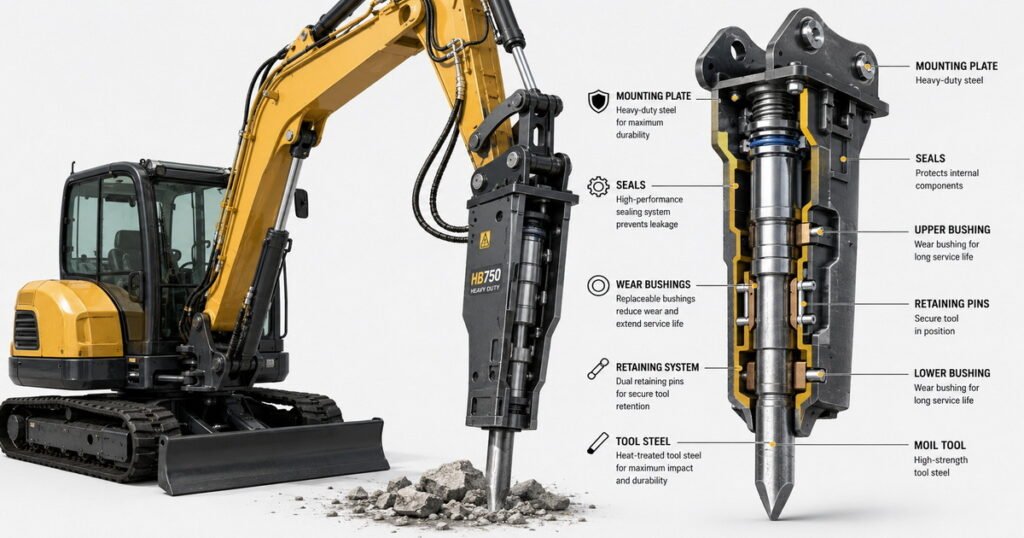
Manufacturers like JCB and Atlas Copco optimize hydraulic control valves to reuse rebound energy and reduce load on the carrier, saving fuel and extending carrier component life. When Certeg produces breaker wear parts and mounting components, we mirror these design priorities, focusing on: [compactequip]
– High‑hardness steels (Hardox‑class equivalents) for impact areas
– Precision machining of pin bores and bushings to tight tolerances
– Welded brackets and adapters that distribute stress and resist cracking
2. Buckets, Root Rakes and Demolition Mining Buckets
Showcase examples include Case 4‑in‑1 buckets, John Deere root rakes, and Attachments International demolition mining buckets. [compactequip]
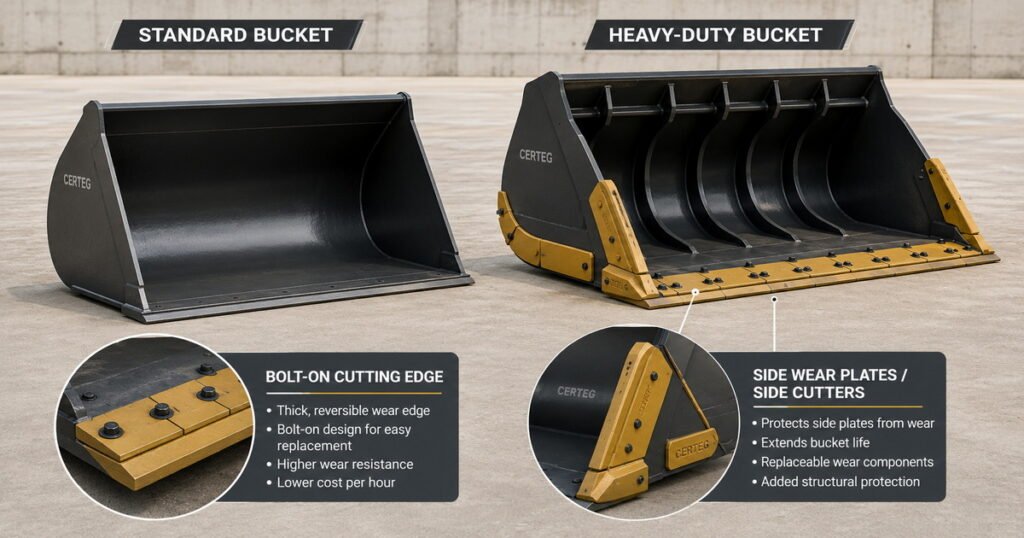
What matters most over the life of these attachments is structural integrity and wear resistance:
– Cutting edges and corner teeth — determine penetration and wear life in abrasive material.
– Side cutters and wear strips — protect bucket walls from grinding damage in rock or demolition rubble.
– High‑strength shell plates and reinforcing ribs — handle repeated shock loads and prying forces without warping.
For a demolition mining bucket, open‑tine designs and special jaws increase productivity by allowing fines to fall through while retaining oversized material. Certeg supports this category with: [compactequip]
– Fabricated bucket bodies and lips in abrasion‑resistant steel
– Bolt‑on or weld‑on wear parts and adapters
– Custom brackets and quick‑attach interfaces for different loader and excavator brands
From a buyer’s perspective, always ask three questions before choosing a bucket or rake:
1. What is the base steel grade for main plates and wear areas?
2. Are wear parts bolt‑on (easier replacement) or weld‑on (stronger but less flexible)?
3. Can I source compatible wear parts from third‑party manufacturers like Certeg in my region?
3. Vacuum Lifters, Spreaders and Specialty Handling Tools
Vacuworx’s CM 3 vacuum lifting system and SnowEx’s V‑Pro spreader address very specific site challenges: safe handling of slabs/plates and precise material spreading in narrow or sensitive areas. [compactequip]
The most critical attachment parts here are:
– Vacuum plates, seals and lifting frames — must hold consistent vacuum even when surfaces are rough or dirty.
– Augers, hoppers and agitators in spreaders — designed to avoid bridging and ensure steady material flow. [compactequip]
Certeg’s role in this niche focuses on fabricated frames, mount plates, reinforcement beams and wear‑resistant hoppers or chutes, all optimized to maintain rigidity and minimize deformation under repeated loading.
4. Land Clearing and Forestry Attachments: Mulchers, Brush Cutters, Tree Saws
Examples in the original article include Loftness Battle Ax mulchers, Brush Wolf cutters, FAE excavator mulchers and Vail X‑Series tree saws. [compactequip]
In forestry and land clearing, unplanned downtime is expensive because sites are often remote. That makes parts quality non‑negotiable:
– Rotor drums and flails/teeth — need careful balancing, high‑strength material and secure retention to survive impacts with stumps and rock. [compactequip]
– Housing structures and skids — take constant abrasion and must maintain geometry to keep the cut consistent.
– Drive shafts and bearing housings — must handle high torque under variable loads.
From the field, I recommend buyers look for:
– Evidence of double Hardox counter blades or similar wear solutions in mulchers
– Availability of multiple tooth options (carbide, knife, combo) for different vegetation types
– Clear documentation on replacement intervals and parts compatibility
Certeg supports OEMs and aftermarket distributors with mulcher housings, rotors, skid shoes, tooth holders and side wear plates, designed to integrate standard or custom cutting tools.
5. Compact Tool Carrier Attachments: The Hidden Productivity Multipliers
The Compact Equipment article finishes with CTC attachments such as cement bowl mixers, vibratory plows and bore drive heads tailored for Toro Dingo‑type machines. [compactequip]
These tools solve niche but high‑value problems on tight sites:
– Cement bowl mixer: mixes and transports small concrete batches without separate mixers.
– Vibratory plow: installs pipe or cable with minimal turf disturbance.
– Bore drive head: allows small‑scale trenchless boring under sidewalks and driveways. [compactequip]
Here, attachment parts that matter most are:
– Drive couplers and mounting flanges — ensure power transfer without slippage.
– Wear liners, bowls and augers — resist abrasion from concrete, soil and stone.
– Pivot joints and compression springs — maintain consistent contact and performance despite terrain changes.
Certeg manufactures precision brackets, bowls, auger components and mounting structures, allowing OEMs to maintain consistent quality globally while giving end users confidence in long‑term support.
A Practical 5‑Step Framework for Choosing Attachments and Parts
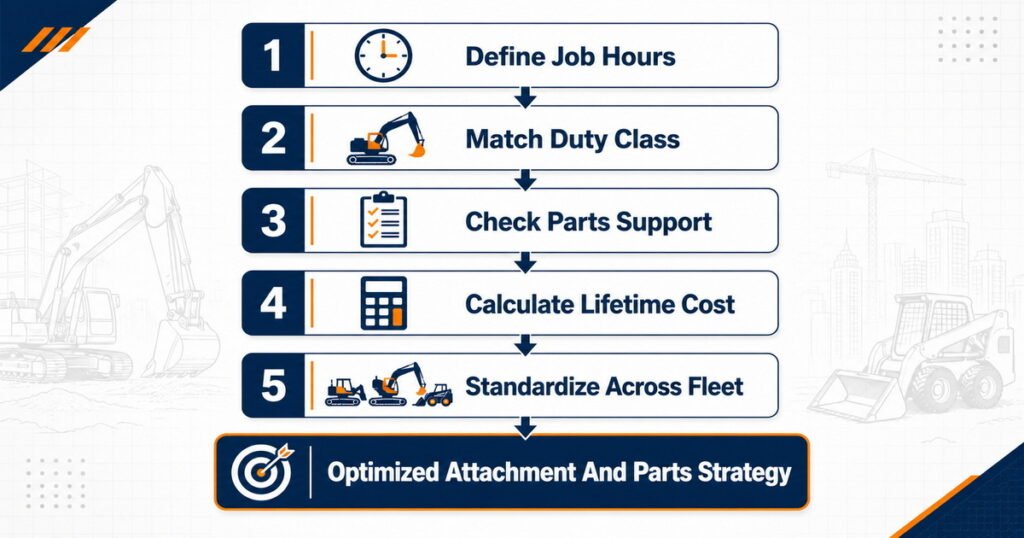
To turn this from a showcase into a decision‑making tool, here is a simple framework we use with our international customers:
1. Clarify your dominant job types (by hours, not by impression).
– List how many hours per month you spend on excavation, demolition, land clearing, snow, or material handling.
– Prioritize attachments that directly cut time in your top‑three tasks.
2. Match attachment duty class to carrier and material.
– Check recommended carrier weight and hydraulic flow range; stay well within the envelope. [media.cnh]
– For abrasive or impact‑heavy work (demolition mining, forestry), demand high‑strength steels and documented testing.
3. Evaluate parts support and interchangeability.
– Confirm whether common wear parts (bucket teeth, blades, tool bits, bushings, seals) can be sourced from third‑party manufacturers. [scubemarketing]
– Ask for a full parts list before purchase; this is standard practice with our global customers.
4. Assess lifetime cost, not just purchase price.
– Estimate wear part replacements over 3–5 years and add expected labor for maintenance.
– Consider that long‑tail, fitment‑specific parts buying — “breaker tool for X model, 45–60 mm pin, 2–3 ton excavator” — often yields better total value than generic parts. [scubemarketing]
5. Plan a standardization strategy.
– Aim to standardize teeth families, coupler types and hydraulic connectors across your fleet to simplify stocking.
– Work with manufacturers like Certeg to align custom attachment parts with your existing standards.
What Certeg Brings to Global Buyers of Attachment Parts
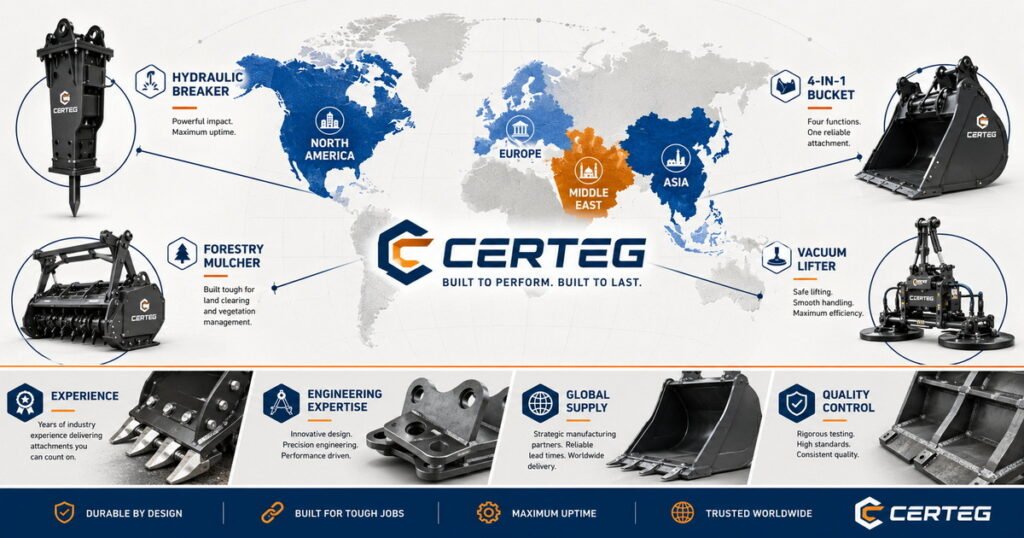
From the perspective of an attachment parts manufacturer, E‑E‑A‑T is not just a search guideline; it mirrors what our best customers already expect:
– Experience (First‑hand use): Many of our engineers and sales specialists have worked on or visited construction, mining and agricultural sites, feeding real‑world feedback into part design and material selection.
– Expertise (Technical depth): We work with structural steels, wear‑resistant plates and precision machining to ensure tight fits for pins, bushings, flanges and bolt holes in attachment parts.
– Authoritativeness (Industry fit): Certeg supplies attachment parts compatible with leading brands of loaders and excavators, supporting construction, earthmoving, demolition, landscaping and municipal fleets worldwide.
– Trustworthiness (Consistency and traceability): Batch tracking, material certificates and dimensional inspection all feed into a quality system that international customers can audit.
Typical attachment parts we manufacture for skid steers, excavators, telehandlers and loaders include:
– Buckets and bucket shells, side cutters, cutting edges
– Quick‑attach plates, adapter frames and couplers
– Wear plates, side wear strips, reinforcing ribs
– Brackets and frames for specialty attachments (mulchers, saws, spreaders)
– Structural and wear parts for hydraulic attachments (breaker mounting components, tool retainers, etc.)
For buyers, this means you can standardize attachments globally while still sourcing key wear and structural parts from a specialized manufacturer that understands construction equipment duty cycles and fitment constraints. [gushwork]
Attachment Types vs. Jobs vs. Critical Parts (Quick Reference Table)
| Job type | Recommended attachment category | Typical carrier | Critical attachment parts to check |
|---|---|---|---|
| Demolition, concrete | Hydraulic breakers, combi cutters, demolition buckets | Skid steers, excavators | Tool steel, bushings, brackets, high‑strength shell plates |
| Land clearing, forestry | Mulchers, brush cutters, tree saws | Skid steers, excavators | Rotor, teeth, housing, skids, bearing housings |
| Trenching, utilities | Vibratory plows, boring attachments, bore drive heads | Compact tool carriers | Couplers, rods, augers, springs, drive interfaces |
| Earthmoving, loading | General purpose and 4‑in‑1 buckets, root rakes | Loaders, skid steers | Cutting edges, side cutters, wear strips, quick‑attach plates |
| Winter and site service | Box plows, spreaders, material buckets | Loaders, telehandlers, UTVs | Hoppers, augers, blades, reinforcement frames |
Call to Action: Plan Your Attachment Parts Strategy with Certeg
If you rely on loaders or excavators in construction, mining, aggregates, landscaping or municipal work, your attachment strategy is now as important as your machine strategy. The right mix of attachments — backed by robust, globally available attachment parts — can shorten project timelines, reduce downtime and protect your capital investment.
Certeg can help you:
– Review your current fleet and top job types
– Identify high‑impact attachments and their critical structural and wear parts
– Standardize attachment parts across brands and models to simplify procurement
– Develop a long‑term parts stocking plan that matches your work season and site conditions
Talk to Certeg’s attachment parts team today to discuss your loader and excavator attachment needs, or share your current BOM so we can propose a durable, cost‑effective parts package for your next project season.
FAQs About Construction Attachment Parts and Certeg
1. What kinds of attachment parts does Certeg manufacture for skid steers and excavators?
Certeg manufactures structural and wear parts for buckets, rakes, mulchers, hydraulic attachments and specialty tools, including cutting edges, plates, brackets, couplers and reinforcement components for loaders and excavators.
2. Can Certeg attachment parts fit multiple brands of machines and attachments?
Yes. We work from customer drawings, OEM specifications or measured samples to produce compatible parts for a wide range of OEM and aftermarket attachments used on skid steers, excavators, telehandlers and loaders.
3. How does Certeg support global buyers in terms of quality and logistics?
We use traceable materials, controlled welding and machining processes and inspection before shipment, and we coordinate packaging and export logistics to help international customers receive parts safely and on schedule.
4. What information should I provide when requesting a quote for attachment parts?
For the fastest response, share machine model, attachment type, key dimensions, material or hardness requirements, operating conditions and any drawings, photos or part numbers you already have.
5. Can Certeg help me upgrade the durability of my existing attachments?
Yes. Many customers ask us to redesign cutting edges, wear plates or reinforcement ribs using higher‑grade materials or improved geometries so that their existing attachments last longer under tough site conditions.
References
1. Compact Equipment – “Attachment Showcase: Dig These Innovative Implements for Skid Steers, Excavators, Telehandlers and Beyond” – overview of attachments mentioned in this article. [compactequip]
2. SkidSteers.com – “Skid Steer vs Excavator: Which is Better?” – comparison of machine capabilities that informs carrier and attachment selection. [skidsteers]
3. Hixen Machinery – “Skid Steer vs Mini Excavator: Which One Suits Your Project” – discussion of versatility and cost‑effectiveness in compact equipment. [hixenmachinery]
4. CNH / Case Construction – “Equipment Showdown: Skid Steer & Compact Excavator Combo vs. Backhoe” – example of pairing carriers and attachments for job efficiency. [media.cnh]
5. Scubamarketing – “Heavy Equipment Marketing: Online Strategies for Parts” – guidance on long‑tail keyword strategy and fitment‑specific parts content. [scubemarketing]
6. WG Content – “E‑E‑A‑T for content quality” – best practices on formatting, structure and unique insights for SEO and user trust. [wgcontent]
7. PageOptimizer Pro – “Effective Strategies for E‑E‑A‑T Implementation on Websites” – tactics for displaying expertise and keeping content updated. [pageoptimizer]
8. Radd Interactive – “Construction Heavy Equipment Marketing & Advertising” – emphasizes focused, topic‑specific content for industrial equipment SEO. [raddinteractive]
9. GushWork – “Digital Marketing for Construction Equipment” – high‑intent SEO and site structure advice for equipment and parts businesses. [gushwork]
10. Compact Equipment – “Badass Attachments: A Guide to Gnarly Implements for Machines Like Mini Exs and Skid Steers” – additional context on attachment versatility and tool carrier concepts. [compactequip]
Hot Tags: Attachment Parts, Manufacturers, Customized, Custom, Suppliers, Buy, Cheap, Quality, Advanced, Durable, in Stock, Made in China, Price, Quotation