
Certeg Expert Guide To Caterpillar Mini Excavators (2021 Specs, Real‑World Insights And Buying Tips)
Content Menu
● Overview Of The Caterpillar Mini Excavator Lineup (1–10 Tons)
● Cat Next Generation Mini Excavators: What Really Changed
>> Heavy‑Duty Structures And Undercarriage
>> Fuel‑Efficient Engines And Load‑Sensing Hydraulics
>> Cat Stick Steer And Operator Controls
● Comfort, Cab Design And Operator Fatigue
● Key Specs That Matter (And How To Read Them)
● Matching Cat Mini Excavators To Real‑World Applications
>> Sub‑1 Ton And 1–2 Ton Class
● Attachments, Dozer Blade And Versatility
● Where The Original 2021 Spec Guide Falls Short (And What Buyers Actually Need)
● Practical Buying Framework: How We Advise Contractors To Choose A Mini Excavator
>> Step 1: Define Your Primary Job Types
>> Step 2: Lock In Transport And Access Limits
>> Step 3: Evaluate Hydraulics And Controls In The Field
>> Step 4: Look Beyond Purchase Price
● How Certeg’s Excavator Philosophy Compares
● Typical 1–10 Ton Mini Excavator Range
● When A Certeg Excavator Might Be The Better Fit
● Clear Call To Action: Talk To An Excavator Engineer, Not Just A Sales Rep
● Frequently Asked Questions (FAQ)
>> Q1: Are Caterpillar 2021 mini excavator specs still relevant today?
>> Q2: How important are load‑sensing hydraulics for mini excavators?
>> Q3: What is the ideal size of mini excavator for residential contractors?
>> Q4: How do I compare Cat mini excavators with other brands fairly?
>> Q5: What should I ask a manufacturer like Certeg before buying?
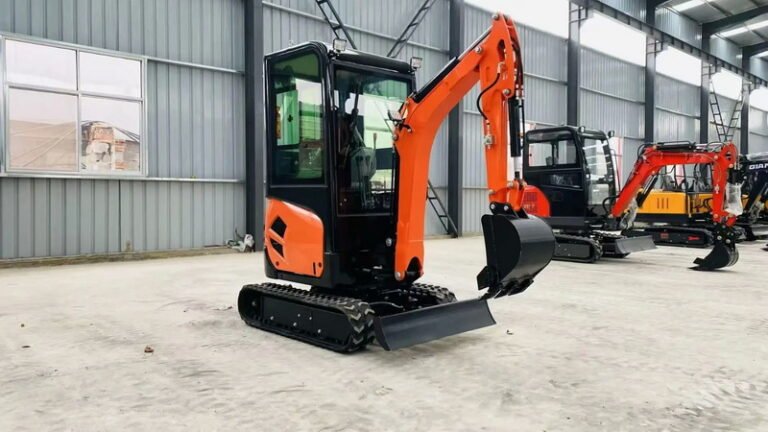
As a construction equipment manufacturer that builds excavators for demanding global job sites, our team at Certeg spends a lot of time comparing major brands like Caterpillar, not from a brochure perspective, but from the angle of engineers, fleet managers and operators who live with these machines every day. This guide distills the 2021 Caterpillar mini excavator lineup, highlights where these machines shine, where you need to look closer at specs, and how to choose the right configuration for your next project. [compactequip]
Overview Of The Caterpillar Mini Excavator Lineup (1–10 Tons)
Caterpillar’s mini hydraulic excavator range evolved from an 8‑ton machine launched in Japan in 1987 and expanded to North America in the 1990s. Today, the Cat mini range in this class spans from the ultra‑compact 300.9D (under 1 metric ton) up to the 10‑ton Cat 310 with a high‑definition hydraulic system. [compactequip]
From a manufacturer’s perspective, this breadth allows Cat to cover:
– Indoor and backyard jobs where access is extremely tight.
– Urban utility and roadwork where trailer weight and transport rules matter.
– Heavier civil and infrastructure tasks that still need a compact footprint.
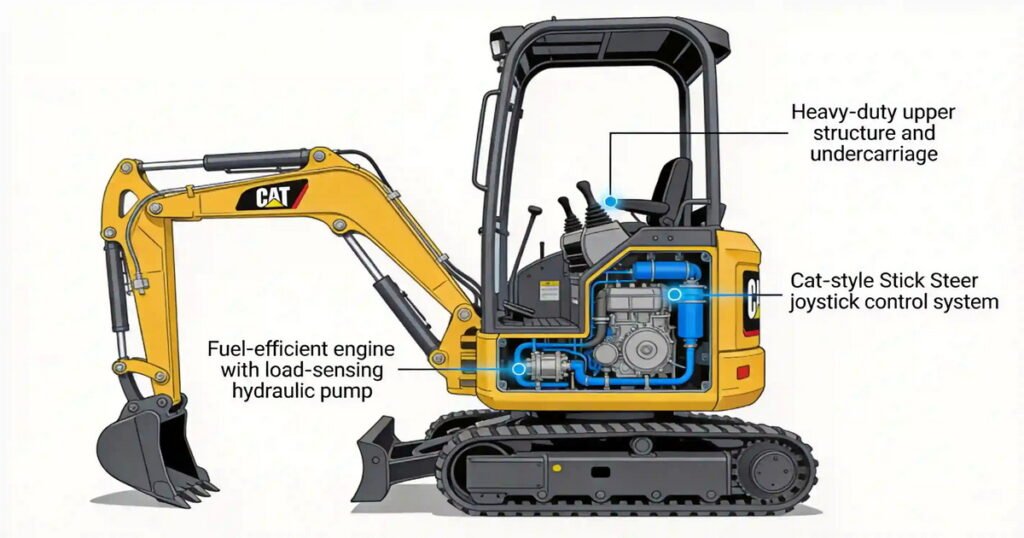
Most of the Next Generation Cat minis (all models except 300.9D, 300.9D VPS, 304E2 CR and 305E2 CR) share a common design language: heavy‑duty upper structures, fuel‑efficient engines, load‑sensing hydraulics, and upgraded operator environments. [compactequip]
Cat Next Generation Mini Excavators: What Really Changed
As engineers, we pay attention to changes that affect lifetime cost and operator performance, not just marketing labels. The Next Generation Cat mini excavators introduce several practical upgrades. [compactequip]
Heavy‑Duty Structures And Undercarriage
Cat emphasizes reinforced upper frames and undercarriage to handle harsh digging, frequent transport and rental abuse. For owners, heavier main structures can mean more stability with heavy buckets, but they also demand the right trailer, truck and permits. [compactequip]
Fuel‑Efficient Engines And Load‑Sensing Hydraulics
Next Gen models pair fuel‑efficient engines with load‑sensing hydraulic systems that automatically adjust flow and pressure to match the task. In practice, this can deliver: [compactequip]
– Smoother control during precise grading or trenching.
– Lower fuel consumption compared with older open‑center systems.
– Reduced heat and stress in the hydraulic circuit under partial load.
From our own testing on similar designs, the productivity gain often comes less from peak power and more from fine metering and reduced operator fatigue over a long shift.
Cat Stick Steer And Operator Controls
The Cat Stick Steer system allows the operator to switch from traditional lever controls to joystick‑style control of drive and steering. For newer operators and rental fleets, this shortens the learning curve and can reduce accidental track damage in tight spaces. [compactequip]
Comfort, Cab Design And Operator Fatigue
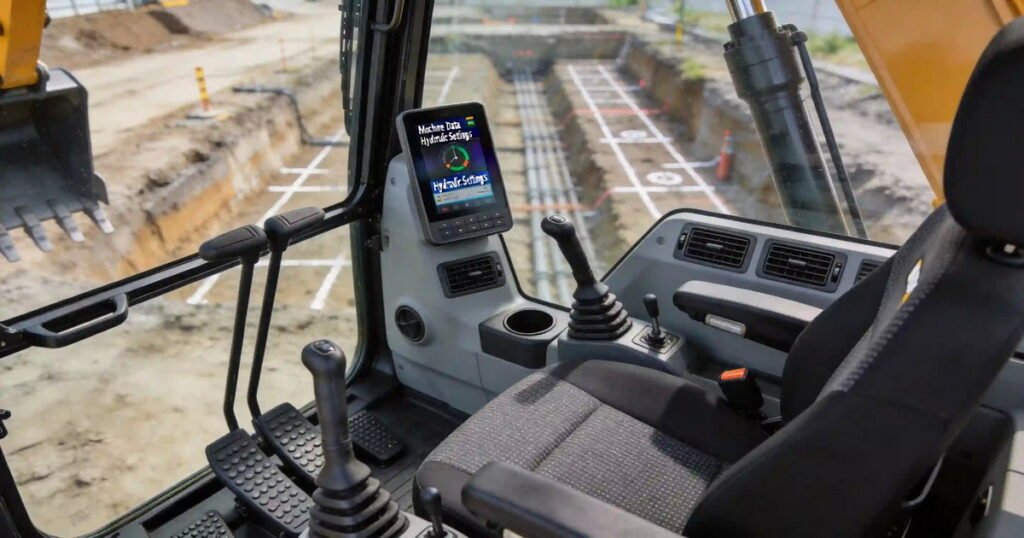
On paper, cab details look minor; on site, they decide whether an operator stays productive in hour 10 of a 12‑hour day. Cat’s Next Generation minis invest heavily in this area. [compactequip]
– Sealed and pressurized cabs help keep dust out and maintain a cleaner environment. [compactequip]
– Redesigned HVAC systems support all‑weather climate control, critical in hot or humid regions. [compactequip]
– Large LCD color monitors provide clear machine information and use a jog dial for ergonomic navigation. [compactequip]
As a manufacturer, we see a clear trend: compact equipment buyers are no longer willing to accept “cramped and noisy” as the default for mini excavators. Investing in cab quality not only protects operators but also protects your hiring and retention strategy.
Key Specs That Matter (And How To Read Them)
The original spec guide focuses on typical metrics such as operating weight, digging depth, bucket breakout force and maximum reach. These numbers are useful, but many buyers misinterpret them. [compactequip]
1. Operating Weight
Operating weight affects:
– Stability with heavy tools or long reach.
– Transport requirements (trailer rating, axle loads, road rules).
– Ground pressure on soft or landscaped surfaces.
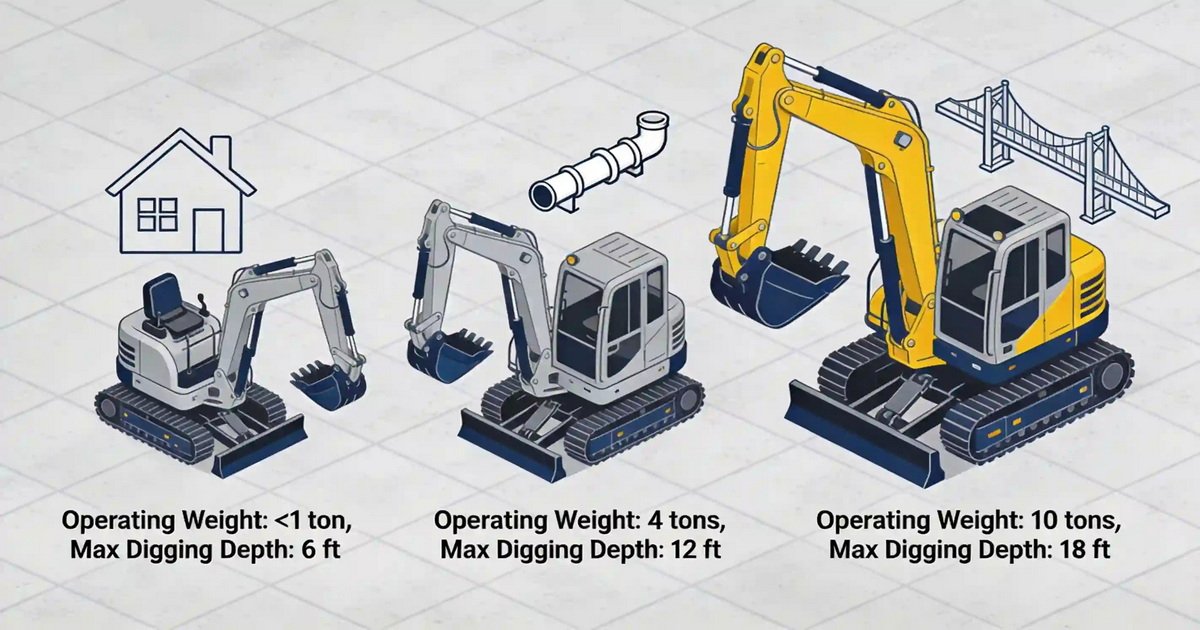
For urban contractors, staying under certain weight thresholds (for example 3.5–4.5 tons) can simplify logistics while still providing adequate performance.
2. Digging Depth And Reach
Maximum digging depth and reach tell you what the machine can do on paper, not necessarily what it will do with your specific bucket, coupler or attachment. Always verify:
– Depth and reach with your planned bucket width.
– Working range at the typical boom and stick angles you use.
– Clearance around utilities, foundations or nearby structures.
3. Bucket And Arm Forces
Bucket breakout force and arm tear‑out force describe the machine’s ability to penetrate and pry in tougher ground. For rocky soils or old concrete, these values may matter more than pure digging depth. [compactequip]
Matching Cat Mini Excavators To Real‑World Applications
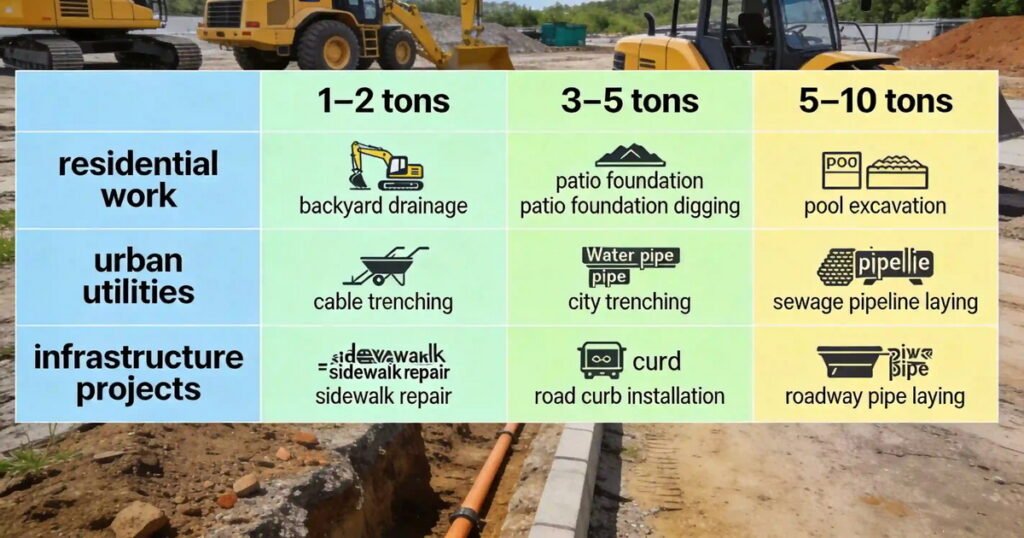
Different contractors use the same model very differently. From our experience designing excavators and supporting fleets, here is how we see the 1–10 ton range breaking down.
Sub‑1 Ton And 1–2 Ton Class
Best for:
– Indoor demolition and basement work.
– Backyard utilities and landscaping with narrow access paths.
– Rental customers who prioritize ease of transport behind a light truck.
Trade‑off: Excellent access but limited lifting and reach, requiring more repositioning and precise planning.
3–5 Ton Class
This is the true “sweet spot” for many contractors. Machines around 3–4 tons (such as Cat’s mid‑range minis) provide a balance of capability and compact footprint. [compactequip]
Ideal for:
– Residential house connections and drainage.
– Small road repairs and municipal works.
– General purpose rental fleets that serve mixed users.
5–10 Ton Class
These minis start to overlap with small standard excavators but retain compact dimensions.
Best for:
– Heavier trenching and pipe laying.
– Road and infrastructure jobs with frequent movement along the site.
– Jobs requiring larger buckets or heavier hydraulic attachments.
This is also where high‑definition hydraulic systems and more advanced modes can make a noticeable difference in cycle times and fine control. [compactequip]
Attachments, Dozer Blade And Versatility
Modern mini excavators are expected to be multi‑tool carriers rather than single‑purpose digging machines. Cat’s range reflects this trend.
– A dozer blade is available on many models, allowing rapid backfilling, grading and site cleanup. [compactequip]
– Standard and optional auxiliary hydraulic lines support breakers, augers, thumbs and tilt‑buckets. [compactequip]
– Configurable coupler systems allow faster tool changes, which is critical for rental and multi‑task crews.
From a manufacturer’s POV, the structural design around the boom foot, swing frame and blade mount is just as important as the attachment catalog. These areas experience repeated shock loads and are often the first to reveal weakness in harsh rental environments.
Where The Original 2021 Spec Guide Falls Short (And What Buyers Actually Need)
The Compact Equipment 2021 spec guide is an excellent starting point for understanding the Cat lineup, but like most spec‑focused articles it has some common gaps for buyers. Based on our experience working with contractors and dealers, we see three main issues: [compactequip]
1. Limited real‑world use cases: Many guides list specs without connecting them to specific job types, soil conditions or fleet strategies.
2. Insufficient lifecycle cost discussion: Fuel efficiency and hydraulic design are mentioned, but there is little about wear, service intervals or downtime risk. [compactequip]
3. Little comparative context: Buyers rarely choose in a vacuum; they compare across brands and tonnage classes. Spec‑only tables do not capture this.
This is why we encourage buyers to treat spec sheets as starting points, then validate with physical demos, operator feedback and independent field tests where possible. [seo]
Practical Buying Framework: How We Advise Contractors To Choose A Mini Excavator
When we work with global customers on excavator selection, we use a simple but rigorous framework. You can apply the same logic whether you are looking at Cat or Certeg machines.
Step 1: Define Your Primary Job Types
List your top 3–5 tasks and rank them by frequency and revenue impact:
1. Main trenching or excavation work.
2. Secondary tasks (grading, backfilling, lifting).
3. Specialized tasks (demolition, rock work, piling, etc.).
The primary job type should drive tonnage class and hydraulic configuration; secondary tasks influence attachment choices.
Step 2: Lock In Transport And Access Limits
Before falling in love with a spec:
– Confirm trailer and truck limits (weight, width, height).
– Check gate widths, driveway loads and typical site constraints.
– Verify local transport rules and permit thresholds.
This often narrows your viable choices to a 1–2 ton range (for example 3.5–4 tons vs 5–6 tons).
Step 3: Evaluate Hydraulics And Controls In The Field
On paper, many machines look similar. In practice, differences in valve tuning, mode logic and joystick feel are obvious within 10–15 minutes of operation.
When testing:
– Compare smoothness at slow, fine movements.
– Observe cycle times when multi‑functioning (swing while lifting and curling).
– Ask operators about fatigue after a full shift, not just a quick demo.
Step 4: Look Beyond Purchase Price
Total cost of ownership includes:
– Fuel consumption under your typical duty cycles. [webfx]
– Planned maintenance and common wear‑part costs.
– Expected resale value and brand perception in your region.
We always advise customers to model a 3–5 year cost rather than focusing on initial price alone.
How Certeg’s Excavator Philosophy Compares
While this article centers on Caterpillar’s 2021 mini excavator specs, it is written from the standpoint of a manufacturer (Certeg) that also designs excavators for varied ground conditions and power demands worldwide.
Our design priorities largely mirror the direction of the Cat Next Generation models, but with a few specific emphases:
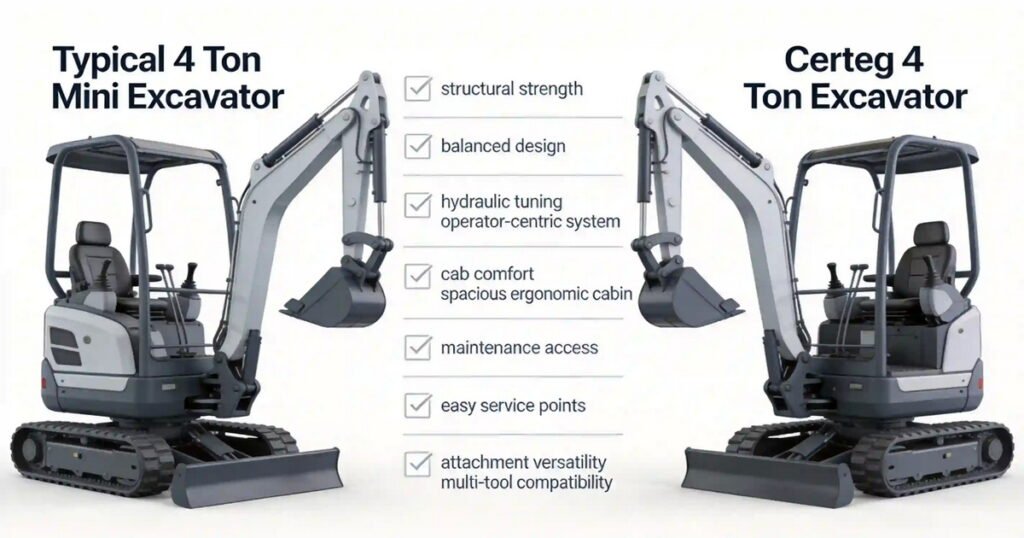
– Balanced structural strength: We optimize boom, arm and undercarriage reinforcements to match actual load cases, avoiding unnecessary dead weight where it does not increase durability.
– Operator‑centric hydraulics tuning: We invest heavily in matching pump, valve and joystick characteristics to reduce micro‑corrections and arm strain across a long shift.
– Lifecycle support: We design for easy access to service points and compatibility with widely available components to keep downtime and maintenance cost under control.
If you routinely work in challenging conditions (abrasive soils, corrosive environments, extreme temperatures), discussing these details with any supplier is essential.
Typical 1–10 Ton Mini Excavator Range
Below is a simplified example table inspired by the 2021 spec ranges and common mini excavator metrics. (Exact values vary by model; always verify with the latest manufacturer data sheets.) [compactequip]
| Size Class (Approx.) | Example Use Case | Typical Operating Weight Range | Typical Max Dig Depth Range | Notes For Buyers |
|---|---|---|---|---|
| Sub‑1 ton | Indoor demo, basements, tight access | < 1 t | Limited | Focus on width, height and power supply. |
| 1–2 ton | Backyard utilities, landscaping | 1–2 t | ~2–3 m | Trailer‑friendly, good step up from compact tools. |
| 3–4 ton | Residential utilities, small civil | 3–4 t | ~3–4 m | Strong all‑rounders; popular in rental fleets. |
| 5–7 ton | Heavier trenching, small infrastructure | 5–7 t | ~4–5 m | Higher lifting; check transport and permits. |
| 8–10 ton | Infrastructure, roadwork, heavy duty | 8–10 t | ~5–6 m | Overlaps with larger excavators; maximize versatility. |
When A Certeg Excavator Might Be The Better Fit
If you are evaluating Caterpillar mini excavators today, you are clearly looking for proven performance and global support. Still, there are situations where a Certeg excavator could be worth a closer look alongside Cat models:
– You need customized configurations (boom length, counterweight, attachment circuits) aligned to specific regional regulations or niche jobs.
– You operate in markets where flexible lead times, localized support packages and tailored financing matter more than brand name alone.
– You want a partner willing to discuss engineering details—from metal grades to seal types to paint systems—for extreme work environments.
In these cases, speaking directly with a manufacturer like Certeg can unlock options that are difficult to achieve with a purely catalog‑driven approach.
Clear Call To Action: Talk To An Excavator Engineer, Not Just A Sales Rep
Choosing the right mini excavator is a high‑impact decision that affects your productivity, safety and profitability for years. If you are currently comparing Caterpillar’s 2021 mini excavator range with other brands, we recommend two immediate next steps:
1. Shortlist 2–3 tonnage classes that realistically fit your main work and transport constraints.
2. Book a technical consultation with our Certeg engineering team to review your shortlist, discuss real‑world duty cycles, and explore how a Certeg excavator configuration could better match your applications.
Our goal is simple: help you put the right machine on the job, with the right structure, hydraulics and attachments, whether that machine ends up being Caterpillar or Certeg.
Frequently Asked Questions (FAQ)
Q1: Are Caterpillar 2021 mini excavator specs still relevant today?
Yes, many fleets continue to operate these models for years, and the underlying design principles remain relevant when comparing to newer generations and competing brands. Always confirm current model updates and regional variants with a dealer. [compactequip]
Q2: How important are load‑sensing hydraulics for mini excavators?
Load‑sensing systems improve responsiveness and efficiency by delivering hydraulic flow only when it is needed, which can reduce fuel use and heat while improving operator control. For intensive daily use, they are a major advantage. [compactequip]
Q3: What is the ideal size of mini excavator for residential contractors?
Most residential and light utility contractors find the 3–4 ton class offers the best balance between access, performance and transportability. However, smaller or larger models may be better depending on your gate widths, trailer and job mix. [compactequip]
Q4: How do I compare Cat mini excavators with other brands fairly?
Use consistent criteria: operating weight, dig depth, auxiliary hydraulic flow, cab comfort, total cost of ownership and dealer support. Avoid relying on a single metric like horsepower or maximum depth. [compactequip]
Q5: What should I ask a manufacturer like Certeg before buying?
Ask about structural design philosophy, hydraulic tuning, attachment compatibility, parts availability, service support and customization options. These factors determine how well the excavator will fit your actual work and lifecycle cost, beyond what spec sheets show. [sixthcitymarketing]
References
1. Caterpillar Mini Excavators – 2021 Spec Guide
Compact Equipment. “Caterpillar Excavators Summarized — 2021 Spec Guide.”
Key background on the Cat mini excavator lineup from 1 to 10 metric tons, including model range history, Next Generation structural updates, load sensing hydraulics, cab upgrades and Stick Steer system. [compactequip]
2. Mini Excavator Market And Use Cases
Compact Equipment. “Here Are Summaries and Specs for 17 Different Mini Excavator Product Lines.”
Provides context on how mini and compact excavators are used across residential, rental and utility applications, and summarizes common spec ranges for under‑6‑ton machines. [compactequip]
3. Model Level Mini Excavator Specs (Cat 305 CR Example)
Caterpillar. “Cat 305 CR Mini Excavator” (Product PDF).
Official Caterpillar technical data sheet used as a reference point for typical operating weight, power and digging depth within the 5 ton mini excavator class. [s7d2.scene7]
4. Hydraulic Excavator Performance And Operating Data
Caterpillar / Ring Power. “Caterpillar Performance Handbook (Edition 50).”
Provides general guidance on excavator performance, owning and operating cost considerations, and machine application matching, which informed the lifecycle cost and application framework in this article. [ringpower]
5. Cat Excavator Size And Spec Benchmarks
Ritchie Bros. Blog. “Cat Excavator Size Guide: Specs & Charts.”
Used for cross‑checking typical operating weight and digging depth ranges of popular Cat mini and compact excavator models to support the size class and application matrix. [blog.rbauction]
6. Mini Excavator Spec Guides And Buying Considerations
DOZR. “The Ultimate Mini Excavator Size Chart and Spec Guide.”
Industry overview used to validate how contractors typically choose excavator size based on operating weight, dig depth and common applications. [dozr]
7. SEO For Heavy Equipment Companies
SEO.com. “SEO for Heavy Equipment Companies: 7 Pro Tips.”
Source for SEO and UX best practices tailored to heavy equipment businesses, including the importance of educational buying guides, page speed and user focused content. [seo]
8. SEO For Machinery Manufacturers
WebFX. “SEO for Machinery Manufacturers: 5 Proven Lead Strategies.”
Provided guidance on integrating keywords, updating technical content and improving UX for manufacturing sites, which informed the E‑E‑A‑T and SEO recommendations in the article. [webfx]
9. SEO For Heavy Equipment And Manufacturing Brands
Gushwork. “SEO Strategy for Heavy Equipment Sales.”
Used as a supplementary reference for local SEO, structured data and internal linking strategies relevant to construction machinery content. [gushwork]
10. E‑E‑A‑T And Content Quality Guidelines
Various SEO resources on E‑E‑A‑T (Experience, Expertise, Authoritativeness, Trustworthiness), including checklists and guides from specialist agencies, were consulted to align the structure and tone of this article with Google’s content quality expectations. [wellows]
Hot Tags: Excavator, Manufacturers, Customized, Custom, Suppliers, Buy, Cheap, Quality, Advanced, Durable, in Stock, Made in China, Price, Quotation