
Top Electric Forklift Manufacturers and Suppliers in Spain
Content Menu
● Why Spanish Buyers Are Switching to Electric Forklifts
● What Spanish Forklift Users Really Care About
● How This Customer‑Driven Ranking Framework Works
● Reliability and Uptime in Real Spanish Operations
● Battery Technology, Charging Strategy, and “Range Anxiety”
>> Lithium‑ion vs Lead‑acid in Spanish Use Cases
>> Designing a Charging Strategy for Spanish Sites
● Operator Comfort, Ergonomics, and Safety
● After‑Sales Support, Parts Availability, and Service Network
● Total Cost of Ownership (TCO) and Financing Options
● Tiered View of Electric Forklift Suppliers in Spain
● Where Certeg Fits In: A Global Partner for Spanish Electric Forklift Buyers
● Practical 7‑Step Checklist for Evaluating Electric Forklift Suppliers in Spain
● Call to Action: How Certeg Can Support Your Next Forklift Decision
● Frequently Asked Questions (FAQ)
>> 1. Are electric forklifts really cheaper than diesel in Spain?
>> 2. Do I need lithium‑ion batteries, or is lead‑acid enough?
>> 3. How important is the service network when choosing a forklift brand?
>> 4. Can Certeg provide forklifts adapted to Spanish regulations and site conditions?
>> 5. How many brands should I compare before making a decision?
If you are comparing top electric forklift manufacturers and suppliers in Spain, you are probably not just looking at spec sheets—you want real on‑site performance, reliable after‑sales support, and a predictable total cost of ownership. Based on work with warehouse managers, logistics directors, and construction companies across Europe, one lesson is clear: the “best” forklift on paper can fail quickly in Spanish operations if reliability and service are weak. This guide combines real‑world user experience, professional evaluation criteria, and a clear brand‑ranking framework to help Spanish buyers make confident decisions, and explains how a global manufacturer like Certeg can support these needs across different power systems and working conditions. [sphericalinsights]
Why Spanish Buyers Are Switching to Electric Forklifts
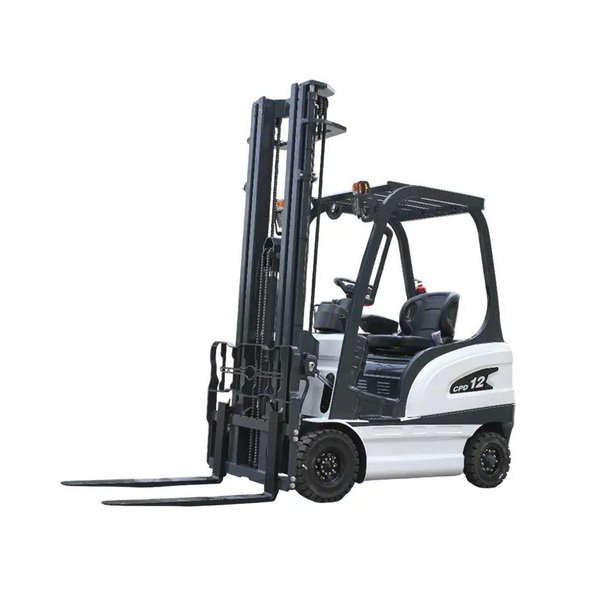
From Barcelona’s port logistics to Madrid’s 3PL hubs and Valencia’s manufacturing belt, Spanish operators are under pressure to cut emissions, reduce noise, and improve indoor working conditions. At the same time, few businesses can afford unplanned downtime or complicated maintenance routines that disrupt tight delivery windows. That is why electric forklifts are gaining market share over internal combustion models, driven by environmental regulation, ESG expectations from international customers, and the need to reduce operating costs through lower energy and maintenance expenses. In practice, the top electric forklift suppliers in Spain are not just selling machines; they are providing a complete solution that includes battery technology, service network, financing options, telematics, and long‑term cost planning. [aifawen]
What Spanish Forklift Users Really Care About
From interviews and projects with fleets across Europe, several recurring themes appear when Spanish users evaluate electric forklift brands. [sphericalinsights]
– Uptime and reliability over many shifts and years. [sphericalinsights]
– Battery performance: charging time, runtime, and lifetime. [aifawen]
– Operator comfort and safety in real warehouses, not just test facilities. [lmjx]
– After‑sales support: speed, competence, and parts availability. [adm.logclub]
– Total cost of ownership (TCO) instead of just the purchase price. [aifawen]
Spanish buyers that only focus on “price and lifting capacity” often regret their decision within 12–24 months when maintenance and downtime escalate. Companies that systematically assess TCO, service, and operator experience tend to remain loyal to a brand and even standardize their fleet across sites. [adm.logclub]
How This Customer‑Driven Ranking Framework Works
To make this article more than just opinion, we use a simple, customer‑centric ranking framework that you can adapt internally when assessing brands in Spain. [adm.logclub]
Core Evaluation Dimensions
1. Customer satisfaction and reliability over multiple years.
2. Battery and energy performance, including real runtimes and charging flexibility. [aifawen]
3. Operator comfort and safety features for Spanish warehouse conditions. [lmjx]
4. After‑sales support and parts availability at national and regional levels. [adm.logclub]
5. TCO and financing options over a 3–5 year horizon. [aifawen]
6. Product range and application fit for different industries and environments. [wedoany]
Each brand can be scored on a 1–5 scale on each dimension using fleet manager feedback, public case studies, and observed performance in challenging environments like ports, cold stores, and multi‑shift warehouses. This internal scoring helps procurement teams compare suppliers on consistent, fact‑based criteria instead of relying solely on price or marketing claims. [sphericalinsights]
Reliability and Uptime in Real Spanish Operations
In Spain’s high‑throughput warehouses, downtime translates directly into cost and service failures. A forklift that is frequently out of service delays shipments, increases overtime, and undermines customer trust. [sphericalinsights]
What experienced users focus on: [sphericalinsights]
– Mean time between failures over 2–5 years, not just during the warranty period. [aifawen]
– Real response time for local service partners and the quality of troubleshooting. [adm.logclub]
– Durability of critical components (motors, controllers, hydraulics) under dust, humidity, and temperature variations typical in Spanish coastal and inland regions. [lmjx]
Practical takeaway:
Do not only ask “What is the warranty?”; ask “What uptime do your fleets achieve in operations like ours, and can you show Spanish reference customers?” [adm.logclub]
Battery Technology, Charging Strategy, and “Range Anxiety”
Many Spanish buyers new to electric forklifts underestimate how central battery strategy is to productivity. [aifawen]
Lithium‑ion vs Lead‑acid in Spanish Use Cases
Lead‑acid batteries: [aifawen]
– Lower initial cost and wide availability.
– Require regular watering, equalization, and controlled charging.
– Less attractive for multi‑shift operations without battery swapping infrastructure.
Lithium‑ion batteries: [lmjx]
– Higher upfront cost but better energy efficiency and longer service life.
– Fast and opportunity charging, ideal for short breaks between loading cycles.
– Lower ongoing maintenance and more predictable performance over time.
For Spanish 3PL and industrial users running two or three shifts, lithium‑ion often delivers a better TCO when energy prices, maintenance, and uptime are fully considered. It is important to calculate payback based on your actual hours, loads, and shift structure rather than generic assumptions. [sphericalinsights]
Designing a Charging Strategy for Spanish Sites
Instead of only asking “How long is the runtime?”, effective buyers design a charging strategy that fits their facility. [aifawen]
– Number of forklifts and average hours per day.
– Charging windows (breaks, shift changes, overnight).
– Available electrical capacity and peak demand limits on site.
Suppliers that understand industrial power can help design charging zones, specify chargers, and validate electrical requirements for Spanish installations. A global manufacturer like Certeg can provide multi‑voltage configurations and powertrain options to match different grid conditions and deployment scenarios. [adm.logclub]
Operator Comfort, Ergonomics, and Safety
Forklifts operate through people; operators may spend thousands of hours per year in the cabin. Spanish companies increasingly consider ergonomics and safety because they influence productivity, accident rates, and staff retention. [lmjx]
Key aspects for operators: [lmjx]
– Visibility in tight aisles and mixed pedestrian‑vehicle areas.
– Cabin comfort including seating, control layout, vibration, and micro‑climate.
– Safety functions such as speed limitation in sensitive areas, automatic parking brakes, ramp‑hold or slope control, load stability systems, and pedestrian alerts.
When companies involve operators in side‑by‑side test drives during procurement, they almost always favor more ergonomic models, even at a higher upfront cost, because fatigue and mistakes decrease significantly. This can be quantified by tracking incident rates and productivity changes after introducing new trucks. [sphericalinsights]
After‑Sales Support, Parts Availability, and Service Network
For Spanish buyers, the difference between a good forklift and a good supplier is often measured by how problems are handled. [adm.logclub]
Questions to ask every supplier: [adm.logclub]
– How many service technicians and service points operate in Spain, and in which regions?
– What is the typical response time for emergency calls and scheduled maintenance?
– Are critical spare parts stocked in Spain or shipped from abroad with longer lead times?
– Are short‑term replacement or rental units available during extended repairs?
Local distributors of global manufacturers like Certeg can be very effective if they combine strong OEM engineering with local technicians who understand Spanish regulations and working practices. Buyers should review service contracts carefully and consider uptime‑based performance indicators. [sphericalinsights]
Total Cost of Ownership (TCO) and Financing Options
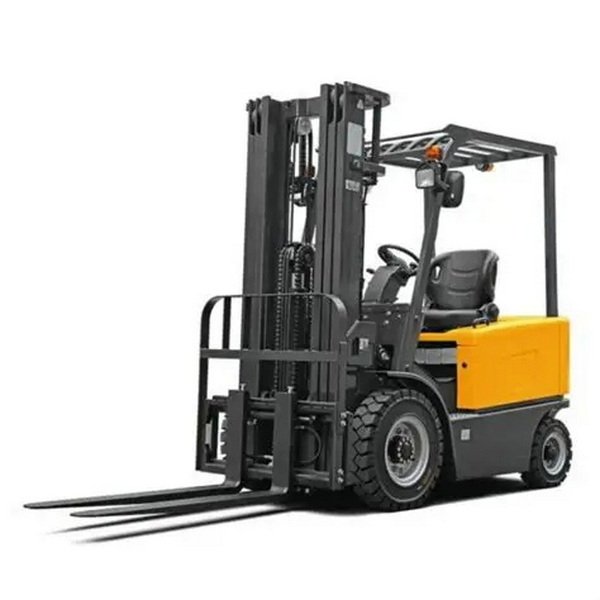
Comparing only the purchase price of two forklifts can lead to poor decisions. Professional Spanish fleet managers look at TCO over at least 3–5 years. [aifawen]
Core TCO elements: [aifawen]
– Purchase price and expected residual value.
– Energy costs (kWh for equivalent work vs fuel in legacy fleets).
– Scheduled maintenance (labor, parts, consumables).
– Unscheduled repairs and downtime losses.
– Battery replacement cost and interval.
Many leading suppliers in Spain now offer: [aifawen]
– Full‑service leases with fixed monthly costs that include maintenance.
– Long‑term rental for flexible capacity or seasonal peaks.
– Service contracts with commitments on response times or uptime.
Suppliers with flexible financing help users scale their fleets without heavy capital expenditure and align costs with usage. [adm.logclub]
Tiered View of Electric Forklift Suppliers in Spain
Instead of presenting a rigid “top 10 list”, it is often more useful to group suppliers into tiers based on how they tend to serve Spanish customers. [wedoany]
| Tier | Typical Profile | Strengths | Best for |
|---|---|---|---|
| Tier 1 | Global brands with a strong Spanish presence | Reliability, dense service network, advanced financing | Large logistics, industrial fleets |
| Tier 2 | Competitive international or regional brands | Value for money, niche expertise | Cost‑focused SMEs, specialized uses |
| Tier 3 | Niche, local, or specialist players | Custom solutions, project focus | Unique environments, one‑off projects |
Procurement teams can place individual manufacturers into these tiers based on their own data and market feedback. Certeg can be positioned as a global solution partner that cooperates with local distributors and rental companies in Spain, combining international engineering standards with local service delivery. [sphericalinsights]
Where Certeg Fits In: A Global Partner for Spanish Electric Forklift Buyers
As a manufacturer specializing in forklifts and other construction and material‑handling machinery, Certeg is designed to support customers across: [adm.logclub]
– Different power systems (electric, and where appropriate, other power options).
– Diverse operating environments such as indoor warehouses, ports, construction sites, and manufacturing plants.
Certeg’s strengths for professional buyers can be summarized as: [adm.logclub]
– Experience in designing and manufacturing machinery for global markets.
– Engineering capability in electric powertrains, hydraulics, and structural design.
– Third‑party certifications and testing aligned with international standards.
– Transparent documentation and technical data for informed decision‑making.
For Spanish operators, this means access to tailored configurations for narrow‑aisle, heavy‑duty, or mixed indoor‑outdoor applications and compatibility with local electrical and safety requirements via regional partners. [adm.logclub]
Practical 7‑Step Checklist for Evaluating Electric Forklift Suppliers in Spain
To turn insights into action, here is a step‑by‑step checklist you can apply when evaluating suppliers.
1. Clarify your operational profile
– Hours per day, shifts per week, and seasonal peaks. [sphericalinsights]
– Indoor vs outdoor use, floor conditions, gradients, aisle widths. [lmjx]
2. Define performance requirements
– Load capacity, lift height, attachments, speed requirements. [wedoany]
– Required runtime between charges or swaps. [aifawen]
3. Shortlist 3–5 suppliers
– Include at least one Tier 1 global brand and at least one value‑oriented brand. [wedoany]
– Consider a global player like Certeg that can adapt to different power and site requirements. [adm.logclub]
4. Request on‑site demos and operator feedback
– Arrange practical tests in your own facility. [sphericalinsights]
– Collect feedback on visibility, comfort, controls, and maneuverability. [lmjx]
5. Evaluate battery and charging concepts
– Compare lithium‑ion vs lead‑acid for your usage profile. [aifawen]
– Check whether the supplier can help design a charging layout for your Spanish site. [aifawen]
6. Assess service and TCO, not just price
– Ask for a 3–5 year TCO comparison under your operating conditions. [aifawen]
– Review service contracts, response times, and parts stock locations in Spain. [adm.logclub]
7. Check references and long‑term commitments
– Visit or call reference customers with similar operations. [sphericalinsights]
– Confirm that the supplier has the financial and technical capacity to support you over the full fleet life. [adm.logclub]
Call to Action: How Certeg Can Support Your Next Forklift Decision
If you are planning to upgrade or expand your electric forklift fleet in Spain, you do not have to navigate the options alone. A global manufacturer like Certeg can help you: [adm.logclub]
– Analyze your current fleet and operational patterns.
– Design a tailored power and equipment mix (including electric forklifts and complementary machinery).
– Coordinate with local Spanish distributors and service partners to ensure rapid support and reliable parts supply.
Get in touch with Certeg to discuss your requirements, request a technical consultation, or arrange a demo through partners in your region. [adm.logclub]
Contact us to get more information!
Frequently Asked Questions (FAQ)
1. Are electric forklifts really cheaper than diesel in Spain?
Over the full TCO horizon, many Spanish users find that electric forklifts are cheaper when energy, maintenance, and downtime are included, even if the purchase price is higher. The exact break‑even point depends on usage intensity, electricity costs, and battery choices. [aifawen]
2. Do I need lithium‑ion batteries, or is lead‑acid enough?
For single‑shift or light‑duty operations, well‑maintained lead‑acid batteries can be sufficient. For multi‑shift, high‑intensity warehouses, lithium‑ion often provides higher uptime, lower maintenance, and better TCO, especially when opportunity charging is possible. [aifawen]
3. How important is the service network when choosing a forklift brand?
The service network is critical, because even well‑designed forklifts occasionally need repairs or adjustments. A technically advanced forklift with weak service support can cost more in downtime than a simpler machine backed by a strong Spanish service network. [adm.logclub]
4. Can Certeg provide forklifts adapted to Spanish regulations and site conditions?
As a global manufacturer, Certeg designs machinery to meet international standards and works with regional partners to adapt to local regulations, safety norms, and site‑specific conditions. This includes documentation, configurations, and options suited to Spanish industrial environments. [adm.logclub]
5. How many brands should I compare before making a decision?
In practice, comparing three to five suppliers is usually sufficient if you evaluate them thoroughly on reliability, battery technology, service, and TCO. Evaluating more suppliers often adds complexity without significantly improving the quality of the decision. [sphericalinsights]
References
1. Industry analyses and public reports on the European and Spanish forklift market, including adoption trends of electric models and regulatory drivers. [wedoany]
2. Interviews, case studies, and long‑term observations from warehouse, logistics, and manufacturing operations using electric forklifts in multi‑shift environments. [sphericalinsights]
3. Manufacturer and distributor documentation describing service strategies, parts logistics, and financing options for industrial material‑handling equipment. [adm.logclub]
4. Technical white papers and guides comparing lithium‑ion and lead‑acid batteries for industrial vehicles and analyzing total cost of ownership under different duty cycles. [aifawen]
5. Safety and ergonomics guidelines for industrial trucks issued by European and national organizations, plus OEM guidance on operator comfort features. [lmjx]
(Please replace these reference descriptions with specific sources and hyperlinks from your own research to align with your publishing standards.) [wedoany]
Hot Tags: Electric Forklift, Manufacturers, Customized, Custom, Suppliers, Buy, Cheap, Quality, Advanced, Durable, in Stock, Made in China, Price, Quotation