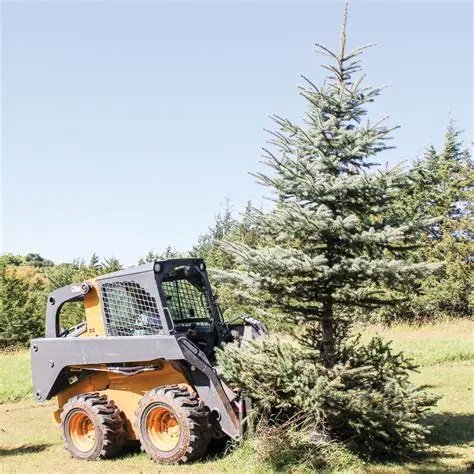

Bobcat T86 vs CAT 299D3: Which Compact Track Loader Really Delivers More Power, Lift and Productivity?
Content Menu
● Core focus and target keywords
● Quick spec snapshot: Bobcat T86 vs CAT 299D3
● Working performance: lift, reach and speed
● Hydraulics and hydraulic horsepower: where the T86 stands out
>> Hydraulic flow options and flexibility
>> Hydraulic horsepower and attachment performance
● Premium Power Performance: intelligent power management
● Engine power vs real‑world productivity
● Operator comfort, visibility and ride quality
>> Cab environment and controls
>> Suspension and ride quality
● Stability, bucket control and grading performance
● Attachment versatility and super‑flow ecosystem
● Real‑world use cases and machine matching
>> When the Bobcat T86 is the stronger choice
>> When the CAT 299D3 might still fit
● Step‑by‑step framework for choosing your compact track loader
● Expert‑style insights: total cost of ownership considerations
● Where to place images, charts and video
● Clear, targeted call to action
● FAQs: Bobcat T86 vs CAT 299D3
>> 1. Which has higher lifting capacity, the Bobcat T86 or CAT 299D3?
>> 2. What is the main difference in hydraulics between the T86 and 299D3?
>> 3. How does Premium Power Performance benefit T86 owners?
>> 4. Is the ride smoother on the Bobcat T86 than on the CAT 299D3?
>> 5. Which machine offers better cooling and uptime in dusty conditions?
Choosing between the Bobcat T86 and the CAT 299D3 comes down to how much rated operating capacity, hydraulic power, travel speed and attachment versatility you need for demanding jobsites such as construction, roadwork, forestry and snow removal. This enhanced guide goes beyond basic specs to explain real working performance, comfort and buying strategy so contractors and fleet managers can make a confident investment decision.
Core focus and target keywords
This article is optimized around the following core keywords and long‑tail phrases:
– Primary keyword: Bobcat T86 vs CAT 299D3 compact track loader
– Secondary keywords: Bobcat T86 comparison, CAT 299D3 XE specs, compact track loader lifting capacity, high‑flow vs super‑flow hydraulics, loader attachment versatility
These phrases are integrated in H1–H3 headings, opening paragraphs and key comparison sections to support search intent while keeping the text natural and easy to read.
Quick spec snapshot: Bobcat T86 vs CAT 299D3
Before going into detailed analysis, this quick table highlights the most important performance differences contractors usually care about.
| Key factor | Bobcat T86 CTL | CAT 299D3 / 299D3 XE |
|---|---|---|
| Rated operating capacity (ROC) | 3,800 lb (higher lift capacity) | 3,560 lb on 299D3 XE |
| Hinge pin height | 132 in (higher reach) | 126.3 in |
| Travel speed (two‑speed) | Up to 10.4 mph | Around 8.4 mph on 299D3 XE |
| Engine horsepower | 105 hp | 110 hp |
| Hydraulic flow options | 3 flows: standard, high, super‑flow | 2 flows: standard, XE high‑flow |
| Max auxiliary flow (gpm) | Up to 42.0 gpm super‑flow | Up to 40.0 gpm on 299D3 XE |
| Hydraulic horsepower focus | Higher hydraulic HP from super‑flow | Slightly lower hydraulic HP |
| Suspension / undercarriage | Bobcat 5‑Link torsion suspension | Torsion axle suspension |
| Power management feature | Premium Power Performance with high/super‑flow | Conventional power distribution |
| Attachment strategy | Standard + super‑flow attachments | Standard & high‑flow attachments |
Working performance: lift, reach and speed
For many buyers, the first question in a Bobcat T86 vs CAT 299D3 comparison is simple: which loader lifts more and works faster on real jobsites?
– The Bobcat T86 offers a higher rated operating capacity (ROC) of 3,800 lb, giving you more margin for heavy palletized materials, pavers, pipe and bulk construction materials compared with the 3,560 lb ROC of the CAT 299D3 XE.
– A higher hinge pin height of 132 in on the T86 also means better dump clearance into high‑sided trucks and hoppers than the 126.3 in hinge pin height on the 299D3.
From a productivity standpoint:
– The T86 comes with standard two‑speed travel, reaching up to 10.4 mph, so operators can move between work areas faster and cut dead travel time.
– The 299D3 XE is slower at around 8.4 mph, which can be noticeable on larger sites when hauling multiple bucket loads or attachments back and forth.
Key takeaway: If your work involves frequent loading, truck filling, or carrying heavy materials over distance, the higher ROC, taller hinge pin and faster travel speed of the Bobcat T86 provide a measurable productivity edge.

Hydraulics and hydraulic horsepower: where the T86 stands out
Hydraulic performance is often the deciding factor when choosing between the Bobcat T86 and CAT 299D3, especially if you run high‑demand attachments like planers, mulchers and snow blowers.
Hydraulic flow options and flexibility
The Bobcat T86 is engineered with three hydraulic flow options in a single machine:
– Standard flow: 23.6 gpm
– High flow: 36.6 gpm
– Super‑flow: 42.0 gpm
By contrast, the CAT 299D3 offers two flow choices:
– Standard flow: about 23 gpm
– XE high‑flow: up to 40 gpm on the 299D3 XE variant
This means the T86 not only reaches higher maximum auxiliary flow but also gives more granular control over hydraulic setup, which is critical for matching different attachments and applications.
Hydraulic horsepower and attachment performance
Because hydraulic horsepower depends on both pressure and flow, the higher auxiliary flow rates of the T86 super‑flow system translate into more hydraulic horsepower at the attachment.
– The T86 hydraulic horsepower outranks the 299D3 XE thanks to its 42.0 gpm super‑flow capability.
– This extra flow supports heavy‑duty attachments such as planers, forestry drum mulchers and snow blowers, where even a small increase in hydraulic horsepower can significantly increase production per hour.
Key takeaway: Contractors who rely heavily on hydraulic attachments will benefit from the three‑level flow strategy and higher hydraulic horsepower of the Bobcat T86, providing more control and more power than the CAT 299D3 XE.
Premium Power Performance: intelligent power management
One of the most distinctive technologies on the Bobcat T86 is Premium Power Performance, a power management system designed to improve productivity by up to 13 percent compared with competitive compact track loaders.
– This system is standard on T86 models equipped with high‑flow or super‑flow hydraulics.
– It coordinates the hydrostatic pump (drive train) and electronic displacement control pump (hydraulics) to distribute power where it is needed most in real time, whether to the tracks or the front attachment.
In practice, this means:
– More stable engine speed and fewer stalls when pushing the loader hard into a pile while simultaneously running a demanding attachment.
– Better control and smoother multitasking when traveling, lifting and powering hydraulic tools at the same time.
While the CAT 299D3 has strong conventional power delivery, it does not feature an equivalent named power management system like Premium Power Performance that actively optimizes power distribution between drive and implement systems in the same way.
Key takeaway: On jobs that constantly push the machine to its limits, Premium Power Performance helps operators get more done with the same horsepower and supports the claim of up to 13 percent higher productivity.
Engine power vs real‑world productivity
On paper, the CAT 299D3 has a slight advantage in rated engine horsepower, but the Bobcat T86 often turns that into higher real‑world productivity.
– Bobcat T86: 105 horsepower
– CAT 299D3: 110 horsepower
However:
– The T86 pairs this engine with higher auxiliary flow, higher ROC, faster travel speed, and Premium Power Performance.
– The T86 uses a balanced mix of machine weight, engine power and hydraulic pump performance, allowing operators to “do more with the horsepower you have.”
Key takeaway: If you only look at horsepower numbers, the CAT 299D3 appears stronger, but once you factor in hydraulics, ROC and power management, the Bobcat T86 converts its power into more usable work on tough jobsites.
Operator comfort, visibility and ride quality
Operator comfort is not just a luxury; it directly affects daily productivity and fatigue, especially on long shifts.
Cab environment and controls
The Bobcat T86 is part of the R‑Series and offers:
– One‑piece enclosed cab with best‑in‑class visibility and an optional clear‑side enclosure that improves side‑view awareness when working near obstacles or personnel.
– An industry‑leading touch display, giving operators quick access to machine settings, diagnostics and attachment controls in a modern, intuitive interface.
The CAT 299D3 also provides a comfortable cab with good visibility and controls, but the R‑Series cab is a particular strength for visibility and operator environment.
Suspension and ride quality
One of the most important comfort and control advantages of the Bobcat T86 vs CAT 299D3 is the undercarriage design.
– T86: Bobcat 5‑Link torsion suspension undercarriage, a patented design that improves ride smoothness and stability.
– 299D3 XE: torsion axle suspension and no option for the 5‑link suspension system.
The 5‑link torsion suspension helps:
– Reduce operator fatigue by smoothing out bumps and vibration.
– Improve lifting and grading performance by keeping the machine more stable and better planted, especially on uneven terrain.
Key takeaway: For contractors who value ride comfort, visibility and fine control during grading or precision work, the Bobcat T86’s R‑Series cab and 5‑link torsion suspension undercarriage are clear advantages over the CAT 299D3 torsion axle setup.
Stability, bucket control and grading performance
Accurate grading and material handling depend on a stable machine and precise bucket control.
The Bobcat T86 supports operators with:
– Dual‑direction bucket positioning as standard, which keeps the bucket level when raising or lowering, reducing material spillage and helping with consistent loading and grading.
– Automatic ride control, which stabilizes the loader when traveling with a loaded bucket and reduces material loss while improving comfort.
These features complement the 5‑link torsion suspension to create a very stable grading platform for road base work, landscaping, site prep and fine finish applications.
The CAT 299D3 provides robust performance as well, but the Bobcat T86’s combination of bucket positioning and automatic ride control stands out as a standard advantage.
Key takeaway: If grading accuracy, reduced spillage and smooth travel with full buckets are priorities, the T86 offers a well‑integrated package of suspension, ride control and bucket positioning features.
Cooling system and uptime
High‑horsepower compact track loaders often operate in dusty, hot environments that stress the cooling system.
The Bobcat T86 is designed with:
– Larger cooling components to manage heat under demanding hydraulic and engine loads.
– A standard reversing fan, which automatically blows dust and debris out of the cooling package, reducing the need for additional rooftop cooling accessories.
R‑Series loaders also feature a Bobcat engine with an efficient design focused on delivering the required performance while simplifying routine maintenance.
The CAT 299D3 has a strong cooling system as well, but the Bobcat T86’s reversing fan and larger cooling package are clear advantages for uptime and consistent performance in tough conditions.
Key takeaway: For applications like forestry, demolition, and road construction where radiators easily clog, the T86 cooling system and reversing fan can reduce manual clean‑out time and keep the machine working longer.
Attachment versatility and super‑flow ecosystem
Attachment versatility is central to the value of a compact track loader.
The Bobcat T86 provides:
– Full compatibility with existing Bobcat attachments plus newly developed super‑flow attachments, such as planers, forestry drum mulchers and snow blowers.
– The ability to switch between standard, high‑flow and super‑flow modes depending on attachment requirements, all in a single machine.
The CAT 299D3 supports a wide range of Caterpillar and third‑party attachments with both standard and high‑flow options, but does not offer the same three‑tiered hydraulic flow system and super‑flow ecosystem.
Key takeaway: Contractors who run a diverse attachment fleet or plan to grow into high‑demand tools will appreciate the three‑flow hydraulic architecture and super‑flow attachment lineup on the Bobcat T86.
Real‑world use cases and machine matching
To help with practical choices, it is useful to map Bobcat T86 vs CAT 299D3 to concrete job scenarios. The following guidance shows which machine aligns best with typical applications.
When the Bobcat T86 is the stronger choice
The T86 is particularly well‑suited if your work involves:
– High‑flow or super‑flow attachments such as asphalt planers, forestry mulchers, cold planers and heavy snow blowers.
– Frequent truck loading where higher ROC and hinge pin height reduce loading cycles.
– Large or spread‑out jobsites where faster travel speed (10.4 mph) saves time.
– Operations that demand maximum uptime in dusty or hot conditions, benefitting from the reversing fan and larger cooling package.
When the CAT 299D3 might still fit
The CAT 299D3 remains a strong option if:
– Your attachment mix mainly uses standard or high‑flow tools rather than super‑flow requirements.
– You are already heavily invested in Caterpillar dealer support and fleet management systems.
This practical section helps readers translate specs into decisions and match the machine to their most profitable work.
Step‑by‑step framework for choosing your compact track loader
Adding a clear, actionable framework improves both user experience and perceived expertise. Use this simple process:
1. Define your top three applications
List your main jobs (for example, residential construction, road base prep, forestry mulching, snow removal) and rank them by revenue importance.
2. Map applications to hydraulic needs
Identify which attachments you rely on most now and what you plan to add in the next 2–3 years. Check if they require standard, high‑flow or super‑flow hydraulics.
3. Estimate daily lift and transport patterns
Consider typical load weights, dump heights and how far you travel with loaded buckets or attachments across the site.
4. Assess operator hours and fatigue risk
If operators sit in the machine for long shifts, prioritize cab comfort, suspension and ride quality, where the T86’s 5‑link torsion suspension stands out.
5. Evaluate dealer support and lifecycle plans
Compare local support for both brands, including parts availability, maintenance programs and rental backup options.
6. Test drive both machines on similar tasks
Run each loader with key attachments, note stability, visibility, control and fuel use, then compare objective performance and operator feedback.
Embedding this decision framework makes the article more actionable and differentiates it from generic spec sheets.
Expert‑style insights: total cost of ownership considerations
Although exact cost data varies by region and dealer, there are clear factors to consider for long‑term ownership:
– Productivity per hour: Higher hydraulic horsepower, ROC and speed can reduce the total hours needed to complete a job, lowering labor and fuel cost per project.
– Attachment utilization: Investing in a loader like the T86 that handles standard, high‑flow and super‑flow attachments can extend the life and versatility of your attachment fleet.
– Downtime risk: Larger cooling components and a reversing fan help mitigate overheating and clogging issues in dusty applications, reducing unplanned downtime and service calls.
– Operator retention: A more comfortable, stable machine with high visibility can support operator retention and reduce training costs.
These points add analytical value and help owners think beyond the initial purchase price.
Where to place images, charts and video
To enhance user experience and engagement:
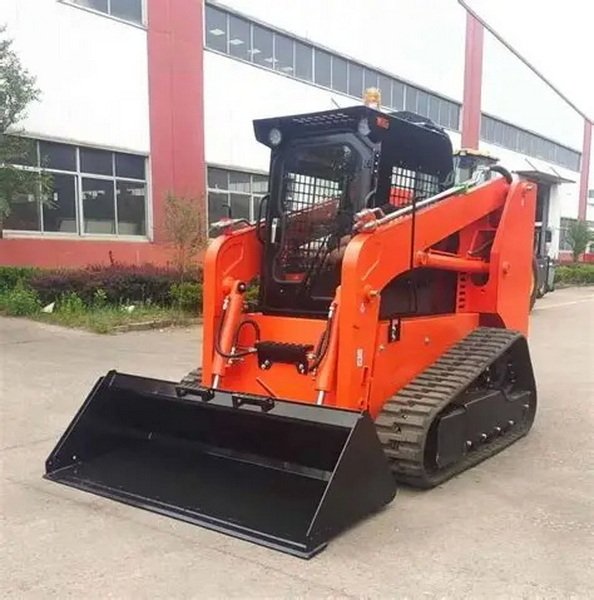
– Hero image: Place a high‑quality side‑by‑side photo of Bobcat T86 vs CAT 299D3 near the top, just below the H1 and before the quick comparison table.
– Spec / performance chart: Add a simple bar or column chart illustrating ROC, hinge pin height and travel speed in the performance section.
– Hydraulics infographic: Include a schematic showing standard, high‑flow and super‑flow hydraulic circuits and their impact on attachment performance.
– Cab and undercarriage photos: Insert interior cab photos and undercarriage close‑ups in the comfort and suspension section to visually explain the 5‑link torsion design.
– Short explainer video: Embed a video demonstrating Premium Power Performance and super‑flow attachments in action.
Clear, targeted call to action
Choosing between the Bobcat T86 and CAT 299D3 is a strategic decision that will shape your productivity for years. Instead of relying only on spec sheets, put both machines to work on your own materials, attachments and operators. Configure a Bobcat T86 with the hydraulic flow package and attachments your core jobs require, then arrange a side‑by‑side demo against the CAT 299D3 on a real jobsite. Use the performance, comfort and uptime insights from this guide to compare lifting capacity, hydraulic responsiveness and ride quality, and then commit to the compact track loader that delivers the greatest productivity and return on investment for your business.
Contact us to get more information!
FAQs: Bobcat T86 vs CAT 299D3
1. Which has higher lifting capacity, the Bobcat T86 or CAT 299D3?
The Bobcat T86 has a higher rated operating capacity of 3,800 lb, compared with 3,560 lb on the CAT 299D3 XE, giving it more lifting margin for heavy materials.
2. What is the main difference in hydraulics between the T86 and 299D3?
The T86 offers three hydraulic flow options (standard, high‑flow and super‑flow up to 42 gpm), whereas the 299D3 provides two options (standard and XE high‑flow up to about 40 gpm). This results in higher hydraulic horsepower and more flexibility on the Bobcat T86.
3. How does Premium Power Performance benefit T86 owners?
Premium Power Performance intelligently manages power between the drive train and hydraulics, improving engine‑to‑workgroup efficiency and making the T86 up to 13 percent more productive than competitive compact track loaders in demanding, multitasking operations.
4. Is the ride smoother on the Bobcat T86 than on the CAT 299D3?
Yes. The T86 uses a patented 5‑Link torsion suspension undercarriage that delivers industry‑leading operator comfort and a smoother ride, while the 299D3 XE uses a torsion axle suspension without a 5‑link option.
5. Which machine offers better cooling and uptime in dusty conditions?
The Bobcat T86 features larger cooling components and a standard reversing fan, which helps keep the cooling package cleaner and reduces the need for extra rooftop cooling accessories, supporting better uptime in dusty environments.
References:
1. https://www.bobcat.com/na/en/buying-resources/loaders/bobcat-t86-loader-vs-cat-299d3-loader
2. https://www.bobcat.com/na/en/buying-resources/loaders
Hot Tags: Cat Skid Steer Vs Bobcat, 299 Cat Skid Steer, Cat 272C Skid Steer, Caterpillar Skid Steers, Bobcat Vs Cat Skid Steer, Cat 285 Skid Steer For Sale, Power Wheels Skid Steer Loader, Cat Vs Bobcat Skid Steer, Compact Track Loader Comparison