
Stand-On and Walk-Behind Compact Tool Carriers: The Complete 2026 Buyer’s Guide With Expert Tips From 9 Manufacturers
Content Menu
● What Are Stand-On and Walk-Behind Compact Tool Carriers?
● Stand-On vs Walk-Behind: Which Is Better?
● How These Machines Compare to Skid Steers and Mini Loaders
● Power Options: Gas, Diesel and Electric
● Essential Attachments and What They Do
● Advice From 9 Leading Manufacturers
>> Vermeer: Size and Training Matter
>> Ditch Witch: Leverage Your Local Dealer
>> Kubota: Start With Your Organization’s Needs
>> Bobcat: Own the Right Attachments
>> Toro: New Applications and Battery-Powered CULs
>> Kanga: Ask the Right Pre-Purchase Questions
>> Giant by Tobroco: Test Multiple Machines
>> Ramrod: Involve the Whole Team
>> Wacker Neuson: Never Ignore Jobsite Access
● Step-by-Step: How to Choose the Right Compact Tool Carrier
● Operator Training and Safety Best Practices
● Maintenance Tips to Maximize Uptime
● New Trends: Electric Models and Smart Hydraulics
● When a Compact Tool Carrier Is Not Enough
● Plan Your Fleet and Request a Demo
● FAQs About Stand-On and Walk-Behind Tool Carriers
>> Q1. Are compact tool carriers the same as mini skid steers?
>> Q2. How much can a typical compact tool carrier lift?
>> Q3. Can I use the same attachments on a compact tool carrier and a skid steer?
>> Q4. Is a battery-electric compact utility loader worth the investment?
>> Q5. How important is dealer support for these machines?
Stand-on and walk-behind compact tool carriers have become essential compact equipment for landscaping, construction, rental and property maintenance crews that need big productivity in tight spaces. In this enhanced guide, you will learn how these machines work, how to choose the right model and attachments, and how to get expert-level performance and ROI from day one.
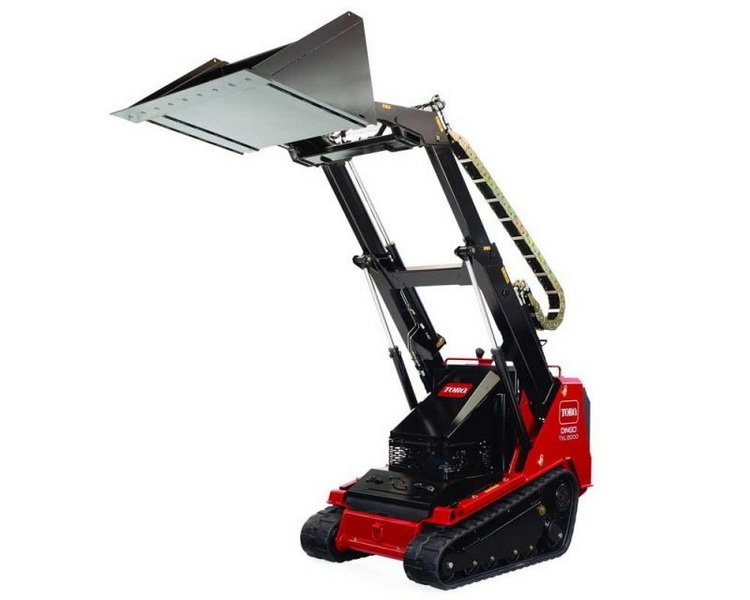
What Are Stand-On and Walk-Behind Compact Tool Carriers?
Stand-on and walk-behind compact tool carriers (often called mini skid steers, compact utility loaders or utility track loaders) are small, highly maneuverable machines designed to power a wide range of attachments. Think of them as skid steers without a cab, optimized for on-and-off operation and tight jobsites.
These machines typically feature:
– Compact size that fits through standard backyard gates and narrow access points.
– Wheels or low-psi tracks for a light footprint on turf and soft ground.
– Universal quick-attach plates that accept dozens of hydraulic and non-hydraulic tools.
– Stand-on platforms or walk-behind controls for clear visibility and quick mounting.
Key Benefits and Use Cases
Stand-on and walk-behind tool carriers deliver a mix of versatility, maneuverability and low operating cost that is hard to match for small and medium projects.
Typical benefits include:
– Fast on-off operation for tasks that require frequent hand work, such as planting or fine grading.
– Reduced turf damage thanks to low ground pressure tracks and compact dimensions.
– Lower acquisition cost than full-size skid steers, making them attractive for small contractors and rental fleets.
– Ability to replace wheelbarrows, hand digging and manual material handling on many jobs.
Common applications:
– Landscaping and hardscaping, including moving soil, mulch, stone and pavers.
– Light excavation and trenching for utilities or irrigation.
– Construction material handling on tight urban or residential sites.
– Property maintenance, snow management and light demolition with the right attachments.
Stand-On vs Walk-Behind: Which Is Better?
Stand-on and walk-behind configurations each offer distinct ergonomics and productivity advantages.
| Aspect | Stand-On Tool Carrier | Walk-Behind Tool Carrier |
|---|---|---|
| Operator position | Operator stands on an integrated platform behind the machine. | Operator walks behind, steering via handle or control arms. |
| Productivity | Higher travel speed, faster cycle times and less operator fatigue on larger sites. | Slower but very precise in tight or sloped areas. |
| Visibility and safety | Elevated stance improves visibility over the attachment and surroundings. | Very stable feel, especially on slopes and uneven ground. |
| Turf impact | Slightly more ground pressure but still low with tracks. | Lighter overall, ideal for soft or sensitive turf. |
| Cost | Typically higher initial price but strong productivity gain. | Often lower purchase cost and simple to operate. |
As a rule of thumb, choose stand-on models for productivity on medium to larger sites and walk-behind units for small yards, steep slopes or extremely delicate surfaces.
How These Machines Compare to Skid Steers and Mini Loaders
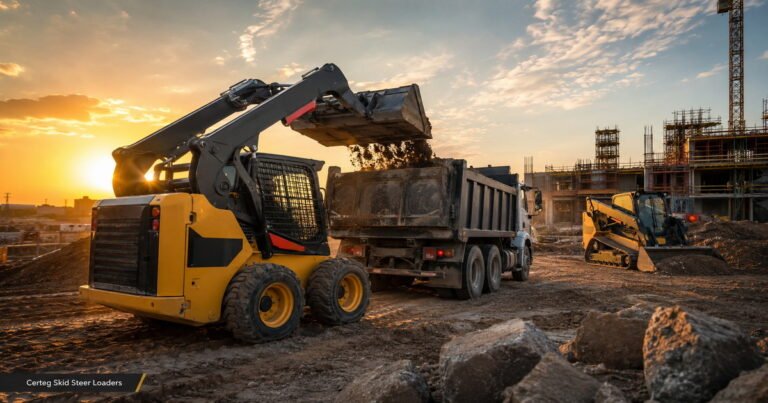
Compact tool carriers sit below traditional skid steers and compact track loaders in size and capacity but compete strongly in tight environments.
Key differences:
– Lower rated operating capacities than larger skid steers, typically in the light to medium duty range.
– Much narrower width, making access through gates, doorways and urban alleys possible.
– Easier transport on smaller trailers or even in some light trucks due to lower machine weight.
– Strong focus on attachment versatility rather than pure lifting capacity.
For contractors already using excavators, skid steers, forklifts, tractors or tracked carriers, compact tool carriers act as highly flexible gap fillers on jobs where big machines cannot reach or would cause damage.
Power Options: Gas, Diesel and Electric
Modern compact tool carriers are available with gas, diesel and increasingly battery-electric powertrains.
– Gasoline engines: Widely used, cost-effective and easy to service, ideal for general construction and landscaping.
– Diesel engines: Better fuel economy and torque for heavy attachments, popular with professional fleets.
– Battery-electric: Zero tailpipe emissions, low noise and the ability to work indoors or in low-emission zones.
Electric compact utility loaders are particularly valuable for:
– Indoor demolition, warehouse work and basement remodeling.
– Noise-sensitive neighborhoods and night work.
– Projects with strict emissions regulations.
Essential Attachments and What They Do
The real value of a compact tool carrier comes from its attachments. Many models accept dozens of tools, turning one power unit into a multi-function machine.
Common attachment categories:
– Buckets: General purpose, multi-purpose and grapple buckets for loading and material handling.
– Augers: Drilling post holes for fencing, decks and tree planting.
– Trenchers: Installing utilities, drainage and irrigation lines.
– Forks: Pallet forks and tree forks for moving pallets, sod, trees and building materials.
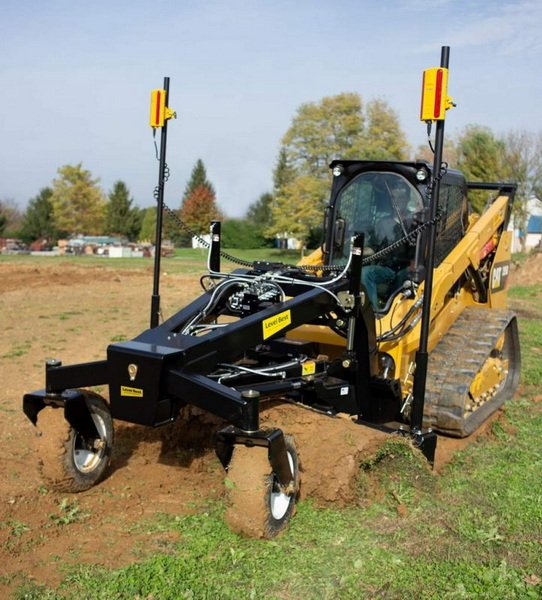
– Ground-engaging tools: Rakes, tillers, box scrapers and brooms for grading and cleanup.
– Demolition tools: Hydraulic breakers for light concrete and asphalt removal.
A single machine can often support a large family of compatible attachments, depending on brand and hydraulic configuration.
Advice From 9 Leading Manufacturers
Leading manufacturers provide valuable guidance on selecting and operating compact tool carriers effectively. Below are distilled tips from nine well-known brands.
Vermeer: Size and Training Matter
Vermeer emphasizes that bigger is not always better, because this category was built around maneuvering where larger machines cannot go or would cause excessive remediation. Their experts advise:
– Selecting the right size mini skid steer based on your work environment and material weights.
– Reading the operator’s manual and practicing in a safe area before working at full speed.
– Seeking dealer-provided training when needed.
Ditch Witch: Leverage Your Local Dealer
Ditch Witch highlights the importance of talking to your local dealer, who understands typical regional soil conditions, regulations and common job types. They recommend:
– Testing different machines at the dealership or demo days.
– Using dealer insight to match attachments and specs to your most frequent tasks.
Kubota: Start With Your Organization’s Needs
Kubota urges buyers to start by understanding your organization’s needs before comparing specifications. In practice this means:
– Clarifying whether you mainly replace wheelbarrows and shovels or rely heavily on hydraulically demanding tools like breakers and trenchers.
– Comparing lift capacity, hydraulic flow and machine width against your typical jobs.
Bobcat: Own the Right Attachments
Bobcat advises contractors to carefully evaluate purchasing versus renting attachments. Because many attachments work on mini track loaders and larger compact loaders, purchasing frequently used tools can pay for itself after only a few projects through labor savings and speed.
Toro: New Applications and Battery-Powered CULs
Toro notes that compact utility loaders have evolved from small-scale helpers to essential jobsite machines with increasing rated capacities and expanded use cases. They highlight:
– New models that enable more demanding work.
– Battery-powered units that bring compact loaders indoors without emissions.
Kanga: Ask the Right Pre-Purchase Questions
Kanga recommends preparing targeted questions before buying to narrow your options. Key points include:
– Typical work environment, such as soft turf, rocky ground or steep slopes.
– Tracks versus wheels, ground clearance and stability.
– Safety features, ergonomics and ease of service.
– Total maintenance cost over the machine’s life.
Giant by Tobroco: Test Multiple Machines
Giant by Tobroco stresses that many contractors are buying mini skid steers as their first machine, often from unfamiliar brands. Their guidance:
– Do your homework by testing several machines with your typical tasks in mind.
– Check serviceability and resale potential as part of your evaluation.
Ramrod: Involve the Whole Team
Ramrod recommends involving everyone who might use the machine in the decision process. This uncovers:
– Different attachments needed by different crews.
– Operator preferences for controls and ergonomics.
– Ways to maximize utilization from day one.
Wacker Neuson: Never Ignore Jobsite Access
Wacker Neuson underscores jobsite access as a key factor in selecting a utility track loader. For example:
– If you must fit through a standard yard gate, narrow models are ideal.
– Tracks allow low ground pressure without sacrificing traction.
Step-by-Step: How to Choose the Right Compact Tool Carrier
Use this practical seven-step process to select the best stand-on or walk-behind unit for your business.
1. Define your core tasks
– List top applications such as landscaping, trenching, demolition, snow work and material handling.
– Estimate typical loads and lifting heights you need to achieve.
2. Map access and terrain
– Measure gate widths, doorway sizes and trailer capacity.
– Note slopes, soft turf and surfaces like pavers or concrete.
3. Choose stand-on versus walk-behind
– Stand-on for higher productivity and frequent travel.
– Walk-behind for slopes, delicate lawns and very tight spaces.
4. Match power and hydraulics
– Select gas, diesel or electric based on emissions rules and job type.
– Check hydraulic flow and pressure against your heaviest attachment requirements.
5. Prioritize attachments
– Decide which attachments you must own and which can be rented in peak season.
– Confirm compatibility of attachments across your fleet when possible.
6. Evaluate dealer support
– Compare training, parts availability and service response time.
– Ask for demos with your own operators and tasks.
7. Run a total cost and ROI scenario
– Factor purchase price, attachment cost, maintenance and transport.
– Estimate labor savings versus manual work or larger machines.
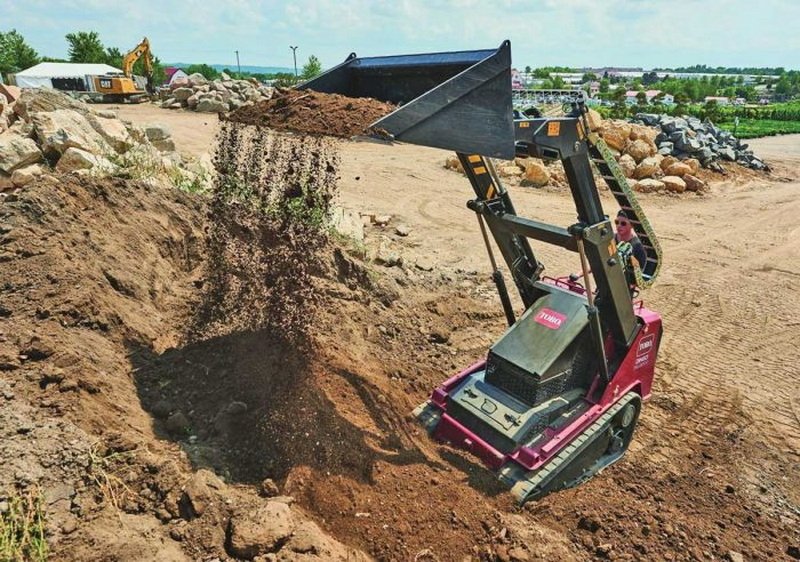
Operator Training and Safety Best Practices
Proper training dramatically improves safety, productivity and machine life.
Best practices include:
– Read the operator’s manual before use to understand controls, safety systems and maintenance points.
– Practice in a secure area under supervision before working near people or structures.
– Always wear appropriate PPE such as helmet, gloves, eye and hearing protection according to jobsite requirements.
– Start slowly when using a new attachment, increasing speed only after you gain control and feel.
– Keep bystanders clear of swing radius and travel path, especially when reversing or working near edges.
Many dealers and manufacturers now offer structured operator training programs, which are particularly valuable for rental customers and new contractors.
Maintenance Tips to Maximize Uptime
Well-maintained compact tool carriers deliver more reliable performance and safer operation.
Core maintenance practices:
– Daily walkaround: Inspect tracks or tires, hoses, couplers and attachment pins for damage or leaks.
– Fluid checks: Check engine oil, coolant and hydraulic fluid levels at the intervals specified in the manual.
– Track and undercarriage care: Clean debris and adjust track tension as recommended.
– Greasing: Follow the manufacturer’s lubrication chart for pins, bushings and pivot points.
– Scheduled services: Perform engine and hydraulic filter changes at prescribed intervals to avoid failures.
Many OEMs design utility track loaders with easy-access service points and simplified daily checks to reduce downtime and maintenance cost.
New Trends: Electric Models and Smart Hydraulics
The compact tool carrier segment is evolving rapidly, driven by technology and jobsite demands.
Notable trends:
– Battery-electric units for indoor, urban and low-emission projects, offering reduced noise and lower daily operating costs.
– Higher rated operating capacities and improved hydraulic performance, enabling heavier attachments and more demanding work.
– Smarter control systems, such as integrated loader and auxiliary controls in a single joystick to simplify operation.
– Enhanced operator platforms and ergonomics to reduce fatigue and support longer shifts.
When a Compact Tool Carrier Is Not Enough
Although compact tool carriers are extremely versatile, they are not the right answer for every job.
Consider larger equipment when:
– Lifting very heavy pallets, large precast components or full demolition loads.
– Working on large open sites where travel distances are long and productivity demands are high.
– Performing deep excavation, heavy compaction or high-reach work where excavators, full-size skid steers, rollers or telehandlers are more suitable.
In many fleets, compact tool carriers complement excavators, skid steers, forklifts, tractors and tracked carriers to cover a broader range of tasks efficiently.
Plan Your Fleet and Request a Demo
To choose the right stand-on or walk-behind compact tool carrier, combine expert manufacturer guidance with a clear view of your own jobs, attachments and growth plans. The most effective next step is to schedule a hands-on demo with a specialist, bring your operators and preferred attachments, and test real tasks on representative ground conditions. By doing this now, you can build a compact equipment fleet that delivers high productivity, low operating cost and strong ROI for years to come, and you will be ready to add the exact machines and attachments your projects will need in the coming season.
Contact us to get more information!
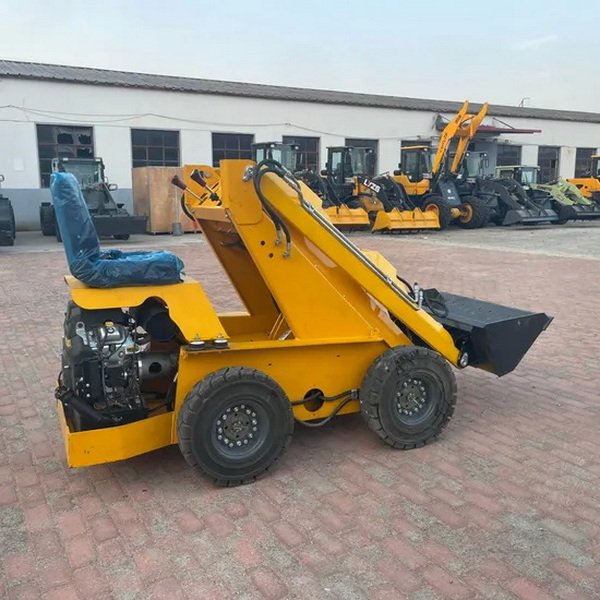
FAQs About Stand-On and Walk-Behind Tool Carriers
Q1. Are compact tool carriers the same as mini skid steers?
Many models marketed as mini skid steers, compact utility loaders or utility track loaders function as compact tool carriers, sharing similar architecture and attachment interfaces. The naming often depends on the manufacturer and market segment, but the core concept is similar.
Q2. How much can a typical compact tool carrier lift?
Rated operating capacity varies widely by model, but many compact loaders in this class handle roughly a few hundred to around one thousand pounds. Higher-spec units may exceed that range, so it is important to check the individual data sheet for exact lift capacity.
Q3. Can I use the same attachments on a compact tool carrier and a skid steer?
Some tool carriers accept a skid-steer-style quick-attach plate, allowing cross-compatibility for selected buckets, forks and other tools. However, you should always confirm mounting type, rated load and hydraulic requirements before sharing attachments across different machines.
Q4. Is a battery-electric compact utility loader worth the investment?
Electric units can be highly cost-effective for contractors working indoors, in emission-regulated zones or in noise-sensitive areas. When machine utilization is high and fuel savings accumulate over time, the total cost of ownership can be very competitive with traditional engines.
Q5. How important is dealer support for these machines?
Dealer support is critical, because it directly influences uptime and productivity. A strong dealer can help with machine selection, attachment matching, operator training, preventive maintenance and fast parts or service, all of which protect your investment over the life of the machine.
References:
1. https://compactequip.com/compact-tool-carriers/everything-you-need-to-know-about-stand-on-walk-behind-tool-carriers-including-expert-advice-from-9-manufacturers/
2. https://compactequip.com/compact-tool-carriers/lets-take-a-look-at-six-brands-of-stand-on-walk-behind-compact-tool-carriers/
3. https://heavyequipmentbuyersguide.com/compact-tool-carrier-attachments
4. https://www.totallandscapecare.com/equipment/landscaping-equipment/article/15034238/equipment-matters-selecting-a-compact-tool-carrier
5. https://www.ditchwitch.com/on-the-job/selecting-a-stand-on-skid-steer-and-trencher-attachment-thats-right-for-you/
6. https://compactequip.com/compact-tool-carriers/heres-a-look-at-wacker-neusons-cool-new-stand-on-tool-carrier/
Hot Tags: Stand-On Tool Carriers, Walk-Behind Tool Carriers, Compact Tool Carriers, Mini Skid Steer Loaders, Stand-On Skid Steer, Walk-Behind Skid Steer, Compact Construction Equipment, Landscaping Equipment, Contractor Equipment, Tool Carrier Attachments