
Two Lift Arm Configurations for Loaders: How to Choose the Right Radius or Vertical Lift Path for Your Jobs
Content Menu
● Radius vs Vertical Lift Path: Which Loader Lift Arm Configuration Is Right for You?
● What Is a Loader Lift Arm Path?
● Radius Lift Path: How It Works and When It Excels
>> Key characteristics of radius lift loaders
>> Typical applications for radius lift
● Vertical Lift Path: How It Works and Where It Delivers More Value
>> Key characteristics of vertical lift loaders
>> Typical applications for vertical lift
● Side‑by‑side comparison: radius vs vertical lift
>> Key performance differences at a glance
● How Lift Arm Choice Affects Total Cost of Ownership
>> Fuel efficiency and cycle times
>> Wear, maintenance, and uptime
● Step‑by‑Step Framework for Choosing the Right Lift Arm
>> Step 1: Map your primary work heights
>> Step 2: Define your heaviest common loads
>> Step 3: Consider jobsite space and approach angles
>> Step 4: Plan for attachments and future work
● Real‑World Scenarios – Which Lift Arm Wins?
>> Scenario 1: Landscaping contractor
>> Scenario 2: Concrete and block supplier
>> Scenario 3: Mixed‑fleet contractor or rental business
● Expert Tips to Maximize Productivity with Any Lift Arm Configuration
>> Use attachments strategically
>> Plan your fleet around lift paths
● Align Your Lift Arm Choice With Your Business Goals
● Frequently Asked Questions (FAQ)
>> 1. What is the main difference between radius and vertical lift loaders?
>> 2. Which lift arm configuration is better for loading high‑sided trucks?
>> 3. When should I choose a radius lift path instead of vertical lift?
>> 4. Does vertical lift always mean a bigger or more powerful machine?
>> 5. Can one loader configuration cover all my jobs?
Selecting between a radius lift path and a vertical lift path loader is a strategic decision that affects your loading height, reach, stability, and long‑term operating costs. This in‑depth guide explains how each lift arm configuration works, where it performs best, and how fleet managers, contractors, and rental businesses can match the right machine to real‑world jobs.
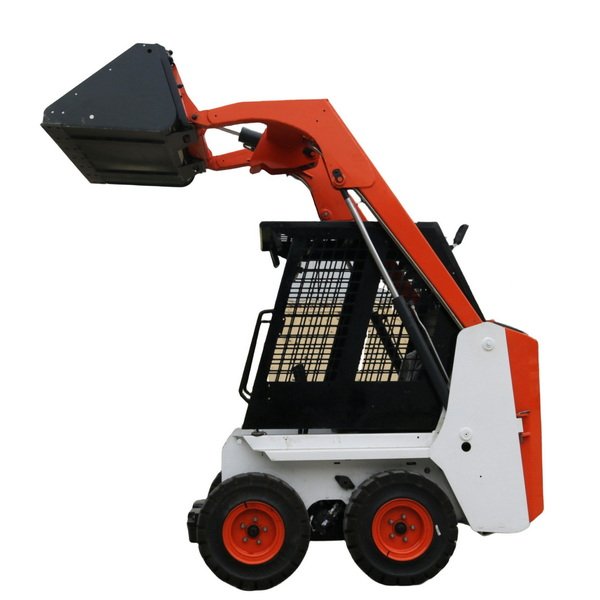
Radius vs Vertical Lift Path: Which Loader Lift Arm Configuration Is Right for You?
When you choose a compact track loader or skid‑steer loader, you are not just picking horsepower and rated operating capacity – you are also choosing a lift arm path that defines how the attachment travels through its working range. Understanding the difference between radius lift and vertical lift helps you load trucks more safely, dig more efficiently, and boost productivity across your fleet.
What Is a Loader Lift Arm Path?
A loader’s lift arm path describes the motion the bucket or attachment follows as you raise and lower the arms from ground level to full height.
– In a radius lift path, the attachment moves in a curved arc away from and then back toward the machine.
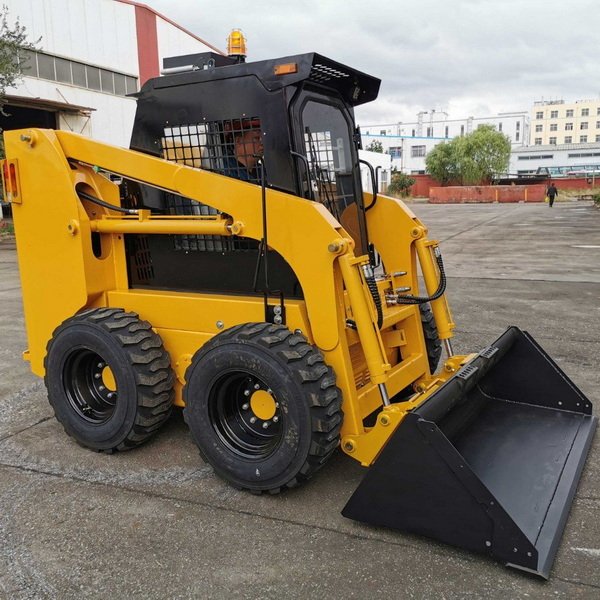
– In a vertical lift path, the attachment travels more up‑and‑down, staying closer to the machine while maintaining strong reach at full height.
This geometry directly influences reach, stability, breakout force, and safe lifting capability at different heights.
Radius Lift Path: How It Works and When It Excels
A radius lift path loader lifts the bucket or attachment in an arc pattern, delivering its maximum forward reach at mid‑range heights rather than at full height.
Key characteristics of radius lift loaders
– Arc‑shaped lift motion that extends the attachment forward mid‑stroke, then moves it back toward the machine near full height.
– Greater reach at truck‑bed height, ideal for loading flatbeds, pickups, and low‑sided trailers.
– Generally simpler lift arm design, with fewer moving parts and the potential for lower ownership and maintenance costs.
Typical applications for radius lift
Radius lift path machines are often the best fit when most work is at or below eye level:
– Backfilling trenches and grading around foundations
– Loading small or medium trucks and trailers at bed height
– Landscaping tasks such as spreading soil, mulch, or aggregates
– Ground‑engaging work such as digging, prying, and light excavation
If your projects require you to dump over walls, backfill, or load flatbed trucks, a radius lift path loader is an economical, highly productive option that maximizes reach where you use it most.
Vertical Lift Path: How It Works and Where It Delivers More Value
A vertical lift path loader raises the load in a motion that is much closer to straight up and down, keeping the bucket or pallet fork near the machine chassis and maintaining strong forward reach at full height.
Key characteristics of vertical lift loaders
– The lift path moves upward with limited outward swing, keeping weight closer to the machine’s center of gravity.
– Provides more reach and stability at full lift height, especially for loading high‑sided trucks or hoppers.
– Typically offers higher rated operating capacity compared with a radius‑lift machine of similar size.
Typical applications for vertical lift
Vertical lift machines shine when you frequently work above eye level or must lift heavier loads safely:
– Placing pallets of block, brick, or sod into high‑sided trucks
– Loading feed mixers, silage wagons, and tall bins in agriculture
– Feeding material into hoppers or crushers in construction and recycling
– Any job where you must dump into the center of a tall truck body
Because the load is kept closer to the machine, you can safely lift more than an identical radius‑lift‑path machine and reduce the risk of tipping when working at full height.

Side‑by‑side comparison: radius vs vertical lift
To help decision‑makers quickly understand the differences, the table below summarizes the most important traits of each lift arm configuration.
Key performance differences at a glance
| Feature / Criteria | Radius Lift Path Loader | Vertical Lift Path Loader |
|---|---|---|
| Lift path shape | Curved, arc‑shaped motion | More straight up‑and‑down motion |
| Best reach height | Mid‑range or truck‑bed height for flatbeds and pickups | Full lift height for high‑sided trucks and tall hoppers |
| Typical rated operating capacity | Generally lower than vertical lift of similar size | Typically higher rated operating capacity for heavier loads |
| Ideal job types | Ground‑level work, grading, landscaping, flatbed loading | High‑truck loading, pallet handling, tall bin and hopper work |
| Stability focus | Strong for digging and prying at ground level, good at mid‑height | Improved stability at full height; load stays closer to machine |
| Purchase economics | Often more economical to buy, simpler design | Often higher purchase price but greater productivity at height |
| Operator visibility | Good view of attachment at ground and mid heights | Strong visibility at height; modern cabs improve all‑around visibility |
| Typical user profile | Landscapers, small contractors, municipal crews | Construction fleets, rental yards, material‑handling operations |
How Lift Arm Choice Affects Total Cost of Ownership
Beyond performance, your lift arm configuration also impacts total cost of ownership across the machine’s life.
Fuel efficiency and cycle times
– A properly matched lift path reduces wasted movements, allowing operators to complete loading cycles faster and burn less fuel per ton moved.
– If you constantly fight the geometry – for example, using a radius lift machine to load high‑sided trucks – you may need more repositioning, time, and fuel to perform the same task.
Wear, maintenance, and uptime
– Radius lift designs often use fewer linkages, which may reduce the number of wear points and simplify maintenance.
– Vertical lift designs add linkages to maintain reach at full height, but modern machines use robust bushings and pins to control wear and support heavy duty cycles.
– Choosing a configuration aligned with your dominant tasks reduces operator work‑arounds that can stress pins, bushings, and tires or tracks.
Step‑by‑Step Framework for Choosing the Right Lift Arm
To simplify decision‑making for contractors, fleet managers, and rental businesses, use this four‑step selection framework when deciding between radius and vertical lift loaders.
Step 1: Map your primary work heights
List your top three to five tasks and estimate whether they are mainly:
1. Ground to eye level, such as grading, clean‑up, and loading small trucks.
2. Eye level to above cab height, such as loading triaxle dump trucks, feeding tall hoppers, or stacking material high.
If most work sits in the first category, a radius lift path is usually optimal; if you are primarily in the second category, start with vertical lift options.
Step 2: Define your heaviest common loads
Identify typical loads and handling tools:
– Palletized block, brick, or tile
– Bulk materials in buckets such as gravel, sand, or soil
– Landscaping materials like mulch, sod, or aggregates
If you frequently handle heavy pallets or dense material at full height, the higher rated operating capacity of vertical lift loaders becomes a decisive advantage.
Step 3: Consider jobsite space and approach angles
– Tight urban or industrial sites may require you to stay farther from the truck while still reaching over tall sides.
– Vertical lift machines maintain forward reach at full height, allowing you to load from one side more easily and reduce repositioning.
Step 4: Plan for attachments and future work
Think about the attachments you use today and may add later – buckets, pallet forks, brooms, augers, grapples, or specialized tools.
– Radius lift is excellent for ground‑engaging attachments and general utility work.
– Vertical lift is better when forks, hoppers, and high‑dump tasks dominate your schedule.
Real‑World Scenarios – Which Lift Arm Wins?
The examples below illustrate how different businesses might choose between lift arm configurations.
Scenario 1: Landscaping contractor
– Tasks: grading yards, moving soil and mulch, loading pickups and small dump trailers.
– Typical work height: ground level to moderate truck‑bed height.
Best fit: A radius lift path loader gives better reach at truck‑bed height, excellent breakout force for digging and grading, and often a lower acquisition cost.
Scenario 2: Concrete and block supplier
– Tasks: moving heavy pallets of block, loading high‑sided delivery trucks throughout the day.
– Typical work height: above eye level, frequent full‑height lifts.
Best fit: A vertical lift path loader with higher rated operating capacity and strong reach at full lift height improves safety, keeps the machine stable, and speeds up loading cycles.
Scenario 3: Mixed‑fleet contractor or rental business
– Tasks: road repair, site clean‑up, pallet handling, light excavation, and truck loading.
– Requirements: one or two machines must serve many different users and tasks.
Best fit: A fleet that mixes one radius lift loader for ground work and one vertical lift loader for high loading jobs offers maximum flexibility and utilization.
Expert Tips to Maximize Productivity with Any Lift Arm Configuration
Regardless of which lift path you choose, a few best practices will help you get the most from your loader.
Optimize operator training
– Teach operators where the machine has maximum reach and stability for the chosen lift path.
– Provide short, job‑specific coaching on safe loading angles, travel speed with raised loads, and attachment changes to reduce incidents and wear.
Use attachments strategically
– Pair radius lift machines with attachments that benefit from ground‑level power: buckets, grapples, cold planers, and trenchers.
– Pair vertical lift machines with attachments used at height: pallet forks, high‑capacity buckets, concrete placement buckets, and high‑dump hoppers.
Plan your fleet around lift paths
Larger fleets can strategically mix lift paths across their machines:
– Use radius lift loaders as jobsite workhorses for grading, digging, and cleanup.
– Deploy vertical lift loaders to truck loading stations, material yards, and logistics hubs where safe full‑height lifting is critical.
Align Your Lift Arm Choice With Your Business Goals
Choosing between radius and vertical lift loaders starts with understanding how high you work, how heavy you lift, and how often you load trucks. When you build or update your fleet of loaders and other construction machines, selecting the right lift arm geometry ensures safer loading, faster cycles, and stronger long‑term returns on every unit you run.
If you are ready to match the right lift arm configuration to your real‑world jobs, review your top applications, define your key working heights, and compare rated operating capacity and lift path options side by side. Then contact a trusted equipment supplier or manufacturer to discuss suitable models, attachment packages, and financing so you can put the ideal radius or vertical lift loader to work on your next project with confidence.
Contact us to get more information!
Frequently Asked Questions (FAQ)
1. What is the main difference between radius and vertical lift loaders?
The main difference is the path the attachment follows as it is raised. Radius lift loaders move the attachment in a curved arc, while vertical lift loaders move it in a more vertical path that keeps the load closer to the machine. This creates better mid‑height reach with radius lift and better full‑height reach and capacity with vertical lift.
2. Which lift arm configuration is better for loading high‑sided trucks?
A vertical lift path loader is generally better for loading high‑sided trucks, hoppers, and tall bins because it maintains strong forward reach at full lift height while keeping the load closer to the machine’s center of gravity. This combination improves stability and allows you to lift heavier loads safely at maximum height.
3. When should I choose a radius lift path instead of vertical lift?
Choose a radius lift path when most of your work is at or below eye level, such as grading, backfilling, landscaping, and loading pickups or small dump trailers at bed height. The radius path’s greater reach at mid‑heights and strong ground‑level breakout force make it ideal for these jobs, often at a more economical purchase price.
4. Does vertical lift always mean a bigger or more powerful machine?
No. Vertical lift refers to lift arm geometry, not necessarily to engine power or machine size. You can find compact loaders with vertical lift paths that share similar footprints and horsepower with radius lift models, but they are optimized for higher lift and greater rated operating capacity at full height.
5. Can one loader configuration cover all my jobs?
One loader configuration can cover many tasks, but if your business mixes heavy ground work with frequent high‑truck loading, you may benefit from a fleet that includes both radius and vertical lift machines. Many contractors and rental fleets use radius lift loaders as versatile jobsite machines and vertical lift loaders where high‑level pallet and bulk handling is the priority.
Reference URLs:
1. https://www.bobcat.com/na/en/buying-resources/loaders/two-lift-arm-configurations-options
2. https://skidpro.com/radial-vs-vertical-lift-skid-steers/
3. https://compactequip.com/skid-steers/vertical-vs-radial/
4. https://www.bigrentz.com/blog/radial-lift-vs-vertical-lift-skid-steer
5. https://www.bobcat.com/na/en/buying-resources/loaders/compact-track-loader-skid-steer-loader-buyers-guide/key-factors-when-choosing-compact-loader
Hot Tags: Vertical Vs Radial Lift Skid Steer, Skid Steer Vertical Lift Vs Radial Lift, Radial Lift Vs Vertical Lift, Skid Steer Lift Arm Types, Compact Loader Lift Arm Design, Vertical Lift Skid Steer Advantages, Radial Lift Skid Steer Benefits, Skid Steer Loader Applications, Bobcat Lift Arm Configurations, Skid Steer Performance Comparison