
Side-Shift to Hydrogen: How Next-Gen Backhoe Loaders Are Redefining Construction Power in 2026
Content Menu
● Backhoe Loader Technology Trends in 2026
● Side-Shift Backhoe Loaders: Design, Benefits and Trade-Offs
>> How side-shift backhoe booms work
>> Main productivity advantages
>> Limitations and considerations
● Operator Experience: Cabs, Controls and Automation
>> Control systems and driving performance
>> Automation and smart features
● Telematics and Fleet Management for Backhoe Loaders
>> What modern telematics delivers
● Alternative Power for Backhoe Loaders: Diesel, Electric and Hydrogen
● Battery-Electric Backhoe Loaders
>> Benefits of electric backhoe loaders
● Hydrogen Backhoe Loaders: Status and Potential
>> Hydrogen combustion engines in construction
>> Key advantages of hydrogen for backhoe loaders
● Diesel vs Electric vs Hydrogen Backhoe Loaders
>> Power technology comparison
● How Side-Shift and Hydrogen Impact Total Jobsite Productivity
>> Side-shift backhoes in confined urban work
>> Hydrogen power for long, heavy shifts
● Practical Buying Guide: Choosing the Right Backhoe Loader in 2026
>> 1. Define your primary applications
>> 2. Choose between center-pivot and side-shift
>> 3. Match powertrain to duty cycle and regulations
>> 4. Evaluate cab, automation and telematics
>> 5. Plan for future attachments and upgrades
● Plan Your Next-Generation Construction Fleet
● FAQs About Side-Shift and Hydrogen Backhoe Loaders
>> 1. Are side-shift backhoe loaders harder to operate than center-pivot models?
>> 2. When does a side-shift backhoe make the biggest difference on site?
>> 3. How soon will hydrogen backhoe loaders be widely available?
>> 4. Should I buy a diesel, electric or hydrogen backhoe today?
>> 5. How does telematics on a backhoe loader help my business?
Backhoe loaders are quietly becoming some of the most advanced compact machines on today’s jobsites, combining side-shift versatility, smart controls and new powertrains such as electric and hydrogen engines. For construction fleets that run excavators, skid steer loaders, road rollers, forklifts, tractors and crawler carriers, understanding where backhoe loader technology is heading is critical for smart equipment planning and future-proof investments.
Backhoe Loader Technology Trends in 2026
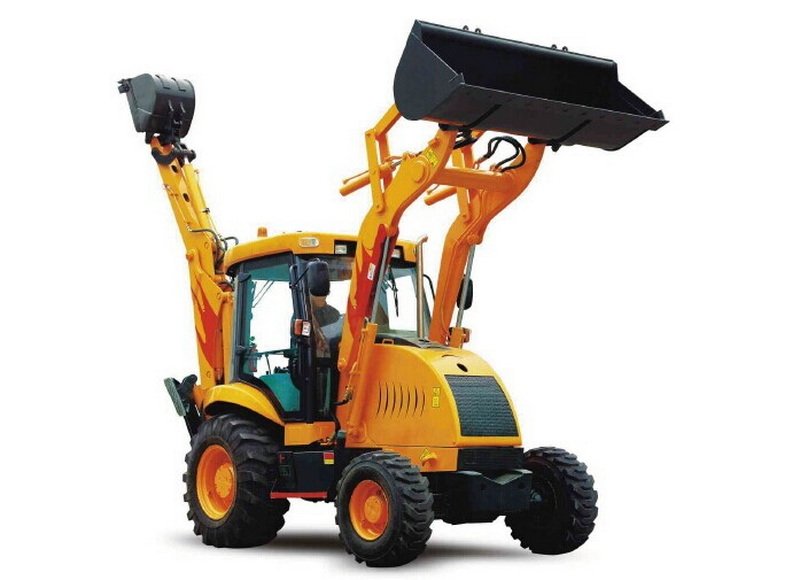
Backhoe loaders have evolved from basic digging tools into multi-purpose tool carriers that can perform tasks traditionally handled by skid steers, wheel loaders and small excavators. Modern backhoes feature advanced hydraulics, high-spec cabs and smart controls that appeal to both experienced operators and a younger, tech-savvy workforce.
Key 2026 backhoe trends
– Side-shift chassis growth: Side-shift models are gaining share in markets that historically preferred center-pivot, as contractors recognize their productivity in tight, urban spaces.
– Pilot and joystick controls: Manufacturers are steadily moving away from traditional manual levers toward pilot or electro-hydraulic joysticks for easier learning and smoother control.
– All-wheel-steer backhoes: Demand is rising for machines that offer loader-like performance and maneuverability in road work, utility jobs and material handling applications.
– Urban-focused compact models: Compact backhoes, such as 3–4 ton side-shift units, are designed for narrow streets and restricted zones where large equipment cannot enter.
These trends are directly linked to the same pressures driving change across excavators, skid steers, rollers and forklifts: tighter emission rules, labor shortages and demand for higher utilization from every machine.
Side-Shift Backhoe Loaders: Design, Benefits and Trade-Offs
How side-shift backhoe booms work
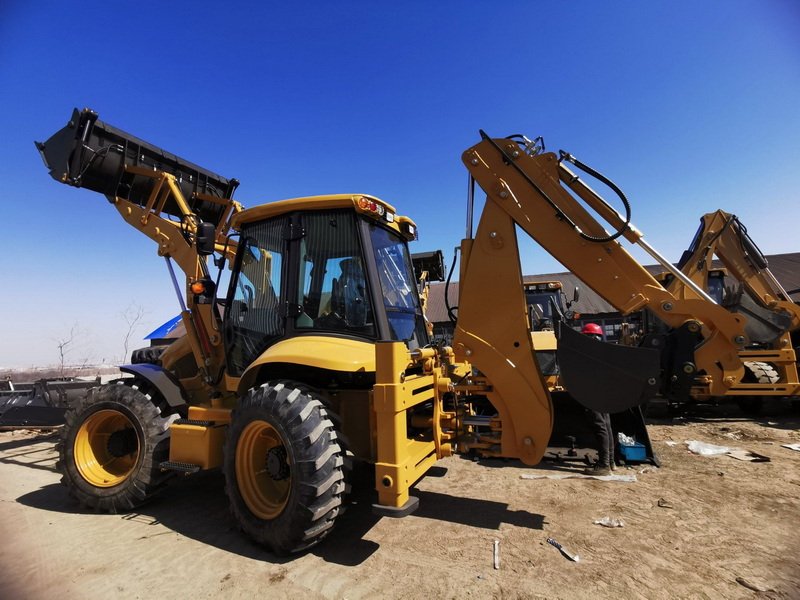
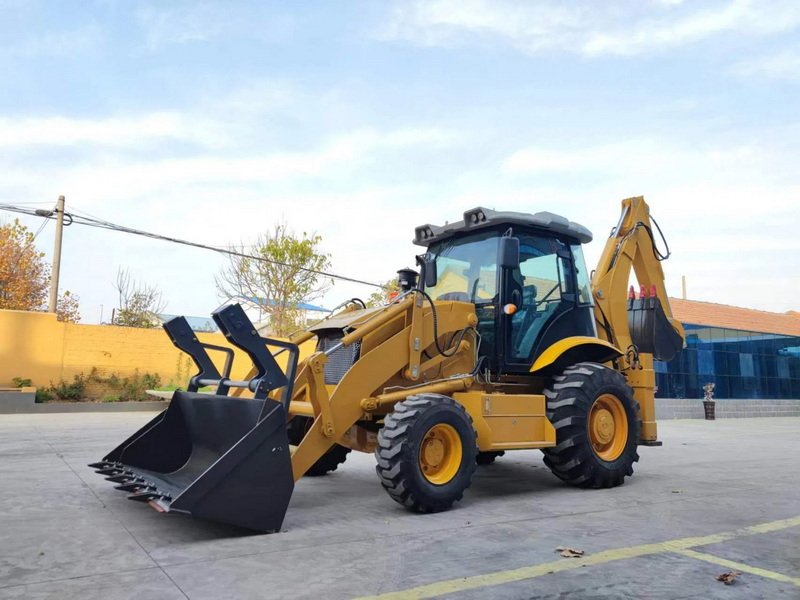
On a side-shift backhoe loader, the rear boom is mounted on a carriage frame that can slide left or right along the machine, rather than pivoting from a fixed center point. The stabilizers are vertical “down-only” legs instead of radially extending outriggers, which keeps the machine profile narrower.
This configuration allows the operator to reposition the digging location without moving the entire machine, which is a major advantage on congested or narrow jobsites.
Main productivity advantages
– Better digging parallel to walls or other structures.
– Less repositioning of the machine to excavate an area, including square trenches and service boxes.
– A larger total digging coverage area from a single stabilizer setup because the boom can move along the carriage frame.
– Clearer sight lines to the bucket and excavation area for safer, more accurate work.
– Reduced overall machine width thanks to vertical stabilizers, improving transportability and road travel.
Manufacturers such as Case and JCB now offer multiple side-shift models, including compact variants designed for container shipping and markets with strict road width regulations.
Limitations and considerations
– Slightly lower tip limits than center-pivot machines, because stabilizers are closer to the machine body.
– A modest learning curve for operators transitioning from center-pivot designs, especially for stabilizer operation and boom shifting.
– A typical cost premium of several thousand dollars versus center-pivot, although productivity gains often offset the higher initial price over the machine’s life.
Operator Experience: Cabs, Controls and Automation
Modern backhoe loaders are designed to feel like command centers rather than basic workstations, mirroring trends seen across skid steer loaders, excavators, tractors and other construction equipment.
Cab and comfort upgrades
– Enclosed cabs with air-conditioning and heat to extend seasonal productivity and protect operators.
– Large LCD displays for machine data, diagnostics and telematics information.
– Air-ride seats that swivel easily between loader and backhoe positions to reduce transition time.
– Improved sound insulation and ergonomics to reduce fatigue on long shifts.
Control systems and driving performance
– Powershift transmissions that enable smooth gear changes and road speeds up to around 25 mph.
– All-wheel-steer configurations that increase maneuverability and loader-side performance.
– Joystick controls, from mechanical to pilot to electro-hydraulic, often with pattern changers that switch between SAE (backhoe) and ISO (excavator) patterns at the touch of a button.
Automation and smart features
– Ride control, return-to-dig, boom kick-outs, auto stabilizer up and parallel lift functions that reduce operator workload.
– Idle management and auto-throttle that save fuel by automatically adjusting or lowering engine speed when the machine is inactive.
– Pre-heat functions that warm the engine block and cab and defrost windows before the start of shift.
– Increasing adoption of grade assist, e-fence and motion-limit functions, which have already proved their value on excavators and dozers.
Such technologies are quickly becoming standard expectations, especially for larger contractors that already use smart systems across their fleets.
Telematics and Fleet Management for Backhoe Loaders
Telematics has become a core requirement for fleets that operate multiple machines such as excavators, skid steers, compactors, forklifts and tractors. Backhoe loaders are no exception, with many OEMs now integrating telematics as standard equipment.
What modern telematics delivers
– Real-time GPS location and geofencing to help prevent unauthorized use or theft.
– Hour tracking, scheduled maintenance alerts and remote diagnostics that reduce unplanned downtime.
– Fuel burn and idle time monitoring to guide operator training and control operating costs.
– Fault code reporting that allows dealers and fleet managers to plan service before failures occur.
For example, some manufacturers now include telematics in the base configuration of their backhoe loaders, with no initial subscription fee, reflecting how essential connectivity has become.
Alternative Power for Backhoe Loaders: Diesel, Electric and Hydrogen
Why diesel still dominates
Diesel engines remain the primary power source for backhoe loaders because they deliver high torque, long operating hours and fast refueling on remote or demanding sites. Existing fueling infrastructure for excavators, loaders, rollers and tractors also strongly favors diesel, especially in developing regions.
However, rising fuel prices, emissions regulations and sustainability targets are pushing OEMs and contractors to evaluate electric and hydrogen powertrains.
Battery-Electric Backhoe Loaders
Several manufacturers have developed prototype or early-series electric backhoe loaders to reduce on-site emissions and noise, especially in cities and utility work.
Examples include:
– Battery-powered backhoes using high-voltage lithium-ion packs that can charge from common three-phase power supplies.
– Electric models in the 3–5 ton class that are targeted at urban utilities and municipal fleets.
Benefits of electric backhoe loaders
– Zero tailpipe emissions at the point of use, supporting compliance in low-emission urban zones.
– Lower noise levels, enabling night work, indoor jobs or work near hospitals and schools.
– Potentially lower running costs due to high drivetrain efficiency and fewer moving parts in the powertrain.
Current constraints
– Limited run time on a single charge, which can be challenging for high-duty cycles or multi-shift operations.
– Charging time and the need for appropriately sized grid connections or fast-charging infrastructure on or near the jobsite.
– Higher upfront equipment cost and uncertainties over residual value in fast-moving technology cycles.
Today, electric backhoe loaders are best suited for predictable, medium-duty work in urban areas where grid power and incentives are available, similar to the way electric mini-excavators and compact wheel loaders are being deployed.
Hydrogen Backhoe Loaders: Status and Potential
Hydrogen is emerging as a promising alternative for heavy equipment that needs long run times and quick refueling but cannot easily electrify using batteries alone.
Hydrogen combustion engines in construction
Several manufacturers have developed hydrogen internal combustion engines and integrated them into prototype machines, including hydrogen-powered backhoe loaders and telescopic handlers. These engines burn hydrogen similarly to diesel but emit mainly water vapor and only small amounts of nitrogen oxides, with no carbon dioxide at the tailpipe.
Because hydrogen engines retain familiar layouts and service concepts, OEMs and dealers can adapt existing platforms such as backhoes, excavators and loaders more easily.
Key advantages of hydrogen for backhoe loaders
– Fast refueling in minutes, similar to diesel, avoiding lengthy charging times.
– High energy density that supports longer duty cycles for high-power tasks such as trenching, lifting and roading.
– Minimal disruption to current shift patterns and utilization models, which is critical on time-sensitive infrastructure projects.
Barriers to adoption
– Limited hydrogen production and refueling infrastructure, especially for off-road applications and remote construction sites.
– Higher cost of green hydrogen compared with diesel, with future cost trajectories still evolving.
– Regulatory and certification processes required to validate safety standards for public-road travel and urban use.
Some governments have already begun to clear hydrogen-powered construction machines for highway use, signaling growing regulatory support for this technology.
Diesel vs Electric vs Hydrogen Backhoe Loaders
Power technology comparison
| Power type | Refueling / charging time | Typical use cases today | Main advantages | Key challenges |
|---|---|---|---|---|
| Diesel | Minutes at standard fuel pump or onsite tank | Most global backhoe loader applications, including roadwork and utilities | Well-known technology, global fuel infrastructure, strong torque, long duty | Emissions, noise, exposure to fuel price volatility, increasing regulatory pressure |
| Battery-electric | From under an hour (fast charge) to several hours | Urban utility work, city infrastructure, low-emission zones, noise-sensitive sites | Zero on-site emissions, low noise, high drivetrain efficiency | Range limits, charging infrastructure, higher upfront cost, weight of large battery packs |
| Hydrogen ICE | Comparable to diesel refueling times, typically minutes | Prototype backhoe loaders and trials on major construction projects | Fast refueling, long runtime, potential for low-carbon operation with green fuel | Scarce fueling infrastructure, hydrogen cost, safety and regulatory approvals, early market stage |
How Side-Shift and Hydrogen Impact Total Jobsite Productivity
Side-shift and hydrogen might sound like niche features, but together they can reshape how contractors schedule and power jobsites.
Side-shift backhoes in confined urban work
On tight city streets or around buried utilities, side-shift models reduce repositioning time, which leads to faster job completion and lower fuel or energy consumption. Contractors that also rely on skid steers or compact excavators can sometimes replace two machines with one well-specified side-shift backhoe, especially for service work, landscaping and small utility installation.
Hydrogen power for long, heavy shifts
For high-utilization fleets that run backhoes alongside large excavators, road rollers and tractors, hydrogen engines offer a potential route to near-zero carbon operation without sacrificing uptime. Fast refueling and familiar engine layouts mean fleets can adapt more easily compared with going all-electric for every application.
Although hydrogen backhoe loaders are not yet widely commercial, early trials indicate that they can match diesel performance while eliminating carbon dioxide emissions at the tailpipe.
Practical Buying Guide: Choosing the Right Backhoe Loader in 2026
When evaluating a new backhoe loader, it is essential to think beyond horsepower and bucket size and consider how the machine will work with your existing excavators, skid steers, rollers, forklifts, tractors and tracked carriers.
1. Define your primary applications
Ask yourself:
– Will the machine work mostly in urban streets, rural projects or off-road sites?
– Is it primarily a digger, a material handler, or a multi-purpose tool carrier?
– How many hours per year will it operate, and on how many different jobsites?
For crews handling pallets, pipes or bundled materials, a tool-carrier-style front end and quick-coupler system on the loader side can add significant value.
2. Choose between center-pivot and side-shift
– Pick center-pivot if you need maximum lifting stability and primarily work in open areas.
– Choose side-shift if you frequently work against walls, in narrow streets or on urban utilities where repositioning the machine is difficult or unsafe.
If your operators are new to side-shift, prioritize machines with hydraulic side-shift mechanisms and intuitive controls to minimize the learning curve.
3. Match powertrain to duty cycle and regulations
– Diesel remains the default for high-duty, remote or fuel-logistics-friendly projects.
– Electric backhoes suit predictable shift patterns in cities with access to charging infrastructure and incentives.
– Hydrogen will be a longer-term option but is worth tracking now, especially if you work on flagship infrastructure or renewable projects that may pilot low-carbon equipment.
4. Evaluate cab, automation and telematics
– Ensure the cab environment aligns with your labor market; comfortable, tech-rich cabs help attract and retain younger operators.
– Look for automation features that address your most frequent tasks, such as return-to-dig for loading cycles or stabilizer automation for frequent setup and teardown.
– Confirm that the telematics system integrates with your existing fleet management platform across excavators, skid steers, rollers and forklifts.
5. Plan for future attachments and upgrades
An underspecified hydraulic system can limit your ability to add high-flow attachments, auxiliary lines or quick couplers later on. When in doubt, invest in a more capable hydraulic package at purchase, because retrofitting is often more expensive and disruptive.
Plan Your Next-Generation Construction Fleet
If your business runs excavators, skid steer loaders, road rollers, forklifts, tractors or crawler carriers, now is the ideal moment to rethink your backhoe loader strategy in the context of side-shift technology and emerging powertrains. Use the insights in this guide to benchmark your current fleet, identify where side-shift models could replace multiple machines and plan for a staged transition toward low-emission power options such as electric and hydrogen.
For buyers who want machines that combine robust digging performance, intelligent hydraulics and flexible power options, partnering with a manufacturer that produces a full line of construction equipment—from backhoes and excavators to skid steers, rollers, forklifts, tractors and tracked transporters—helps ensure long-term compatibility, easier maintenance planning and consistent support across your entire fleet. Now is the time to review your projects, define your power strategy and contact a trusted OEM or dealer to specify the next-generation backhoe loaders that will keep your jobsites productive and competitive.
Contact us to get more information!
FAQs About Side-Shift and Hydrogen Backhoe Loaders
1. Are side-shift backhoe loaders harder to operate than center-pivot models?
Side-shift machines use very similar control layouts to center-pivot models, especially when equipped with pilot or electro-hydraulic joysticks. Most operators adapt quickly, and the ability to slide the boom along the carriage frame often makes precise work easier rather than harder.
2. When does a side-shift backhoe make the biggest difference on site?
Side-shift backhoes are most valuable on narrow streets, near walls or around underground utilities where moving the entire machine is difficult or limited by traffic, space or safety rules. In these scenarios, the reduced repositioning can significantly cut cycle times and overall fuel or energy use.
3. How soon will hydrogen backhoe loaders be widely available?
Prototype hydrogen backhoe loaders already exist and have been demonstrated publicly, but commercial rollout depends on hydrogen fuel infrastructure and regional regulations. In the near term, they are most likely to appear first on flagship infrastructure projects and in markets with strong policy support for hydrogen.
4. Should I buy a diesel, electric or hydrogen backhoe today?
For most contractors, diesel remains the most practical choice in 2026 due to its established fueling infrastructure and proven performance. Electric backhoes are suitable for urban, low-emission and noise-sensitive work where charging is available, while hydrogen is a future option to monitor rather than an immediate mainstream choice.
5. How does telematics on a backhoe loader help my business?
Telematics improves uptime and total cost of ownership by enabling remote diagnostics, maintenance scheduling, fuel and idle monitoring and security features such as geofencing. For fleets with multiple equipment types, integrating backhoe data with excavators, skid steers and rollers gives a clearer view of utilization and replacement needs.
Reference URLs:
1. https://compactequip.com/backhoes/side-shift-to-hydrogen-the-coolest-technology-powering-backhoe-loaders-in-2024/
2. https://highways.today/2025/03/19/electric-hydrogen-future-equipment/
3. https://innovatek.co.nz/hydrogen-engines-a-viable-alternative-to-electric/
4. https://www.constructionenquirer.com/2024/03/27/hydrogen-powered-diggers-to-be-allowed-to-use-highways/
5. https://everstarmachinery.com/blog/electric-backhoe-loaders/
6. https://b2bpurchase.com/promising-future-for-backhoe-loaders/
7. https://allpurposeheavyequipmenttraining.com/blogs/guide-different-types-heavy-equipment-training.php
Hot Tags: Hydrogen Backhoe Loader, Side Shift Backhoe, Backhoe Loader Technology, Hydrogen Powered Construction Equipment, 2024 Backhoe Innovations, Eco Friendly Backhoe Loader, Advanced Backhoe Features, Backhoe Loader Power Systems, Hydrogen Construction Machinery, Next Gen Backhoe Loaders