
What Are Land Clearing Tractors & Forestry Track Loaders?
Content Menu
● What Are Land Clearing Tractors & Forestry Track Loaders?
>> Land Clearing Tractors (Dedicated Mulcher Dozers)
>> Forestry Track Loaders (Compact Track Loaders with Mulching Heads)
● Land Clearing Tractor vs Forestry Track Loader: Key Differences
● Price Comparison: Land Clearing Tractor vs Forestry Track Loader (2026)
>> Operating & Maintenance Cost
● Power & Performance: When Each Machine Shines
>> Land Clearing Tractors Excel When:
>> Forestry Track Loaders Excel When:
● Application Guide: Which Machine for Your Job?
>> 1. Light Brush & Small Trees (Under 6–8 inches)
>> 2. Heavy Brush & Small Trees (8–12 inches)
>> 3. Large Trees & Dense Forest (12+ inches)
>> 4. Firebreaks & Pipeline Rights-of-Way
>> 5. Mixed Jobs (Mulching + Digging + Grading)
● How to Match the Machine to Your Business Model
>> 1. Small Contractor / Landowner (Occasional Clearing)
>> 2. Mid-Sized Contractor (Regular Clearing Jobs)
>> 3. Large Contractor / Forestry Operator (Heavy, Continuous Work)
● 2026 Trends: What’s Changing in Land Clearing Equipment?
>> 1. Rise of High-Flow Compact Track Loaders
>> 2. Focus on Low Ground Pressure & Environmental Protection
>> 3. Telematics & Smart Features
● Expert Buying Checklist: Land Clearing Tractor vs Forestry Track Loader
>> 4. Attachments & Versatility
● When to Choose a Land Clearing Tractor
● When to Choose a Forestry Track Loader
● How to Maximize ROI on Your Land Clearing Equipment
>> 1. Right-Sizing the Machine
>> 2. Proper Attachment Matching
>> 4. Maintenance & Downtime Reduction
● Case Study: Choosing the Right Machine for a 50-Acre Land Clearing Project
>> Scenario
>> Option 1: Forestry Track Loader
>> Option 2: Land Clearing Tractor
● Ready to Choose the Right Machine for Your Land Clearing Needs?
● FAQ
>> 1. What is the main difference between a land clearing tractor and a forestry track loader?
>> 2. Which machine is cheaper: land clearing tractor or forestry track loader?
>> 3. Can a compact track loader replace a land clearing tractor?
>> 4. What size trees can a forestry track loader mulch?
>> 5. How do I choose between a land clearing tractor and a forestry track loader?
Land clearing tractors and forestry track loaders are both powerful tools for vegetation management, but they serve different roles in terms of price, power, and application. This guide compares land clearing tractors vs forestry track loaders in 2026, helping contractors, landowners, and forestry operators choose the right machine for their specific job, terrain, and budget.
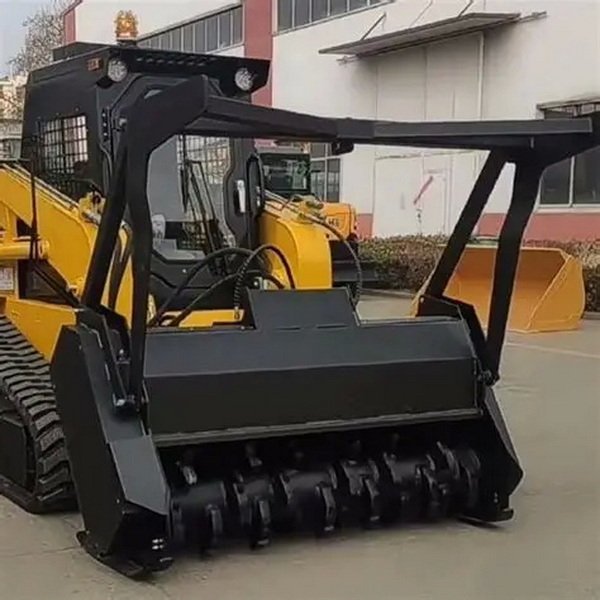
What Are Land Clearing Tractors & Forestry Track Loaders?
Land Clearing Tractors (Dedicated Mulcher Dozers)
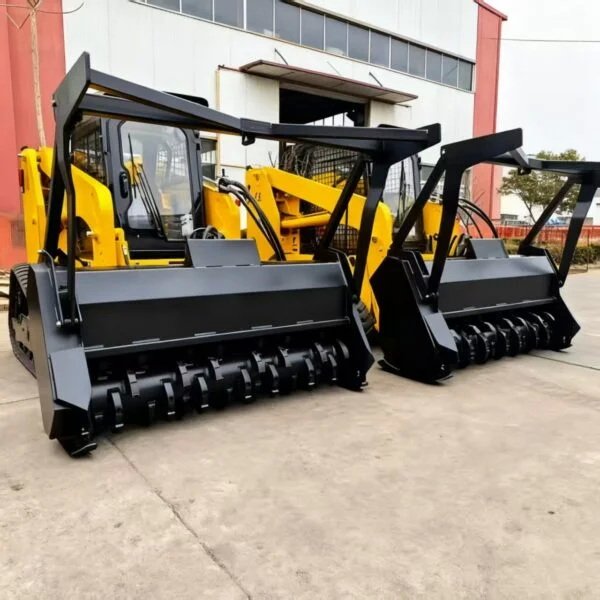
Land clearing tractors are purpose-built, tracked machines designed specifically for heavy-duty vegetation removal. They are often called mulcher dozers, forestry mulchers, or land clearing tractors and are built around a robust undercarriage with a large rotary mulching head at the front.
They are optimized for dense brush, small trees, and firebreaks. Common brands include Caterpillar (D3K2 Mulcher), Fecon (FTX series), Rayco, and FAE PrimeTech. Typical power ranges from 100 to 300+ hp, with hydraulic systems sized for large mulching heads (6–8 ft wide).
These machines are essentially dozers with a mulching drum instead of a blade, giving them excellent pushing power and stability on slopes and rough ground.
Forestry Track Loaders (Compact Track Loaders with Mulching Heads)
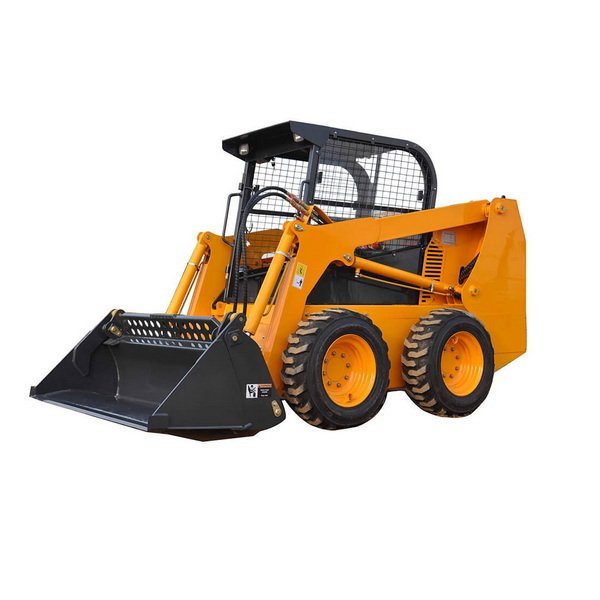
Forestry track loaders are compact track loaders (CTLs) equipped with forestry protection kits and a mulching head attachment. They are versatile, multi-attachment machines that can switch between mulching, digging, grading, and material handling.
They are ideal for brush clearing, light tree removal, and mixed-use sites. Common brands include Caterpillar (299D3 XE Land Management), JCB (325T Forestmaster), ASV, Bobcat, and John Deere. Typical power ranges from 70 to 120 hp, with high-flow hydraulics to drive mulching heads.
Because they are tool carriers, they can also use backhoes, grapples, rakes, and other attachments, making them a good choice for operators who need more than just mulching.
Land Clearing Tractor vs Forestry Track Loader: Key Differences
| Feature | Land Clearing Tractor | Forestry Track Loader |
|---|---|---|
| Primary Role | Dedicated vegetation mulching | Multi-attachment tool carrier |
| Typical Power | 100–300+ hp | 70–120 hp |
| Hydraulic Flow | High-flow, mulcher-optimized | High-flow, but shared with other functions |
| Ground Pressure | Very low (wide tracks) | Low (tracks), but narrower than large dozers |
| Mobility & Speed | Slower, more stable on slopes | Faster travel, more agile in tight spaces |
| Attachments | Usually 1–2 (mulcher, maybe blade) | Many (mulcher, grapple, backhoe, rake, etc.) |
| Best For | Heavy brush, small trees, firebreaks, large-scale clearing | Mixed jobs, brush, light trees, and site prep |
Price Comparison: Land Clearing Tractor vs Forestry Track Loader (2026)
Upfront Equipment Cost
– Land clearing tractor (dedicated mulcher dozer):
– Entry-level models (e.g., Fecon FTX128/150, Cat D3K2 Mulcher): $150,000–$250,000+
– Larger forestry mulchers (e.g., Rayco C275, FAE PrimeTech): $250,000–$400,000+
– Forestry track loader (compact track loader + mulcher head):
– High-end CTL (e.g., Cat 299D3 XE, JCB 325T): $90,000–$140,000
– Mulching head attachment (e.g., Fecon Bull Hog, FAE PMM/SSL): $20,000–$50,000
– Total package: $110,000–$190,000
A dedicated land clearing tractor has a higher initial cost, but a forestry track loader with a mulcher head is significantly cheaper and more versatile.
Operating & Maintenance Cost
– Fuel consumption:
– Land clearing tractors are more efficient per acre on heavy jobs, but burn more fuel per hour.
– Forestry track loaders are more fuel-efficient on light-to-medium brush but may overheat on long, dense mulching runs.
– Maintenance:
– Land clearing tractors have simpler hydraulic systems focused on the mulcher, so maintenance is more predictable.
– Forestry track loaders have more complex hydraulics and more wear points (tracks, undercarriage, multiple attachments), so maintenance can be higher if used heavily.
– Tires/tracks:
– Land clearing tractors use heavy-duty steel or rubber tracks designed for rough terrain.
– Forestry track loaders use compact tracks that wear faster in abrasive conditions but are cheaper to replace.
Power & Performance: When Each Machine Shines
Land Clearing Tractors Excel When:
– Material is dense and large:
– Trees up to 12–18 inches in diameter.
– Thick brush, vines, and mixed vegetation.
– In these conditions, a dedicated land clearing tractor can do the work of 2–3 compact track loaders.
– Work is continuous and long-duration:
– Large-scale land clearing, firebreaks, pipeline rights-of-way.
– The machine stays cooler and runs longer without overheating.
– Terrain is steep or unstable:
– Steep hillsides, soft ground, and uneven terrain where stability and low ground pressure are critical.
Forestry Track Loaders Excel When:
– Material is light to medium:
– Grass, brush, saplings, and small trees (up to 6–8 inches).
– In these conditions, a high-flow CTL with a mulcher head is very productive and cost-effective.
– Jobs are mixed or changing:
– You need to mulch, then dig, then move material, then grade.
– The ability to swap attachments quickly is a major advantage.
– Space is tight or access is limited:
– Urban lots, narrow rights-of-way, and areas with obstacles where a smaller, more agile machine is needed.
Application Guide: Which Machine for Your Job?
1. Light Brush & Small Trees (Under 6–8 inches)
– Best choice: Forestry track loader with mulcher head.
– Why:
– Lower upfront cost.
– High productivity on light-to-medium material.
– Can switch to other attachments (grapple, rake, backhoe) for site prep.
2. Heavy Brush & Small Trees (8–12 inches)
– Best choice:
– For occasional jobs: High-flow forestry track loader with a heavy-duty mulcher head.
– For frequent, large-scale work: Dedicated land clearing tractor.
3. Large Trees & Dense Forest (12+ inches)
– Best choice: Dedicated land clearing tractor.
– Why:
– Higher power and hydraulic flow for large mulching heads.
– Better stability and pushing power on slopes.
– Longer run times without overheating.
4. Firebreaks & Pipeline Rights-of-Way
– Best choice: Land clearing tractor.
– Why:
– Continuous, long-duration mulching.
– Low ground pressure minimizes soil disturbance.
– Can also use a blade for grading and cleanup.
5. Mixed Jobs (Mulching + Digging + Grading)
– Best choice: Forestry track loader.
– Why:
– One machine can handle mulching, excavation, material handling, and grading.
– Ideal for contractors who need flexibility across multiple job types.
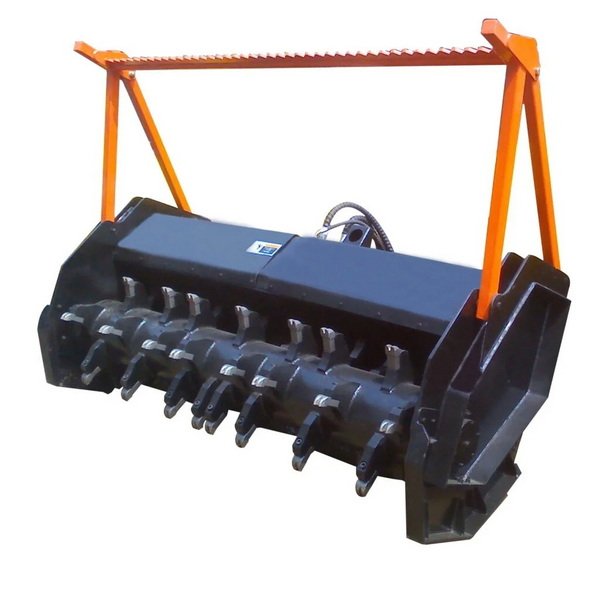
How to Match the Machine to Your Business Model
1. Small Contractor / Landowner (Occasional Clearing)
– Recommended: Forestry track loader with mulcher head.
– Benefits:
– Lower initial investment.
– Can be used for other jobs (digging, grading, snow removal).
– Easier to finance and maintain.
2. Mid-Sized Contractor (Regular Clearing Jobs)
– Recommended:
– Start with a high-flow forestry track loader.
– Add a dedicated land clearing tractor if you win large, long-duration contracts.
3. Large Contractor / Forestry Operator (Heavy, Continuous Work)
– Recommended: Dedicated land clearing tractor.
– Benefits:
– Higher productivity on heavy jobs.
– Lower cost per acre on large projects.
– Better resale value in the forestry and land clearing market.
2026 Trends: What’s Changing in Land Clearing Equipment?
1. Rise of High-Flow Compact Track Loaders
Manufacturers are offering more “forestry” or “land management” packages on compact track loaders (e.g., Cat 299D3 XE Land Management, JCB 325T Forestmaster). These include extra protection (mesh guards, hose guards, cooling pack guards), high-flow hydraulics (40+ gpm) for mulching heads, and larger fuel tanks for longer run times.
This blurs the line between CTLs and dedicated mulchers, making forestry track loaders more competitive on heavier jobs.
2. Focus on Low Ground Pressure & Environmental Protection
Both land clearing tractors and forestry track loaders are being designed with lower ground pressure to reduce soil compaction and environmental impact. Features include wider tracks, oscillating undercarriages (e.g., FAE PrimeTech), and rubber tracks for sensitive areas.
3. Telematics & Smart Features
Modern machines now include GPS tracking and usage monitoring, remote diagnostics and maintenance alerts, and fuel efficiency reports and operator performance data. These features help operators optimize fleet utilization, reduce downtime, and improve ROI.
Expert Buying Checklist: Land Clearing Tractor vs Forestry Track Loader
Before buying, ask these questions:
1. Job Profile
– What type of vegetation? (Grass, brush, small trees, large trees)
– Average tree diameter?
– Typical job size (acres per job)?
– Terrain (flat, hilly, wet, rocky)?
2. Machine Requirements
– Required horsepower and hydraulic flow for the mulcher head.
– Need for extra protection (forestry kit, cooling package).
– Fuel capacity and run time needed.
3. Business & Financials
– Upfront budget and financing options.
– Expected utilization (hours per year).
– Resale value and depreciation.
4. Attachments & Versatility
– Will you need other attachments (grapple, backhoe, rake, blade)?
– How often will you switch between mulching and other tasks?
5. Support & Service
– Local dealer support and parts availability.
– Warranty and service contracts.
– Training for operators.
When to Choose a Land Clearing Tractor
Choose a dedicated land clearing tractor if:
– You regularly clear dense brush and small trees (8–18 inches).
– Jobs are large-scale and continuous (firebreaks, pipeline rights-of-way).
– Terrain is steep, soft, or unstable.
– You want maximum productivity and lowest cost per acre on heavy jobs.
When to Choose a Forestry Track Loader
Choose a forestry track loader if:
– You mainly clear light to medium brush and small trees (under 8 inches).
– Jobs are mixed (mulching, digging, grading, material handling).
– You work in tight spaces or limited access areas.
– You want lower upfront cost and higher versatility.
How to Maximize ROI on Your Land Clearing Equipment
1. Right-Sizing the Machine
– Don’t oversize: A large land clearing tractor on small brush jobs wastes fuel and increases wear.
– Don’t undersize: A small CTL on heavy forest work will overheat and reduce productivity.
2. Proper Attachment Matching
– Match the mulcher head size and type to the machine’s hydraulic flow and power.
– Use reversible or carbide teeth optimized for your vegetation type.
3. Operator Training
– Train operators on proper mulching techniques (speed, overlap, depth).
– Teach machine protection (avoiding rocks, stumps, and overheating).
– Ensure daily maintenance (filters, fluid levels, track tension).
4. Maintenance & Downtime Reduction
– Follow manufacturer maintenance schedules.
– Use telematics to schedule service before failures occur.
– Keep spare filters, hoses, and common wear parts on hand.
Case Study: Choosing the Right Machine for a 50-Acre Land Clearing Project
Scenario
– 50 acres of mixed brush, saplings, and small trees (4–10 inches).
– Terrain: Rolling hills, some wet areas.
– Owner: Mid-sized contractor with existing skid steer and excavator.
Option 1: Forestry Track Loader
– Machine: High-flow compact track loader (e.g., Cat 299D3 XE) + mulcher head.
– Pros:
– Lower upfront cost.
– Can also be used for grading and material handling.
– Cons:
– May need to work longer hours on dense areas.
– Higher wear on tracks and hydraulics.
Option 2: Land Clearing Tractor
– Machine: Dedicated mulcher dozer (e.g., Fecon FTX150 or Cat D3K2 Mulcher).
– Pros:
– Higher productivity on dense material.
– Better stability on slopes.
– Cons:
– Higher initial cost.
– Less versatile for other jobs.
Recommendation
For this project, a high-flow forestry track loader is the best starting point. It offers a good balance of cost, productivity, and versatility. If the contractor wins more large-scale forestry jobs, adding a dedicated land clearing tractor later makes sense.
Ready to Choose the Right Machine for Your Land Clearing Needs?
If you’re deciding between a land clearing tractor and a forestry track loader, the best next step is to talk to an experienced equipment specialist who understands your specific job types, terrain, and budget. A tailored recommendation, backed by real-world performance data and ROI analysis, will ensure you invest in the machine that delivers the highest long-term value.
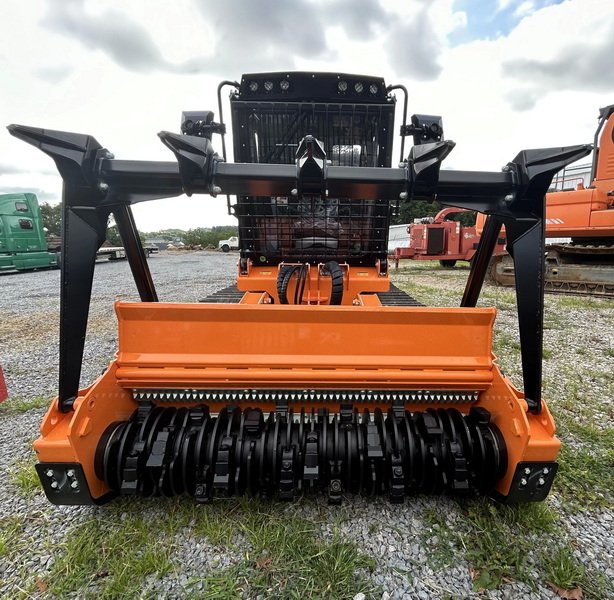
FAQ
1. What is the main difference between a land clearing tractor and a forestry track loader?
A land clearing tractor is a dedicated mulcher dozer built for heavy vegetation removal, while a forestry track loader is a compact track loader with a mulcher attachment that can also handle digging, grading, and material handling.
2. Which machine is cheaper: land clearing tractor or forestry track loader?
A forestry track loader with a mulcher head is usually cheaper upfront than a dedicated land clearing tractor. A high-end CTL + mulcher typically costs $110,000–$190,000, while a land clearing tractor starts around $150,000–$250,000+.
3. Can a compact track loader replace a land clearing tractor?
On light to medium brush and small trees, a high-flow forestry track loader can be very effective. On dense forest and large trees, a dedicated land clearing tractor is significantly more productive and efficient.
4. What size trees can a forestry track loader mulch?
A forestry track loader with a heavy-duty mulcher head can typically handle trees up to 6–8 inches in diameter. For larger trees (8–12+ inches), a dedicated land clearing tractor is recommended.
5. How do I choose between a land clearing tractor and a forestry track loader?
Choose a land clearing tractor for large-scale, heavy-duty jobs with dense vegetation. Choose a forestry track loader for mixed jobs, light-to-medium clearing, and when you need versatility across multiple attachments.
Hot Tags:Land Clearing Tractors, Forestry Track Loaders, Land Clearing Equipment Comparison, Forestry Equipment vs Tractors, Track Loader vs Tractor, Forestry Track Loader Applications, Land Clearing Machinery, Heavy Duty Land Clearing Equipment, Forestry Mulching Equipment, Construction Equipment Comparison