
The Most Unique Skid Steer and Track Loader Choices Today (and Where Certeg Fits In)
Content Menu
● Understanding Unique Skid Steer and Track Loader Designs
● Skid Steer vs Compact Track Loader: What Really Matters
>> Key application differences (expert view)
>> Summary table: skid steer vs compact track loader
● Stand‑Alone Loader Concepts: What Makes Them “Unique”
>> All‑wheel‑steer skid steers: taking the “skid” out
>> Single‑arm boom loaders: visibility and safety first
● Market Trends: Why Unique Loaders Are Growing in Popularity
● How Certeg Positions Its Skid Steer and Track Loaders
● Practical Buying Guide: Matching Loader Concepts to Your Jobs
>> Step 1: Define your terrain and climate
>> Step 2: Clarify surface protection requirements
>> Step 3: Safety, visibility and operator profile
>> Step 4: Fleet economics and utilization
● Planning for Electric and Hybrid Loader Adoption
● Asia‑Pacific and Emerging Market Opportunities
● How to Future‑Proof Your Loader Fleet
● Call to Action: Talk to an OEM, Not Just a Dealer
● FAQ
>> 1. What is the main difference between a skid steer and a compact track loader?
>> 2. Are compact track loaders always a better choice than skid steers?
>> 3. Why are all‑wheel‑steer skid steers considered “stand‑alone” designs?
>> 4. How important are electric and hybrid skid steers for future fleets?
>> 5. What makes Certeg an attractive partner for global buyers?
Choosing a skid steer loader or compact track loader today isn’t just about brand names or headline specs — it’s about matching unique machine designs to very specific ground conditions, jobsites and ownership costs. As a manufacturer working with contractors and rental fleets worldwide under the Certeg brand, I’ve seen how “stand‑alone” design features can make the difference between a loader that quietly prints money for its owner and one that constantly sits in the yard. [compactequip]
Understanding Unique Skid Steer and Track Loader Designs
Over the last decade, several manufacturers have pushed beyond the traditional two‑arm, wheeled skid steer formula into specialized designs that solve real‑world problems like turf damage, visibility, safety and operator fatigue. From all‑wheel‑steer systems to single‑arm booms, these concepts may look unusual, but they exist because contractors demanded better maneuverability, cleaner surfaces and safer cab access. [compactequip]
At the same time, global demand for compact loaders keeps rising, driven by urban construction, infrastructure projects and the need for multi‑purpose machines that work in tight spaces. Compact track loaders have captured a growing share of this market thanks to better traction, lower ground pressure and improved ride comfort in poor ground conditions. [marknteladvisors]
Skid Steer vs Compact Track Loader: What Really Matters
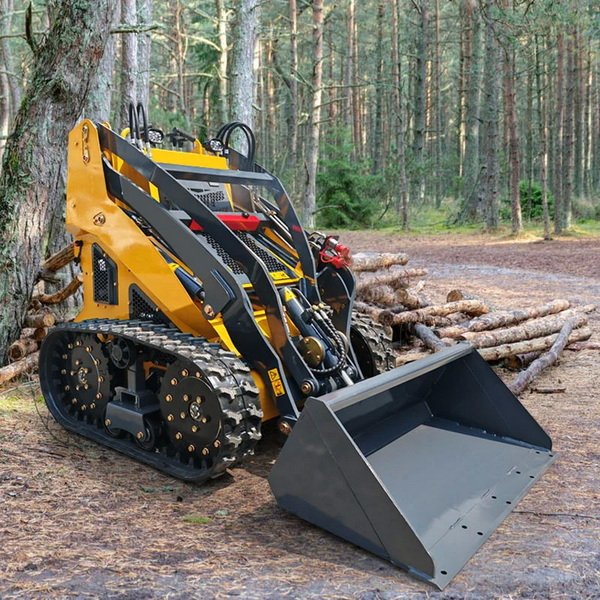
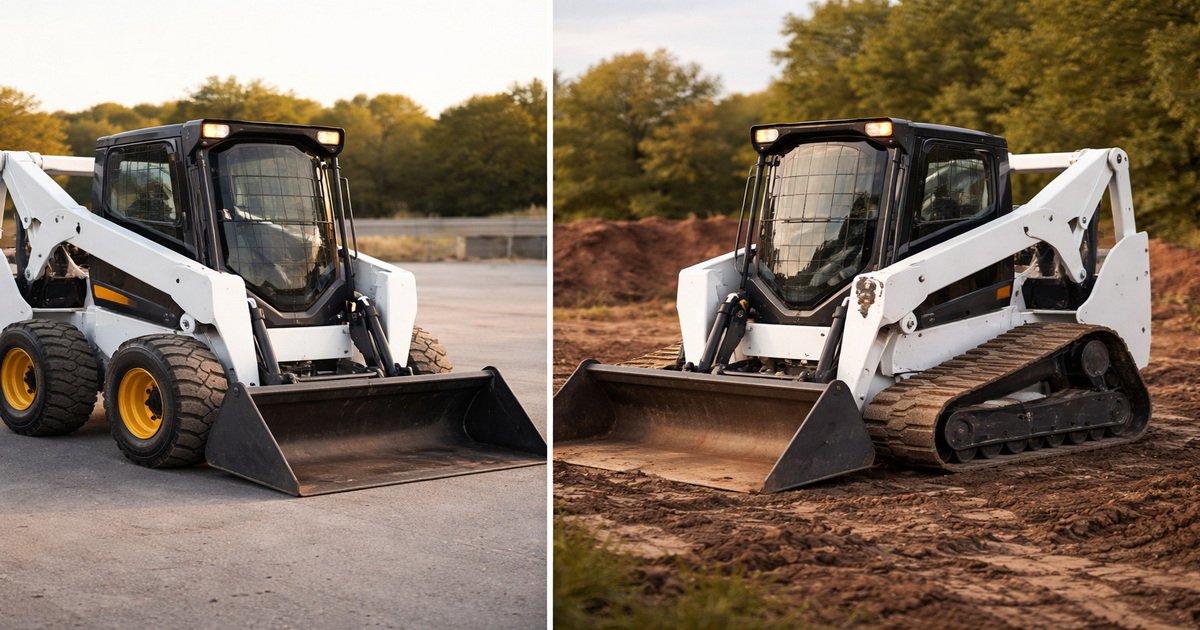
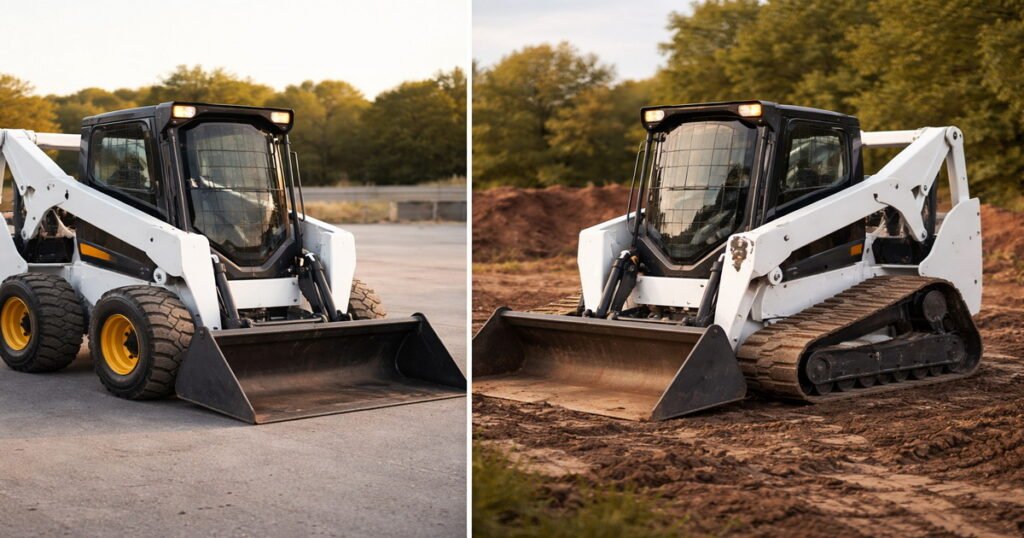
If you strip away marketing language, the core difference is simple: skid steers run on wheels, compact track loaders run on rubber tracks. That one design choice drives the rest of the performance story — especially terrain, stability, cost and maintenance. [bobcat]
Key application differences (expert view)
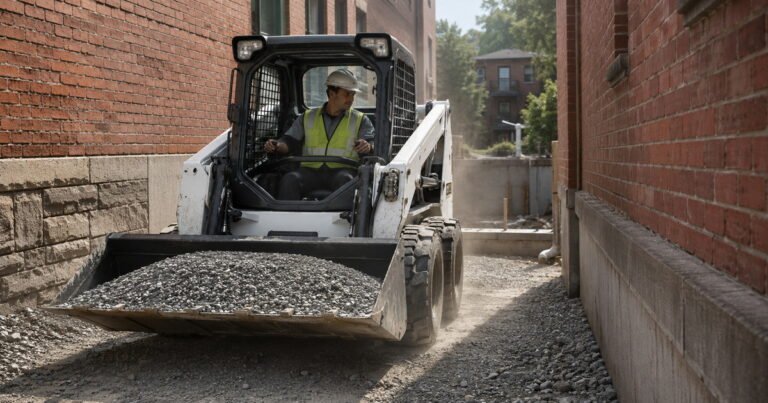
– Best terrain: Wheeled skid steers excel on hard, stable ground such as concrete, asphalt and compacted gravel, where they move quickly and efficiently. [youtube]
– Soft ground advantage: Compact track loaders dominate on mud, wet clay, snow, sand and uneven terrain due to high traction and low ground pressure, which protects the surface and improves pushing power. [rippa]
– Cost profile: Skid steers generally offer lower purchase price and lower undercarriage maintenance, which is attractive for rental fleets and cost‑sensitive buyers. [technavio]
– Comfort and productivity: Track loaders tend to vibrate less and feel more stable on rough ground, which supports longer workdays with less operator fatigue. [inland-group]
Summary table: skid steer vs compact track loader
| Factor | Skid Steer Loader (Wheeled) | Compact Track Loader (Tracked) |
|---|---|---|
| Undercarriage | Wheels for hard, flat surfaces bobcat | Rubber tracks for soft, uneven terrain bobcat |
| Best jobsite | Paved yards, concrete, urban streets bobcat | Muddy sites, slopes, landscaping, snow rippa |
| Purchase cost | Usually lower upfront rippa | Higher upfront investment rippa |
| Maintenance cost | Lower undercarriage cost rippa | Higher track and roller costs rippa |
| Travel speed | Typically faster on hard ground rippa | Slower but more controlled in rough terrain rippa |
| Traction & ground pressure | Moderate traction, higher ground pressure rippa | Excellent traction, low ground pressure rippa |
| Operator comfort | More vibration on rough ground marknteladvisors | Smoother ride, better stability marknteladvisors |
For Certeg’s global customers, the choice usually comes down to jobsite mix: fleets that live on concrete yards or road projects lean towards wheeled skid steers, while earthmoving, landscaping and agricultural clients increasingly standardize on tracked loaders. [skyquestt]
Stand‑Alone Loader Concepts: What Makes Them “Unique”
The Compact Equip article highlights a series of stand‑alone loader concepts that break away from the conventional skid steer layout to solve specific operational problems. While each model is different, they share a common philosophy: use creative engineering to maximize maneuverability and minimize damage or risk on the job. [compactequip]
All‑wheel‑steer skid steers: taking the “skid” out
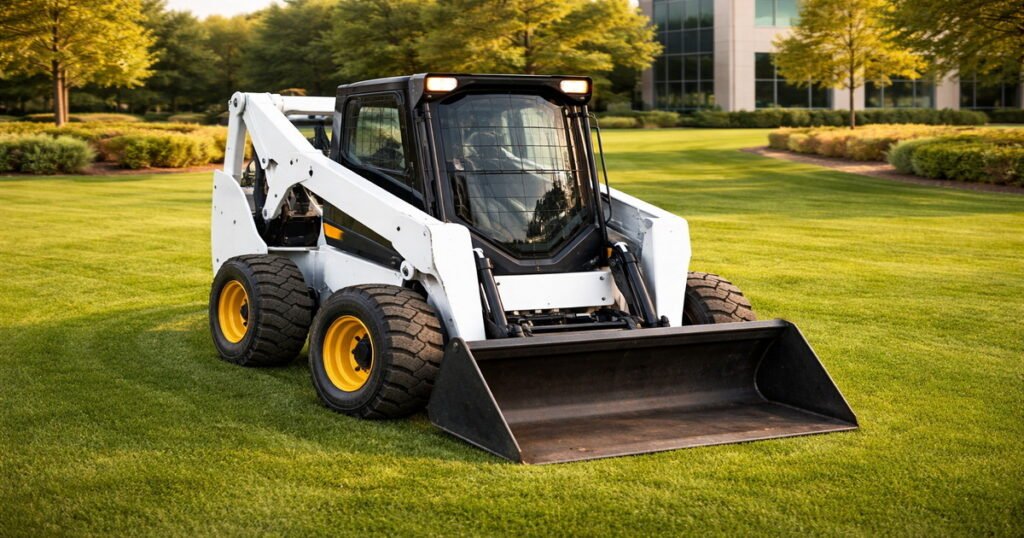
One of the most interesting concepts is the all‑wheel‑steer skid steer, where the operator can switch between conventional skid steering and four‑wheel steering at the touch of a switch. In four‑wheel‑steer mode, all axles turn, so the machine rolls through a turn instead of dragging its tires across the surface, dramatically reducing turf tearing and black tire marks on pavement. [compactequip]
From a contractor’s point of view, this type of system is especially valuable for:
– High‑visibility commercial sites where surface damage is unacceptable, such as retail centers and campuses. [inland-group]
– Municipal work on decorative pavements, stamped concrete or sports facilities. [compactequip]
– Snow removal on finished asphalt where scuff marks create customer complaints. [compactequip]
When you flip back to traditional skid steer mode, you regain the tight‑turning agility and cycle time that operators rely on in confined spaces and loading operations. [youtube]
Single‑arm boom loaders: visibility and safety first
The article also features single‑arm compact track loaders, a concept popularized by JCB’s Powerboom, which uses one reinforced boom on the right side instead of the usual two arms. This allows the operator to enter and exit the cab through a full‑size side door on the left, instead of climbing over a front attachment — an obvious safety and ergonomics win. [compactequip]
Real‑world benefits of the single‑arm approach include:
– Safer access: Side‑door entry reduces slip‑and‑fall risk on muddy buckets and crowded jobsites. [compactequip]
– Better visibility: With no left‑side boom arm, operators gain a clearer view of oncoming traffic, pedestrians and trench edges. [compactequip]
– Smoother workflow: Easier entry/exit encourages operators to step out, check job progress and communicate with ground crews more frequently.
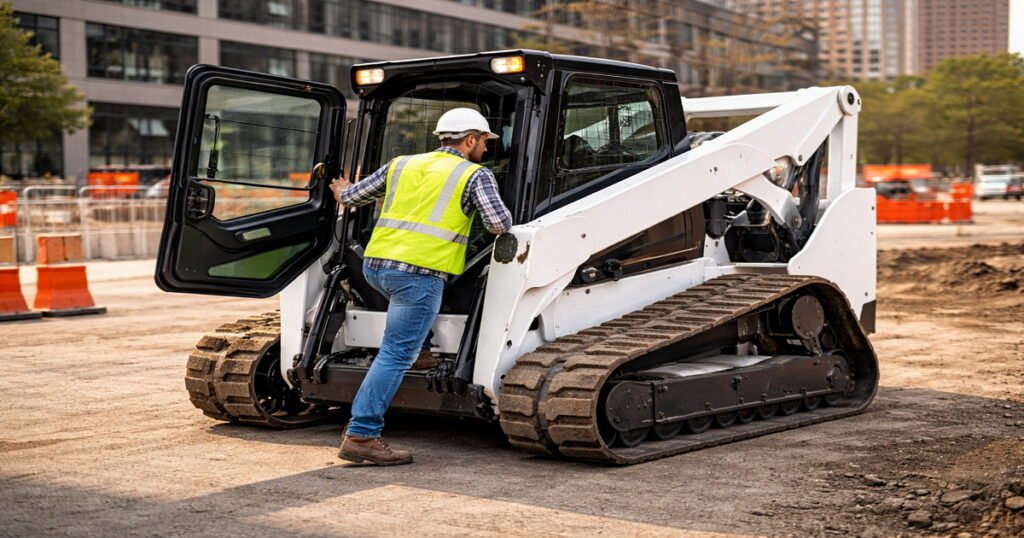
From an OEM perspective, the single‑arm concept requires advanced steel design and robust load‑path engineering, but the payoff is real: lower incident rates and more confident operators in congested environments. [inland-group]
Market Trends: Why Unique Loaders Are Growing in Popularity
Looking at the data, it’s clear that demand for compact loaders is not just stable — it’s growing, with a noticeable shift toward more capable and specialized machines. [technavio]
– The global skid steer loader market was valued at roughly USD 2.49 billion in 2024 and is expected to reach about USD 3.51 billion by 2033, driven by urbanization and infrastructure spending. [skyquestt]
– In North America, compact track loaders now hold the largest share of the skid steer/CTL segment, thanks to better traction, improved comfort and higher productivity in poor ground conditions. [marknteladvisors]
– On the technology side, electric and hybrid skid steers are emerging, offering lower emissions and noise to meet stricter jobsite regulations and sustainability goals. [technavio]
For buyers, this means that the “standard” loader spec sheet is no longer enough. You need to think in terms of job‑matched features: all‑wheel‑steer where surface protection matters, single‑arm machines where side access and visibility are critical, and tracked machines where ground conditions are unpredictable. [marknteladvisors]
How Certeg Positions Its Skid Steer and Track Loaders
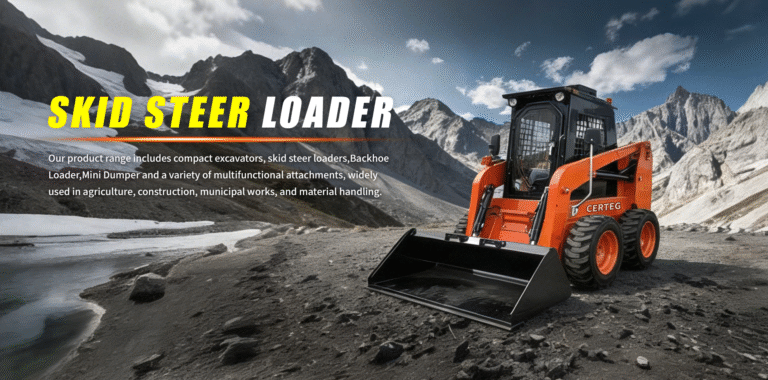
As a manufacturer supplying wheeled skid steers and tracked loaders to customers across Asia, Europe and the Americas, Certeg builds machines specifically for fleets that need robust performance at a competitive cost. Our role is not to copy niche concepts blindly, but to absorb their lessons and apply them where they genuinely improve ROI for rental houses, contractors and agricultural users. [youtube]
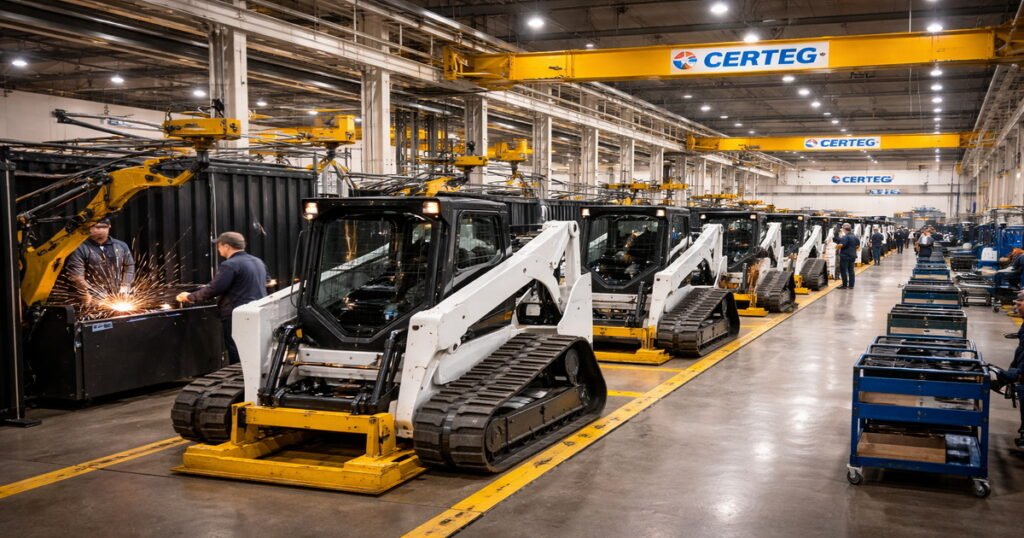
From the factory floor to field testing, our design priorities typically include:
– Powertrain reliability using proven engines (such as Kubota/Xinchai in our CT‑series units) matched to hydraulic systems designed for continuous duty. [youtube]
– Undercarriage durability, with reinforced chassis and track systems tuned for mixed earthmoving and construction work. [youtube]
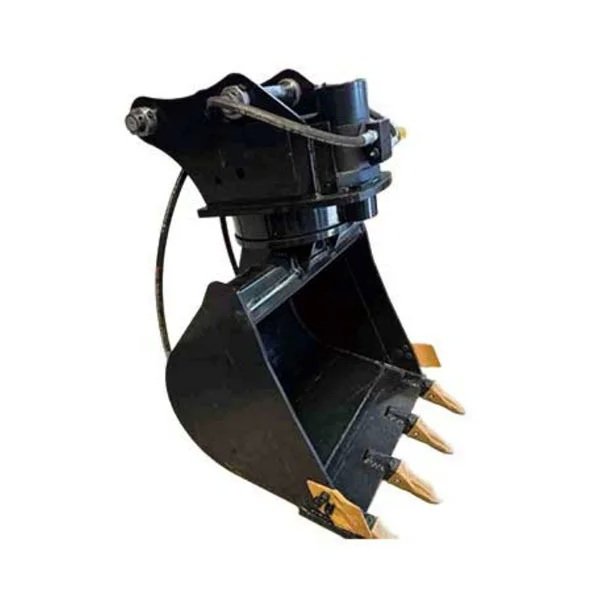
– Attachment flexibility, using standardized quick‑attach couplers so fleets can use a wide range of buckets, forks, augers and specialty tools. [riggscat]
Rather than chasing every experimental configuration, we focus on balanced wheeled and tracked loaders that deliver predictable performance across a wide variety of jobs, while still offering the traction, stability and control today’s market expects. [skyquestt]
Practical Buying Guide: Matching Loader Concepts to Your Jobs
Drawing on both the original stand‑alone loader concepts and current market data, here is a practical decision path I recommend when advising buyers on skid steer and track loader choices.
Step 1: Define your terrain and climate
1. List your top 3 recurring jobsite conditions (e.g., city streets, muddy subdivisions, agricultural yards).
2. If more than half your work is on soft, wet, or snowy terrain, prioritize a compact track loader with a robust undercarriage. [bobcat]
3. If you mainly run on concrete or asphalt and value travel speed, a wheeled skid steer is usually the better starting point. [bobcat]
Step 2: Clarify surface protection requirements
– Choose all‑wheel‑steer or very precise control when surface damage (turf, decorative pavement, stamped concrete) is a major concern. [inland-group]
– Standard skid steer steering is fine where minor scuffing is acceptable, such as gravel yards or rough construction entrances. [compactequip]
Step 3: Safety, visibility and operator profile
– For busy, pedestrian‑heavy sites, prioritize cab access and visibility; single‑arm side‑entry designs are especially attractive here. [inland-group]
– If you rely on seasonal or less‑experienced operators, invest in machines with intuitive controls, good sight‑lines and stable undercarriages to reduce risk. [youtube]
Step 4: Fleet economics and utilization
– Use historical data: measure annual hours per machine, attachment mix and maintenance cost per hour.
– If utilization is high and ground conditions are poor, the higher capital cost of a CTL is often offset by higher productivity and fewer lost days. [skyquestt]
– In mixed fleets, pairing a cost‑effective Certeg skid steer with a higher‑spec CTL can give rental houses a tiered offer that fits both budget‑conscious and performance‑driven customers. [marknteladvisors]
Planning for Electric and Hybrid Loader Adoption
One of the most important trends that the original article did not cover in depth is the rise of electric and hybrid compact loaders. Even if you plan to buy diesel units today, it’s worth preparing your fleet strategy for lower‑emission machines over the next five years. [technavio]
Current industry analysis shows a growing preference for electric and hybrid skid steers due to strict emissions rules, urban noise limits and corporate sustainability targets. These machines reduce jobsite noise, improve indoor air quality and allow nighttime or indoor operation where diesel fumes would be unacceptable. For OEMs like Certeg, this trend means designing frames, hydraulic layouts and control systems that can be adapted to future alternative powertrains without redesigning the entire loader platform. [skyquestt]
Asia‑Pacific and Emerging Market Opportunities
Another under‑reported angle is how Asia‑Pacific and other emerging markets are shaping loader demand. According to recent market research, Asia‑Pacific is the fastest‑growing region for skid steer loaders, driven by rapid urbanization, smart infrastructure investment and growing mechanization among small contractors and farmers. [skyquestt]
For a manufacturer headquartered in this region, this presents a unique opportunity and responsibility. We see strong demand for affordable, compact machines that can operate in crowded urban spaces, as well as in rural projects where manual labor previously dominated. Certeg’s approach is to combine robust, export‑ready designs with cost structures that work for local contractors, then scale the same platforms to Europe, North America and other regions with adjusted configurations and compliance packages. [skyquestt]
How to Future‑Proof Your Loader Fleet
Based on conversations with rental fleet managers and mid‑sized contractors, three decisions have the biggest impact on whether a compact loader fleet stays competitive over a 5‑ to 10‑year horizon.
– Standardize on a core platform: Choose 1–2 core skid steer/CTL models that share filters, hoses, track sizes and control layouts to simplify parts stocking and training.
– Prioritize telemetry‑ready machines: Even if you don’t use telematics on day one, machines with CAN‑bus‑based monitoring and data ports make it easier to add fleet management later.
– Work with an OEM that supports OEM/ODM: Brands like Certeg that offer OEM/ODM services can customize options, branding and even some specs for larger buyers, ensuring your fleet stands out in your local market while keeping a common technical foundation. [skyquestt]
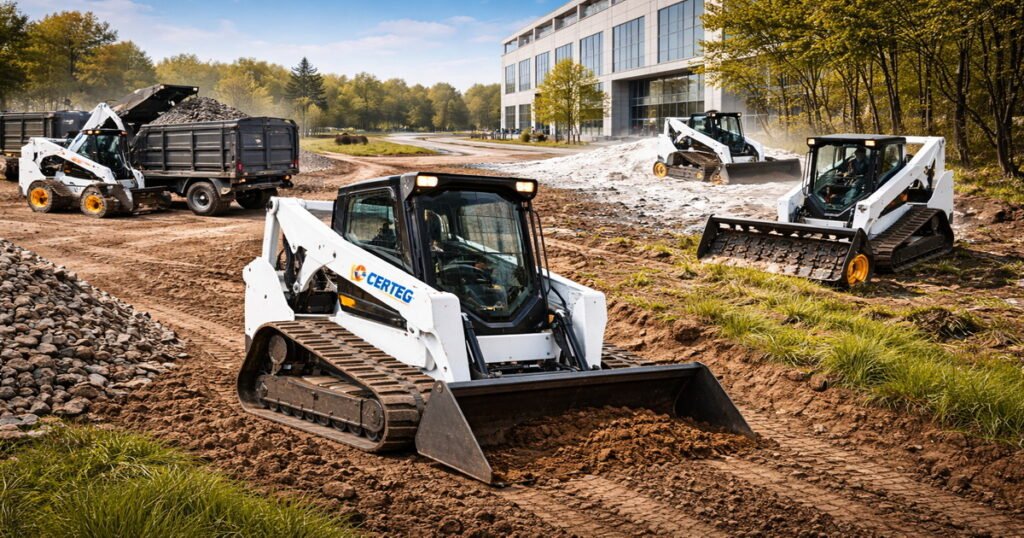
Call to Action: Talk to an OEM, Not Just a Dealer
If you are currently comparing unique skid steer and track loader options, don’t make the decision on spec sheets alone. Use those specs as a starting point, then map them to your real jobs, operators and ownership costs over 3–5 years.
As an OEM, Certeg can help you translate stand‑alone concepts into practical fleet decisions — whether that means choosing between wheels and tracks, selecting the right power range, or configuring attachments for your exact work mix. If you’d like a tailored recommendation for your projects or rental fleet, contact the Certeg team with your jobsite conditions, annual hours and attachment needs so we can propose a right‑sized loader package, not just a model number.
FAQ
1. What is the main difference between a skid steer and a compact track loader?
The main difference is the undercarriage: skid steers run on wheels, while compact track loaders use rubber tracks, which affects traction, ground pressure, stability and best‑fit terrain. [rippa]
2. Are compact track loaders always a better choice than skid steers?
Not always; CTLs perform better on soft or uneven ground but cost more to buy and maintain, whereas skid steers are faster and more economical on hard, stable surfaces. [rippa]
3. Why are all‑wheel‑steer skid steers considered “stand‑alone” designs?
They let operators switch between conventional skid steering and four‑wheel steering to reduce turf damage and tire marks while still preserving tight‑turn maneuverability when needed. [compactequip]
4. How important are electric and hybrid skid steers for future fleets?
They are increasingly important in urban and indoor applications where noise and emissions limits are strict, and current market analysis shows a clear trend toward these low‑emission machines. [technavio]
5. What makes Certeg an attractive partner for global buyers?
Certeg manufactures both wheeled skid steers and compact track loaders with export‑ready designs, offers OEM/ODM customization, and focuses on balancing performance, durability and cost for diverse global jobsites. [youtube]
References
1. Compact Equip. “Stand Alone Loaders: Here Are Some of the Most Unique Skid Steer and Track Loader Choices on the Market.” 2019. [compactequip]
2. Bobcat. “Skid-Steer Loaders vs. Compact Track Loaders: Which Is Right for You?” 2026. [bobcat]
3. Rippa. “Skid Steer vs. Compact Track Loader: Which Is Right for Your Business?” 2026. [rippa]
4. MarkNtel Advisors. “North America Skid Steer & Compact Track Loader Market Size, Share, Forecast 2024–2030.” [marknteladvisors]
5. Technavio. “Skid-steer Loaders Market Size 2024–2028.” [technavio]
6. SkyQuest. “Skid Steer Loader Market Size, Share, and Industry Forecast Report.” [skyquestt]
7. CERTEG. “Inside the CERTEG Skid Steer Factory! #skidsteer.” YouTube, 2026. [youtube]
8. Inland Group. “Skid Steer or Compact Track Loader: Which is Right for You?” 2025.[inland-group]
9. Riggs Cat. “Skid Steer and Compact Track Loaders.” [riggscat]
10. Dozr. “Comparing All Compact Track Loader Brands: Who Makes The Best CTL?” [dozr]
Hot Tags: Skid Steer Loader, Manufacturers, Customized, Custom, Suppliers, Buy, Cheap, Quality, Advanced, Durable, in Stock, Made in China, Price, Quotation