
The 2015 Caterpillar Skid Steer Lineup: Expert Guide, Real-World Insights and Smarter Alternatives
Content Menu
● Overview of the 2015 Caterpillar Skid Steer Lineup
● Radial Lift vs Vertical Lift: What It Means on Site
>> Radial‑Lift Models: Simpler and Lighter
>> Vertical‑Lift Models: Better for Loading and Trucks
● Cooling and Reliability: Why Cat’s Demand Fan Still Matters
● Hydraulic Power and Attachments: High‑Flow XPS and XHP
>> High Flow XPS: Up to 33 gpm
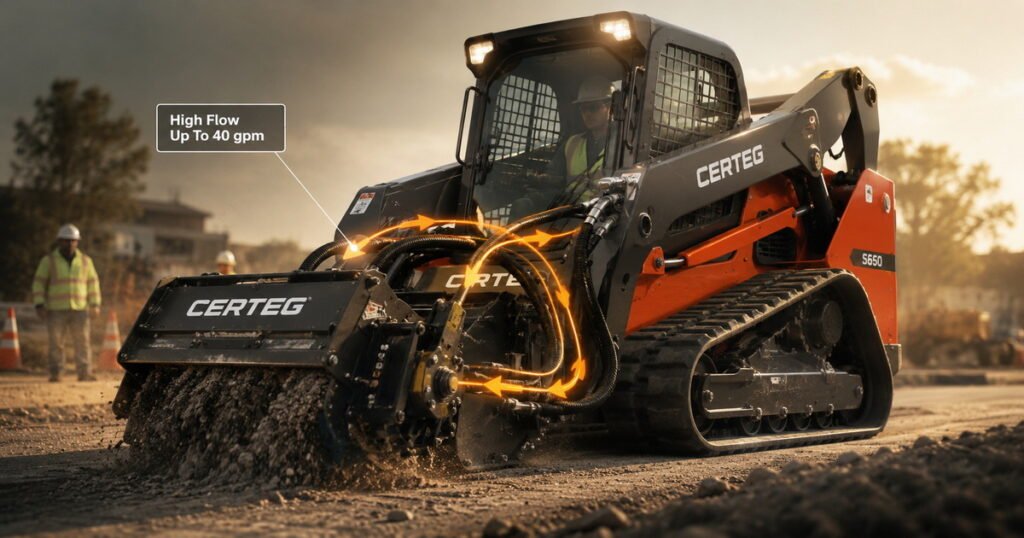
>> 272D2 XHP: Up to 40 gpm at 4,061 psi
● Operator Comfort, Visibility and Safety
>> Enclosed Cab and Control Options
● Practical Advice to Skid Steer Buyers
● How 2015 Cat Skid Steers Compare to Modern Loaders
>> Emissions and Fuel Efficiency
● Matching Skid Steer Type to Work Conditions
>> Track vs Wheel Skid Steer Loaders
● Simple Purchase Checklist for Skid Steer Buyers
● Skid Steer Feature Snapshot: 2015 Cat vs Modern Expectations
● Call to Action: Turn Specs into a Working Solution
● FAQ
>> 1. Are 2015 Caterpillar skid steers still a good investment today?
>> 2. What is the main difference between radial‑lift and vertical‑lift loaders?
>> 3. Do I really need high‑flow hydraulics for my skid steer?
>> 4. How important is cab comfort on a skid steer loader?
>> 5. Should I choose a compact track loader or a wheeled skid steer?
Choosing the right skid steer loader today is less about memorizing specs and more about understanding how power, hydraulics and visibility translate into productivity on real jobsites. As a manufacturer of both compact track and wheeled skid steer loaders at Certeg, I’ve spent years comparing machines on muddy construction sites, tight urban infill projects and harsh industrial yards, and Caterpillar’s 2015 skid steer lineup is still a useful benchmark for buyers who want durable, high‑performance machines. [compactequip]
Overview of the 2015 Caterpillar Skid Steer Lineup
In 2015, Caterpillar offered eight skid steer loader models, combining both radial‑lift and vertical‑lift designs to serve different work profiles. That lineup also introduced two smaller D Series machines — the radial‑lift 226D and vertical‑lift 232D — which brought many of the comfort and control features from larger D Series units into a more compact package. [compactequip]
Cat’s approach was clear: give contractors a structured range from small chassis units for tight spaces up to high‑horsepower models capable of running demanding high‑flow attachments. As a manufacturer, this tiered strategy is still the template many of us use when designing product families for global construction markets. [cat]
Radial Lift vs Vertical Lift: What It Means on Site
Caterpillar’s 2015 skid steer range deliberately mixed radial‑lift and vertical‑lift designs because each style behaves differently under load. Understanding this difference matters more than memorizing model numbers. [compactequip]
Radial‑Lift Models: Simpler and Lighter
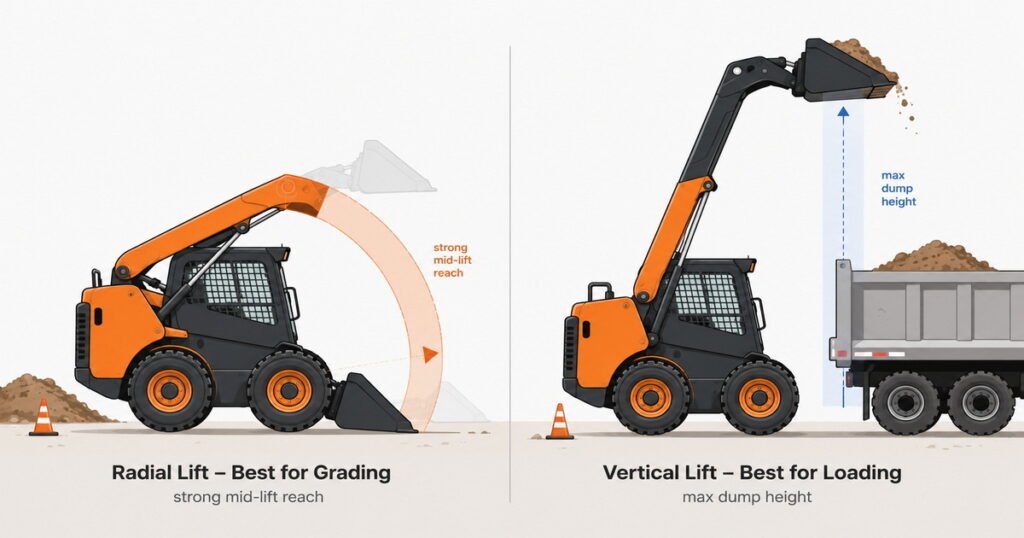
Radial lift uses a compact, more simple linkage design that arcs the boom as it raises. Caterpillar highlighted this design for: [compactequip]
– Good reach at mid‑lift height
– Strong performance in digging, dozing and finish grading or back‑filling
– Lower machine weight and lower cost compared with vertical‑lift designs
For contractors who spend most of the day on ground‑engaging tasks — grading pads, backfilling trenches or pushing material — radial‑lift machines often give better feel, stability and value per dollar. From our own experience at Certeg, these characteristics are especially attractive in emerging markets and rental fleets that want robust machines with fewer moving parts. [cat]
Vertical‑Lift Models: Better for Loading and Trucks
Vertical‑lift skid steers keep the bucket closer to the machine as it rises, delivering better reach at full lift height for loading into trucks or hoppers. In 2015, Caterpillar used vertical‑lift designs on models like the 232D to target: [cat]
– Higher dump heights and more efficient truck loading
– More stable handling at maximum lift
– Applications where cycle times and loading productivity drive ROI
When we design or recommend vertical‑lift loaders today, it is almost always for customers whose core work is material handling rather than fine grading. The 2015 Cat lineup reflected that same segmentation. [cat]
Cooling and Reliability: Why Cat’s Demand Fan Still Matters
One of the most underrated aspects of the 2015 Caterpillar skid steer lineup is the hydraulically driven demand fan and high‑capacity cooling system. For anyone who has watched a machine derate in the middle of a hot afternoon, this is more than a brochure bullet. [compactequip]
All 2015 Cat skid steers came with a cooling fan that runs hydraulically, not mechanically tied to engine speed. That design allowed the fan to spin faster exactly when the engine was lugging in tough conditions, keeping temperatures under control while preserving usable power. [compactequip]
Cat also integrated Demand Fan functionality, which automatically matched fan speed to cooling requirements instead of running at a fixed speed. This delivered: [compactequip]
– Improved fuel efficiency
– Lower noise levels
– Better cold‑weather heater performance
– Maximum available engine horsepower for machine performance
From a manufacturing standpoint, this sort of smart cooling is now a baseline expectation on premium skid steers, including our own Certeg designs for high‑temperature markets and continuous‑duty applications. But in 2015, Cat was ahead of many competitors with this approach. [cat]
Hydraulic Power and Attachments: High‑Flow XPS and XHP
For many buyers, hydraulic performance is what truly defines a modern skid steer loader. Caterpillar’s 2015 lineup offered the High Flow XPS system and an even more powerful configuration on its largest model. [compactequip]
High Flow XPS: Up to 33 gpm
The Cat High Flow XPS hydraulic system in 2015 delivered: [compactequip]
– Flow up to 33 gpm
– Pressure up to 4,061 psi
This combination meant more speed and torque to hydraulic work tools, which is crucial for attachments like: [compactequip]
– Cold planers
– Wheel saws
– Mulching heads
– Heavy‑duty brush cutters
272D2 XHP: Up to 40 gpm at 4,061 psi
At the top of the range, the 110 gross hp 272D2 XHP pushed flow up to 40 gpm while maintaining the same high pressure of 4,061 psi. That made it particularly suitable for contractors who wanted one machine to handle the most demanding high‑torque hydraulic attachments. [compactequip]
As a manufacturer, we see this specification as the practical threshold for serious land‑clearing and road‑maintenance attachments. When advising customers today, we still tell them: if you plan to run a forestry mulcher or full‑width cold planer daily, look for a loader with hydraulic capacity in this high‑flow, high‑pressure range. [gushwork]
Operator Comfort, Visibility and Safety
The move to the D Series in 2015 was not just about power; it significantly upgraded operator experience — something we now consider central to both safety and productivity. [compactequip]
Visibility Improvements
Caterpillar redesigned the loader arms to improve sight lines to: [compactequip]
– The work tool
– The sides of the machine
– The tracks or tires
Visibility was further enhanced by an integrated rear‑view camera, an industry first at the time for skid steer loaders. This reduced blind spots when reversing, especially important in congested jobsites with mixed pedestrian and equipment traffic. [compactequip]
Enclosed Cab and Control Options
The optional enclosed cab in 2015 Cat skid steers introduced: [compactequip]
– A one‑piece modular design for maximum sealing and pressurization
– A cleaner, quieter operator environment
– Reduced dust and debris ingress
Caterpillar also offered: [compactequip]
– A standard security system to deter unauthorized use and theft
– An optional 5‑in heads‑up LCD in‑cab monitor
– Customization of up to 11 different operating parameters
From a UX perspective, this level of configurability is what operators now expect from premium machines. At Certeg, we have followed a similar path by prioritizing sealed cabs, intuitive display layouts and configurable joystick responses to reduce fatigue over long shifts.
Practical Advice to Skid Steer Buyers
Kevin Coleman, senior marketing engineer at Caterpillar, offered buying guidance in the original 2015 spec article that still applies today. He recommended that buyers carefully evaluate ease of maintenance and daily checks when comparing machines. [compactequip]
Key points he highlighted include reviewing how easy it is to: [compactequip]
– Check and replace fuel filters and water separators
– Access and maintain engine air filters
– Inspect and change hydraulic filters
– Check and top up engine oil and hydraulic oil without hunting for dipsticks or removing multiple covers
From our experience building and supporting fleets, machines that make these daily tasks easy tend to stay in better condition, retain higher residual value and experience fewer unexpected failures. This is one area where a “simple” design choice can save thousands of dollars over the life of a loader. [cat]
How 2015 Cat Skid Steers Compare to Modern Loaders
While the 2015 Caterpillar skid steers were advanced for their time, buyer expectations have evolved. Today, when I evaluate a skid steer — including competitor machines and our own Certeg models — I look at how those 2015 features compare to current standards. [seo]
Power and Hydraulics
– 2015 Cat loaders with High Flow XPS and XHP can still handle most high‑demand attachments, but modern machines often offer better hydraulic cooling and smarter control modes to protect tools and pumps. [compactequip]
– Many current loaders, including Certeg’s high‑flow models, integrate auto‑throttle, work modes and improved pressure management for smoother attachment performance. [gushwork]
Operator Technology
– The 5‑in LCD monitor in 2015 was ahead of its time, but today’s premium loaders regularly include larger displays, integrated telematics, and sometimes camera systems that support 360‑degree awareness. [seo]
– Certeg and other manufacturers now design cabs around operator comfort, with better suspension seats, Bluetooth‑enabled radios and refined HVAC to reduce fatigue. [gushwork]
Emissions and Fuel Efficiency
– Since 2015, emission standards and engine control strategies have continued to evolve, pushing manufacturers to optimize fuel burn, aftertreatment reliability and idle management. [seo]
– If you run older 2015 equipment alongside newer machines, you may notice higher fuel consumption and more frequent manual regeneration or maintenance on older engines. [gushwork]
Matching Skid Steer Type to Work Conditions
One of the most common mistakes I see buyers make is treating all skid steers as interchangeable. In reality, you should choose track vs wheel, radial vs vertical, and hydraulic configuration based on specific job conditions. [cat]
Track vs Wheel Skid Steer Loaders
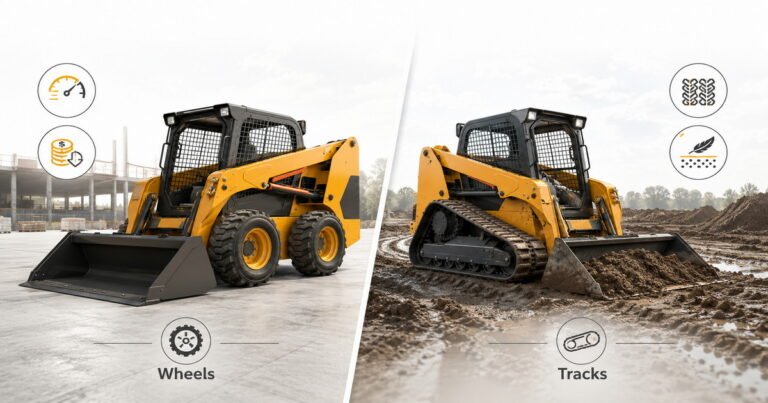
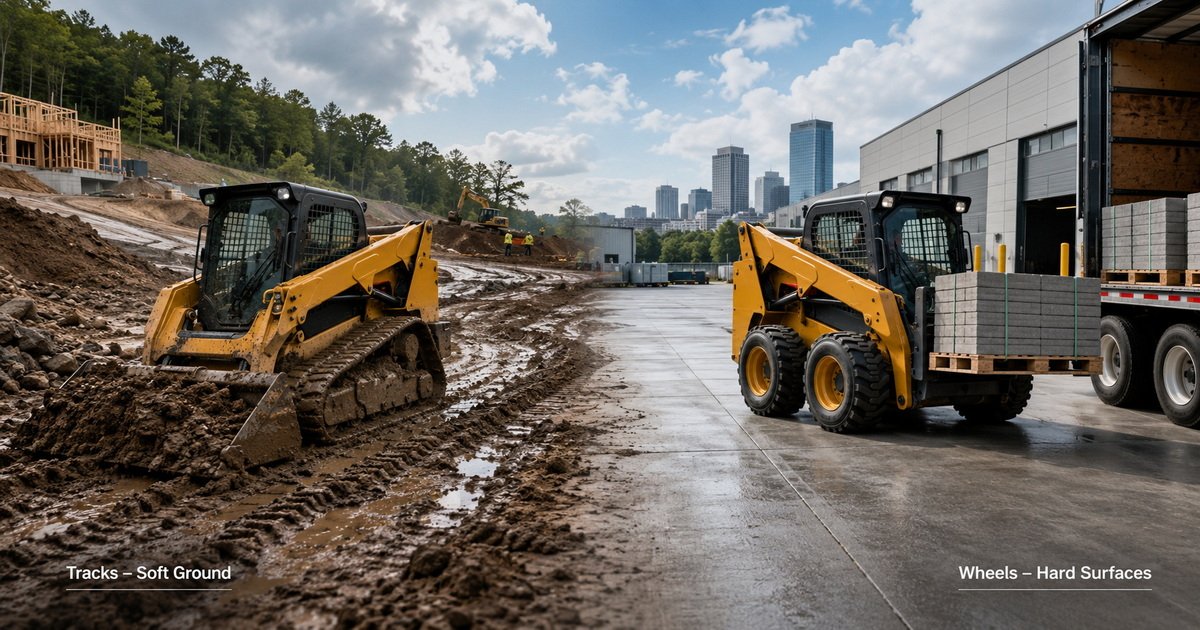
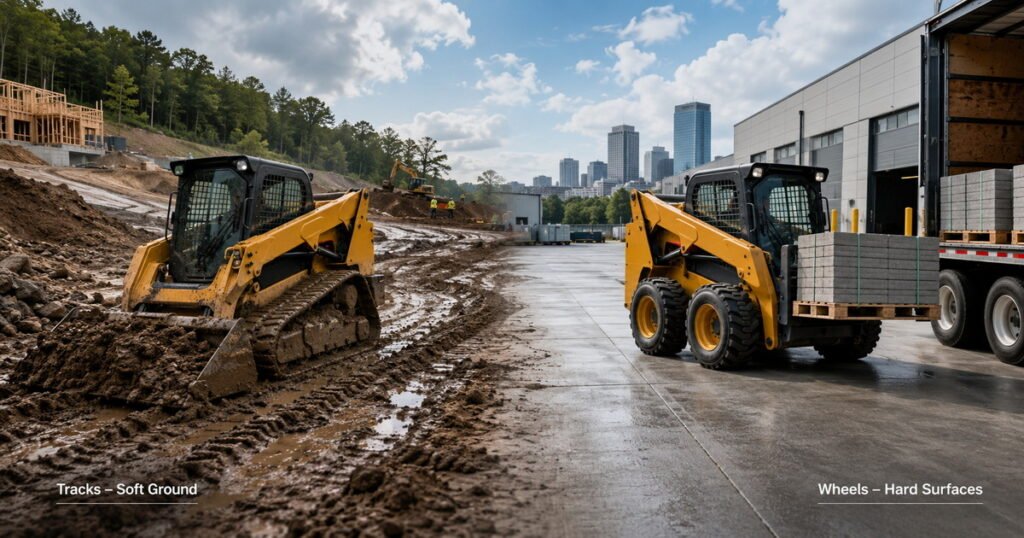
– Compact track loaders (rubber tracks, low ground pressure) excel on soft, muddy or sandy surfaces, offering better traction and flotation where wheeled skid steers would sink or spin. [cat]
– Wheeled skid steers are ideal for hard, paved or compacted surfaces where they deliver faster travel speeds, lower purchase cost and easier tire service. [cat]
Certeg offers both track and wheeled loaders specifically tuned for ground conditions in global markets, allowing you to standardize on the platform that best fits your typical jobsite.
Choosing by Application
– For fine grading and dirt work, a radial‑lift loader with strong breakout force and good mid‑lift reach is often the best choice. [compactequip]
– For truck loading, pallet handling and yard work, vertical‑lift designs minimize spillage and improve transfer efficiency. [cat]
– For forestry, roadwork and heavy attachment usage, prioritize high‑flow hydraulics and a robust cooling package over marginal increases in rated operating capacity. [compactequip]
Simple Purchase Checklist for Skid Steer Buyers
When helping customers evaluate Caterpillar or Certeg skid steers, I use a practical checklist that moves beyond pure specifications. [seo]
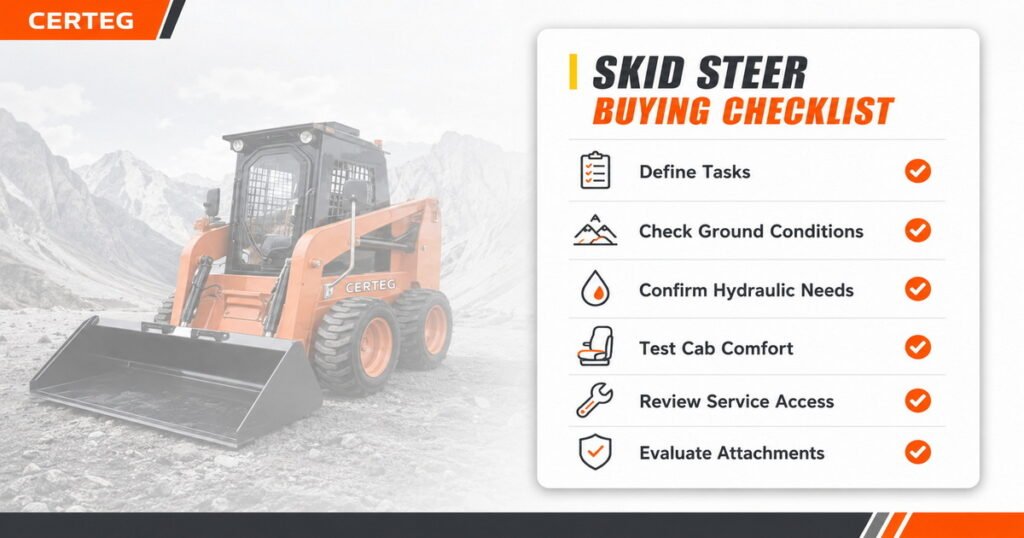
1. Define primary tasks clearly
Are you grading, loading, mulching or running a mix of attachments? This will drive your lift style, hydraulic needs and undercarriage choice. [compactequip]
2. Assess ground conditions
If you regularly work on wet, soft or landscaped surfaces, lean toward compact track loaders; for yards, plants and urban projects with concrete or asphalt, wheel loaders remain highly efficient. [cat]
3. Set performance requirements
Identify minimum tipping load, rated operating capacity and hydraulic flow/pressure required by your heaviest planned attachment. [compactequip]
4. Evaluate the cab and controls personally
Sit in the machine. Check sight lines, seat comfort, joystick response and noise levels. If the operator is uncomfortable, productivity will fall. [compactequip]
5. Inspect service access
Open the rear and side panels. Confirm that daily checks can be completed without removing guards or covers. Ask to see how filters and fluids are accessed. [compactequip]
6. Consider lifecycle costs
Compare fuel efficiency claims, maintenance intervals, parts availability and resale value. A slightly higher purchase price can be justified if lifecycle cost is lower. [gushwork]
This structured approach helps ensure you do not get distracted by one impressive number and overlook practical realities like serviceability or ground conditions.
Skid Steer Feature Snapshot: 2015 Cat vs Modern Expectations
Below is a simplified comparison of key attributes of the 2015 Cat skid steer lineup against what buyers typically expect from modern loaders, including machines produced by manufacturers like Certeg.
| Feature / Aspect | 2015 Caterpillar Skid Steers (D Series) | Modern Premium Skid Steers (e.g., Certeg and peers) |
|---|---|---|
| Lift design options | Radial and vertical lift available compactequip | Radial and vertical lift widely available cat |
| Hydraulic high‑flow options | High Flow XPS up to 33 gpm, 4,061 psi compactequip | High‑flow systems in similar or higher ranges, often with smarter control compactequip |
| Max hydraulic performance | 272D2 XHP up to 40 gpm, 4,061 psi compactequip | Comparable or higher, with enhanced cooling and protection compactequip |
| Cooling / demand fan | Hydraulically driven demand fan standard compactequip | Cooling fans with multiple auto modes and telematics monitoring seo |
| Visibility | Improved loader arm design, rear‑view camera compactequip | Expanded camera systems, sometimes 360‑degree coverage seo |
| Cab design | Sealed, pressurized cab; optional LCD monitor compactequip | Advanced cabs with larger displays, better HVAC, ergonomic seats seo |
| Security and customization | Standard security system; up to 11 parameter settings compactequip | Security plus remote monitoring, geo‑fencing, more user profiles seo |
| Maintenance access | Emphasis on accessible filters and fluid checks compactequip | Similar focus, with longer service intervals and predictive maintenance seo |
Call to Action: Turn Specs into a Working Solution
If you are comparing a 2015 Caterpillar skid steer with newer loaders or deciding between track and wheel options, you do not need to make that decision alone. Our engineering and sales teams at Certeg work daily with contractors, rental companies and fleet managers worldwide to match skid steer loaders to specific power, hydraulic and ground‑condition requirements. [cat]
Share your typical jobsite conditions, preferred attachments and budget range, and we will help you shortlist a configuration — whether that resembles a high‑flow XHP‑style loader, a compact radial‑lift machine or a balanced all‑rounder optimized for your region. [seo]
FAQ
1. Are 2015 Caterpillar skid steers still a good investment today?
They can be, especially if the machine has been well maintained and matches your hydraulic and lift requirements, but you should weigh that against modern features such as advanced telematics, improved fuel efficiency and upgraded cabs. [gushwork]
2. What is the main difference between radial‑lift and vertical‑lift loaders?
Radial‑lift loaders offer simpler linkage, strong mid‑lift reach and are excellent for digging and grading, while vertical‑lift loaders provide better reach and stability at full height for loading trucks and hoppers. [cat]
3. Do I really need high‑flow hydraulics for my skid steer?
You only need high‑flow if you plan to run demanding attachments such as cold planers, wheel saws or forestry mulchers; for buckets, forks and light brooms, standard flow is usually sufficient. [compactequip]
4. How important is cab comfort on a skid steer loader?
Cab comfort and visibility directly influence productivity and safety; sealed, quiet cabs with good HVAC, clear sight lines and simple displays reduce fatigue and keep operators focused. [seo]
5. Should I choose a compact track loader or a wheeled skid steer?
Choose compact track loaders for soft, muddy or sensitive ground, and wheeled skid steers for hard surfaces like concrete and asphalt where speed, tire serviceability and purchase cost are priorities. [cat]
References
1. – Compact Equipment – “caterpillar skid steers — 2015 Spec Guide” (accessed 2026) – [https://compactequip.com/skid-steers/caterpillar-skid-steer-2015-spec-guide/] [compactequip]
2. – Compact Equipment – “Here Are Summaries and Specs for 11 Different Skid Steer Product Lines” (accessed 2026) – [https://compactequip.com/skid-steers/here-are-summaries-and-specs-for-11-different-skid-steer-product-lines-courtesy-of-the-2022-compact-equipment-spec-guide/] [compactequip]
3. – Caterpillar – Compact Track Loaders product overview (Chinese) – [https://www.cat.com/zh_CN/products/new/equipment/skid-steer-and-compact-track-loaders/compact-track-loaders.html] [cat]
4. – Caterpillar – Skid Steer Loaders product overview (Chinese) – [https://www.cat.com/zh_CN/products/new/equipment/skid-steer-and-compact-track-loaders/skid-steer-loaders.html] [cat]
5. – SEO.com – “SEO for Heavy Equipment Companies: 7 Pro Tips” – [https://www.seo.com/industries/heavy-equipment/] [seo]
6. – Gushwork – “SEO Strategy for Heavy Equipment Sales” – [https://www.gushwork.ai/blog/seo-strategy-for-heavy-equipment-sales] [gushwork]
7. – Compact Equipment Magazine – home page – [https://compactequip.com] [compactequip]
8. – YouTube – “2015 Caterpillar Cat 272D Rubber Tire Skid Steer Loader Cab Walkaround” – [https://www.youtube.com/watch?v=RI0OaCAbOdE] [youtube]
Hot Tags: Skid Steer Loader, Manufacturers, Customized, Custom, Suppliers, Buy, Cheap, Quality, Advanced, Durable, in Stock, Made in China, Price, Quotation