
Stumped No More: The Complete 2026 Guide to Skid Steer and Excavator Stump Removal Attachments
Content Menu
● Why stump removal attachments matter
● Main types of stump removal attachments
>> Auger‑based stump planers (screw‑type)
>> Stump buckets and ripper buckets
>> Grapples, stump pullers, and tree pullers
>> Mulchers and forestry heads
● Comparison of key stump removal attachment types
● How to choose the right stump removal attachment
>> 1. Evaluate machine compatibility
>> 2. Assess stump size, species, and density
>> 3. Define your desired finish and follow‑up work
>> 4. Run the numbers: cost, utilization, and ROI
● Expert best practices for safe and efficient stump removal
>> Site preparation and safety checks
>> Operating techniques by attachment type
>> Maintenance essentials for stump attachments
● Matching stump removal attachments to your business model
● Emerging trends in stump removal attachments
● Where versatile OEM equipment fits in
● build your stump removal attachment package now
● FAQ about stump removal attachments
>> 1. Which stump removal attachment is best for most contractors?
>> 2. When should I choose an auger stump planer instead of a grinder?
>> 3. Do stump removal attachments work well on excavators?
>> 4. How deep should I grind a stump?
>> 5. What safety gear is required for stump removal work?
Removing tree stumps efficiently is critical for professional landscapers, contractors, and landowners who want clean, build‑ready sites without wasted time or damaged equipment. This enhanced guide explains every major stump removal attachment type for skid steers, compact track loaders, and excavators, with practical selection tips, safety guidance, and ROI insights for modern job sites.
Core target keywords
– Primary keyword: stump removal attachments
– Secondary keywords: stump grinder attachment, stump planer auger, stump bucket, stump grapple, skid steer stump removal, excavator stump removal, forestry attachments, tree and stump removal service
These keywords can also be used in meta title, meta description, image ALT text, and internal linking on your site.
Why stump removal attachments matter
Professional stump removal is about more than aesthetics. It directly affects productivity, site safety, and long‑term land use. Using the right stump removal attachments lets contractors convert existing machines into high‑earning, multi‑task tools instead of renting or buying dedicated stump equipment.
Key benefits of modern stump removal attachments:
– Higher productivity: Grind or extract multiple stumps per hour with the skid steer, CTL, or excavator you already own.
– Lower operating cost: Avoid extra machines, transport, and rental fees by using quick‑attach systems.
– Cleaner results: Remove stumps below grade and prepare ground for turf, hardscape, or foundations.
– Better safety: Purpose‑built attachments reduce kickback, flying debris, and manual labor risk when used correctly.
Suggested visuals:
– Wide shot of a skid steer or compact track loader grinding a line of stumps on a clearing site.
– Close‑up of an operator cab view, showing visibility and attachment control layout.
Main types of stump removal attachments
Different stump removal attachments solve different problems, from shallow small stumps to deep, heavily rooted ones. Choosing the correct tool depends on your machine, job mix, and desired finish quality.
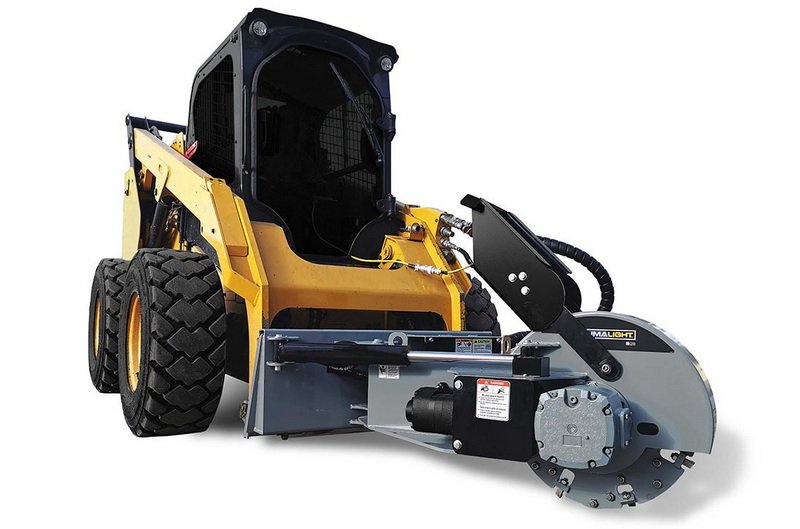
Stump grinder attachments
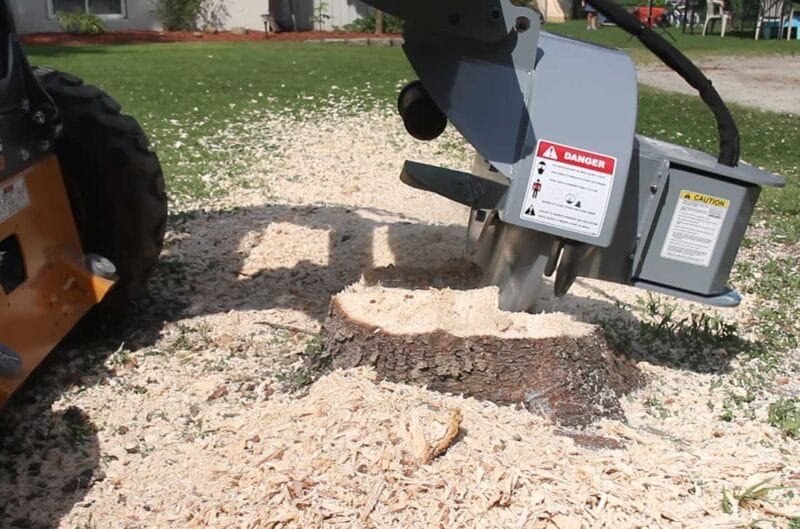
Stump grinders are the most recognized stump removal tools for skid steers, CTLs, and excavators. A rotating cutting wheel with carbide teeth grinds the stump into chips, usually below ground level.
Key advantages:
– Fast material removal for medium and large stumps.
– Below‑grade finish for easy backfilling and re‑seeding.
– Precise control over cut depth and stump profile.
Common applications: land clearing, residential tree removal, utility line work, right‑of‑way maintenance.
Suggested visuals:
– Side‑by‑side image: standard flow vs high‑flow stump grinder on the same chassis.
– Short video clip showing a grinder making several horizontal passes to take a stump below grade.
Auger‑based stump planers (screw‑type)
Auger stump planers, sometimes called screw‑type stump removal attachments, use a conical tool with cutting blades that drills down into the stump and shreds it into chips. Many operators run them on the same auger drives used for post holes, making them a cost‑effective choice.
Key advantages:
– Cost‑efficient option if you already own an auger drive.
– Produces uniform chips that are easy to manage.
– Lower risk of flying debris compared with some open‑wheel grinders.
Best use cases: intermittent stump removal, mixed jobs that also require auger drilling, areas where controlled material discharge is important.
Suggested visuals:
– Close‑up of a stump planer tip and blades, annotated to show cutting edges and pilot cone.
– Embedded video demonstrating a 10–14 inch planer working on a medium stump.
Stump buckets and ripper buckets
Stump buckets are reinforced, narrow buckets with aggressive teeth used to pry out stumps and roots by digging around and under them. Ripper‑style buckets focus more on root cutting and ground penetration.
Key advantages:
– Complete root removal, reducing regrowth risk.
– Versatile for rocks, small trees, and old fence posts.
– Useful even when you do not need to grind the stump into chips.
Best use cases: smaller trees, shallow root systems, jobs where root removal and trenching are important.
Suggested visuals:
– Before/after sequence showing a stump bucket digging around the stump and then lifting it.
– Diagram labeling bucket teeth, side plates, and wear areas.
Grapples, stump pullers, and tree pullers
Grapples and stump pullers rely on high clamping force to grab, twist, and lift stumps out of the ground. They are often used after a stump has been partially loosened by digging or cutting tools.
Key advantages:
– Fast extraction for smaller trees and posts with moderate roots.
– Excellent for handling, loading, and transporting uprooted stumps and logs.
– Multi‑purpose use across tree work, demolition, and material handling.
Suggested visuals:
– Action photo of a skid steer grapple carrying a stump to a truck or burn pile.
– Short clip showing a post‑puller style tool extracting a small tree.
Mulchers and forestry heads
High‑flow mulchers and forestry heads can sometimes grind stumps as part of a broader land‑clearing pass. While not dedicated stump removal attachments, they are valuable for large‑scale vegetation management.
Key advantages:
– One‑pass clearing for brush, small trees, and shallow stumps.
– Efficient for utility corridors and forestry sites.
Limitations: they may not remove larger stump crowns as deep or clean as a dedicated stump grinder.
Suggested visuals:
– Wide drone‑style shot of a forestry head clearing a strip of right‑of‑way.
Comparison of key stump removal attachment types
| Attachment type | Primary machine | Best for stump size | Finish quality (below grade?) | Typical productivity level | Ideal user profile |
|---|---|---|---|---|---|
| Stump grinder | Skid steer / CTL | Medium to large stumps | Yes, adjustable depth | High | Tree services, contractors, rental fleets |
| Auger stump planer | Skid steer / excavator | Small to medium stumps | Yes, within tool diameter | Medium | Mixed auger and occasional stump jobs |
| Stump bucket / ripper | Skid steer / CTL | Small trees, shallow roots | Root removal, not grinding | Medium | Landscapers, farmers, fencing contractors |
| Grapple / stump puller | Skid steer / excavator | Small to moderate stumps | Full extraction if loosened | Medium to high | DIY operators, farm and ranch, small crews |
| Mulcher / forestry head | High‑flow skid steer | Shallow stumps, brush | Partial, mainly surface | Very high over large areas | Land‑clearing and forestry specialists |
Use this table in your page body and consider pairing it with structured data and internal links to related attachment pages.
How to choose the right stump removal attachment
Selecting the right stump removal attachments requires balancing machine specs, stump conditions, and business goals. The following framework helps operators match attachment type to job requirements.
1. Evaluate machine compatibility
Start with the host machine’s hydraulic and structural limits. Oversizing an attachment can slow performance and damage components, while undersizing wastes productivity.
Key checks:
– Hydraulic flow and pressure: Confirm the attachment’s required GPM and PSI fall within your machine’s auxiliary circuit range.
– Operating capacity: Verify the attachment weight plus stump load does not exceed rated operating capacity.
– Mounting interface: Ensure the quick‑attach pattern matches your skid steer, CTL, or excavator coupler.
Suggested visuals:
– Simple spec sheet style graphic comparing a standard‑flow grinder vs a high‑flow grinder on the same loader.
2. Assess stump size, species, and density
Stump hardness and root structure significantly affect attachment choice and cycle time. Dense hardwoods and large stump diameters usually demand more aggressive cutting tools.
Key considerations:
– Diameter: Very large stumps may require multiple passes or pre‑cutting.
– Wood hardness: Hardwoods wear teeth faster, so plan for more frequent maintenance.
– Root spread and depth: Wide, shallow roots may favor buckets and grapples, while deep taproots may require grinders or planers.
Suggested visuals:
– Illustration showing typical root patterns for shallow‑root vs deep‑root species.
3. Define your desired finish and follow‑up work
The “right” attachment depends on what must happen to the site after stump removal. Grinding below grade is critical when installing turf or hardscape, while full root extraction is vital in areas where regrowth is unacceptable.
Common scenarios:
– Turf or lawn renovation: Stump grinder or stump planer to 4–6 inches below grade, backfilled with chips and topsoil.
– Fence or structure installation: Bucket and grapple combination to clear roots and compact subgrade.
– Forestry and access roads: Mulcher to knock stumps down enough for tracked machine passage.
4. Run the numbers: cost, utilization, and ROI
Attachments should be evaluated like any capital equipment purchase, considering both upfront price and long‑term earning capacity. Even premium stump grinder attachments can pay for themselves quickly when integrated into an existing tree or landscaping business.
Key ROI drivers:
– Hourly billing rate vs cycle time per stump.
– Annual number of stump jobs (stand‑alone or bundled with tree removal).
– Reduced rentals and subcontracting when you own your own stump removal attachments.
Suggested visuals:
– Simple bar chart comparing estimated payback periods for stump planer vs grinder vs bucket based on standard utilization assumptions.
Expert best practices for safe and efficient stump removal
Safe operation is non‑negotiable when working with high‑torque, high‑speed stump removal attachments. Following consistent procedures protects operators, bystanders, and equipment.
Site preparation and safety checks
Before starting work, operators should systematically assess the site and setup.
Best practices:
– Inspect for underground utilities such as water, gas, and communications lines.
– Clear loose debris, rocks, and metal from around the stump to reduce kickback and tooth damage.
– Establish an exclusion zone to keep bystanders well away from flying chips and equipment swing radius.
– Confirm all guards, shields, and deflectors are properly installed on the attachment.
Operating techniques by attachment type
Correct technique improves productivity and extends attachment life. The following practices are widely used across professional tree care and skid steer operations.
For stump grinders:
– Use smooth, lateral sweeping passes, lowering gradually to avoid overload.
– Maintain appropriate engine RPM and hydraulic flow for clean cutting.
– Avoid sudden plunging into the stump, instead peel layers to control chip size.
For auger stump planers:
– Keep the tool straight and aligned to prevent binding.
– Let the pilot tip feed at a controlled rate and avoid excessive down pressure.
– Periodically withdraw the tool to clear chips and reduce heat build‑up.
For buckets and grapples:
– Undercut roots from multiple sides before attempting full extraction.
– Work slowly when prying to avoid twisting the loader arms or coupler.
– Use the grapple to secure loosened stumps before moving across uneven ground.
Suggested visuals:
– Step‑by‑step image sequence of a grinder pass from right to left.
– Short operating tips overlay on a real working video clip.
Maintenance essentials for stump attachments
Well‑maintained stump removal attachments cut faster, run cooler, and last longer. Regular inspections also reduce the risk of in‑field failures that stop crews and damage machines.
Core maintenance tasks:
– Cutting teeth and blades: Inspect daily for chips, cracks, and rounding, then rotate or replace as needed.
– Fasteners and wear parts: Check mount bolts, tooth pockets, and guards for looseness and wear.
– Hydraulic components: Inspect hoses, couplers, and motors for leaks, kinks, and overheating.
– Lubrication: Follow recommended greasing intervals for bearings and pivot points.
Suggested visuals:
– Close‑up comparison of a new vs worn tooth set.
– Maintenance checklist graphic for pre‑shift inspection.
Matching stump removal attachments to your business model
Different businesses should prioritize different stump removal attachments based on their primary revenue streams and fleet makeup. This section helps owners connect attachment strategy directly to market positioning.
Recommended setups by business type:
– Tree care companies: High‑flow stump grinder as a primary tool, plus a grapple for handling logs and extracted root balls.
– Landscape contractors: Mid‑size grinder or stump planer for finish work, stump bucket for roots, and a standard bucket for backfilling.
– Farm and ranch operations: Stump planer on existing auger drive, general‑purpose grapple for logs, rocks, and small tree removal.
– Land‑clearing and forestry: High‑power mulcher for large acreage plus a dedicated grinder for critical locations like roads and building pads.
Suggested visuals:
– Matrix graphic showing business type vs recommended attachment package.
Emerging trends in stump removal attachments
Attachment technology continues to evolve, improving safety, performance, and integration with host machines. Staying ahead of these developments helps contractors maintain a competitive edge.
Notable trends:
– Higher efficiency cutting systems with optimized tooth patterns and wheel designs.
– Better debris management through improved chip deflectors and optional guarding kits.
– Smarter hydraulics with flow control and pressure protection tuned for modern high‑flow loaders.
– Content‑driven sales using how‑to videos and case studies to support buyer education.
Suggested visuals:
– Embedded video demonstrating a new‑generation grinder or planer in a real job scenario.
Where versatile OEM equipment fits in
For global buyers, one of the most effective ways to leverage stump removal attachments is to pair them with versatile base machines such as excavators, skid steers, compact track loaders, and tractors. Multi‑attachment‑ready carriers allow owners to switch quickly between stump work, grading, lifting, and material transport.
Key advantages of attachment‑ready OEM machines:
– Multi‑season utilization: One machine handles stump removal, snow, pallet handling, and earthmoving with the right attachments.
– Lower fleet complexity: Fewer engine platforms to maintain and fewer operator training tracks.
– Scalable packages: Start with essential stump removal attachments and add more tools as revenue grows.
Suggested visuals:
– Gallery of a single machine shown with different work tools attached (grinder, planer, bucket, grapple).
build your stump removal attachment package now
The fastest way to unlock new revenue in stump work is to evaluate your existing equipment, identify attachment gaps, and build a focused plan. Whether you operate a single skid steer or a full mixed fleet of excavators, loaders, and tractors, the right stump removal attachments can quickly convert occasional stump jobs into a consistent profit center.
Next steps:
– Audit your fleet and list hydraulic specs, coupler types, and typical job conditions.
– Prioritize one primary removal method (such as a stump grinder or auger stump planer) plus one support tool (such as a stump bucket or grapple).
– Consult your preferred equipment supplier or OEM partner to size, configure, and quote a complete stump removal attachment package tailored to your business.
– Schedule operator training and maintenance routines so the new setup starts adding billable hours from day one.
Contact us to get more information!

FAQ about stump removal attachments
1. Which stump removal attachment is best for most contractors?
For most tree and landscape contractors, a skid steer or compact track loader stump grinder attachment offers the best mix of speed, depth control, and job versatility. It can handle a wide range of stump sizes, works on tight sites, and integrates well into existing fleets.
2. When should I choose an auger stump planer instead of a grinder?
An auger stump planer is ideal when you already own an auger drive and encounter stumps regularly but not as your primary service. It is more affordable than a full grinder and produces controlled chips, making it attractive for farms, small contractors, and mixed‑use fleets.
3. Do stump removal attachments work well on excavators?
Many stump grinders, planers, and pullers are designed to fit excavators with the correct coupler and hydraulic configuration. Excavators excel at reaching over obstacles, working on slopes, and applying strong breakout force to stubborn root systems.
4. How deep should I grind a stump?
Depth depends on the follow‑up work, but many operators grind 4–6 inches below grade for turf or landscape restoration and deeper when installing structures or pavement. The goal is to prevent trip hazards and avoid interference with new roots, posts, or foundations.
5. What safety gear is required for stump removal work?
Operators should use eye and face protection, hearing protection, gloves, and sturdy footwear at a minimum, along with high‑visibility outerwear in traffic or public areas. Job sites should also have defined exclusion zones, proper signage, and clear communication protocols for everyone nearby.
References:
1. https://compactequip.com/attachments/stumped-everything-you-need-to-know-about-stump-removal-attachments/
2. https://skidpro.com/skid-steer-stump-removal/
3. https://skidsteersolutions.com/inside-the-cab-skid-steer-solutions/mastering-stump-removal-the-best-practices/
4. https://skidsteersolutions.com/inside-the-cab-skid-steer-solutions/skid-steer-auger-stump-planer-attachment/
5. https://skidsteerstore.com/blogs/blogs/best-skid-steer-stump-grinder-attachments-guide
6. https://tomahawkattachments.com/blog/your-guide-to-stump-buckets
7. https://www.mclarenindustries.com/us/en/news-and-resources/articles/293/best-attachments-for-your-tree-and-stump-removal-service
8. https://blog.primeattach.com/diy-stump-removal-with-skid-steer-grapples-rippers-and-pullers
Hot Tags: Stump Removal Attachments, Stump Grinder Attachment, Skid Steer Stump Grinder, Excavator Stump Removal, Tree Stump Removal Equipment, Forestry Attachments, Land Clearing Attachments, Heavy Equipment Attachments, Compact Equipment Attachments, Construction Attachment Tools