
Bobcat T66 vs Kubota SVL75-2: Which Compact Track Loader Is Really Better for Your Business?
Content Menu
● Target keywords and article focus
>> Rated operating capacity and power
>> Travel speed and cycle efficiency
>> Control precision and operator confidence
● Operator comfort and visibility
>> Lighting and low-light work
● Real-world use cases and best-fit scenarios
>> When the Bobcat T66 is the stronger choice
>> When the Kubota SVL75-2 may still fit
● Step-by-step selection framework for buyers
>> 1. Define your primary tasks
>> 2. Quantify productivity differences
>> 3. Evaluate operator comfort and safety
● Attachments, technology, and future-proofing
>> Technology and support ecosystem
● Comparative advantages summarized
● UX and visual content recommendations
● Take the next step with expert support
● Frequently Asked Questions (FAQ)
>> 1. Is the Bobcat T66 more powerful than the Kubota SVL75-2?
>> 2. Which compact track loader is more comfortable for operators?
>> 3. Does travel speed really matter for compact track loaders?
>> 4. Why does rated operating capacity matter so much?
>> 5. How should I test these loaders before I buy?
Choosing between the Bobcat T66 and Kubota SVL75-2 is a strategic investment decision that affects uptime, productivity, and long-term operating costs. This enhanced guide compares performance, comfort, technology, and total cost of ownership so contractors and fleet managers can confidently select the right compact track loader for demanding jobsites.

Target keywords and article focus
This article is optimized around the following core and long-tail keywords:
– Primary keyword: Bobcat T66 vs Kubota SVL75-2
– Secondary keywords:
– Bobcat T66 specs
– Kubota SVL75-2 specs
– compact track loader comparison
– Bobcat vs Kubota track loader
– best compact track loader for construction
These keywords appear naturally in the H1 and H2 headings, introduction, conclusion, and comparison sections to support strong topical relevance without keyword stuffing.
Overview of both loaders
Both the Bobcat T66 and Kubota SVL75-2 are compact track loaders designed for year-round use in landscaping, construction, agriculture, and rental fleets. Compact track loaders are valued for their ability to dig, lift, grade, and haul in tight spaces while maintaining traction on soft or uneven ground.
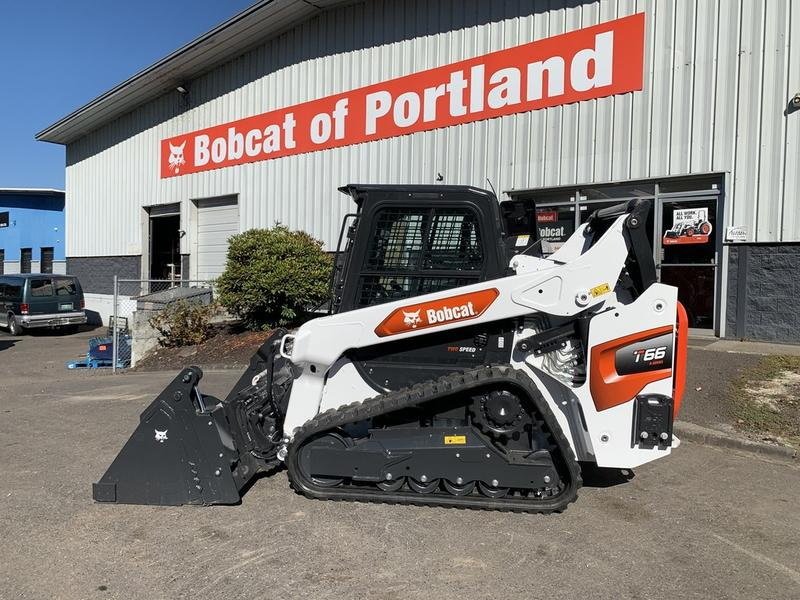
The Bobcat T66 emphasizes high rated operating capacity, fast travel speed, refined controls, and a quiet, comfortable cab for all-day work. The Kubota SVL75-2 is a proven, durable machine with traditional control feel and solid performance, but with less focus on quiet operation and cab refinement.
Key performance comparison
The Bobcat T66 delivers a noticeable edge in core performance metrics that matter on busy jobsites.
Rated operating capacity and power
The Bobcat T66 provides 150 pounds more rated operating capacity than the Kubota SVL75-2, allowing it to safely lift and carry heavier loads per cycle. Higher ROC translates into fewer trips with heavy pallets, concrete, aggregate, or landscape materials, directly improving job productivity.
Travel speed and cycle efficiency
The Bobcat T66 has a faster single-speed and two-speed travel mode than the Kubota SVL75-2. Faster travel across the site reduces non-productive time, especially on large commercial or infrastructure projects.
Control precision and operator confidence
The Bobcat T66 features ultra-responsive selectable joystick controls that give operators precise, smooth control of travel and lift functions. The Kubota SVL75-2 uses more traditional controls, which some operators may find less refined and more fatiguing over long shifts.
Operator comfort and visibility
Operator comfort is directly tied to productivity, training speed, and safety. A machine that operators enjoy running will be used more effectively and more carefully.
Cab visibility and layout
The Bobcat T66 offers a panoramic view from the cab, with big windows, clear-side enclosure options, and a well-designed operator environment. Enhanced side and front visibility support safer operation when working near personnel, structures, or traffic. The Kubota SVL75-2 provides functional visibility, but the Bobcat cab design is more focused on a wide, unobstructed view.
Lighting and low-light work
Standard LED headlights on the Bobcat T66 improve night or early-morning operation, delivering bright, energy-efficient lighting that sharpens depth perception. LED lighting is particularly valuable for contractors running double shifts, winter work, or time-sensitive projects.
Noise and operator fatigue
The Bobcat T66 is engineered to run quiet, which helps reduce operator fatigue over long days. By contrast, the Kubota SVL75-2 is noticeably louder, which can contribute to fatigue and communication challenges on busy sites.
Feature comparison table
The table below summarizes the most important differences between the Bobcat T66 and Kubota SVL75-2 compact track loaders.
| Feature | Bobcat T66 | Kubota SVL75-2 |
|---|---|---|
| Rated operating capacity (ROC) | Higher ROC, +150 lb vs Kubota | Lower ROC than T66 |
| Travel speed (single / two-speed) | Faster in both modes | Slower in comparison |
| Controls | Selectable, ultra-responsive joysticks | Traditional controls, less refined |
| Cab visibility | Panoramic view, large windows | Adequate but less panoramic |
| Lighting | Standard LED headlights | Conventional lighting |
| Interior noise | Engineered to be quiet | Noticeably louder |
Real-world use cases and best-fit scenarios
To move beyond basic specs, it is useful to think about how each machine fits into specific project types and workflows.
When the Bobcat T66 is the stronger choice
The Bobcat T66 is typically the better option when:
1. High utilization fleets
– Contractors or rental fleets that run machines multiple shifts per day gain from higher ROC, fast travel, and quieter operation, which compound into more billable work hours and less operator fatigue.
2. Complex, tight jobsites
– Urban infill, interior demolition, and utility work benefit from precise joystick controls, excellent visibility, and powerful LED lighting for safe operation in tight or low-light conditions.
3. Operator recruitment and retention
– A comfortable, quiet cab with modern control feel makes it easier to attract skilled operators and train newer team members quickly and safely.
When the Kubota SVL75-2 may still fit
While the Kubota SVL75-2 is outperformed by the T66 in several core metrics, some buyers may still consider it when:
– Existing fleets are already standardized on Kubota controls and operators strongly prefer that feel.
– The majority of work is light-duty or intermittent, where incremental speed and ROC advantages are not fully utilized.
Step-by-step selection framework for buyers
To make an objective decision between the Bobcat T66 and Kubota SVL75-2, use the following simple framework. This turns a spec sheet comparison into a business decision driven by productivity and cost.
1. Define your primary tasks
List the top 3–5 jobs your loader performs most often:
– Material handling, such as pallets, blocks, and bagged materials
– Earthmoving and grading
– Land clearing and forestry attachments
– Road maintenance and paving support
– Agriculture handling and feeding
For each task, estimate:
– Average load weight
– Typical cycle distance traveled
– Hours of operation per shift
2. Quantify productivity differences
With higher rated operating capacity and faster two-speed travel, the Bobcat T66 can complete more cycles per hour than the Kubota SVL75-2 under similar conditions. To capture this value:
1. Estimate the number of loader cycles per day.
2. Assume a conservative percentage productivity gain from faster travel and higher ROC.
3. Multiply by the value of your crew’s hourly rate or project billing rate.
Even a small improvement in cycles per hour compounded over months can offset a price difference between machines.
3. Evaluate operator comfort and safety
Include your operators in test drives of both machines and score them in three areas:
– Control precision and responsiveness
– Visibility and confidence around obstacles
– Noise level and end-of-day fatigue
Machines like the Bobcat T66 that score higher in these areas typically lead to fewer near-miss incidents, less accidental damage to structures or materials, and lower turnover of skilled operators.
Attachments, technology, and future-proofing
While this comparison focuses on the base loaders, thoughtful buyers should also consider the attachment ecosystem and technology integration offered by each platform.
Attachment versatility
A compact track loader becomes a year-round revenue machine when paired with the right attachments, such as buckets, augers, trenchers, sweepers, land levelers, and cold planers. Verify which attachments, hydraulic flows, and quick-coupler systems are available and supported long-term for both Bobcat and Kubota models in your market.
Technology and support ecosystem
Modern loaders increasingly integrate telematics, maintenance monitoring, and fleet management tools. Choosing a platform with a strong dealer network, parts availability, and digital support helps minimize unplanned downtime and improves lifetime return on investment.
Comparative advantages summarized
From a practical standpoint, the Bobcat T66 vs Kubota SVL75-2 decision comes down to consistent edges in performance, comfort, and productivity for the Bobcat machine.
Bobcat T66 key advantages include higher rated operating capacity for heavier loads and fewer trips. It offers faster travel speeds in both single and two-speed modes for shorter cycle times. Selectable, ultra-responsive joystick controls reduce operator fatigue and enable precision work. Panoramic cab visibility with large windows and clear-side enclosure options improves safety and confidence. Standard LED headlights significantly improve low-light operation, and quieter operation supports communication, comfort, and all-day productivity.
The Kubota SVL75-2 remains a solid option with a traditional control feel that may appeal to operators used to older machines. It provides robust construction suitable for basic applications where peak productivity is not critical.
UX and visual content recommendations
To maximize user engagement and dwell time on the page, place visual content strategically throughout the article.
– Hero image near the top: side-by-side photo of Bobcat T66 and Kubota SVL75-2 working on a real jobsite.
– Comparison diagram under the feature table: simple infographic highlighting differences in rated operating capacity, travel speed, and cab visibility.
– Cab interior photo in the comfort section: show the panoramic view and LED lighting of the T66 from the operator’s perspective.
– Short explainer video in the selection framework section: walk through how to calculate productivity gains using ROC and travel speed differences.
– Attachment carousel in the attachments section: display key attachments that leverage each machine’s capabilities.
Short paragraphs, bullets, and bold key terms should be used throughout, so readers can quickly scan the article on mobile and desktop.
Take the next step with expert support
For decision-makers comparing Bobcat T66 vs Kubota SVL75-2, the most reliable way to finalize your choice is to combine on-paper analysis with real-world testing and expert guidance. Book a guided demo to test lift performance, travel speed, visibility, and control response side by side using your typical materials and attachments. Request a total cost of ownership review that includes productivity, fuel, maintenance, and operator feedback over a multi-year period.
If you are building or upgrading a fleet for construction, agriculture, landscaping, or rental applications, talk directly with an equipment specialist who understands your projects, ground conditions, and utilization targets. A focused consultation will help you configure the right compact track loader, attachments, and support plan to keep your business productive and profitable.
Contact us to get more information!
Frequently Asked Questions (FAQ)
1. Is the Bobcat T66 more powerful than the Kubota SVL75-2?
The Bobcat T66 offers a higher rated operating capacity and faster travel speed than the Kubota SVL75-2, which delivers more usable power and productivity on most jobsites.
2. Which compact track loader is more comfortable for operators?
The Bobcat T66 provides a quieter cab, panoramic visibility, modern joystick controls, and standard LED headlights, making it a more comfortable and confidence-inspiring machine for long shifts.
3. Does travel speed really matter for compact track loaders?
Yes. Faster single-speed and two-speed travel, as found on the Bobcat T66, reduce non-productive time when moving between material piles, trucks, and work zones, especially on large sites.
4. Why does rated operating capacity matter so much?
Higher rated operating capacity allows you to carry heavier loads safely, reducing the number of trips required for materials like block, gravel, or soil, which directly improves daily output and profitability.
5. How should I test these loaders before I buy?
Arrange a side-by-side demo on your own jobsite, using your typical attachments and materials, and have operators score each machine on power, control precision, visibility, comfort, and noise.
Reference
1. https://www.bobcat.com/na/en/buying-resources/loaders/bobcat-t66-loader-vs-kubota-svl75-2-loader
Hot Tags: Bobcat Skid Steers for Sale Near Me, 75 Kubota Skid Steer, Kibota Skid Steer, Kubota Track Skid Steer, Kubota Skid Steer Deals, Kubota Skid Steer Specs, Bobcat Vs Kubota Skid Steer , Compact Track Loader Comparison, Bobcat Vs Kubota Track Loader, Compact Track Loader Specs