
Making the Right Skid Steer or Track Loader Choice: A Practical Guide for Landscapers and Contractors
Content Menu
● Why Your First Skid Steer or Track Loader Can Shape Your Business Future
● Skid Steer vs. Compact Track Loader – Matching Machine Type to Ground Conditions
>> When a Wheeled Skid Steer Is the Better Business Decision
>> When a Compact Track Loader Offers Superior Long‑Term Value
● Sizing Your Loader: Project Types, Payload and Access
>> Key Questions to Define the Right Size Class
● Radial Lift vs. Vertical Lift: Choosing the Right Linkage for Your Work
>> Radial Lift for Ground‑Engaging Work
>> Vertical Lift for Loading and Pick‑and‑Place
● Hydraulics, Controls and On‑Board Technology – Where Productivity Gains Really Come From
>> Understanding Standard vs. High‑Flow Hydraulics
>> Operator Controls, Boom Memory and Automation Packages
>> Telematics, Visibility and Track Choices
● Attachments Strategy – Turning a Loader into a Multi‑Role Tool Carrier
● Renting vs. Buying: A Practical Framework Using the 80/20 Rule
● Specialty Designs: How Telescoping Track Loaders Expand Capabilitie
● FAQs
>> 2. Is high‑flow hydraulics always worth the extra cost?
>> 3. What is the most common mistake new landscapers make when buying their first loader?
>> 4. Can telematics support small fleets with only one or two loaders?
>> 5. Do specialty track designs truly help on high‑end properties?
Choosing the right skid steer or compact track loader is one of the most financially critical decisions a landscaping or construction business will make. For many small and mid‑sized companies, the first machine becomes the backbone of daily operations, influencing productivity, operating costs and the type of projects the company is able to bid on and complete.
From years of working alongside contractors who manage fleets ranging from a single loader to more than one hundred machines, it is clear that the businesses that thrive are not simply buying a machine based on price or brand familiarity. They are aligning power, ground conditions, attachments and ownership costs with a clear business plan. This article walks through how to approach that decision in a structured, practical way, using real‑world insights from the field.
Why Your First Skid Steer or Track Loader Can Shape Your Business Future
Many landscapers start with a familiar pattern: a truck, a trailer and a financed loader with two or three essential attachments. Taking that step is exciting, but moving too quickly can quietly introduce long‑term friction into the business. A machine that looks good on paper can become a source of higher maintenance costs, underpowered performance or limited job fit.
A more sustainable approach begins with a different core question. Instead of asking what the business can afford, owners should ask what they need the machine to do most of the time. If the majority of work involves turf restoration, wet soils and fine grading, the ideal loader will differ significantly from one that spends most of its life loading trucks on asphalt, clearing snow or handling heavy palletized materials. The closer the machine matches the dominant project profile, the more predictable and stable the business becomes.
Skid Steer vs. Compact Track Loader – Matching Machine Type to Ground Conditions
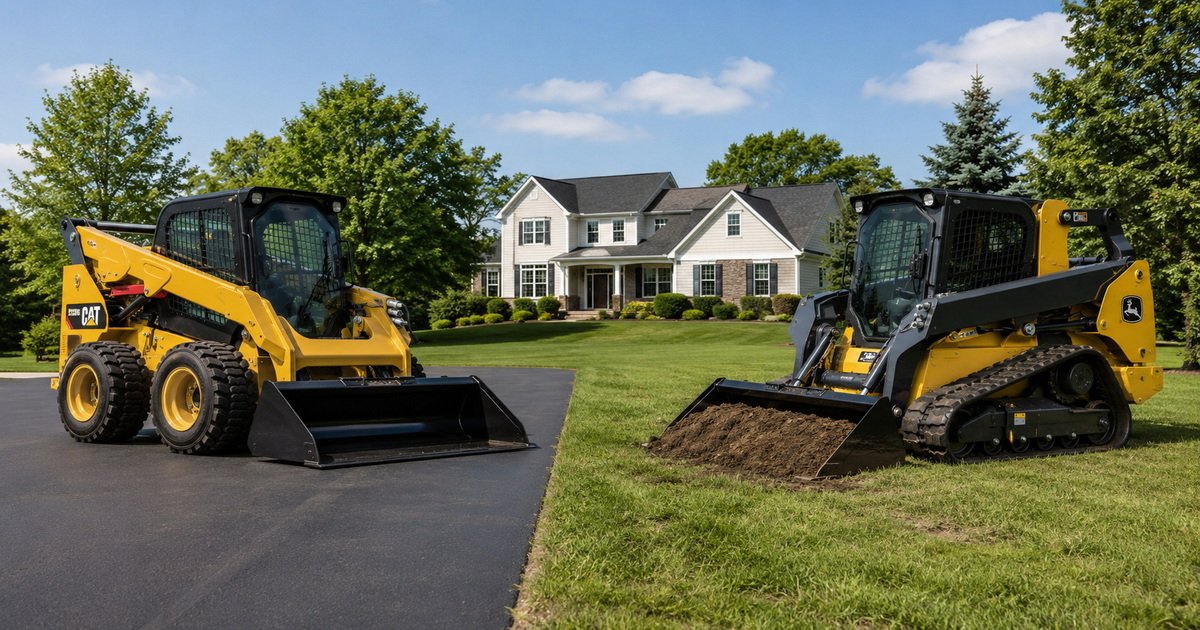
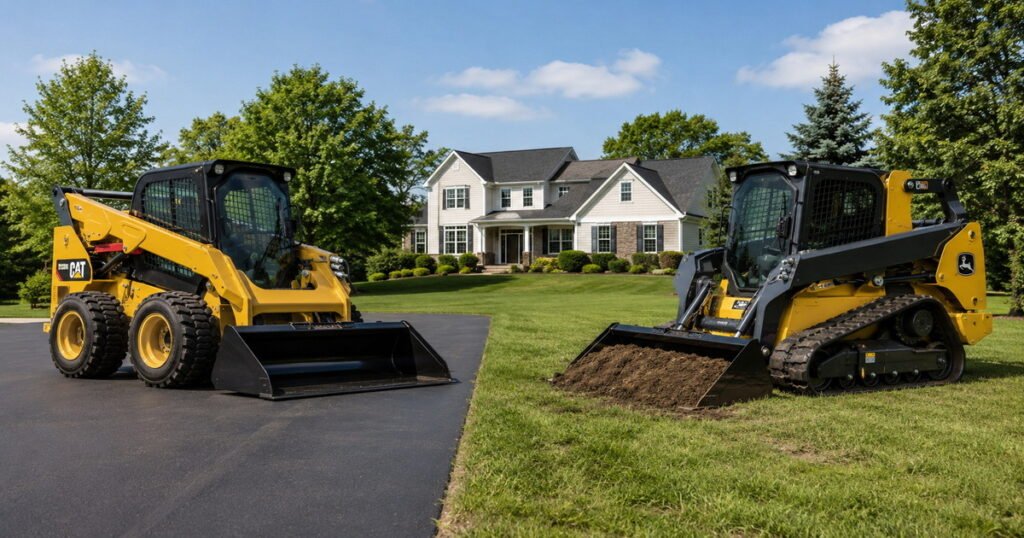
The first strategic choice may appear simple but carries deeper cost and performance consequences: wheels or tracks. Wheeled skid steers and compact track loaders share many traits, yet their design makes each better suited to particular environments and work styles.
When a Wheeled Skid Steer Is the Better Business Decision
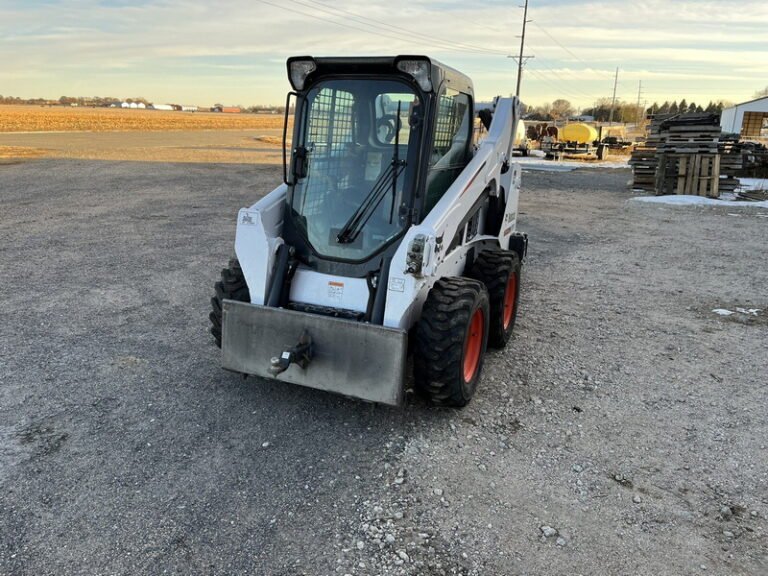
Wheeled skid steers excel on firm surfaces and in applications that require frequent travel over concrete, asphalt or compacted gravel. They typically offer higher travel speeds, which can be valuable in snow removal and site cleanup operations over large areas. Their transport weight is usually lower, giving owners more flexibility when matching machines to trailers and tow vehicles.
Tires are generally less expensive to replace than rubber tracks and undercarriage components, especially when the machine operates daily on abrasive surfaces. For companies that rely heavily on snow work as a seasonal revenue stream, a wheeled skid steer with appropriate tires often delivers better lifecycle economics than a tracked machine. This is not simply a matter of purchase price, but of wear, replacement intervals and how often the machine operates on hard surfaces.
When a Compact Track Loader Offers Superior Long‑Term Value
Compact track loaders, by contrast, feature dedicated rubber track undercarriages that dramatically improve flotation and reduce ground pressure. This design makes them the natural choice for soft, muddy or wet jobsites where wheeled machines are more likely to rut, sink or stall. Track loaders are particularly valuable on high‑end residential turf where ground disturbance and restoration costs carry weight in customer satisfaction and repeat business.
They also perform well on uneven terrain where traction and stability are key safety factors. As landscaping projects have grown more complex and property owners have demanded gentler ground contact, tracked machines have become many contractors’ default choice. However, their undercarriage systems bring a different maintenance profile, and owners should weigh both performance and lifecycle costs before deciding.
Sizing Your Loader: Project Types, Payload and Access
Once the basic machine type is clear, the next decision is size. Buying the largest loader available might feel like future‑proofing, but oversizing can add unnecessary weight, higher transport requirements and reduced maneuverability, especially in dense residential environments.
Key Questions to Define the Right Size Class
Owners and managers can ask several practical questions to guide size selection:
– Will the machine regularly work in tight backyards, narrow gates or confined urban sites?
– Will it primarily load trucks, move mulch or handle heavy retaining wall blocks and stone pallets?
– How often will it run demanding attachments, such as brush cutters, asphalt planers or rotary mulchers?
Small projects and confined spaces often justify compact loaders that fit through common access points and minimize turf impact. Larger commercial or infrastructure work tends to require mid‑ or large‑frame machines with higher operating capacities to safely lift heavy materials and power attachments without straining engines or hydraulics. The most reliable decisions start with actual project patterns rather than assumptions.
Radial Lift vs. Vertical Lift: Choosing the Right Linkage for Your Work
Loader arms may look similar at a glance, but their lift paths affect how efficient a machine is in specific tasks. Radial‑lift and vertical‑lift designs each have strengths that align with particular job profiles.

Radial Lift for Ground‑Engaging Work
Radial‑lift skid steers and compact track loaders use a simple arc‑shaped path from ground to full lift. This configuration shines in ground‑engaging applications such as breaking compacted soil, digging, grading and trenching. It tends to favor tasks where the bucket spends more time near ground level, cutting, pushing and pulling.
Machines in this category often carry slightly higher horsepower compared with vertical‑lift models in the same size class. That additional power can be beneficial for long days of digging or grading, where engines and hydraulics are continuously under load.
Vertical Lift for Loading and Pick‑and‑Place
Vertical‑lift loaders employ linkage systems that keep the bucket moving almost straight up as the arms rise. This design improves reach at maximum height, which is particularly useful when loading high‑sided trucks or placing materials onto elevated surfaces. For work that involves building retaining walls, handling pallets or stacking bulk materials, vertical‑lift machines can reduce the need to reposition and cut cycle times.
Companies that spend significant time in supply yards or on projects that involve frequent loading and unloading often see clear productivity gains with vertical‑lift machines. Selecting the right linkage is not about preference alone; it is about aligning geometry with daily work patterns.
Hydraulics, Controls and On‑Board Technology – Where Productivity Gains Really Come From
Modern loaders are more advanced than earlier generations. While engines and frames still matter, the true productivity gains often come from hydraulic capacity, control systems and integrated technology.
Understanding Standard vs. High‑Flow Hydraulics
Auxiliary hydraulic flow determines which attachments a loader can power effectively. Standard flow is sufficient for many tasks, including buckets, forks and some trenching tools. High‑flow systems, in contrast, are designed for demanding attachments that require more hydraulic energy, such as large brush cutters, asphalt planers or heavy snow blowers.
Before investing in attachments, owners should match both flow and pressure ratings to their machines. An attachment that is underpowered may deliver poor performance, while one that pushes beyond recommended limits can shorten component life. Thinking about hydraulics as part of the long‑term business plan helps avoid misaligned purchases and wasted capacity.
Operator Controls, Boom Memory and Automation Packages
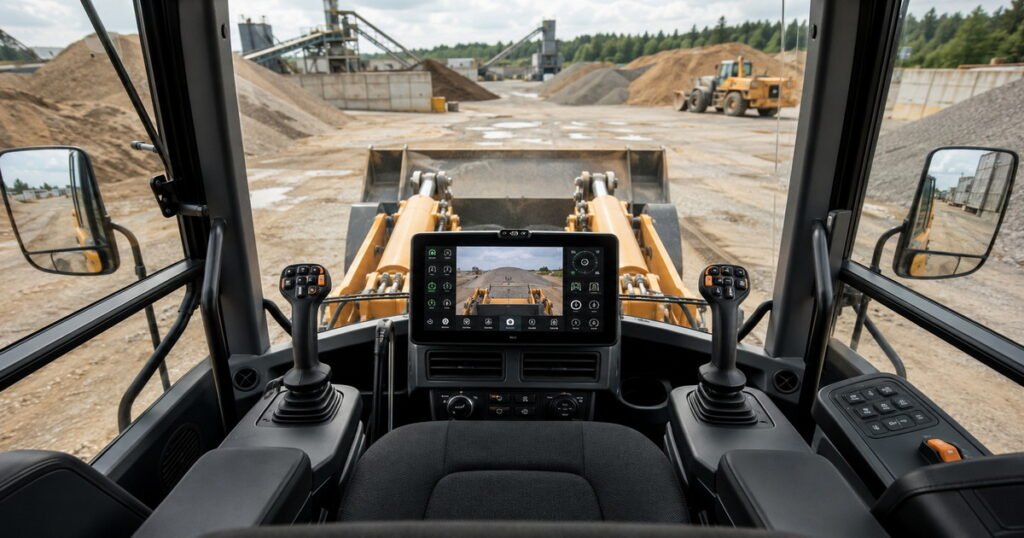
Control layouts have evolved from traditional levers and foot pedals into selectable joystick systems. Some loaders allow operators to switch between patterns, making it easier for crews that use different brands or come from various equipment backgrounds. This flexibility reduces the training curve and helps keep operators comfortable across diverse jobs.
Advanced boom performance packages can store specific boom and bucket positions, allowing the machine to return automatically to ideal loading or dumping angles. This helps supply yards and busy sites maintain consistent cycles and reduce operator fatigue. Features such as bucket self‑leveling, ride control and large multifunction displays with integrated cameras further improve material retention, travel comfort and situational awareness in tight spaces.
Telematics, Visibility and Track Choices
Telematics has become increasingly accessible. Even owners with small fleets can use connected systems to monitor utilization, idle time and maintenance needs. With clearer data, it becomes easier to schedule service before problems appear and to decide when a machine is underused or overextended.
Visibility also matters. Cab design, sight lines and optional camera systems affect safety and operator confidence. Track design plays a role too. Smooth turf tracks and wider low‑ground‑pressure options can substantially reduce surface damage, especially on manicured lawns and sensitive sites. Choosing tracks that fit typical projects can reduce rework and protect property values.
Attachments Strategy – Turning a Loader into a Multi‑Role Tool Carrier
A skid steer or compact track loader is fundamentally a tool carrier. After buckets and forks, the choice of attachments can transform a single machine into multiple revenue‑generating roles.
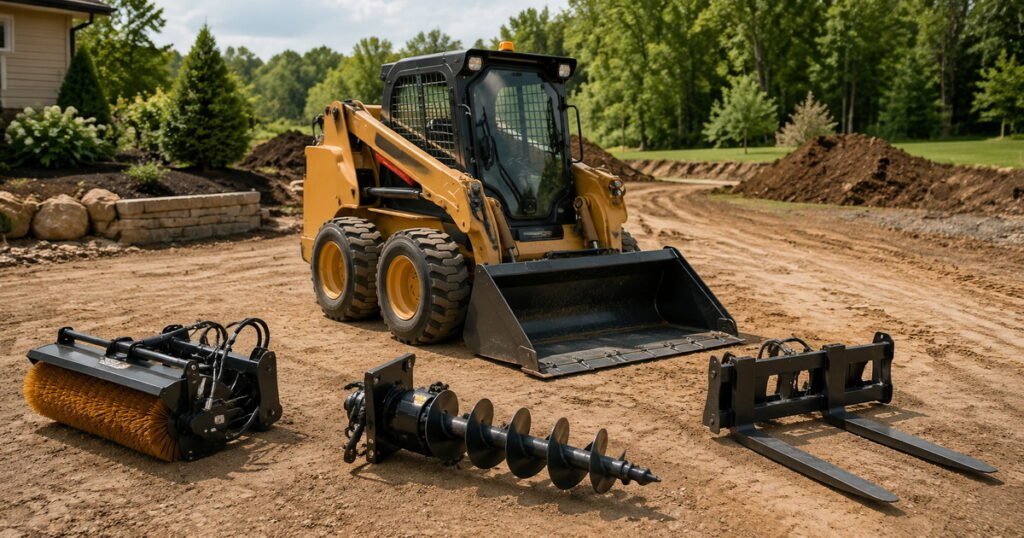
Popular attachments in landscaping and light construction include augers and trenchers for tree planting, fence posts and irrigation lines; powered rakes and soil conditioners for yard preparation; brush cutters, stump grinders and grapples for land clearing; and sweepers and brooms for final site cleanup. Each attachment represents a separate business case.
Owners should consider how often an attachment will be used annually, how it complements existing services and whether it opens doors to new types of projects. Aligning attachment investments with real demand helps the machine generate more value rather than sitting idle between jobs.
Renting vs. Buying: A Practical Framework Using the 80/20 Rule
For those unsure about which configuration fits their business, renting can be a low‑risk way to test assumptions. Rental fleets often feature straightforward machines, yet they provide valuable opportunities to experiment with tires versus tracks, different size classes and various attachments under real project conditions.
A simple rule of thumb is to focus on the environments and tasks that make up roughly eighty percent of the company’s workload. Machines should be purchased to serve that dominant share as effectively as possible. The remaining twenty percent of atypical or specialized jobs can often be covered through rentals. This approach limits capital tied up in rarely used equipment while ensuring that core work remains well supported.
Specialty Designs: How Telescoping Track Loaders Expand Capabilities
Innovative loader designs, such as telescoping compact track models, offer capabilities beyond those of conventional machines. A telescoping loader can reach higher and farther, allowing operators to load high‑sided trucks from one side, place materials deeper into sites without repositioning or dig below grade to specific depths.
For businesses that regularly manage complex loading situations or work on projects that mix excavation and material placement, such a machine can sometimes replace several specialized tools. Reducing the number of machines required on a job can simplify logistics, lower transport costs and streamline training.
FAQs
1. How do I decide between a skid steer and a compact track loader for mixed residential and commercial work?
If most projects involve turf, soft soil and fine grading, a compact track loader typically offers better traction and reduced surface damage. If the majority of work occurs on asphalt, concrete or involves snow removal, a wheeled skid steer is often more suitable.
2. Is high‑flow hydraulics always worth the extra cost?
High‑flow systems are valuable when a business plans to run demanding attachments regularly. For operations that rely mainly on standard buckets, forks and lighter tools, standard flow can provide an economical balance of performance and cost.
3. What is the most common mistake new landscapers make when buying their first loader?
Many new owners base their decision primarily on price and general specifications rather than analyzing which tasks the machine will perform most often. This can lead to machines that are poorly matched to real projects and that cost more to operate over time.
4. Can telematics support small fleets with only one or two loaders?
Telematics can help even small fleets by providing insight into actual usage, idle time and service needs. With clearer data, owners can reduce downtime, extend component life and protect the value of their machines.
5. Do specialty track designs truly help on high‑end properties?
Smooth turf tracks and wider low‑ground‑pressure designs can significantly reduce rutting and surface disruption on premium lawns and landscaped grounds. This can lower restoration costs and enhance client satisfaction on sensitive sites.
References
1. Compact Equip – “Making Green: For Landscapers, the Right Skid Steer or Track Loader Can Make or Break a Business.”
Making Green: For Landscapers, the Right Skid Steer or Track Loader Can Make or Break a Business
2. Gushwork – “Complete Guide to SEO for Heavy Equipment Businesses.”
https://www.gushwork.ai/feeds/blog/seo-heavy-construction-equipment-business
3. WebFX – “How Heavy Equipment Buyers Use SEO and Digital Content.”
https://www.webfx.com/industries/heavy-equipment/heavy-equipment/seo
4. TSR Digital – “7 Expert SEO Strategies for Heavy Equipment Manufacturers.”
https://tsrdigital.in/seo/seo-strategies-for-manufacturers
5. Heavy Vehicle Inspection – “Strategies to Reduce Downtime and Enhance Productivity in Construction Equipment.”
6. WebFX – “Digital Marketing for Skid Steer Attachment Companies.”
7. Vital Design – “Content Marketing Strategy for Equipment Manufacturers: Bobcat Case.”
https://vitaldesign.com/manufacturer-marketing-bobcat
Hot Tags: Skid Steer Loader, Manufacturers, Customized, Custom, Suppliers, Buy, Cheap, Quality, Advanced, Durable, in Stock, Made in China, Price, Quotation