
How to Safely Tow and Transport a Skid Steer or Compact Track Loader (Complete 2026 Guide)
Content Menu
● Understanding Your Machine Before Towing
● Selecting the Right Transport Vehicle and Trailer
>> Check Vehicle and Trailer Ratings
>> Match Trailer Type to Machine
● Complying With Transport Laws and Permits
● Pre-Trip Inspection and Preparation Checklist
● Preparing the Loading Area and Ramps
● Step-by-Step: How to Load a Skid Steer or Compact Track Loader
● How to Correctly Tie Down a Skid Steer or Compact Track Loader
>> Use Designated Tie-Down Points
>> Apply and Inspect Tie-Down Equipment
● Securing Attachments and Hydraulic Hoses
● Common Mistakes to Avoid When Towing Skid Steers and CTLs
● Advanced Best Practices for Fleet Owners and Contractors
● Recommended Safety Gear and Transport Accessories
● When to Upgrade Your Transport Solution
● Sample Transport Planning Table
● FAQ
>> 1. How many tie-downs do I need for a skid steer or compact track loader?
>> 2. Should I load my skid steer forward or backward onto the trailer?
>> 3. Do I really need wheel chocks if my machine is tied down?
>> 4. Where can I find the correct weight and tie-down points for my machine?
>> 5. When do I need a special permit to tow my skid steer or compact track loader?
Moving a skid steer or compact track loader between jobsites looks simple, but doing it wrong can damage equipment, cause accidents, or violate transport laws. This guide walks you through step-by-step best practices for towing, loading, and securing your machine so your team stays safe and productive.
Understanding Your Machine Before Towing
Before you think about trailers or tie-downs, you must know exactly what you are hauling.
– Machine type: skid steer, compact track loader (CTL), or small articulated loader
– Operating weight: base machine weight plus fuel, attachments, and any added counterweights
– Overall dimensions: length, width, and height with the attachment mounted
Always confirm weight and dimensions in the machine’s Operation & Maintenance Manual, not from memory or rough estimates. This information directly determines what transport vehicle, trailer, and tie-down equipment you are allowed and able to use.
Selecting the Right Transport Vehicle and Trailer
Choosing the wrong truck or trailer is one of the most common transport mistakes and can lead to overloaded axles, poor braking, or legal penalties.
Check Vehicle and Trailer Ratings
At minimum, verify these ratings on the identification plates or in the owner’s manuals:
– GVWR (Gross Vehicle Weight Rating) of the tow vehicle
– GAWR (Gross Axle Weight Rating) for each axle
– Trailer GVWR and payload rating
– Hitch and coupler rating, including safety chains and any required breakaway system
Add the weight of the skid steer or compact track loader, attachment, fuel, and any tools or materials to the empty trailer weight to confirm you are within all ratings. Never assume “close enough” is acceptable when it comes to weight limits.
Match Trailer Type to Machine
– A standard equipment trailer is suitable for most skid steers and compact track loaders when properly rated.
– Oversized loads or heavier machines may require a larger trailer with higher capacity, possibly a gooseneck or low-boy configuration.
If you are unsure what you can safely haul, consult your dealer or a qualified transport specialist with your exact equipment specifications.
Complying With Transport Laws and Permits
Transport rules vary by country, state, and even municipality, and non-compliance can be costly. Authorities regulate loads based on gross vehicle weight rating, dimensions, and sometimes cargo type.
Key legal checks include:
– Maximum allowed weight, width, length, and height on your route
– Whether you need an oversize or overweight permit for your configuration
– Requirements for signage, such as “Oversize Load,” flags, and escort vehicles for very large moves
Always verify federal, state, and local regulations before transporting your machine, especially if your route crosses multiple jurisdictions.
Pre-Trip Inspection and Preparation Checklist
A disciplined pre-trip inspection dramatically reduces risk when towing a skid steer or compact track loader.
Machine preparation:
– Remove mud, sand, and debris from tracks, tires, and steps to minimize slipping
– Confirm fluids (engine oil, coolant, hydraulic oil, fuel) are at proper levels
– Check for visible leaks, loose panels, or damaged components
Trailer and tow vehicle preparation:
– Inspect tires for proper inflation and visible damage
– Check brakes, lights, and reflectors on both truck and trailer
– Confirm hitch connection, safety chains, and the breakaway system are correctly installed
Creating and using a printed checklist for operators helps enforce consistent safety practices across your fleet.
Preparing the Loading Area and Ramps
Good site preparation prevents many loading accidents.
– Park the trailer on firm, level ground, away from traffic and overhead obstacles
– Secure the parking brakes on the towing vehicle and block its wheels to prevent rolling
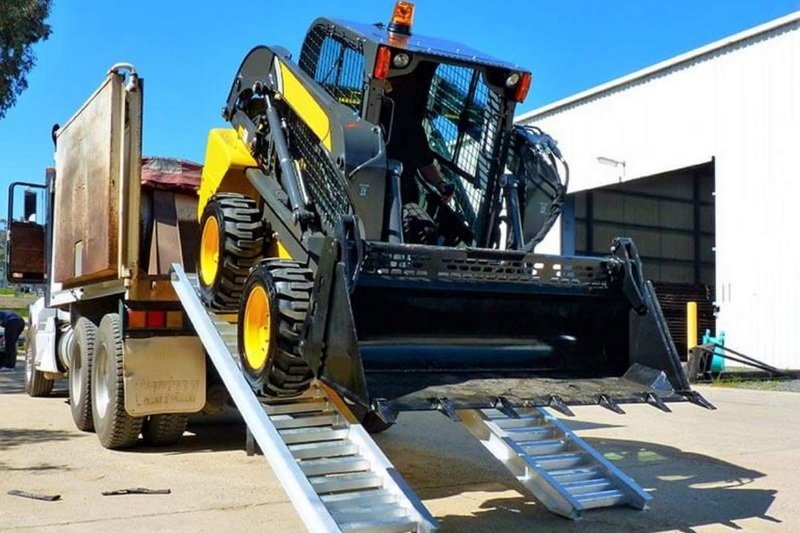
– Use metal loading ramps of the correct length and width with a slip-resistant surface and adequate load capacity
Ramps must be properly aligned and securely attached to the trailer before you move the machine. Avoid makeshift ramps, uneven ground, and steep approach angles that can cause the machine to bottom out or lose traction.
Step-by-Step: How to Load a Skid Steer or Compact Track Loader
Once the trailer and machine are ready, follow this structured process to load safely.
1. Configure machine controls
– Disengage the auto-idle feature so the engine does not unexpectedly reduce power.
– Set the two-speed travel to the low-range position for better control and traction.
2. Approach the trailer
– Align the machine squarely with the ramps, avoiding sharp steering input at the ramp.
– Travel up the ramp with the heaviest end first: typically the rear if the counterweight is at the back or the front if the attachment is very heavy.
3. Drive onto the trailer
– Use slow, steady throttle and avoid sudden movements.
– Keep the attachment low but clear of the deck to maintain a stable center of gravity.
– Stop when the machine is centered side-to-side and properly positioned front-to-back to balance axle loads.
4. Secure the machine for tie-down
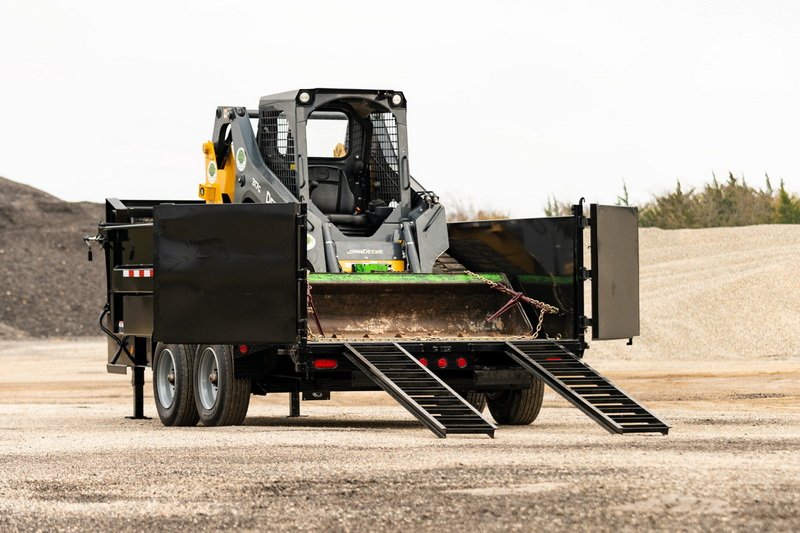
– Lower the attachment fully to the trailer floor.
– Stop the engine and lock all doors and covers.
– Place chocks, cradles, wedges, or blocks in front of and behind each track or wheel to prevent rolling or shifting.
This sequence helps operators consistently load in a safe, repeatable way across different sites and conditions.
How to Correctly Tie Down a Skid Steer or Compact Track Loader
Improper tie-down is a major cause of load shifts and roadside incidents. Most equipment manufacturers recommend at least four tie-down positions to prevent movement in all directions.
Use Designated Tie-Down Points
– Identify the front and rear tie-down points in the Operation & Maintenance Manual for your specific model.
– Never hook chains or straps to hydraulic lines, axles, or non-structural parts.
Tie-down anchor points on the trailer may include D-rings, chain slots, or built-in strap rails designed for heavy equipment.
Apply and Inspect Tie-Down Equipment
– Use chains, binders, or heavy-duty straps with ratings that exceed the load requirements.
– Attach tie-downs at all designated points, pulling the machine forward, backward, and sideways to prevent any movement.
– Inspect pins, hooks, and links, and remove any equipment showing cracks, stretching, or fatigued links.
Recheck tension after driving a short distance, especially on longer trips, as straps and chains can settle.
Securing Attachments and Hydraulic Hoses
Attachments and hoses are frequently damaged during transport when they are not properly secured.
– Whenever possible, connect the attachment (bucket, forks, auger, etc.) to the loader before transport.
– If you must transport the attachment separately, place it on the trailer deck and secure it with chain straps or tie-downs.
– Ensure your loader’s hydraulic hoses are not lying under the machine, obstructing tie-downs, or routed where they could become disconnected.
Treat every bucket and auxiliary tool as a separate load that must be fully restrained in the event of hard braking or an emergency maneuver.
Common Mistakes to Avoid When Towing Skid Steers and CTLs
Even experienced operators sometimes develop unsafe habits over time.
– Relying on memory for weight instead of checking the manual or spec plate
– Using insufficient tie-down points or anchoring to non-approved locations
– Skipping wheel chocks and assuming tie-downs alone will prevent rolling
– Operating on sloped or soft ground during loading, which increases rollover risk
– Transporting attachments loosely placed on the trailer instead of secured
Regular training refreshers and internal audits can help catch these issues early and reduce long-term risk.
Advanced Best Practices for Fleet Owners and Contractors
For contractors and rental fleets that move machines daily, small process improvements deliver big safety and productivity gains.
– Develop standard operating procedures (SOPs) for towing and loading, customized to your machine types such as skid steers, compact track loaders, excavators, forklifts, tractors, and tracked carriers.
– Train operators on both machine control and transport safety, not just jobsite operation.
– Keep digital or printed copies of each machine’s Operation & Maintenance Manual in the truck or on a company intranet for fast access.
Tracking incidents, near-misses, and equipment damage related to transport helps identify training gaps and prioritize improvements.
Recommended Safety Gear and Transport Accessories
Equipping your team with the right supporting tools makes safe towing easier to execute consistently.
Suggested items include:
– High-visibility safety vests, gloves, and hard hats for loading operations
– Heavy-duty wheel chocks sized for your tire or track configuration
– A dedicated set of rated chains, binders, and straps, labeled for specific machine classes
– Ramp locks or pins that prevent ramps from shifting under load
– A compact inspection kit (flashlight, tire gauge, basic tools) kept in the towing vehicle
Standardizing these accessories across your fleet reduces downtime and makes it easier for operators to follow company policies.
When to Upgrade Your Transport Solution
As your business grows, the same small trailer and pickup that worked for one skid steer may no longer be safe or efficient.
Consider upgrading your transport setup when:
– You frequently operate close to maximum payload limits
– You have added heavier attachments like cold planers, breakers, or large buckets
– You operate across multiple regions with strict weight and roadside inspections
Working with a professional equipment partner or dealer ensures that your excavators, skid steers, road rollers, forklifts, tractors, and tracked carriers can all be matched with suitable, compliant towing and loading solutions as your fleet expands.
Sample Transport Planning Table
Use a simple planning table like this as an internal template when preparing to tow different machines in your fleet:
| Item | Example Entry (Skid Steer) | Example Entry (Compact Track Loader) |
|---|---|---|
| Machine type | Skid steer loader | Compact track loader |
| Operating weight | From Operation & Maintenance Manual | From Operation & Maintenance Manual |
| Attachment installed | 4-in-1 bucket | Pallet forks |
| Total transport weight | Machine + attachment + fuel | Machine + attachment + fuel |
| Trailer GVWR | Plate or trailer manual | Plate or trailer manual |
| Required tie-down points | Minimum 4 | Minimum 4 |
| Wheel or track chocks used | Yes | Yes |
| Permit needed (Y/N) | Check local rules | Check local rules |
Plan Your Next Safe Move
Safe towing and loading of your skid steers, compact track loaders, excavators, road rollers, forklifts, tractors, and tracked transporters protects your people, your machines, and your schedule. Now is the ideal time to review your current equipment, trailers, and operating procedures, then standardize a transport checklist and training plan for your team. If you are upgrading or expanding your fleet, contact your equipment supplier or dealer today to select machines and transport solutions that match your power needs, jobsite conditions, and long-term safety standards.
Contact us to get more information!
FAQ
1. How many tie-downs do I need for a skid steer or compact track loader?
Most manufacturers recommend at least four tie-down positions, using the designated front and rear points to prevent movement in every direction. In many regions, transport regulations also require this minimum to comply with cargo securement rules.
2. Should I load my skid steer forward or backward onto the trailer?
You should always travel up the ramp with the heaviest end first. For many machines this means loading in reverse when the counterweight is at the rear, but very heavy front attachments can shift the balance and require you to drive forward.
3. Do I really need wheel chocks if my machine is tied down?
Yes. Wheel or track chocks provide a crucial extra layer of protection against rolling or shifting during sudden stops, sharp turns, or equipment failure. Chains and straps are designed to restrain the load, but chocks help stabilize it before the tie-downs are fully engaged.
4. Where can I find the correct weight and tie-down points for my machine?
You should always refer to the Operation & Maintenance Manual for your specific model. It lists operating weight, dimensions, approved lifting and tie-down points, and any model-specific recommendations for securement and transport.
5. When do I need a special permit to tow my skid steer or compact track loader?
You may need special permits when your combined truck and trailer exceed local limits on gross weight, width, length, or height. Always check federal, state, and municipal rules for every region on your route, and obtain any required oversize or overweight permits before you move the machine.
References:
1. https://www.bobcat.com/na/en/buying-resources/loaders/how-to-load-tow-skid-steer-compact-track-loaders
Hot Tags: Skid Steer On Trailer, How To Run A Bobcat Skid Steer, How To Load A Skid Steer, Towing A Skid Steer, Skid Steer On Trailer, Compact Track Loader Transport, Skid Steer Tie Down, Skid Steer Trailer Loading, Skid Steer Transport Safety, Compact Track Loader Towing