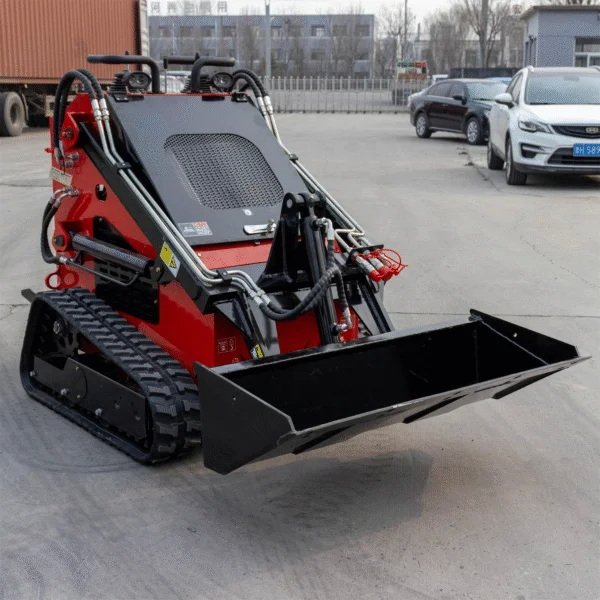

How to Choose the Right Skid Steer / Track Loader Stump Grinder Attachment (2026 Guide)
Content Menu
● Why Use a Stump Grinder Attachment on a Skid Steer or Track Loader?
● Key Factors When Choosing a Stump Grinder Attachment
>> 1. Match Hydraulic Flow (Standard vs. High Flow)
>> 2. Understand Stump Grinder Types: Wheel vs. Auger vs. Shredder
>>> Stump Shredders (Low‑Speed, High‑Torque)
>> 3. Cutting Depth, Width, and Swing
>> 4. Compatibility with Your Machine
● Skid Steer vs. Compact Track Loader: Which Is Better for Stump Grinding?
● How Deep Should You Grind a Stump? (2026 Best Practices)
● Safety Best Practices for Stump Grinder Attachments
>> 2. Personal Protective Equipment (PPE)
● Maintenance Tips to Maximize Stump Grinder Life
>> Weekly
● Rent vs. Buy: When Should You Own a Stump Grinder Attachment?
>> Rent When:
>> Buy When:
● How to Maximize ROI with a Stump Grinder Attachment
● Choose the Right Stump Grinder for Your Fleet
● FAQ
>> 1. What size skid steer do I need for a stump grinder attachment?
>> 2. Can any skid steer or track loader run a stump grinder?
>> 3. How deep should a stump be ground for landscaping vs. construction?
>> 4. Are stump grinder attachments safe for operators?
>> 5. How much does a stump grinder attachment cost, and what’s the typical ROI?
If you run a skid steer loader or compact track loader, adding a stump grinder attachment is one of the smartest ways to expand your machine’s capabilities for land clearing, landscaping, and site prep. A high‑quality stump grinder turns a single‑purpose loader into a versatile stump‑removal system that can handle everything from small backyard stumps to large, stubborn roots on commercial and municipal jobs.
In this 2026 guide, you’ll learn exactly how to choose the right stump grinder attachment for your skid steer or track loader, covering hydraulic requirements, key performance specs, safety best practices, and the latest innovations in stump grinding technology. Whether you’re a contractor, rental fleet manager, or landowner, this guide will help you select an attachment that maximizes productivity, safety, and return on investment.
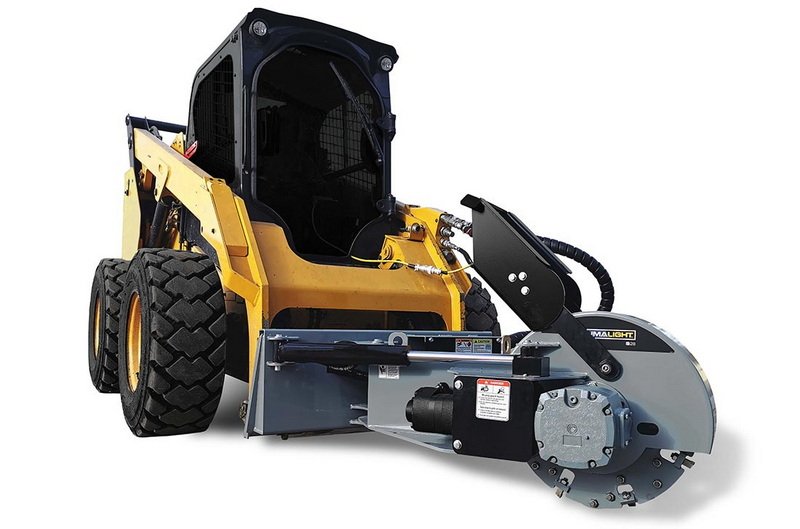
Why Use a Stump Grinder Attachment on a Skid Steer or Track Loader?
Stump grinder attachments are purpose‑built tools that mount directly to the quick‑attach coupler of a skid steer or compact track loader, transforming it into a mobile stump‑removal machine. Instead of buying a dedicated stump grinder, you can use your existing loader to:
– Remove tree stumps quickly and efficiently on construction sites, parks, and residential properties.
– Clear land for new development, roads, or utility work without major excavation.
– Offer stump grinding as an add‑on service to landscaping, tree care, and site prep jobs.
Compared to full‑size stump grinders, attachment‑style grinders are more compact, easier to transport, and ideal for tight spaces like backyards, narrow lots, and urban sites. They also let you keep one machine on the jobsite while switching between tasks (digging, grading, loading, and stump grinding) in minutes.
Key Factors When Choosing a Stump Grinder Attachment
1. Match Hydraulic Flow (Standard vs. High Flow)
The most critical factor is matching the stump grinder’s hydraulic requirements to your skid steer or track loader. Using the wrong flow can lead to poor performance, excessive wear, or even damage to the attachment or machine.
– Standard‑flow machines (typically 18–29 GPM) work best with light‑ to medium‑duty stump grinders.
– High‑flow machines (30–45+ GPM) unlock the full power of heavy‑duty grinders, allowing faster grinding of large, dense hardwood stumps.
Always check:
– Your loader’s auxiliary hydraulic flow (GPM) and pressure (PSI).
– The grinder’s minimum and recommended flow range.
– Whether the attachment is designed for standard flow, high flow, or both.
For example, many modern stump grinders are available in both standard‑flow and high‑flow versions, so you can match the attachment to your machine’s capabilities.
2. Understand Stump Grinder Types: Wheel vs. Auger vs. Shredder
Not all stump grinders work the same way. The three main types used on skid steers and track loaders are:
Wheel‑Type Stump Grinders
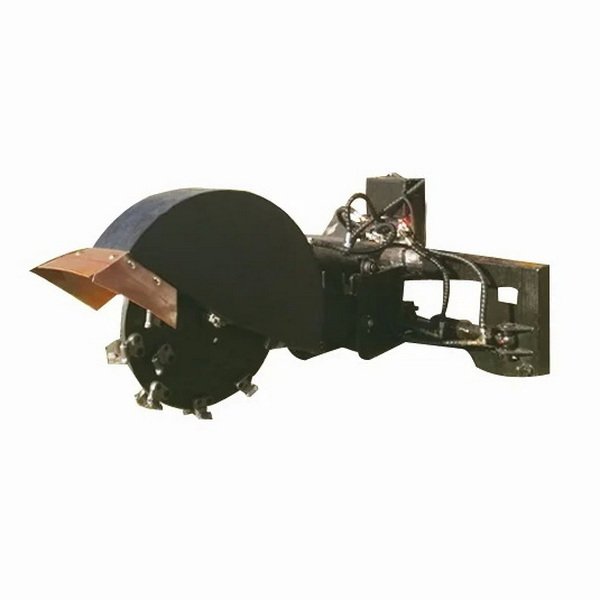
– Use a rotating cutting wheel with carbide‑tipped teeth to grind stumps into chips.
– Best for: General stump removal, landscaping, and moderate‑duty jobs.
– Pros: Lower initial cost, widely available, good for a variety of stump sizes.
– Cons: Can throw debris (rocks, wood chips, carbide bits), requires more frequent tooth inspection and replacement.
Auger‑Type Stump Grinders
– Use a high‑torque, low‑speed auger to bore into the stump and pull it apart.
– Best for: High‑volume land clearing, forestry, and jobs where safety and cleanup are critical.
– Pros: Safer (less flying debris), faster on large stumps, easier cleanup (larger chips).
– Cons: Higher initial cost, more specialized, may require high‑flow hydraulics.
Stump Shredders (Low‑Speed, High‑Torque)
– Use a planetary or direct‑drive system to shred stumps rather than grind them at high speed.
– Best for: Contractors who want a safer, more efficient alternative to traditional grinders.
– Pros: Very safe (minimal flying debris), efficient on medium stumps, often compatible with standard‑flow machines.
– Cons: May not be ideal for very large or extremely hard stumps without multiple passes.
For most contractors, a wheel‑type grinder offers the best balance of cost, versatility, and performance. For high‑volume or safety‑critical jobs, an auger or shredder design is often worth the investment.
3. Cutting Depth, Width, and Swing
The physical dimensions of the grinder determine what it can handle on the jobsite:
– Cutting depth: Most skid steer stump grinders can grind 6–12 inches below grade, which is enough to prevent regrowth and prepare the area for sod or landscaping. For construction or deep‑rooted trees, look for models that can reach 12+ inches.
– Cutting width: Wider grinders (24–36 inches) remove stumps faster but may be harder to maneuver in tight spaces.
– Swing vs. fixed:
– Fixed grinders are simpler and often more powerful, but require repositioning the machine.
– Hydraulic‑swing grinders can move left and right, giving better control and reducing machine movement.
For residential and landscaping work, a 24–30 inch grinder with 6–8 inches of depth is usually sufficient. For commercial land clearing, a wider, deeper grinder with high‑flow hydraulics will deliver the best productivity.
4. Compatibility with Your Machine
Before buying, confirm that the stump grinder is compatible with:
– Your loader’s quick‑attach coupler (universal, Bobcat‑style, Caterpillar, etc.).
– Your loader’s weight class (small, medium, or large frame).
– Your loader’s auxiliary hydraulic system (flow, pressure, and hose routing).
Many manufacturers offer compatibility charts that list which models work with specific skid steer and track loader brands and sizes. Always double‑check these before purchasing.
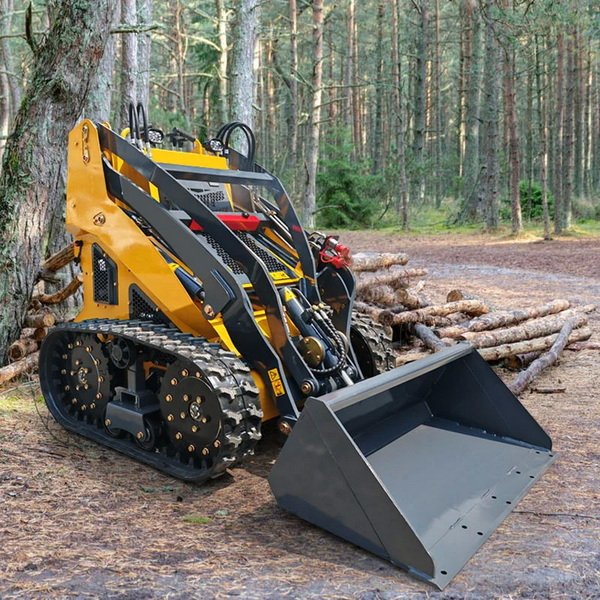
Skid Steer vs. Compact Track Loader: Which Is Better for Stump Grinding?
Both skid steers and compact track loaders can run stump grinder attachments, but they have different strengths:
| Feature | Skid Steer Loader | Compact Track Loader |
|---|---|---|
| Maneuverability | Excellent in tight spaces and on hard surfaces | Good, but slightly slower due to tracks |
| Traction & Stability | Good on firm ground; can slip on soft or sloped terrain | Superior on soft, muddy, or sloped ground |
| Ground Pressure | Higher; can damage turf or soft surfaces | Lower; better for sensitive surfaces |
| Speed | Faster travel and cycle times | Slower, but more stable in rough terrain |
| Best For | Urban sites, hard surfaces, quick jobs | Wet sites, slopes, sensitive turf, long projects |
Rule of thumb:
– Use a skid steer for fast, frequent stump grinding on hard surfaces and in tight spaces.
– Use a compact track loader when working on soft ground, slopes, or sensitive turf where stability and low ground disturbance are critical.
How Deep Should You Grind a Stump? (2026 Best Practices)
The ideal grinding depth depends on the job and future use of the area:
– 4–6 inches below grade: Standard for most landscaping and residential jobs. Prevents regrowth and allows sod or shallow planting.
– 6–12 inches below grade: Recommended for flower beds, vegetable gardens, or areas where you plan to plant trees or shrubs.
– 12+ inches below grade: Needed for construction, driveways, or when dealing with large, aggressive root systems.
Always discuss depth expectations with the customer and document it in the quote. Deeper grinding takes more time and fuel, so it should be priced accordingly.
Safety Best Practices for Stump Grinder Attachments
Stump grinders are powerful tools that can be dangerous if not used correctly. Follow these 2026 safety best practices:
1. Pre‑Operation Checks
– Read the operator’s manual for both the loader and the stump grinder.
– Inspect the grinder for damaged teeth, worn belts, loose bolts, and hydraulic leaks.
– Ensure all safety guards, shields, and chip deflectors are in place and undamaged.
2. Personal Protective Equipment (PPE)
– Wear ANSI‑certified safety glasses or a face shield.
– Use hearing protection (stump grinders are loud).
– Wear heavy‑duty gloves, steel‑toe boots, and high‑visibility clothing.
3. Jobsite Preparation
– Remove rocks, metal, and other debris around the stump.
– Clear the area of bystanders; keep them at least 75 feet away from the rotating cutter.
– Use the loader’s cab or canopy to protect the operator from flying debris.
4. Safe Operation
– Start the grinder at idle and gradually increase throttle.
– Make shallow passes at first; avoid taking large chunks that can stall the machine.
– Keep the grinder at a safe angle; never operate it overhead or in a way that compromises guarding.
– Shut down properly: reduce throttle to idle, disengage hydraulics, and wait for all moving parts to stop before leaving the machine.

Maintenance Tips to Maximize Stump Grinder Life
A well‑maintained stump grinder will last longer, perform better, and reduce downtime. Follow this simple maintenance routine:
Daily/Per‑Job
– Clean wood chips, dirt, and debris from the cutting wheel, frame, and hydraulic lines.
– Inspect carbide teeth for wear, chipping, or looseness; replace or sharpen as needed.
– Check hydraulic hoses and fittings for leaks, kinks, or damage.
Weekly
– Grease all grease points (pivot points, bearings, etc.) according to the manufacturer’s schedule.
– Inspect belts, pulleys, and drive components for wear.
– Check fluid levels (engine oil, hydraulic oil, coolant) if the grinder has its own power unit.
Seasonal/Off‑Season
– Deep clean the entire attachment.
– Replace worn teeth, belts, and filters.
– Store in a dry, covered area; apply light lubrication to prevent rust.
Keeping a maintenance log helps track wear patterns and plan for parts replacement before failures occur.
Rent vs. Buy: When Should You Own a Stump Grinder Attachment?
The decision to rent or buy depends on utilization and business model:
Rent When:
– You only need stump grinding occasionally (a few jobs per year).
– You work in diverse markets and don’t want to tie up capital in a single attachment.
– You want to test different models before committing to a purchase.
Buy When:
– You regularly perform land clearing, tree care, or site prep work.
– You can bill stump grinding as a separate, profitable service.
– You have a high‑flow skid steer or track loader that can fully utilize a heavy‑duty grinder.
For contractors, owning a stump grinder attachment often pays for itself in 12–18 months if used on 1–2 jobs per week, especially when combined with other attachments like mulchers, grapples, and augers.
How to Maximize ROI with a Stump Grinder Attachment
To get the best return on investment:
1. Bundle services: Offer stump grinding as part of site prep, land clearing, or landscaping packages.
2. Charge by the stump or by the hour: Use size‑based pricing (e.g., $X for stumps under 12 inches, $Y for 12–24 inches, etc.).
3. Use high‑flow machines: They complete jobs faster, allowing more jobs per day.
4. Maintain the attachment: Regular maintenance reduces downtime and extends life.
5. Market the capability: Highlight stump grinding on your website, social media, and proposals.
A stump grinder attachment can turn a standard loader into a revenue‑generating machine that wins more bids and keeps crews busy year‑round.
Choose the Right Stump Grinder for Your Fleet
Now that you know how to choose the right skid steer or track loader stump grinder attachment, it’s time to act:
1. Audit your fleet: List your skid steers and track loaders with their hydraulic flow and weight class.
2. Define your needs: How many stumps do you remove per month? What sizes and types of stumps?
3. Shortlist compatible models: Focus on grinders that match your machine’s flow and coupler type.
4. Compare specs and pricing: Look at cutting depth, width, swing, and warranty.
5. Talk to a supplier: Get a quote and, if possible, a demo on a similar machine.
If you’re a manufacturer like Certeg, this is also the perfect opportunity to highlight your loaders’ compatibility with popular stump grinder attachments and offer tailored hydraulic packages for stump grinding applications.
Contact us to get more information!
FAQ
1. What size skid steer do I need for a stump grinder attachment?
Most stump grinders require a medium‑ to large‑frame skid steer with at least 60–75 HP and 18–45 GPM auxiliary flow, depending on the model. Always match the grinder’s flow requirements to your machine’s capabilities.
2. Can any skid steer or track loader run a stump grinder?
No. Only machines with sufficient hydraulic flow (standard or high flow) and the correct quick‑attach coupler can safely run a stump grinder. Always check the manufacturer’s compatibility list.
3. How deep should a stump be ground for landscaping vs. construction?
For landscaping, 4–6 inches below grade is usually enough. For construction or replanting, grind 6–12 inches or deeper to disrupt the root system and prepare for foundations or paving.
4. Are stump grinder attachments safe for operators?
Yes, when used correctly. Always wear PPE, keep bystanders away, use the loader’s cab for protection, and follow the manufacturer’s safety instructions. Auger and shredder designs are inherently safer than high‑speed wheel grinders.
5. How much does a stump grinder attachment cost, and what’s the typical ROI?
Prices range from $9,000–$15,000 for mid‑size grinders, with premium models up to $20,000. Contractors often see ROI in 12–18 months with regular use, especially when bundling stump grinding with other services.
Citations:
1. – Fortune Business Insights – Skid Steer Loader Market Size, Industry Share | Forecast 2026–2034
2. – Grand View Research – Stump Grinder Market Size, Share & Trend Analysis, 2024–2032
3. – Global Market Insights – Skid‑steer Loaders Market Analysis – Size and Forecast 2024–2028
4. – The Business Research Company – Skid Steer Loaders Market Size, Industry Analysis Report 2026
5. – Skid Steer Solutions – Mastering Stump Removal: The Best Practices
6. – Skid Steer Store – Best Skid Steer Stump Grinder Attachments: The Complete Guide
7. – Rentalex – Comparing Track Grinders And Stump Cutters
8. – Jansen USA – 11 Maintenance Tips To Keep Your Stump Grinder Working Well
9. – MechMax – How To Maintain Your Stump Grinder—Ensuring Efficient and Safe Operation
10. – Gregory Poole – Skid Steer Loader vs. Track Loader
11. – TriGreen Equipment – Compact Track Loader vs. Skid Steer Loader
12. – Lawn Love – How Much Does Stump Grinding Cost in 2026?
13. – Ness Stump Grinding – How deep should a tree stump be ground down?
14. – Brooketree Service – Stump Grinding Depth Explained
15. – Skid Steer Store – Best Skid Steer vs 3pt Tractor Stump Grinders: Full Comparison
16. – Quipli – The Most Rented & Profitable Construction Equipment
17. – Pro‑Qui LLC – Profitable Skid Steer Attachment? How to Elevate ROI?
18. – Skid Steer Loader – Most profitable skid steer attachment? How to Elevate ROI?
19. – Build‑Review – How to Maximize Return on Investment with Skid Steer Attachments?
Hot Tags:Skid Steer Stump Remover,Skid Steer Stump Removal,Skid Steer Stump Grinder, Track Loader Stump Grinder, Stump Grinder Attachment, Skid Steer Attachments, Track Loader Attachments, Forestry Equipment Attachments, Land Clearing Equipment, Tree Stump Removal Equipment