
Complete Guide to Selecting the Right Breaker for Your Skid Steer or Track Loader in 2026
Content Menu
● Why Breaker Attachments Are Essential for Modern Skid Steers
>> Expanding Market Demand and Applications
>> Advanced Features for Enhanced Performance
● Application-Driven Selection: Matching Breakers to Your Specific Needs
>> Understanding the Critical Sizing Equation
>> Avoiding Common Sizing Mistakes
>> Maximizing Versatility Across Equipment
● Hydraulic Flow and Pressure: The Performance Foundation
>> Understanding Critical Flow Requirements
>> Calculating Available Hydraulic Capacity
>> Setting Flow Controls Correctly
● Comprehensive Maintenance and Operation Strategies
>> Establishing Essential Lubrication Practices
>> Pre-Operation Inspection Protocols
>> Maintenance-Friendly Design Features
● Nitrogen Systems: Understanding Power Sources
>> How Nitrogen Enhances Breaker Performance
>> Nitrogen Assist vs. Hydraulic Systems
>> Proper Nitrogen Charging Procedures
● Preventive Design Innovations Reducing Failure Points
>> Eliminating Common Failure Modes
>> Field Serviceability Improvements
● Safety Considerations for Skid Steer Breaker Operation
>> Stability and Ground Conditions
● Making Your Final Selection: Dealer Partnership and Support
>> Evaluating Total Cost of Ownership
>> Leveraging Dealer Expertise
>> Warranty and Service Agreements
● Partner with Certeg for Superior Equipment Performance
>> 1. What is the ideal breaker size for my skid steer’s weight class?
>> 2. How often should I grease my skid steer breaker, and what type of lubricant should I use?
>> 3. What are the signs that my breaker’s nitrogen charge is low?
>> 4. Can I use the same breaker on both my skid steer and mini excavator?
>> 5. What is the most common mistake that damages breaker attachments?
Choosing the right hydraulic breaker attachment for your skid steer or track loader is a critical decision that impacts productivity, equipment longevity, and operational costs. With construction and demolition industries increasingly relying on compact equipment for versatile applications, understanding the nuances of breaker selection has never been more important. This comprehensive guide provides actionable insights to help contractors, equipment operators, and construction managers make informed decisions when selecting breaker attachments for their machines.
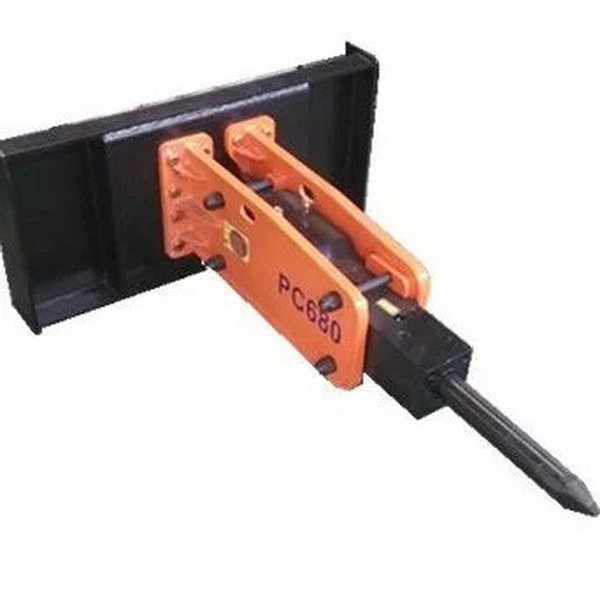
Why Breaker Attachments Are Essential for Modern Skid Steers
Expanding Market Demand and Applications
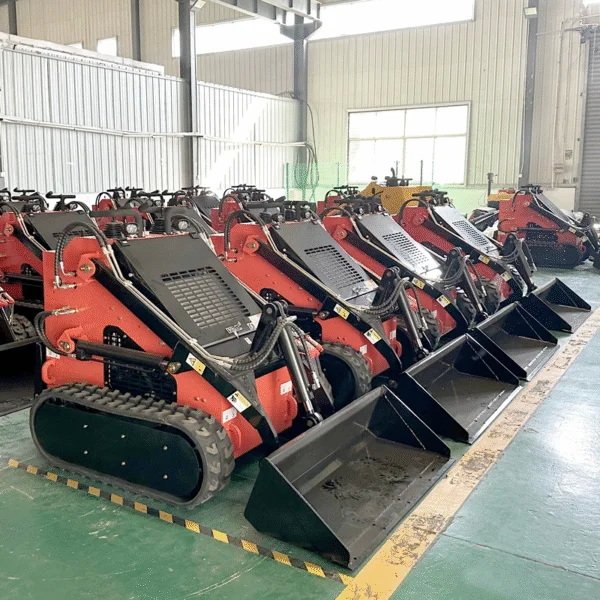
The demand for breaker attachments on skid steers and track loaders has grown significantly over the past several years. Unlike excavators, skid steers operate in tighter spaces and offer superior versatility for multiple attachment changes. Smaller track loaders and remote-control demolition robots are increasingly used for interior building demolition and systematic floor-by-floor deconstruction projects.
Industries such as paving, concrete work, and urban construction frequently utilize skid steers over mini excavators because breakers can be swapped on and off in seconds, allowing seamless transitions to other attachments like buckets or augers. This rapid attachment exchange capability makes skid steer-mounted breakers invaluable for contractors who need to maximize equipment utilization across diverse job site requirements.
Advanced Features for Enhanced Performance
Modern hydraulic breakers incorporate sophisticated features specifically designed to complement skid steer operations. Water ports for dust suppression have become standard on many models, addressing environmental regulations and improving operator visibility during breaking operations. Additionally, manufacturers now offer self-regulating valves that protect breakers from over-pressurization and excessive flow, eliminating the need for constant hydraulic testing when switching between host machines.
Universal mounting systems and interchangeable brackets enable single breakers to be transferred between excavators and skid steers by simply changing the mounting configuration, dramatically increasing equipment utilization rates and return on investment.
Application-Driven Selection: Matching Breakers to Your Specific Needs
Understanding the Critical Sizing Equation
Selecting the appropriate breaker size involves balancing three critical factors: machine specifications, hydraulic capacity, and application requirements. While sizing a breaker to your specific machine is essential to manage stress on both the attachment and the carrier, the intended application plays an equally important role in this calculation.
Most skid steers can accommodate three to four different breaker sizes, which can create confusion without clear application focus. Industry experts recommend starting with auxiliary hydraulic flow requirements, which typically narrow the selection to one or two suitable models. From there, consider the machine size and work intensity—heavier applications generally require more robust breaker models.
Avoiding Common Sizing Mistakes
The most critical decision is ensuring you don’t mount too heavy or too light of a breaker on any sized carrier. Interestingly, in certain applications, a smaller breaker can actually deliver higher productivity than an oversized model. This occurs when the smaller breaker cycles faster and provides more consistent impact energy for the specific material being broken.
Weight distribution becomes particularly critical with skid steer applications. Unlike excavators that rely on tracked stability and boom reach, skid steers depend on ground contact pressure and counterweight balance. Breakers exceeding 60% of the skid steer’s rated operating capacity create tipping hazards and compromise safe operation.
Maximizing Versatility Across Equipment
Consider breakers with cross-platform compatibility to maximize fleet efficiency. Several manufacturers offer models that can be mounted to both skid steers and mini excavators by removing two pins and installing a pin and bushing conversion kit. This flexibility is especially valuable for rental operations and contractors who maintain diverse equipment fleets.
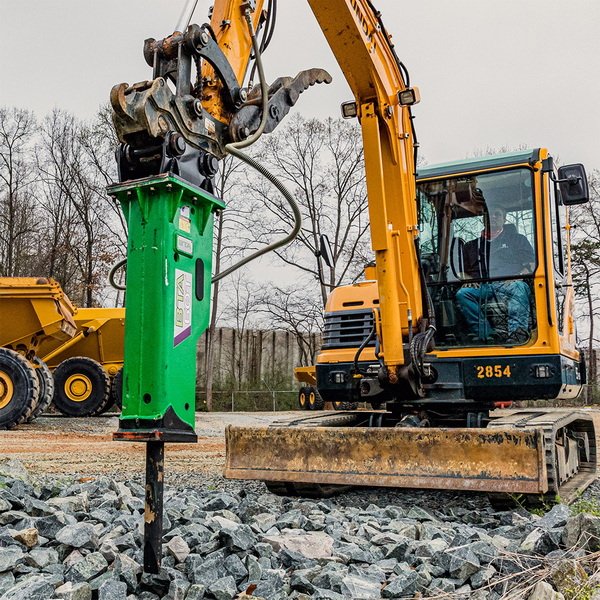
Hydraulic Flow and Pressure: The Performance Foundation
Understanding Critical Flow Requirements
Every hydraulic breaker operates within a specified hydraulic flow range and required pressure. Proper auxiliary circuit settings are absolutely essential for optimal breaker performance and extended maintenance intervals. Most skid steers provide 15-35 gallons per minute (GPM) of hydraulic flow, significantly less than excavators of comparable lifting capacity.
Operating pressure typically ranges from 2,500 to 3,500 PSI in skid steer hydraulic systems. Breakers must match these pressure parameters while delivering adequate impact energy for effective breaking performance. Remember that breakers generally operate at lower pressures (1,500-2,500 PSI) compared to other hydraulic attachments, so flow rate becomes more critical than pressure for determining performance.
Calculating Available Hydraulic Capacity
To determine your skid steer’s available auxiliary hydraulic flow, check the manufacturer’s specifications carefully. Most skid steers reserve 10-15% of total flow for steering and drive functions, leaving the remainder for attachment operation. This means a machine rated at 30 GPM total flow may only provide 25-27 GPM to the breaker attachment.
Undersized hydraulic flow results in slow cycling and reduced impact energy, while oversized breakers create excessive heat and system stress that accelerates component wear. Operating a breaker below its minimum flow rate can cause internal damage, making proper flow matching essential for long-term reliability.
Setting Flow Controls Correctly
If your auxiliary circuit settings aren’t properly configured, the breaker won’t perform optimally and maintenance intervals will drastically increase. Install an in-line flow meter to verify actual flow delivery to the breaker attachment. Adjust the flow control valve to the maximum permitted flow rate for your specific breaker model—the highest appropriate flow rate delivers the most blows per minute and maximum productivity.
Ensure your machine’s relief valve is set 400-600 PSI above the actual operating pressure of the breaker to prevent internal damage to the relief valve.
Comprehensive Maintenance and Operation Strategies
Establishing Essential Lubrication Practices
Even the most carefully selected breaker becomes a poor investment without a disciplined maintenance regimen. Breakers require greasing with high moly-based lubricant (chisel paste) at least once every one to two hours of operation. This frequent lubrication is non-negotiable for preventing premature wear and catastrophic failure.
When applying grease, ensure the working tool is fully pressed into the breaker housing before greasing. This technique prolongs the life of the wear bushing and working tool by ensuring lubricant reaches critical wear surfaces. The lower bushing consistently experiences the most abrasion and wear, making it the most critical lubrication point on all breaker models regardless of brand or size.
Pre-Operation Inspection Protocols
Daily pre-use inspections are mandatory for safe and effective breaker operation. Check all mounting bolts for proper torque and verify that the working tool, bushing, and retainer pins remain within manufacturer-specified wear limits. Loose mounting hardware creates vibration that accelerates wear throughout the breaker and carrier attachment system.
Inspect hydraulic hoses for damage, proper routing, and secure connections. Hoses that “hop” around excessively during operation indicate low nitrogen pressure and require immediate attention. Visual inspection of seals should reveal no hydraulic oil leakage—modern breakers with quality seals should demonstrate minimal to zero leakage.
Maintenance-Friendly Design Features
Modern breaker designs incorporate features that simplify maintenance and reduce downtime. Some manufacturers offer breakers with only two moving parts and accumulator-free designs, making maintenance straightforward and convenient. Automatic lubricators can be mounted to breakers for hassle-free lubrication, eliminating the need for operators to manually grease at frequent intervals.
Integral gas chamber assemblies can be removed as complete units without discharging and recharging the nitrogen system, significantly reducing service time and complexity. Dust seals on lower bushings decrease wear on tools and bushings, extending component life between replacements.
Operational Best Practices
Before starting breaker operation, ensure your machine is in the proper hydraulic mode if equipped with multiple power settings. The single most common misuse causing premature failure is prying, either intentionally or unintentionally.
The breaker must maintain constant downward pressure to function correctly, but this pressure must align directly with the tool axis. Any pressure creating a prying action or side loading on the tool causes premature lower bushing wear and potential tool breakage. Operators should be trained to recognize and avoid side-loading conditions that dramatically accelerate wear.
Mount breakers with the working tool positioned for optimal weight distribution. Most skid steers achieve best stability with breakers mounted slightly forward of the vertical centerline, but not so far forward that lifting capacity becomes compromised.
Nitrogen Systems: Understanding Power Sources
How Nitrogen Enhances Breaker Performance
All hydraulic breakers utilize nitrogen in their power delivery system, but the role nitrogen plays varies significantly between designs. Understanding these differences helps operators maintain breakers correctly and diagnose performance issues quickly.
For hydraulic breakers with diaphragm accumulators, the nitrogen charge remains correct unless the diaphragm ruptures. The accumulator is either properly charged or not—it typically doesn’t leak gradually over time unless someone has loosened the charging valve. If the diaphragm ruptures, the breaker experiences immediate performance loss with very little impact energy.
Nitrogen Assist vs. Hydraulic Systems
Nitrogen assist breakers can be 100% nitrogen-fired or use a combination of hydraulic oil and nitrogen. These designs typically require less oil flow to produce similar impact energy, which reduces operating costs and heat generation. Nitrogen assist breakers generally have fewer components and are easier to service than hydraulic designs with complex accumulator systems.
They achieve higher efficiency in terms of the percentage of energy coming from nitrogen versus oil as the primary force accelerating the piston during the downward striking motion. This efficiency translates to lower hydraulic system demands and reduced fuel consumption on the carrier machine.
Proper Nitrogen Charging Procedures
Insufficient nitrogen reduces accumulator pressure, resulting in weaker striking force. Conversely, excessive nitrogen increases accumulator pressure to the point where hydraulic oil pressure becomes insufficient to push the piston upward for compression, rendering the accumulator incapable of storing energy.
Before commencing operation, ensure newly installed or serviced hydraulic breakers are charged with nitrogen to the specified pressure, typically 2.5 ±0.5 MPa (approximately 360 PSI). Use a pressure gauge during charging to regulate accumulator pressure within the optimal range. If a breaker will be inactive for extended periods, release the nitrogen and seal the oil inlet and outlet ports.
Low power output is a reliable indicator that the backhead or accumulator needs recharging. Regular nitrogen pressure checks per manufacturer recommendations prevent performance degradation and extend component life.
Preventive Design Innovations Reducing Failure Points
Eliminating Common Failure Modes
Contemporary breaker engineering focuses on removing traditional failure points while adding protective features. Mono block cylinder housing designs eliminate tie rods, drastically reducing expensive failures caused by eventual tie rod stretching and breaking. This design innovation removes one of the most common catastrophic failure modes in older breaker designs.
Breakers without tension bolts enable easier troubleshooting and decrease routine maintenance time. Instead of tension bolt systems, these advanced designs feature overload protection systems that prevent over-powering if oil flow from the carrier’s auxiliary circuit exceeds maximum specifications. This automatic protection prevents operator error from damaging internal components.
Field Serviceability Improvements
Modern breakers increasingly emphasize field serviceability for diaphragm replacement and component access. While diaphragm rupture requires complex disassembly in some models, leading manufacturers now offer breakers with field-serviceable accumulators that significantly reduce repair time and cost.
Precision tolerance control in piston manufacturing enables easy replacement of pistons and cylinders as matched unit assemblies, lowering maintenance expenses and reducing the skill level required for repairs. Specialized carbon steel construction with heat treatment ensures minimal wear on piston striking surfaces while maximizing piston lifespan.
Seal Technology Advances
Premium seal technology using name-brand components ensures minimal to zero hydraulic oil leakage, along with reduced friction and wear. Quality seals extend service life dramatically and prevent the environmental contamination and costly fluid replacement associated with leaking breakers.
Safety Considerations for Skid Steer Breaker Operation
Visibility and Awareness
Skid steer cabs provide limited visibility compared to excavator cabs, requiring operators to maintain constant awareness of working tool position and surrounding obstacles. Consider machines with rear-view cameras or mirrors to improve visibility during backing operations with breakers mounted.
Establish clear communication protocols with ground personnel when operating breakers in congested job sites. The combination of limited visibility and powerful breaking forces creates serious injury risk without proper site management.
Stability and Ground Conditions
Ground conditions affect skid steer stability more dramatically than tracked excavators. Avoid operating breakers on slopes exceeding manufacturer recommendations, and maintain awareness of surface conditions affecting traction or stability. Soft ground, ice, or debris can compromise the stable platform required for safe breaker operation.
Position the machine with proper weight distribution before beginning breaking operations. The substantial forces generated during breaking can shift improperly positioned machines, creating tip-over hazards or uncontrolled movement.
Making Your Final Selection: Dealer Partnership and Support
Evaluating Total Cost of Ownership
While initial purchase price matters, total cost of ownership includes maintenance requirements, parts availability, and service support. Breakers with simplified maintenance requirements and longer service intervals reduce lifetime operating costs despite potentially higher initial investment.
Consider parts availability in your region and manufacturer reputation for responsive technical support. A breaker that requires weeks for replacement parts delivery creates costly downtime that quickly exceeds any initial savings.
Leveraging Dealer Expertise
The right breaker for your skid steer exists in today’s ample market with improved designs—finding it requires partnership with knowledgeable dealers. Quality dealers provide application analysis, help match breaker specifications to your specific requirements, and offer post-sale support including operator training.
Request demonstration opportunities to evaluate breaker performance with your actual materials and applications. Hands-on evaluation reveals performance characteristics that specifications alone cannot communicate.
Warranty and Service Agreements
Investigate warranty coverage and available service agreements that protect your investment. Extended warranties and preventive maintenance programs provide financial protection and ensure professional service attention that maintains optimal performance.
Partner with Certeg for Superior Equipment Performance
At Certeg, we manufacture premium skid steers, track loaders, wheel loaders, forklifts, tractors, and crawler carriers engineered to deliver exceptional hydraulic performance for breaker attachments. Our machines feature optimized hydraulic systems with precise flow and pressure control, ensuring compatibility with the full range of modern breaker attachments.
Don’t compromise on equipment quality when your productivity depends on it. Contact our technical team today to discuss your specific breaking applications and learn how Certeg equipment provides the ideal platform for breaker attachment operations. We offer comprehensive specifications, application consulting, and ongoing support to maximize your productivity and equipment investment.
Ready to upgrade your fleet? Visit our website at www.certeg.com or call our equipment specialists now to schedule a demonstration and experience the Certeg difference in compact construction equipment. Transform your breaking operations with machinery built for performance, reliability, and profitability.
Contact us to get more information!
Frequently Asked Questions
1. What is the ideal breaker size for my skid steer’s weight class?
The ideal breaker size depends on your skid steer’s hydraulic flow capacity (typically 15-35 GPM) and weight rating. Start by matching the breaker’s flow requirements to your machine’s auxiliary hydraulic capacity, then select a breaker weight that doesn’t exceed 60% of your skid steer’s rated operating capacity to maintain stability. Most manufacturers provide compatibility charts showing recommended breaker models for specific machine weight classes, and consulting these resources prevents over- or under-sizing mistakes.
2. How often should I grease my skid steer breaker, and what type of lubricant should I use?
Breakers require greasing with high moly-based lubricant (chisel paste) every one to two hours of operation. The lower bushing area experiences the most wear and represents the most critical greasing point on all breaker models. Always press the working tool fully into the breaker housing before applying grease to ensure lubricant reaches critical wear surfaces and prolongs bushing and tool life. Consider installing automatic lubricators to eliminate manual greasing intervals and ensure consistent lubrication.
3. What are the signs that my breaker’s nitrogen charge is low?
Hydraulic hoses that “hop” around excessively during operation are an early indicator of low nitrogen pressure. Reduced impact power and slower breaking performance also signal that the backhead or accumulator needs recharging. If your breaker suddenly loses most of its impact energy, a ruptured diaphragm in the accumulator system may be the cause, requiring immediate service. Regular nitrogen pressure checks per manufacturer specifications prevent performance degradation before it becomes severe.
4. Can I use the same breaker on both my skid steer and mini excavator?
Yes, many modern breakers offer interchangeable mounting systems that allow transfer between skid steers and mini excavators by changing mounting brackets. Some models require only removing two pins and installing a pin and bushing conversion kit to switch between machine types. This cross-platform compatibility dramatically increases equipment utilization rates and provides excellent return on investment, especially for rental operations and contractors with diverse fleets. Verify that the breaker’s hydraulic specifications match both machines before purchasing.
5. What is the most common mistake that damages breaker attachments?
Prying or side-loading the breaker tool represents the single most common misuse causing premature failure. Breakers must maintain constant downward pressure aligned directly with the tool axis—any pressure creating a prying action causes rapid lower bushing wear and potential tool breakage. Operators should receive training to recognize and avoid side-loading conditions. Operating breakers below minimum hydraulic flow rates also causes internal damage, making proper flow settings essential. Regular maintenance, especially frequent greasing of the lower bushing, prevents the majority of preventable failures.
Citations:
1. https://compactequip.com/attachments/six-things-know-selecting-breaker-skid-steer-track-loader/
2. https://skidsteersdirect.com/blogs/news/top-10-best-skid-steer-attachments-for-2025
3. https://www.besthammers.com/how-to-choose-a-breaker-for-your-skid-steer-hammer/
4. https://gorillahammers.com/hydraulic-hammer-breaker-size-guide/
5. https://www.beilite.com/en/blog/info_itemid_13481.html
6. https://www.mmsce.com/blogs/news/hydraulic-hammers-their-characteristics-and-uses
7. https://www.rayattachments.com/Why-hydraulic-breaker-need-nitrogen-and-how-to-charge-id46549637.html
8. https://www.bluediamondattachments.com/blog/blue-diamond-attachments-introduces-hydraulic-breakers-for-excavators-and-skid-steers/
9. https://rbibreakers.com/wp-content/uploads/2021/12/RBI-Complete-Manaul.pdf
10. https://gorillahammers.com/when-do-i-need-to-service-my-hydraulic-breaker/
11. https://www.forconstructionpros.com/equipment/attachments/hammers-breakers/article/21005372/best-practices-for-hydraulic-breaker-attachment-selection
12. https://www.youtube.com/watch?v=VlpSlz24XBs
Hot Tags: Skid Steer Breaker Attachment, Hydraulic Breaker For Skid Steer, Track Loader Breaker Attachment, Skid Steer Hydraulic Hammer, Selecting Skid Steer Breaker, Skid Steer Rock Breaker, Concrete Breaker Attachment, Skid Steer Demolition Attachment, Hydraulic Hammer Attachment, Breaker Attachment Buying Guide