
Cold Planer Attachment Guide for Skid Steers and Track Loaders in 2026
Content Menu
● Understanding Cold Planer Attachments
● Key Specifications that Influence Performance
>> Hydraulic flow and pressure
● Example Cold Planer Lines for Compact Equipment
>> Blue Diamond Extreme Duty Series 2
>> Bobcat cold planer attachments
>> Takeuchi cold planer lineup
● How to Match a Cold Planer to a Loader
>> Typical spec ranges in compact milling
● Operating Practices for Better Milling Results
● Maintenance Practices that Protect Your Investment
● Integrating Cold Planers into a Certeg Fleet
● Take the Next Step with Certeg
● FAQs About Cold Planer Attachments
>> FAQ 1: What types of jobs justify investing in a cold planer attachment?
>> FAQ 2: How can I confirm whether my loader can run a specific planer?
>> FAQ 3: Does every cold planer need a dust suppression system?
>> FAQ 4: How often should the drum teeth be replaced?
>> FAQ 5: Can one cold planer be used across multiple machines?
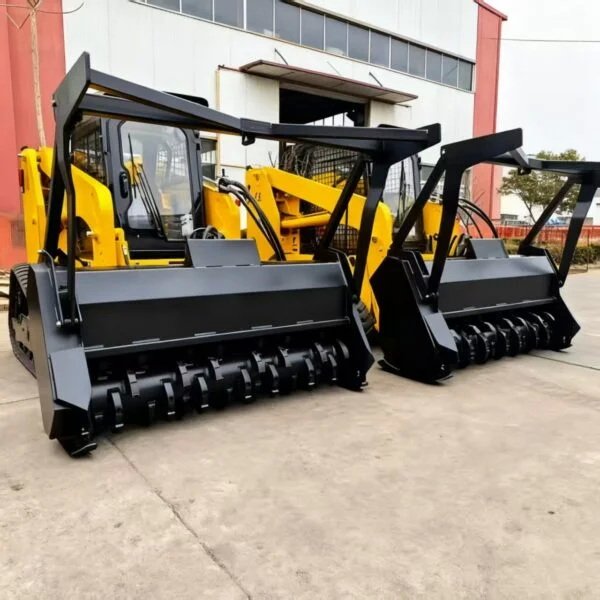
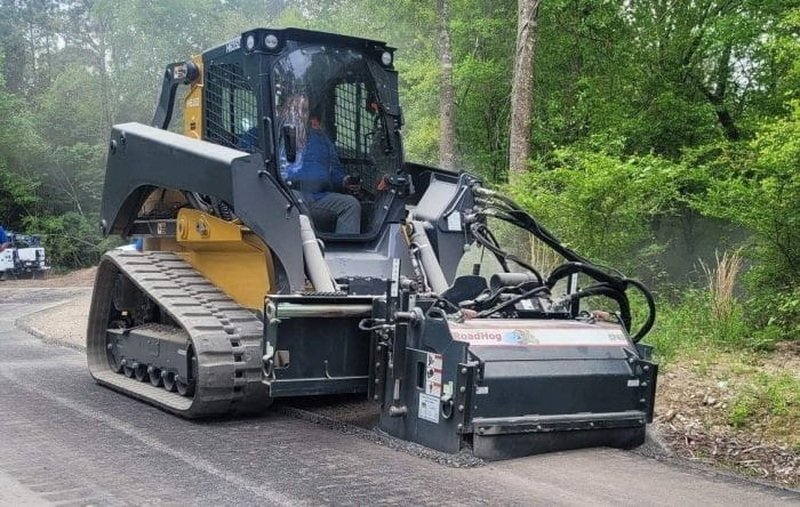
Equipping a skid steer or compact track loader with a cold planer attachment turns compact equipment into a precision milling solution for asphalt and concrete repair. Cold planers help contractors remove damaged pavement, correct surface imperfections, and prepare a stable base for new overlays with far lower cost than a dedicated milling machine.[1][2]
Understanding Cold Planer Attachments
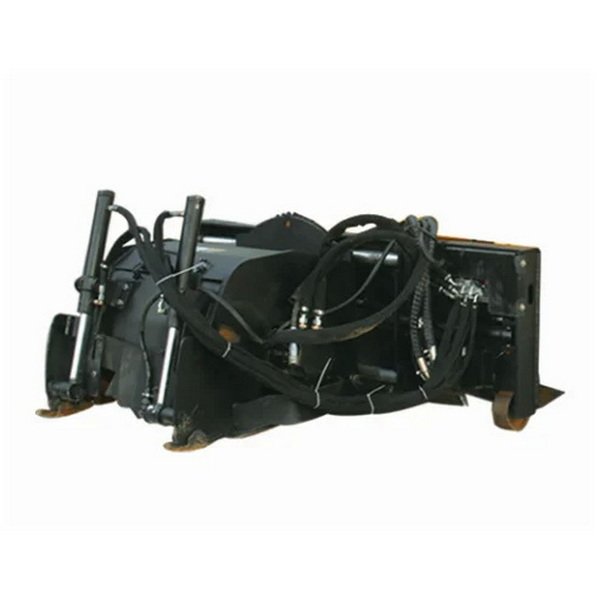
A cold planer attachment uses a rotating drum with carbide teeth to grind and profile existing pavement so new material can be placed on a uniform surface. The process produces a controlled depth cut, allowing crews to maintain grade, drainage, and smooth transitions between old and new pavement.[2][1]
Common uses include:
– Removing rutted or cracked asphalt in parking lots and streets.[1][2]
– Creating clean edges around patches, manholes, and catch basins.[2][1]
– Tapering transitions at curbs, driveways, and building entrances.[1][2]
– Cutting shallow channels that improve drainage on flat surfaces.[2]
When paired with robust compact loaders from manufacturers like Certeg, cold planers let small crews complete professional pavement repair with minimal disruption.[2]
Key Specifications that Influence Performance
Cold planer performance depends on several critical specifications that must align with the host machine’s capabilities.[3][2]
Cutting width and depth
– Typical compact cold planers range from about 12 to 48 in in cutting width, covering fine patch work through wider lane repairs.[4][3][1]
– Many models offer maximum milling depths from roughly 4 to 7 in, depending on design and available hydraulic power.[4][1][2]
– Narrow planers are ideal for utility cuts, small repairs, and tight spaces, while wider drums serve higher‑production maintenance on large paved areas.[3][2]
Hydraulic flow and pressure
– Standard‑flow planers often operate between 15 and 25 gpm at approximately 3,000–3,600 psi, supporting lighter milling tasks.[3][4]
– High‑flow units may require 24–50 gpm and pressures up to around 4,500 psi to drive larger drums and deeper cuts efficiently.[4][3]
– Matching the attachment’s required flow and pressure to the loader prevents slow performance, stalling, and hydraulic overheating.[2][3]
Drum and control options
– Drum configurations vary in tooth spacing and pattern, balancing aggressive material removal with surface finish quality.[5][2]
– Options such as hydraulic side shift, tilt, depth skis, and self‑leveling help maintain consistent cutting depth and alignment.[1][2]
– Electrical harnesses and joystick controls allow operators to manage planer functions directly from the cab for better precision and comfort.[6][1]
Example Cold Planer Lines for Compact Equipment
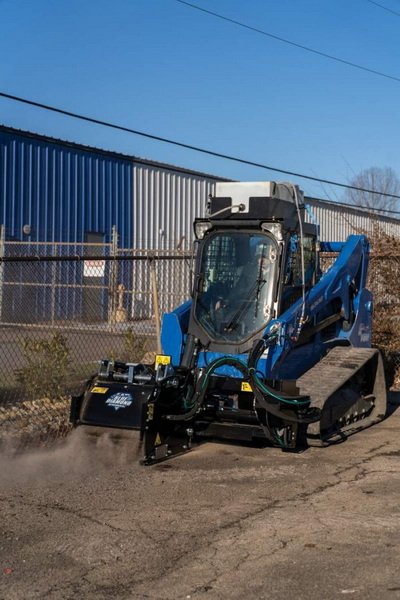
Different manufacturers illustrate how modern cold planers are tailored for skid steers and track loaders.[4][1]
Blue Diamond Extreme Duty Series 2
The Blue Diamond Extreme Duty Series 2 cold planers are built for demanding milling applications on compact equipment.[1][4]
Key characteristics include:
– A family of eight models spanning approximately 14–48 in cutting widths.[4][1]
– Milling depths around 4.3–6.7 in and working speeds capable of reaching roughly 16 ft per minute, depending on conditions.[1][4]
– Two low‑flow versions rated about 12–30 gpm, plus six high‑flow models that support around 27–50 gpm.[4]
– Heavy‑duty build, optional dust suppression, and direct‑drive hydraulic motors designed to reduce maintenance.[1][4]
Bobcat cold planer attachments
Bobcat’s planer range emphasizes visibility, control, and consistent milling results.[7][1]
Typical features include:
– Carbide‑tipped bits on a rotating drum engineered for high‑torque cutting in asphalt and concrete.[7][1]
– Adjustable skis that fine‑tune depth and help the planer follow uneven surfaces.[1]
– Depth gauges that operators can see from the cab to avoid over‑ or under‑milling.[7][1]
– Multiple flow configurations to match different loader hydraulic packages.[7][1]
Takeuchi cold planer lineup
Takeuchi offers several cold planers designed around its compact track loaders.[1]
Notable elements are:
– Model options such as TRPLSSL45, TRPLSSL60, TRPLSSL75, and TRPMSSL60 to cover varied job requirements.[1]
– Plug‑and‑play wiring harnesses that integrate planer functions with joystick controls.[1]
– Guidance from the manufacturer on pairing each model with compatible loaders.[1]
How to Match a Cold Planer to a Loader
Correctly matching a cold planer to a skid steer or compact track loader is essential for safe, efficient milling.[3][2]
Core selection steps
A structured approach helps buyers and fleet managers choose suitable combinations.[2][3][4]
1. Confirm hydraulic capacity
Check the loader’s auxiliary hydraulic flow and pressure ratings and compare them with the planer’s requirements.[3][4]
2. Align cutting width with job type
Choose narrower planers for patching, small trenches, and tight environments; select broader widths for large areas and higher production.[2][3]
3. Verify cutting depth requirements
Evaluate the typical repair depth, ensuring the attachment can achieve it without exceeding loader limits.[5][2]
4. Check weight and stability
Confirm that the loader’s operating weight and wheelbase or track length offer sufficient stability for the planer’s mass and expected cutting forces.[8][2]
5. Review control and visibility options
Prioritize features like side shift, depth indicators, and self‑leveling if the work requires precise edge control or close work around structures.[2][1]
Typical spec ranges in compact milling
The table below summarizes common specification ranges for compact cold planers used on skid steers and track loaders.[3][4][2][1]
Operating Practices for Better Milling Results
Solid operating technique helps protect equipment while delivering consistent, high‑quality milling.[9][2]
– Begin with a shallow test pass to confirm depth, traction, and planer response before proceeding to full depth.[9][2]
– Use multiple passes for deeper cuts rather than forcing the planer to remove too much material at once.[9][2]
– Maintain a steady ground speed and avoid sudden steering movements that can cause uneven cuts or stress on the attachment.[9][2]
– Watch engine load and hydraulic temperature, adjusting speed or depth if the machine shows signs of strain.[2]
Training operators on these concepts can significantly improve productivity and equipment longevity.[10][2]
Safety and Site Management
Cold planers generate high energy, debris, and noise, making a disciplined safety approach essential.[10][2]
– Establish clear exclusion zones around the milling area to keep bystanders and other trades at a safe distance.[2]
– Require appropriate personal protective equipment, including eye and ear protection, gloves, high‑visibility clothing, and safety footwear.[10][2]
– Inspect guards, hoses, and couplers before each shift to identify leaks, damage, or loose components.[10][2]
– Consider dust suppression systems to control airborne particles, especially in urban or enclosed environments.[2][1]
Organized traffic control and material hauling plans further reduce risks and improve efficiency during milling operations.[10][2]
Maintenance Practices that Protect Your Investment
Routine maintenance keeps cold planers productive and protects the loader’s hydraulic system.[5][2]
– Inspect carbide teeth daily, replacing worn or broken cutters to maintain cutting performance and reduce vibration.[5][2]
– Check the drum, bearings, and structural components for cracks or damage after heavy use.[5][2]
– Clean material buildup from the drum housing and around hydraulic components at the end of each shift.[2]
– Monitor belt or chain tension where applicable, and follow the attachment’s recommended lubrication and service intervals.[5][2]
Preventive maintenance policies, logbooks, and standardized inspection routines help fleets avoid costly downtime and premature component failures.[2]
Integrating Cold Planers into a Certeg Fleet
As a manufacturer of excavators, skid steers, road rollers, forklifts, tractors, and tracked transporters, Certeg can support complete pavement maintenance workflows.
– Skid steer and compact track loader models can be configured with standard‑flow or high‑flow hydraulics to match different cold planer classes.[3]
– Road rollers from the same fleet can follow milling work, ensuring proper density and finish for overlays or patches.[2]
– Tracked transporters and forklifts move milled material, aggregates, and bagged products around the site to streamline logistics.[2]
This integrated approach reinforces the image of a single‑source equipment partner that supports contractors through every stage of pavement repair.
Take the Next Step with Certeg
Pavement repair work becomes safer, faster, and more profitable when cold planer attachments are matched carefully to capable skid steers and compact track loaders. To ensure your next investment delivers the expected milling performance, reach out to Certeg’s dedicated application team for one‑on‑one guidance on hydraulic configurations, planer sizing, and complete milling–compaction workflows across your fleet.[3][2]
FAQs About Cold Planer Attachments
FAQ 1: What types of jobs justify investing in a cold planer attachment?
Cold planers are most valuable for frequent asphalt and concrete maintenance, such as parking lot repairs, municipal patching, and industrial yard resurfacing. They are also useful for utility contractors that regularly cut trenches or create drainage paths in existing pavement.[1][2]
FAQ 2: How can I confirm whether my loader can run a specific planer?
Compare the loader’s auxiliary hydraulic flow and pressure ratings with the planer’s required values and check the recommended carrier weight range in the attachment documentation. If the loader’s specifications fall below the minimums, choose a smaller or standard‑flow planer instead of oversizing the attachment.[3][4][2]
FAQ 3: Does every cold planer need a dust suppression system?
Dust control is not always mandatory, but it is strongly recommended in populated areas, warehouses, or sites with strict environmental rules due to fine particles generated during milling. Many compact cold planers offer optional water spray kits that significantly reduce airborne dust and improve visibility.[2][1]
FAQ 4: How often should the drum teeth be replaced?
Teeth should be inspected at least daily and replaced whenever they become rounded, chipped, or broken, because worn cutters reduce productivity and increase vibration. Ignoring tooth wear can lead to accelerated bearing damage, higher fuel consumption, and poor surface finish.[5][2]
FAQ 5: Can one cold planer be used across multiple machines?
Many cold planers can be shared across skid steers and compact track loaders that use the same quick‑attach interface and meet the hydraulic and weight requirements. Before swapping attachments between machines, confirm coupler compatibility, hydraulic capacity, and stability for safe operation.[6][1][2]
Citations:
[1] https://compactequip.com/attachments/cold-planer-attachment-showcase-compact-milling-for-skid-steers-and-track-loaders/
[2] https://equipmentandcontracting.com/cold-planer-attachments-101-selection-tips-usage-and-more/
[3] https://compactequip.com/skid-steers/how-to-pick-the-right-cold-planer-for-a-skid-steer-or-compact-track-loader/
[4] https://www.bluediamondattachments.com/attachments/skid-steers/cold-planers
[5] https://www.kellytractor.com/eng/images/pdf/attachments/sslcoldplaners.pdf
[6] https://www.virnigmfg.com/product/cold-planer/
[7] https://www.bobcat.com/na/en/attachments/planer
[8] https://skidpro.com/skid-steer-attachments/brooms-sweepers-cold-planers-and-road-saws/cold-planer-standard-flow/
[9] https://compactequip.com/attachments/lets-make-planning-simple-properly-equip-skid-steers-track-loaders-cold-planing-applications/
[10] https://www.hopenn.com/blog/compact-equipment-attachments-guide/
Hot Tags:Skid Steer Milling Attachment, Cold Planer Attachment, Skid Steer Cold Planer, Compact Milling Attachment, Asphalt Milling Skid Steer, Track Loader Cold Planer, Road Milling Attachment, Skid Steer Milling Machine, Pavement Milling Equipment, Cold Planer For Skid Steers