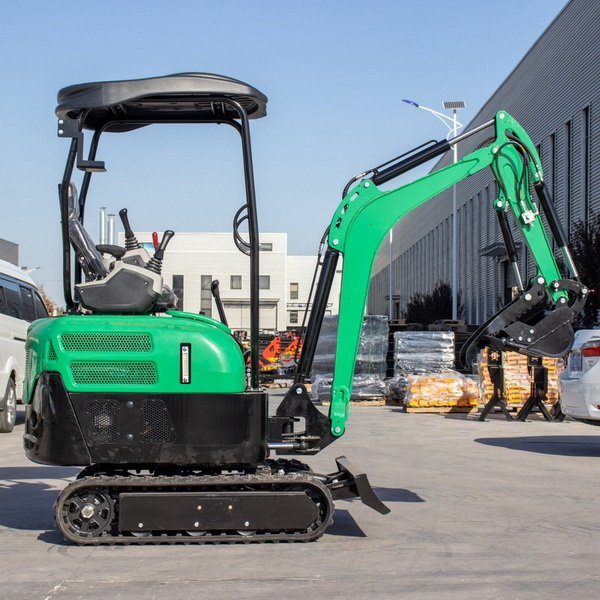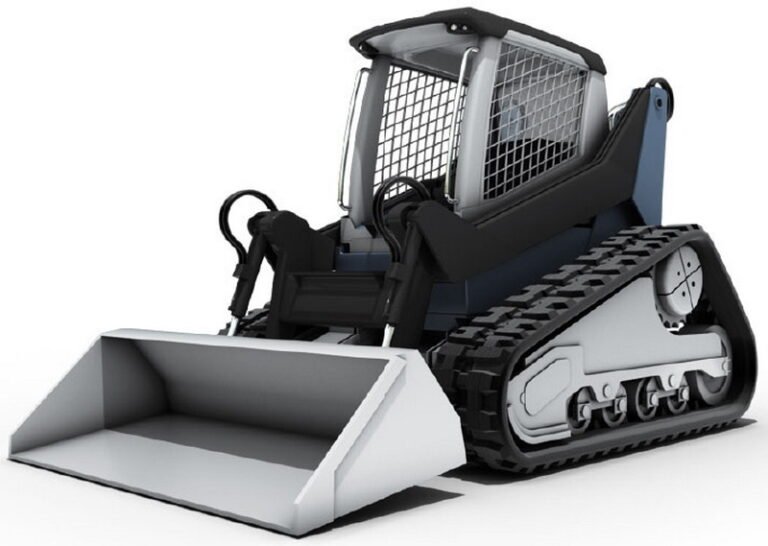

Attachments for Compact (Mini) Excavators: 2026 Complete Buyer’s Guide
Content Menu
● Why Compact Excavator Attachments Matter
● How to Choose the Right Compact Excavator Attachment
>> 1. Define Your Primary Tasks
>> 2. Match Attachment to Machine Size and Hydraulics
>> 3. Evaluate Jobsite Conditions
>> 4. Factor in Productivity and ROI
● Types of Excavator Attachment Couplers
● Major Types of Compact Excavator Attachments
>> Digging and Trenching Buckets
>> Grading and Ditching Buckets
>> Augers and Drill Attachments
>> Grapples, Thumbs, and Clamps
● Additional Specialty Attachments
● Compact Excavator Attachments and Couplers: Quick Comparison
● Safety Best Practices for Compact Excavator Attachments
● Maintenance Tips to Extend Attachment Life
● Real‑World Use: Replacing Multiple Machines
● When to Rent vs. Buy Compact Excavator Attachments
● How Modern Equipment Maximizes Attachment Performance
● Build Your Compact Excavator Attachment Package
● FAQs About Compact (Mini) Excavator Attachments
>> (1) What are the most essential compact excavator attachments for a small contractor?
>> (2) How do I know if an attachment will fit my compact or mini excavator?
>> (3) Is a hydraulic quick coupler worth the extra cost on a mini excavator?
>> (4) How often should compact excavator attachments be serviced?
>> (5) Should I rent or buy specialized mini excavator attachments?
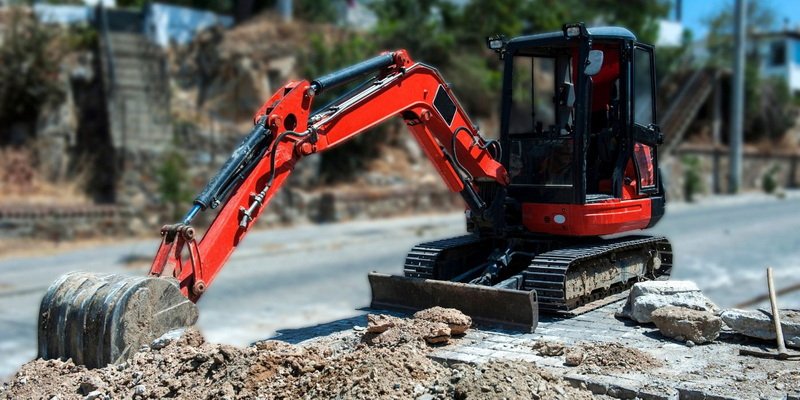
Compact (mini) excavator attachments are one of the most effective ways to expand your machine’s capabilities, reduce manual labor, and win more diverse projects with a single carrier. Whether you work in construction, landscaping, utilities, agriculture, or rental, choosing the right attachment and coupler system turns a compact excavator into a highly profitable multi‑tool.
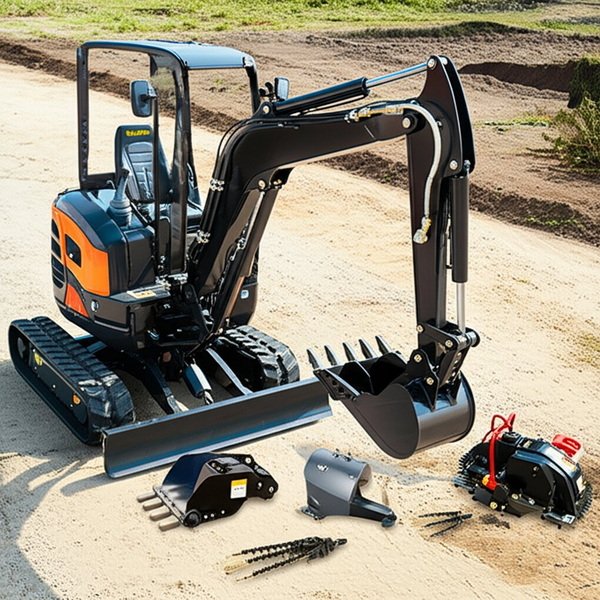
Why Compact Excavator Attachments Matter
Modern contractors and fleet owners increasingly rely on compact excavator attachments to cover many tasks that once required several dedicated machines. With the right attachment package, a mini excavator can dig, grade, break concrete, drill holes, handle materials, and manage vegetation.
Key benefits include:
– Higher utilization of each excavator across seasons and job types.
– Lower labor costs by mechanizing repetitive or heavy manual work.
– Faster changeovers between tasks when paired with efficient coupler systems.
How to Choose the Right Compact Excavator Attachment
Selecting the wrong attachment can reduce productivity, increase wear, or create safety risks. A simple decision framework helps match each compact excavator attachment to your job, ground conditions, and carrier size.
1. Define Your Primary Tasks
Start by listing the top three to five recurring tasks your compact excavator performs. For many contractors, these include trenching, backfilling, grading, breaking concrete or rock, augering, and handling debris.
Key questions:
– What materials will you work with most often (soil, clay, rock, concrete, asphalt, roots)?
– Are you mainly digging, lifting, compacting, or demolishing?
– Do you need precision (fine grading) or heavy impact (breaking, ripping)?
2. Match Attachment to Machine Size and Hydraulics
Every compact or mini excavator has limits on operating weight, hydraulic flow, and pressure. Attachments must fit these specifications to perform efficiently and safely.
Check the following:
– Mounting system: pin size and spacing, quick coupler type, and machine model compatibility.
– Hydraulic requirements: flow and pressure range for breakers, augers, thumbs, and mulchers.
– Maximum attachment weight: to avoid overloading the boom, arm, and undercarriage.
3. Evaluate Jobsite Conditions
Different ground and site conditions affect which compact excavator attachments perform best. Rocky ground and frost require robust buckets or rippers, while soft soils favor cleanup buckets or grading blades.
Consider:
– Soil type and compaction.
– Space constraints (urban streets, fenced yards, indoors).
– Environmental limits (noise, dust, vibration).
4. Factor in Productivity and ROI
An attachment’s true value lies in its overall return on investment, not only its purchase price.
Compare:
– Cost vs. labor savings and time saved per job.
– Expected service life and rebuild options.
– Rental vs. ownership for highly specialized attachments.
Types of Excavator Attachment Couplers
Attachment couplers determine how quickly and safely operators can change compact excavator attachments throughout the day. A well‑chosen coupler system turns a mini excavator into a versatile tool carrier with minimal downtime between tasks.
Manual Pin‑On Couplers
Manual pin‑on couplers use traditional mounting pins and require operators to leave the cab, remove retaining pins, align the new attachment, and reinstall pins.
Pros:
– Simple design with low initial cost.
– Fewer moving parts and minimal maintenance.
Cons:
– Slower changeovers, especially with frequent attachment changes.
– Higher risk of improper pin installation if operators rush.
Mechanical Quick Couplers
Mechanical quick couplers use a lever, wedge, or locking mechanism to secure attachments more quickly than basic pin‑on systems.
Advantages:
– Faster attachment changes than manual pin‑on.
– Reduced physical effort for operators.
Limitations:
– Still requires the operator to exit the cab.
– Locking mechanisms must be checked regularly for wear and proper engagement.
Hydraulic Quick Couplers
Hydraulic quick couplers allow the operator to change most compact excavator attachments from the cab, using hydraulic controls to latch and lock the tool.
Key benefits:
– Very fast attachment changes, ideal when switching frequently between buckets, breakers, and grapples.
– Improved safety by reducing time spent near moving equipment and pinch points.
Considerations:
– Higher purchase price and more complex hydraulic plumbing.
– Requires regular inspection of hoses, seals, and locking indicators.
Major Types of Compact Excavator Attachments
A strong attachment strategy usually covers core categories: digging buckets, grading tools, demolition attachments, drilling tools, and material‑handling implements. The sections below explain each category, typical uses, and selection tips.
Digging and Trenching Buckets
Digging buckets are the most common compact excavator attachments and are designed for general excavation in soil, clay, and mixed materials. Trenching buckets are narrower and optimized for utilities, irrigation, and drainage.
Best uses:
– Foundation excavation and footings.
– Utility trenches for water, gas, fiber, and electrical lines.
– Irrigation channels and small drainage ditches.
Selection tips:
– Choose width to match pipe size and local trench requirements.
– Specify heavier‑duty cutting edges and side cutters for abrasive or rocky soils.
Grading and Ditching Buckets
Grading buckets, often wide with a smooth edge, help with slopes, final grade, and cleanup. They are ideal when a compact excavator must handle some tasks normally assigned to skid‑steer or track loaders.
Typical applications:
– Smoothing building pads and lawns.
– Shaping roadside ditches and drainage.
– Backfilling trenches and leveling aggregates.
Hydraulic Breakers
Hydraulic breakers are powerful attachments for breaking concrete, rocks, and frozen ground. On compact excavators, they enable controlled demolition in tight or urban spaces where larger breakers are impractical.
Use cases:
– Demolishing small slabs, sidewalks, curbs, and driveways.
– Trenching in rocky ground or frost.
– Reducing boulders for easier hauling.
Selection points:
– Match breaker size to excavator operating weight and auxiliary hydraulic flow.
– Use appropriate tool bits (chisel, moil, blunt) for each material.
Augers and Drill Attachments
Auger attachments turn a compact excavator into a high‑productivity drilling machine for posts, piers, trees, and anchors.
Typical applications:
– Fence, guardrail, and signpost installation.
– Deck and small building footings.
– Tree and shrub planting in landscaping.
Selection tips:
– Choose auger drive based on torque, speed, and soil conditions.
– Keep multiple bits and extensions to cover different diameters and depths.
Grapples, Thumbs, and Clamps
Grapples and thumbs increase a compact excavator’s ability to grab, sort, and move irregular objects. They are among the most valuable mini excavator attachments for demolition, land clearing, and recycling work.
Use cases:
– Handling logs, rocks, and demolition debris.
– Sorting scrap metal and construction waste.
– Loading brush and green waste into containers or trucks.
Common options:
– Weld‑on or bolt‑on thumbs paired with standard buckets.
– Dedicated hydraulic grapples with independent jaws.
Compaction Attachments
Compaction wheels and vibratory plate compactors allow compact excavators to compact soil back into trenches and confined areas without separate rollers or rammers.
Key benefits:
– Higher productivity than manual tampers in deep or narrow trenches.
– Better compaction around utilities where large rollers cannot reach.
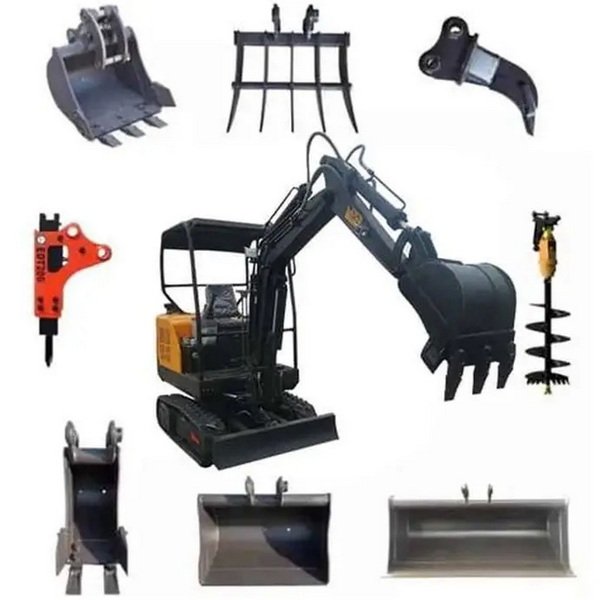
Additional Specialty Attachments
Beyond core tools, a growing range of specialty compact excavator attachments helps contractors capture niche work and higher‑margin projects.
Examples:
– Rippers for frozen or highly compacted soils.
– Brush cutters and flail mowers for vegetation management.
– Tiltrotators for advanced shaping and 3D grading.
Compact Excavator Attachments and Couplers: Quick Comparison
| Category | Primary Function | Typical Jobsites | Coupler Considerations | Notes for Buyers |
|---|---|---|---|---|
| Digging / trenching buckets | Excavation and trenching | Utilities, foundations, drainage | Work with all coupler types | Choose width and teeth for soil type |
| Grading / ditching buckets | Slope finishing and cleanup | Landscaping, roads, backfilling | Tilt couplers improve versatility | Wide buckets boost grading speed |
| Hydraulic breakers | Concrete and rock demolition | Urban demo, road repair | Need strong hydraulic coupler | Match flow, pressure, and weight |
| Augers | Hole drilling | Fencing, landscaping, foundations | Check auxiliary hydraulics | Use multiple bit sizes and extensions |
| Grapples / thumbs | Material handling | Demolition, recycling, land clearing | Hydraulic or mechanical couplers | Ensure sufficient lift capacity |
| Compaction attachments | Soil compaction | Trench backfill, utilities | Stable, rigid coupling preferred | Confirm required downforce and vibration |
Safety Best Practices for Compact Excavator Attachments
Safe operation is essential when working with compact excavator attachments, as each tool changes the machine’s working envelope and load limits. Proper training and inspection significantly reduce accidents and unplanned downtime.
Fundamental practices:
– Follow the excavator and attachment manufacturer’s operating manuals and safety decals.
– Train operators on each attachment, including startup checks and shutdown procedures.
– Verify that safety locks and coupler indicators are fully engaged before lifting or swinging loads.
Maintenance Tips to Extend Attachment Life
Well‑maintained compact excavator attachments reduce downtime and avoid costly failures on critical jobs. Routine care also protects the host machine’s hydraulics and structure.
Recommended practices:
– Daily inspection for cracks, loose fasteners, damaged hoses, or leaks.
– Regular greasing of pins, bushings, and pivot points to limit wear.
– Using the correct hydraulic oil and filters to protect breakers, augers, and other powered tools.
– Storing attachments on level ground or racks to prevent damage and corrosion.
Real‑World Use: Replacing Multiple Machines
Many contractors use compact excavator attachments to reduce the number of separate machines required on a job. A utility crew can dig trenches, place pipe, compact backfill, and restore grade with one mini excavator equipped with buckets, a compactor, and a grading attachment.
This approach offers:
– Fewer machines to transport and maintain.
– Lower fuel and insurance costs.
– Greater flexibility when jobsites or schedules change.
When to Rent vs. Buy Compact Excavator Attachments
Owning every attachment is not always necessary. Many fleets purchase frequently used compact excavator attachments and rent highly specialized tools for occasional jobs.
Consider buying when:
– Utilization is high across multiple projects and seasons.
– The attachment is central to your core services.
– You want full control over maintenance and availability.
Consider renting when:
– You need rare or highly specialized tools.
– You are testing a new service offering.
– Project duration is short, or usage is uncertain.
How Modern Equipment Maximizes Attachment Performance
Equipment designed for intensive attachment use can offer better performance and uptime. Optimized auxiliary hydraulics, boom geometry, and coupler compatibility allow compact excavators to support a wide range of attachments with minimal setup.
Benefits of well‑matched machines and attachments:
– Smoother hydraulic response and precise control for grading and demolition.
– Reduced stress on structures and undercarriages, improving long‑term durability.
Build Your Compact Excavator Attachment Package
Contractors and fleet owners who plan attachments strategically get more value from every compact or mini excavator in their fleet. A focused package combining digging, grading, demolition, and material‑handling tools can expand services without adding more base machines.
If you are planning projects for the next 12–24 months, now is the right time to define your essential compact excavator attachments and choose the coupler system that supports fast, safe changeovers. Share your typical jobs, preferred machine sizes, and current hydraulic setup with a specialist team so they can propose a tailored package of buckets, breakers, augers, grapples, and compaction tools that fits your budget and schedule.
Take the next step today: contact our sales and engineering team to design a compact excavator attachment package matched to your excavators, skid‑steer loaders, road rollers, forklifts, tractors, and crawler transporters. Request a detailed quotation, lead time, and configuration proposal for your upcoming projects.
FAQs About Compact (Mini) Excavator Attachments
(1) What are the most essential compact excavator attachments for a small contractor?
For most small contractors, the core compact excavator attachments include a general‑purpose digging bucket, a trenching bucket, a wide grading bucket, and at least one powered attachment such as a hydraulic breaker or auger. This combination covers common tasks like excavation, utilities, site preparation, and basic demolition.
(2) How do I know if an attachment will fit my compact or mini excavator?
Attachment fit depends on the excavator model, coupler type, pin dimensions, and hydraulic specifications. Always confirm compatibility by checking the manufacturer’s approved attachment list and matching pin spacing, pin diameter, and allowable attachment weight before purchase.
(3) Is a hydraulic quick coupler worth the extra cost on a mini excavator?
Hydraulic quick couplers are usually worthwhile when operators change compact excavator attachments multiple times per day or work on varied jobs. They save time, reduce exposure to pinch points, and encourage operators to use the most suitable tool for each task instead of avoiding changes because of manual effort.
(4) How often should compact excavator attachments be serviced?
Most compact excavator attachments should be inspected daily, greased according to the manufacturer’s schedule, and checked regularly for wear, cracks, and loose fasteners. Hydraulic attachments such as breakers and augers also require periodic seal inspections, bushing maintenance, and adherence to the carrier’s hydraulic oil and filter service intervals.
(5) Should I rent or buy specialized mini excavator attachments?
If you only need a specialized attachment for a single project or a few days each year, renting is usually more economical. When an attachment supports a core service and will see regular use, owning it typically provides better long‑term value, availability, and control over maintenance.
Hot Tags:Chinese Mini Excavator, Attachments for Mini Excavator, Compact Excavator Attachments, Mini Excavator Attachments, Excavator Buckets, Hydraulic Breaker Attachments, Auger Drive Attachments, Excavator Grapples, Trenching Attachments, Excavator Thumb Attachment