
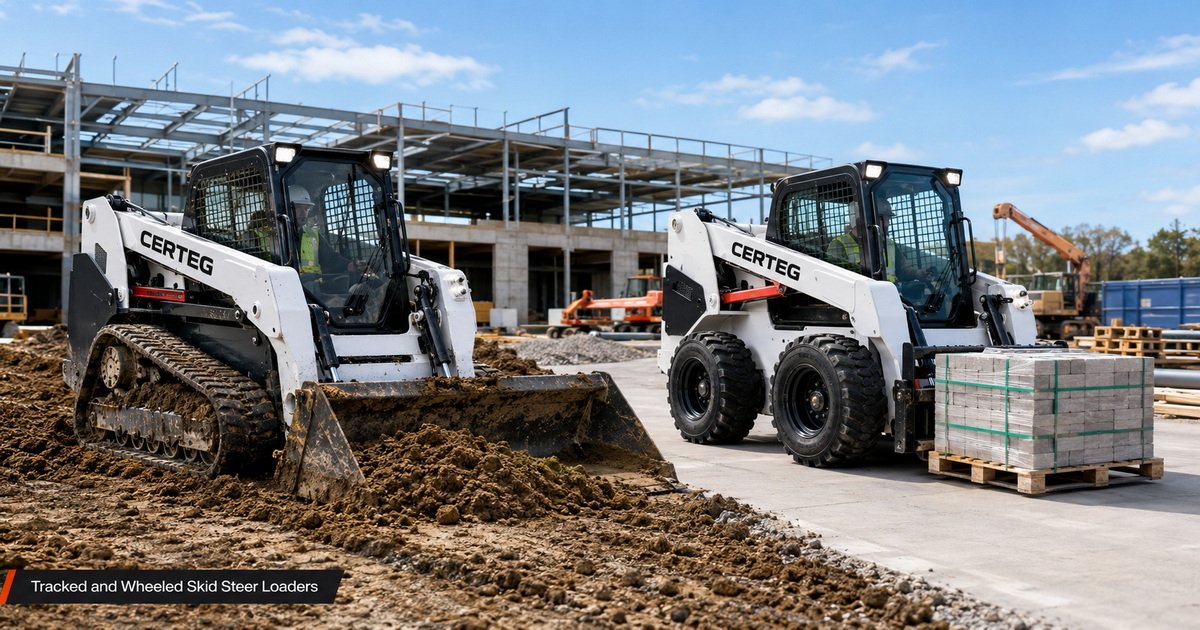
Certeg Skid Steer Loaders: Expert Guide to Choosing the Right Track and Wheel Machines
Content Menu
● Why Skid Steer Loaders Remain Essential
● Lessons from a Major Industry Milestone
● Global Market Snapshot for Skid Steer Loaders
● Track vs. Wheel Skid Steers: Core Differences
>> Key Differences Between Tracked and Wheeled Machines
● How Certeg Aligns Machines with Real Job Conditions
>> Three Pillars of Machine Selection
● Technology Developments in Modern Skid Steers
>> Telematics and Connectivity
>> Operator Comfort and Visibility
>> Smart Attachments and Automatic Functions
● Safety and Quality as Long-Term Differentiators
● Practical Checklist for Selecting Your Next Skid Steer Loader
● Building Stronger Fleets with the Right Skid Steer
>> 1. What are the main advantages of a tracked skid steer?
>> 2. When is a wheeled skid steer the better option?
>> 3. How important are attachments when choosing a skid steer?
>> 4. What role do comfort and visibility play in productivity?
>> 5. How can a manufacturer support long-term reliability?
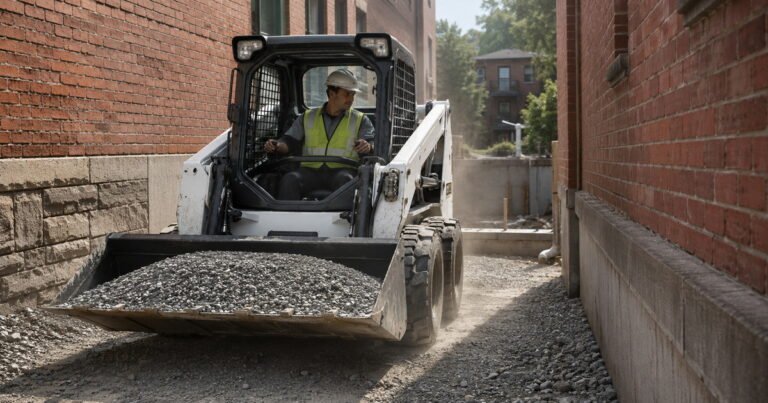
As a long-time producer of compact construction equipment, Certeg designs skid steer loaders to deliver reliable performance in demanding environments. From urban renovation projects to remote infrastructure sites, our tracked and wheeled machines are built to handle tough ground conditions, frequent attachment changes, and long working days. Drawing on experience from global customers, this guide explains how to select the right skid steer configuration and what to look for in modern compact loaders.
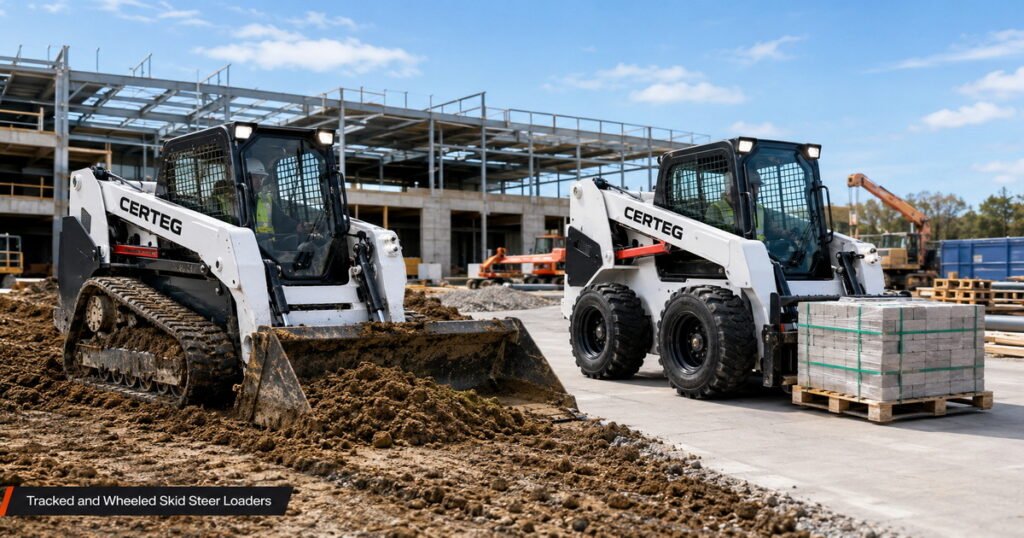
Why Skid Steer Loaders Remain Essential
Skid steer loaders remain one of the most versatile pieces of equipment on construction, landscaping, agricultural, and industrial sites. Even as new categories of compact equipment appear, contractors continue to rely on skid steers for daily tasks.
Key reasons they remain essential include:
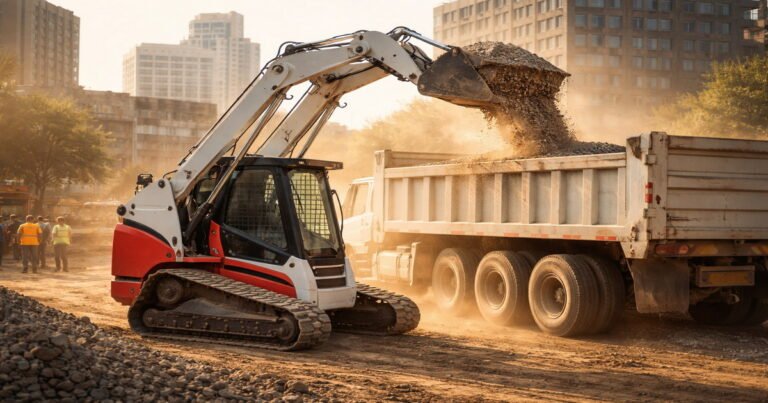
– High versatility: One base machine can run buckets, forks, augers, sweepers, trenchers, cold planers, and many other tools.
– Compact footprint: Their short wheelbase and tight turning radius make them ideal for confined areas, narrow streets, and warehouse entrances.
– Cost effectiveness: For many small and medium-sized companies, a well-specified skid steer provides a better balance between purchase price, running costs, and productivity than larger loaders.
For fleets that already use multiple machines, skid steers often serve as the “first in, last out” tool on a job site, handling setup, support, and clean-up work with minimal downtime.
Lessons from a Major Industry Milestone
One of the most respected brands in the industry recently celebrated the production of its 250,000th skid steer loader, a milestone that reflects more than four decades of continuous development. That story highlights several design principles that still influence how modern machines are built.
Important lessons that emerged from this long history include:
– Stability and ride comfort: Early innovations such as longer wheelbases improved how the machine carried loads and reduced operator fatigue.
– Operator protection: Enclosed protective structures, better boom lockouts, and improved entry and exit points reduced risks from rollovers and falling material.
– Hydrostatic drive evolution: Adapting hydrostatic technology from other machines led to smoother and more controllable drivetrains, especially at low speeds.
Manufacturers that adopt similar principles focus not only on power, but also on predictable handling, safety, and ease of operation. These priorities strongly influence how Certeg designs and refines its own skid steer platforms.
Global Market Snapshot for Skid Steer Loaders
The market for skid steer loaders continues to grow steadily in many regions. Demand is supported by ongoing infrastructure investment, urban redevelopment, industrial expansion, and the need for flexible equipment in smaller contractor fleets.
General trends observed in recent years include:
– Steady growth: Many studies describe moderate growth rates in the low to mid single digits per year across the global market.
– Regional variations: North America remains a core market, while Asia-Pacific, Latin America, and parts of Europe are seeing rising adoption as more contractors move from manual work to mechanized solutions.
– Segment diversity: Construction, agriculture, landscaping, rental fleets, and public works all contribute to overall demand.
As an equipment producer, Certeg uses these signals to plan capacity, develop new models, and configure machines for different regional preferences and regulations.
Track vs. Wheel Skid Steers: Core Differences
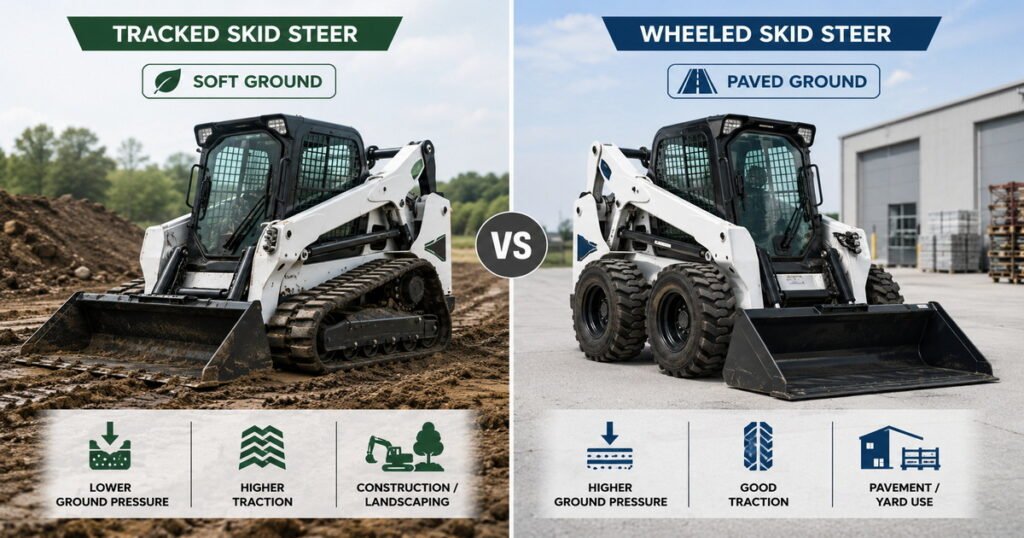
Choosing between a tracked skid steer and a wheeled skid steer is one of the most important decisions for buyers. Both types can use similar attachments and engines, but they behave very differently under real job site conditions.
Key Differences Between Tracked and Wheeled Machines
| Aspect | Tracked Skid Steer | Wheeled Skid Steer |
|---|---|---|
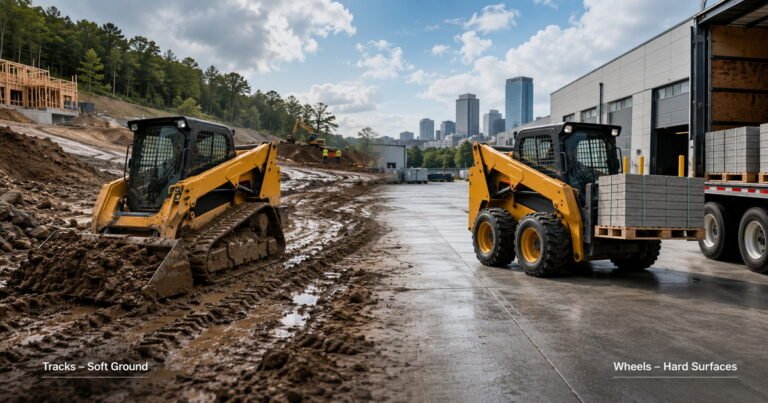
| Ground conditions | Performs best on soft, muddy, sandy, or snowy ground | Performs best on firm, paved, or compacted ground |
| Ground pressure | Lower ground pressure, less soil damage | Higher ground pressure, more rutting on soft soils |
| Traction | Superior traction on slopes and uneven surfaces | Good traction on stable, dry terrain |
| Travel speed | Slightly lower travel speed, tuned for control | Generally higher travel speed on hard surfaces |
| Operating cost | Higher undercarriage wear costs, lower tire concerns | Lower undercarriage cost, tires are main wear item |
| Typical use cases | Land clearing, grading, forestry, slope work | General construction, yard work, road maintenance |
In practical terms, contractors who work on wetlands, loose soils, and unprepared job sites often choose tracked machines. Those who mainly operate on hardened ground or move frequently between short-distance jobs may prefer wheeled models.
How Certeg Aligns Machines with Real Job Conditions
From a manufacturer’s point of view, matching the right skid steer to the actual working environment is critical. Certeg uses a structured process to recommend tracked or wheeled machines, as well as specific power and hydraulic packages.
Three Pillars of Machine Selection
1. Job profile and attachments
– Identify primary tasks: excavation, grading, pallet handling, demolition, snow removal, industrial cleaning, or material transport.
– Define attachment requirements: standard buckets, high-capacity buckets, pallet forks, augers, trenchers, planers, sweepers, or breakers.
– Specify hydraulic demand: standard-flow or high-flow hydraulics for intensive tools.
2. Operating environment
– Terrain type: paved yards, gravel, clay, sand, rock, or mixed conditions.
– Climate: extreme heat, heavy rainfall, frost, or dusty environments.
– Job site constraints: narrow access, height limits, or noise-sensitive areas.
3. Usage pattern and fleet strategy
– Daily operating hours and typical project durations.
– Integration with existing machines and attachments.
– Availability of maintenance staff, storage facilities, and spare parts.
By combining these factors, Certeg can recommend whether a customer should prioritize traction and low ground pressure with a tracked machine, or maneuverability and low tire costs with a wheeled model. This approach helps contractors avoid over-specifying or under-specifying their equipment.
Technology Developments in Modern Skid Steers
Skid steers have evolved from simple mechanical machines into compact, technology-rich tools. Many recent developments focus on improving reliability, operator experience, and integration into larger fleets.
Telematics and Connectivity
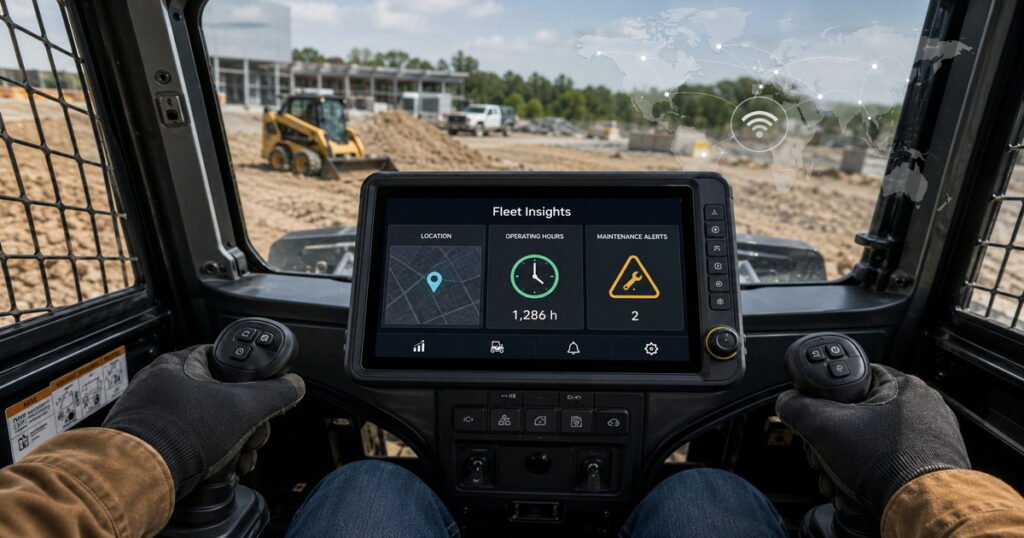
Modern machines increasingly support telematics units that monitor key parameters. While the exact features vary by brand and platform, common functions include:
– Monitoring machine location and running hours
– Tracking fuel consumption and idle time
– Sending alerts for upcoming or overdue maintenance
– Providing basic diagnostic information for service teams
This data helps owners avoid unexpected downtime, plan service intervals, and understand how their machines are actually being used. Certeg designs its machines with architectures that can integrate with external telematics solutions adopted by global fleets and rental companies.
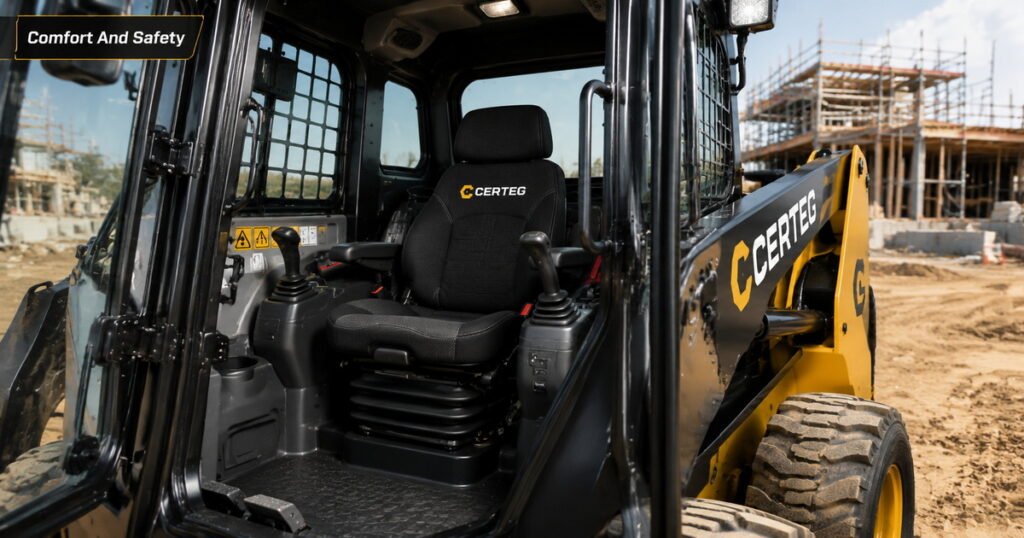
Operator Comfort and Visibility
Contractors and fleet managers now place greater emphasis on operator comfort, recognizing that fatigue and poor visibility can lead to reduced productivity and higher risk.
Modern skid steer cabs often include:
– Sealed and pressurized environments to reduce dust and noise
– Improved heating and cooling for extreme climates
– Suspension seats and ergonomic control layouts
– Larger windows, slimmer pillars, and auxiliary lighting for better visibility
Historic innovations such as reinforced protective structures and safer boom lockouts have evolved into more comfortable and user-friendly cabins, which in turn support longer, safer working shifts.
Smart Attachments and Automatic Functions
Another trend is the use of smarter attachments and automated functions. Systems can detect specific tools and adjust control settings or display information that helps operators work more accurately.
Typical improvements include:
– Automatic recognition of certain attachments and associated parameters
– Onboard displays showing machine tilt and grade information
– Simplified control logic that reduces the learning curve for new operators
Certeg takes these trends into account when designing control systems and hydraulic circuits, aiming to ensure that its machines can work efficiently with a wide range of tools from different suppliers.
Safety and Quality as Long-Term Differentiators
In compact equipment, safety and quality are not marketing slogans—they are essential for long-term success. Manufacturers that systematically reduce injuries, defects, and breakdowns earn the trust of contractors and rental fleets.
Some of the practices that contribute to this reputation include:
– Structured quality management systems that monitor every step of production
– Clear safety signage and multilingual manuals for international markets
– Standardized testing procedures for protective structures and critical components
Certeg’s own approach emphasizes stable processes, traceable components, and continuous improvement in assembly and testing. This is especially important when machines are exported to regions where service infrastructure may be uneven and where customers depend on reliable equipment from day one.
Practical Checklist for Selecting Your Next Skid Steer Loader
Based on experience with customers in different regions, the following checklist can help you or your team specify a machine more effectively.
1. Define top-priority tasks
– List up to five main applications your machine must handle.
– Separate seasonal tasks (such as snow removal) from year-round tasks.
2. List required attachments
– Identify which tools you already own and which you plan to add.
– Note the approximate flow and pressure requirements where known.
3. Assess ground and site conditions
– Describe your typical ground conditions and weather patterns.
– Decide whether low ground pressure or higher road speed matters more.
4. Set performance and capacity targets
– Estimate typical load sizes and maximum lift heights required.
– Consider whether you need higher breakout forces for dense materials.
5. Consider operator and maintenance needs
– Decide whether a closed cab is necessary for climate or noise reasons.
– Check that local service resources and spare parts will be available.
6. Align machine choice with future plans
– Think about upcoming projects or expansions that might change your requirements.
– Ensure that your chosen platform can be upgraded with additional attachments or options later.
This process allows decision-makers to move from a general idea—”we need a new skid steer”—to a detailed specification that suppliers and manufacturers can respond to precisely.
Building Stronger Fleets with the Right Skid Steer
Skid steer loaders continue to play a central role in modern construction and industrial projects. Their compact size, rich attachment ecosystem, and relatively low ownership costs make them indispensable for many companies. The choice between tracked and wheeled models depends on terrain, climate, and usage patterns, and should be made carefully to avoid unnecessary costs or limitations.
As a manufacturer, Certeg focuses on aligning machine design with real job conditions, integrating practical technology, and maintaining consistent quality and safety standards. By combining experience from different regions with a flexible product range, Certeg helps contractors, rental companies, and industrial clients build stronger, more productive fleets.
Frequently Asked Questions
1. What are the main advantages of a tracked skid steer?
A tracked skid steer offers lower ground pressure, better traction on soft or uneven ground, and improved performance in muddy, sandy, or snowy conditions. It is often chosen for land clearing, grading, and slope work where tires might sink or spin.
2. When is a wheeled skid steer the better option?
A wheeled skid steer is usually preferred on firm, paved, or compacted surfaces, especially where machines travel frequently between different areas on the same site. It can offer higher travel speeds and lower undercarriage maintenance costs, making it suitable for general construction and yard work.
3. How important are attachments when choosing a skid steer?
Attachments are critical because they define what the machine can actually do on site. Buyers should evaluate current and future tools, check hydraulic requirements, and ensure compatibility with the chosen skid steer platform to avoid limitations later.
4. What role do comfort and visibility play in productivity?
Comfort and visibility directly influence operator performance. A comfortable cab with good climate control, ergonomic controls, and clear sightlines reduces fatigue, supports longer shifts, and lowers the risk of accidents, especially in congested or complex job sites.
5. How can a manufacturer support long-term reliability?
Manufacturers support reliability through structured quality processes, robust component selection, clear maintenance instructions, and consistent testing. When combined with proper care by owners and operators, these practices help machines deliver stable performance over many years.
References
1. Compact Equipment – “New Holland Construction Manufactures its 250,000th Skid Steer Loader”
2. Grand View Research – “Skid Steer Loaders Market Size & Share Report, 2024–2030”
https://www.grandviewresearch.com/horizon/statistics/loader-market/type/skid-steer-loaders/global
3. Grand View Research – “Skid Steer Loaders Market Size To Reach $12.56Bn By 2030”
https://www.grandviewresearch.com/press-release/global-skid-steer-loaders-market
4. Construction Equipment – “4 Skid Steer Tech Trends”
5. The Engineering Projects – “The Latest Technology Transforming Skid Steers”
https://www.theengineeringprojects.com/2025/10/the-latest-technology-transforming-skid-steers.html
6. WebFX – “SEO Strategies for Heavy Equipment Companies”
https://www.webfx.com/industries/heavy-equipment/heavy-equipment/seo
7. Gushwork AI – “Complete Guide to SEO for Heavy Equipment Businesses”
https://www.gushwork.ai/feeds/blog/seo-heavy-construction-equipment-business
Hot Tags: Skid Steer Loader, Manufacturers, Customized, Custom, Suppliers, Buy, Cheap, Quality, Advanced, Durable, in Stock, Made in China, Price, Quotation