
Certeg Skid Steer Loaders: A Practical Buyer’s Guide For Global Contractors
Content Menu
● Understanding Skid Steer Loaders
● Track vs Wheel: Matching Undercarriage to Ground Conditions
>> When a Track Skid Steer Makes Sense
>> When a Wheel Skid Steer Is the Better Option
● Using Well‑Known Spec Ranges as a Benchmark
● Radial Lift vs Vertical Lift: Choosing the Right Linkage
● Power, Hydraulics, and Attachment Performance
>> Engine Output and Machine Size
>> Hydraulic Flow and Pressure
● Operator Comfort, Safety, and Protection Systems
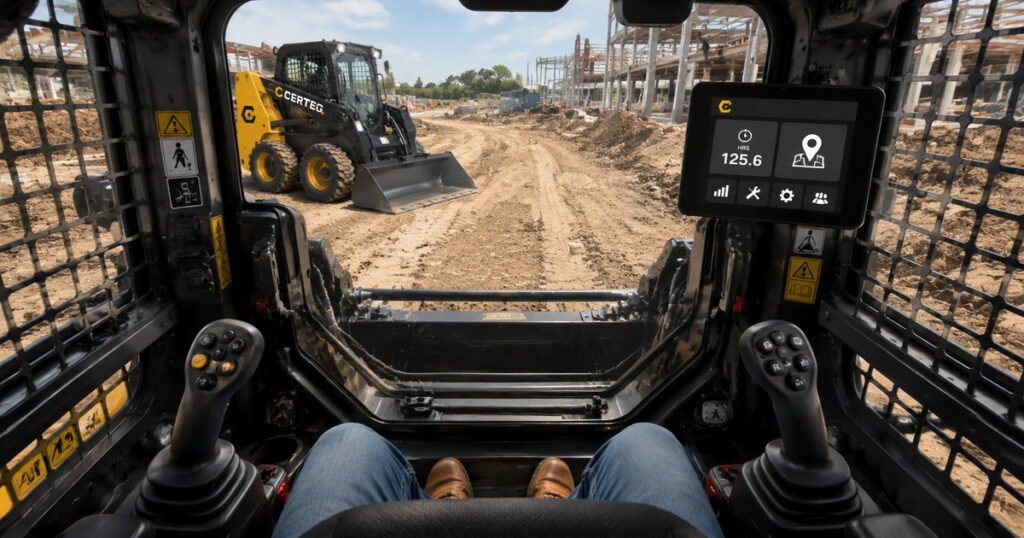
>> Cabin Comfort and Control Layout
>> ROPS, FOPS, and Structural Protection
● What Contractors Notice in Daily Use
● A Practical Checklist for Selecting a Skid Steer Loader
● Serving Global Buyers and Diverse Project Conditions
● Digital Fleet Management and Data‑Driven Maintenance
● Mixed Fleet in an Urban Project
● Final Thoughts on Choosing the Right Skid Steer Loader
>> 1. What is the ideal size of a skid steer loader for urban construction projects?
>> 2. Should I choose a radial-lift or vertical-lift skid steer for truck loading?
>> 3. How important are high-flow hydraulics for attachments?
>> 4. What safety features should I prioritize in a skid steer loader?
>> 5. How does telematics help manage a fleet of skid steers?
Running construction, mining, or agricultural projects today means working under constant pressure to finish jobs faster, safer, and more profitably. Skid steer loaders sit at the heart of many of these operations because they deliver compact size, strong power, and the flexibility to handle dozens of tasks with a single machine.
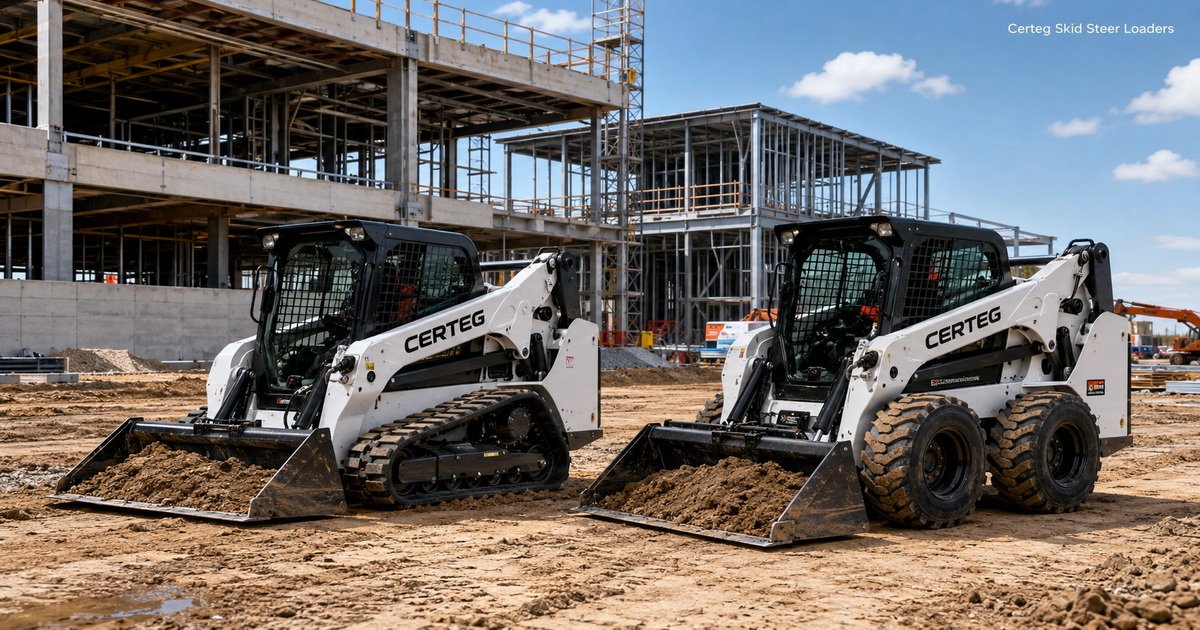
Certeg focuses on designing and building both track and wheel skid steer loaders that meet the diverse conditions found on job sites around the world. This guide explains the key decisions buyers need to make, how different configurations influence productivity, and what to look for when comparing models in the same performance class.
Understanding Skid Steer Loaders
A skid steer loader is a compact machine with a rigid frame, a pair of lift arms, and a wide variety of front‑mounted attachments. It can turn within a tight radius by skidding its wheels or tracks, which makes it especially useful in confined or cluttered job sites.
Because of their high power relative to size, skid steers handle work that would be difficult for larger machines to perform in narrow streets, small yards, or inside industrial plants. They are commonly used for loading trucks, grading, trench backfilling, site cleanup, material handling, snow removal, and light demolition.
Track vs Wheel: Matching Undercarriage to Ground Conditions
One of the first decisions buyers face is choosing between a track skid steer loader and a wheel skid steer loader. Both types can be highly productive, but they excel in different environments.
When a Track Skid Steer Makes Sense
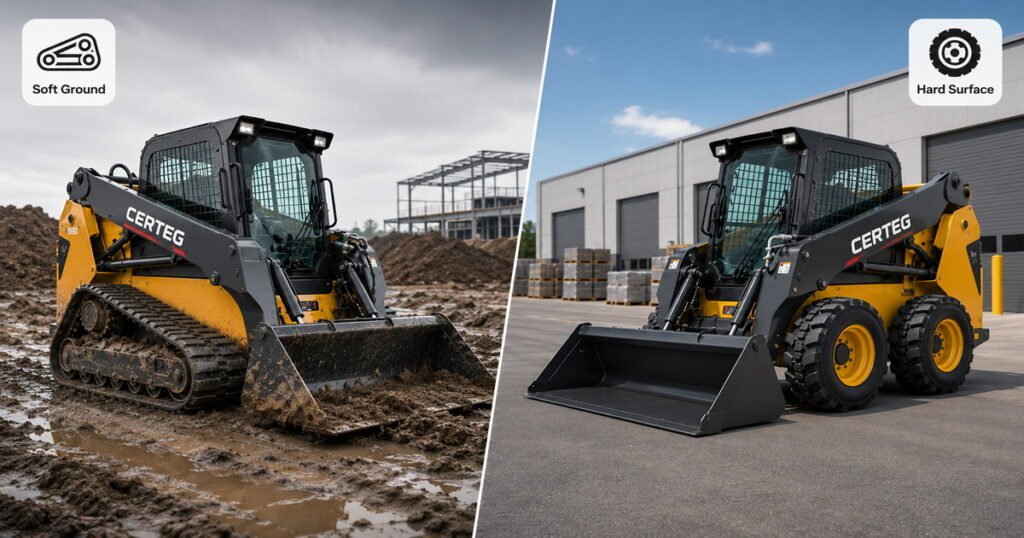
Track skid steers, often referred to as compact track loaders, use rubber tracks instead of wheels. This design spreads the machine’s weight over a larger surface area, which reduces ground pressure and improves traction on soft or uneven terrain.
Track models are typically the better choice when:
– Job sites are muddy, sandy, snowy, or frequently wet
– The ground surface is unfinished, loose, or unstable
– You need to minimize damage to turf or soil
– Work involves operating on slopes or in off‑road conditions
On these sites, tracks help keep the machine moving, reduce wheel spin, and limit rutting. They also provide a smoother ride over rough ground, which can improve comfort and reduce operator fatigue.
When a Wheel Skid Steer Is the Better Option
Wheel skid steer loaders use pneumatic or solid tires and are often preferred where ground conditions are firm and access roads are paved or compacted. They are usually faster when traveling between work areas on concrete or asphalt and can be more economical to maintain in these conditions.
Wheel models are typically the better choice when:
– Most work takes place on roads, concrete yards, or compacted surfaces
– Travel distance within the site is relatively long
– Tire replacement costs are lower than track replacement costs in your region
– The machine is used for frequent loading and unloading in logistics or industrial environments
For many urban contractors, a wheel skid steer offers the best balance of speed, maneuverability, and operating cost.
Using Well‑Known Spec Ranges as a Benchmark
Across the industry, manufacturers offer skid steer loaders in several size bands to cover different applications. Smaller models tend to focus on maneuverability and ease of transport, while larger machines offer higher capacity, more power, and additional features.
In the compact to mid‑size range, many machines deliver rated operating capacities starting around one thousand pounds and extending into the mid‑one‑thousand‑pound segment. Engine power in this class often ranges from just over thirty horsepower to the high sixties, providing enough output to handle typical construction and landscaping tasks.
At the top of the range, large skid steer loaders can achieve operating weights above ten thousand pounds and lift paths approaching twelve feet. These machines are designed for heavy‑duty work such as high‑volume truck loading, bulk material handling, and demanding industrial assignments.
Certeg positions its models to align with these familiar performance bands so that buyers can easily understand where each machine fits in terms of capacity, power, and size when planning a fleet or replacing existing units.
Radial Lift vs Vertical Lift: Choosing the Right Linkage
Another core decision is selecting between radial‑lift and vertical‑lift skid steer loaders. Although both can handle many of the same tasks, their lift paths are optimized for different applications.
Radial‑Lift Loaders
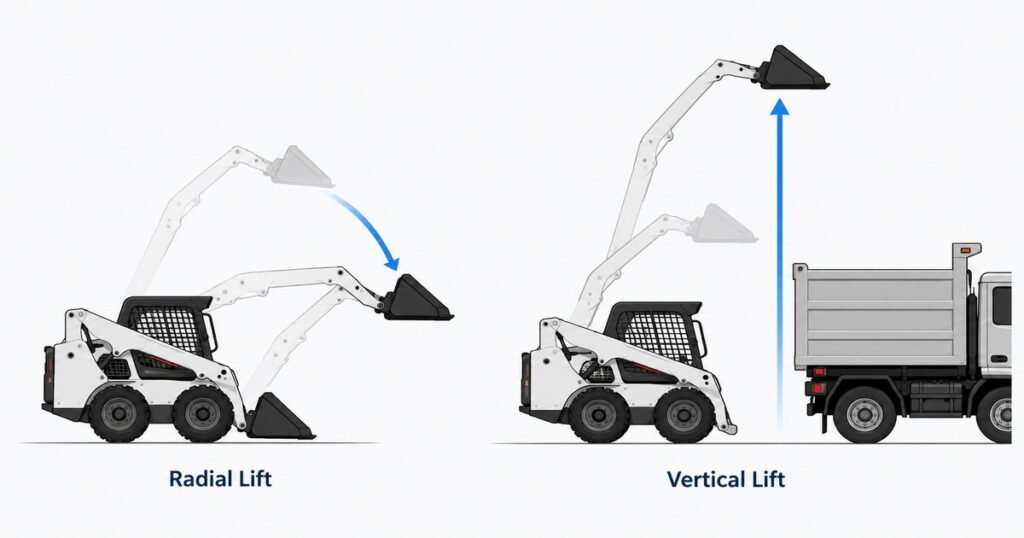
Radial‑lift machines follow a more curved lift path. They typically provide strong breakout force in the lower to mid‑range of the lift arc, which makes them especially effective for earthmoving and general construction work.
Radial‑lift loaders are often preferred when:
– The primary jobs involve digging, grading, trenching, or backfilling
– Most material is moved at or slightly above ground level
– The loader is used frequently with buckets, grading blades, or landscape attachments
Because the linkage is relatively straightforward, radial designs can be easier to maintain and cost‑effective to purchase.
Vertical‑Lift Loaders
Vertical‑lift machines use a more complex linkage that keeps the bucket or attachment closer to the machine as it rises. The result is a taller, more consistent lift path that delivers higher reach and better dump clearance.
Vertical‑lift loaders are often chosen when:
– The machine frequently loads trucks, hoppers, or bins with high side walls
– Pallet handling and material stacking are common tasks
– The job requires lifting heavy loads to greater heights while maintaining stability
On busy construction or industrial sites where truck loading is a daily core task, vertical lift can shorten cycle times and improve overall throughput.
Power, Hydraulics, and Attachment Performance
Skid steer loaders often serve as power units for a wide range of attachments. This makes engine output and hydraulic capacity critical factors in real productivity, not just marketing numbers.
Engine Output and Machine Size
Across typical product lines, small and mid‑size skid steers are equipped with engines in the thirty to seventy horsepower range, while large machines may exceed this. The key is not just peak horsepower, but how torque is delivered and how the powertrain supports heavy loads and high‑duty cycles.
When choosing a machine, consider:
– The heaviest material and loads you plan to handle
– The combination of lift height and load weight you need
– The length of typical duty cycles and shift patterns
A loader that is slightly undersized for your heaviest use case may work in the short term but will run near its limits, affecting longevity and operator experience.
Hydraulic Flow and Pressure
Hydraulic performance can be even more important than raw engine power. Many modern skid steers offer both standard‑flow and high‑flow auxiliary hydraulic circuits, and some provide additional pressure‑boosting features.
High‑flow systems are particularly important for attachments such as:
– Cold planers and milling heads
– Mulching heads and forestry tools
– Larger snow blowers and brooms
– Heavy‑duty rock saws and trenchers
Before selecting a loader, list all attachments you expect to use, gather their required flow and pressure specifications, and ensure your chosen machine meets or exceeds these needs. Matching the hydraulic package to these requirements prevents bogging, frequent stalling, and excessive wear.
Operator Comfort, Safety, and Protection Systems
Modern skid steer loaders are designed with operator well‑being and safety as central priorities. Comfortable cabins and robust protection systems can have a direct effect on productivity and incident rates.
Cabin Comfort and Control Layout
Many manufacturers now provide spacious cabins with:
– Adjustable suspension seats to reduce vibration and fatigue
– Intuitive control layouts with either joystick or hand‑and‑foot options
– Low noise levels and good sealing to limit dust and fumes
These factors matter when operators spend long hours in the machine. Comfortable environments help maintain focus, reduce physical strain, and keep productivity steady throughout the shift.
ROPS, FOPS, and Structural Protection
Roll‑over protective structures and falling‑object protective structures are crucial safety components in many work environments. In applications such as construction, demolition, mining, or bulk handling, machines may operate beneath overhead hazards or on unstable ground.
When specifying a skid steer loader, it is important to:
– Ensure the protection level matches the risk profile of your operation
– Consider additional guarding packages for glass, lights, and vulnerable components
– Evaluate visibility from the cabin to both the attachment and surroundings
An appropriate protection package, combined with clear sightlines, contributes significantly to operator safety and confidence.
What Contractors Notice in Daily Use
Operator and contractor feedback often highlights practical aspects that go beyond the spec sheet. Many comments focus on how quickly attachments can be swapped, how stable the machine feels on uneven ground, and how easy it is to perform daily maintenance.
Common points raised in field reports and user discussions include:
– Preference for universal mechanical quick‑attach systems to simplify attachment sharing between brands
– A strong appreciation for hydraulic quick‑attach options in fleets where attachments change multiple times per day
– Positive reactions to machines that offer smooth ride characteristics, secure footing on slopes, and responsive controls
Certeg’s design approach emphasizes quick access to maintenance points, compatibility with widely used attachment interfaces, and balanced weight distribution for stable operation across different site conditions.
A Practical Checklist for Selecting a Skid Steer Loader
To translate technical specifications into a confident purchasing decision, it helps to follow a consistent evaluation process. The following checklist offers a simple, step‑by‑step framework:
1. Define Core Applications
Clarify whether the machine will primarily perform earthmoving, truck loading, pallet handling, snow removal, industrial cleanup, or mixed tasks. Consider the main industries you serve and the seasonal variations in your workload.
2. Assess Ground Conditions
Review the typical surfaces: paved yards, urban streets, compacted gravel, farm fields, forests, mine sites, or ports. If most work occurs on firm surfaces, a wheel loader may be more economical; if soft or uneven ground is common, a track loader often provides better results.
3. Select Lift Path Type
Decide whether radial lift or vertical lift better suits your daily operations. Vertical lift often benefits truck loading and high‑stacking applications, while radial lift is well suited to digging, grading, and general utility work.
4. Determine Capacity and Power Range
Estimate the heaviest loads you need to move, the maximum lift height required, and the typical operating cycle. Select a machine whose rated operating capacity and engine output provide a comfortable margin above those needs.
5. Match Hydraulic Package to Attachments
For each attachment in your current or planned inventory, note its required flow and pressure. Confirm that your chosen loader’s auxiliary hydraulic system, whether standard or high‑flow, can support these tools reliably.
6. Specify Safety and Comfort Features
Identify the level of roll‑over and falling‑object protection required and consider options such as protective guards, lighting packages, and visibility enhancements. Evaluate interior comfort features such as heating, air conditioning, suspension seats, and control layouts.
7. Plan Service and Lifecycle Costs
Consider the availability of parts, local service partners, and the ease of performing daily checks and scheduled maintenance. Compare track and tire replacement cycles, fuel consumption patterns, and potential telematics integration for monitoring usage.
Serving Global Buyers and Diverse Project Conditions
Certeg’s skid steer loaders are designed for use in a wide variety of climates and regulatory environments. International buyers often face unique combinations of standards, logistics constraints, and site conditions, which influence how machines are specified, shipped, and supported.
Key considerations for global projects include:
– Compliance with local emission requirements and machine regulations
– Compatibility with local fuels, lubricants, and maintenance practices
– Transport limitations, including container dimensions and port equipment
– Availability of training for operators and maintenance staff
By aligning its product range with widely recognized performance bands and configurations, Certeg makes it easier for distributors and end users to integrate new machines into existing fleets, even when multiple brands are in use.
Digital Fleet Management and Data‑Driven Maintenance
A growing trend across equipment fleets is the use of digital tools to monitor and manage machines. Skid steer loaders are increasingly being integrated into these systems, providing better insight into how they are used and where efficiency gains can be found.
Telematics and fleet platforms can:
– Track machine hours, idle time, and utilization rates
– Monitor fuel consumption and identify patterns of over‑idling
– Provide alerts for impending maintenance based on actual use rather than simple calendar intervals
– Help locate machines on large or dispersed job sites
When combined with good maintenance practices, these tools reduce unexpected downtime, extend machine life, and provide data that supports better planning for future purchases or fleet balancing.
Mixed Fleet in an Urban Project
Consider a contractor managing multiple sites in a densely populated city. The company might operate both track and wheel skid steer loaders to handle different stages of the same project.
On a paved street job, a wheel skid steer with vertical lift and high‑flow hydraulics could be used as the main machine for loading trucks and handling pallets of materials. Its travel speed and tire configuration make it practical for moving between sections of the site and working on finished surfaces.
In a nearby lot where ground conditions are muddy or uneven, a track skid steer with radial lift might handle excavation, backfilling, and grading tasks. Thanks to its lower ground pressure and higher traction, it can work steadily in conditions that would slow or immobilize a wheeled machine.
By treating each machine as part of a coordinated system, the contractor can assign loaders to the tasks they handle best, share attachments through compatible quick‑attach systems, and use telematics to monitor utilization across the fleet.
Final Thoughts on Choosing the Right Skid Steer Loader
Selecting the right skid steer loader is less about chasing the largest numbers on a spec sheet and more about aligning a machine with the actual work it will perform every day. Ground conditions, lift path needs, attachment requirements, safety expectations, and lifecycle costs all influence how a loader will perform over its service life.
By understanding these factors and using a structured evaluation process, contractors and industrial operators can build fleets that are not only productive but also reliable, safe, and adaptable to changing project demands. Certeg’s product range is designed with this holistic view in mind, ensuring that both track and wheel skid steer loaders can be configured to match a wide variety of global job sites and business requirements.
Frequently Asked Questions
1. What is the ideal size of a skid steer loader for urban construction projects?
Most urban contractors prefer small to medium-frame skid steers with rated operating capacities around 1,050–1,650 lb, similar to Mustang’s 1050R to 1650R range, because they balance maneuverability with sufficient power for multi story and street work.
2. Should I choose a radial-lift or vertical-lift skid steer for truck loading?
For frequent truck loading and pallet handling, a vertical-lift skid steer is usually better because it offers higher lift height and maintains a stable bucket position over the truck side walls. Radial-lift machines are more suitable if your main focus is digging and grading.
3. How important are high-flow hydraulics for attachments?
High flow hydraulics are critical if you intend to run power-hungry attachments like cold planers, mulchers, and heavy brooms; without adequate flow, attachments can underperform or stall, reducing productivity and increasing wear. For light-duty buckets and forks, standard flow is usually sufficient.
4. What safety features should I prioritize in a skid steer loader?
At a minimum, look for Level 2 ROPS and appropriate FOPS protection, especially in environments with overhead hazards such as demolition, mining, or ship trimming. Additional comfort and visibility features (suspension seats, HVAC, clear sightlines) also contribute to safety by reducing operator fatigue and errors.
5. How does telematics help manage a fleet of skid steers?
Telematics gives you real-time visibility into machine hours, location, fuel use, and fault codes, enabling proactive maintenance and reducing unscheduled downtime. Over time, this data helps you optimize fleet size, deployment patterns, and replacement schedules for better total cost of ownership.
References
1. WebFX – “Digital Marketing for Skid Steer Attachment Companies.”
2. Gushwork – “Complete Guide to SEO for Heavy Equipment Businesses.”
https://www.gushwork.ai/feeds/blog/seo-heavy-construction-equipment-business
3. Windmill Strategy – “SEO for Industrial Companies: An SEO/Content Creation Guide.”
https://www.windmillstrategy.com/seo-for-industrial-companies-comprehensive-guide
5. HawkSEM – “SEO for Manufacturing Companies: A Step-By-Step Guide.”
https://hawksem.com/blog/seo-for-manufacturers-and-industrial
6. TSR Digital – “SEO Strategies for Heavy Equipment Manufacturers.”
https://tsrdigital.in/seo/seo-strategies-for-manufacturers
Hot Tags: Skid Steer Loader, Manufacturers, Customized, Custom, Suppliers, Buy, Cheap, Quality, Advanced, Durable, in Stock, Made in China, Price, Quotation