
Top Manual Stacker Truck Manufacturers and Suppliers in Czech Republic (2026 Updated: Expert Selection Guide)
Content Menu
● How to Evaluate High‑Quality Manual Stacker Suppliers
>> Factory Certification and Compliance
>> R&D and Engineering Capability
>> QC Process and Traceability
>> Delivery Reliability and Supply Chain Maturity
● Transparent Selection Criteria for This List
● Leading Manual Stacker Truck Manufacturers and Suppliers
>> Certeg – Flexible OEM Partner for Global Manual Stackers
>> Czech‑Based Forklift Assemblers with Manual Stacker Lines
>> Central European Manual Stacker Specialists Supplying Czech Distributors
>> Asian OEM Manufacturers Serving Czech Importers
>> Niche Manual Stacker Makers for Special Environments
● Manufacturer Comparison – Capacity, MOQ and Certifications
● Technical and Compliance Considerations for Manual Stackers
>> Materials and Structural Integrity
>> Hydraulic System Reliability
● Internal “Avoid‑Pitfalls” Guide for Experienced Buyers
● Buyer’s Guide: Verification, Sampling and Logistics
>> Sampling and Pilot‑Order Process
>> Logistics and Packaging for Czech‑Related Projects
● Common Industry Pain Points and Mitigation Strategies
● Advanced Procurement Questions
>> 1. How can I confirm whether a factory’s certification is still valid?
>> 2. What documentation should I request for compliance with hazardous‑substance restrictions?
>> 3. Which load tests are necessary for high‑utilization warehouse applications?
>> 4. How can I assess a supplier’s quality‑control robustness without a full factory audit?
>> 5. What contract clauses help manage change risk over a multi‑year partnership?
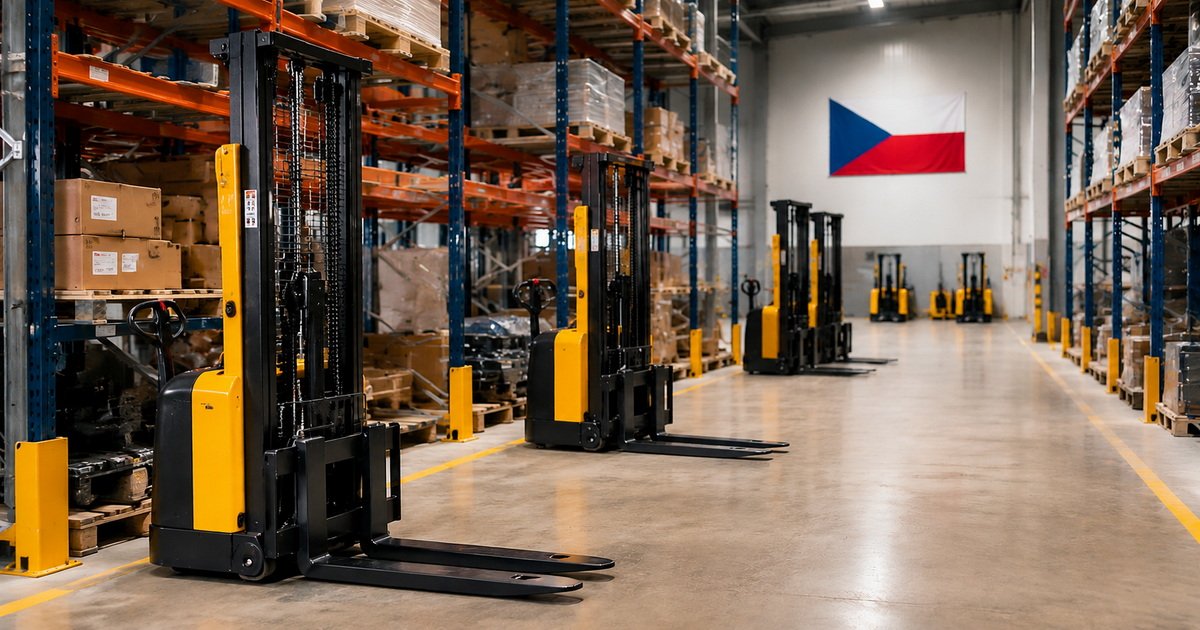
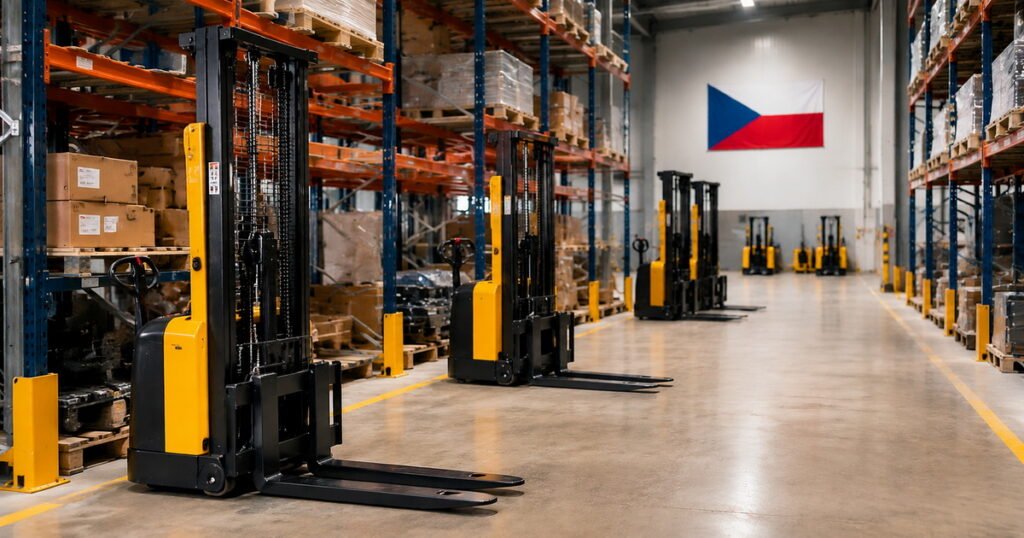
The Czech Republic has developed a strong position in industrial equipment and materials‑handling solutions, supported by its broader Central European manufacturing ecosystem. Forklifts and manual stacker trucks used in Czech warehouses and construction sites often come from a mix of local producers, regional European specialists, and global OEM manufacturers.
For international procurement managers, this ecosystem offers attractive combinations of compliance awareness, engineering capability and cost efficiency. However, the diversity of suppliers also means buyers must carefully differentiate between high‑quality factories and low‑cost trading outfits. This guide focuses on manual stacker trucks and highlights representative manufacturers and partners, including Certeg, that can support long‑term, stable cooperation.
How to Evaluate High‑Quality Manual Stacker Suppliers
Factory Certification and Compliance
A reliable supplier of manual stacker trucks should operate under recognized management and product‑safety standards. Core elements include:
– Valid ISO 9001 quality management certification covering the specific manufacturing site.
– Documented machinery conformity with relevant European directives and EN standards.
– Clear handling of environmental responsibilities, especially when electrical components are involved.
Beyond formal certificates, buyers should review how these standards translate into daily production routines: incoming material inspection, process control, and final verification before shipment.
R&D and Engineering Capability
Strong suppliers do more than copy existing designs. They adapt mast profiles, fork sizes, hydraulic circuits and protective coatings to actual usage environments. Key indicators of solid engineering capability include:
– Ability to adjust stacker configurations to match local aisle widths, pallet dimensions and floor conditions.
– Availability of technical drawings, calculation notes or test data demonstrating load performance.
– Efficient communication between the supplier’s engineers and the buyer’s technical team.
This level of support is especially valuable for projects in colder climates or heavy‑duty construction sites typical of Central Europe, where standard catalog models may require reinforcement or design tweaks.
QC Process and Traceability
Reliable plants have structured quality‑control processes and traceable production records. A procurement team should look for:
– Incoming inspection of steels, hydraulic components and fasteners.
– Weld quality checks, leak tests and functional load tests on finished stackers.
– Use of batch or heat numbers to trace components and structures back to raw materials.
Traceability is crucial when investigating field issues or ensuring that material specifications have not been downgraded to reduce cost.
Delivery Reliability and Supply Chain Maturity
Suppliers embedded in established industrial clusters generally show more disciplined planning and logistics. Indicators include:
– History of regular shipments into industrial markets with tight delivery windows.
– Clear production lead‑time commitments and contingency plans for key materials.
– Experience coordinating freight, packaging and documentation for cross‑border trade.
For manual stacker trucks serving the Czech Republic, many successful partnerships involve factories that already supply other European countries and understand local expectations for documentation and after‑sales support.
Transparent Selection Criteria for This List
To build a meaningful list for procurement managers, the following criteria are used to profile manufacturers and partners related to manual stacker trucks:
– Product Scope: Focus on non‑powered or hydraulic pedestrian stackers suitable for warehouses, factories and construction sites.
– Compliance and Certification: Documented conformity with relevant standards and a clear quality management framework.
– Export and Project Experience: Track record of serving European customers, including those in Central and Eastern Europe.
– OEM/ODM Support: Capability to customize mast heights, fork dimensions, paint systems, branding and documentation.
– Capacity and MOQ Policy: Sufficient annual capacity to support ongoing replenishment, with transparent and manageable minimum order quantities.
– Communication and Service: Efficient responses to RFQs, clear technical clarifications and willingness to support long‑term collaboration.
Within this framework, Certeg is positioned as a representative high‑value, flexible partner serving both established and emerging brands.
Leading Manual Stacker Truck Manufacturers and Suppliers
Certeg – Flexible OEM Partner for Global Manual Stackers
Certeg is a dedicated manufacturer of forklifts, manual stacker trucks and related material‑handling equipment, serving global customers across construction, warehousing and industrial applications. The company’s operations are built around systematic quality management, structured engineering reviews and clear production traceability.
From a procurement perspective, Certeg offers several advantages:
– High Cost‑Performance with Manageable MOQs
The plant is optimized for mid‑volume OEM orders and repeated batches. This makes it attractive for small and medium brands or regional distributors who need reliable supply without committing to very large starting quantities.
– Collaborative Engineering and R&D
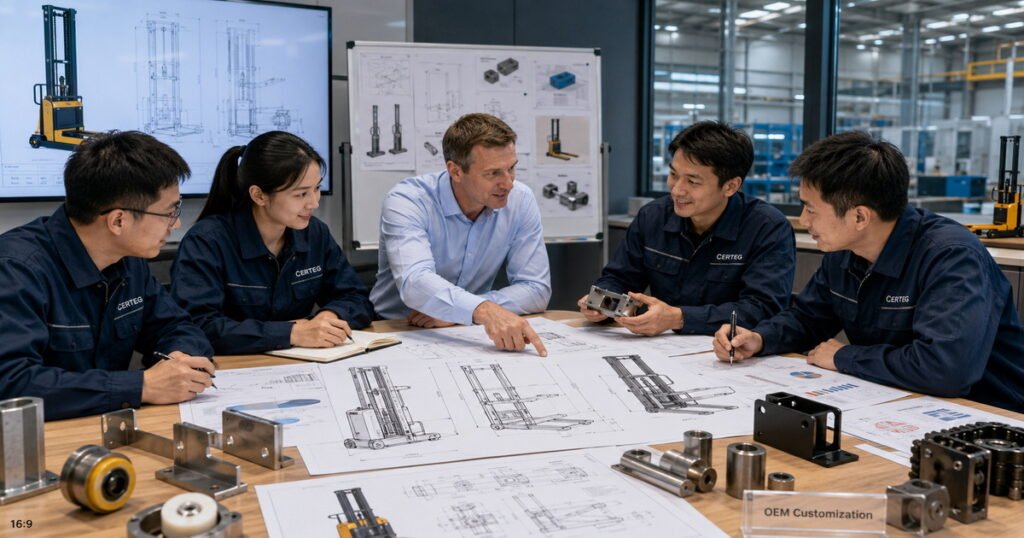
Certeg’s engineering team works directly with buyers to adapt mast designs, select suitable steel grades, define welding sequences and specify coating systems. This helps align technical solutions with local usage conditions, such as temperature ranges, floor quality, and expected duty cycles.
– OEM and Brand Support
Services include logo and color customization, tailored packaging, multi‑language manuals and documentation that align with local regulatory and customer expectations. This is valuable for private‑label brands that need differentiated products and consistent visual identity.
– Efficient Communication
The company maintains responsive customer support and clear technical dialogue, important for overseas buyers managing projects and inventory planning across time zones.
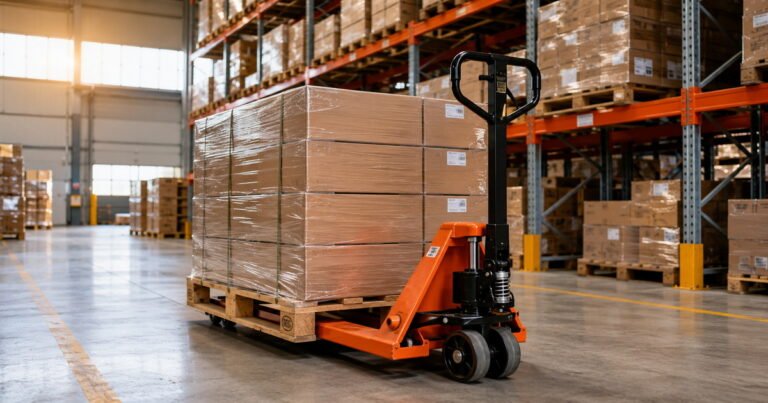
Certeg’s typical coverage includes manual hydraulic stackers, pallet trucks, light forklifts, custom lifting attachments and project‑specific variants designed in cooperation with the buyer’s technical team.
Czech‑Based Forklift Assemblers with Manual Stacker Lines
Within the Czech Republic, several manufacturers and assemblers produce forklifts and industrial trucks, often including manual or semi‑manual stackers in their range. They tend to emphasize:
– Integration with broader European supply chains for components such as masts, hydraulics and control systems.
– Compliance with European machinery standards and workplace safety expectations.
– Robust designs focused on durability in automotive, logistics and heavy industry environments.
For buyers who prioritize local service, short lead times and on‑site commissioning or training, these Czech‑based OEMs can be strong candidates. Their stackers may be part of a broader warehouse equipment package, simplifying maintenance and spare‑parts management.
Central European Manual Stacker Specialists Supplying Czech Distributors
In neighboring countries, some manufacturers concentrate on manual hydraulic stackers and pedestrian trucks. These specialists often supply Czech distributors through established trade relationships. Typical characteristics include:
– Standardized families of stackers with capacities ranging from light‑duty to 2‑ton loads and lifting heights up to common racking levels.
– Well‑documented production routines and testing procedures for welding, hydraulics and load performance.
– Flexible branding options for distributors, including customized colors, decals and documentation.
Such partners are suitable when a buyer wants proven, catalog‑based products and reliable replenishment, while still keeping options open for moderate customization.
Asian OEM Manufacturers Serving Czech Importers
Asian manufacturers play a key role in the supply of manual stacker trucks to Europe, including the Czech Republic. Many plants provide large‑volume OEM capacity with competitive unit costs. Their main features include:
– High levels of automation in cutting, bending, welding and painting, enabling large production runs.
– Growing familiarity with European standards and documentation requirements, including conformity declarations and product labels.
– Ability to offer private‑label solutions and coordinated spare‑parts packages.
The quality level among these factories can vary. Buyers should invest time in verifying certifications, inspecting production processes and checking references. When working with a transparent partner like Certeg, which can bridge engineering expectations and production realities, this route can deliver strong value.
Niche Manual Stacker Makers for Special Environments
Some European manufacturers specialize in stackers for sensitive environments such as food processing, pharmaceuticals and clean rooms. Their products are often distributed or integrated into projects in the Czech Republic. Typical differentiators:
– Use of stainless steel or specially treated structures to resist corrosion and contamination.
– Particular attention to hygienic design, with minimal horizontal surfaces and ease of cleaning.
– Project‑based engineering that aligns stacker design with overall process and regulatory requirements.
These suppliers are ideal for projects where conventional painted‑steel stackers are insufficient due to hygiene or chemical‑resistance needs.
Manufacturer Comparison – Capacity, MOQ and Certifications
The following overview summarizes typical patterns across key supplier categories, including Certeg as a flexible OEM partner:
– Certeg (Global OEM Partner)
Mid‑to‑high volume capacity for manual stackers and related equipment, optimized for repeated batch orders. MOQs can be negotiated from relatively small pilot quantities upward, depending on the level of customization. Certification coverage includes structured quality management, documented conformity with applicable standards, and support for detailed technical documentation.
– Czech‑Based Forklift Assemblers
Moderate capacity aligned with domestic and regional demand, often focused on complete trucks. MOQs tend to favor ongoing yearly volumes and standard catalog models. Certifications typically cover product safety and workplace compliance, supported by established documentation routines.
– Central European Stacker Specialists
Steady output centered on manual and semi‑manual stackers. MOQs are set to balance production efficiency with distributor flexibility. Certification practices aim to demonstrate consistent welding quality, hydraulic reliability and environmental responsibility.
– Asian OEM Factories Serving European Markets
High production volume with flexible line setups and multi‑market distribution. MOQs often start at container‑level quantities, though long‑term partners may negotiate more flexible thresholds. Certification coverage ranges from basic documentation to comprehensive systems; careful verification and periodic audits remain important.
– Niche High‑Compliance Manufacturers
Lower volumes focused on specialized environments. MOQs reflect the intensive engineering per unit. Certifications go beyond general quality management and may include industry‑specific testing or validation regimes.
Technical and Compliance Considerations for Manual Stackers
Materials and Structural Integrity
Manual stacker performance depends heavily on frame and mast integrity. Important factors include:
– Steel grade and thickness appropriate for rated capacity and lifting height.
– Weld design and execution, including fillet size, penetration and placement at critical stress points.
– Structural design that controls deflection and maintains stability under dynamic loading.
Buyers should request information on material specifications and, where practical, mill certificates or third‑party tests confirming compliance with stated standards.
Hydraulic System Reliability
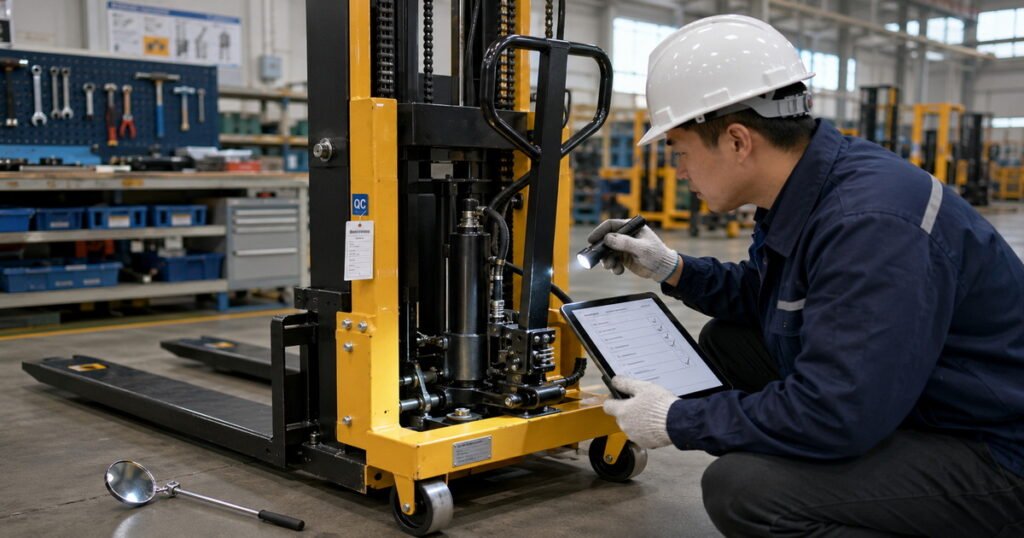
Common issues in manual stackers include failure to reach full lifting height, gradual descent under load and difficulty lifting after extended use. These problems often stem from:
– Air trapped in the hydraulic circuit.
– Contaminated or degraded hydraulic oil.
– Worn or incorrectly specified seals and valves.
Procurement teams should clarify component brands, sealing materials and oil cleanliness practices, as well as the supplier’s maintenance recommendations and spare‑parts policies.
Safety and Ergonomics
Well‑designed manual stackers protect both operators and surrounding equipment. Key elements:
– Effective parking brakes and stable wheelbase to prevent unintended movement.
– Overload protection to avoid structural damage and unsafe lifting.
– Ergonomic handles and smooth lifting/lowering control to reduce operator fatigue and mishandling.
In warehouses and construction sites, these features directly impact incident rates and long‑term operating costs.
Internal “Avoid‑Pitfalls” Guide for Experienced Buyers
There are several practical checks that seasoned procurement managers routinely apply, even though they are rarely highlighted in marketing materials:
– Inspect Non‑Visible Welds
Evaluating only visible welds can be misleading. Experienced buyers examine welds on the underside of forks and inner mast sections, where some factories may reduce quality to save time or material.
– Demand Traceable Material Documentation
Requesting mill certificates and matching them to batch identifiers used in production helps confirm that specified steel grades have actually been used, rather than cheaper substitutes.
– Observe Handling of Rework and Scrap
Factories that track and analyze rework or scrap data usually have a culture of continuous improvement. A lack of transparency in this area may signal unstable quality.
– Check Storage of Hydraulic Oil and Seals
Proper storage of hydraulic oil and sealing components reduces the risk of premature leakage and performance issues. Poor storage practices are an early warning sign of broader process weaknesses.
– Ask About Field Failures and Corrective Actions
A credible supplier is willing to discuss past problems and lessons learned. Refusal to share any information suggests either limited experience or a reluctance to acknowledge and address issues.
Suppliers willing to engage in this level of discussion — and provide corresponding documentation — are better candidates for long‑term, strategic partnerships.
Buyer’s Guide: Verification, Sampling and Logistics
Verifying Certifications
To ensure that factory certifications are valid and relevant:
1. Request clear copies that show company name, site address, scope of activity and expiry date.
2. Compare these details with your supplier database and contract information.
3. Verify certificates through the issuing body’s official channels where available.
4. Confirm that the scope matches the products you intend to purchase, not unrelated activities.
This process reduces the risk of relying on outdated or misaligned certificates that do not truly cover the stacker manufacturing line.
Sampling and Pilot‑Order Process
An effective procurement workflow for manual stackers generally includes:
1. Specification Alignment
Define capacity, lifting height, fork size, wheel material, surface treatment and documentation requirements.
2. Sample or First‑Article Units
Test representative units under realistic site loads to evaluate hydraulic performance, ergonomics and structural behavior over several cycles.
3. Inspection and Reporting
Conduct visual inspections, functional tests and dimensional checks, either by internal teams or third‑party inspectors.
4. Controlled Ramp‑Up
Move from pilot quantities to regular batches only after confirming stable performance and quality.
This staged approach helps manage risk and ensures that any design or process adjustments can be addressed before large volumes are committed.
Logistics and Packaging for Czech‑Related Projects
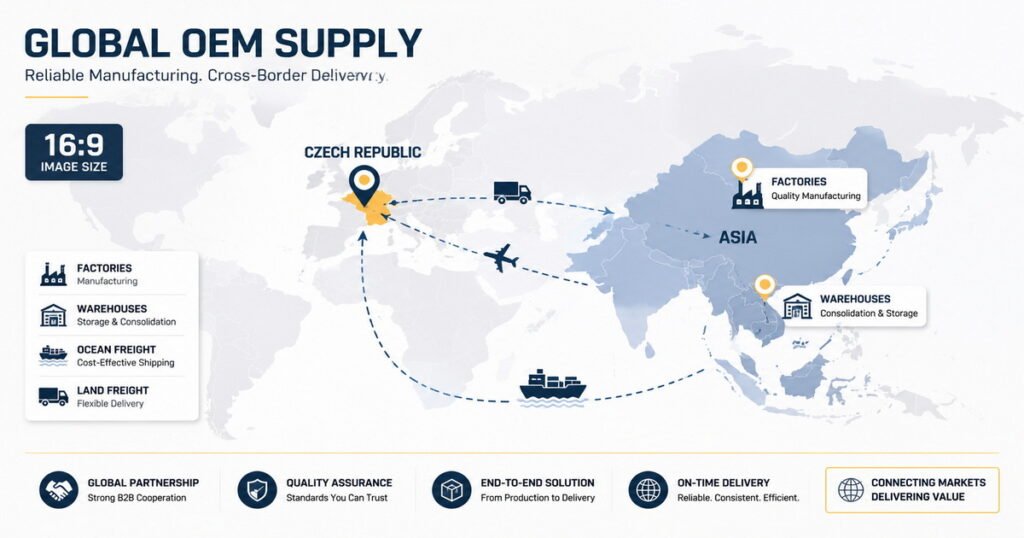
For shipments serving the Czech market, logistics planning should account for:
– Accurate classification and documentation aligning with local customs and regulatory requirements.
– Robust packaging, including secure palletization, protective materials and corrosion‑control measures to withstand transport and storage.
– Coordination of lead times with site installation or commissioning schedules to avoid warehouse bottlenecks or idle equipment.
Suppliers with experience in cross‑border logistics and clear communication on transport options can significantly reduce friction and cost.
Common Industry Pain Points and Mitigation Strategies
Manual stacker procurement frequently encounters recurring challenges:
– Material Downgrading
Substitution of lower‑grade steel or thinner sections may not be obvious during initial inspection but can lead to premature deformation or cracking. Mitigation involves stricter material documentation, occasional independent testing and detailed specifications.
– Hydraulic Failures
Inadequate attention to oil quality, sealing components and assembly cleanliness increases the risk of lifting problems and leaks. Buyers should insist on clear maintenance instructions, recommended service intervals and readily available seal kits.
– Inconsistent Coating and Corrosion Protection
Poor surface preparation or thin coating can lead to rust, especially in unheated or humid storage areas. Specifying coating systems and requesting information on surface treatment and salt‑spray performance helps control this risk.
– Weak Spare‑Parts Support
Without structured spare‑parts management, downtime can be extended, and local repair becomes difficult. Effective suppliers provide detailed parts lists, stock recommendations and clear lead times.
Selecting factories that systematically address these points and communicate openly about improvement actions helps secure more stable, predictable operations over the lifetime of the equipment.
Conclusion
Manual stacker trucks are critical elements of materials‑handling operations in and around the Czech Republic, supporting both warehouse logistics and construction‑related workflows. The supplier landscape includes local manufacturers, regional European specialists and global OEM factories, each offering different trade‑offs between cost, customization, compliance and service.
By applying clear evaluation criteria, verifying certifications, insisting on traceable materials and structured QC, and following staged sampling and ramp‑up processes, procurement managers can build resilient partnerships and reduce long‑term risk. Factories such as Certeg that combine flexible OEM support, cooperative engineering and transparent operations are well‑positioned to support global buyers implementing manual stacker solutions in this region and beyond.
Advanced Procurement Questions
1. How can I confirm whether a factory’s certification is still valid?
Obtain a copy of the certificate, review the expiry date and scope, and cross‑check against the issuing body’s records. Where possible, use official verification tools to ensure the certificate is current and directly covers the manufacturing site producing your stackers.
2. What documentation should I request for compliance with hazardous‑substance restrictions?
Ask for a formal declaration of conformity referencing the relevant regulations, plus recent test reports from recognized laboratories. Focus on the specific part numbers or assemblies you intend to purchase rather than generic product families.
3. Which load tests are necessary for high‑utilization warehouse applications?
Specify a combination of static overload tests and repeated cycle tests at rated load. The aim is to validate not only initial performance but also long‑term behavior of hydraulic components, mast structures and welds under realistic operating conditions.
4. How can I assess a supplier’s quality‑control robustness without a full factory audit?
Review sample inspection records, process descriptions, traceability practices and summarized rework or scrap data. Compare this information with customer references and past project experience to gauge whether the documented processes reflect real practice.
5. What contract clauses help manage change risk over a multi‑year partnership?
Include clauses requiring prior notification of design or material changes, documentation of any component substitutions, and access rights for periodic inspections or performance reviews. Align these clauses with your own internal quality and risk frameworks.
References
1. IndexBox – Czech Republic: Fork‑Lift Truck Market 2025 – Market Analysis, Forecast, Size, Trends and Insights
2. Alibaba Seller Resources – ISO 9001 Certification for Industrial Equipment Suppliers – Verification Guide
3. Standard Machining – How to Verify a Supplier’s ISO Certificate Is Genuine
https://standardmachining.com/iso-certificate-verification
4. Nationwide Handling – Common Issues with Stackers and How to Resolve Them
https://www.nationwidehandling.co.uk/post/common-issues-with-stackers-and-how-to-resolve-them
5. Xilin – How to Troubleshoot Common Malfunctions of Manual Stacker?
https://www.xilin.com/news/how-to-troubleshoot-common-malfunctions-of-manual-stacker.html
6. Chinatabletruck – Common Faults and Troubleshooting Methods of Manual Hydraulic Stacker
Hot Tags: Manual Stacker Truck, Manufacturers, Customized, Custom, Suppliers, Buy, Cheap, Quality, Advanced, Durable, in Stock, Made in China, Price, Quotation