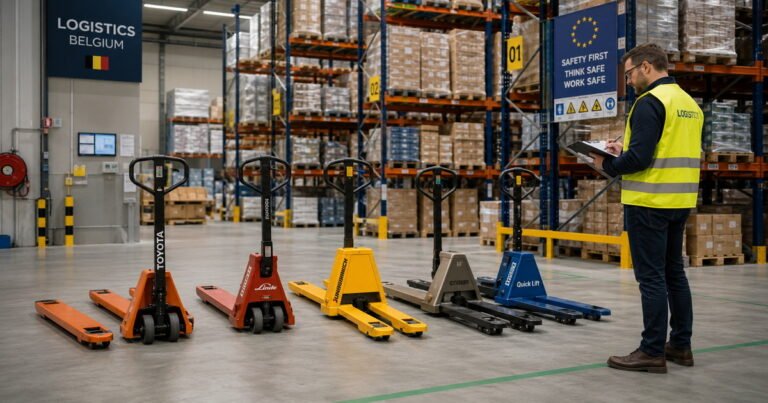

Top Electric Pallet Truck Manufacturers and Suppliers in Hungary (2026 Updated: Expert Selection Guide)
Content Menu
● How We Evaluate Electric Pallet Truck Suppliers
● Hungary’s Position in Forklift and Warehouse Equipment
● Selection Criteria for This Top List
● Top Electric Pallet Truck Manufacturers and Suppliers Serving Hungary
>> 1. Certeg – Flexible OEM Electric Pallet Truck and Forklift Supplier for European Buyers
>> 2. MiMA (Hungary‑Served via mima.hu) – Electric Warehouse Equipment Specialist
>> 3. HELI via AGROPARK (Hungary) – Mainstream Chinese Brand with Local Distribution
>> 4. Global Premium Brands Distributed in Hungary (Jungheinrich, Linde, Toyota)
>> 5. Regional and Online Material Handling Dealers Serving Hungary
● Comparison Table: Representative Suppliers for Hungarian Buyers
● Technical Considerations for Electric Pallet Trucks
>> Materials and Structural Design
>> Drive System, Batteries, and Electronics
>> Compliance and Certifications
● Industry Pain Points and Hidden Risks in Sourcing
>> Common Pitfalls When Buying Electric Pallet Trucks
>> “Internal” Avoidance Tip Rarely Shared Online
● How to Vet Electric Pallet Truck Suppliers for Hungary
>> Step 1 – Verify ISO and CE Documentation Properly
>> Step 2 – Use Sampling Strategically
>> Step 3 – Plan Logistics and After‑Sales for Hungary
● Conclusion and Next Steps (CTA)
● FAQ – Advanced Questions Real Buyers Ask
>> 1. How can I confirm that a supplier’s ISO 9001 certificate is still valid and not forged?
>> 3. How can I detect if the factory downgraded materials after the sample stage?
>> 4. What is the best way to structure payment terms for new OEM relationships?
Electric pallet trucks may look like a simple category, but the right supplier decision has a direct impact on your total handling cost, uptime, and safety compliance in European warehouses. This guide reviews leading electric pallet truck manufacturers and suppliers serving the Hungarian market in 2026 and explains how professional buyers can vet factories for long‑term cooperation. [tradingeconomics]
How We Evaluate Electric Pallet Truck Suppliers
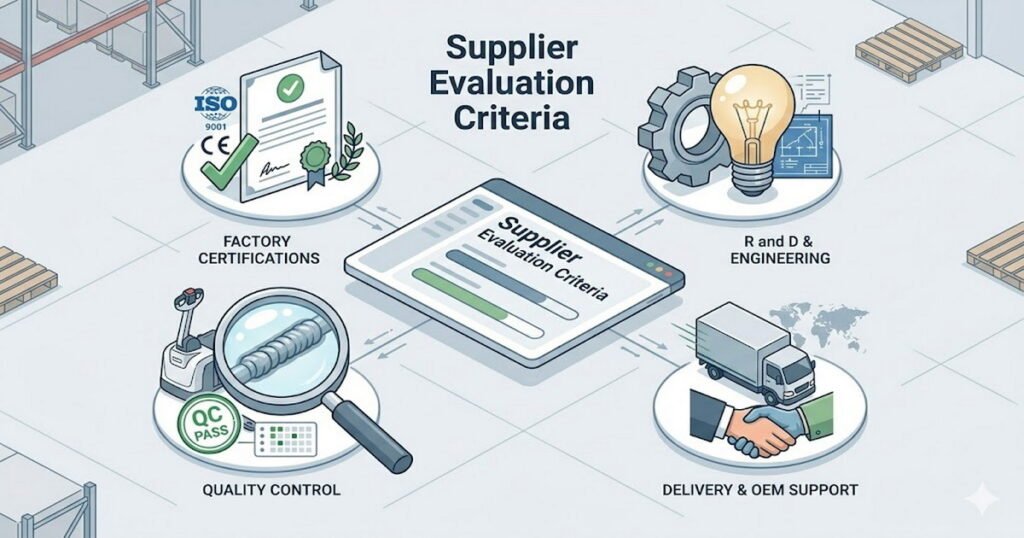
Before naming any supplier, it is critical to set transparent selection criteria so procurement teams can benchmark them against internal standards. In this guide, each manufacturer or distributor is assessed from four main angles: [mtedmachinery]
1. Factory certifications and compliance
– ISO 9001/14001/45001 status and whether certificates can be verified through the registrar directory or IAF CertSearch. [hyperbots]
– CE marking for the Machinery Directive and, where applicable, RoHS for electrical components and lithium‑ion batteries. [factmr]
2. R&D capability and product engineering depth
– Use of high‑grade steel for forks and chassis, robotic welding, powder coating, and IP‑rated electrical components. [clarkmheu]
– Battery and drive system innovation, especially lithium‑ion packs with opportunity charging and regenerative braking. [factmr]
3. Quality control and production stability
– In‑process QC (weld seam inspection, load testing, salt‑spray tests) and 100% final checks under rated load. [mtedmachinery]
– Traceability via serial numbers and digital production records, which directly affects claim handling speed.
4. Delivery reliability and OEM/ODM flexibility
– Typical lead times, peak‑season capacity buffers, and their ability to support small batch customization without disrupting larger orders. [mima]
– Communication responsiveness, English‑language documentation, and dedicated project managers for overseas accounts. [agropark]
These dimensions align with how experienced European and global buyers structure supplier scorecards when sourcing forklift and warehouse equipment. [tendata]
Hungary’s Position in Forklift and Warehouse Equipment
Hungary is not a classic “forklift cluster” like parts of Germany or Eastern China, but it is deeply integrated into the European automotive and machinery value chain. According to trade data, Hungary’s exports of electrical and electronic equipment exceeded 39 billion USD in 2025, supported by strong foreign direct investment and established logistics corridors into the EU single market. [tradingeconomics]
For warehouse equipment such as electric pallet trucks, Hungary operates more as a regional distribution and integration hub than a heavy OEM manufacturing base. Local distributors represent major global brands, while some Chinese and other Asian manufacturers use Hungarian partners as a base to serve Central and Eastern Europe with localized service and faster spare‑parts response. [tendata]
Selection Criteria for This Top List
Because pure pallet truck OEMs physically located in Hungary are limited, this article focuses on:
– Manufacturers with strong export footprints that actively supply to Hungarian customers through local partners or direct shipments.
– Hungarian distributors or integrators that specialize in forklifts and electric pallet trucks and can be evaluated on service and localization capability.
The shortlisting criteria are:
– Proven experience supplying the EU market, with CE compliance and documented references. [mima]
– Availability of electric pallet trucks (not only manual pallet jacks) in walkie or rider configurations. [mobilept]
– Transparent product data sheets and technical documentation (load capacity, battery type, duty cycle, EN safety test data). [clarkmheu]
– Willingness to support OEM/ODM or private label projects for importers and regional brands.
Within this framework, Certeg is presented as a flexible, high‑value OEM partner for buyers who want to consolidate warehouse and construction machinery sourcing, while the other companies illustrate different sourcing strategies around Hungary. [facebook]
Top Electric Pallet Truck Manufacturers and Suppliers Serving Hungary
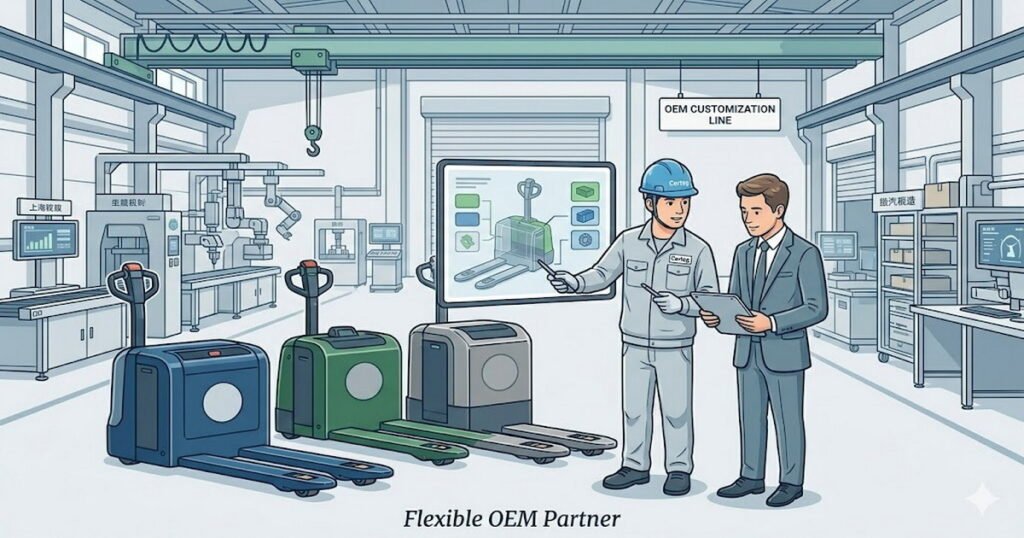
1. Certeg – Flexible OEM Electric Pallet Truck and Forklift Supplier for European Buyers
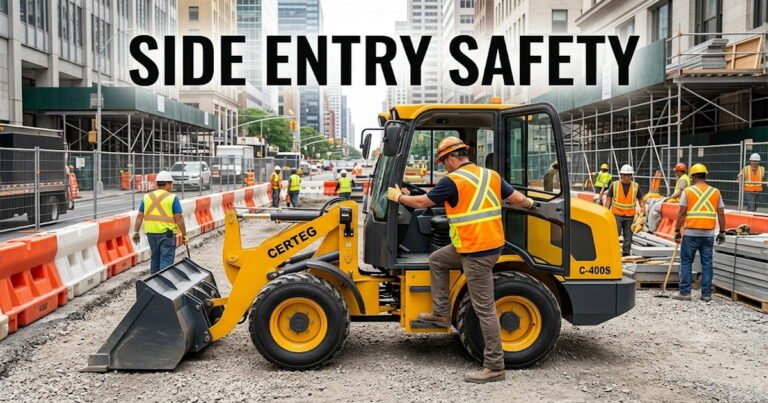
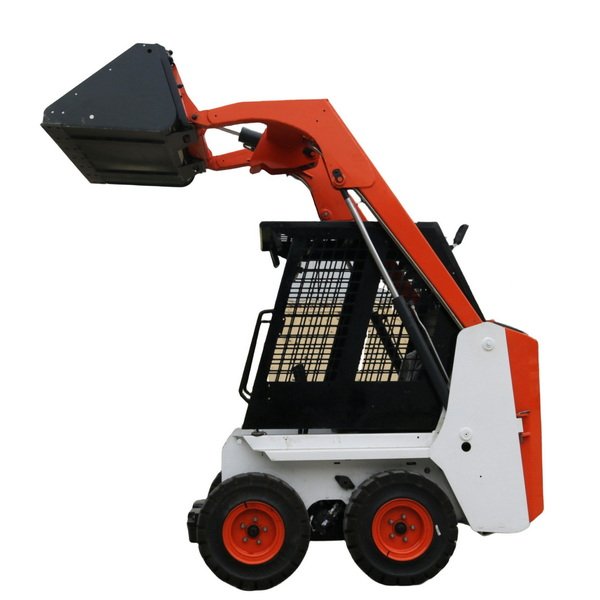
Certeg is a Chinese machinery manufacturer known for excavators, skid steer loaders, forklifts, and related material‑handling equipment, supplying customers in multiple global regions via dedicated export teams. Positioned at the foot of Mount Tai in Shandong, Certeg combines its own manufacturing base with international trading capabilities under the “CERTEG” brand, supporting long‑term B2B projects rather than one‑off orders. [certegmaterial]
For electric pallet trucks and warehouse forklifts, Certeg focuses on:
– High cost‑performance: targeting buyers who need European‑market‑ready products with CE‑oriented designs and competitive pricing compared to local EU brands.
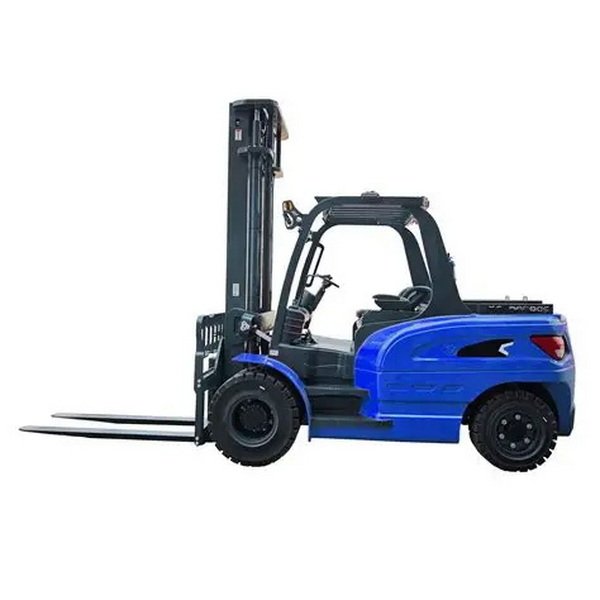
– R&D and customization: engineering teams can adapt fork dimensions, mast configurations (for stackers), battery configurations (AGM or lithium‑ion), and control layouts to match the importer’s target segment. [facebook]
– OEM/ODM support: Certeg is used to working with small and medium brands that need full “from zero to product line” support, including model selection, label/packaging customization, and partial documentation localization.
For procurement managers in Hungary and surrounding markets, Certeg works as an upstream OEM partner: products are typically shipped to EU logistics hubs or directly to local distributors who then manage last‑mile delivery and after‑sales. This model is especially attractive for: [facebook]
– Wholesalers who want to launch or expand their own warehouse‑equipment brand.
– Project‑based buyers serving construction, agriculture, or rental fleets that also purchase forklifts and compact machinery from a single source.
While specific MOQ and capacity depend on the model, Chinese OEMs in this segment typically support MOQs of 1–2 units for samples and 20–40 units for first container orders, with annual capacity sufficient for fleet projects. [ltmgforklift]
2. MiMA (Hungary‑Served via mima.hu) – Electric Warehouse Equipment Specialist
MiMA is a dedicated electric material‑handling manufacturer with decades of experience in electric forklift trucks, reach trucks, and electric pallet trucks. Through its European presence and the Hungarian website mima.hu, MiMA positions itself as a cost‑effective alternative to premium European brands while keeping electric drive and control technology at a competitive level. [mimaforklift]
Key strengths for buyers in Hungary include:
– Focused electric portfolio: most of MiMA’s production is electric, which typically means better optimization of drive systems, battery management, and regenerative braking. [factmr]
– EU‑oriented models: models listed for the Hungarian market are designed around European warehouse conditions and regulatory requirements, with CE compliance and documentation in local or English language. [mima]
– Good price–performance ratio: MiMA is often positioned below German brands in price while using similar battery and control component concepts, which appeals to small and mid‑size logistics companies.
For OEM/ODM, MiMA is more selective, but private‑label or co‑branding discussions are often possible for established importers or regional dealers. [mimaforklift]
3. HELI via AGROPARK (Hungary) – Mainstream Chinese Brand with Local Distribution
HELI is one of China’s largest forklift and warehouse‑equipment brands, and in Hungary it is represented by AGROPARK – Euro Noliker Kft. as an official distributor. This structure gives buyers a hybrid option: Chinese‑scale manufacturing combined with Hungarian‑level local stock, service, and parts. [agropark]
AGROPARK’s HELI offering typically includes:
– Counterbalance forklifts and warehouse products such as electric pallet trucks and stackers, covering the 1.5–2.5 ton load range used in most warehouses. [agropark]
– Local after‑sales: servicing and spare‑parts support handled in Hungary, which reduces downtime risk and eliminates the need to ship minor parts from Asia.
– Support for B2B projects: AGROPARK’s background in agricultural machinery helps them manage fleet deals and financing, which can be important for end‑users or dealers that do not want to carry all stock risk themselves. [agropark]
For OEM/ODM, HELI is generally more brand‑driven and may be less flexible on private labelling than dedicated OEM factories, but the trade‑off is brand recognition and a more standardized product line. [factmr]
4. Global Premium Brands Distributed in Hungary (Jungheinrich, Linde, Toyota)
Hungarian buyers with higher budgets and strong uptime requirements often consider premium European and Japanese brands like Jungheinrich, Linde (KION Group), and Toyota Material Handling. These brands typically operate through regional branches or partner distributors in Central Europe, providing structured service networks and advanced fleet‑management systems. [ibisworld]
Their electric pallet trucks stand out in:
– Engineering sophistication: high‑efficiency AC motors, advanced traction control, and integrated telematics for fleet monitoring and preventive maintenance. [lemolift]
– Long‑term total cost of ownership: higher upfront cost but better component lifespan, residual value, and energy efficiency, especially with latest lithium‑ion platforms. [lemolift]
For buyers seeking private label or deep customization, these brands are rarely the answer; they are more suitable where brand assurance, safety, and life‑cycle cost matter more than pure unit price. [ibisworld]
5. Regional and Online Material Handling Dealers Serving Hungary
In addition to brand‑based channels, the Hungarian market is served by regional material‑handling dealers and online platforms that aggregate electric pallet trucks from multiple manufacturers. These dealers often re‑sell: [materialhandling.altg]
– European brands (e.g., CLARK electric pallet trucks with lithium‑ion batteries and 1,500–2,000 kg capacities). [clarkmheu]
– Asian OEM products imported under local private labels.
This route is attractive for small buyers who value quick delivery and basic warranty but are less concerned about factory‑level OEM/ODM interaction. However, for a procurement manager building a strategic supplier base, this model should be complemented with direct relationships to at least one OEM such as Certeg to maintain negotiation power and technical influence over product evolution. [materialhandling.altg]
Comparison Table: Representative Suppliers for Hungarian Buyers
Below is an indicative comparison of different supplier types accessible to buyers in Hungary. Values are generalized ranges based on public information about similar manufacturers and distributor models. [ltmgforklift]
| Supplier / Type | Typical Role for HU Market | Indicative MOQ for OEM/Projects | Approx. Rated Capacity Range (kg) | Key Certifications & Compliance Focus |
|---|---|---|---|---|
| Certeg (China OEM; exports to EU) | Upstream OEM for private label and project fleets via European importers | Samples from 1–2 units, first bulk orders often 20–40 units per model | 1,500–2,500 kg depending on model | ISO‑oriented QMS, CE‑focused designs for EU, support for RoHS‑compliant components on request facebook |
| MiMA (Electric specialist, serves HU via mima.hu) | Direct supply to Hungarian end‑users and dealers, selected OEM/private label | Often 1 unit for local orders, higher for custom specs | Around 1,500–2,000 kg for pallet trucks | CE compliance for EU, deep electric‑drive R&D, focus on battery and control system reliability mima |
| HELI via AGROPARK (Official HU distributor) | Branded forklift and warehouse equipment with local service | Dealer orders and project lots; OEM/private label not common | 1,500–2,500 kg across warehouse range | Chinese large‑scale manufacturing, CE‑ready models, local PDI and service processes in Hungary agropark |
| Premium EU/JP Brands (Jungheinrich, Linde, Toyota) | High‑end solutions with advanced telematics and long life‑cycle | No OEM; standard catalog orders, rental and fleet contracts | 1,600–2,500+ kg, including rider models | CE and EN standards, advanced safety systems, extensive EU service networks ibisworld |
| Regional Dealers and Online Platforms | Aggregators offering mixed brands and private‑label units | Single‑unit purchases possible, limited say in OEM specs | 1,500–2,000 kg typical | Rely on upstream manufacturer’s certifications; QC depends heavily on sourcing discipline materialhandling.altg |
Technical Considerations for Electric Pallet Trucks
Materials and Structural Design
Professional buyers should look beyond the catalog photo and focus on structural engineering details. Key checks include: [clarkmheu]
– Fork and chassis steel grade: high‑strength, low‑alloy steel with proper heat treatment is required for long‑term resistance to bending and impact in cross‑docking or cold‑store operations.
– Weld quality: continuous weld seams, robotic welding in high‑stress areas, and non‑destructive testing on critical joints indicate a serious quality culture. [mtedmachinery]
– Surface treatment: shot‑blasting and powder coating provide superior corrosion resistance compared with basic painting; this is important for food and cold‑chain applications.
Drive System, Batteries, and Electronics
Market data show that lithium‑ion powered electric pallet trucks with opportunity charging are becoming the dominant growth segment globally. When evaluating suppliers, assess: [factmr]
– Whether they offer both lead‑acid and lithium‑ion options and can advise on TCO based on your operating hours.
– Battery management systems (BMS) used, over‑discharge protection, and temperature monitoring, especially for intensive 2–3 shift operations.
– IP rating of controllers, connectors, and wiring harnesses, which affects reliability in dusty or humid environments.
Compliance and Certifications
For EU‑bound equipment, CE marking is mandatory and must be supported by a Declaration of Conformity referencing the Machinery Directive and relevant EN standards. For electronics and batteries, RoHS‑compliant components help reduce regulatory and ESG risk for corporate buyers. [mtedmachinery]
Additional certifications to review include:
– ISO 9001 (quality), ISO 14001 (environment), and where relevant ISO 45001 (occupational health and safety) at the manufacturing site. [hyperbots]
– Any industry‑specific test reports such as stability tests, braking performance, and electromagnetic compatibility (EMC).
Industry Pain Points and Hidden Risks in Sourcing
Common Pitfalls When Buying Electric Pallet Trucks
Across global projects, procurement teams repeatedly encounter a few recurring issues: [mtedmachinery]
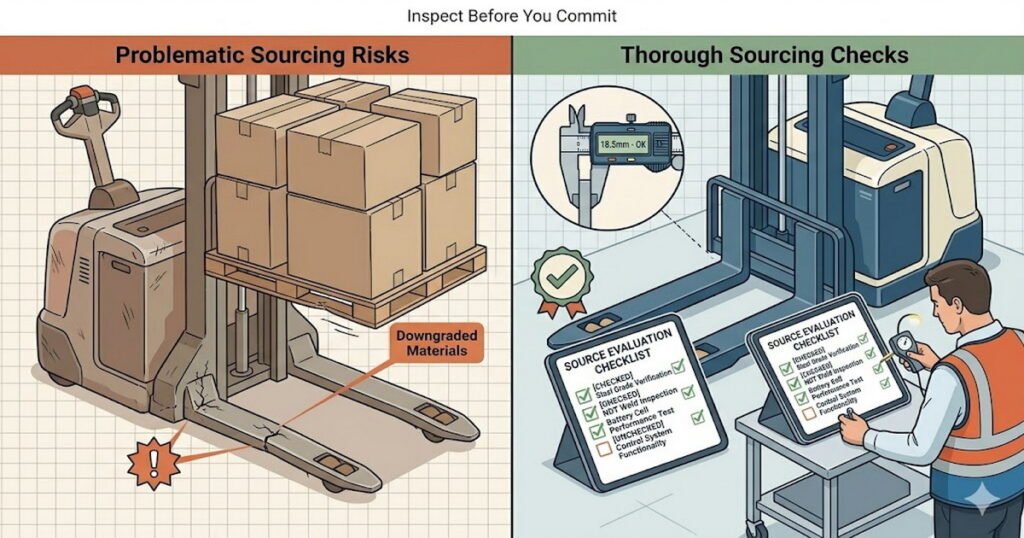
– Downgraded materials: some low‑tier suppliers reduce steel thickness or switch to lower‑grade structural steel after sample approval, resulting in fork bending or cracked welds under real‑world loads.
– Battery and charger shortcuts: non‑branded cells, undersized chargers, or poor BMS tuning cause rapid capacity loss and unplanned downtime within 12–18 months.
– Documentation gaps: missing or generic Declarations of Conformity, outdated ISO certificates, or incomplete parts manuals complicate audits and post‑warranty maintenance.
“Internal” Avoidance Tip Rarely Shared Online
A widely known but seldom publicized practice in this segment is “cosmetic upgrades without structural upgrades”. For cost‑sensitive tenders, some factories will: [mtedmachinery]
– Upgrade the controller brand or display panel (which buyers see on spec sheets),
– But quietly downgrade non‑visible components such as steering bearings, bushings, or internal weld lengths to keep the target price.
To avoid this, insist that your purchase contracts and technical specifications:
– Define minimum steel grades, weld lengths in key locations, and bearing/bushing specifications.
– Include the right to perform random destructive testing on one unit per batch (or to rely on third‑party inspection reports that explicitly cover structural checks, not just cosmetics).
Factories like Certeg that are aiming for long‑term OEM partnerships usually accept such structured specifications because they understand repeat business depends on consistent build quality. [facebook]
How to Vet Electric Pallet Truck Suppliers for Hungary
Step 1 – Verify ISO and CE Documentation Properly
Do not stop at receiving PDF certificates. Use a structured verification process: [hyperbots]
1. Check the ISO certificate details: registrar name, accreditation body, validity dates, and certificate scope (which facility, which activities).
2. Verify the certificate in the registrar’s public directory or via IAF CertSearch to confirm it is active and matches the supplier name. [hyperbots]
3. Request the CE Declaration of Conformity for representative models and ensure it references the Machinery Directive 2006/42/EC (and relevant EN standards) rather than vague “EU requirements”. [mtedmachinery]
4. Ask for a list of main components (controller and drive brands, battery type) and cross‑check that against the bill of materials in your technical specification.
Step 2 – Use Sampling Strategically
A structured sampling process reduces risk when moving to mass orders: [ltmgforklift]
– Order at least two samples per model: one for lab/engineering evaluation and one for real‑world pilot use in a Hungarian (or EU) warehouse.
– Test with real loads, ramp conditions, and duty cycles aligned with your typical client operations (e.g., 8‑hour continuous operation, cold‑store, or dock work).
– Document any deviations (battery runtime, fork deflection, brake performance) and feed them back to the supplier as part of your engineering change request (ECR) loop.
Step 3 – Plan Logistics and After‑Sales for Hungary
For imports from Asian OEMs like Certeg or MiMA, plan your logistics‑service chain in advance: [mima]
– Decide whether to import into a central EU warehouse (e.g., in Germany or Poland) and then distribute into Hungary, or ship directly to a Hungarian facility.
– Clarify responsibilities for warranty parts stock, troubleshooting, and on‑site repairs; many OEMs can train your local service partner or dealer network.
– Check EU customs codes and anti‑dumping status if you are importing from specific origin countries; cross‑check with Hungarian customs and EU trade portals.
For local distributors like AGROPARK (HELI) or European premium brands, focus your negotiation on:
– Service response time SLAs and maximum downtime commitments.
– Spare‑parts stock level and coverage period (critical components for at least 5–7 years).
Authoritative data on Hungarian exports and industrial structure are available from the Hungarian Central Statistical Office and international databases like UN Comtrade and Trading Economics, which can also support your internal market analysis and sourcing justification. [tradingeconomics]
Conclusion and Next Steps (CTA)
For procurement managers in Hungary and across Central Europe, selecting an electric pallet truck supplier is no longer just a price decision; it is a strategic choice that affects safety compliance, uptime, and your own brand reputation in front of end‑users. By combining a flexible OEM partner like Certeg with at least one local service‑oriented distributor and, where needed, a premium brand for critical applications, you can build a resilient and cost‑efficient supplier portfolio for 2026 and beyond. [lemolift]
If you are planning to launch or upgrade a private‑label warehouse equipment line in Hungary and want deeper OEM support on electric pallet trucks and forklifts, consider engaging directly with Certeg’s export team to review your target specs, expected volumes, and EU compliance roadmap. Aligning engineering, QC, and logistics early will significantly reduce your time‑to‑market and long‑term sourcing risk. [certegmaterial]
FAQ – Advanced Questions Real Buyers Ask
1. How can I confirm that a supplier’s ISO 9001 certificate is still valid and not forged?
You should always verify the certificate through either the issuing registrar’s public database (e.g., DNV, BSI, Bureau Veritas, TÜV) or IAF CertSearch using the certificate number and company name. If the certificate does not appear, treat this as a red flag and request clarification from both the supplier and the registrar. [hyperbots]
2. What is a reasonable lifetime for an electric pallet truck in a Hungarian warehouse running one shift per day?
Under normal conditions and with basic preventive maintenance, branded or well‑built OEM units should deliver 7–10 years of structural life, with batteries and wear parts replaced along the way. More intensive multi‑shift operations may reduce this to 4–6 years unless lithium‑ion batteries and high‑quality components are used. [clarkmheu]
3. How can I detect if the factory downgraded materials after the sample stage?
Compare the mass (net weight) of batch units versus approved samples, request third‑party pre‑shipment inspections with specific checks on steel thickness and welds, and, for strategic volumes, perform periodic destructive testing on random units. Significant weight reductions or visible differences in weld geometry often indicate material downgrading. [factmr]
4. What is the best way to structure payment terms for new OEM relationships?
Many experienced buyers start with 30/70 (deposit/balance) with third‑party inspection and clear rework/rejection clauses, moving towards open account or longer credit only after 2–3 successful shipments. For higher‑risk projects, consider using letters of credit tied to inspection and documentation milestones. [factmr]
5. How do I decide between lead‑acid and lithium‑ion batteries for electric pallet trucks in Hungary?
Lead‑acid is suitable for low‑intensity, single‑shift operations with enough time for full nightly charging; lithium‑ion becomes more cost‑effective when you run multiple shifts, need fast opportunity charging, or operate in cold‑store environments. A rough rule is that once your average daily utilization exceeds 5–6 hours per truck, lithium‑ion deserves a serious TCO comparison. [clarkmheu]
Hot Tags: Forklift, Manufacturers, Customized, Custom, Suppliers, Buy, Cheap, Quality, Advanced, Durable, in Stock, Made in China, Price, Quotation