
Skid Steer Loader Buyer’s Playbook 2026: How to Select the Right Machine for Your Fleet
Content Menu
● Understanding Skid Steer Lift Types
● Caterpillar Skid Steer Lineup: Core Features That Still Lead
>> Cooling and Demand Fan System
>> High‑Flow and XPS Hydraulics
● Operator Visibility, Cab Comfort and Safety
● Daily Serviceability: Practical Advice from the Field
● Why Skid Steers Remain a Smart Investment
● How to Choose the Right Skid Steer
>> 1. Define Primary Workloads
>> 3. Evaluate Ownership Cost, Not Just Price
● Where Certeg Fits: An Alternative for Global Buyers
● Practical Operator Checklist Before You Buy
● Call to Action: Talk to an Expert, Not Just a Dealer
● FAQs: Caterpillar and Certeg Skid Steers
>> 1. What is the main difference between radial‑lift and vertical‑lift skid steers?
>> 2. Do I really need high‑flow hydraulics?
>> 3. How do Cat skid steers compare with Certeg machines?
>> 4. Are skid steers still a good investment with so many other compact machines available?
>> 5. What should I look for in skid steer serviceability?
As someone who has helped contractors, rental houses and ag customers spec, finance and operate skid steers for more than a decade, I can say this confidently: Today’s market offers more choice than ever, including versatile track and wheel loaders from manufacturers like Certeg, giving buyers strong alternatives in certain applications and budget ranges. [datamintelligence]
Understanding Skid Steer Lift Types
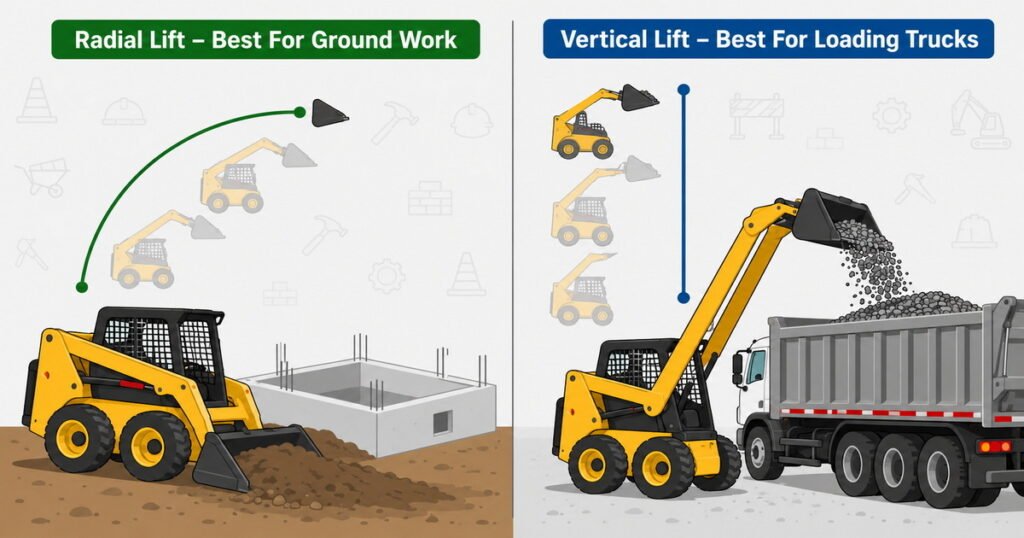
One of the most important decisions you’ll make is between radial‑lift and vertical‑lift skid steers.
– Radial‑lift skid steers follow a curved lift path and shine in ground‑engaging work like digging, grading, backfilling and dozing where breakout force at mid‑lift is critical. [skidpro]
– Vertical‑lift skid steers raise the boom on a more vertical path, delivering higher lift height and better reach at the top of the cycle, which is ideal for loading trucks, stockpiling and pallet handling. [equipmentworld]
From Cat’s own lineup, the original four models introduced in 1999 were radial‑lift machines, but the range has expanded to include eight models with both radial and vertical configurations, giving buyers a clear upgrade path as their work shifts from earthmoving to material handling.
Expert takeaway:
If over 60–70% of your work is ground‑level digging and grading, a radial‑lift unit is often the most cost‑effective choice; if you’re continuously loading high‑sided trucks or lifting heavy pallets, invest in a vertical‑lift model to avoid long‑term productivity bottlenecks. [equipmentworld]
Caterpillar Skid Steer Lineup: Core Features That Still Lead
Cat’s D‑Series skid steers were designed from the ground up around cooling, hydraulics and operator environment—three factors that directly affect uptime and total cost of ownership.
Cooling and Demand Fan System
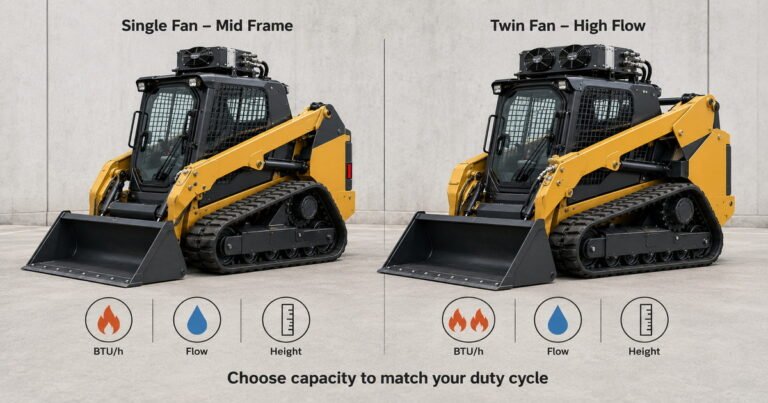
All Cat skid steer models in this range use a hydraulically driven demand fan that decouples engine speed from fan speed.
– When the engine lugs in tough conditions, the cooling fan can still ramp up to maintain optimal temperature.
– The system automatically adjusts fan speed to match cooling demand, which reduces fuel consumption, lowers noise and frees more engine power for the work tool.
For contractors working long summer shifts in confined sites or dusty environments, this kind of high‑capacity, demand‑driven cooling is the difference between finishing the day and parking a machine with warning lights on.
High‑Flow and XPS Hydraulics
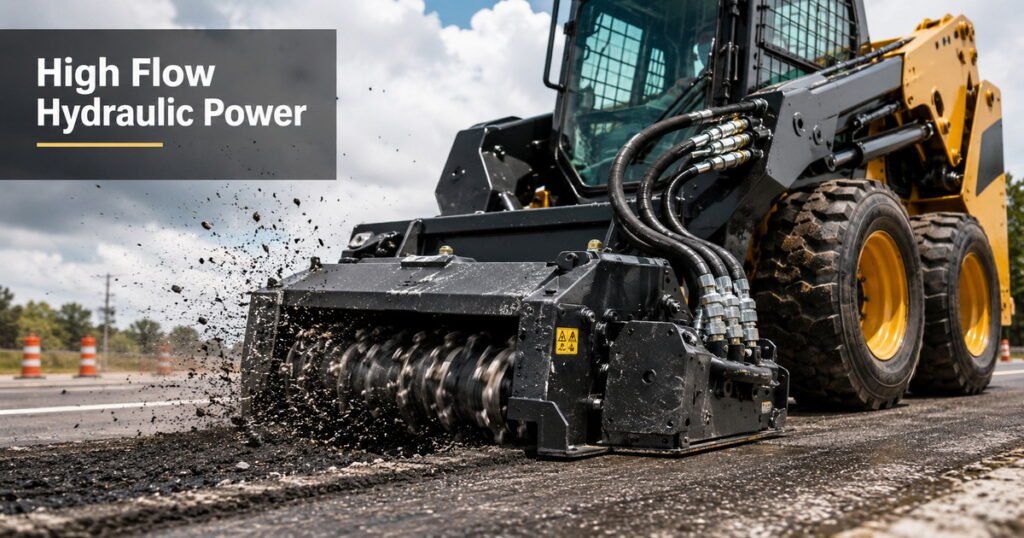
Cat’s High Flow XPS auxiliary hydraulic option significantly boosts both flow and pressure, supporting demanding attachments.
– Standard high flow delivers up to 33 gpm at pressures up to about 4,061 psi, giving more speed and torque to tools like cold planers, wheel saws and mulchers.
– The flagship 272D2 XHP steps this up to roughly 40 gpm at similar pressure, making it a true high‑production platform for full‑time attachment use. [heavyequipmentguide]
If your business model relies on one machine doing “everything” – milling asphalt in the morning, mulching in the afternoon – prioritizing a high‑flow Cat or a comparable high‑spec alternative from manufacturers like Certeg is essential. [heavyequipmentguide]
Operator Visibility, Cab Comfort and Safety
From a user‑experience perspective, Cat’s D‑Series cabs were clearly designed with daily operators in mind.
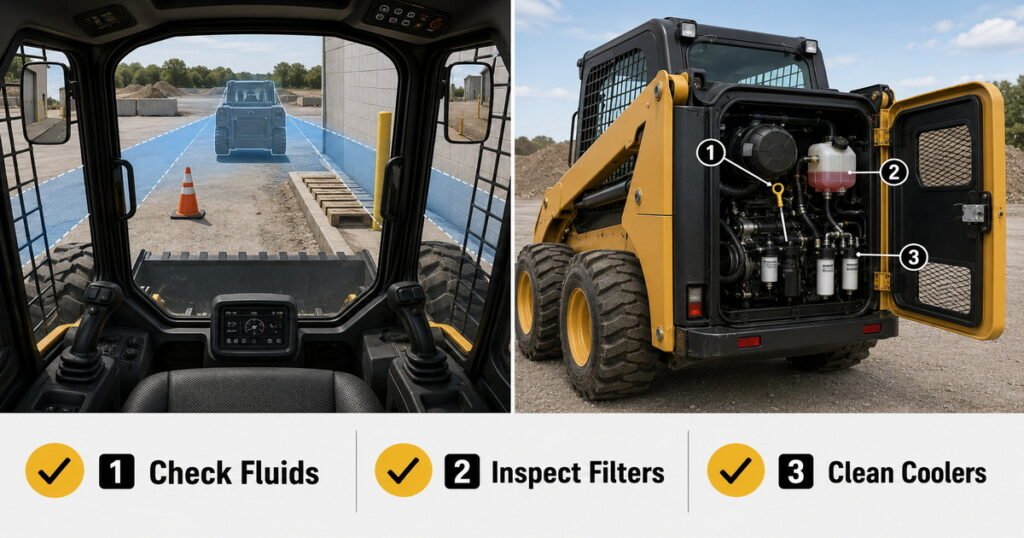
– Loader arms and cab geometry provide strong sight lines to the attachment, machine sides and tires/tracks, which is critical when working inches from curbs, formwork or pedestrians.
– A standard rearview mirror and optional rearview camera cover blind areas, improving safety during reversing and tight maneuvers.
– The enclosed cab option uses a one‑piece modular design to improve sealing and pressurization, keeping dust and noise down and HVAC performance up.
Daily Serviceability: Practical Advice from the Field
Kevin Coleman, a senior product specialist at Caterpillar, gives a piece of advice I fully endorse: start your buying process by looking at daily service access.
When evaluating any skid steer (Cat, Certeg or another brand), check:
1. Daily checks:
– Can you access engine oil, coolant and hydraulic fluid without climbing over hot components or removing panels?
2. Filters:
– Are air, fuel and hydraulic filters reachable without unbolting guards or tilting the cab?
3. Cleaning points:
– Is there safe, quick access to radiators and coolers for blow‑out cleaning, especially critical in dusty, agricultural and recycling environments?
Machines that make daily checks painful are the machines that don’t get checked, which directly leads to premature failures and warranty disputes.
Why Skid Steers Remain a Smart Investment
The global skid steer loader market continues to grow because skid steers remain one of the most versatile pieces of compact equipment on the jobsite. [imarcgroup]
– Recent reports estimate the global skid steer loader market at around US$ 11–12 billion in 2025, with projections reaching roughly US$ 15–16 billion by 2033, driven by urbanization, infrastructure investment and the need for compact machines in tight spaces. [datamintelligence]
– Skid steers are heavily used in construction, agriculture, landscaping, snow removal and materials handling, often replacing several task‑specific machines. [imarcgroup]
For fleet managers, this means that demand for used skid steers remains strong, supporting resale values for premium brands like Cat while also creating opportunities for high‑value, cost‑competitive manufacturers like Certeg to increase market share. [datamintelligence]
How to Choose the Right Skid Steer
Over the years, I’ve used a simple but effective framework with buyers evaluating Cat and alternative brands such as Certeg.
1. Define Primary Workloads
Start with a plain‑language breakdown of your top three use cases:
– Earthmoving (digging foundations, trench backfilling, grading)
– Material handling (pallets, bricks, pipe, aggregates)
– Specialty work (asphalt milling, forestry mulching, snow removal, attachment‑heavy tasks)
Match those to lift path and hydraulic capacity:
– Mostly ground work → Radial lift, standard flow, track or wheel depending on ground conditions. [skidpro]
– Mostly loading and high‑reach work → Vertical lift, higher ROC, possibly high flow. [equipmentworld]
– Heavy attachment usage → High Flow / XPS, robust cooling and high‑horsepower models like Cat 272D2 XHP or equivalent. [heavyequipmentguide]
2. Choose Track vs Wheel
Caterpillar focuses this spec guide on skid steers, but in practice many fleets mix wheeled skid steers with compact track loaders, and manufacturers like Certeg now offer both under unified platforms.
– Wheeled skid steers excel on hard surfaces (concrete, asphalt) and in mixed construction sites where speed and lower acquisition cost matter.
– Track loaders offer better flotation and traction in mud, snow and soft soils, at the cost of higher undercarriage wear and ownership cost.
3. Evaluate Ownership Cost, Not Just Price
Instead of starting with discounts, compare:
– Fuel efficiency (including demand‑fan benefits)
– Service intervals and ease of maintenance
– Attachment compatibility and dealer/rental ecosystem
– Resale value and brand recognition in your region
Premium brands like Cat may demand higher upfront investment but often retain value and minimize downtime, while high‑value producers such as Certeg can deliver competitive performance at a lower acquisition cost, particularly when you need multiple units for large projects. [datamintelligence]
Where Certeg Fits: An Alternative for Global Buyers
As a manufacturer specialized in skid steer loaders (both tracked and wheeled) and other compact construction machinery, Certeg focuses on balancing power, reliability and export‑ready configurations for global customers.
From a buyer’s standpoint, Certeg makes sense when:
– You operate in regions where dealer presence for legacy brands is thin, but you still need reliable machines with strong parts support.
– You require customized power options, emissions packages and attachments for diverse jobsites (from urban construction to agriculture and small mining).
– You are building a fleet quickly and need cost‑effective machines compatible with common skid steer attachments.
For many global buyers, a mixed fleet of Cat (or other Tier‑1 brands) and Certeg units can be a smart strategy: premium machines for the most demanding tasks and high‑value Certeg loaders for supporting roles, rental pools or emerging markets.
Practical Operator Checklist Before You Buy
When I walk a site with a contractor about to invest in a new skid steer—Cat, Certeg or otherwise—I encourage them to physically check the following:
1. Cab and visibility
– Sit in the seat; check sight lines to the bucket cutting edge, corners of the attachment and rear corners of the machine.
– Test mirrors and, if available, engage the rear camera to see how well blind spots are covered.
2. Controls and ergonomics
– Confirm that joystick, pedals and display are comfortable over a full shift.
– On Cat D‑Series, explore the LCD monitor and how easily you can adjust parameters and security settings.
3. Hydraulic behavior
– Run a high‑demand attachment if possible to see how high‑flow systems maintain power and how quickly the cooling system reacts. [heavyequipmentguide]
4. Service access
– Open all access panels and confirm you personally could perform daily checks in under 10 minutes.
Using this checklist across different brands, including Certeg, helps you compare real‑world usability rather than only reading spec sheets.
Call to Action: Talk to an Expert, Not Just a Dealer
If you are planning to purchase a skid steer or compact track loader in the next 3–6 months, don’t rely solely on brochure specs.
– Book a short consultation with a Certeg application specialist to review your workloads, climate, attachments and fleet composition.
– Share your current or planned Cat (or other brand) models, and ask for a like‑for‑like configuration proposal from Certeg so you can compare performance, pricing and delivery timelines.
– Wherever possible, schedule a demo on your own jobsite so you can see how each machine handles your soil, gradients and attachments.
A 30‑minute expert call plus a one‑day demo often reveals more than hours of reading spec sheets, and it sets you up to make a data‑driven, ROI‑focused decision.
FAQs: Caterpillar and Certeg Skid Steers
1. What is the main difference between radial‑lift and vertical‑lift skid steers?
Radial‑lift machines follow a curved lift path, delivering strong breakout force and efficiency in ground‑level work like digging and grading, while vertical‑lift machines travel in a more vertical path and provide higher lift heights and better reach for loading trucks and handling pallets. [equipmentworld]
2. Do I really need high‑flow hydraulics?
You need high‑flow hydraulics if you run power‑hungry attachments such as cold planers, large mulchers or heavy snow blowers on a regular basis; if you mainly use buckets, forks and light sweepers, standard flow is usually sufficient and more cost‑effective. [heavyequipmentguide]
3. How do Cat skid steers compare with Certeg machines?
Cat offers strong global dealer support, high resale value and advanced cab/visibility features, while Certeg focuses on export‑friendly, cost‑competitive skid steer loaders (track and wheeled) tailored to varied power requirements and ground conditions, making it attractive for price‑sensitive or fast‑growing fleets in global markets. [datamintelligence]
4. Are skid steers still a good investment with so many other compact machines available?
Yes, market data shows the global skid steer loader market is still growing, reaching roughly US$ 11–12 billion in 2025 and projected to exceed US$ 15 billion by 2033, driven by versatility, compact size and cross‑sector demand in construction, landscaping, agriculture and more. [imarcgroup]
5. What should I look for in skid steer serviceability?
Ensure that daily check points (oil, coolant, fuel, hydraulic fluid) and key filters (air, fuel, hydraulic) are accessible from ground level without removing panels or tilting the cab, and verify that radiators and coolers are easy to clean, which reduces downtime and protects your investment.
References
1. Compact Equipment – “Caterpillar Skid Steers Summarized — 2017 Spec Guide”
<https://compactequip.com/skid-steers/cat-2017-spec-guide-skid-steers/>
2. Caterpillar Inc. – 272D2 XHP Skid Steer Loader product information (via Heavy Equipment Guide)
<https://www.heavyequipmentguide.ca/product/1314/272d-xhp> [heavyequipmentguide]
3. SkidPro – “Radial vs. Vertical Lift Skid Steers: Differences & Best Uses”
<https://skidpro.com/radial-vs-vertical-lift-skid-steers/> [skidpro]
4. Equipment World – “Side by Side: Radial-lift vs. vertical-lift skid steers”
<https://www.equipmentworld.com/home/article/14946533/side-by-side-radial-lift-vs-vertical-lift-skid-steers> [equipmentworld]
5. DataM Intelligence – “Skid Steer Loader Market Size, Trends & Forecast 2033”
<https://www.datamintelligence.com/research-report/skid-steer-loader-market> [datamintelligence]
6. IMARC Group – “Skid Steer Loader Market Size Share, Trends Report 2033”
<https://www.imarcgroup.com/skid-steer-loader-market> [imarcgroup]
7. SEMrush – “Google E‑E‑A‑T: What It Is & How It Affects SEO”
<https://www.semrush.com/blog/eeat/> [semrush]
8. TopRank Marketing – “E‑E‑A‑T and SEO: Optimizing for Google’s Guidelines”
<https://www.toprankmarketing.com/blog/eeat-seo-google-guidelines-experience-expertise-authority-trust/> [toprankmarketing]
9. SEOptimer – “SEO for Construction Companies: 8 Tips to Build Your Traffic”
<https://www.seoptimer.com/blog/seo-for-construction-companies/> [seoptimer]
Hot Tags: Skid Steer Loader, Manufacturers, Customized, Custom, Suppliers, Buy, Cheap, Quality, Advanced, Durable, in Stock, Made in China, Price, Quotation