
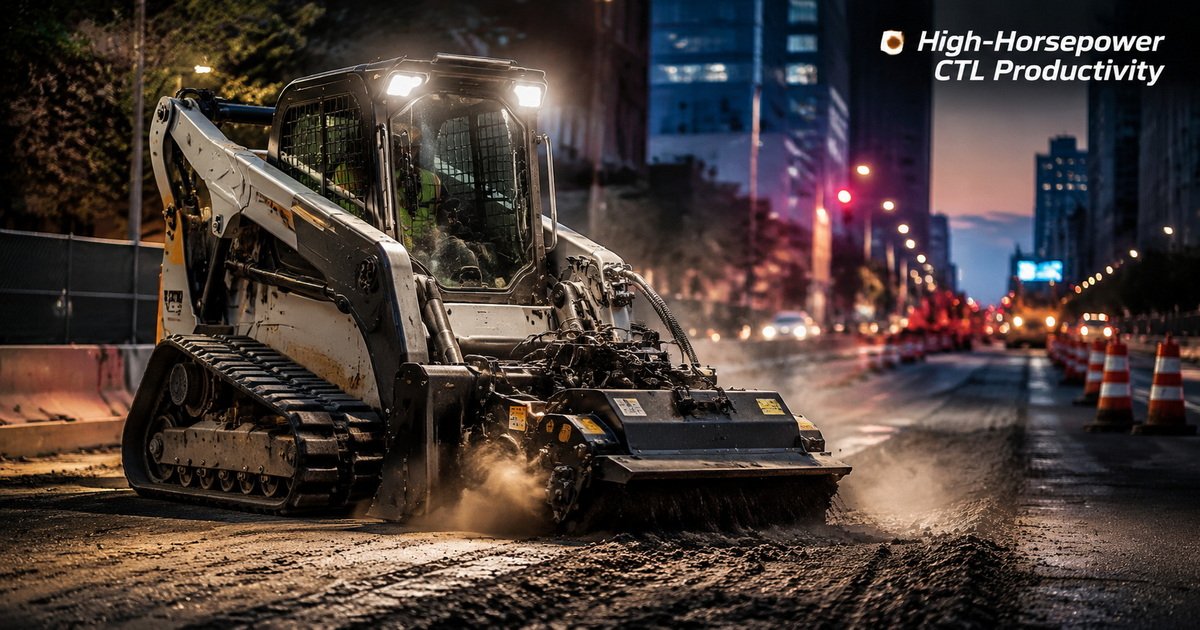
High‑Horsepower Skid Steers and Compact Track Loaders: How Modern CTLs Like the 334/335 P‑Tier Are Redefining Jobsite Productivity
Content Menu
● The Evolution of Skid Steers and CTLs
>> From “yard machines” to core production assets
● Inside the John Deere 334 & 335 P‑Tier
>> Power, hydraulics, and performance
>> Operator‑first cab and controls
● Why Compact Track Loaders Dominate Today
>> Traction, versatility, and site protection
● The Role of Attachments: Turning Specs into Productivity
>> High‑flow tools for high‑horsepower loaders
● Transportability and Fleet Flexibility
>> Bigger machines that still move easily
● Technology: Grade Control, Cameras, and Telematics
>> Grade indication and 3D control as standard expectations
>> Surround View and camera‑based safety
>> JDLink telematics and connected fleets
● How to Choose Between Skid Steer and CTL
● Real‑World Jobsite Scenario: High‑Flow CTL in Urban Work
● What Global Buyers Should Look for in Skid Steer & CTL OEMs
● How Contractors Should Move Forward
● FAQs
>> 1. What is the main difference between a skid steer and a compact track loader?
>> 2. Why do contractors care about hydraulic flow and auxiliary pressure?
>> 3. Are grade control and telematics worth the added cost on compact loaders?
>> 4. How should I compare different OEMs offering similar power specs?
>> 5. Where does a high‑power CTL fit in a mixed fleet with excavators and dozers?
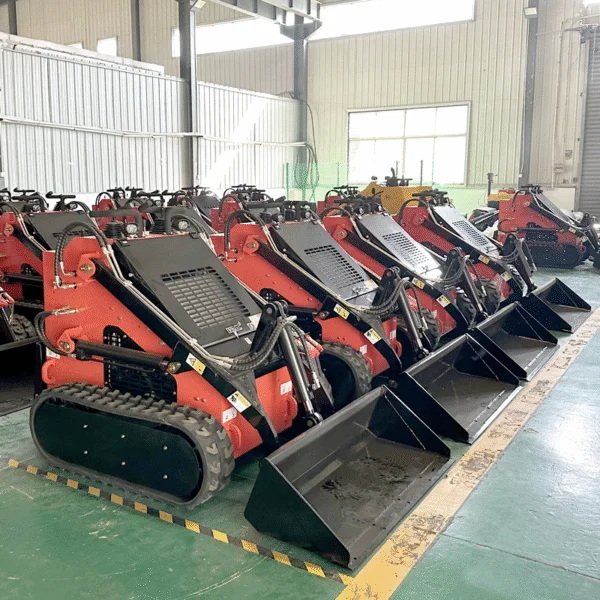
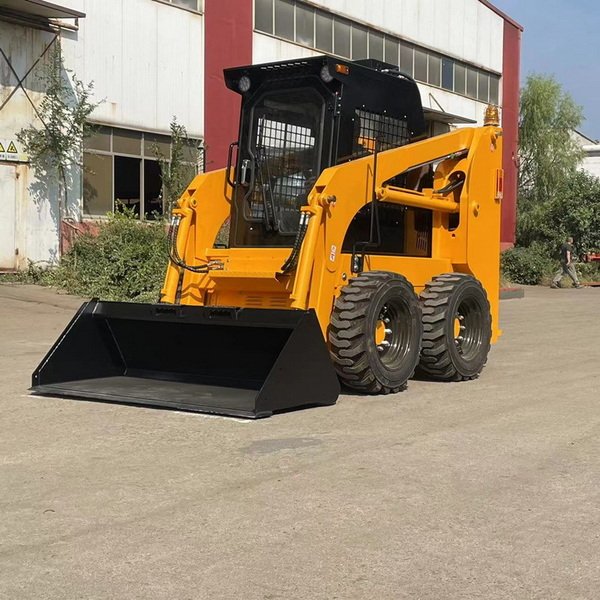
A modern skid steer or compact track loader (CTL) is no longer just a “small loader” — it’s a high‑horsepower, high‑flow productivity platform that can transform how contractors tackle tight‑space jobs and complex grading work. From my experience working with skid steer owners and purchasing teams, the evolution of machines like John Deere’s 334 and 335 P‑Tier reflects a broader shift in the compact equipment market: more power, smarter hydraulics, and operator‑first design packed into a transportable footprint. [swarmify]
The Evolution of Skid Steers and CTLs
From “yard machines” to core production assets
Two decades ago, many contractors treated skid steers primarily as support equipment — for cleanup, light material handling, and occasional loading. Today, compact track loaders are the most popular compact equipment category in the United States, driven by their ability to deliver near‑excavator productivity on tight and sensitive sites. The Machine Heads interview with Gregg Zupancic at John Deere highlights this evolution clearly: larger frames, more hydraulic flow, and technology packages that rival full‑size machines. [seo]
Several industry shifts accelerated this change:
– Urban infill and tight‑access construction sites. [gushwork]
– Growing demand for grade control and precision earthmoving. [ideahills]
– Increased reliance on multi‑function attachments instead of multiple dedicated machines. [raddinteractive]
For OEMs like Certeg, this means designing skid steers and CTLs as primary production tools, not just compact helpers.
Inside the John Deere 334 & 335 P‑Tier
Power, hydraulics, and performance
John Deere’s 334 P‑Tier skid steer and 335 P‑Tier CTL, first shown at CONEXPO‑CON/AGG 2023, were engineered as the company’s largest compact loaders to date. Both machines feature 118 gross horsepower diesel engines, delivering roughly 18% more engine power than the prior generation models. Their hydraulic systems support up to 44 gpm of high‑flow capability and 4,000 psi auxiliary pressure, enabling contractors to run large, high‑demand attachments without bogging down. [swarmify]
From a buyer’s perspective, the combination of:
– High engine power
– High‑flow hydraulics
– Robust auxiliary pressure
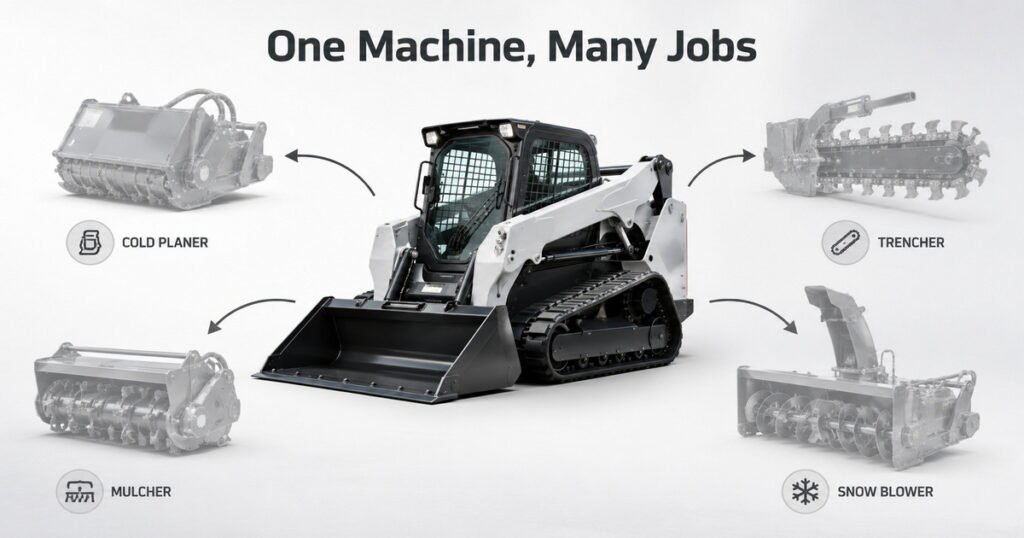
puts these machines firmly in the “production class” of compact loaders — suitable for cold planers, heavy‑duty mulchers, large trenchers, and high‑capacity snow throwers. [swarmify]
Operator‑first cab and controls
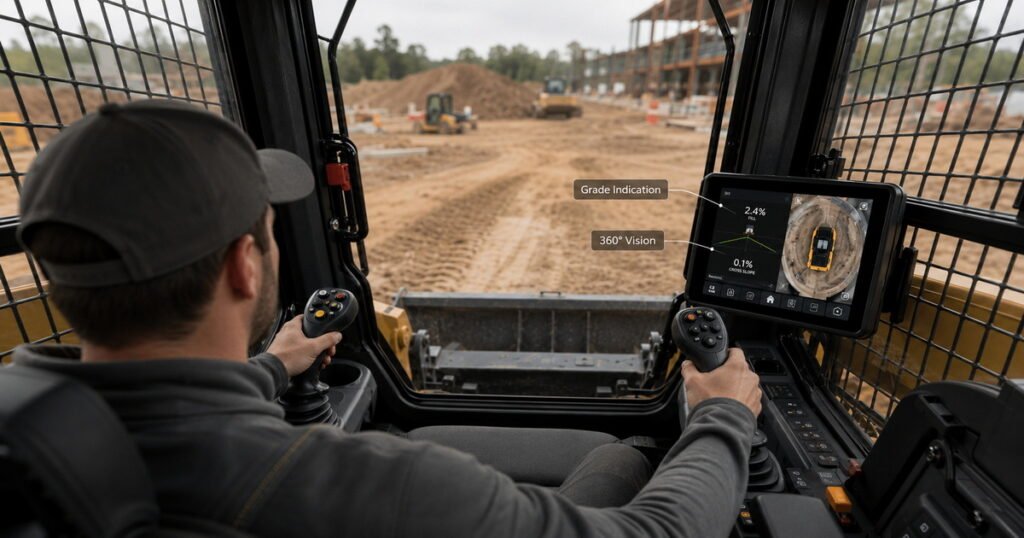
One of the most noticeable evolutions spotlighted in the Machine Heads video is the P‑Tier cab redesign. Deere built a one‑piece cab structure with upgraded creature comforts such as heated and ventilated seating, hands‑free Bluetooth, and an 8‑inch touchscreen display with standard grade indication. New joysticks and integrated camera displays support the Surround View vision system, giving operators expanded visibility around the sides and rear of the machine. [swarmify]
These design choices matter because:
– Better ergonomics reduce fatigue over long shifts.
– Integrated grade and vision systems shorten the learning curve for newer operators.
– Intuitive joysticks and display layouts help experienced operators unlock full hydraulic performance.
For manufacturers like Certeg, this trend sets a clear benchmark: operator‑centric design is now a competitive requirement, not a luxury feature. [ideahills]
Why Compact Track Loaders Dominate Today
Traction, versatility, and site protection
The original article notes that compact track loaders have become the most popular compact equipment category in America, and that’s consistent with what I see in fleet data and contractor feedback. CTLs distribute machine weight across a larger contact patch, delivering lower ground pressure and better traction in sand, mud, and soft soils. This translates directly into: [seo]
– Fewer stuck machines and recovery costs.
– Greater year‑round usability in variable climates.
– Reduced ground disturbance on finished or sensitive surfaces.
When paired with high‑flow hydraulics and modern cab technology, CTLs like the 335 P‑Tier effectively replace several older machines — loader, small dozer, and even fine‑grade equipment in some applications. [swarmify]
The Role of Attachments: Turning Specs into Productivity
High‑flow tools for high‑horsepower loaders
During the Machine Heads discussion, Zupancic emphasizes how 44 gpm of hydraulic flow and 4,000 psi open the door to large, power‑hungry attachments. From a practical standpoint, contractors typically match these machines with: [swarmify]
– Cold planers for road repair and milling.
– High‑capacity mulchers for land clearing.
– Heavy trenchers and saws for utilities.
– Large snow blowers and pusher boxes for winter services. [raddinteractive]
The real value comes when OEMs like Certeg design loader frames, quick‑attach plates, and auxiliary circuits not just to “run” attachments, but to run them efficiently and safely under diverse duty cycles.
Transportability and Fleet Flexibility
Bigger machines that still move easily
One potential concern with larger, more powerful skid steers and CTLs is transport complexity. The Machine Heads video addresses this directly, noting that Deere kept transport dimensions and weight within practical limits for common trailers and regional hauling regulations. This reflects a critical fleet management reality: a machine that cannot be moved quickly between jobsites loses much of its business value. [swarmify]
Manufacturers that optimize for transportability typically focus on:
– Balanced operating weight for common trailer classes.
– Low overall height for urban bridges and clearances.
– Tie‑down points and loading angles that speed daily logistics. [tsrdigital]
For Certeg, designing skid steers and CTLs with transport in mind helps international buyers standardize fleets across regions with different road regulations.
Technology: Grade Control, Cameras, and Telematics
Grade indication and 3D control as standard expectations
The P‑Tier machines integrate grade indication via the 8‑inch touchscreen and support 3D grade control systems for advanced earthmoving. Ten years ago, this type of feature was more common on larger dozers and motor graders; today it’s becoming a baseline expectation even on compact loaders. For contractors, the benefits include: [ideahills]
– More precise cuts and fills, reducing rework.
– Easier adherence to digital site plans and BIM workflows.
– Faster onboarding of new operators using visual guidance.
Surround View and camera‑based safety
Deere’s Surround View vision solution, with dedicated camera display, improves awareness around the sides and rear of the machine. On congested and urban jobsites, camera systems increasingly complement mirrors and traditional visibility design, helping reduce contact incidents with personnel, obstacles, and other equipment. [gushwork]
JDLink telematics and connected fleets
The article highlights JDLink telematics as a core capability of the 334 and 335 P‑Tier, enabling remote performance monitoring, fault codes, and utilization tracking. Across fleets, telematics deliver tangible value: [swarmify]
– Data‑driven maintenance scheduling reduces unscheduled downtime.
– Utilization reports help right‑size fleets and rental decisions.
– Location tracking improves security and dispatch efficiency. [seo]
For global manufacturers like Certeg, aligning machines with open or widely compatible telematics platforms increases appeal to large contractors who expect to see every asset in a single fleet management dashboard.
How to Choose Between Skid Steer and CTL
When advising contractors on equipment purchases, I often use a simple three‑part framework to decide between a wheeled skid steer and a tracked CTL:
1. Ground conditions and seasonality
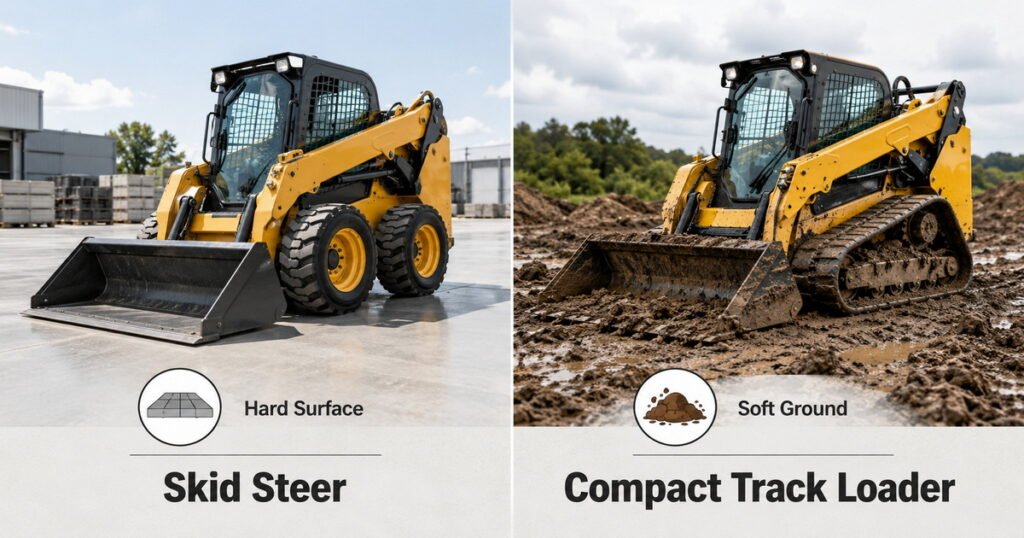
– Frequent mud, sand, and soft ground favor CTLs.
– Mostly paved or compacted surfaces favor skid steers. [seo]
2. Primary applications
– Precision grading, land clearing, and landscaping typically benefit from CTLs.
– Heavy pallet handling, yard work, and hard‑surface cleanup often suit skid steers. [raddinteractive]
3. Transport and total cost of ownership
– CTLs usually have higher undercarriage costs but better year‑round utilization.
– Skid steers may be cheaper to maintain but less versatile in poor conditions. [seo]
By mapping these factors to available models — including high‑power options comparable to the 334 and 335 P‑Tier — fleet managers can build a rational, ROI‑driven loader strategy rather than buying on specs alone.
Real‑World Jobsite Scenario: High‑Flow CTL in Urban Work
To illustrate these principles, consider a mid‑size contractor working on urban road rehabilitation:
– Tight shoulder widths and lane closures limit full‑size equipment access.
– The scope includes milling, trenching for utilities, and final grading.
– Night work and compressed schedules require fast mobilization and multi‑tool flexibility. [gushwork]
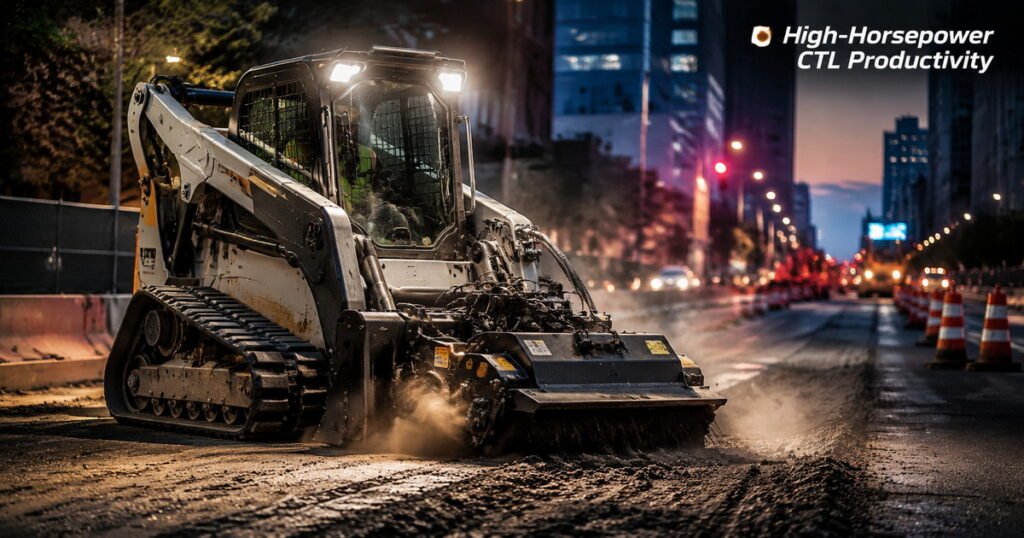
A high‑horsepower CTL with ~118 hp and 44 gpm high‑flow — similar to the Deere 335 P‑Tier — becomes a central jobsite platform. Paired with a cold planer attachment, the machine handles milling; swapping to a trencher, it opens utility lines; with grade control, it finishes subgrade ahead of paving crews. [swarmify]
Manufacturers like Certeg can serve this type of contractor by:
– Offering CTLs and skid steers across multiple power bands.
– Validating high‑flow performance with third‑party attachment partners.
– Providing telematics and data support for multi‑jobsite fleet optimization. [tsrdigital]
What Global Buyers Should Look for in Skid Steer & CTL OEMs
From conversations with procurement teams and fleet managers, several evaluation criteria recur when selecting a skid steer or CTL supplier:
– Proven experience in construction, agriculture, and industrial applications, backed by case studies and references. [ideahills]
– Configurable power and hydraulic options to fit diverse duty cycles and attachment mixes. [raddinteractive]
– After‑sales parts and service coverage across regions.
– Integration with telematics and data platforms for modern fleet management. [seo]
– Operator‑focused design — visibility, ergonomics, and safety systems. [swarmify]
Certeg’s positioning as a manufacturer of skid steer loaders (both track and wheel types) for global construction customers aligns directly with these expectations, especially for buyers who need tailored power configurations and machine setups for different ground conditions and regulatory environments. [ideahills]
High‑Power CTL Features
Below is a simplified spec‑style table based on capabilities highlighted for the 334 and 335 P‑Tier class of machines. Use this type of layout when presenting similar models from Certeg or other OEMs on your site. [swarmify]
| Feature | Typical Value in P‑Tier Class |
|---|---|
| Engine gross horsepower | 118 hp (diesel) swarmify |
| Hydraulic flow | Up to 44 gpm high‑flow swarmify |
| Aux pressure | Approx. 4,000 psi swarmify |
| Machine type | Skid steer or compact track loader swarmify |
| Cab features | Heated/vented seat, Bluetooth, 8‑in touchscreen swarmify |
| Vision system | Surround View multi‑camera swarmify |
| Grade tech | Standard indication; 3D grade control support swarmify |
| Telematics | JDLink or equivalent swarmify |
Use similar tables to compare Certeg models, highlighting power and hydraulic options across different sizes, plus any unique features (e.g., regional telematics platforms or specialized attachments). [seo]
How Contractors Should Move Forward
If you are evaluating skid steers and CTLs for your fleet, these steps help turn information into a confident decision:
1. Define your primary use cases (grading, road work, material handling, land clearing).
2. Map those applications to power and hydraulic requirements, using high‑flow benchmarks like 40–45 gpm for demanding tools. [raddinteractive]
3. Decide on CTL versus skid steer using the ground‑conditions framework above.
4. Build a short list of OEMs — including Certeg and regional dealers — that can provide machines with matching specs and support. [ideahills]
5. Request demo time with high‑power loaders equipped with the exact attachments you plan to use.
Throughout this process, focus not only on raw specs but on operator experience, data connectivity, and local support — the factors that determine day‑to‑day productivity and long‑term ownership costs. [tsrdigital]
Call to Action
If your team is comparing skid steers and compact track loaders for upcoming projects, now is the ideal moment to reassess how high‑horsepower, high‑flow machines fit into your fleet strategy. Connect with Certeg or your preferred dealer to review real‑world applications, run attachment demos, and design a loader package that matches your exact ground conditions, job profiles, and growth plans. [seo]
FAQs
1. What is the main difference between a skid steer and a compact track loader?
A skid steer uses wheels and excels on hard, stable surfaces, while a compact track loader uses tracks, delivering lower ground pressure and better traction on soft or uneven terrain. [raddinteractive]
2. Why do contractors care about hydraulic flow and auxiliary pressure?
Hydraulic flow (gpm) and auxiliary pressure (psi) determine which attachments the machine can power effectively, especially high‑demand tools like cold planers and mulchers. [raddinteractive]
3. Are grade control and telematics worth the added cost on compact loaders?
For many fleets, grade control reduces rework and improves accuracy, while telematics optimizes maintenance and utilization, often paying for themselves over the machine’s lifecycle. [seo]
4. How should I compare different OEMs offering similar power specs?
Beyond horsepower and flow, evaluate cab ergonomics, visibility systems, telematics integration, local service coverage, and attachment ecosystem support. [tsrdigital]
5. Where does a high‑power CTL fit in a mixed fleet with excavators and dozers?
High‑power CTLs typically fill the gap between mini‑excavators and small dozers, handling multi‑tool work in tight spaces while supporting precision grading and urban logistics. [gushwork]
References
1. Compact Equipment – “Machine Heads Video: Going Deep on the Skid Steer‑CTL Evolution and the New 334 and 335 P‑Tier Machines with John Deere’s Gregg Zupancic.” [Link] [swarmify]
2. SEO.com – “SEO for Heavy Equipment Companies: 7 Pro Tips.” [Link] [seo]
3. TSR Digital – “7 Expert SEO Strategies for Heavy Equipment Manufacturers.” [Link] [tsrdigital]
4. IdeaHills – “SEO & GEO for the Heavy Machinery & Construction Industry.” [Link] [ideahills]
5. Radd Interactive – “Construction Heavy Equipment Marketing & Advertising.” [Link] [raddinteractive]
6. Swarmify – “Product Video Best Practices for Ecommerce (2026).” [Link] [swarmify]
7. Telerik – “On‑Page Video SEO: A Guide.” [Link] [telerik]
8. Google Search Central – “Video SEO Best Practices.” [Link] [developers.google]
9. Gushwork – “Digital Marketing for Construction Equipment.” [Link] [gushwork]
Hot Tags: Skid Steer Loader, Manufacturers, Customized, Custom, Suppliers, Buy, Cheap, Quality, Advanced, Durable, in Stock, Made in China, Price, Quotation