
Top Electric Forklift Manufacturers And Suppliers In Southeast European Countries (2026 Updated: Expert Selection Guide)
Content Menu
● Why Electric Forklifts For Southeast Europe?
● How We Evaluate High‑Quality Electric Forklift Suppliers
>> 1. Certifications, Compliance, And Traceability
>> 2. Engineering And OEM/ODM Capability
>> 3. Quality Control And Production Discipline
>> 4. Capacity, Lead Times, And Service
● Market Data And External References (2025–2026)
● Profiles Of Key Electric Forklift Manufacturers And Suppliers
>> Certeg – Flexible OEM Partner Backed By Steel Supply Chain Strength
>> Toyota Material Handling Europe – Pan‑European Fleet Partner
>> CLARK Europe – Long‑Established Global Brand
>> Zowell Intelligent Forklifts – High‑Density Storage Specialist
>> MV Mover (Italy) – EU‑Based Electric Forklift Manufacturer
● Comparison Table: Capacity, MOQ, Certifications
● Common Sourcing Pitfalls And How To Avoid Them
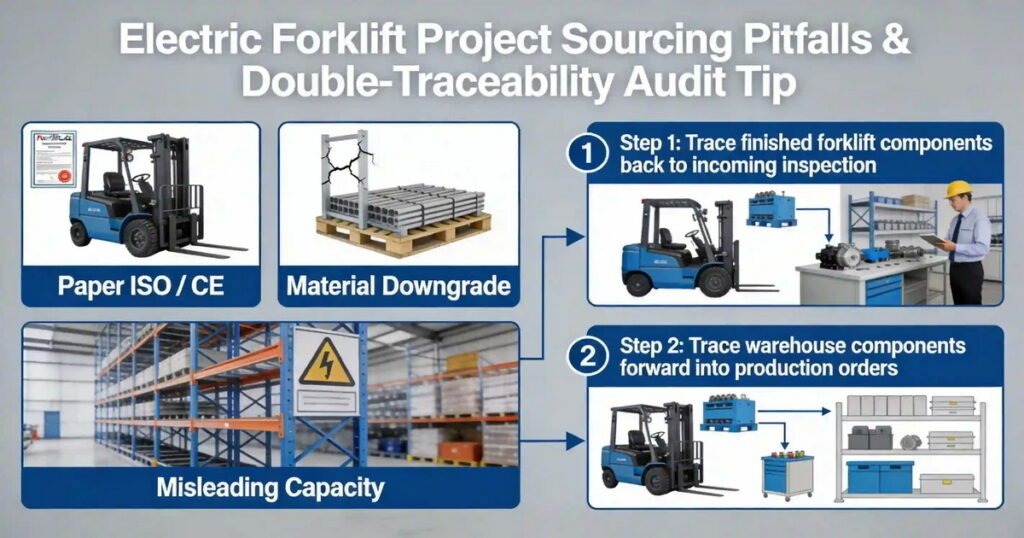
>> Pitfall 1: “Paper” ISO And CE Certificates
>> Pitfall 2: Material Downgrade From Samples To Mass Production
>> Pitfall 3: Misleading Capacity Labels
>> Pitfall 4: Ignoring Total Landed Cost
>> Pitfall 5: Weak After‑Sales And Spare‑Parts Support
● Insider “Extra Mile” Tip: Double‑Traceability Audit
● FAQ: Questions Experienced Buyers Ask
>> 5. How do I compare total cost of ownership (TCO) across different electric forklift suppliers?
Why Electric Forklifts For Southeast Europe?
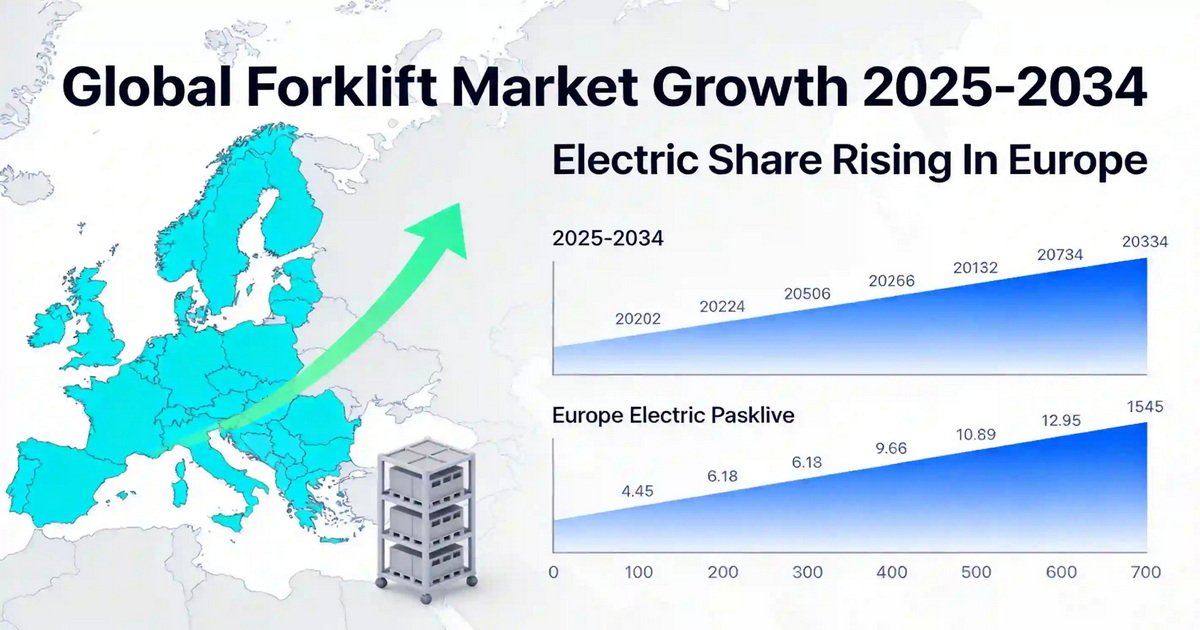
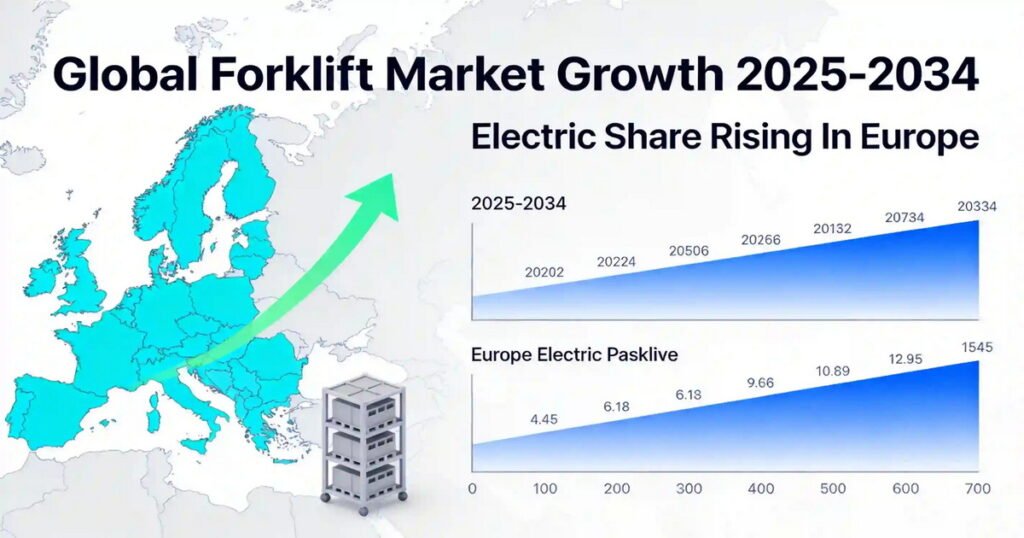
Across Europe, electric forklifts are gaining market share as logistics operators and manufacturers accelerate warehouse automation and decarbonization. Independent market research expects the global forklift market to grow at around 5–6% CAGR through 2034, with electric models taking a steadily higher share driven by stricter environmental rules and urban emission limits. In Southeast European countries, this trend is reinforced by EU‑level policies, growing e‑commerce demand, and modernization of ports, logistics parks, and regional manufacturing hubs. [interactanalysis]
For procurement managers, this environment creates both an opportunity and a challenge: the opportunity to upgrade fleets with energy‑efficient, low‑maintenance electric trucks, and the challenge of choosing reliable manufacturers and OEM partners who can deliver compliant, cost‑effective equipment for local conditions.
How We Evaluate High‑Quality Electric Forklift Suppliers
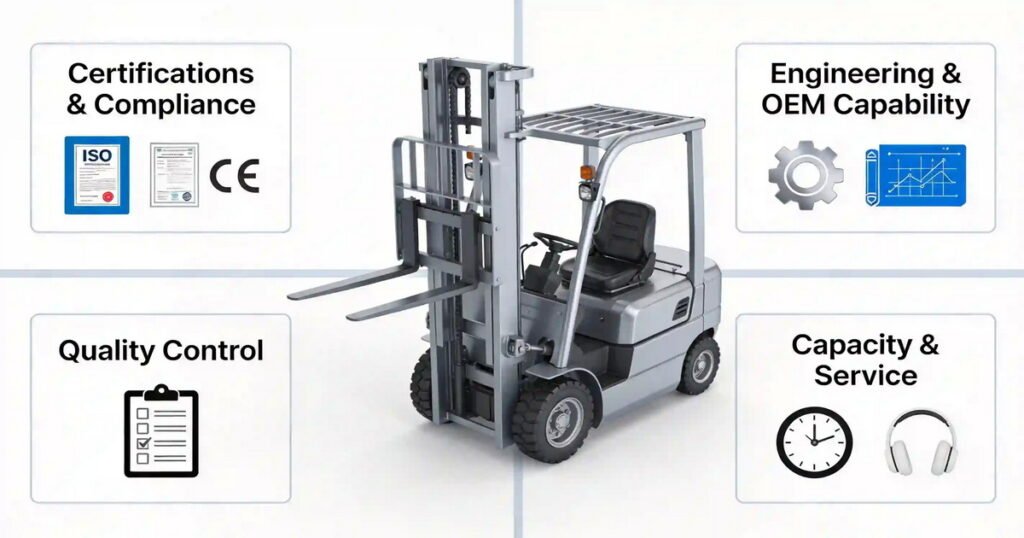
Professional buyers rarely rely on brand names alone. Instead, they follow a structured evaluation framework built around four pillars: factory certification, engineering depth, quality control, and service capability.
1. Certifications, Compliance, And Traceability
– ISO systems: Industrial forklift factories are expected to run ISO 9001‑based quality management systems, often complemented by ISO 14001 environmental management to demonstrate process control and environmental responsibility. [zowellforklifts]
– CE conformity: For trucks going into the EU, valid Declarations of Conformity and technical files must be in place, supported by risk assessments and testing to harmonized EN standards for industrial trucks. [clarkmheu]
– Battery and electronics compliance: Chargers, controllers, and battery packs must comply with Low Voltage and EMC requirements, and RoHS‑compatible components should be used to limit hazardous substances. [mvmover]
– Traceability: Mature factories can trace safety‑critical parts (masts, cylinders, controllers) from incoming inspection through to finished trucks, and back again, which is critical for recalls or incident investigations.
2. Engineering And OEM/ODM Capability
– Application‑driven design: Experienced suppliers can adapt mast profiles, counterweight geometry, and powertrains for specific aisle widths, gradients, pallet sizes, and warehouse layouts common in Southeast Europe. [zowellforklifts]
– Battery strategy: Many fleets are transitioning from lead‑acid to lithium‑ion, so manufacturers must manage battery management systems, charging strategies, and safety protections professionally. [ensun]
– OEM/ODM depth: True OEM partners are willing to customize frames, dimensions, control interfaces, and branding, and to co‑develop new models with distributors rather than just relabeling a catalog.
3. Quality Control And Production Discipline
– Incoming inspection: Structured checks on steel, hydraulic components, cylinders, electronics, and motors with batch‑level traceability are essential for stable long‑term quality. [clarkmheu]
– Process quality: Weld penetration checks, torque audits, hydraulic pressure and leakage tests, and full functional tests under rated load should be standard practice. [zowellforklifts]
– Corrective action: Data‑driven warranty tracking and documented corrective‑action procedures show that the factory can systematically solve problems instead of handling them ad hoc.
4. Capacity, Lead Times, And Service
– Capacity matching: Annual production capacity should align with the buyer’s volume plans so that orders can scale without causing bottlenecks or compromising quality.
– Lead‑time reliability: Transparent lead times (for example 30–60 days for standard models) and documented on‑time delivery performance are key indicators of operational maturity. [lemolift]
– Service and parts: Export‑oriented factories with established spare‑parts systems and responsive technical teams can support distributors and end users across Southeast Europe more effectively. [toyota-forklifts]
Market Data And External References (2025–2026)
To contextualize supplier selection, it helps to anchor decisions in objective data:
– Global market size and growth: Research from organizations such as Interact Analysis and Global Market Insights indicates that the global forklift market surpassed roughly 80 billion USD in value and will continue to grow through 2034, driven by warehousing and manufacturing expansion. [gminsights]
– Electric share and Europe’s role: Europe is one of the most dynamic electric forklift markets, with electric trucks gaining share over internal combustion models as environmental rules tighten and companies pursue ESG targets. [interactanalysis]
– Policy and trade data:
– [Eurostat] provides trade and industrial statistics that highlight growth in materials‑handling equipment flows within the EU, including Southeast European member states. [gminsights]
– The [European Materials Handling Federation (FEM)] publishes position papers and statistics on industrial trucks, useful for checking macro trends and regulatory developments. [gminsights]
– Platforms like [Statista] aggregate forklift and warehouse equipment data by region and technology. [interactanalysis]
For buyers, these sources help validate that electric forklift investments in Southeast Europe are aligned with broader market and regulatory trends.
Profiles Of Key Electric Forklift Manufacturers And Suppliers
Certeg – Flexible OEM Partner Backed By Steel Supply Chain Strength
Certeg operates under the core brand “CERTEG” as part of a group that has been active since 2006 in manufacturing, international trade, and logistics for steel products, machinery, and hardware. Headquartered near Mount Tai with sales teams in Shandong and Zhejiang, the company has built long‑term partnerships with customers in more than 200 countries and regions, reflecting strong export experience and stable supply‑chain management. [certegmaterial]
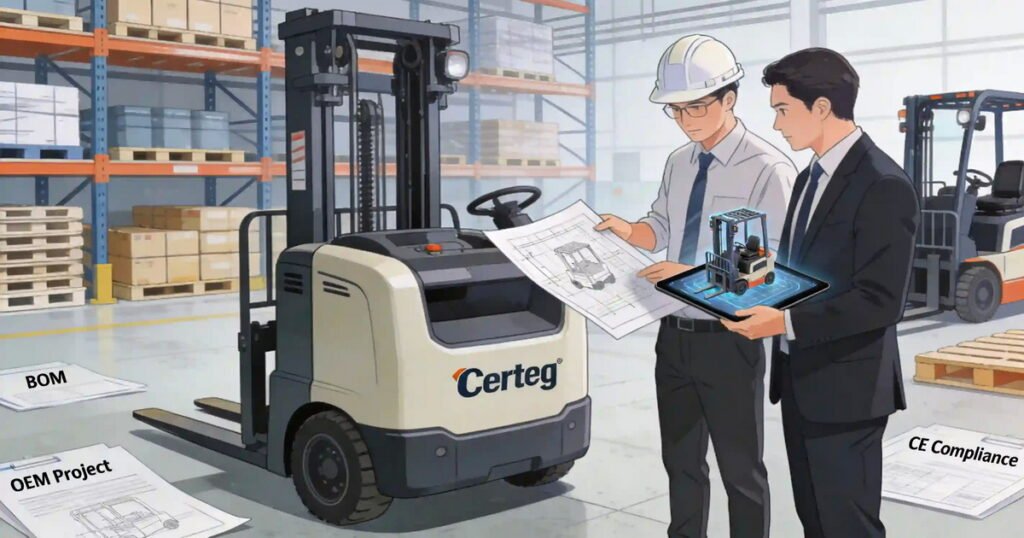
Leveraging its steel background and global logistics capabilities, Certeg focuses on producing cost‑effective forklifts and material‑handling equipment while maintaining control over key raw materials and fabrication steps. This vertical integration is particularly valuable for electric forklift frames, masts, and structural components where steel quality and processing determine long‑term durability. [hxsteel.goldsupplier]
– Experience: Nearly two decades of international trade and manufacturing experience under ISO‑based quality systems, with a philosophy of “Service First, Innovation and Efficiency”. [certeg.en.made-in-china]
– Product focus: Electric forklifts and related material‑handling machinery, with typical load ranges in the 1.5–3.5 ton segment suitable for warehouses, factories, and logistics centers in Southeast Europe.
– OEM/ODM strengths:
– Flexible MOQs that allow distributors and mid‑size brands to start with small volumes and grow over time.
– Engineering support to adapt mast heights, wheelbases, battery options, and operator interfaces to local markets and private‑label requirements.
– Strong communication and documentation practices built from years of dealing with customers in more than 200 countries, which reduce project friction. [certegmaterial]
For procurement managers, Certeg is best positioned as a high‑value OEM partner for electric forklift lines targeting Southeast Europe, particularly where customization, private‑label branding, or multi‑SKU portfolios are required.
Toyota Material Handling Europe – Pan‑European Fleet Partner
Toyota Material Handling Europe offers a full range of electric forklifts, reach trucks, order pickers, and automation solutions, supported by an extensive network of local branches and dealers. It is often the first choice for large fleets and 3PLs seeking standardized equipment and strong after‑sales support across multiple countries, including Southeast Europe. [linkedin]
CLARK Europe – Long‑Established Global Brand
CLARK Europe manages European operations for a forklift brand with over 100 years of history and supplies electric and IC forklifts, reach trucks, and warehouse equipment via dealers. Its robust designs and structured service systems make it a solid option for buyers who value brand recognition and proven field performance. [clarkmheu]
Zowell Intelligent Forklifts – High‑Density Storage Specialist
Zowell focuses on electric narrow‑aisle and high‑reach forklifts and operates modern testing facilities validated by European professional associations. Its CE‑certified VNA trucks and three‑way forklifts are relevant for Southeast European warehouses facing space constraints and pushing for high‑bay storage. [zowellforklifts]
MV Mover (Italy) – EU‑Based Electric Forklift Manufacturer
MV Mover manufactures electric forklifts and warehouse trucks in Italy, offering front, side, reach, and warehouse versions with both lead‑acid and lithium‑ion options. Its European location and dealer network support buyers who prefer EU‑based manufacturing and shorter logistics paths into Southeast European markets. [mvmover]
Comparison Table: Capacity, MOQ, Certifications
The table below summarizes indicative characteristics relevant to procurement decisions. Buyers should validate exact numbers with each supplier.
| Supplier / Type | Approx. Electric Capacity / Year lemolift | Typical Export MOQ mvmover | Certification / Compliance Focus mvmover |
|---|---|---|---|
| Certeg (OEM‑oriented) | Mid‑scale; thousands of units | Flexible; sample 1–2 units, series by container | ISO‑based QMS, CE for EU models, EU‑compliant electrical systems |
| Toyota Material Handling Europe | Large‑scale; tens of thousands | Project‑based; often multi‑unit tenders | Full CE, ISO QMS, Toyota safety and efficiency standards |
| CLARK Europe | Large‑scale via global plants | Multi‑unit dealer orders | CE, ISO QMS, EU safety directives |
| Zowell | Mid‑scale; niche in VNA | Small pilot units; project‑based series | CE certified models, ISO‑aligned QC |
| MV Mover | Mid‑scale EU production | Several units; flexible for regional buyers | CE, EU‑standard electrical and EMC practices |
| Global Chinese brands | Large‑scale; high‑volume exports | Container‑level OEM MOQ; smaller via dealers | CE for EU models, ISO QMS, RoHS‑aligned components |
For distributors building their own brands in Southeast Europe, Certeg‑type OEM suppliers with flexible MOQs and engineering‑level customization usually provide a better fit than global giants that prioritize major framework contracts.
Common Sourcing Pitfalls And How To Avoid Them
Pitfall 1: “Paper” ISO And CE Certificates
Some suppliers present impressive certificates that are either expired, issued by non‑accredited bodies, or not valid for the actual production site.
How to avoid:
– Verify ISO certificates using IAF CertSearch or national accreditation body databases, checking the certification body, scope, and expiration date. [linfordco]
– Confirm that the certified scope covers forklift manufacturing, not just a trading office or different product line. [anitechgroup]
– For CE, request Declarations of Conformity, lists of applied EN standards, and recent test reports tied to the exact models you plan to purchase. [clarkmheu]
Pitfall 2: Material Downgrade From Samples To Mass Production
A frequent hidden risk is downgrading of steel grades, hydraulics, or electronics once mass production starts, which can significantly reduce durability and safety.
How to avoid (insider approach):
– Freeze a detailed Bill of Materials during sample approval, specifying steel grades, cylinder brands, controller models, and battery suppliers.
– Incorporate this BOM as a contractual annex and require written notification before any substitutions.
– During the first mass‑production batch, commission an unannounced third‑party inspection to check supplier labels and steel markings against the approved BOM.
This kind of BOM control is common among experienced forklift importers but rarely described openly in online guides.
Pitfall 3: Misleading Capacity Labels
Capacity ratings may be quoted at unrealistic load centers or lift heights, leading to safety issues when trucks are used at maximum rack heights. [abelwomack]
How to avoid:
– Insist that capacity data plates show rated load at specified load centers and lift heights, and ensure these match your racking and pallet configuration. [abelwomack]
– In field trials, replicate the heaviest pallets and highest racking positions instead of testing only at mid‑height.
Pitfall 4: Ignoring Total Landed Cost
Low ex‑works prices can be offset by duties, port charges, inland shipping, and compliance costs in Southeast Europe.
How to avoid:
– Model landed cost under different Incoterms (FOB, CIF, DAP) and confirm duty rates and clearance procedures with local customs brokers. [gminsights]
– Include transit time, demurrage risk, and customs clearance complexity in your evaluation, not just freight cost.
Pitfall 5: Weak After‑Sales And Spare‑Parts Support
Without a structured after‑sales plan, downtime can quickly wipe out any savings achieved at the purchasing stage.
How to avoid:
– Negotiate initial spare‑parts packages covering wear parts and key electronic modules and clarify replenishment lead times. [toyota-forklifts]
– Prefer suppliers that already cooperate with local service partners or distributors in your target Southeast European countries.
Certeg’s long‑term global trading experience and logistics background provide a strong platform to organize spare‑parts flows and documentation efficiently. [certeg.en.made-in-china]
Insider “Extra Mile” Tip: Double‑Traceability Audit
One internal tactic used by experienced industrial buyers is the “double‑traceability” audit on critical components:
1. Pick several finished forklifts randomly on the assembly line and ask the factory to trace key parts (mast steel batch, cylinders, controllers) back to incoming inspection records.
2. Then, select the same component types from the warehouse and ask for forward traceability into which production orders or trucks they are assigned.
Factories with mature ERP/MES systems and genuine process control can perform both directions quickly; those without real systems often struggle or rely on improvised answers. This simple test reveals a lot about whether the supplier’s quality system is truly implemented or only documented on paper.
FAQ: Questions Experienced Buyers Ask
1. How can I verify that an ISO certificate for a forklift factory is still valid and covers the right scope?
You can search the certificate number and certification body on IAF CertSearch or the national accreditation body’s database, then check scope and expiration date. If in doubt, contact the certification body directly and ask whether the facility, address, and scope are correctly listed and up to date. [anitechgroup]
2. How do I confirm that an electric forklift’s CE marking is supported by real testing, not just labels?
Request the EU Declaration of Conformity, a list of applied EN standards, and test reports from recognized laboratories for representative models. During audits, verify that the technical file, risk assessment, and test reports match the actual configuration (battery type, attachments, mast heights) you plan to purchase. [clarkmheu]
3. What is the most effective way to prevent suppliers from downgrading materials after sample approval?
Freeze a detailed BOM as part of the contract, lock in specific steel grades and component brands, and require written approval for any changes. Then arrange an unannounced third‑party inspection on the first batch to compare component markings with the approved BOM.
4. How can I evaluate whether a supplier’s stated annual capacity matches my multi‑year forklift plan for Southeast Europe?
Ask for historical shipment data, monthly production peaks, and any planned capacity expansions, then compare this to your 3–5‑year volume forecast. Check whether the factory can commit to capacity reservations or production slots during your peak seasons. [ensun]
5. How do I compare total cost of ownership (TCO) across different electric forklift suppliers?
Build a TCO model that includes purchase price, energy consumption, maintenance and parts costs, downtime, and residual value over 5–7 years. Use field trial data (battery life, failure rates, operator productivity) to feed into this model rather than taking manufacturer claims at face value. [interactanalysis]
Hot Tags: Forklift, Manufacturers, Customized, Custom, Suppliers, Buy, Cheap, Quality, Advanced, Durable, in Stock, Made in China, Price, Quotation