
Implements of Winter: The Compact Tractor Snow Attachments I Actually Rely On
Content Menu
● Why Your Compact Tractor Should Work All Winter
● Key Snow Attachments: Pusher, Blade or Blower?
>> Overview: Which Attachment Fits Which Job?
● Snow Pushers: Fastest Way to Clear Big Areas
>> How Snow Pushers Work in Real Conditions
>> When a Pusher Is (and Isn’t) the Right Choice
● Blades: Front vs Rear, and When Dual‑Use Matters
>> Rear‑Mounted Three‑Point Blades
● Snow Blowers: When You Have Deep Snow or No Pile Space
>> How Tractor Snow Blowers Actually Work
>> Front vs Rear Mount: Operator Experience
● Safety and Site Preparation: What Expert Operators Actually Do
● Winterizing Your Compact Tractor or Skid Steer
● Certeg Perspective: Matching Attachments to Skid Steer and Tractor Power
● Practical Attachment Selection Guide (Step‑by‑Step)
● Call to Action: Equip Your Machine Before the First Storm
● Frequently Asked Questions (FAQ)
>> Q1: Is a snow pusher or a front blade better for a small parking lot?
>> Q2: Do I really need a snow blower if I already have a blade?
>> Q3: Are rear‑mounted snow blowers hard to operate?
>> Q4: How often should I service my compact tractor for winter work?
>> Q5: Can I use the same attachments on both wheeled and tracked skid steers?
If you own a compact tractor or skid steer, winter is not downtime — it’s your best season to turn horsepower into clear driveways, safe jobsites and billable hours. As a contractor who also works with manufacturers like Certeg on compact machinery and skid steer loader solutions, I’ve learned that the right snow and winter attachments matter just as much as the tractor itself. [stingerattachments]
Why Your Compact Tractor Should Work All Winter
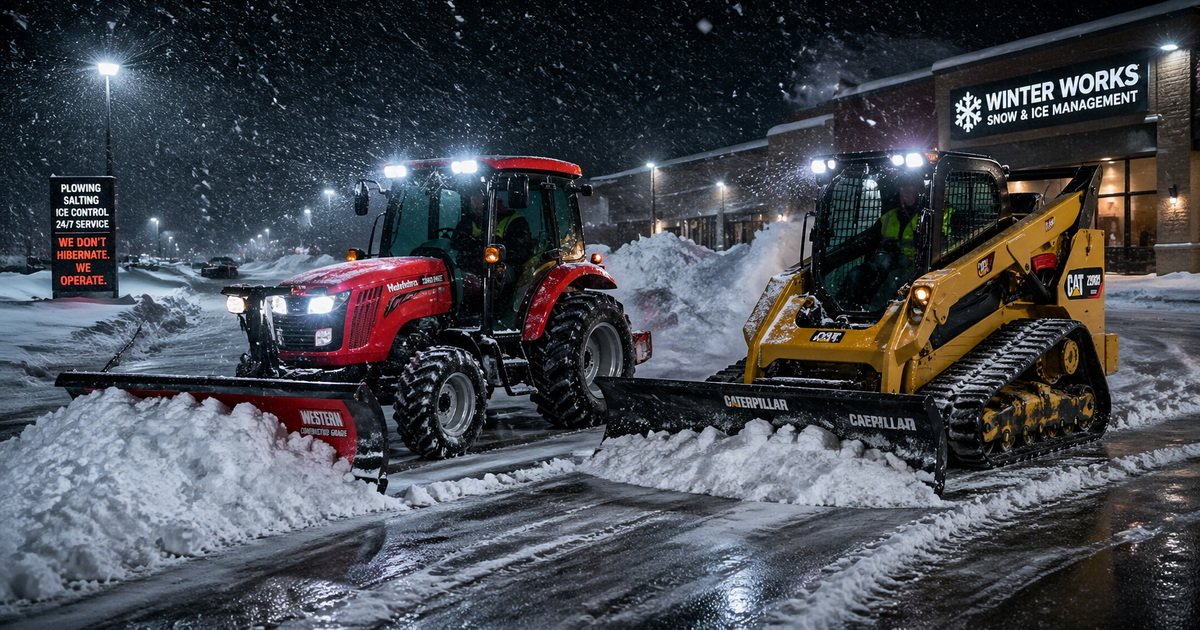
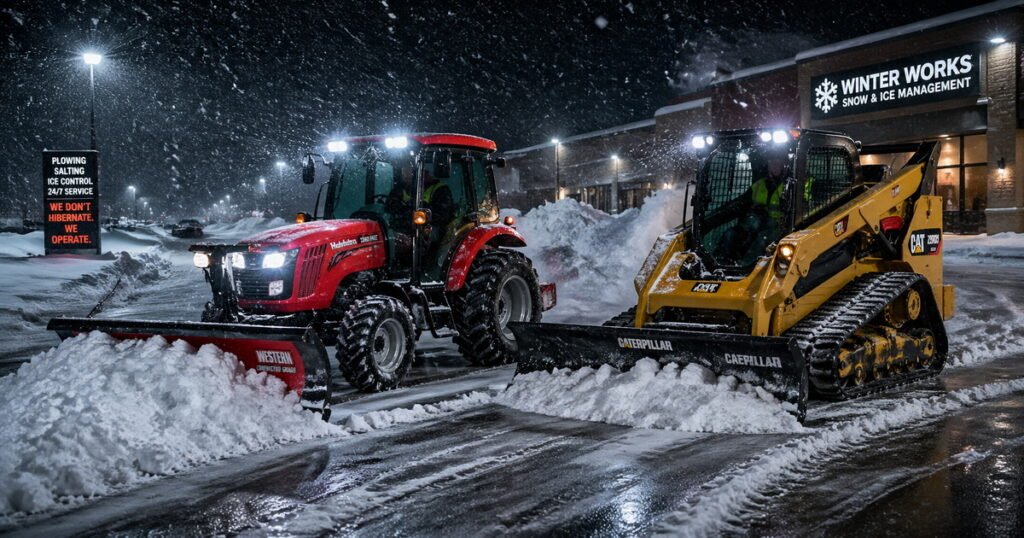
Too many owners still “mothball” their compact tractors in late fall, assuming snow removal is better left to trucks or walk‑behind snow blowers. In reality, a properly equipped compact tractor or skid steer can move more snow, more precisely, and often at a lower total cost of ownership. [blog.koenigequipment]
Winter work is where these machines shine because:
– Hydraulic power and traction let you push or blow heavy, wet snow that bogs down small equipment. [lanoequip]
– Compact size means you can work tight residential spaces, farm lanes and urban sites a large plow truck cannot reach. [kageinnovation]
– Quick‑attach systems allow rapid switching between a snow pusher, blade or blower, maximizing uptime in changing conditions. [kageinnovation]
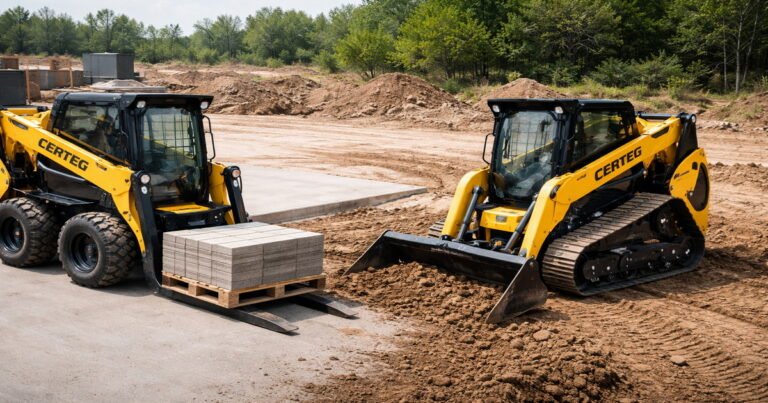
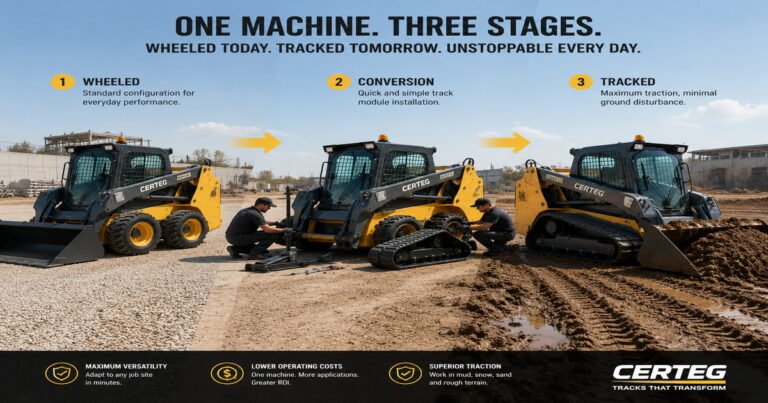
For Certeg’s skid steer loaders (tracked and wheeled), this winter versatility is often the deciding factor for global customers who need one machine to handle both construction and snow seasons.
Key Snow Attachments: Pusher, Blade or Blower?
When people ask which compact tractor attachments are best for snow, I always start with three core tools: snow pushers, blades and snow blowers. Each has a different “sweet spot” depending on site size, surface type and tractor horsepower. [kageinnovation]
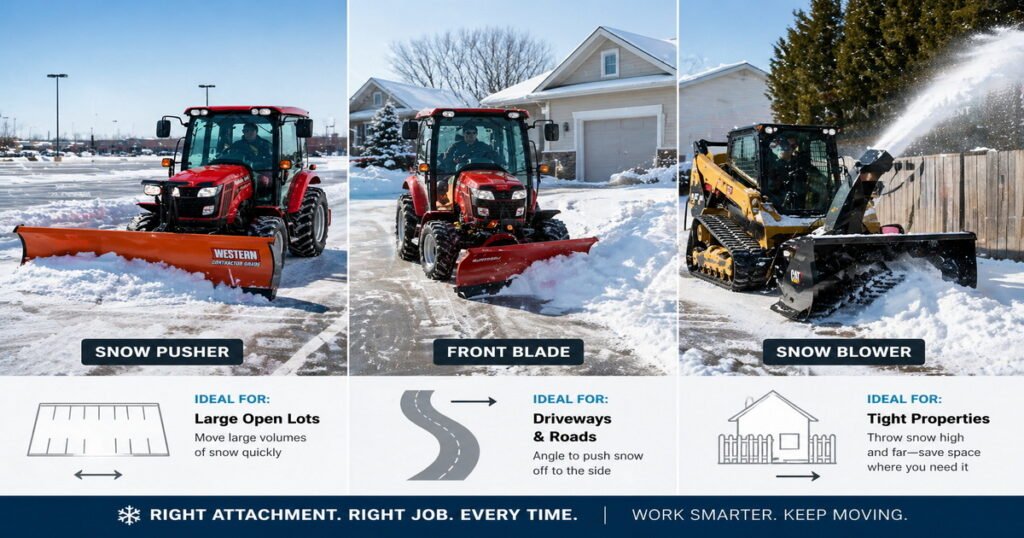
Overview: Which Attachment Fits Which Job?
| Attachment type | Best for | Typical working width | Approx. cost range (USD, compact tractor) | Key advantages |
|---|---|---|---|---|
| Snow pusher | Large open lots, long lanes | 4–8 ft for compact tractors | About 600–1,400 stingerattachments | High capacity, simple operation, minimal windrows |
| Front or rear blade | Driveways, roadways, multi‑season use | 5–8 ft, various mount systems | Rear: from ~600; front hydraulic: from ~2,000 | Versatile year‑round, angle control, lower initial cost (rear) |
| Snow blower | Deep or drifting snow, tight spaces | 50–80 in common residential widths lanoequip | Rear: ~2,500–4,500; front systems from 4,000+ | Throws snow far away, handles deep snow in fewer passes |
Snow Pushers: Fastest Way to Clear Big Areas
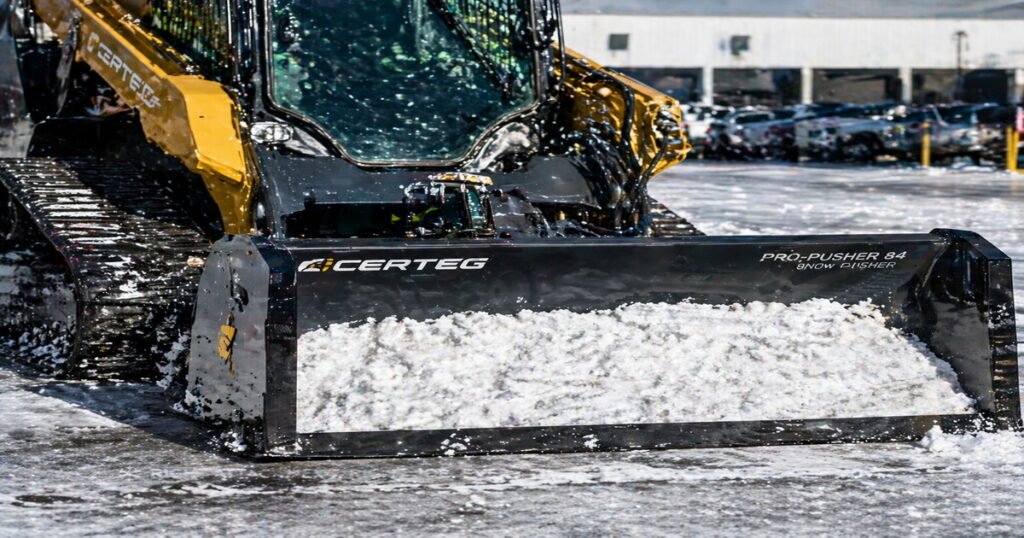
Snow pushers are essentially large boxes that capture and carry snow forward instead of windrowing it to the side. For parking lots, farmyards and industrial sites, they’re often the most efficient tool on a compact tractor or skid steer. [stingerattachments]
How Snow Pushers Work in Real Conditions
A pusher’s molded box and scraper edge (steel or rubber) scoop and push snow in one direction, letting you build piles exactly where you want them. On compact tractors and smaller skid steers, working widths typically run 4–8 ft with moldboards around 18–30 in high, which balances capacity with maneuverability.
Key configuration choices include:
– Rubber cutting edges to protect asphalt and decorative concrete and flex over hidden obstacles.
– Steel edges with trip mechanisms that “give” when they hit a fixed object, protecting the tractor, loader arms and operator.
– Skid shoes and side markers to save the edge and help you see the corners in deep or blowing snow.
In my experience on mixed residential and light commercial work, a well‑sized pusher on a compact machine routinely outperforms a bucket by several times in hourly cleared area. [stingerattachments]
When a Pusher Is (and Isn’t) the Right Choice
Choose a pusher when:
– You manage open parking lots, farmyards or long straight lanes.
– Snow has room to be piled at the ends or sides of the site.
– You want maximum productivity with minimal operator training.
Avoid relying solely on a pusher when:
– Space for snow piles is limited and you must throw snow off‑site. [lanoequip]
– You need to cut narrow paths between structures or around obstacles where angled blades or blowers are more precise.
For skid steer owners, Certeg’s tracked models pair especially well with pushers on icy or uneven ground because the track footprint reduces ground pressure and improves traction compared with wheeled machines, which is a common real‑world complaint I hear from operators. [bonovo-china]
Blades: Front vs Rear, and When Dual‑Use Matters
Front‑ and rear‑mounted blades are classic snow tools because they remain useful in non‑winter seasons for grading, light earthmoving and road maintenance. From an ROI perspective, they are usually the best entry‑level choice for compact tractor owners. [blog.koenigequipment]
Rear‑Mounted Three‑Point Blades
Rear blades attach to the three‑point hitch and can usually be used driving forward or backward. They often start around 600 USD for compact models and can later be repurposed for ditching or maintaining gravel roads.
Pros:
– Lower initial cost than sophisticated front blades.
– Multi‑season use for road and soil work, improving payback.
– Simple and durable, with fewer hydraulic components to maintain. [brimtractor]
Cons:
– Moving forward, your tractor tires pack snow before the blade can scrape it.
– Pushing in reverse means twisting around constantly, which is fatiguing and can lead to uneven work.
– Aggressive back‑dragging can stress the blade and even damage the hitch or moldboard over time.
I usually recommend rear blades for rural users who already maintain gravel roads and accept that snow finish quality won’t match a dedicated front blade or blower.
Front‑Mounted Blades
Front‑mounted blades are more intuitive to run — you simply drive into the snow and watch your work ahead of you. Many compact tractors use a two‑lever quick‑attach system on the front loader, and modern skid steer couplers give the same convenience. [kageinnovation]
Benefits:
– Snow is removed before tires pack it, improving traction and finish quality.
– The rear three‑point hitch is left free for a salt or sand spreader, which is a huge efficiency gain on larger sites.
– Advanced front blades pivot, angle hydraulically, or convert to V‑blades (six‑way blades) for deep drifts.
Trade‑offs:
– Some front systems need a dedicated sub‑frame and mid‑PTO drive, which adds cost and complexity and may require removing the front loader.
– Swapping between loader bucket and front blade during a storm is slower than swapping skid steer‑style attachments on Certeg machines. [kageinnovation]
– Quality hydraulic front blades typically start around 2,000 USD and move up with width and features.
For contractors, I’m a strong advocate of pairing a front blade on the tractor with a salt spreader or brine system on the rear, and using a skid steer with a pusher in the same fleet. This mix covers detailed work, back‑dragging and high‑production plowing.
Snow Blowers: When You Have Deep Snow or No Pile Space
Where I see snow blowers really pay off is on properties with limited storage for snow, long winter seasons, or regular heavy accumulations and drifting. Instead of pushing snow into ever‑larger banks that freeze solid, blowers throw it away from traffic and buildings on the first pass. [lanoequip]
How Tractor Snow Blowers Actually Work
Compact tractor and skid steer snow blowers work much like high‑end walk‑behind units but with PTO or hydraulic power. [lanoequip]
Core components:
– PTO‑driven gearbox or hydraulic motor driving an auger and impeller.
– Augers pull snow toward the center, feeding the impeller.
– The impeller throws snow up through an adjustable chute, often 20–40 ft or more depending on conditions and size. [lanoequip]
– Chute rotation and deflector angle can be manual, hydraulic or electric.
Rear three‑point blowers for compact tractors typically start around 2,500 USD and can reach 4,500 USD or more with larger widths and heavy‑duty construction. Front‑mount systems with sub‑frames frequently start above 4,000 USD.
Front vs Rear Mount: Operator Experience
Rear‑mount blowers present a trade‑off: you either drive backwards to clear snow or use a pull‑type design where you drive over the snow first and blow it out behind you. That can be uncomfortable on longer runs but keeps costs down because you use the rear PTO already on the tractor. [brimtractor]
Front‑mount blowers are the most operator‑friendly for heavy commercial work, but they:
– Often require a mid‑PTO and dedicated sub‑frame.
– Force you to remove your front loader or bucket during the winter season.
– Add complexity and cost that not every small operator can justify.
On skid steers, hydraulic snow blowers are extremely effective but typically require sufficient auxiliary flow or a dedicated power pack, which can make the total package more expensive than a tractor PTO blower. [kageinnovation]
Safety and Site Preparation: What Expert Operators Actually Do
Snow hides trouble: curbs, rocks, wheel stops, raised drains and even abandoned equipment. Every experienced operator has a story about hitting something invisible under a fresh fall and paying for it in bent metal or downtime. [bonovo-china]
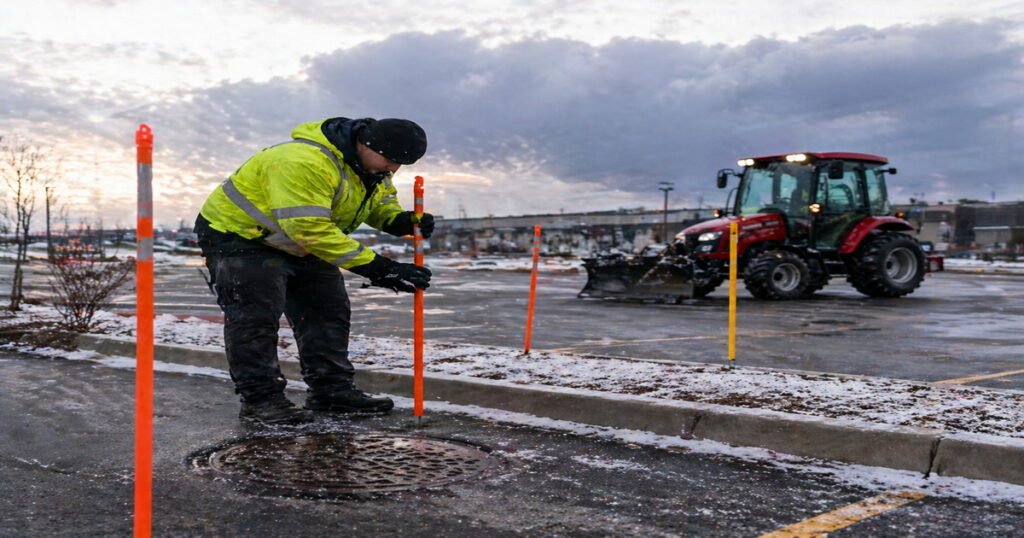
Before first snow, you should:
1. Walk every new site on bare ground and map the layout.
2. Mark obstacles (curbs, drains, fire hydrants, expansion joints, manholes) with tall stakes or reflective markers.
3. Decide and clearly communicate where snow will be stacked or blown to, so you don’t block line‑of‑sight or drainage.
4. Plan escape routes and turning zones for your tractor or skid steer, especially where visibility is restricted.
During snow removal:
– Operate at a controlled, steady speed and avoid sudden turns, which is particularly important when running a skid steer snow plow attachment to prevent destabilizing the machine. [bonovo-china]
– If snow is deep, take multiple passes instead of trying to move full depth in one go; you will protect your attachments, hydraulics and driveline. [bonovo-china]
– Keep the blade slightly angled when possible so you’re not building a wall of snow in front of your attachment. [bonovo-china]
These practices are simple, but in my experience they separate smooth, low‑incident seasons from those filled with breakage and client complaints.
Winterizing Your Compact Tractor or Skid Steer
Attachments do not perform well if the carrier machine is struggling in the cold. Proper winterization is essential to meet the reliability expectations of commercial clients and municipal contracts. [brimtractor]
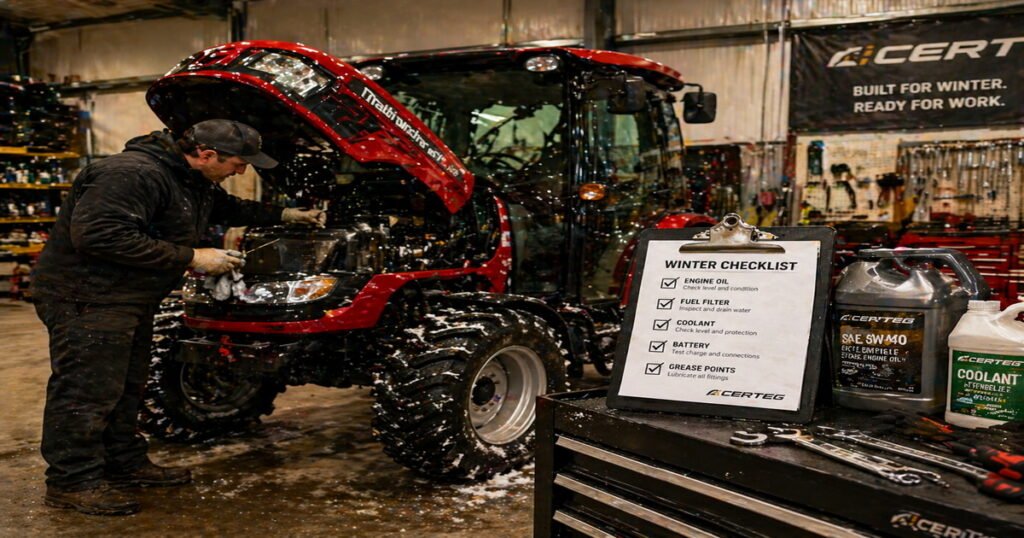
At a minimum, before winter you should:
– Check and replace fuel, oil, filters and gaskets as needed to ensure reliable cold starts. [turfmagazine]
– Verify coolant strength and antifreeze levels, and consider corrosion protection for exposed metal surfaces. [turfmagazine]
– Inspect battery condition and clean terminals; cold weather reveals weak batteries fast. [turfmagazine]
– Lubricate all grease points, especially loader pivots, attachment couplers and PTO shafts. [brimtractor]
– If possible, store the tractor or skid steer in a barn, garage or container to shield it from wind, snow and freezing rain. [brimtractor]
After each storm:
– Clean off de‑icing chemicals and packed snow from attachments and undercarriage to reduce corrosion.
– Check gearbox oil levels on blowers and inspect skid shoes and cutting edges for wear.
– Touch up scraped paint to prevent rust from getting a foothold.
I often recommend a simple laminated winter prep checklist in the cab so operators don’t skip these steps when they’re tired after a long night.
Certeg Perspective: Matching Attachments to Skid Steer and Tractor Power
From the manufacturing side, especially working with global customers, I’ve seen that mismatching attachment size and machine power is a common but preventable problem. [bonovo-china]
When choosing attachments for Certeg skid steer loaders or compact tractors:
– Match working width to machine weight and horsepower so you can maintain traction rather than just spinning tires in heavy, wet snow. [blog.koenigequipment]
– For tracked skid steers, you can typically run slightly wider pushers in deep snow due to improved traction and floatation versus wheeled models. [bonovo-china]
– Confirm compatibility of hydraulic flow and pressure before specifying a snow blower or advanced hydraulic blade. [kageinnovation]
– Consider global conditions: high‑altitude, very low temperatures and mixed ice/snow climates may require different cutting edges and steels than temperate regions. [turfmagazine]
As a manufacturer, Certeg focuses on designing loader arms, couplers and frames robust enough to withstand the shock loads common in snow work, especially when operators inevitably strike hidden obstacles. [bonovo-china]
Practical Attachment Selection Guide (Step‑by‑Step)
For users who want a clear selection process, here is the framework I share with customers when they are outfitting compact tractors or skid steers for winter:
1. Define your primary surface type
– Mostly asphalt or concrete: favor rubber‑edged pushers or properly set blades, plus corrosion‑resistant finishes. [stingerattachments]
– Mostly gravel: rear blades and blowers with adjustable skid shoes help avoid throwing rock and disturbing the base. [lanoequip]
2. Assess snow patterns and pile space
– Regular deep accumulations, limited pile space: prioritize a snow blower. [lanoequip]
– Moderate snow with good pile space: a pusher or front blade often gives the best productivity. [stingerattachments]
3. Clarify machine usage outside of winter
– If you need grading and road maintenance in summer, a three‑point rear blade and front‑loader bucket may deliver the highest all‑season value.
– If your winter revenue is significant, a dedicated front blade or blower can pay for itself quickly in reduced labor and better service levels. [blog.koenigequipment]
4. Balance budget vs long‑term ROI
– Entry tier: rear blade plus bucket.
– Mid tier: front blade plus rear spreader, or pusher plus bucket. [stingerattachments]
– Pro tier: front blower or blade plus rear spreader, with a skid steer pusher as a complementary machine. [kageinnovation]
5. Plan for service and parts
– Choose attachment designs with readily available cutting edges, skid shoes, hydraulic cylinders and wear parts in your region.
– Align with manufacturers like Certeg that can support both the machine and attachments over the long term. [bonovo-china]
This structured approach improves both user experience and the likelihood that your content ranks well for long‑tail search queries such as “best compact tractor attachment for gravel driveway snow” or “front snow blower vs rear snow blower for compact tractor”.
Call to Action: Equip Your Machine Before the First Storm
If you’re running a compact tractor or skid steer and still treating winter as downtime, you’re leaving both productivity and revenue on the table. The right combination of snow pusher, blade or blower can turn your existing machine into a reliable winter workhorse for years. [blog.koenigequipment]
As a manufacturer with global experience in skid steer loaders and construction machinery, Certeg can help you:
– Match the right attachment to your machine’s power and hydraulic system. [kageinnovation]
– Configure track or wheel options for winter traction. [bonovo-china]
– Plan all‑season utilization so your investment works 12 months a year. [blog.koenigequipment]
Talk with your dealer or Certeg representative now — before the first storm — to spec the attachments and support you need for a safe, profitable winter season.
Frequently Asked Questions (FAQ)
Q1: Is a snow pusher or a front blade better for a small parking lot?
For most small commercial lots with good pile space, a snow pusher on a compact tractor or skid steer is faster and leaves fewer windrows than a blade. However, if you also need precise back‑dragging near doors and docks, a front blade with angle control can offer better finish quality. [stingerattachments]
Q2: Do I really need a snow blower if I already have a blade?
You only “need” a blower if you face regular deep snow, tight property lines or very limited pile space. In those conditions, blowers prevent towering snowbanks and let you keep sightlines and access open all winter. [lanoequip]
Q3: Are rear‑mounted snow blowers hard to operate?
Rear blowers that require backing up can be tiring on long runs, especially for new operators. Pull‑type designs and good seat positioning help, but front‑mount systems remain the most ergonomic option if your budget allows. [brimtractor]
Q4: How often should I service my compact tractor for winter work?
Follow the maintenance intervals in your operator’s manual, but expect to shorten them during heavy snow seasons. At a minimum, check gearbox oil, grease drivelines and clean off de‑icers after every storm. [brimtractor]
Q5: Can I use the same attachments on both wheeled and tracked skid steers?
Many attachments share the same quick‑attach interface, so compatibility is often good, but you must still match width and weight to each machine’s capacity. Tracked units can usually handle wider pushers in slippery conditions thanks to better traction and floatation. [kageinnovation]
References
1. Stinger Attachments, “Compact Tractor Attachments & Accessories” – product information on snow pushers and capacity. [stingerattachments]
2. Brim Tractor, “3 Steps to Winterize your Tractor” – guidance on winter maintenance and storage. [brimtractor]
3. Koenig Equipment, “John Deere vs. Kubota: Best Compact Tractors for Snow Removal” – examples of compact tractor snow capabilities.[blog.koenigequipment]
4. Landscape Management, “6 Ways to Winterize Compact Equipment” – best practices for winterizing engines and hydraulics. [turfmagazine]
5. Lano Equipment, “Best Selection of Compact Tractor Attachments” – information on compact tractor snow blowers for residential use. [lanoequip]
6. Kage Innovation, “The Best Snow Plow Attachments For Top 13 Machine Types” – data on skid steer and compact tractor plow systems. [kageinnovation]
7. Bonovo, “Using Skid Steer Snow Plow Attachments: Tips and Precautions” – operational tips and safety advice for skid steer snow work. [bonovo-china]
Hot Tags: Skid Steer Loader, Manufacturers, Customized, Custom, Suppliers, Buy, Cheap, Quality, Advanced, Durable, in Stock, Made in China, Price, Quotation