
Yanmar Compact Track Loader Specs and Product Lineup – Expert Review and 2026 Buyer’s Guide
Content Menu
● Why Compact Track Loaders Are Outpacing Skid Steers
● Inside Yanmar’s Compact Track Loader Lineup (TL65RS, TL75VS, TL80VS, TL100VS)
>> Core Specifications Overview
● Operator‑First Design – Cab, Visibility and Safety
● Hydraulics, Attachments and Real‑World Productivity
● CTLs vs Skid Steers – How to Choose for Your Fleet
● What Industry Data Says About CTL Trends Through 2033
● Practical Buying Checklist from an Operator’s Perspective
● Where Certeg Fits in a CTL‑First World
● How to Visualize and Compare CTL Options
● Turn Specs into Jobsite Productivity
● FAQs: Compact Track Loaders and Yanmar’s Lineup
>> Q1. Are compact track loaders really worth the higher purchase price compared to skid steers?
>> Q2. How do Yanmar CTLs compare to other top compact track loader brands?
>> Q3. Do I still need wheel skid steers if I invest heavily in CTLs?
>> Q4. What should I prioritize in a CTL spec sheet for urban construction sites?
>> Q5. How important are telematics and advanced electronics on compact track loaders?
Yanmar’s latest compact track loaders (CTLs) deliver a convincing mix of power, comfort and technology for modern jobsites, but as a contractor and equipment marketer who lives with these machines every day, I also see where buyers still have unanswered questions — especially when comparing brands or choosing between CTLs and skid steer loaders. This guide breaks down Yanmar’s compact track loader specs and product lineup from an expert, real‑world perspective and then connects those insights to what Certeg and other premium manufacturers are doing across both track and wheel skid steer loaders. [compactequip]
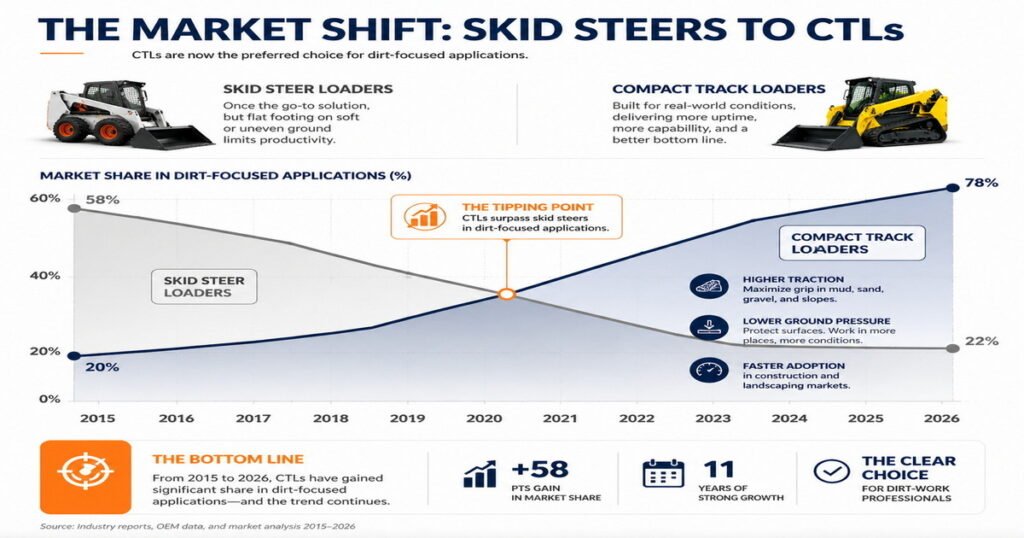
Over the last decade, compact track loaders have gone from a niche option to the dominant compact loader format in North America, now making up roughly 80% of the compact loader market in dirt‑focused applications. As someone who has specced and operated both skid steer loaders and CTLs on dense urban sites and soft, muddy projects, I’ve seen firsthand why that shift is happening: traction, stability and all‑day operator comfort now matter as much as headline horsepower. [accio]
Why Compact Track Loaders Are Outpacing Skid Steers
In 2026, the compact track loader segment continues to grow faster than traditional skid steers, especially on earthmoving and construction projects. Multiple market analyses show CTLs holding more than a one‑third share of the overall loader market, with adoption driven by construction, landscaping and forestry customers who need sure‑footed performance on uneven, soft or wet ground. [linkedin]
Key reasons CTLs are winning more bids:
– Superior traction and flotation on mud, sand and loose aggregate, reducing downtime after heavy rain. [awesomeearthmovers]
– Lower ground pressure, which protects finished surfaces and landscaping compared to wheeled skid steers. [accio]
– Higher pushing power for grading, backfilling and site prep, thanks to better contact area and undercarriage design. [compactequip]
– Operator confidence on slopes and uneven terrain, where tracks feel more planted than wheels. [compactequip]
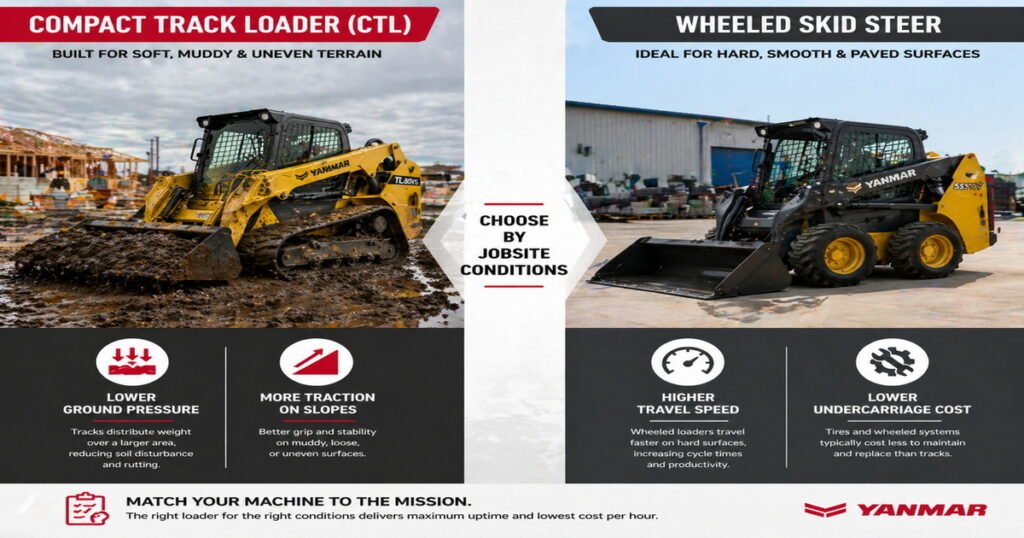
However, skid steer loaders still offer important advantages on hard, paved surfaces and in applications like snow removal and fast shuttle work, where their speed and typically lower running costs shine. That is why many fleets now intentionally run a mix of tracked and wheeled machines to match different jobs, and why manufacturers like Certeg continue to develop both compact track loaders and wheel skid steers rather than betting on a single configuration. [linkedin]
Inside Yanmar’s Compact Track Loader Lineup (TL65RS, TL75VS, TL80VS, TL100VS)
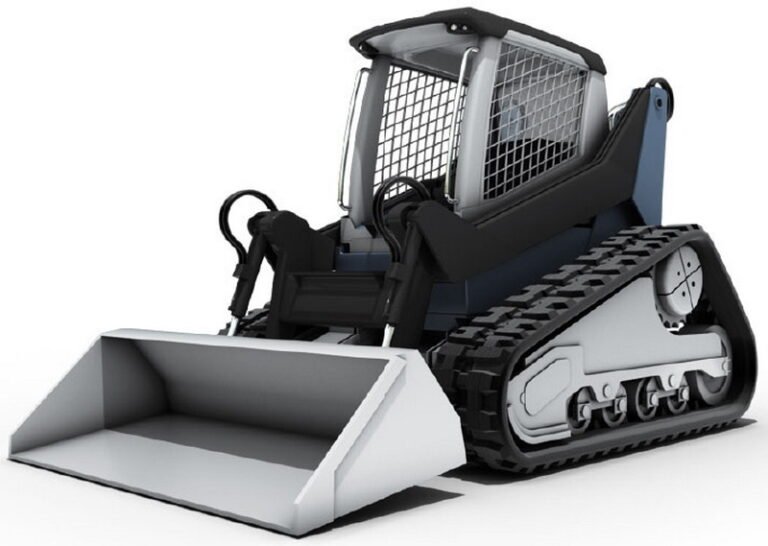
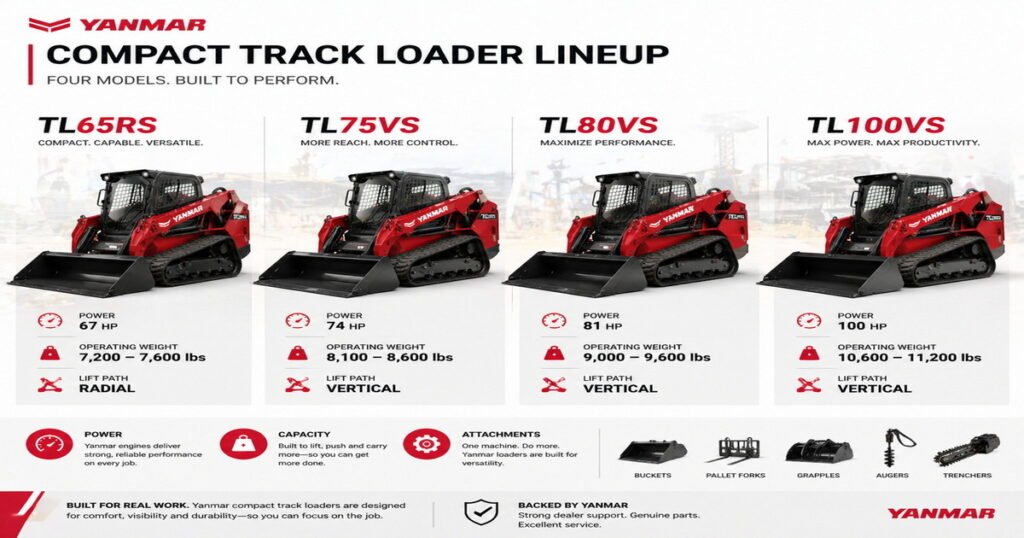
Yanmar’s new compact track loader family spans four core models designed for construction‑grade duty cycles: TL65RS, TL75VS, TL80VS and TL100VS. Engine outputs range from about 67 hp to 103.5 hp, with operating weights roughly between 8,575 lb and 10,555 lb, giving contractors a clear progression from compact, transport‑friendly units to higher‑capacity production machines. [compactequip]
These machines share Yanmar’s Tier 4 Final diesel platform, which is known for fuel efficiency and reliable torque delivery in compact excavators and agricultural equipment. They also leverage a torsion‑axle suspended undercarriage that reduces vibration and shock transfer to the cab, an under‑appreciated benefit when you spend 8–10 hours a day in the seat on rough ground. [compactequip]
Core Specifications Overview
While detailed specs should always be checked in the latest brochure or dealer site, the table below summarizes key attributes of the current Yanmar CTL lineup. [youtube]
| Model | Approx. Gross Engine Power | Operating Weight | Notable Features |
|---|---|---|---|
| TL65RS | ~67 hp diesel compactequip | ~8,500–8,700 lb compactequip | Radial lift, compact footprint, suitable for tight urban sites compactequip |
| TL75VS | ~74–75 hp diesel compactequip | ~9,000–9,500 lb compactequip | Vertical lift, improved reach at full height, ideal for truck loading compactequip |
| TL80VS | ~80 hp diesel compactequip | ~9,500–10,000 lb compactequip | Higher rated operating capacity, heavy attachments and grading work compactequip |
| TL100VS | Up to 103.5 hp diesel compactequip | ~10,500 lb compactequip | Flagship model, maximum hydraulic power and productivity compactequip |
Yanmar also continues to expand its CTL family with newer radial‑lift units such as the TL50RP and compact models like the TL25RP, giving buyers more choices across jobsite sizes and price points. This tiered approach mirrors what we see from other premium manufacturers (including Certeg), where lineups typically run from roughly 50 hp “entry” units to 100+ hp production machines with high‑flow hydraulics and advanced telematics. [forconstructionpros]
Operator‑First Design – Cab, Visibility and Safety
On paper, power and capacity sell machines; in the field, operator experience keeps them on the job and reduces turnover. Yanmar clearly invested in cab design and safety, and those are areas where many user reviews and demo operators are especially positive. [compactequip]
Key cab and safety features include:
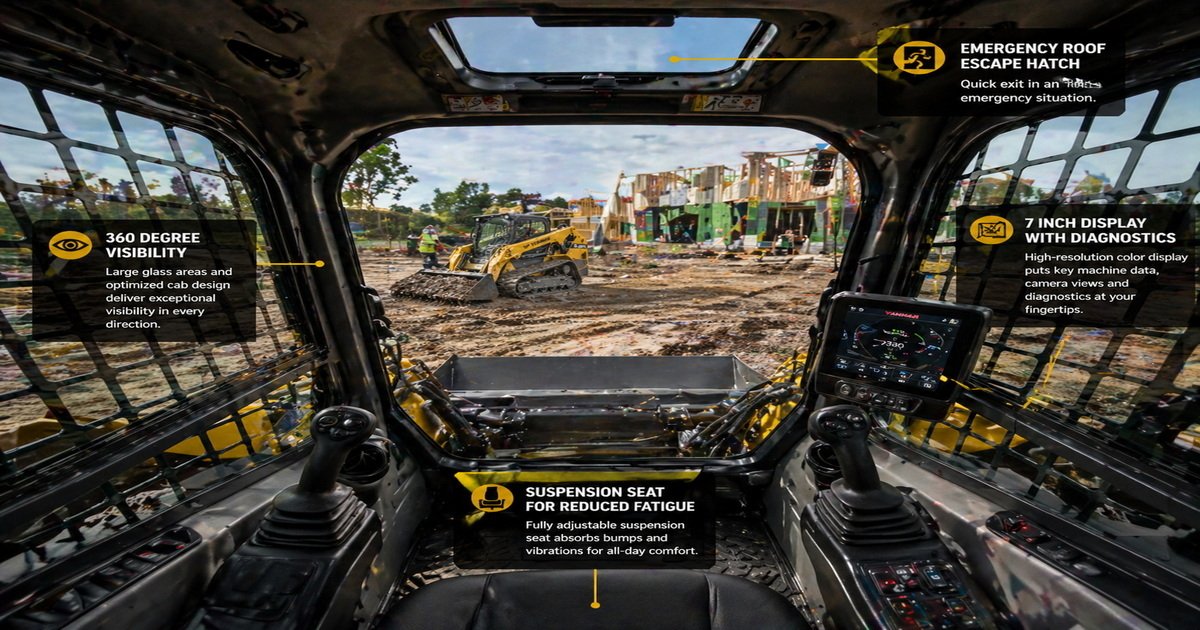
– 360‑degree visibility with large glass areas and thoughtful cab geometry. [youtube]
– A standard suspended seat that absorbs shocks and keeps operators fresher late in the day. [compactequip]
– A removable roof hatch escape, providing an additional emergency egress route beyond the front door. [compactequip]
– LED work lights and a 7‑inch color display, making machine status and diagnostics easier to see in all conditions. [youtube]
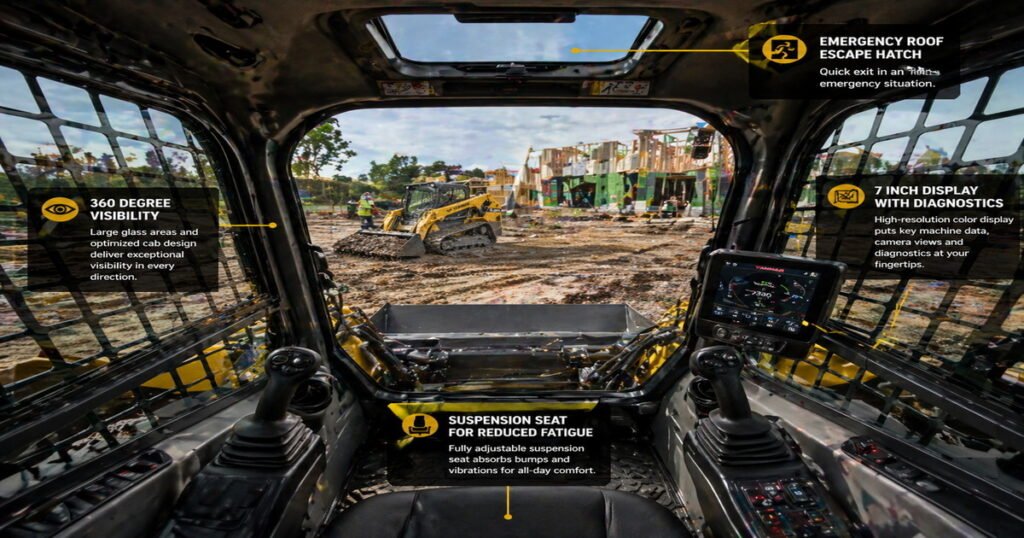
From a usability standpoint, this kind of design matters as much as raw performance. On complex sites where you’re constantly working around ground crews, trucks and other machines, better visibility reduces near misses and soft‑tissue strain from constantly leaning and twisting to see around blind spots. [equipmentworld]
You can further improve human‑machine interaction by standardizing on similar display layouts and control patterns across your fleet — something Certeg and other OEMs focus on so operators can switch between wheeled skid steers and CTLs with minimal relearning. [equipmentworld]
Hydraulics, Attachments and Real‑World Productivity
One of the biggest reasons compact track loaders have become “mini tool carriers” for modern fleets is their hydraulic capability. Yanmar CTLs offer both standard‑flow and optional high‑flow auxiliary circuits, allowing you to run demanding attachments like cold planers, mulchers and heavy‑duty trenchers. [youtube]
From an expert buyer’s perspective, you should focus on three hydraulic aspects when considering a Yanmar or alternative brand:
1. Standard‑flow GPM and pressure – Determines how well you can run common attachments (buckets, grapples, power rakes) without high‑flow. [compactequip]
2. High‑flow GPM and pressure – Critical for production attachments; small differences here can translate into significant time savings on big contracts. [equipmentworld]
3. Hydraulic cooling and protection – A robust cooling package, guarded lines and easy‑to‑clean coolers keep the machine in its optimal performance band, especially in hot climates or under continuous high‑flow use. [compactequip]
Yanmar’s focus on high‑flow options and telematics (via SmartAssist) aligns with broader market trends where contractors expect detailed utilization data, fuel consumption tracking and proactive maintenance alerts. Certeg and similar manufacturers are following the same path by integrating smarter electronics, load monitoring and, in some cases, semi‑autonomous features into track and wheel loaders to raise fleet‑level productivity. [linkedin]
CTLs vs Skid Steers – How to Choose for Your Fleet
Although compact track loaders are gaining market share, skid steers are far from obsolete. The right choice depends on your ground conditions, application mix and ownership cost expectations. [awesomeearthmovers]
When compact track loaders make more sense:
– You frequently work on soft soils, mud, sand or rough terrain. [accio]
– You need maximum pushing power for grading, site stripping or backfilling. [accio]
– You want lower ground disturbance and better flotation for landscaping or golf course work. [linkedin]
When skid steer loaders (wheel) may be better:
– Your jobs are mostly on paved or hard‑packed surfaces. [compactequip]
– You prioritize speed and lower undercarriage maintenance costs. [awesomeearthmovers]
– You do a lot of snow removal, yard loading and short‑cycle material handling. [accio]
This is why Certeg and many large contractors run both machine types, matching compact track loaders to earthmoving and traction‑critical tasks while using wheel skid steers for yards, streets and snow operations. [linkedin]
What Industry Data Says About CTL Trends Through 2033
If you’re planning purchases for the next 5–7 years, it helps to step back from individual spec sheets and look at the broader compact track loader market. Recent forecasts show robust growth driven by construction, landscaping and agriculture, with urbanization and infrastructure spending as key demand drivers. [accio]
Notable market‑level trends include:
– CTL dominance over skid steers in North American dirt‑centric applications, with multiple reports confirming that CTLs account for the majority of compact loader sales. [awesomeearthmovers]
– Technology integration such as telematics, automation and remote diagnostics becoming standard expectations rather than premium extras. [linkedin]
– Sustainability pressure, pushing OEMs toward more efficient engines, lower emissions and even hybrid or electric prototypes in select markets. [compactequip]
Yanmar’s integration of ASV undercarriage technology and expansion into more CTL models, along with competing launches from major brands in 2024–2026, confirm that manufacturers see compact track loaders as a long‑term strategic category rather than a short‑term trend. For buyers, that means continued innovation — and a stronger case for standardizing attachment interfaces and control schemes across brands to keep fleets flexible. [heavyequipmentguide]
Practical Buying Checklist from an Operator’s Perspective
Beyond the marketing language, the best way to judge a CTL like Yanmar’s TL series — or a comparable Certeg machine — is to treat the purchase as a multi‑year productivity decision rather than a one‑time transaction. Based on conversations with fleet managers and my own time speccing machines, here is a simple, actionable checklist: [compactequip]
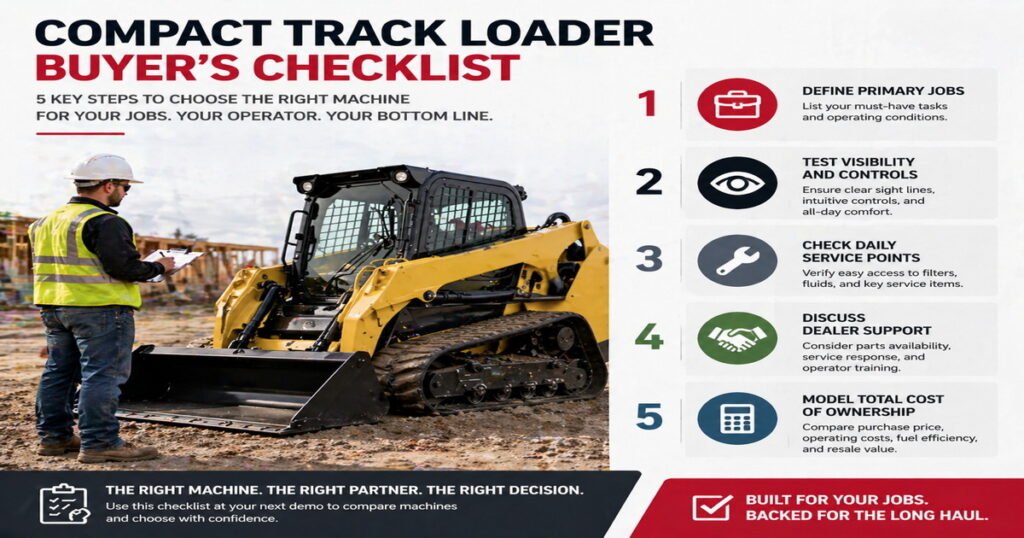
1. Define your primary jobs. List your top three use cases (e.g., residential grading, commercial site prep, utility trench backfill) and ensure the machine’s lift path, ROC and attachment support match those tasks. [equipmentworld]
2. Test visibility and controls. Get seat time in at least two models; evaluate sight lines to the cutting edge, rear corners and sides, and note how intuitive the joysticks and display feel. [compactequip]
3. Check daily service points. Confirm that filters, fluid checks and grease points are accessible without tools or cab tilting where possible; easier service means better compliance. [compactequip]
4. Discuss dealer support. Ask about parts availability, loaner units and response times; even the best CTL loses value if you can’t keep it running. [equipmentworld]
5. Model total cost of ownership. Compare fuel consumption, expected undercarriage life and resale values across CTLs and skid steers over at least a five‑year window. [accio]
Manufacturers like Yanmar emphasize these same points, with product specialists stressing the importance of understanding daily maintenance requirements and spending time in each machine before making a purchase decision. [compactequip]
Where Certeg Fits in a CTL‑First World
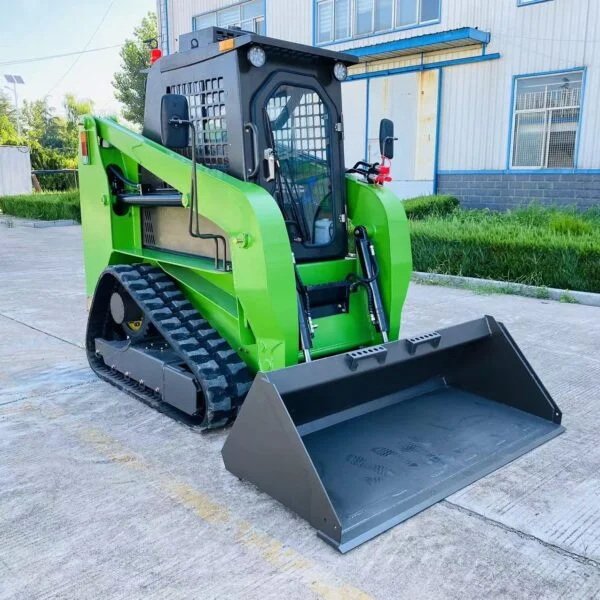
As a producer of both tracked and wheeled skid steer loaders, Certeg positions itself for customers who want a unified fleet experience across different power levels and working conditions. While Yanmar offers a strong, construction‑grade CTL lineup, many global buyers also look for brands that can deliver consistent engines, hydraulics, cab design and telematics across a full range of compact machinery. [compactequip]
By focusing on machine families that cover multiple power bands and undercarriage types, manufacturers like Certeg can:
– Provide matched performance across CTLs and wheel skid steers for different terrains. [linkedin]
– Simplify training and spare parts stocking through common components and control logic. [equipmentworld]
– Offer flexible customization (attachments, guarding, high‑flow options) that can be tailored to regional regulations and project needs. [compactequip]
For contractors, the most important step is aligning any Yanmar purchase — or an alternative CTL from Certeg or another brand — with your existing fleet strategy. That includes understanding which loader will carry which attachment, on which ground conditions, with which operators, and then validating those assumptions with real demo time. [compactequip]
How to Visualize and Compare CTL Options
From a user‑experience perspective, equipment buyers rarely make decisions based on text alone. To get the most value from this kind of technical information, it helps to visualize it. [equipmentworld]
Recommended visual assets for this topic:
– A side‑by‑side photo of a Yanmar compact track loader and a wheel skid steer working on different surfaces (mud vs. pavement) to illustrate application fit. [awesomeearthmovers]
– A simple comparison chart showing CTL vs skid steer metrics: ground pressure, typical ROC, maintenance cost band, and ideal applications. [accio]
– A short walk‑around video highlighting Yanmar TL‑series service points, cab entry, visibility and attachment coupling. [youtube]
– A visual timeline graphic of CTL adoption over the last decade and forecast growth through 2033. [linkedin]
Turn Specs into Jobsite Productivity
If you’re evaluating compact track loaders for 2026 projects, don’t stop at reading spec sheets. Arrange side‑by‑side demos of Yanmar’s TL‑series machines and at least one alternative from another manufacturer so your operators can feel the differences in traction, cab comfort and control responsiveness. [compactequip]
Then, map those insights back to your fleet strategy: decide where CTLs will replace or complement existing skid steer loaders, which attachments you plan to standardize on, and how telematics data will feed into your maintenance and bidding processes. Engaging early with dealers — including Certeg’s regional partners where available — helps you lock in build slots, configuration options and support agreements that turn a good machine choice into a long‑term competitive advantage. [equipmentworld]
FAQs: Compact Track Loaders and Yanmar’s Lineup
Q1. Are compact track loaders really worth the higher purchase price compared to skid steers?
Yes, in soft ground, grading and heavy pushing applications, CTLs often deliver more productive hours per day and fewer weather‑related delays, which can outweigh the initial price premium over several years. [awesomeearthmovers]
Q2. How do Yanmar CTLs compare to other top compact track loader brands?
Yanmar’s TL‑series machines are competitive on power, cab comfort and undercarriage design, especially with their torsion‑axle suspension and strong Tier 4 Final engines, though specific advantages will vary by model and attachment mix. [forconstructionpros]
Q3. Do I still need wheel skid steers if I invest heavily in CTLs?
Many fleets keep at least a few wheel skid steers for yard work, paved sites and snow removal, using CTLs primarily for dirt‑focused or traction‑critical tasks where their performance advantage is clear. [awesomeearthmovers]
Q4. What should I prioritize in a CTL spec sheet for urban construction sites?
Focus on overall width and height for access, visibility, rated operating capacity at 35% of tipping load, vertical vs radial lift for truck loading, and noise levels or cab comfort for long shifts. [compactequip]
Q5. How important are telematics and advanced electronics on compact track loaders?
Telematics improve uptime and fleet management by tracking utilization, maintenance needs and fault codes, and they are increasingly standard on new CTLs, including Yanmar’s SmartAssist‑equipped models. [youtube]
References
1. Compact Equipment – “Yanmar Compact Track Loader Specs and Product Lineup for 2025” (2025). [compactequip]
2. Accio – “Track Loader Trends 2026: Key Market Insights” (2026). [accio]
3. Top 10 Compact Track Loaders – “Top 10 Most Popular New Compact Track Loaders of 2024” (2025). [forconstructionpros]
4. Compact Equipment – “Yanmar Compact Track Loaders — 2014 Spec Guide” (2014).[compactequip]
5. YouTube – “A Closer Look: Yanmar’s New Line of Compact Track Loaders” (2025). [youtube]
6. LinkedIn Insight – “Compact Track Loaders Market Size Forecast from 2026 to 2033” (2026). [linkedin]
7. Equipment World – “Compact Track Loader Buyer’s Guide 2025” (2025). [equipmentworld]
8. Awesome Earthmovers – “The Unstoppable Rise of the Compact Track Loader” (2023). [awesomeearthmovers]
9. Heavy Equipment Guide – “Yanmar expands compact track loader lineup” (2026). [heavyequipmentguide]
10. Compact Equipment – “The State of Skid Steers and Compact Track Loaders in 2026” (2026). [compactequip]
Hot Tags: Skid Steer Loader, Manufacturers, Customized, Custom, Suppliers, Buy, Cheap, Quality, Advanced, Durable, in Stock, Made in China, Price, Quotation