
3D Grade Control for Compact Track Loaders: 2026 Guide to Dozer-Level Productivity
Content Menu
● What Is Grade Control on a Compact Track Loader?
● 2D vs 3D Grade Control: Key Differences
● How 3D Grade Control Works on Compact Track Loaders
● Productivity and ROI: Why Contractors Move to 3D
>> Operator Upskilling and Labor Flexibility
● Ideal Jobs for 3D-Equipped Compact Track Loaders
● Leading 3D Grade Control Platforms for CTLs
● CTL + Dozer Hybrid Concepts and Fleet Strategy
● Practical Steps to Implement 3D Grade Control on a CTL
● Common Mistakes When Moving from 2D to 3D
● How 3D CTLs Change Bidding and Business Strategy
● User Experience Tips for CTL Operators Using 3D Systems
● Quick Comparison: 2D vs 3D Grade Control on CTLs
● Turn Your CTL into a 3D Grading Profit Center
● FAQs
>> 1. What is the main benefit of 3D grade control on a compact track loader?
>> 2. Do I need a base station for 3D CTL grade control?
>> 3. Can I start with 2D and upgrade to 3D later?
>> 4. How long does it take operators to learn 3D systems?
>> 5. Is 3D grade control worth it for small contractors?
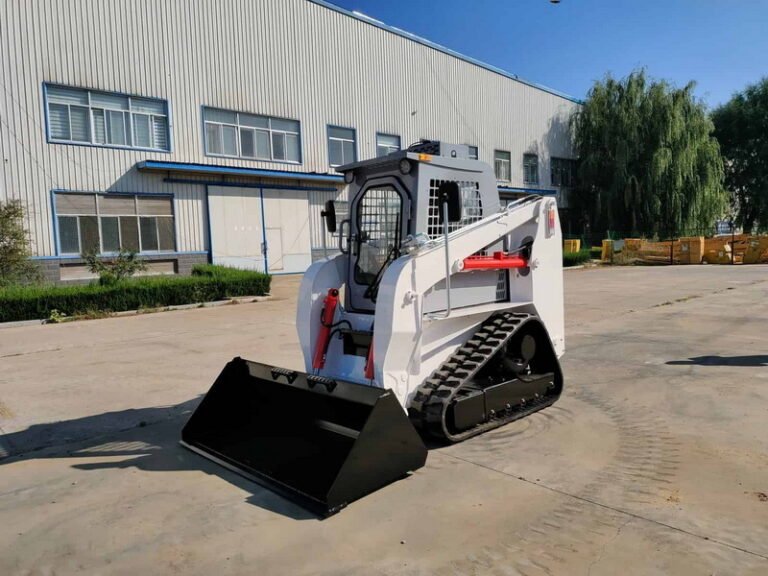
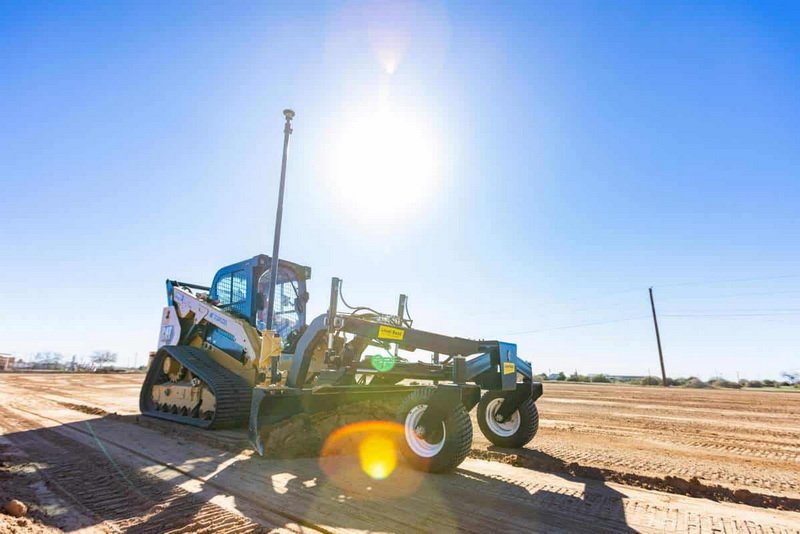
Compact track loaders with advanced 3D grade control systems now deliver dozer-size productivity on tight, complex jobsites while keeping fleet costs and transport logistics under control. This in-depth guide explains how 3D grade control works on compact track loaders (CTLs), compares 2D vs 3D systems, highlights leading technology platforms and real-world use cases, and shows contractors how to turn a CTL into a profit-driving grading machine.
What Is Grade Control on a Compact Track Loader?
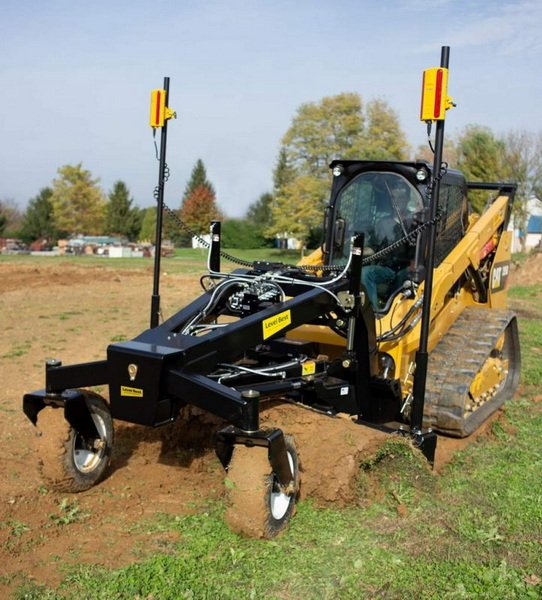
Grade control (often called machine control) is a technology that partially automates the grading attachment on your compact track loader using sensors, lasers, GPS/GNSS or total stations to maintain the target elevation and slope. Instead of relying only on stringlines and operator “eye,” the system continuously measures the bucket or blade position and sends automatic correction commands so the machine cuts or fills to design grade.
With a properly set up CTL grade control system, contractors can:
– Cut and finish faster with fewer passes.
– Hit tighter tolerances on pads, parking lots and complex landscapes.
– Reduce survey stakes, rework and material waste.
– Let newer operators achieve results closer to experienced finish dozer operators.
Grade control turns a compact track loader into a light-duty finish dozer, ideal for final grading, backfilling and jobsite cleanup on both small urban infill sites and large civil projects.
2D vs 3D Grade Control: Key Differences
Both 2D and 3D systems boost productivity, but they are designed for different levels of job complexity.
2D Grade Control on CTLs
2D systems use laser receivers, sonic tracers or slope sensors to control elevation relative to a single reference plane or line. They are ideal for:
– Flat pads and basic site prep.
– Single-slope work such as driveways, parking lots or shed foundations.
– Indoor or covered environments where GPS is not available.
Typical 2D benefits include:
– Lower cost hardware and simpler installation.
– Easy entry point for contractors new to machine control.
– Strong return on investment for repetitive flatwork projects.
However, 2D systems struggle when elevation changes in multiple directions or when the design includes complex contours and grade breaks.
3D Grade Control on CTLs
3D grade control integrates GPS/GNSS or robotic total station data with the CTL’s grading attachment to follow a full digital terrain model. These systems are best for:
– Golf courses, sports fields and landscaped campuses with many slopes and curves.
– Road work, subdivisions and infrastructure projects with complex crossfall and elevation changes.
– Large jobsites where multiple machines share the same design files.
Key 3D advantages:
– Handles multi-slope and variable contour designs without constant laser resets.
– Supports larger, more profitable projects that were previously reserved for dozers and motor graders.
– Enables coordinated work where several machines grade to the same model at once.
On many fleets, 2D becomes the stepping stone and 3D becomes the strategic technology that transforms bidding, scheduling and job selection.
How 3D Grade Control Works on Compact Track Loaders
3D CTL systems typically combine several components to deliver automatic or indicate control.
– Positioning hardware: GPS/GNSS receivers or total station prisms track machine location in three dimensions.
– Inertial sensors: IMUs and angle sensors measure the attachment’s pitch, roll and elevation relative to the machine.
– Onboard controller: A dedicated control unit calculates the difference between current position and design grade and sends commands to the hydraulics.
– Display and user interface: An in-cab screen guides the operator with cut/fill maps, target lines and automatic control modes.
Two main operating styles are available:
– Indicate systems: Show the operator where to raise or lower the blade but do not move the hydraulics automatically.
– Automatic systems: Take over blade height and tilt control on supported attachments, letting the operator focus on speed and steering.
With automatic 3D control, the CTL becomes extremely efficient in final trimming phases, especially on large areas where small errors compound into major rework.
Productivity and ROI: Why Contractors Move to 3D
When contractors add 3D grade control to compact track loaders, they routinely report significant gains in productivity and profitability.
Time and Cost Savings
On large infrastructure jobs, early adopters saw total machine control productivity gains in the range of 25–35 percent, allowing them to complete annual workloads months ahead of previous schedules. Faster completion yields:
– Lower fuel and labor hours per project.
– Reduced overtime and fewer weekend pushes.
– More competitive bids without sacrificing margins.
The ability to hit grade right the first time also reduces imported fill, hauled-away spoil and callbacks.
Operator Upskilling and Labor Flexibility
Grade control helps turn beginner operators into mid-level performers, while experienced operators become even more productive. That matters in today’s tight labor market where:
– Skilled finish dozer operators are hard to find.
– Contractors must maximize the output of smaller crews.
– Training time for new hires directly impacts project schedules.
By putting advanced 3D technology on widely available compact track loaders, smaller firms can “punch above their weight” and compete for work that once required larger fleets.
Ideal Jobs for 3D-Equipped Compact Track Loaders
3D CTLs excel wherever complex surfaces, tight sites and fast turnarounds intersect.
Typical high-value applications include:
– Golf courses and high-end landscaping with extensive grade breaks.
– Sports fields, parks and recreation areas with engineered drainage.
– Residential subdivisions, pads and driveways with varying elevations.
– Parking lots and commercial sites requiring smooth transitions and tight tolerances.
– Final trim on highway and infrastructure projects where dozers and graders completed rough grading.
Because compact track loaders offer low ground pressure and excellent maneuverability, they are especially valuable in constrained urban sites and on finished subgrade where heavy dozers would cause damage.
Leading 3D Grade Control Platforms for CTLs
Several major technology providers offer grade control solutions engineered specifically for compact track loaders.
– Trimble Earthworks and Siteworks Machine Guidance: Provides both 2D and 3D options, including 3D indicate solutions tailored to CTLs and attachments like box blades and dozer blades.
– Topcon 3D-MC: Longtime provider of machine control systems that now supports compact equipment platforms, allowing CTLs to share models with dozers and graders on the same job.
– OEM-integrated systems: John Deere, Caterpillar, CASE and other manufacturers offer factory-ready CTLs designed to integrate seamlessly with 2D and 3D systems.
Choosing between OEM-integrated and aftermarket platforms often comes down to fleet standardization, dealer support and whether the contractor already runs the same technology on larger earthmoving machines.

CTL + Dozer Hybrid Concepts and Fleet Strategy
Some manufacturers have introduced hybrid machines that combine dozer-level grading performance with compact track loader versatility. These platforms aim to give fleets:
– True dozing and grading capability, plus full loading and material handling in one machine.
– Fewer separate machines to purchase, transport and maintain.
– Simplified operator training because one operator can perform multiple roles.
At a fleet level, 3D CTL solutions complement full-size dozers and graders by:
– Taking over final trim work on tight or sensitive surfaces.
– Freeing big iron to move to the next project sooner.
– Allowing small crews to finish punch-list tasks without calling back larger machines.
For contractors running excavators, skid steers, CTLs, rollers and tractors, 3D-equipped compact track loaders become a flexible bridge between heavy grading equipment and compact site tools.
Practical Steps to Implement 3D Grade Control on a CTL
To successfully adopt 3D grade control on your compact track loaders, follow a structured rollout.
1. Define priority applications
Identify recurring jobs where you struggle to hit schedule or tolerance, such as large pads, subdivisions or sports fields.
2. Select technology platform
Decide whether OEM-integrated systems or aftermarket solutions that match your existing GPS/GNSS infrastructure make more sense.
3. Choose compatible attachments
Confirm that your grading blades, box blades or dozer-style blades are fully supported for automatic control and that mounts fit your CTLs.
4. Plan base station and network setup
For GPS/GNSS systems, determine whether you will run your own base, use a local reference network or rely on a dealer-managed service.
5. Invest in operator and survey training
Train operators on display screens, working in automatic modes and basic troubleshooting, and train office staff or survey partners on building and uploading design files.
6. Pilot on one project and measure ROI
Track productivity, rework hours and material savings on an initial job so you can build a clear business case for expanding 3D grade control across the fleet.
Common Mistakes When Moving from 2D to 3D
Contractors sometimes assume 3D systems are simply “2D with GPS,” but the workflow change is deeper.
Avoid these frequent mistakes:
– Underestimating design file quality: Poor or incomplete digital models lead to inaccurate grading and frustrated operators.
– Skipping calibration and daily checks: Failing to verify sensors, prisms and receivers causes gradual drift off grade.
– Ignoring operator feedback: Operators are the first to notice inconsistent behavior; their input is critical for fine-tuning settings.
– Not updating bidding strategy: When your CTLs grade faster, you must adjust how many jobs you bid and how you schedule crews.
A deliberate, documented process for 3D setup and daily use will protect your investment and sustain long-term productivity gains.
How 3D CTLs Change Bidding and Business Strategy
Once contractors adopt 3D grade control on compact track loaders, the limiting factor often becomes workload, not machine capacity.
– Crews finish traditional annual workloads earlier, creating capacity to bid more or larger projects.
– Faster execution and reduced risk of overruns make firms more confident bidding complex jobs.
– Smaller companies can compete directly with larger fleets that have not yet modernized grading operations.
This shift requires leadership to revisit:
– Target markets and preferred project sizes.
– Pricing models that recognize higher accuracy and predictability.
– Investment planning across other equipment classes, from excavators to rollers and tractors.
3D-ready CTLs fit naturally into a portfolio that supports end-to-end site development, from earthmoving to compaction and material handling.
User Experience Tips for CTL Operators Using 3D Systems
A strong operator experience accelerates adoption and maximizes ROI.
– Keep the in-cab display layout simple and consistent across machines.
– Standardize color schemes for cut/fill, targets and alarms so operators instantly recognize status.
– Use short, clear presets for common job types (flat pad, crown road, sports field) to minimize setup time.
– Encourage operators to start in indicate mode before switching to full automatic, building confidence gradually.
When the system supports the operator instead of overwhelming them, 3D grade control becomes a daily tool, not an occasional specialty feature.
Quick Comparison: 2D vs 3D Grade Control on CTLs
| Aspect | 2D Grade Control | 3D Grade Control |
|---|---|---|
| Core technology | Lasers, slope sensors, sonic tracers | GPS/GNSS or total station plus sensors |
| Best suited for | Flat pads, single-slope work, indoor jobs | Complex multi-slope designs, large open sites |
| Typical cost | Lower upfront, simpler hardware | Higher initial investment, broader capabilities |
| Accuracy | High within a single reference plane | High across entire 3D model, including grade breaks |
| Setup complexity | Laser or reference line setup; minimal file work | Requires digital design files, base/network planning |
| Fleet integration | Often standalone per machine | Design files can be shared across multiple machines |
Turn Your CTL into a 3D Grading Profit Center
If you are ready to reduce rework, finish projects earlier and compete for higher-value grading work, now is the time to evaluate 3D grade control for your compact track loaders. Talk with your technology dealer or equipment partner about the right combination of CTLs, attachments and grade control platforms for your typical projects, then pilot a 3D-equipped machine on your next pad, subdivision or sports field to see the productivity lift firsthand. Use the results of that pilot to refine your bidding, upgrade your fleet plan and position your company as a technology-forward contractor in your local market.
Contact us to get more information!
FAQs
1. What is the main benefit of 3D grade control on a compact track loader?
The main benefit is the ability to automatically follow complex digital terrain models, letting the CTL deliver finish-dozer accuracy on multi-slope, contour-heavy projects while reducing passes and rework.
2. Do I need a base station for 3D CTL grade control?
Most GPS/GNSS-based 3D systems require either a dedicated base station or access to a correction network to achieve construction-grade accuracy, though some dealers provide managed network services.
3. Can I start with 2D and upgrade to 3D later?
Yes, many CTL grade control platforms are modular, allowing contractors to begin with 2D laser-based control and later add GNSS or total station hardware and 3D software as project complexity grows.
4. How long does it take operators to learn 3D systems?
With well-designed in-cab displays and structured training, operators often become effective in indicate mode within days and comfortable in automatic modes over several weeks of regular use.
5. Is 3D grade control worth it for small contractors?
For small firms that frequently build pads, parking areas or complex landscapes, 3D CTL systems can pay for themselves in one or a few large jobs through time savings, reduced rework and the ability to win projects that previously went to larger fleets.
References:
1. https://compactequip.com/track-loaders/3d-please-advanced-grade-control-systems-bring-dozer-size-productivity-to-compact-track-loaders/
2. https://compactequip.com/attachments/your-compact-track-loader-can-grade-a-buyers-guide-to-grade-control-attachments-and-systems/
3. https://compactequip.com/attachments/video-unlocking-the-full-potential-of-compact-track-loaders-with-advanced-grade-control-systems/
4. https://www.youtube.com/watch?v=OIKJn_NnL1I
5. https://www.youtube.com/watch?v=4luR7rlWhi8
6. https://compactequip.com/tag/topcon/
7. https://compactequip.com/tag/trimble/page/3/
8. https://construction.unitedequip.com/new-equipment/compact-equipment/compact-track-loaders/333-p-tier-compact-track-loader/
9. https://www.equipmentworld.com/construction-equipment/compact-equipment/compact-track-loaders/article/15751325/compact-track-loader-buyers-guide-2025/
Hot Tags: Compact Track Loader Grade Control, 3D Grade Control Systems, Compact Track Loader Technology, Dozer-Size Productivity, Advanced Grade Control, Compact Track Loader Automation, Construction Grade Control Systems, Compact Track Loader Precision, Earthmoving Technology, Smart Construction Equipment