
Mini Skid Steer Selection Guide 2026: Expert Advice from Leading Manufacturers
Content Menu
● What Is a Mini Skid Steer and Who Needs One?
● Key Benefits of Mini Skid Steers
● Tracks vs. Tires: Which Undercarriage Should You Choose?
● Core Specifications That Matter Most
>> Operating Capacity and Lift Performance
>> Hydraulic Flow and Pressure
>> Size, Weight and Ground Pressure
● Expert Advice from Leading Manufacturers
● Attachments: How to Maximize Versatility
>> Example Attachment Selection Table
● Safety First: Training, Site Checks and PPE
>> Personal Protective Equipment (PPE)
● Pre‑Operation Checklist from Manufacturer Experts
● Operational Best Practices to Protect Operators and Machines
● Maintenance Matters: Uptime and Total Cost of Ownership
● New Trends in Mini Skid Steers for 2025–2026
● Practical 7‑Step Checklist for Choosing a Mini Skid Steer
● Take the Next Step with a Dedicated Equipment Partner
>> 1) What is the main difference between a mini skid steer and a full‑size skid steer?
>> 2) Should I choose a tracked or wheeled mini skid steer?
>> 3) How much operating capacity do I need?
>> 4) Which attachments should I buy first?
>> 5) How often should I service my mini skid steer?
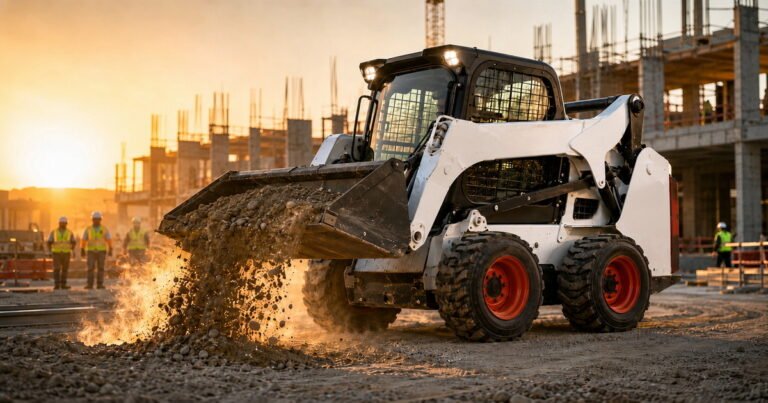
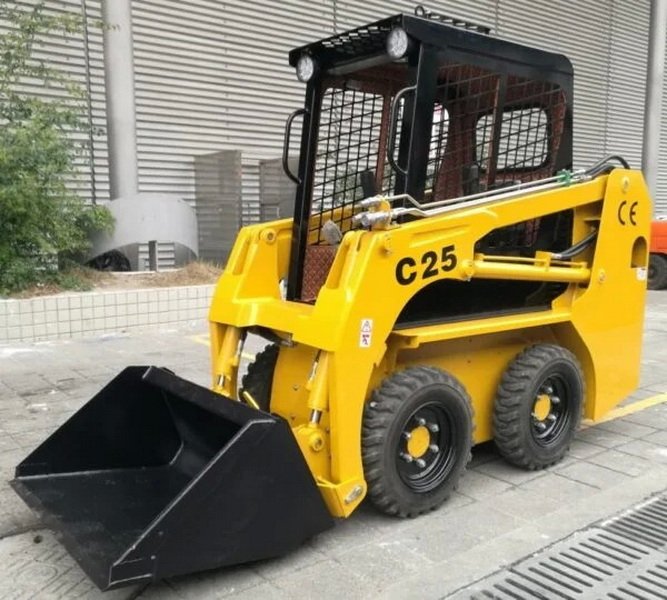
Mini skid steers (also called compact tool carriers or mini track loaders) have become essential compact equipment for landscaping, construction, rental and property maintenance because they deliver high productivity in tight spaces. Choosing the right mini skid steer in 2026 means understanding machine types, key specs, attachment options, and proven safety and maintenance practices shared by top manufacturers.
What Is a Mini Skid Steer and Who Needs One?
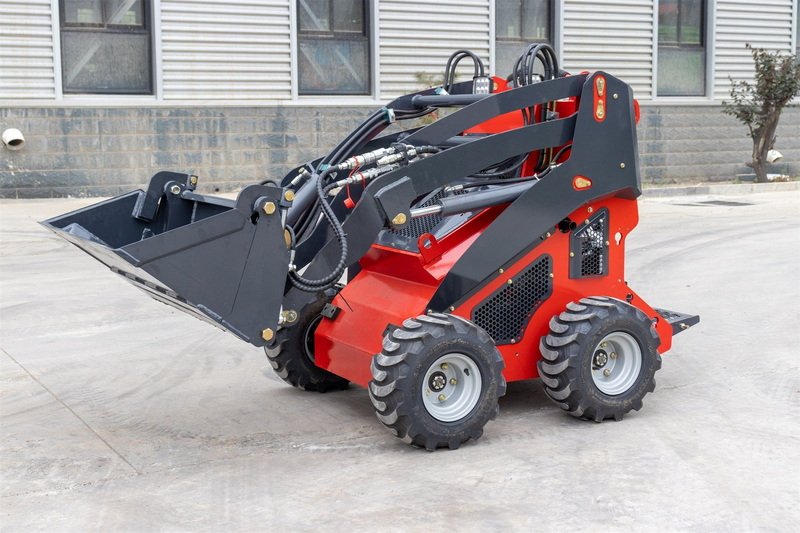
Mini skid steers are compact, stand-on or walk‑behind machines designed to power a wide range of hydraulic and mechanical attachments for digging, lifting, grading and material handling tasks. Their small footprint lets operators access narrow gates, backyards, indoor areas and congested urban jobsites where larger loaders cannot work efficiently.
Typical users include:
– Landscaping contractors installing trees, turf and hardscapes.
– Construction and utility crews trenching, backfilling and moving spoil.
– Rental houses serving mixed residential and light‑construction customers.
– Property maintenance, agriculture and facility management teams.
Because many attachments are shared with larger skid steers or compact track loaders, mini skid steers often act as a high‑ROI support machine in mixed fleets.
Key Benefits of Mini Skid Steers
Mini skid steers deliver a combination of maneuverability, versatility and safety that is difficult to match with manual labor or single‑purpose machines.
– Compact size and access: Machines can pass through standard residential gates and work between buildings and tight corners.
– High maneuverability: Zero‑turn capability allows precise positioning around obstacles and in confined spaces.
– Productivity vs. hand labor: Tasks like digging, transporting materials and trenching that might take hours by hand can be completed in minutes.
– Attachment versatility: One carrier can drive dozens of attachments, reducing the need for multiple dedicated machines.
– Transport convenience: Many units can be hauled on standard utility trailers without special permits.
For contractors managing labor shortages and tight schedules, mini skid steers are often the most cost‑effective way to add mechanized power to small jobs.
Tracks vs. Tires: Which Undercarriage Should You Choose?
Choosing between a tracked mini skid steer and a wheeled model has a major impact on traction, surface protection and operating cost.
Tracked Mini Skid Steers
Tracked models provide:
– Lower ground pressure and reduced turf or surface damage on soft soils and landscaped areas.
– Higher traction and better performance in mud, sand, snow and uneven terrain.
– Improved stability on slopes and off‑road conditions.
Tracked machines are ideal when you frequently work on soft ground, rural and off‑road environments or high‑end lawns where surface damage must be minimized.
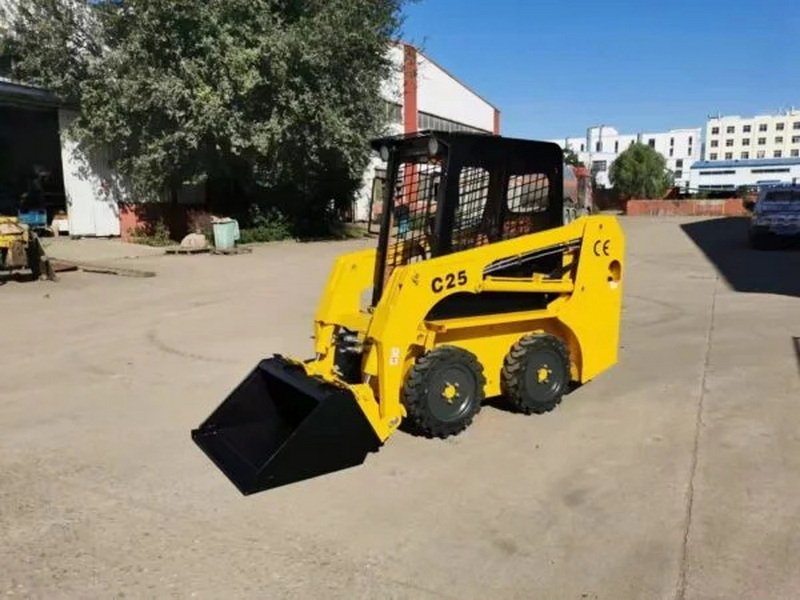
Wheeled Mini Skid Steers
Wheeled machines typically offer:
– Lower initial cost and reduced undercarriage maintenance expenses.
– Higher travel speeds on firm, finished surfaces.
– Less vulnerability to damage from rocks, metal scraps and sharp debris compared with rubber tracks.
Wheeled mini skid steers fit contractors working mostly on hard surfaces, concrete pads or compacted gravel where traction is not a critical issue.
Core Specifications That Matter Most
When comparing mini skid steer models, focus on a small set of critical specs that directly impact productivity and safety.
Operating Capacity and Lift Performance
Rated operating capacity indicates how much weight the machine can safely lift and transport. Higher capacities support heavier pallets, stones, soil and attachment loads, but they may also require a larger, heavier machine that is less suitable for delicate turf.
Hydraulic Flow and Pressure
Hydraulic flow and pressure determine which attachments you can run and how efficiently they perform. High‑flow circuits are needed for demanding tools such as trenchers, stump grinders and heavy‑duty brush cutters, while standard flow may be adequate for buckets, forks and light brooms.
Engine Power and Fuel Type
Horsepower affects tractive effort, lift performance and hydraulic output. For intensive digging, grading or high‑duty attachments, choose higher horsepower; for lighter landscaping or property maintenance, a smaller engine may be sufficient and more fuel‑efficient.
Size, Weight and Ground Pressure
Machine width, length and operating weight must match jobsite access and transport capabilities. Low ground pressure is important on soft soils and lawns, whereas heavier machines may provide better stability with heavy attachments.
Expert Advice from Leading Manufacturers
Manufacturers contributing mini skid steer guidance emphasize visibility, attachment matching, safety discipline and maintenance discipline.
Key points frequently highlighted by manufacturers include:
– 360‑degree visibility and open platform: Stand‑on mini skid steers typically provide excellent visibility of the attachment, jobsite and nearby workers, which helps reduce accidents and improve control.
– Ease of access: Without a cab, operators can quickly step on and off the platform, making it easier to react to jobsite hazards and adjust tasks.
– Simple, intuitive controls: Straightforward controls shorten the learning curve so more crew members can operate the machine safely and productively.
Manufacturers also note that properly equipped mini skid steers can instantly increase productivity and address labor challenges by enabling smaller crews to do more work.
Attachments: How to Maximize Versatility
Attachments are what turn a mini skid steer into a multi‑tool machine.
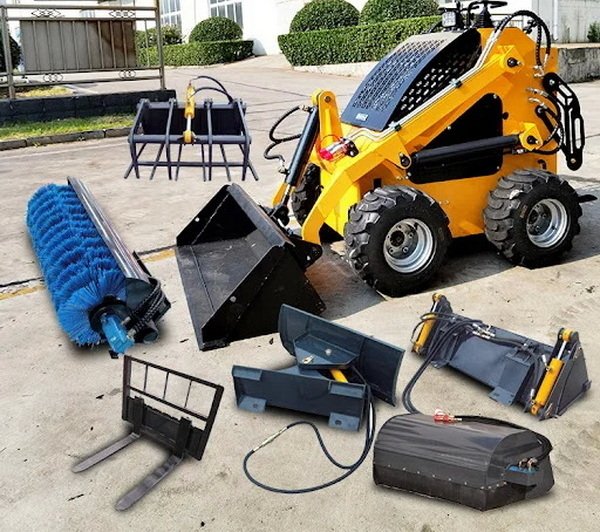
Common attachments include:
– Buckets for loading, backfilling and material transport.
– Pallet forks for handling pallets, lumber and bagged materials.
– Trenchers for utilities, irrigation and drainage.
– Stump grinders and augers for tree and landscape work.
– Grapples, sweepers and levelers for cleanup and fine grading.
You should always match attachment size and weight to machine capacity, keep loads balanced and follow attachment‑specific PPE and operating instructions.
Example Attachment Selection Table
| Application | Recommended Attachment(s) | Key Machine Priorities |
|---|---|---|
| Turf and landscape install | Light bucket, fork, auger | Low ground pressure, fine control, visibility |
| Utility trenching | Trencher, backhoe | High hydraulic flow, tracked undercarriage |
| Hardscape and pallets | Pallet forks, grapple | Higher lift capacity, stable stance |
| Site cleanup | Bucket, brush broom, grapple | Maneuverability, quick‑change coupler |
Safety First: Training, Site Checks and PPE
Safety experts and manufacturers consistently call out training, site assessment and PPE as non‑negotiable.
Key safety practices:
– Get machine‑specific training from the dealer or manufacturer, even if you already operate other equipment.
– Always call local utility‑marking services before digging to avoid hitting buried cables or gas lines.
– Walk the jobsite to identify unstable ground, slopes, holes, overhead hazards and obstacles.
Personal Protective Equipment (PPE)
Standard PPE for mini skid steer operation typically includes:
– Wrap‑around eye protection, safety shoes and hard hats.
– Hearing protection such as earplugs or earmuffs in noisy environments.
– High‑visibility clothing when working near traffic or other mobile equipment.
Operators should avoid loose clothing and unsecured long hair that could catch on moving parts and should review attachment manuals for any additional PPE requirements.
Pre‑Operation Checklist from Manufacturer Experts
Several manufacturer representatives recommend a consistent pre‑operation routine to prevent failures and unsafe conditions.
Before each shift:
1. Read and understand the operator’s manual, including limitations and safety instructions.
2. Check tire or track condition and inflation (for wheeled machines).
3. Inspect hydraulic lines, couplers and moving parts for leaks, cracks or damage.
4. Confirm that the attachment is securely connected and functions correctly before working.
5. Verify engine oil, hydraulic fluid and fuel levels are in the recommended range.
6. Start the machine and test all controls, including travel, lift, tilt and hydraulics.
Also inspect the worksite one more time for overhead power lines, underground service markings and unstable terrain.
Operational Best Practices to Protect Operators and Machines
Safe and efficient operation protects both people and equipment.
Recommended habits include:
– Use handholds and steps; maintain three points of contact when mounting and dismounting the machine.
– Operate on stable, level ground whenever possible, and avoid abrupt turns or sudden stops.
– Keep loads low and travel straight up or down slopes rather than across the slope.
– Stay within rated load capacities and avoid jerky control inputs that destabilize the machine.
– Park on level ground, lower attachments to the surface, shut off the engine and remove the key before leaving the machine.
Limiting travel on steep slopes, reducing speed on inclines and avoiding operation on slopes in ice, snow or heavy rain further reduces risk.
Maintenance Matters: Uptime and Total Cost of Ownership
Routine maintenance is essential for uptime, safety and long machine life.
Key maintenance practices include:
– Following the maintenance schedule in the operation and maintenance manual for fluids, lubricants and filters.
– Performing daily visual checks on attachments, especially cutting edges, teeth and wear components that contact the ground.
– Repairing or replacing damaged parts immediately rather than operating with compromised components.
Simple practices such as cleaning debris from radiators, checking fasteners and inspecting hydraulic hoses help prevent breakdowns and protect your investment.
New Trends in Mini Skid Steers for 2025–2026
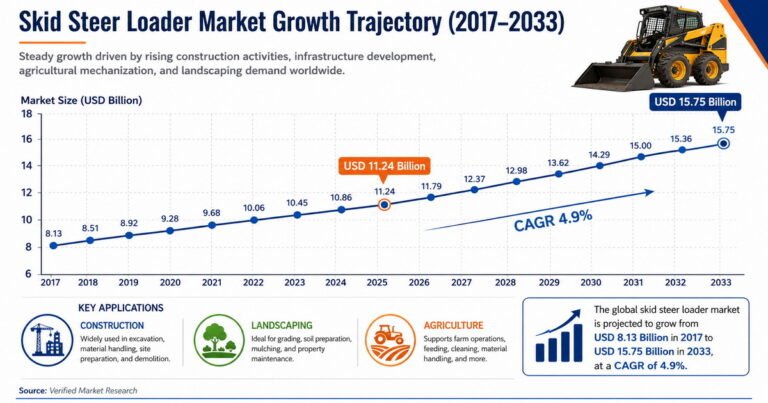
Recent market trends show steady growth in compact equipment, including mini skid steers, driven by urban construction, landscaping and infrastructure projects. Modern models increasingly emphasize operator comfort, visibility and simplified maintenance access to improve daily productivity.
Key trends include:
– Wider adoption of ergonomic controls and user‑friendly platforms for new operators.
– Focus on low ground disturbance designs for landscaping and turf‑sensitive work.
– Expanded attachment catalogs tailored for specialized industries such as tree care and underground utilities.
As emissions rules evolve, more fleets are also evaluating electric and lower‑emission compact machines to work in indoor and low‑noise environments.
Practical 7‑Step Checklist for Choosing a Mini Skid Steer
Use this step‑by‑step checklist to narrow down models and configure the right package.
1. Define your primary tasks (landscaping, utilities, hardscape, rental, agriculture).
2. List the attachments you need now and those you may add over the next 3–5 years.
3. Decide whether tracks or tires best match your typical terrain and ground conditions.
4. Set minimum requirements for operating capacity, hydraulic flow and machine width.
5. Evaluate engine power, fuel type and undercarriage design for productivity and operating cost.
6. Compare dealer support, parts availability and training resources in your region.
7. Arrange demos or short‑term rentals to test visibility, comfort and controls with your crew.
Documenting these steps keeps buying decisions objective and aligned with actual job requirements rather than brand familiarity alone.
Take the Next Step with a Dedicated Equipment Partner
If you are planning to upgrade or expand your compact equipment fleet, now is the right time to choose a mini skid steer that fits your jobs, operators and budget. Talk with a trusted supplier that can help you compare models, match attachments and calculate total operating costs, instead of just looking at sticker price. By working with a partner that also offers excavators, skid steer loaders, road rollers, forklifts, tractors and tracked transporters, you can build a cohesive fleet with shared service support, consistent training and strong long‑term ROI on every project.
Contact us to get more information!
FAQs About Mini Skid Steers
1) What is the main difference between a mini skid steer and a full‑size skid steer?
Mini skid steers are smaller, lighter machines designed for tight spaces and lighter to medium‑duty work, while full‑size skid steers deliver higher power and lift capacities for larger jobsites. Minis are easier to transport, often fit through residential gates and typically cost less to fuel and maintain than full‑size loaders.
2) Should I choose a tracked or wheeled mini skid steer?
Choose tracks if you frequently work on soft soils, lawns, mud, snow or uneven terrain where low ground pressure and traction are critical. Choose wheels when you mainly operate on firm or paved surfaces and want lower undercarriage costs and higher travel speeds.
3) How much operating capacity do I need?
Your required operating capacity depends on the heaviest materials and attachments you plan to handle routinely. For hardscape and pallet work, prioritize higher capacities; for lighter landscape tasks and delicate turf, a mid‑range capacity machine with lower ground pressure may be more appropriate.
4) Which attachments should I buy first?
Most contractors start with a general‑purpose bucket and pallet forks, then add trenchers, augers, grapples or brooms as their workload evolves. Focus first on attachments that replace your most time‑consuming manual tasks or rented equipment so you can see a fast productivity and ROI gain.
5) How often should I service my mini skid steer?
Follow the service intervals in your operator’s manual, including daily checks and periodic fluid and filter changes. Routine inspection of attachment wear parts, hoses and cutting edges helps prevent breakdowns and maintain safe performance.
Reference URLs
1. https://compactequip.com/compact-tool-carriers/heres-mini-skid-steer-advice-from-seven-manufacturers/
2. https://skidpro.com/mini-skid-steers-top-brands-and-buying-tips/
3. https://skidpro.com/the-complete-guide-to-mini-skid-steers-and-attachments/
4. https://mechmaxx.com/blogs/news/the-ultimate-buyers-guide-to-mini-skid-steer-loaders-2025
5. https://rippa.com/best-mini-skid-steer-brands-and-what-to-consider-before-buying/
6. https://gamzenindia.com/skid-steer-loader-price-guide-2025-cost-attachments-maintenance-tips/
Hot Tags: Skip Steer, Skid Steer with Trailer for Sale, Mini Skid Steer Selection, Mini Skid Steer Buying Guide, Mini Skid Steer Machines, Compact Tool Carriers, Walk-Behind Skid Steer, Stand-On Skid Steer, Mini Skid Steer Applications, Mini Skid Steer Comparison