
How to Outfit a Compact Track Loader for Brush Cutting and Land Management in 2026
Content Menu
● Target keywords and article focus
● Why use a compact track loader for brush cutting
● Drum mulcher vs other CTL brush cutting attachments
>> Common CTL brush cutting tools
● Hydraulic requirements for CTL brush cutting
>> Hydraulic cooling and filtration
● Guarding and safety for forestry‑ready compact track loaders
>> Essential CTL guarding for brush cutting
>> Personal protective equipment (PPE) and work area safety
● Step‑by‑step setup for compact track loader brush cutting
>> 1. Define your applications and vegetation
>> 2. Select the right CTL platform
>> 3. Match the attachment to your CTL
>> 4. Install guarding and fire‑prevention measures
>> 5. Configure operating settings and controls
>> 6. Plan access, travel paths, and debris handling
● Operating best practices for brush cutting with a CTL
>> Cutting technique and ground speed
● Routine maintenance for brush cutters and mulchers
● Additional land management attachments for CTLs
● Where to add visuals for stronger UX
● Take action: design your CTL brush cutting package
● FAQs about compact track loader brush cutting
>> (FAQ 1) What size compact track loader is best for brush cutting?
>> (FAQ 2) Do I need high‑flow hydraulics for a drum mulcher?
>> (FAQ 3) Can I run a forestry mulcher on a non‑forestry CTL?
>> (FAQ 4) How often should I replace mulcher teeth or brush cutter blades?
>> (FAQ 5) What are the biggest safety hazards when brush cutting with a CTL?
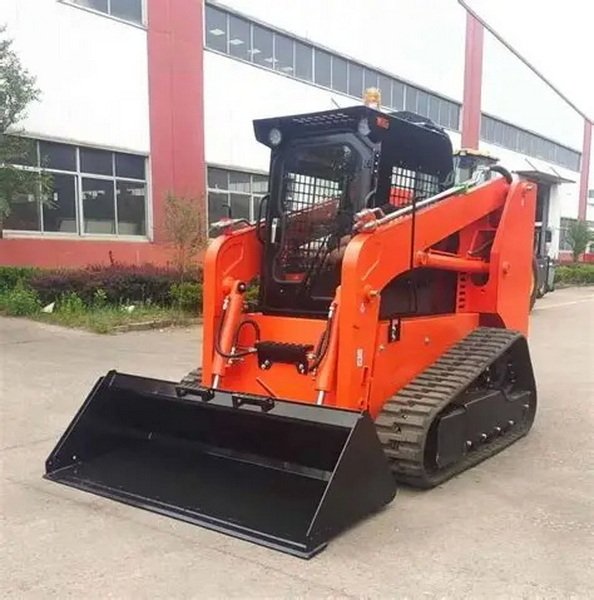
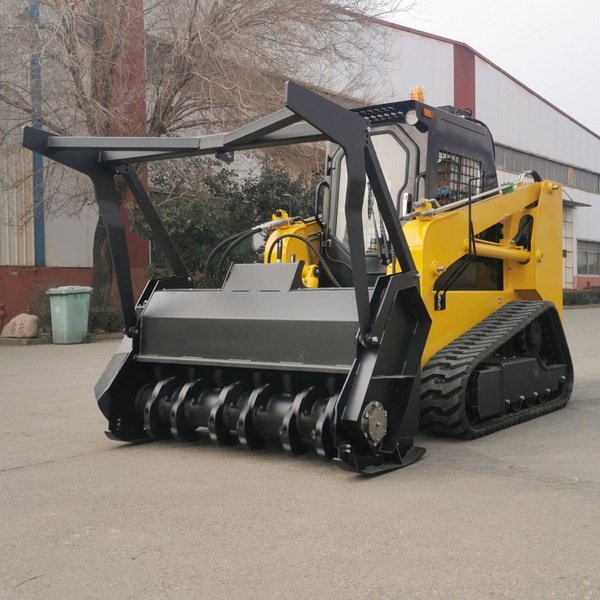
Outfitting a compact track loader (CTL) for brush cutting and land management is about matching the right attachment, hydraulics, and guarding to the vegetation and terrain you tackle most often. With the proper setup, a CTL becomes a year‑round land management platform that generates profitable work when traditional dirt jobs slow down.[1][2][3]
Target keywords and article focus
For SEO and UX, the focus stays on compact track loader brush cutting supported by relevant long‑tail terms.
– Primary keyword: compact track loader brush cutting
– Secondary keywords:
– compact track loader land management
– CTL brush cutter attachment
– drum mulcher for compact track loader
– forestry compact track loader
– brush cutting safety and guarding
– CTL hydraulic flow for brush cutters
These terms work best when used naturally in headings, introductory sentences, FAQs, and internal links to related CTL and attachment pages.[4][5]
Why use a compact track loader for brush cutting
Compact track loaders combine low ground pressure, high tractive effort, and excellent attachment versatility, which makes them ideal for land management and brush cutting on uneven or soft ground. Tracks distribute machine weight over a large area, improving flotation in muddy, wet, or sandy conditions and reducing surface damage compared with wheeled machines.[2][4]
With the right brush cutter or drum mulcher attachment, a CTL can clear tall grass, saplings, brush, and small trees on:[6][1]
– Utility and powerline rights‑of‑way
– Roadside and railway corridors
– Fence lines, pasture edges, and field reclamation
– Hunting land, trails, and recreational properties
– Storm damage and disaster cleanup sites
For manufacturers that produce CTLs, skid steer loaders, excavators, tractors, and tracked transporters, this application opens a recurring services market in vegetation control and right‑of‑way maintenance.
Drum mulcher vs other CTL brush cutting attachments
Different compact track loader brush cutting attachments deliver different results, from fine mulch to rough clearing.[3][1]
Common CTL brush cutting tools
– Drum mulcher: Front‑mounted rotor with teeth that shreds brush and trees into fine mulch; ideal for heavy land clearing and forestry work.[1][2]
– Disc mulcher: High‑inertia disc that fells and shreds trees quickly but leaves coarser material on the ground.[7][2]
– Rotary brush cutter / brush mower: Blade carrier that cuts grass and brush; suited to 2–6 in material depending on model.[3][1]
– Deck mower / rotary mower: Produces a cleaner, more even finish on grass and light brush.[1][3]
– Tree shear, stump grinder, grapple: Specialty tools that complement mulching and help handle larger timber and debris.[2][1]
Attachment selection table
Selecting among these depends on vegetation size, required finish quality, and how often the CTL works in heavy timber versus grass and light brush.[2][1]
Hydraulic requirements for CTL brush cutting
High‑power brush cutters and drum mulchers place significant demands on a CTL’s hydraulic system. Matching gallons per minute (GPM) and pressure (PSI) between the carrier and attachment is critical for performance and reliability.[9][1]
Standard‑flow vs high‑flow
– Standard flow
– Often used for lighter work such as grass and small brush.[9][1]
– Fits owners who run a brush cutter only a few times per week or on smaller acreages.[1]
– High flow
– Required for most drum mulchers and high‑capacity brush cutters.[9][1]
– Supports heavier material (larger trees, thicker brush) and multiple acres per day.[2][1]
If the CTL’s flow is below the attachment’s minimum requirement, the tool runs slowly and may stall. If the machine exceeds the attachment’s maximum flow or pressure, overheating and premature hydraulic failures become much more likely.[9]
Hydraulic cooling and filtration
Brush cutting and forestry operations generate continuous, high‑load hydraulic demand, which raises oil temperature. To maintain reliability:[10][1]
– Use a larger or dedicated hydraulic cooler where available.[10][1]
– Keep coolers clean and free of debris to preserve airflow.[10]
– Follow manufacturer guidance on oil type and change intervals.[1]
Adding high‑efficiency filters and monitoring hydraulic temperature and pressure from the cab further protects both attachment and machine in demanding work.[9][1]
Guarding and safety for forestry‑ready compact track loaders
Working with high‑energy brush cutter attachments makes guarding and operator protection essential.[11][1]
Essential CTL guarding for brush cutting
– Shatterproof front door: 3/4 in polycarbonate is strongly recommended, especially for drum and disc mulchers, to stop flying debris and broken teeth.[2][1]
– Side and rear guards: Polycarbonate windows or metal screens to protect from lateral and rearward throw.[1]
– FOPS / ROPS cab: Cab structure rated for falling object and rollover protection.[10][1]
– Undercarriage and belly guarding: Shields hoses, motors, and lines from stumps, rocks, and slash.[2][1]
– Debris guarding around engine bay: Reduces buildup near exhaust and hot surfaces to lower fire risk.[12][10]
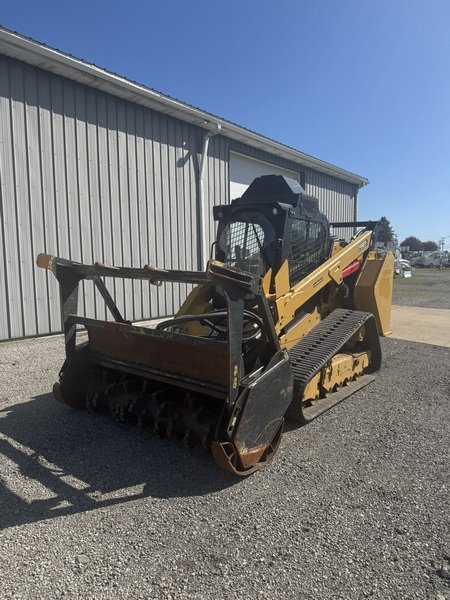
Forestry‑spec compact track loaders often ship with this guarding as standard or optional packages, while dirt‑configured machines usually require upgrades before heavy brush work.[1][2]
Personal protective equipment (PPE) and work area safety
Operators and ground personnel should follow best practices similar to other high‑risk cutting tools. Recommended PPE includes:[11][12]
– Eye and face protection, hard hat, hearing protection, and safety boots.[12]
– High‑visibility clothing and gloves suitable for handling rough material.[11][12]
Before starting work:
– Inspect the area for rocks, metal, wire, and other hazards that can be thrown or wrap around the drum.[11]
– Keep bystanders and co‑workers well outside the attachment’s throw zone.[11]
– Refuel and service the machine away from hot components and only when the engine is cool.[12][11]
Step‑by‑step setup for compact track loader brush cutting
This sequence helps operators configure a compact track loader for brush cutting and land management safely and efficiently.
1. Define your applications and vegetation
Begin by listing the primary work types.[13][1]
– Grass and weeds on estates or pastures
– Mixed brush and saplings on agricultural land
– Timber and regrowth in forestry blocks
– Utility right‑of‑way or roadside vegetation
Record typical tree diameter and acreage per day, because these factors drive selection of CTL size, hydraulic configuration, and attachment type.[6][1]
2. Select the right CTL platform
When choosing a compact track loader for brush cutting:[10][2]
– Confirm operating weight and stability are adequate for the chosen attachment.
– Match hydraulic flow and pressure to the brush cutter or mulcher.[9][1]
– Prioritize forestry guarding packages from the factory or dealer.[2][1]
For fleets running multiple attachments, a CTL with strong auxiliary hydraulics and a robust undercarriage delivers higher year‑round utilization.[5][2]
3. Match the attachment to your CTL
Before purchasing, verify:[9][1]
– Hydraulic range (GPM/PSI) and case drain requirements
– Weight and center of gravity versus CTL rated operating capacity
– Recommended carrier horsepower and track width for traction and stability
Test fitment and quick coupler compatibility where possible, and consider pusher bars or control structures on the mulcher to manage trees and tall brush.[1][2]
4. Install guarding and fire‑prevention measures
After pairing machine and attachment, install or confirm:[10][1]
– Forestry door, side and rear guarding, and roof protection
– Belly pans and hose guards
– Additional engine bay shielding or screens
Carry a suitable fire extinguisher and regularly remove fine debris from the radiator, engine, and hydraulic compartments to reduce fire risk.[12][10]
5. Configure operating settings and controls
Modern compact track loaders often provide:[4][5]
– Adjustable hydraulic flow settings for attachments
– Joystick control patterns and response tuning
– Work modes to prioritize power or fuel efficiency
Calibrating these settings helps the mulcher or brush cutter spool up smoothly and maintain speed under load without excessive stalling.[9][1]
6. Plan access, travel paths, and debris handling
Productive land management depends on careful job planning.[13][6]
– Map machine travel routes and turning locations to avoid soft ground and hidden obstacles.
– Decide how to handle large logs, stumps, or rocks with grapples or an excavator.[13][1]
– Establish staging areas for processed material, chipping, or hauling.[6]
Operating best practices for brush cutting with a CTL
Proper technique maximizes productivity while protecting the machine and attachment.
Cutting technique and ground speed
Operators get better results when they:
– Maintain a steady, moderate ground speed that keeps the rotor or blades at operating RPM.[7]
– Avoid forcing the head into heavy material and instead take controlled bites.[7][2]
– Hold a reasonable cutting height to limit tooth strikes on rocks and dirt where conditions allow.[7]
In rocky areas, keeping disc and drum mulchers slightly above ground level helps reduce tool damage and costly downtime.[7][2]
Managing heat and downtime
During long days, short idle periods help hydraulic oil cool if temperatures approach the upper limit of the machine’s specification. Watching gauges and warning indicators and clearing debris from coolers during breaks further improves cooling performance.[10][1]
Routine maintenance for brush cutters and mulchers
Brush cutting attachments face high shock loads and abrasive conditions, so preventive maintenance is critical.[1][9]
Daily or pre‑shift tasks typically include:
– Inspecting the drum, blade carrier, and teeth for wear or damage.[7][1]
– Tightening loose bolts, fasteners, and tooth hardware.[1]
– Checking hydraulic hoses, couplers, and case drain lines for leaks or abrasion.[9]
– Cleaning accumulated debris from guards, coolers, and intake screens.[10][1]
At scheduled intervals, operators should:
– Grease bearings, pivot points, and rotor supports.[7]
– Inspect belts, drive systems, and motor mounts.[1]
– Replace worn teeth to maintain cutting efficiency and consistent mulch quality.[7][1]
Consistent maintenance reduces unplanned downtime, lowers lifecycle cost, and supports safe operation in demanding land management conditions.[7][10]
Additional land management attachments for CTLs
Beyond brush cutters and mulchers, equipping a compact track loader with complementary tools increases year‑round utilization.[5][3][1]
Useful land management attachments include:
– Root rakes and grapples for piling and loading brush, logs, and debris.[3][1]
– Augers and trenchers for fence lines, utilities, and site infrastructure.[14][5]
– Cold planers for integrating road repair and approach work with vegetation management on rural networks.[15]
– Snow pushers and brooms to keep the machine productive outside of the growing season.[14][5]
This broader attachment ecosystem turns a single forestry‑ready compact track loader into a multi‑season revenue generator with strong asset utilization.[4][2]
Where to add visuals for stronger UX
Visuals help readers scan and understand key decisions in CTL brush cutting setups.
Recommended placements include:
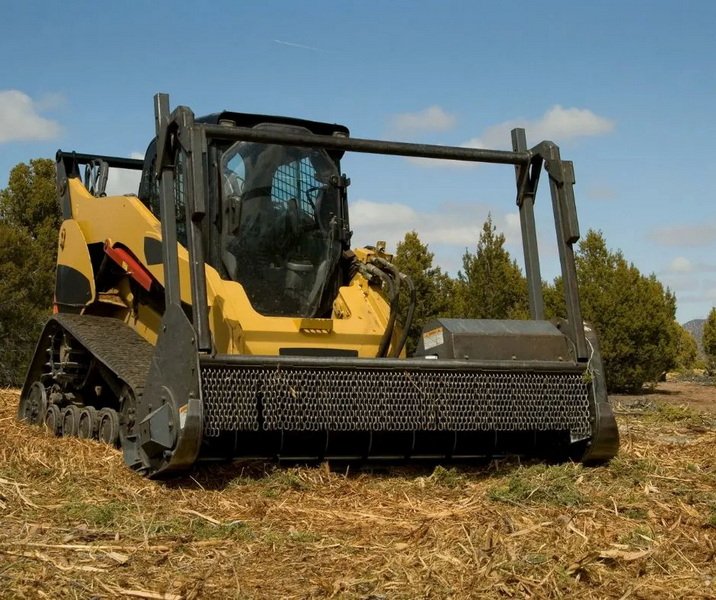
– Hero image under H1 with a forestry‑ready CTL and drum mulcher working in brush.[2][1]
– Hydraulic diagram or infographic in the hydraulic section showing GPM/PSI matching between CTL and attachment.[9]
– Comparison graphic in the attachment section contrasting drum vs disc mulcher vs rotary brush cutter with typical applications.[2][1]
– Guarding close‑up photos of polycarbonate doors, side screens, and undercarriage protection.[10][1]
– Short video in the operating best practices section showing cutting technique, ground speed, and material approach.[14][7]
– Maintenance checklist visual summarizing daily and weekly service tasks for brush cutters and mulchers.[7][1]
These visuals support skim‑readers, reinforce perceived expertise, and encourage longer on‑page engagement.[5][4]
Take action: design your CTL brush cutting package
A well‑configured compact track loader for brush cutting and land management depends on correct choices in machine size, hydraulic capacity, guarding, and attachment selection. The next step is to turn these principles into a concrete package that matches real vegetation, terrain, and production goals on your jobs.[4][2][1]
If your business plans to expand into vegetation control, rights‑of‑way clearing, or forestry maintenance, reach out to your compact equipment dealer or Certeg sales contact to specify a complete CTL brush cutting solution. Ask for a combined package that includes a properly sized CTL, matched brush cutter or drum mulcher, forestry guarding upgrades, and a maintenance plan so your crews can start land management work safely and productively from day one.[4][2][1]
FAQs about compact track loader brush cutting
(FAQ 1) What size compact track loader is best for brush cutting?
For light brush and grass, mid‑size CTLs with standard‑flow hydraulics can power rotary brush cutters efficiently on smaller acreages. For heavy brush and regular forestry work, higher‑horsepower CTLs with high‑flow hydraulics are recommended to drive drum or disc mulchers all day.[8][3][2][1]
(FAQ 2) Do I need high‑flow hydraulics for a drum mulcher?
Most drum mulchers for compact track loaders are designed around high‑flow hydraulic circuits to maintain rotor speed and torque in dense material. Some light‑duty models can run on standard flow, but they will have lower productivity and more limited tree diameter capability.[8][9][1]
(FAQ 3) Can I run a forestry mulcher on a non‑forestry CTL?
Many standard CTLs can technically power mulchers if flow and pressure match, but without forestry guarding and shatterproof glass the risk to the operator and machine is significantly higher. Upgrading the door, cab, underside, and engine bay protection is strongly recommended before using high‑energy mulchers in heavy brush.[11][10][1]
(FAQ 4) How often should I replace mulcher teeth or brush cutter blades?
Replacement intervals depend on soil conditions, rock content, and daily hours, but many high‑utilization operators inspect teeth or blades every day and replace them as soon as they become rounded or chipped. Running dull tools reduces cutting performance, increases fuel consumption, and accelerates wear on the rotor and drive components.[7][1]
(FAQ 5) What are the biggest safety hazards when brush cutting with a CTL?
Key dangers include thrown objects, machine fires from debris buildup near hot components, rollovers on uneven terrain, and contact with overhead or buried utilities. Adequate guarding, PPE, careful site assessment, and adherence to safe operating distances are essential to reduce these risks.[12][11][10][1]
Citations:
[1] https://compactequip.com/attachments/how-to-outfit-a-compact-track-loader-for-brush-cutting-and-land-management-applications/
[2] https://compactequip.com/compact-track-loaders/learn-how-to-upfit-a-compact-track-loader-for-abrasive-brush-cutting-applications/
[3] https://thompsontractor.com/blog/compact-track-loader-attachments/
[4] https://www.mechandlink.com/en/news-article/Compact-track-loader-attachments-a-guide-to-unlock-your-machine-s-full-capabilities
[5] https://shop.equipmentshare.com/blogs/guides/choosing-track-loader-attachments
[6] https://construction.papemachinery.com/blog/best-equipment-and-techniques-for-efficient-land-and-road-removal/
[7] https://www.spartanequipment.com/blog/the-complete-guide-to-skid-steer-brush-hogs-power-through-any-land-clearing-project/
[8] https://www.landyattachments.com/blogs/blog/top-rated-drum-mulchers-for-skid-steers-in-2025
[9] https://www.skidsteersolutions.com/inside-the-cab-skid-steer-solutions/skid-steer-brush-cutters-know-what-to-look-for/
[10] https://www.newenglandconstruction.news/NEC/article/7B8D1C05-six-tips-to-optimize-compact-track-loader-forestry-performance
[11] https://www.ccohs.ca/oshanswers/safety_haz/landscaping/grass_trimmer.html
[12] https://www.stihlusa.com/en/guides-projects/arbeitstechnik-und-geraetepflege/grass-trimmer-tips/grass-trimmer-safety
[13] https://www.bucktowngradingandconstruction.com/small-land-clearing-tools/
[14] https://www.youtube.com/watch?v=w8dg_ZgYus0
[15] https://www.perplexity.ai/search/59fc2acf-b036-4dc6-9b20-078dd13b3507
Hot Tags:Skid Steer Mulchers, Skid Steer Mulcher for Rent Near Me, Skidsteer Mulcher, Mulcher for Skid Steer, Skid Steer with Mulcher, Compact Track Loader Attachments, Brush Cutting Equipment, Forestry Mulcher Attachments, Skid Steer Brush Cutter, Compact Track Loader Mulcher