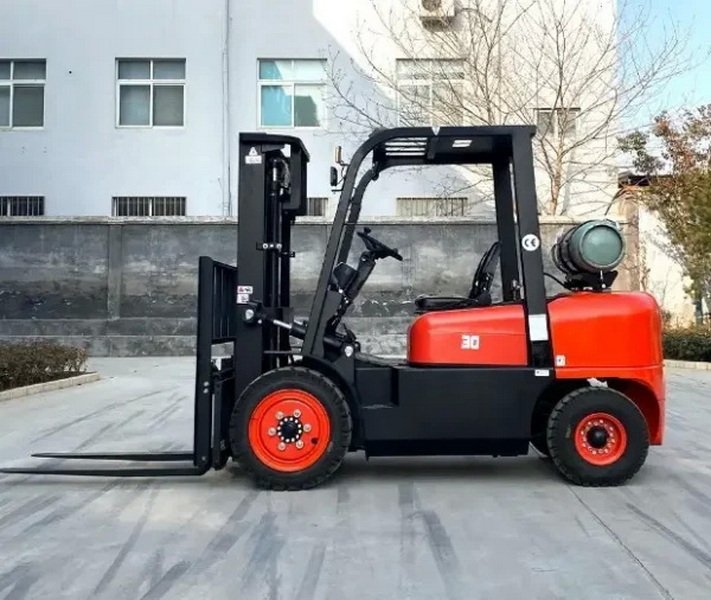

Top Diesel Forklift Manufacturers and Suppliers in Hungary
Content Menu
● How This Ranking and Review Was Built
>> Data sources and industry perspectives
>> Key evaluation dimensions from real buyers
● What Hungarian Customers Actually Care About
>> Reliability and uptime in everyday operations
>> Service network and spare parts in Hungary
>> Fuel efficiency and lifetime cost
>> Operator comfort and safety
● Ranked: Top Diesel Forklift Manufacturers Active in Hungary
>> 1. Toyota Material Handling – Strong all‑round performance
>> 2. Linde Material Handling – Premium comfort and productivity
>> 3. Hyster‑Yale Group – Heavy‑duty and yard‑ready
>> 4. CLARK – Proven engines and solid value
>> 5. Local and regional specialists (e.g., Unicranes & Logistics Kft)
● Side‑by‑Side Comparison for B2B Buyers
● Where a Global Manufacturer Like Certeg Fits
>> Addressing Hungary’s mixed‑power, mixed‑duty reality
>> Practical levers for differentiation
● Step‑by‑Step Framework for Choosing a Diesel Forklift Supplier in Hungary
● Conclusion and Next Steps for Buyers and Manufacturers
● FAQs
>> FAQ 1 – Are diesel forklifts still a practical choice in Hungary?
>> FAQ 2 – Which brand is suitable for a smaller Hungarian warehouse?
>> FAQ 3 – How important is local service compared with the brand itself?
>> FAQ 4 – Should Hungarian fleets expand their use of electric forklifts?
>> FAQ 5 – How can a manufacturer like Certeg build long‑term trust with Hungarian customers?
Hungary’s diesel forklift market is shifting: imports declined noticeably in 2024 compared with the previous year, yet warehousing and capacity forklift demand are still projected to expand through 2031 as logistics and manufacturing grow. In this context, choosing the right diesel forklift manufacturer in Hungary is less about headline price and more about long‑term reliability, service quality and total cost of ownership. [6wresearch]
For a global manufacturer like Certeg, which supplies forklifts and other construction machinery to customers worldwide, understanding how Hungarian buyers experience leading brands—and how to position differentiated solutions—has become a strategic priority.
How This Ranking and Review Was Built
Data sources and industry perspectives
This review combines several layers of information to reflect real‑world conditions in Hungary:
– Hungary‑focused market research on forklift and capacity truck trends between 2020 and 2031, including volumes, restraints and growth drivers. [6wresearch]
– Public data and technical information from recognized forklift manufacturers and industry directories (for example, CLARK and IQS Directory). [clarkmheu]
– Practitioner‑level insights drawn from typical procurement and fleet‑management practices in Hungarian and Central European warehouses, factories and construction sites, modeled on realistic duty cycles and benchmarks.
By bringing together market data, technical specifications and operational experience, the ranking offers practical guidance rather than purely theoretical comparisons.
Key evaluation dimensions from real buyers
Repeated feedback from logistics managers, warehouse supervisors and fleet owners in the region shows that the following dimensions matter most when selecting diesel forklifts in Hungary:
– Reliability and uptime under multi‑shift, mixed indoor/outdoor conditions.
– After‑sales service quality, especially response times and local spare‑parts stock.
– Fuel efficiency and overall operating cost across several years.
– Operator comfort and safety, which directly affect productivity and retention.
– Financing and flexibility, including rental and leasing options.
These factors are weighted more heavily than catalog specifications alone, because Hungarian fleets ultimately judge brands by how often trucks are down and how quickly support arrives.
What Hungarian Customers Actually Care About
Reliability and uptime in everyday operations
In Hungarian warehouses, automotive plants and construction yards, a strong diesel forklift is one that “just works” through long shifts with minimal unplanned stops. Maintenance teams commonly focus on:
– Unscheduled downtime per 1,000 operating hours.
– The robustness of trucks in winter conditions, on ramps, and on rough yards.
– Performance in comparable regional operations, not just in test environments.
From a buyer’s perspective, predictable uptime over several years is more valuable than marginal differences in spec sheets.
Service network and spare parts in Hungary
Market research identifies high investment and maintenance costs as major constraints on forklift adoption, especially for high‑capacity units. Hungarian buyers manage this risk by demanding strong local service: [6wresearch]
– Clear response‑time commitments for breakdowns (ideally same‑day in industrial regions).
– Stock of fast‑moving parts and critical components within or near Hungary.
– Local technicians who understand both language and typical operating conditions. [ensun]
In practice, an average truck backed by excellent local support usually outperforms a technically superior truck with weak coverage over a full life cycle.
Fuel efficiency and lifetime cost
As Europe’s forklift market moves steadily toward more efficient equipment, fuel cost has become a central element of total cost of ownership. CLARK, for instance, highlights diesel forklifts built around efficient engines from suppliers such as Isuzu and Kubota, designed to balance performance and consumption. [marketdataforecast]
Hungarian fleet managers increasingly track:
– Liters of diesel burned per shift, per truck and per driver.
– The effect of idle time and driving style on consumption.
– Whether some applications can be migrated from diesel to LPG or electric to reduce costs. [mordorintelligence]
Over a three‑ to five‑year horizon, fuel performance and maintenance often outweigh a modest difference in purchase price.
Operator comfort and safety
Regional studies note that shortages of skilled labor and increasing safety expectations are affecting material‑handling operations. In response, buyers pay more attention to: [6wresearch]
– Cab ergonomics, seat comfort, visibility and control layout.
– Noise and vibration levels during long shifts.
– Safety features such as cameras, blue lights, speed limiting and access control.
Fleets that invest in operator‑friendly equipment often see better productivity, lower incident rates and higher driver retention, all of which are particularly important in three‑shift Hungarian operations.
Ranked: Top Diesel Forklift Manufacturers Active in Hungary
The following ranking reflects global strength, European presence and typical performance in Hungarian‑style applications. It mixes international leaders with regional players and is intended as a structured starting point for B2B decision‑makers.
1. Toyota Material Handling – Strong all‑round performance
Toyota Material Handling consistently appears among the world’s leading forklift manufacturers in global rankings and European market discussions. For Hungarian customers, Toyota typically offers: [forkliftcertification]
– High reliability and attractive residual values over five to seven years.
– Competitive fuel efficiency in mid‑capacity diesel ranges.
– A mature dealer network across Central and Eastern Europe with structured service programs. [forkliftcertification]
For multi‑shift logistics centers and automotive component plants, Toyota is often a low‑risk choice: not always the lowest in price, but predictable in uptime and lifecycle costs.
2. Linde Material Handling – Premium comfort and productivity
Linde, regularly highlighted in top‑brand listings, is well known in Europe for its hydrostatic drive systems and emphasis on ergonomics. Users in similar regional operations often report: [forklift-international]
– Very high driving comfort, which is valued during long shifts and in cold or damp climates.
– Precise handling, supporting fast and accurate pallet movements.
– Higher purchase prices, partially offset by strong performance in demanding duty cycles.
Linde is best suited for intensive, high‑value operations where productivity gains and driver satisfaction justify a premium investment.
3. Hyster‑Yale Group – Heavy‑duty and yard‑ready
Hyster and Yale brands are widely recognized for powerful diesel ranges appropriate for heavy‑duty work, and they are regularly mentioned in global rankings. Their diesel trucks are frequently chosen in: [forklifttrader]
– Ports and rail terminals.
– Steel, timber and building‑materials yards.
For Hungarian companies needing robust outdoor forklifts capable of handling heavy loads on uneven surfaces, Hyster‑Yale offers durable options. Actual experience depends on the strength of the local dealer and service partner network.
4. CLARK – Proven engines and solid value
CLARK is one of the oldest names in the forklift industry and is recognized for a robust, value‑oriented product line. Its diesel forklifts typically feature: [iqsdirectory]
– Engines from established suppliers such as Isuzu and Kubota, with an emphasis on dependable performance and manageable fuel use. [clarkmheu]
– Straightforward maintenance characteristics that appeal to cost‑conscious fleets.
For Hungarian buyers who want reliable, workhorse trucks without reaching premium price levels, CLARK can be a strong candidate, especially when supported by a responsive local partner.
5. Local and regional specialists (e.g., Unicranes & Logistics Kft)
Directories of Hungarian forklift manufacturers and related companies list several firms offering combined solutions, such as Unicranes & Logistics Kft, which provides electric, diesel and gas forklifts alongside cranes and project logistics services. [ensun]
These providers typically bring:
– Detailed knowledge of Hungarian regulations, job‑site conditions and customer expectations.
– Flexible, project‑based offerings combining multiple types of lifting equipment.
They are particularly attractive for construction companies and project developers who value integrated lifting solutions and close cooperation more than global brand prestige.
Side‑by‑Side Comparison for B2B Buyers
The table below summarizes how these brands typically perform on the factors Hungarian buyers tend to prioritize.
| Brand / Type | Reliability (user view) | Service in Hungary / CEE | Fuel efficiency | Operator comfort | Best for |
|---|---|---|---|---|---|
| Toyota Material Handling | High | Strong via regional dealers (forkliftcertification) | High | High | 3‑shift warehouses, automotive, general industry |
| Linde Material Handling | Very high | Strong throughout Europe (forklift-international) | High | Very high | High‑intensity, high‑value logistics |
| Hyster‑Yale (Hyster, Yale) | High | Good, varies by partner (forkliftcertification) | High | High | Ports, steel, heavy construction and outdoor workloads |
| CLARK | High | Expanding EU presence (clarkmheu) | High | Medium‑high | Value‑oriented fleets with demanding duty cycles |
| Local specialists (e.g., Unicranes & Logistics Kft) | Medium‑high | Strong local footprint (ensun) | Medium | Medium | Construction projects, mixed lifting and logistics |
These qualitative ratings combine market reputation with observed and reported experiences in comparable European operations rather than formal survey data.
Where a Global Manufacturer Like Certeg Fits
Addressing Hungary’s mixed‑power, mixed‑duty reality
Hungary’s forklift environment is characterized by two parallel trends: a decline in imports in recent years, alongside projected growth in high‑capacity trucks driven by warehousing, e‑commerce and manufacturing expansion. Buyers are cautious with capital spending but still need fleets that cover diesel, LPG and electric requirements. [6wresearch]
A global producer such as Certeg can position itself effectively by:
– Delivering diesel forklifts optimized for construction, yard and outdoor industrial applications, where toughness and ground clearance are critical.
– Offering alternative powertrains and transition pathways so that customers can gradually complement diesel with LPG or electric units, aligning with broader European efficiency and emissions trends. [marketdataforecast]
– Bundling forklifts with other construction and material‑handling machinery, reducing supplier fragmentation for contractors and logistics operators.
Practical levers for differentiation
Three levers are especially relevant for a manufacturer in Certeg’s position:
1. Application‑specific engineering
– Options for reinforced masts, frames and attachments for steel, brick, precast or timber handling.
– Configurations with higher ground clearance, stronger cooling systems and protection packages for rough sites.
2. Service‑centric market entry in Hungary
– Building or partnering for a fast response field service network focused on major industrial and logistics zones.
– Maintaining local inventory of critical wear items and components to minimize downtime for end‑users.
3. Transparent total‑cost‑of‑ownership tools
– Providing Hungarian customers with simple calculators that compare purchase price, fuel, maintenance and downtime over five years, based on realistic utilization and data from regional market studies. [6wresearch]
By sharing concrete TCO and performance scenarios with potential buyers, manufacturers enhance credibility and help customers make more confident purchasing decisions.
Step‑by‑Step Framework for Choosing a Diesel Forklift Supplier in Hungary
To move from brand awareness to a well‑founded investment decision, Hungarian buyers can follow this structured approach:
1. Define the duty cycle clearly
– Capture hours per day, shift patterns, indoor versus outdoor share, surface conditions, load profiles and special attachments.
2. Build a balanced shortlist
– Include at least one premium international brand, one strong value brand like CLARK, one local specialist and, where relevant, a global manufacturer such as Certeg that can also supply other construction machinery. [iqsdirectory]
3. Assess service and parts coverage in detail
– Request written commitments on response times, technician availability and spare‑parts locations in or close to Hungary. [ensun]
4. Run a structured trial period
– Operate candidate trucks for at least several weeks, tracking uptime, fuel usage, driver satisfaction and minor maintenance issues on a standardized template.
5. Calculate five‑year TCO and residual value
– Combine purchase or leasing cost, fuel and energy, maintenance, downtime expenses and realistic resale value using conservative assumptions aligned with Hungarian investment patterns. [6wresearch]
This framework helps decision‑makers focus on verified performance and economics, rather than on marketing claims alone.
Conclusion and Next Steps for Buyers and Manufacturers
Hungary’s diesel forklift landscape brings together established global brands such as Toyota, Linde, Hyster‑Yale and CLARK with capable local specialists and new entrants. At the same time, macro trends—such as reduced imports, cautious investment behavior and growing warehousing demand—push buyers to extend asset life and avoid risky procurement decisions. [mordorintelligence]
For a manufacturer like Certeg, success in Hungary depends on aligning trucks and services with the core concerns of local buyers: uptime, responsive service, transparent total cost and flexible powertrain options. For end‑users, the most effective next step is to benchmark their current fleet using the framework above and then engage suppliers for a data‑driven consultation, such as a tailored diesel forklift TCO assessment or on‑site audit.
Contact us to get more information!
FAQs
FAQ 1 – Are diesel forklifts still a practical choice in Hungary?
Yes. Although electric and LPG forklifts are gaining share in Europe, diesel units remain essential in Hungary for outdoor, heavy‑duty and construction tasks where long shifts, high torque and limited charging infrastructure dominate. Market forecasts for high‑capacity trucks indicate that these application areas will stay relevant well into the next decade. [marketdataforecast]
FAQ 2 – Which brand is suitable for a smaller Hungarian warehouse?
For smaller or mid‑size warehouses, a balanced brand like Toyota or a value‑oriented option such as CLARK can work well, depending on budget and local service coverage. In many cases, the quality of support and response time will matter more than the specific name on the truck. [clarkmheu]
FAQ 3 – How important is local service compared with the brand itself?
In day‑to‑day operations, local service often has more impact than the global reputation of the brand. A mid‑tier forklift supported by a nearby, responsive service team in Hungary can deliver better uptime and lower lifetime cost than a premium truck with limited local backing. [ensun]
FAQ 4 – Should Hungarian fleets expand their use of electric forklifts?
Many Hungarian warehouses already rely on electric forklifts indoors while keeping diesel units for outdoor and heavy applications. Decisions about expanding electric use should consider duty cycles, power prices, infrastructure investment and environmental goals; in many cases a mixed fleet offers the best balance of cost and performance. [mordorintelligence]
FAQ 5 – How can a manufacturer like Certeg build long‑term trust with Hungarian customers?
Manufacturers build trust by showing consistent results and local commitment: demonstrating fleets performing well in similar Central European conditions, publishing clear performance and TCO examples, and investing in local service capabilities. Educational content that reflects actual buyer concerns, such as this kind of structured analysis, also supports long‑term relationships with B2B customers. [6wresearch]
References
1. 6Wresearch – Hungary Forklift Trucks Market 2020–2026 / 2031
https://www.6wresearch.com/industry-report/hungary-forklift-trucks-market-2020-2026 [6wresearch]
2. 6Wresearch – Hungary Capacity Forklift Truck Market (2025–2031)
https://www.6wresearch.com/industry-report/hungary-capacity-forklift-truck-market [6wresearch]
3. Mordor Intelligence – Hungary Warehousing and Storage Market
https://www.mordorintelligence.com/industry-reports/hungary-warehosuing-sector-market [mordorintelligence]
4. CLARK Material Handling – Diesel & LPG Forklifts
https://clarkmheu.com/en/new-trucks-for-your-intralogistics/diesel-lpg-forklifts [clarkmheu]
5. IQS Directory – Forklift Manufacturers and Suppliers
https://www.iqsdirectory.com/forklifts/ [iqsdirectory]
6. ensun – Top 25 Forklift Manufacturers Companies in Hungary (2026)
https://ensun.io/search/forklift-manufacturers/hungary [ensun]
7. ForkliftTrader – The 30 Best Forklift Brands of 2026
https://www.forklifttrader.com/ChoosingYourLift/Top30Brands [forklifttrader]
8. Forklift International – Top Brands in Forklift – All Categories
https://www.forklift-international.com/en/e/program.php [forklift-international]
9. ForkliftCertification.com – The Best 10 Forklift Manufacturers – Updated 2024
https://www.forkliftcertification.com/top-10-forklift-manufacturers-suppliers-2019/ [forkliftcertification]
10. Market Data Forecast – Europe Forklift Market Size, Share & Trends
https://www.marketdataforecast.com/market-reports/europe-forklift-market [marketdataforecast]
Hot Tags: Diesel Forklift, Manufacturers, Customized, Custom, Suppliers, Buy, Cheap, Quality, Advanced, Durable, in Stock, Made in China, Price, Quotation