
Revolutionary Trailer Mover Attachment for Skid Steers and Compact Track Loaders: Transforming Jobsite Efficiency in 2026
Content Menu
● Understanding the Trailer Mover Attachment: A Purpose-Built Solution
● Critical Safety Advantages Over Traditional Methods
>> Eliminating Blind Backing Hazards
>> Replacing Dangerous DIY Solutions
>> Enhanced Compact Track Loader Safety Compliance
● Operational Efficiency Gains Across Construction Applications
>> Eliminating Equipment Redundancy
>> Precision Maneuvering in Confined Spaces
>> Time Savings Through Streamlined Workflows
● Strategic Applications Across Construction Sectors
>> Commercial Construction Projects
>> Residential Development Operations
>> Landscaping and Site Development
>> Municipal Maintenance Operations
>> Rental Equipment Yard Management
● Comparative Analysis: Trailer Mover vs. Traditional Methods
● Integration with Modern Compact Equipment Technology
>> Attachment Recognition Systems
>> Operator Assistance Features
● Best Practices for Trailer Mover Operation
>> Pre-Operation Inspection Requirements
>> Coupling Procedure Guidelines
>> Maneuvering and Positioning Techniques
● Expanding Product Ecosystem: Comprehensive Attachment Solutions
>> Direct-to-Consumer Model Advantages
>> Compatibility and Universal Fit Philosophy
● Return on Investment Analysis for Construction Operations
>> Equipment Utilization Optimization
>> Safety Incident Cost Avoidance
>> Productivity Enhancement Value
● Transform Your Jobsite Operations with Certeg Equipment Solutions
● Frequently Asked Questions About Trailer Mover Attachments
>> 1. What weight capacity do I need for a skid steer trailer mover attachment?
>> 2. Can I use a trailer mover attachment with any brand of skid steer or compact track loader?
>> 3. Is a purpose-built trailer mover safer than using modified pallet forks?
>> 4. How much time does a trailer mover attachment save compared to using a truck?
>> 5. What maintenance does a trailer mover attachment require?
Jobsite logistics just became significantly more efficient with the introduction of specialized trailer mover attachments for skid steers and compact track loaders. Ignite Attachments has engineered a purpose-built solution that eliminates common trailer positioning challenges, reduces equipment requirements, and dramatically improves operational safety across construction sites, landscaping operations, and municipal maintenance projects. This innovative attachment represents a fundamental shift from improvised solutions to professional-grade equipment designed specifically for the demanding requirements of modern construction environments.[1]
Understanding the Trailer Mover Attachment: A Purpose-Built Solution
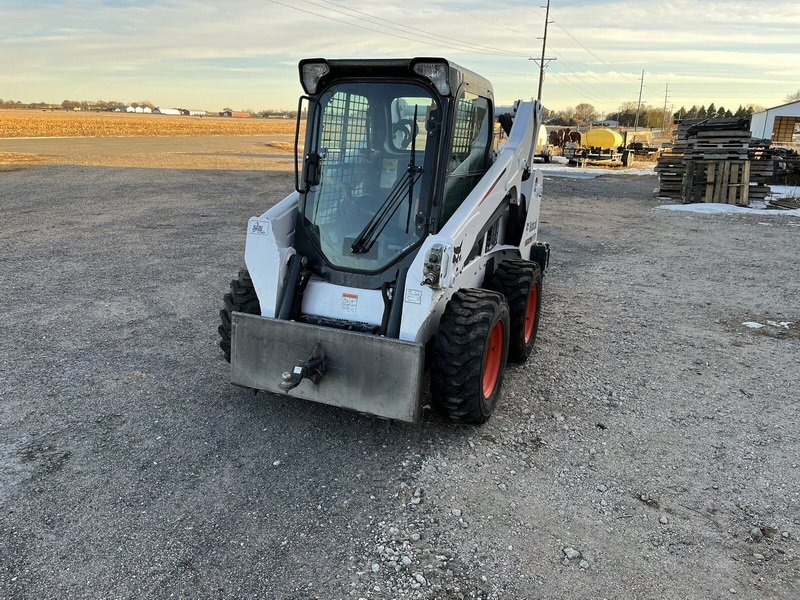
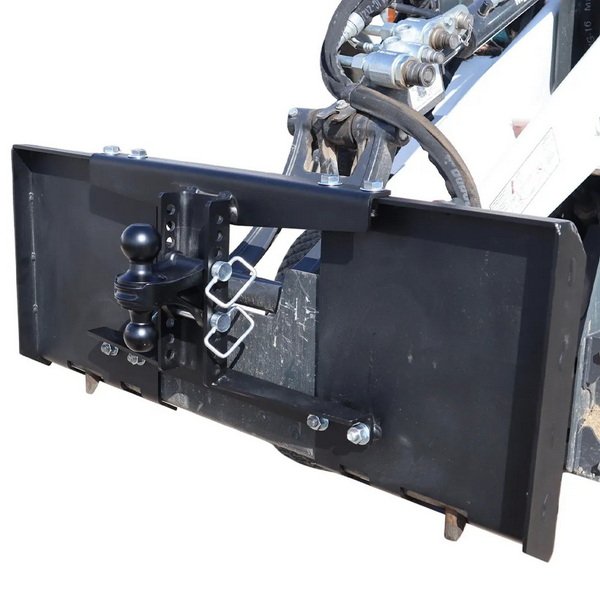
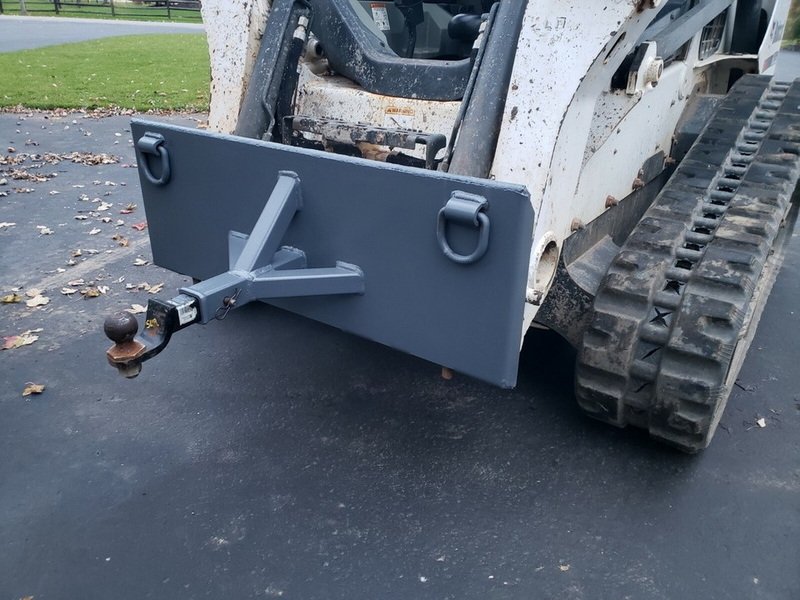
The skid steer trailer mover is a lightweight, off-center hitch mount attachment that connects directly to standard loader plates, enabling operators to reposition trailers without requiring a truck or additional personnel. This engineered solution addresses a critical gap in jobsite equipment management, where trailer repositioning has traditionally required inefficient workarounds or safety-compromising improvised methods.[1]
Core Design Specifications
The Ignite trailer mover incorporates several critical engineering features that distinguish it from generic alternatives:[1]
– Weight: 26.5 pounds, enabling single-person portability and easy storage
– Construction Material: High-strength Grade 50 steel for maximum durability under demanding jobsite conditions
– Load Capacity: Rated for Class 2 hitch loads up to 3,500 pounds, suitable for most construction trailers
– Mounting Configuration: Dual 2-inch receiver slots providing flexible left or right side positioning
– Universal Compatibility: Designed to fit standard skid steer and compact track loader mounting plates across multiple manufacturers
The off-center mounting design represents a crucial innovation that fundamentally improves operator visibility. By positioning the hitch away from the loader’s centerline, operators maintain clear sightlines to the trailer tongue during approach, connection, and maneuvering operations—a significant safety enhancement over traditional centerline hitches.[1]
Critical Safety Advantages Over Traditional Methods
Safety considerations drive the adoption of purpose-built trailer positioning equipment in professional construction operations. Traditional trailer movement methods introduce multiple risk factors that this attachment systematically eliminates.[2]
Eliminating Blind Backing Hazards
Conventional truck-based trailer positioning requires operators to back up while relying on mirrors or spotters, creating significant blind spot risks. The Ignite trailer mover enables forward-facing visibility throughout the entire operation, allowing operators to maintain direct visual contact with the trailer, surrounding obstacles, and personnel. This forward operation capability reduces accident risk and improves positioning precision, particularly in confined jobsite areas.[3][1]
Replacing Dangerous DIY Solutions
Many construction crews have historically improvised trailer movers by modifying pallet forks or welding makeshift hitches to existing equipment. These unauthorized modifications create serious safety and liability concerns:[1]
– Compromised structural integrity from non-engineered welding
– Insurance policy violations due to equipment modifications
– OSHA compliance issues related to improvised safety equipment
– Reduced visibility from centerline-mounted improvised hitches
– Unpredictable load ratings without proper engineering analysis
The purpose-built skid steer hitch attachment eliminates these risks by providing a factory-engineered solution with documented load ratings, proper materials certification, and insurance-compliant construction.[3]
Enhanced Compact Track Loader Safety Compliance
Operating compact track loaders safely requires adherence to established safety protocols and equipment capacity limits. Using properly rated attachments ensures operators stay within manufacturer specifications while maintaining insurance coverage and regulatory compliance. The Ignite trailer mover’s documented 3,500-pound capacity enables proper load planning and prevents dangerous overload situations.[2][1]
Operational Efficiency Gains Across Construction Applications
Beyond safety improvements, trailer mover attachments deliver measurable productivity enhancements that directly impact project timelines and labor costs.
Eliminating Equipment Redundancy
Traditional trailer positioning requires dedicating a truck and driver specifically for repositioning tasks. The skid steer attachment approach eliminates this requirement, allowing crews to:[1]
– Reduce on-site vehicle count, decreasing congestion in confined jobsites
– Redeploy trucks to revenue-generating transportation tasks
– Eliminate dedicated spotter personnel for backing operations
– Consolidate equipment functions using existing loader assets
These efficiency gains become particularly valuable on multi-phase construction projects where trailer repositioning occurs frequently throughout each workday.[1]
Precision Maneuvering in Confined Spaces
Skid steers and compact track loaders excel at operating in restricted areas where trucks cannot maneuver effectively. The combination of compact equipment maneuverability with forward-facing visibility enables operators to position trailers with precision in challenging environments:[4]
– Narrow alleyways between buildings or equipment
– Congested staging areas with multiple active work zones
– Soft terrain conditions where wheeled vehicles cannot operate
– Indoor facilities requiring trailer movement within buildings
The ability to execute tight-radius turns while maintaining trailer control represents a significant operational advantage over truck-based methods.[1]
Time Savings Through Streamlined Workflows
Eliminating truck-based trailer repositioning saves approximately 15-20 minutes per move when accounting for vehicle retrieval, positioning, and return time. On jobsites requiring multiple daily trailer repositions, these time savings compound into significant productivity gains:[1]
– Single-operator execution reduces labor requirements
– Immediate availability using on-site loader assets
– No vehicle switching delays between operations
– Rapid attachment mounting in under 60 seconds
Strategic Applications Across Construction Sectors
The versatility of trailer mover attachments for construction equipment extends across multiple industry segments, each with specific operational benefits.
Commercial Construction Projects
Large-scale commercial construction sites benefit from improved material delivery trailer management. The attachment enables efficient repositioning of material trailers, equipment trailers, and mobile office units without disrupting primary equipment operations or requiring dedicated support vehicles.[1]
Residential Development Operations
Residential construction crews working across multiple homes simultaneously can efficiently move tool trailers, generator trailers, and waste disposal trailers between active work locations. The compact footprint of skid steers with trailer movers prevents lawn damage and enables access through standard residential driveways.[1]
Landscaping and Site Development
Landscaping contractors benefit from repositioning equipment trailers, mulch trailers, and material delivery trailers across expansive project sites. The ability to operate on soft terrain without rutting or compaction damage makes this solution particularly valuable for finish grading and landscape installation phases.[1]
Municipal Maintenance Operations
Municipal maintenance departments managing parks, sports complexes, and infrastructure projects can efficiently reposition maintenance trailers, equipment carts, and mobile work stations using existing loader assets. This eliminates the need to dispatch trucks for simple trailer positioning tasks, improving fleet utilization efficiency.[1]
Rental Equipment Yard Management
Equipment rental facilities can streamline yard organization by efficiently repositioning customer trailers, rental equipment trailers, and storage units. The attachment enables single-operator yard management without requiring dedicated yard trucks for every repositioning task.[3]
Comparative Analysis: Trailer Mover vs. Traditional Methods
Understanding the quantifiable differences between trailer moving approaches helps justify equipment investment decisions.
Integration with Modern Compact Equipment Technology
Contemporary skid steers and compact track loaders incorporate advanced technology features that enhance trailer mover attachment performance.[4]
Attachment Recognition Systems
Leading manufacturers now offer automatic attachment recognition technology that adjusts hydraulic flow and control parameters when attachments are connected. While the trailer mover operates mechanically without hydraulic requirements, this technology ecosystem demonstrates the industry’s movement toward integrated attachment solutions rather than improvised modifications.[4]
Operator Assistance Features
Modern loaders include rear-view cameras, proximity sensors, and grade control systems that complement trailer mover operations. These features provide additional situational awareness during trailer coupling and maneuvering operations, further enhancing safety and precision.[4]
Telematics Integration
Fleet management systems can track equipment utilization patterns to identify operational efficiency improvements from trailer mover adoption. Telematics data demonstrates time savings, equipment consolidation benefits, and safety incident reduction associated with purpose-built attachments versus improvised methods.[5]
Best Practices for Trailer Mover Operation
Maximizing safety and efficiency requires following established operational protocols for compact track loader attachments.[2]
Pre-Operation Inspection Requirements
Before each use, operators should verify:[2]
– Attachment mounting security with all pins properly engaged
– Hitch receiver condition with no visible wear or damage
– Loader plate integrity with secure attachment to loader arms
– Trailer tongue compatibility with receiver size and style
– Load weight estimation within 3,500-pound capacity limits
Coupling Procedure Guidelines
Safe trailer coupling follows a systematic approach:[3]
1. Position loader directly in line with trailer tongue for straight approach
2. Approach slowly at idle speed while maintaining visual contact
3. Align hitch receiver with trailer coupler at matching height
4. Engage coupler fully until locking mechanism activates
5. Verify connection security before beginning trailer movement
6. Connect safety chains according to equipment and regulatory requirements
Maneuvering and Positioning Techniques
Effective trailer repositioning requires understanding loader-trailer dynamics:[2]
– Maintain low speeds (under 5 mph) during all trailer movement
– Execute gradual turns to prevent trailer sway or jackknifing
– Monitor trailer clearance continuously during confined space operations
– Use spotter assistance in congested areas despite improved visibility
– Account for trailer momentum when stopping or changing direction
Expanding Product Ecosystem: Comprehensive Attachment Solutions
The trailer mover release represents broader strategic expansion beyond traditional implement offerings into comprehensive equipment solutions.[1]
New Product Categories
Recent market entries include comprehensive compact equipment parts and consumables:[1]
– Solid skid steer tires: Flat-free construction with multiple tread patterns for varying terrain conditions
– Hydraulic kits: Including third-function valves and advanced top/tilt control systems
– Maintenance consumables: Premium-grade grease, hydraulic fluid, and polyurethane cutting edges
– Upcoming releases: Steel cutting edges, replacement rubber tracks, and wafer brush attachments
Direct-to-Consumer Model Advantages
Digital-first business models eliminate traditional distribution markups, providing contractors with professional-grade equipment at competitive pricing. Direct shipping approaches reduce lead times and enable comprehensive online product research without requiring dealer visits.[1]
Compatibility and Universal Fit Philosophy
Manufacturers emphasize cross-brand compatibility, ensuring products function properly across multiple equipment brands. This approach reduces inventory complexity for rental operations and multi-brand fleets while simplifying attachment procurement decisions.[1]
Return on Investment Analysis for Construction Operations
Understanding the financial impact of trailer mover attachment adoption helps justify equipment purchases through quantifiable metrics.
Labor Cost Reduction
Eliminating the need for dedicated spotters during trailer positioning operations saves approximately 30-45 minutes of labor per workday on active jobsites. At average construction labor rates of $35-45 per hour, this represents $17-33 in daily labor savings per crew, or $4,400-8,600 annually based on a 260-workday year.
Equipment Utilization Optimization
Reducing reliance on trucks for trailer positioning enables redeployment to revenue-generating transportation tasks. For operations maintaining dedicated yard trucks primarily for trailer spotting, consolidating this function into existing loader operations can potentially eliminate one truck asset, saving $8,000-12,000 annually in ownership costs (insurance, maintenance, depreciation).
Safety Incident Cost Avoidance
The average cost of a workplace vehicle incident exceeds $75,000 when accounting for medical expenses, equipment damage, productivity loss, and insurance impacts. Even a single prevented incident over the attachment’s service life provides substantial return on a $500-800 equipment investment.[2]
Productivity Enhancement Value
Time savings of 15-20 minutes per trailer repositioning operation compound across multiple daily moves. A crew performing five trailer repositions daily saves 75-100 minutes of operational time, equivalent to 1.25-1.67 hours of billable project work—translating to $125-200 additional productive capacity daily at typical $100/hour labor billing rates.
Transform Your Jobsite Operations with Certeg Equipment Solutions
Maximizing construction efficiency starts with the right equipment foundation. As a leading manufacturer of excavators, skid steer loaders, vibratory rollers, forklifts, tractors, and tracked carriers, Certeg delivers comprehensive construction equipment solutions engineered to meet diverse power requirements and operational demands across global markets. Our skid steer loaders and compact track loaders feature universal attachment compatibility, standardized quick-connect systems, and robust mounting configurations that support the full spectrum of productivity-enhancing implements—including innovative trailer mover attachments that eliminate jobsite inefficiencies.
Ready to revolutionize your trailer positioning operations and overall jobsite productivity? Contact Certeg’s equipment specialists today to explore how our compact loader solutions integrate seamlessly with purpose-built attachments to deliver measurable time savings, enhanced safety performance, and superior return on investment. Our technical team will analyze your specific operational requirements and recommend optimized machine configurations tailored to your construction, landscaping, or municipal maintenance applications. Discover why leading contractors worldwide trust Certeg for reliable, versatile construction equipment that drives profitable project execution.
Frequently Asked Questions About Trailer Mover Attachments
1. What weight capacity do I need for a skid steer trailer mover attachment?
Most construction and landscaping trailers fall within the Class 2 hitch category (up to 3,500 pounds gross trailer weight), which standard trailer movers accommodate. Calculate your maximum loaded trailer weight including equipment, materials, and trailer chassis to ensure compatibility. For heavier applications exceeding 3,500 pounds, consult with attachment manufacturers about heavy-duty alternatives or consider using appropriately rated towing vehicles instead of compact loaders.[1]
2. Can I use a trailer mover attachment with any brand of skid steer or compact track loader?
Trailer movers feature universal mounting plate compatibility designed to fit standard skid steer and compact track loader quick-attach systems across major manufacturers. However, always verify dimensional compatibility between the attachment mounting configuration and your specific loader model before purchasing. Most contemporary loaders manufactured after 2000 use standardized mounting interfaces, but some older or specialized machines may require adapter plates.[1]
3. Is a purpose-built trailer mover safer than using modified pallet forks?
Yes, significantly safer for multiple reasons. Purpose-built trailer movers feature engineered load ratings, factory-quality construction materials, and optimized visibility through off-center mounting design. Modified pallet forks typically obstruct operator sightlines, lack documented load capacities, and often violate insurance policies and workplace safety regulations. The liability risk and potential for accidents with improvised solutions far exceeds the modest investment in proper equipment.[3][1]
4. How much time does a trailer mover attachment save compared to using a truck?
Time savings vary by jobsite configuration, but typical operations save 15-20 minutes per trailer repositioning when eliminating the need to retrieve a truck, execute backing maneuvers with spotter assistance, and return the vehicle to parking. On jobsites requiring 3-5 daily trailer moves, this compounds to 45-100 minutes of saved time daily. Additionally, single-operator execution eliminates the labor cost of dedicated spotters required for safe truck-based backing operations.[1]
5. What maintenance does a trailer mover attachment require?
Minimal maintenance is required due to the all-mechanical design without hydraulic components or moving parts. Recommended maintenance includes periodic visual inspection for weld integrity and structural damage, cleaning debris from receiver tubes, applying light lubrication to prevent corrosion, and verifying mounting pins remain secure and undamaged. The high-strength steel construction provides long service life with minimal intervention when used within rated capacity limits.[1]
Citations:
[1] https://www.spartanequipment.com/blog/the-benefits-of-using-highquality-skid-steer-attachments-for-municipal-maintenance/
[2] https://www.gregorypoole.com/ctl-safety/
[3] https://www.skidsteers.com/mini-skid-steer-attachments/trailer-movers/
[4] https://www.youtube.com/watch?v=6I-MSh5t0_Y
[5] https://wlius.com/applications/gps-asset-tracking/gps-trailer-tracking/
Hot Tags:Skid Steer Trailer Mover Attachment, Trailer Mover for Skid Steer, Trailer Mover Attachment, Skid Steer Trailer Mover, Track Loader Trailer Mover, Skid Steer Attachments, Trailer Mover For Skid Steers, Trailer Mover For Track Loaders, Heavy Duty Trailer Mover, Skid Steer Towing Attachment