
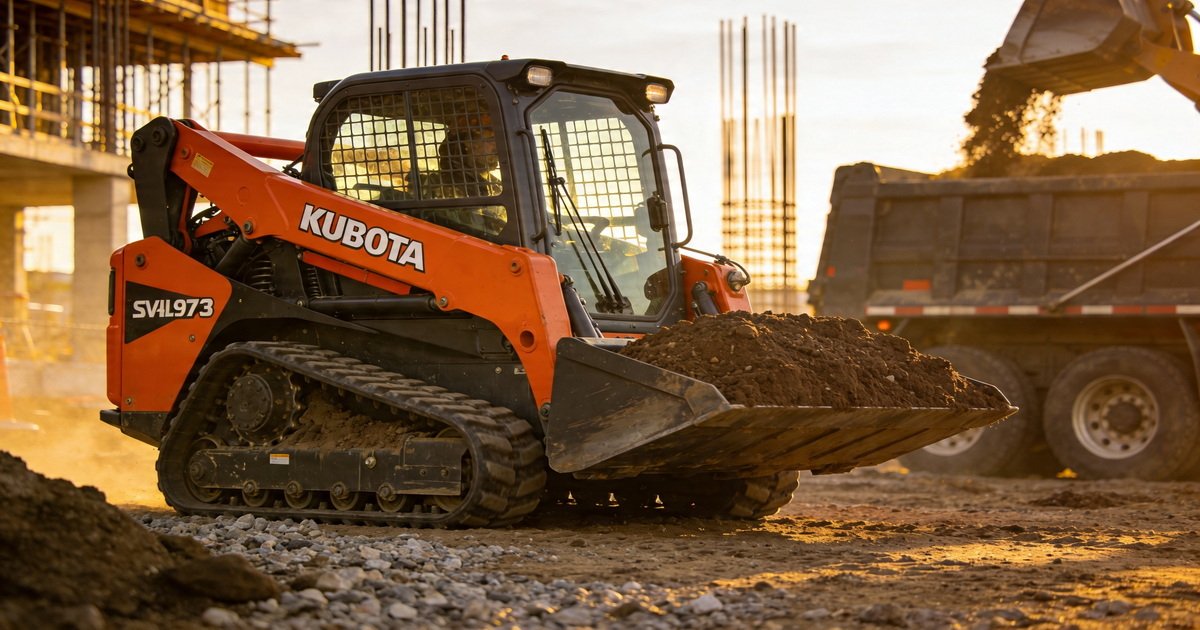
Kubota SVL97-3: An Expert’s Field-Tested Review of Kubota’s Largest Compact Track Loader
Content Menu
● What Is the Kubota SVL97-3 and Who Is It For?
● Key Specifications and Performance at a Glance
● First-Hand Operator Experience: Cab, Controls and Comfort
>> Operator Tech: Display, Camera and Lighting
● Power, Hydraulics and Real-World Productivity
>> Engine and Travel Performance
>> Smarter Hydraulics and Automatic Downshift
● Attachment Control, Ride Quality and Serviceability
>> Programmable Attachment Flow and Live Pressure
>> Kubota Shockless Ride (KSR)
● Compact Track Loader vs Skid Steer Loader: Where the SVL97-3 Fits
>> When to Choose a Compact Track Loader Like SVL97-3
>> When a Wheeled Skid Steer Might Be Better
● How the SVL97-3 Impacts Jobsite Economics
>> 1. Productivity and Cycle Time Economics
>> 2. Operator Retention and Training
>> 3. Fleet Strategy: Standardizing on High-Capacity CTLs
● Practical Operator Tips for Getting the Most from the SVL97-3
● Call to Action: Next Steps for Contractors and Fleet Managers
● FAQs
>> 1. Is the Kubota SVL97-3 a good choice for high-flow attachments?
>> 2. How does the SVL97-3 compare to the previous SVL97-2 model?
>> 3. Is the sealed cab worth it for most contractors?
>> 4. Should I choose a compact track loader or a wheeled skid steer for mixed jobsites?
>> 5. How can I maximize ROI on a Kubota SVL97-3 in my fleet?
As someone who’s spent years around compact track loaders (CTLs) and skid steer loaders on construction, landscaping and rental jobsites, the new Kubota SVL97-3 feels less like a routine model refresh and more like a meaningful jump in comfort, control and productivity. This in-depth review blends hands-on operator perspective, industry data and real user feedback to help you decide if the SVL97-3 is the right heavy-duty CTL for your fleet — and how it compares to other skid steer and compact track loader options on the market. [youtube]
What Is the Kubota SVL97-3 and Who Is It For?
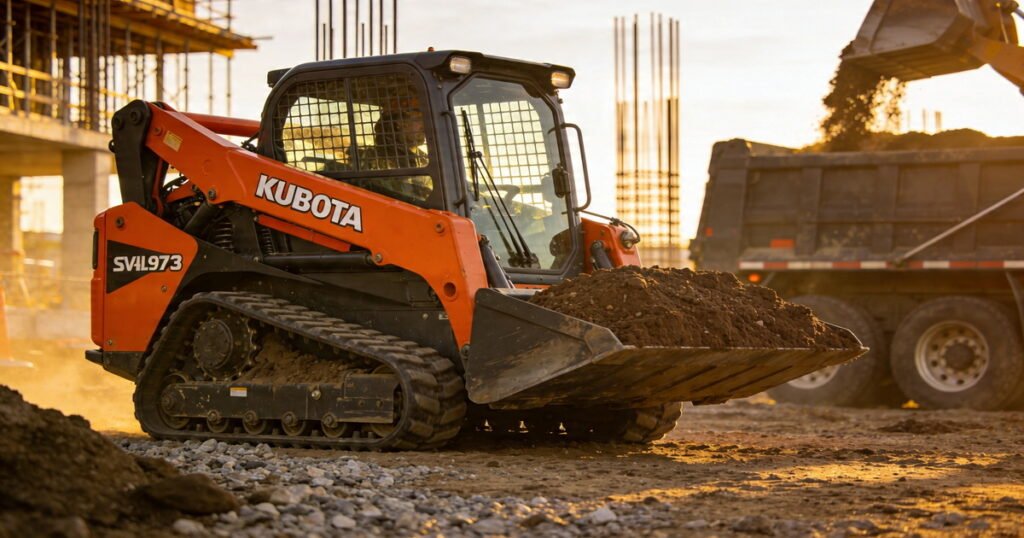
The Kubota SVL97-3 is currently Kubota’s largest compact track loader, positioned for contractors who need serious lifting power, fast cycle times and an all-weather cab for long days on site. It builds directly on the popular SVL97-2 platform but adds a sealed one-piece cab, upgraded hydraulics and smarter attachment control to push the machine into “production-class CTL” territory. [youtube]
From an expert fleet perspective, the SVL97-3 is a strong fit if you:
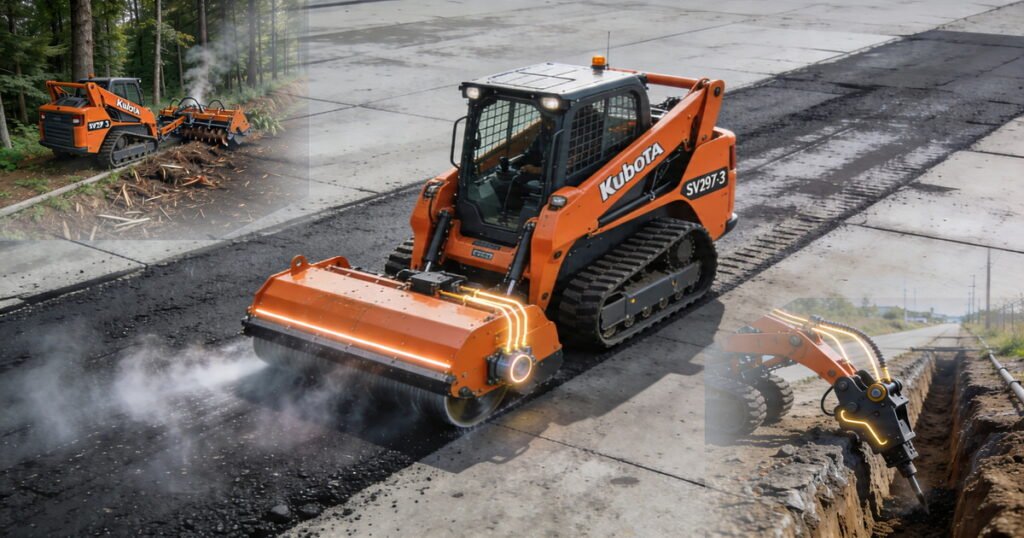
– Run high-flow attachments (cold planers, mulchers, trenchers, heavy brooms). [youtube]
– Do a mix of grading, earthmoving and material handling where rated operating capacity and cycle speed directly affect profit.
– Work in dusty, noisy or cold environments where cab comfort drives operator retention. [youtube]
If your fleet strategy includes both compact track loaders and skid steer loaders (wheeled skid steers), the SVL97-3 can serve as the tracked production workhorse, while a wheeled skid steer covers hard-surface and yard work. [gushwork]
Key Specifications and Performance at a Glance
Before we dive into experience and usability, here are the headline numbers that matter on bids and job costing. [youtube]
| Feature | Kubota SVL97-3 (Dash-3) | Notes |
|---|---|---|
| Engine power | 96.4 hp Kubota diesel | Tier 4 Final compliant. youtube |
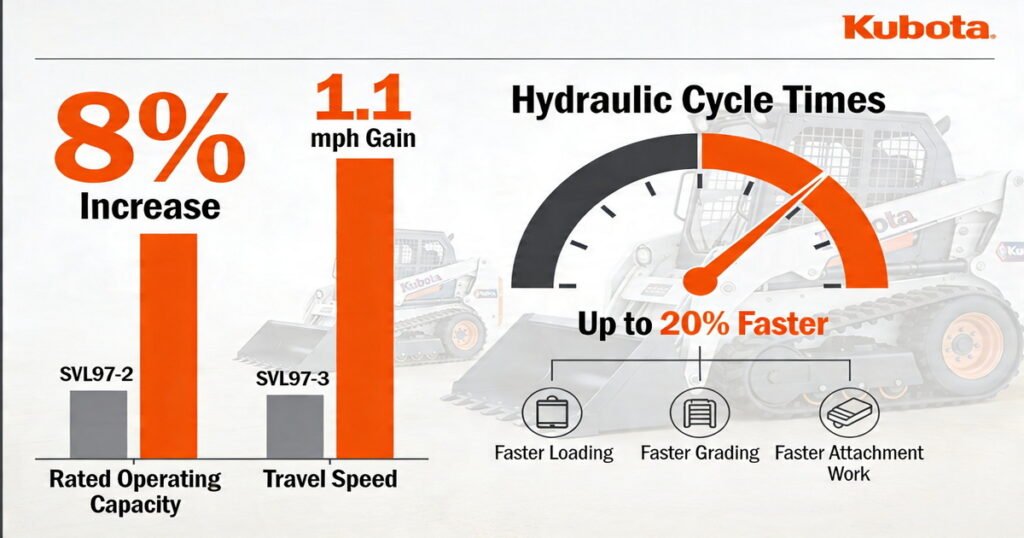
| Rated operating capacity (ROC) | ~3,459 lbs | About 8% higher than SVL97-2. youtube |
| ROC with optional counterweights | ~3,659 lbs | +200 lbs with added ballast. |
| Travel speed (high range) | Up to 8.4 mph | +1.1 mph vs prior model. youtube |
| Hydraulic improvements | ~20% faster cycle times | New pump & priority flow. youtube |
| Cab type | One-piece sealed cab | Shared design with SVL75-3. youtube |
On paper, the SVL97-3 clearly targets contractors who measure output in truckloads per day, not just machine-hours. [youtube]
First-Hand Operator Experience: Cab, Controls and Comfort
From an operator’s standpoint, cab experience is no longer a side note — it directly impacts productivity over 8–10 hour shifts. On the SVL97-3, Kubota has finally caught up with (and in some cases surpassed) premium CTL competitors in this area. [youtube]
Sealed One-Piece Cab
Kubota moved to the same sealed one-piece cab design used on the SVL75-3, and the difference versus the older SVL97-2 style is immediately noticeable. [youtube]
– Dust and debris intrusion are dramatically reduced. [youtube]
– Noise levels drop enough that radio and in-cab communication are clearer at full throttle.
– The cab tilts up as a single unit once you remove two bolts, making hydraulic service access straightforward.
For operators working in demolition, concrete, or dry soils, this sealed cab is a genuine fatigue reducer, not a marketing bullet. [youtube]
HVAC and Seating Upgrades
Inside the cab, Kubota has finally given HVAC and seating the attention heavy users expect. [youtube]
– An upgraded HVAC system delivers about 40% more airflow, with better vent placement.
– Controls for temperature and fan speed feel more precise than on previous Kubota CTLs.
– A heated air-ride seat comes standard on enclosed cabs, smoothing out rough ground and winter startups.
For northern climates or high-dust jobs, these upgrades shift the SVL97-3 from “acceptable” to operator-approved.
Operator Tech: Display, Camera and Lighting
Kubota’s operator environment also gets a modern electronics update.
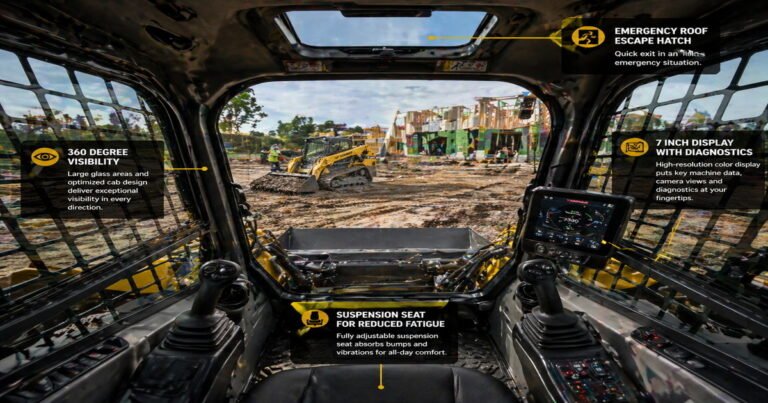
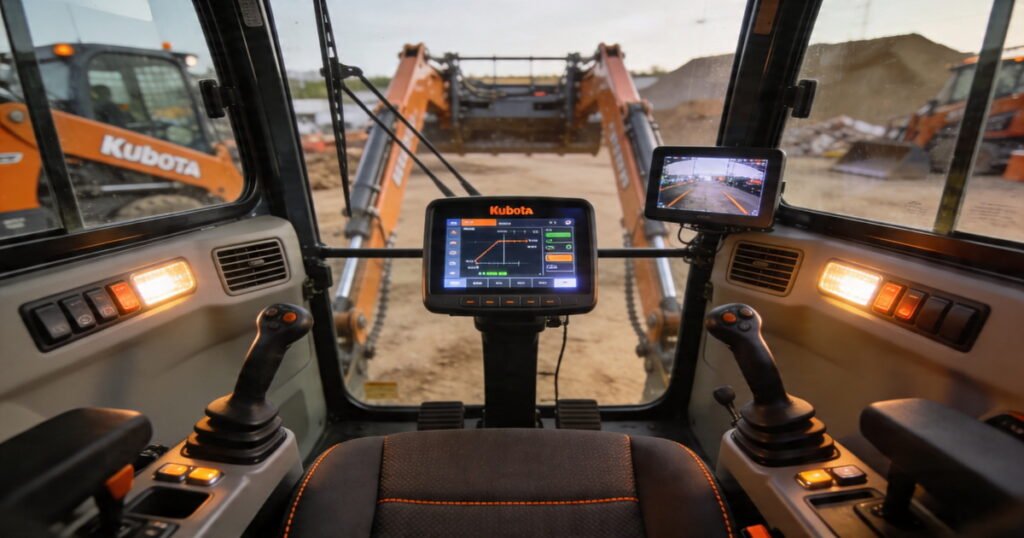
– A 7 in touchscreen display centralizes machine settings, attachment presets and monitoring.
– A rearview camera enhances backing safety, especially on congested jobsites or in tight yards.
– Delayed-shutoff exterior LED lights stay on briefly after shutdown, making end-of-day checks safer.
From a UX standpoint, these features reduce cognitive load: the operator spends less time fiddling with multiple switches and more time focusing on bucket edge, grade and site hazards. [blog.marketmuse]
Power, Hydraulics and Real-World Productivity
Numbers matter, but how the machine feels under load often decides whether a CTL stays booked or sits in the yard. In the SVL97-3, the powertrain and hydraulic improvements are obvious once you start cycling the arms and running attachments. [youtube]
Engine and Travel Performance
The SVL97-3 runs a 96.4 hp Kubota diesel with a DPF muffler to meet Tier 4 Final emissions standards, but it does so without feeling strangled at high load. [youtube]
– High-range speed climbs to 8.4 mph, roughly 1.1 mph faster than the previous model. [youtube]
– The machine gained about 400 lbs of base weight, which, combined with tweaked loader arm geometry, boosts ROC by around 8%. [youtube]
On long carries with a full bucket or pallet forks, this extra speed and stability turns into more cycles per hour, especially when paired with a truck that can keep up.
Smarter Hydraulics and Automatic Downshift
Hydraulic performance is one of the most meaningful upgrades on the Dash-3. [youtube]
– A new hydraulic pump increases multifunction controllability and helps deliver up to 20% faster cycle times. [youtube]
– Priority flow is given to the arms, bucket curl and auxiliary hydraulics, so they respond smoothly even under mixed input.
– An automatic downshift feature kicks from high to low range when turning or entering a pile, keeping engine RPM up while maintaining control. [youtube]
In practice, this means less bogging at the pile face and more confidence when feathering controls for fine grading or trench backfill.
Attachment Control, Ride Quality and Serviceability
Where many CTLs fall down is in daily usability: clumsy attachment control, harsh ride or hard-to-reach components. Kubota clearly targeted those pain points with the SVL97-3. [youtube]
Programmable Attachment Flow and Live Pressure
Kubota has dramatically expanded attachment control flexibility. [youtube]
– Operators can now program flow settings for up to 20 different attachments (up from five on the earlier model).
– The system shows live auxiliary pressure on-screen, allowing you to confirm performance instead of guessing from sound or feel.
From a fleet manager’s standpoint, this reduces the risk of mismatched hydraulic settings damaging expensive tools like planers or mulchers, and it speeds up changeovers between crews. [gushwork]
Kubota Shockless Ride (KSR)
Kubota’s Shockless Ride (KSR) comes standard on enclosed cab SVL97-3 units.
– It uses a hydraulic accumulator to absorb bumps and reduce pitching when traveling with a loaded bucket.
– It keeps more material in the bucket over uneven ground, directly improving payload delivered per trip.
– Operator fatigue is noticeably lower after a full day of hauling or loading trucks.
This is particularly valuable for contractors running long haul routes from excavation to stockpile or truck. [youtube]
Easier Maintenance Access
Serviceability is often overlooked until your first mid-season failure. Kubota addressed this with several practical updates.
– A swing-out radiator opens up better access to the engine bay for cleaning and daily checks.
– The sealed cab tilts after removing only two bolts, exposing hydraulic components for service.
– New cleanout panels simplify debris removal in areas that typically pack with dirt and wood chips.
For rental companies and high-utilization fleets, this translates into quicker turnaround and less downtime on scheduled maintenance. [gushwork]
Compact Track Loader vs Skid Steer Loader: Where the SVL97-3 Fits
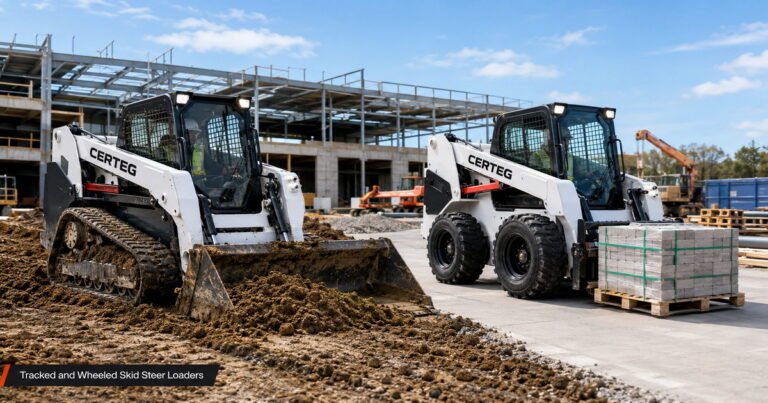
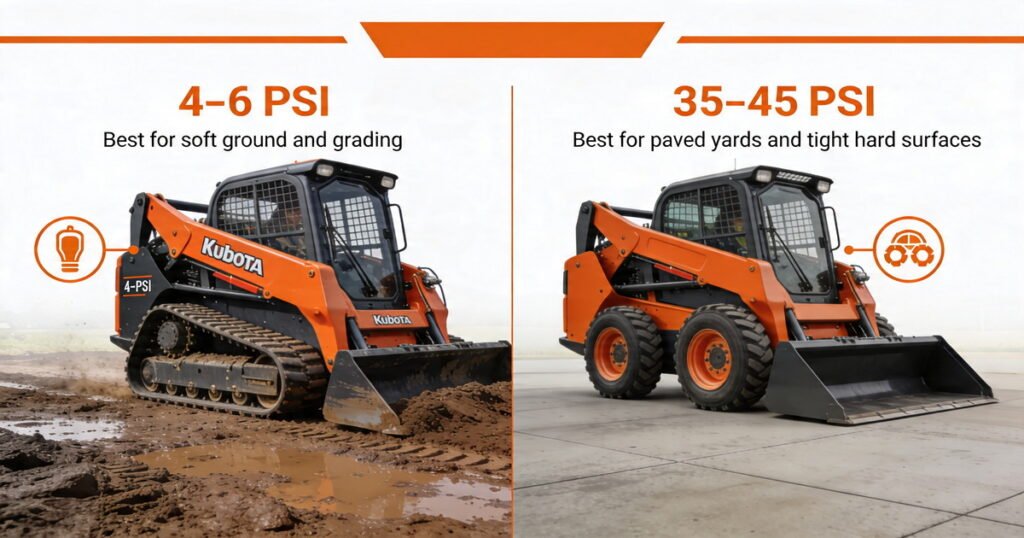
As a manufacturer and supplier of both skid steer loaders and compact track loaders, we see many buyers wrestling with the “tracks vs wheels” decision. The SVL97-3 sits squarely in the high-production tracked category. [gushwork]
When to Choose a Compact Track Loader Like SVL97-3
– Soft, muddy or sandy ground conditions where low ground pressure matters.
– Jobs that involve frequent grading, cut-and-fill, or working on unprepared ground.
– Forestry, site prep and brush clearing with high-flow attachments.
When a Wheeled Skid Steer Might Be Better
– Primarily hard-surface work (concrete, asphalt, paved yards).
– Frequent trailer moves where lighter weight is a benefit.
– Lower acquisition cost requirements for entry-level fleets.
For many contractors, a balanced fleet includes a high-capacity CTL like the SVL97-3 for production earthwork and one or more wheeled skid steers for yard, snow or material handling. [gushwork]
How the SVL97-3 Impacts Jobsite Economics
To go beyond basic spec-sheet comparisons, it helps to look at how the SVL97-3 can change your job costing in the real world. [blog.marketmuse]
1. Productivity and Cycle Time Economics
An estimated 20% improvement in cycle times means that in a typical 8-hour day, a crew can move significantly more material or complete more loading cycles. [youtube]
– If your SVL97-2 crew averaged 200 truck loads per week, a 20% gain could push that toward 240, assuming trucks and site logistics can keep up.
– On fixed-price jobs, this shortens project duration, freeing machine time for additional contracts.
Even if actual in-field gains fall below the theoretical 20%, the combination of higher ROC, faster travel and smarter auto-downshift still adds measurable value to job margins. [youtube]
2. Operator Retention and Training
With chronic operator shortages in many regions, retaining skilled CTL operators has become a hidden cost center. [gushwork]
– A quieter, climate-controlled, sealed cab reduces fatigue and operator complaints.
– Intuitive touchscreen controls and consistent attachment presets shorten training time for new hires.
– Better visibility (camera + lighting) reduces incident risk, protecting both people and equipment.
In my experience, operators are more likely to choose and stick with machines that visibly “respect” them through comfort and control quality.
3. Fleet Strategy: Standardizing on High-Capacity CTLs
Many forward-looking contractors are consolidating around fewer, more capable CTLs rather than keeping multiple mid-sized machines. [gushwork]
– A high-capacity CTL like the SVL97-3 can cover both heavy lifting and fine grading with the right attachment set. [youtube]
– Standardizing on one primary CTL platform simplifies parts stocking, training, and telematics monitoring. [gushwork]
– With programmable attachment flow for 20 tools, a single SVL97-3 can rotate through multiple tasks in a day without complex setup.
This approach often pairs well with one or two flexible skid steers for support work, giving you coverage across changing soil and weather conditions.
Practical Operator Tips for Getting the Most from the SVL97-3
Based on how the SVL97-3 is engineered, here are some field-tested tips to maximize ROI. [youtube]
1. Use programmed attachment profiles
Save custom flow and pressure settings for each high-flow attachment (planer, mulcher, broom, trencher) so operators can swap tools without guessing.
2. Leverage automatic downshift for pile work
Encourage operators to stay in high range for carries but let the auto-downshift handle entry into the pile; this keeps the engine in its power band and reduces stalling. [youtube]
3. Keep the sealed cab and radiator clean
Regularly use the swing-out radiator and cleanout panels to avoid heat-related derates and cab pressure issues, especially in dusty or fibrous materials.
4. Train for visibility and camera use
Integrate the rearview camera into your standard operating procedures for reversing in tight spaces or around spotters.
5. Match machine to attachment weight and ROC
Take full advantage of the extra ROC by pairing the SVL97-3 with attachments that previously pushed mid-sized CTLs to their limits — but always verify tool weight and balance. [youtube]
Call to Action: Next Steps for Contractors and Fleet Managers
If you are currently evaluating compact track loaders or skid steer loaders for upcoming projects or for your equipment fleet, the Kubota SVL97-3 sets a high benchmark for comfort, hydraulic control and real-world productivity. As a manufacturer and supplier specializing in skid steer loaders (both tracked and wheeled) and other construction machinery, we can help you compare the SVL97-3 class of CTLs with alternative configurations, power ratings and undercarriage types tailored to your soil conditions and work profiles. [gushwork]
Talk to our application specialists today to:
– Match machine size and ROC to your core jobs.
– Select the right mix of attachments for grading, earthmoving or demolition.
– Design a balanced fleet strategy combining CTLs and skid steer loaders that maximizes uptime and return on investment.
FAQs
1. Is the Kubota SVL97-3 a good choice for high-flow attachments?
Yes. With 96.4 hp and upgraded hydraulics that deliver faster cycle times and programmable attachment flow for up to 20 tools, the SVL97-3 is well suited to high-flow attachments such as planers, mulchers and trenchers. [youtube]
2. How does the SVL97-3 compare to the previous SVL97-2 model?
The SVL97-3 offers about 8% higher rated operating capacity, faster travel speeds, roughly 20% quicker hydraulic cycle times and a sealed one-piece cab that greatly improves comfort and dust control compared to the SVL97-2. [youtube]
3. Is the sealed cab worth it for most contractors?
For contractors working regularly in dust, noise or extreme temperatures, the sealed cab with enhanced HVAC, heated air-ride seat and reduced intrusion significantly improves operator comfort and retention, which often justifies the investment. [youtube]
4. Should I choose a compact track loader or a wheeled skid steer for mixed jobsites?
If your jobsites are frequently soft, muddy or unprepared, a compact track loader like the SVL97-3 is usually the better primary machine, while a wheeled skid steer can complement it for hard-surface and yard work. [gushwork]
5. How can I maximize ROI on a Kubota SVL97-3 in my fleet?
Standardize attachment flow presets, train operators to use auto-downshift and KSR, maintain the sealed cab and radiator areas proactively, and match the machine to projects where high ROC and fast cycles directly increase billable output. [youtube]
References
1. Equipment World – “A Closer Look: Kubota’s New, Largest Compact Track Loader, the SVL97-3” (specs and performance details). [youtube]
2. Kubota SVL97-3 launch and feature highlight videos (horsepower, comfort features, hydraulics). [youtube] [youtube]
3. Kaige Kubota – “Meet the New Kubota SVL97-3: Power, Precision and Next-Level Comfort” (feature overview and positioning). [kaigekubota]
4. SEO and E-E-A-T best-practice resources for equipment and B2B content.”SEO Strategy for Heavy Equipment Sales” – Gushwork. [gushwork]
5. “Enhancing Your Content Strategy with SEO Best Practices” – MarketMuse Blog. [blog.marketmuse]
6. “E-E-A-T for AI Search: How to Build Authority That Gets Cited by AI” – Ziptie. [ziptie]
Hot Tags: Skid Steer Loader, Manufacturers, Customized, Custom, Suppliers, Buy, Cheap, Quality, Advanced, Durable, in Stock, Made in China, Price, Quotation