
How to Choose the Best Mini Skid Steer in 2026: A Practical, Data‑Driven Buyer’s Guide
Content Menu
● What Is a Mini Skid Steer and Who Really Needs One?
● Core Decision 1: Stand‑On vs Walk‑Behind Mini Skid Steers
>> Walk‑Behind (Pedestrian) Mini Skid Steers
● Core Decision 2: Tracks vs Tires
● Lift Path: Vertical vs Radial and What It Changes
● Power, Hydraulics and Operating Capacity
>> Engine Power and Hydraulic Flow
>> Rated Operating Capacity (ROC) and Stability
● Attachments: Turning a Mini Skid Steer into a Multi‑Tool
● Operator Controls, Comfort and Learning Curve
● Safe Operation: Slope, Load and Transport
● 2026 Market Trends: Why Mini Skid Steers Are Growing So Fast
● Mini Skid Steer vs Compact Track Loader: Which One Fits Your Jobs?
● Buy, Rent or Lease: Picking the Right Ownership Model
● Step‑By‑Step Buying Checklist for 2026
● Turn Your Mini Skid Steer Plan into a Competitive Advantage
>> 1. What size mini skid steer do I need for residential landscaping?
>> 2. Are electric mini skid steers worth it for indoor jobs?
>> 3. How often should I service my mini skid steer?
>> 4. Can one mini skid steer handle both construction and landscaping tasks?
>> 5. What should I look for in a dealer or rental partner?
Mini skid steers, also called compact tool carriers or mini track loaders, have become one of the most versatile tools on modern construction and landscaping sites, especially where space is tight and labor is expensive. Choosing the right machine in 2026 means looking beyond brand names and focusing on power, lift, attachments, operator comfort and long‑term ROI instead of just sticker price.

What Is a Mini Skid Steer and Who Really Needs One?
A mini skid steer is a compact, walk‑behind or stand‑on loader designed to power a wide range of hydraulic and mechanical attachments in confined spaces. They are widely used in construction, landscaping, property maintenance, agriculture and utility work where larger skid steers or compact track loaders cannot maneuver efficiently.
You should consider a mini skid steer if you:
– Work on tight residential lots, urban infill projects or indoor demolition where access is limited.
– Want to replace repetitive hand labor such as wheelbarrowing, shoveling or manual trenching with mechanized productivity.
– Need a single carrier that can run multiple attachments for digging, grading, trenching, material handling, sweeping and more.
Core Decision 1: Stand‑On vs Walk‑Behind Mini Skid Steers
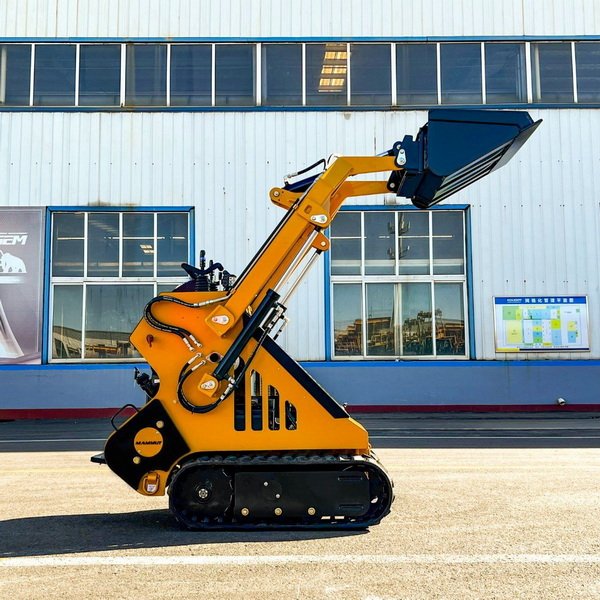
Stand‑On Mini Skid Steers
Modern buyers increasingly prefer stand‑on mini skid steers because they offer faster travel, better visibility and less operator fatigue compared with pedestrian units.
Key advantages:
– Higher travel speeds make site‑to‑site movement and material handling significantly quicker.
– Elevated operator platform improves visibility to the attachment and work area, which is critical in tight or congested jobsites.
– Suspended platforms can reduce vibration and bouncing, improving comfort and fine control over long shifts.
Best for:
– Contractors and rental fleets focused on productivity and multi‑operator usage.
– Landscaping and construction crews needing to load trucks, move pallets or trench over longer distances in a day.
Walk‑Behind (Pedestrian) Mini Skid Steers
Walk‑behind units still have a place in ultra‑tight access or very budget‑sensitive applications.
Advantages:
– Lower cost and simpler construction, which appeals to small contractors or homeowners.
– Smaller footprint and lighter weight for delicate surfaces and ultra‑narrow gateways.
Limitations:
– Travel speed is capped at walking pace, which reduces productivity on larger jobs.
– Operator fatigue can increase over a long day, especially on uneven surfaces.
Practical rule of thumb: If your crew will be on the machine for hours every day, a stand‑on model will almost always deliver better productivity and operator acceptance than a walk‑behind.
Core Decision 2: Tracks vs Tires
Tracked Mini Skid Steers
Tracked mini skid steers are now the dominant choice because they combine low ground pressure with strong traction.
Benefits:
– Low ground pressure protects turf, finished landscaping and concrete surfaces from scarring and rutting.
– Better traction and pushing power for dozing, grading and working in mud, sand or soft soils.
– More stability when carrying loads over uneven terrain.
Considerations:
– Higher initial purchase and rental cost versus wheeled models.
– Risk of de‑tracking if tracks are poorly tensioned or abused on sharp obstacles, which can cause downtime.
Wheeled Mini Skid Steers
Wheeled units, with pneumatic or semi‑pneumatic tires, can still be the right choice for certain environments.
Benefits:
– Lower risk of track issues, since there is no de‑tracking and semi‑pneumatic tires are highly resistant to punctures.
– Often lower acquisition cost and simpler maintenance.
– Good choice on hard, flat surfaces with minimal mud or loose material.
Limitations:
– Higher ground pressure and more potential to mar delicate surfaces, especially when turning under load.
– Less traction in mud, snow and steep terrain compared with tracks.
Selection tip: If you routinely work on lawns, soft soil or uneven ground, choose tracks; if your work is mostly on hard surfaces with debris and you need lower cost, tires may be sufficient.
Lift Path: Vertical vs Radial and What It Changes
Mini skid steers use either vertical‑lift or radial‑lift loader arms, which changes how the attachment moves through its lift cycle.
– Vertical lift keeps the bucket or forks close to the machine throughout the arc, offering greater reach at full height and at the ground.
– Radial lift moves the attachment in an arc, placing it farther forward mid‑stroke and closer at the top and bottom, which can improve breakout force for digging and grading.
Choose vertical lift if:
– Loading into trucks, hoppers or high‑sided trailers is a frequent task.
– You need maximum reach at full height for pallet forks or high‑dump buckets.
Choose radial lift if:
– Your main work is digging, backfilling, grading or trenching, where breakout force and mid‑range reach matter more than maximum height.
Power, Hydraulics and Operating Capacity
Engine Power and Hydraulic Flow
Modern mini skid steers span a wide range of horsepower and hydraulic capabilities.
Look at:
– Engine power (hp): Higher horsepower allows you to power demanding attachments such as trenchers, brush cutters and cold planers without bogging down.
– Standard vs high‑flow hydraulics: High‑flow circuits support more specialized attachments, and multiple auxiliary circuits plus electrical connectors expand what you can run.
– Auxiliary hydraulic controls: One‑way and two‑way flow options, along with clean, leak‑free couplers, are essential for safe attachment changes and consistent performance.
Many popular commercial mini skid steer models with around 24–25 hp and operating capacities near 1,000 lb are widely used for construction and landscaping because they balance size and power well.
Rated Operating Capacity (ROC) and Stability
Rated operating capacity tells you how much a mini skid steer can safely lift and carry without compromising stability. Many stand‑on machines now offer ROCs that rival, and sometimes surpass, small skid steers and compact track loaders.
Consider:
– Material density, for example wet soil versus mulch or pavers.
– Lift height required to clear truck sides.
– Whether you will use forks, augers, trenchers or grapples regularly, as these change effective load and balance.
Safety guideline: Always travel with the load low to keep the center of gravity down and maintain stability.
Attachments: Turning a Mini Skid Steer into a Multi‑Tool
The true value of a mini skid steer comes from its attachment ecosystem.
Common high‑value attachments:
– General‑purpose and 4‑in‑1 buckets for loading, grading and backfilling.
– Pallet forks for moving palletized materials, pavers and job boxes.
– Augers for post holes, fence installation and planting.
– Trenchers for utilities and irrigation.
– Grapples and brush attachments for land clearing and storm cleanup.
Coupler systems:
– Some brands use proprietary couplers that favor their own attachments, requiring adapters for third‑party tools.
– Others use common industry interface plates or mini skid steer plates aligned with cross‑brand alliances, improving compatibility.
Buying tip: If you already own attachments or plan to build a large attachment fleet, prioritize common coupler standards and hydraulic compatibility to avoid expensive adapters and downtime.
Operator Controls, Comfort and Learning Curve
Control systems vary widely, from basic mechanical levers to sophisticated electronic joysticks.
Key factors to evaluate:
– Control type: mechanical, pilot or electric‑over‑hydraulic, using joysticks, thumb wheels or levers.
– Control pattern: ISO‑style joystick layouts are familiar to many operators and shorten the learning curve.
– Ergonomics: Smooth response, intuitive labeling and stable platforms reduce fatigue and training time, especially in rental environments where multiple operators use the same machine.
Best practice:
– Spend time with your dealer or rental house to walk through control functions before taking the machine to the jobsite.
– Allow operators to practice with light loads until the controls feel natural and intuitive.
Safe Operation: Slope, Load and Transport
Mini skid steers are compact, but they can still be dangerous if misused.
Safety principles:
– Avoid steep slopes; on slight slopes, reduce speed and travel straight up and down the slope rather than across it.
– Keep the heavy end of the machine uphill and avoid operating on slopes in ice, snow or rain.
– When traveling, keep buckets and forks low to improve stability and visibility.
– When loading on or off trailers, limit ramp angles and use appropriate tie‑downs.
Maintenance safety: Always relieve hydraulic pressure and shut the machine down before changing attachments or working near couplers.
2026 Market Trends: Why Mini Skid Steers Are Growing So Fast
The compact tool carrier and mini skid steer segment continues to grow as contractors look for ways to complete more work in less time with smaller crews.
Key trends:
– Durability, versatility and ease of use are top design priorities, helping crews with mixed skill levels be productive quickly.
– Larger stand‑on units now offer ROCs that rival small skid steers, prompting some contractors to replace traditional skid steers with compact tool carriers.
– The global market for compact loaders and tool carriers has surpassed billions of US dollars in value and is forecast to keep expanding as urban construction and infrastructure investment grow.
Emerging opportunities:
– Battery‑electric models are increasingly used for indoor demolition and renovation, where emissions, noise and ventilation constraints are critical.
– Smart features and telematics are starting to appear, improving fleet visibility, maintenance planning and operator tracking.
Mini Skid Steer vs Compact Track Loader: Which One Fits Your Jobs?
| Aspect | Mini skid steer | Compact track loader |
|---|---|---|
| Size | Smaller footprint for tight access | Larger, needs more space |
| Maneuverability | Excellent in narrow, congested areas | Moderate in confined spaces |
| Power | Lower engine power and ROC overall | Higher power for heavy construction tasks |
| Ground pressure | Very low with tracks, turf‑friendly | Low, but typically higher than mini units |
| Cost | Lower purchase and rental cost | Higher total cost of ownership |
| Best use cases | Residential work, landscaping, light construction, indoor jobs | Large earthmoving, high‑volume loading, heavy attachments |
Decision rule: Start with your space constraints and task mix; if tight access and multi‑attachment flexibility dominate, a mini skid steer often delivers better ROI than a full‑size compact track loader.
Buy, Rent or Lease: Picking the Right Ownership Model
Total cost of ownership goes far beyond the upfront price, especially once you add attachments and maintenance.
– Buying
– Best for contractors using the machine frequently throughout the year.
– New mini skid steers typically range roughly from USD 15,000 to 40,000, depending on brand, power and features.
– Provides unrestricted access and the ability to tailor attachments precisely to your workflow.
– Renting
– Ideal for short‑term projects, seasonal spikes or when testing a size class or brand.
– Lets you try different machines and attachments before committing to a purchase.
– Leasing or financing
– Spreads cost over time while keeping access to newer equipment and warranty coverage.
– Can be attractive for growing contractors who need predictable monthly expenses and want to preserve cash flow.
ROI tip: When calculating payback, consider not only the rental rate or payment but also the labor hours saved by replacing manual work with mechanized productivity.
Step‑By‑Step Buying Checklist for 2026
Use this simple checklist before you sign a purchase order or rental agreement.
1. Define your primary tasks
List what you will actually do: trenching, post holes, grading, pallet handling, demolition, snow removal and so on.
2. Evaluate jobsite constraints
Measure gate widths, doorways, alleyways and trailer capacities.
Note typical ground conditions such as turf, mud, concrete, gravel or indoors.
3. Choose stand‑on vs walk‑behind and tracks vs tires
Favor stand‑on tracks for daily professional work on varied terrain.
Consider walk‑behind or wheeled only when budget and ultra‑tight access are key constraints.
4. Set minimum performance specs
Define required ROC, lift height and horsepower based on your heaviest loads and attachments.
Check hydraulic flow requirements for trenchers, augers or high‑flow tools.
5. Check attachment compatibility
Confirm coupler type, hydraulic connectors and electrical plugs for all planned attachments.
6. Test operator comfort and controls
Put experienced and novice operators on each candidate machine.
Evaluate visibility, stability, platform comfort and control responsiveness.
7. Compare total cost of ownership
Factor in attachments, scheduled maintenance, fuel, parts, warranty and dealer support.
8. Decide on buy vs rent vs lease
Match expected utilization to the most cost‑effective acquisition model.
Turn Your Mini Skid Steer Plan into a Competitive Advantage
If you are planning new projects or upgrading your fleet, this is the ideal moment to align power, lift capacity, attachments and ownership model with the real demands of your jobs. Instead of choosing on price alone, use the checklist above to define your requirements, compare options and identify the configuration that will save the most labor and generate the highest return on investment over the next several years.
To move from planning to action, create a clear specification sheet for your ideal mini skid steer and then speak directly with a trusted construction machinery supplier who can match you with the right machine and attachment package. The sooner you put the right mini skid steer to work on your sites, the faster you will reduce manual labor, increase productivity and strengthen your competitive position in 2026 and beyond.
Contact us to get more information!
FAQs About Mini Skid Steers
1. What size mini skid steer do I need for residential landscaping?
For most residential landscaping work, contractors favor stand‑on tracked models with an operating capacity around 700–1,200 lb and engine power in the mid‑20 hp range. This configuration balances maneuverability with lifting capability and attachment performance in tight yards and on finished lawns.
2. Are electric mini skid steers worth it for indoor jobs?
Battery‑electric mini skid steers can be highly effective for indoor demolition, flooring and renovation, because they eliminate exhaust emissions and significantly reduce noise. They often carry a higher upfront price and require charging infrastructure, but they can unlock work in environments where combustion engines are restricted.
3. How often should I service my mini skid steer?
Most manufacturers recommend regular checks of hydraulic hoses, couplers, tracks or tires, filters and fluids, often daily or weekly depending on usage. More detailed service is scheduled at fixed hour intervals, and following the original equipment manufacturer’s service schedule is essential to reduce downtime and protect warranties.
4. Can one mini skid steer handle both construction and landscaping tasks?
Yes, many contractors use a single mini skid steer across construction, landscaping and property maintenance by investing in a versatile attachment set. A combination of buckets, forks, augers, trenchers and grapples allows one carrier to tackle digging, grading, material handling, land clearing and light demolition.
5. What should I look for in a dealer or rental partner?
Prioritize partners who offer prompt parts availability, on‑site service options, operator training and a broad attachment inventory. Strong support and clear communication often matter more to long‑term productivity than minor differences between machine models, especially when you depend on the equipment for daily work.
References:
1. https://compactequip.com/compact-tool-carriers/how-to-choose-a-mini-skid-steer-in-2024/
2. https://skidpro.com/mini-skid-steers-top-brands-and-buying-tips/
3. https://idealrockaway.com/blog/top-ten-mini-skid-loaders-complete-guide/
4. https://www.equipmentworld.com/construction-equipment/compact-equipment/compact-utility-loaders/article/15772227/standon-mini-skid-steer-buyers-guide-2025
5. https://mechmaxx.com/blogs/news/the-ultimate-buyers-guide-to-mini-skid-steer-loaders-2025
6. https://compactequip.com/compact-tool-carriers/now-and-then-established-brands-vs-exciting-newcomers-in-the-compact-tool-carrier-market
7. https://compactequip.com/compact-tool-carriers/heres-mini-skid-steer-advice-from-seven-manufacturers/
8. https://www.boleous.com/blog/chinese-mini-skid-steer-brands/
Hot Tags: Mini Skid Steer for Sale, Kubota Small Skid Steer, Best Mini Skid Steer 2024, Best Mini Skid Steer, Mini Skid Steer Comparison, Mini Skid Steer Selection Tips, Mini Skid Steer Specifications, Mini Skid Steer Attachments, Compact Tool Carrier Guide, Walk-Behind Mini Skid Steer