
High‑Flow Skid Steer and Compact Track Loaders: Hydraulic Horsepower, Cab Comfort and P‑Tier Performance for Global Contractors
Content Menu
● Understanding Today’s Skid Steer Loader Market
● High-Flow Hydraulics: Why Modern Contractors Are “Hungry for Power”
>> The shift to high‑flow systems
● Hydraulic Horsepower and Fuel Efficiency: Lessons from P‑Tier Design
>> Engine output and system pressure
>> Practical implications for contractors
● Performance Tiering: G, P and X — What It Means for Buyers
● Right‑Sizing “Large” Compact Loaders: Dimensions and Transport
>> Staying compact without sacrificing capability
● Cab Design, Visibility and Operator Comfort
>> One‑piece cab and isolation
>> Advanced displays and view systems
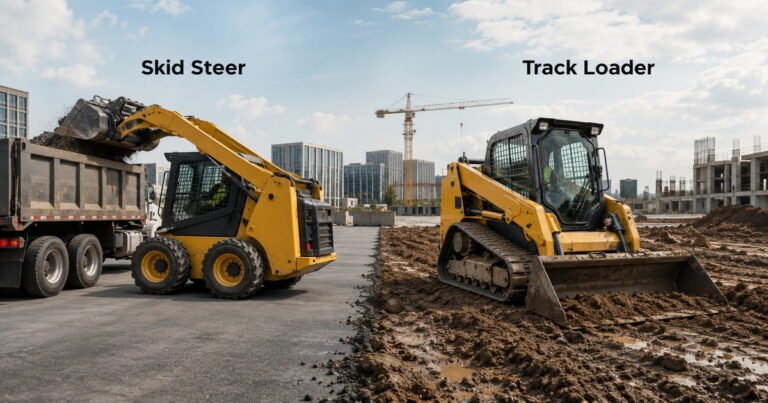
● Comparing Wheeled and Tracked Skid Steer Loaders
● Practical Steps to Select the Right High‑Flow Loader
● Partner with Certeg for High‑Flow Skid Steer Solutions
● FAQs
>> Q1: What is “hydraulic horsepower,” and why does it matter for skid steers?
>> Q2: When should I choose a compact track loader over a wheeled skid steer?
>> Q3: How does a PCLS hydraulic system improve operator experience?
>> Q4: What are the key cab features that impact operator comfort and safety?
>> Q5: How can equipment manufacturers improve E‑E‑A‑T in their product content?
Certeg skid steer loaders are engineered for contractors who demand high-flow hydraulics, fuel-efficient performance and operator comfort in both wheeled and tracked machines. Building on the industry’s shift toward powerful attachments and performance-tiered machines, this expert review explores how modern hydraulic horsepower and cab design translate into real jobsite productivity for global buyers. [youtube]
Understanding Today’s Skid Steer Loader Market
Over the last decade, skid steer loaders and compact track loaders have become the dominant category in compact construction equipment, often replacing backhoes, wheel loaders and agricultural tractors on many jobsites. Contractors have moved in this direction because these machines combine a small footprint, easy transport on standard trailers and fast attachment changes, while still delivering serious pushing, grading and lifting capability. [youtube]
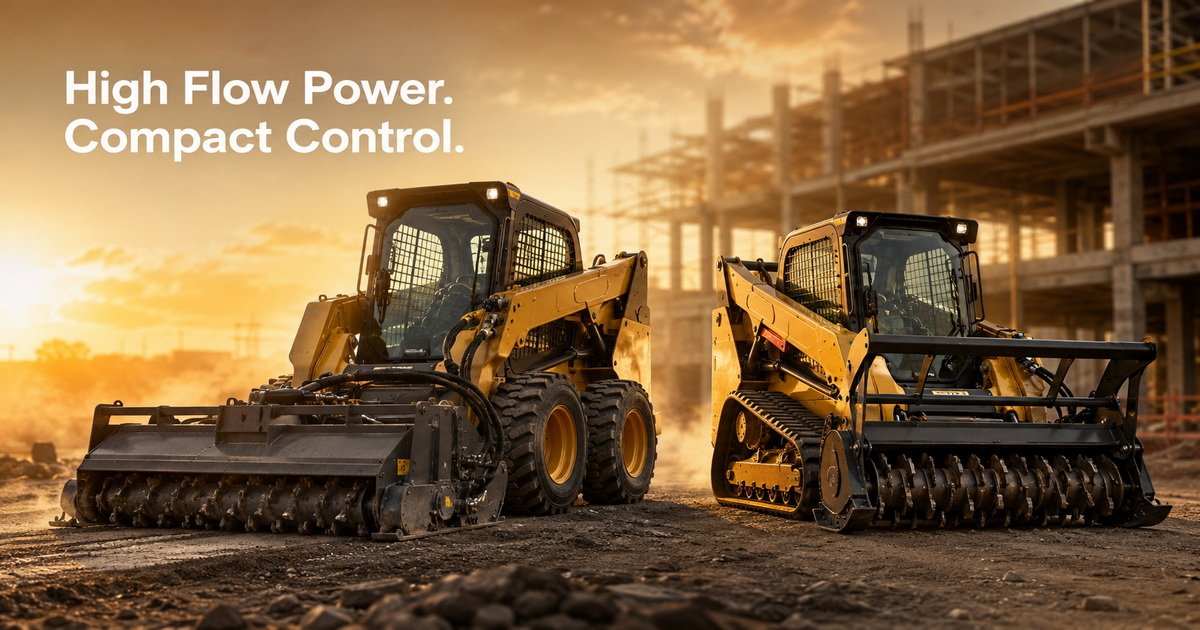
The real driver of this growth is not only the machine itself but the explosion of hydraulically driven attachments such as dozer blades, grading boxes, backhoes, cold planers, mulchers and forestry mowers. As a result, high-flow hydraulics and smart control systems have become non‑negotiable for serious contractors, pushing manufacturers to redesign loaders around attachments rather than the other way around. [raddinteractive]
High-Flow Hydraulics: Why Modern Contractors Are “Hungry for Power”
The shift to high‑flow systems
Contractors today want to mulch, grind, cut, spread, dig and grade faster — often with a single machine running multiple hydraulic functions at once. As high-flow attachments have become standard on jobsites, OEMs report that take rates for high-flow options have more than doubled in recent years, confirming that hydraulic performance is now a key purchase driver rather than a “nice to have.” [webfx]
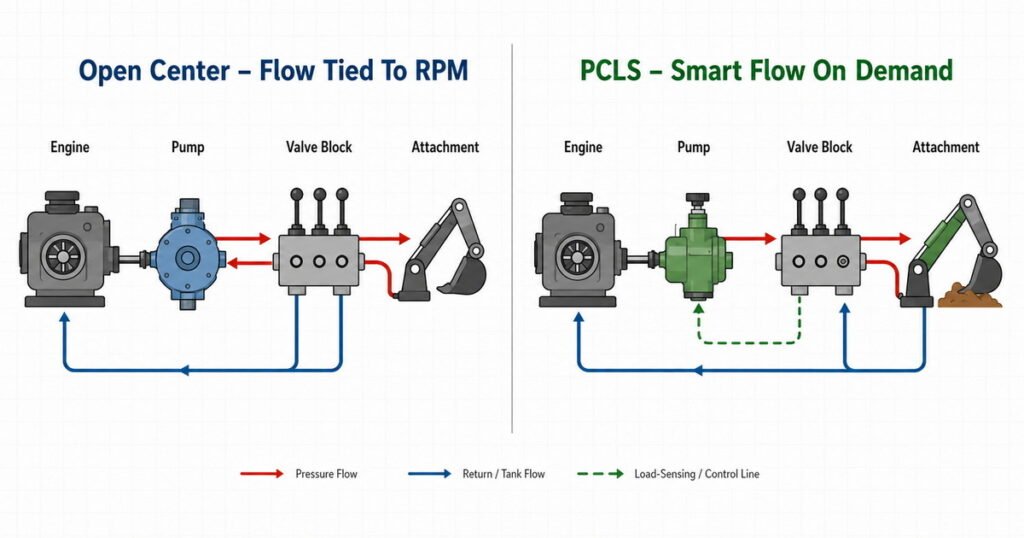
Traditional open‑center hydraulic systems tie hydraulic flow directly to engine RPM, which can waste energy and limit multi‑function capability when running heavy attachments at full speed. In contrast, pressure‑compensating, load‑sensing (PCLS) systems automatically adjust pump output to match attachment demand, so the pump only works as hard as the task requires. This smarter flow control delivers smoother operation, stronger simultaneous functions (for example, raising the boom while counter‑rotating) and significantly lower noise levels compared with older systems. [youtube]
From an expert perspective, that shift toward PCLS architectures marks a major inflection point: loaders are no longer just compact earthmovers, but integrated hydraulic platforms built to run power‑hungry attachments all day without sacrificing efficiency.
Hydraulic Horsepower and Fuel Efficiency: Lessons from P‑Tier Design
Engine output and system pressure
Modern large‑frame skid steers and track loaders illustrate how engine horsepower, hydraulic pressure and flow combine into usable hydraulic horsepower. One recent benchmark uses a proven 3.1 L diesel engine tuned to deliver roughly 118 gross hp, paired with system pressure around 4,000 psi and high‑flow options up to approximately 44 gpm. That combination translates into substantially higher hydraulic horsepower compared to previous large‑frame models, enabling heavier attachments such as wider cold planers or deep trenchers. [youtube]
Because the PCLS hydraulic pump is decoupled from pure engine RPM, these loaders can also achieve up to 20% better fuel efficiency than earlier open‑center machines, while simultaneously providing more hydraulic power. For contractors, that means lower operating costs per hour, reduced refueling downtime and more predictable bid pricing on attachment‑heavy work. [gushwork]
Practical implications for contractors
From an industry expert standpoint, this hydraulic package is particularly valuable when:
– Running high‑flow mulchers in continuous forestry or right‑of‑way clearing work.
– Operating cold planers with drum widths in the 40–60 in range for asphalt maintenance. [youtube]
– Using grade control‑ready grading attachments for fine finish on commercial sites. [gushwork]
In each case, consistent hydraulic horsepower and precise flow control directly impact production rates, cut quality and operator fatigue over long shifts. [youtube]
Performance Tiering: G, P and X — What It Means for Buyers
Why tiering matters
Some leading manufacturers now categorize compact loaders into three performance tiers: G, P and X, designed to align machine capabilities with buyer expectations. [quickcreator]
– G‑Tier: Economy machines focused on durability and “good‑enough” performance at lower price points. [youtube]
– P‑Tier: Mid‑high tier machines optimized for big performance, efficiency, comfort and service life, serving the widest group of commercial buyers. [youtube]
– X‑Tier: Top‑of‑the‑line models featuring next‑generation powertrains such as hybrid or battery‑electric systems and advanced hydraulic technologies. [quickcreator]
For global contractors, this tiering simplifies fleet decisions: G for budget‑conscious tasks, P for mainstream production work and X for specialized, high‑tech applications. P‑Tier loaders, in particular, hit the sweet spot for many buyers by combining high hydraulic horsepower with upgraded cab comfort and technology at a price still viable for fleet purchases. [robertsiegers]
Aligning tier and use case
In my experience working with equipment buyers and fleet managers, P‑Tier compact loaders are best suited to contractors who:
– Run high‑flow attachments regularly but don’t yet need full electrification.
– Require grade control‑ready platforms for civil, sitework or road jobs.
– Value cab comfort and visibility because operators spend most of the day in one machine.
G‑Tier remains attractive for occasional use or light‑duty applications, while X‑Tier becomes relevant where emissions regulations, noise limits or ESG mandates drive investment in alternative powertrains. [gushwork]
Right‑Sizing “Large” Compact Loaders: Dimensions and Transport
Staying compact without sacrificing capability
A key design challenge for large‑frame skid steers and compact track loaders is adding horsepower and hydraulic capacity without losing compactness. Instead of dramatically increasing height or width, modern large frames often maintain similar overall dimensions to their predecessors — growing only a few inches in length and roughly 200 lb in operating weight to accommodate larger coolers and hydraulic components. [youtube]
This approach matters for contractors because it preserves:
– The ability to access tight urban or industrial spaces, including interior demolition or plant maintenance work. [youtube]
– Compatibility with standard trailers and pickup trucks used for daily transport. [youtube]
– Maneuverability on congested sites where larger wheel loaders or dozers would be difficult to position. [youtube]
From a UX perspective, this “large but still compact” philosophy delivers high‑end performance without imposing a transport penalty, which is critical for smaller fleets and owner‑operators.
Cab Design, Visibility and Operator Comfort
One‑piece cab and isolation
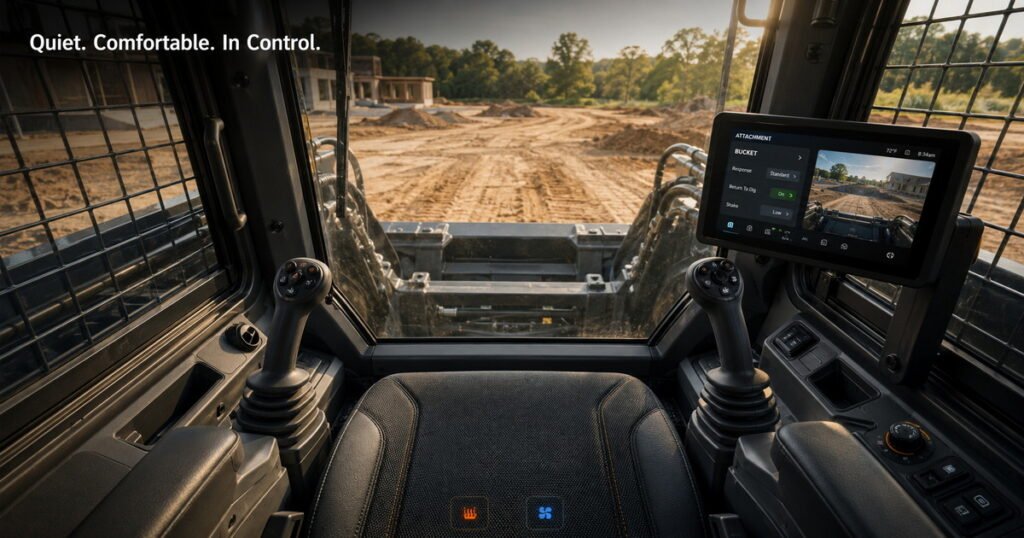
Recent large‑frame loaders have introduced a one‑piece cab design that rolls back with the floor attached, replacing earlier two‑piece cabs that left the floor in place. This change improves service access and enhances cab sealing, helping keep out dust, noise and debris. Larger rubber isolators further reduce vibration and sound levels, creating a noticeably quieter and smoother operating environment. [youtube]
Inside the cab, operators benefit from:
– Heated and ventilated seats for long seasonal use in both hot and cold climates. [youtube]
– Hands‑free Bluetooth audio integration for safer communication. [youtube]
– Expanded glass areas providing better visibility to tracks, tires and ground, especially with the boom down during grading tasks. [youtube]
Improved visibility to the work area allows operators to avoid contact with curbs, walls and other obstacles, reducing repair costs and increasing safety. [youtube]
Advanced displays and view systems
On the technology side, modern P‑Tier loaders offer:
– A standard 2.5 in display plus an optional 8 in touchscreen. [youtube]
– Attachment management software that stores custom configurations for different tools, reducing setup time and mistakes. [youtube]
– Integrated grade‑indicate and 2D grade control‑ready hardware for more precise grading. [youtube]
– Optional Surround View systems with dedicated displays providing approximately 280° visibility around the machine. [youtube]
For operators, these features shift the UX from “analog controls with basic gauges” to a more automotive‑grade experience where information, camera views and attachment settings are intuitively accessible. [quickcreator]
Comparing Wheeled and Tracked Skid Steer Loaders
From a global contractor’s standpoint, choosing between wheeled skid steer loaders and compact track loaders is a strategic decision that impacts productivity, maintenance and total cost of ownership. [nine]
| Loader type | Best ground conditions | Key advantages | Typical use cases |
|---|---|---|---|
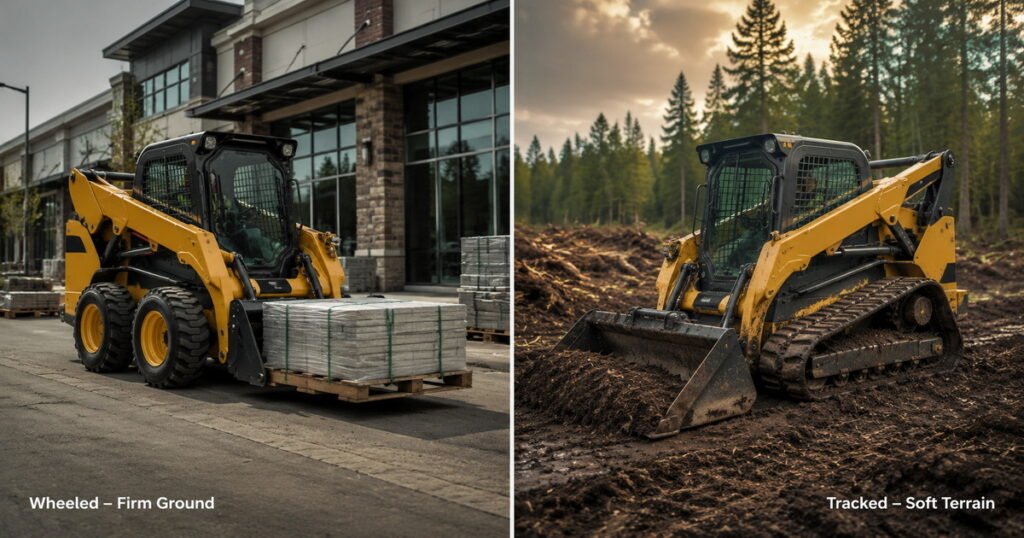
| Skid steer (wheeled) | Firm, paved or well‑compacted surfaces nine | Lower purchase cost, faster travel speed, simpler undercarriage maintenance | Urban construction, material handling, warehouse yards |
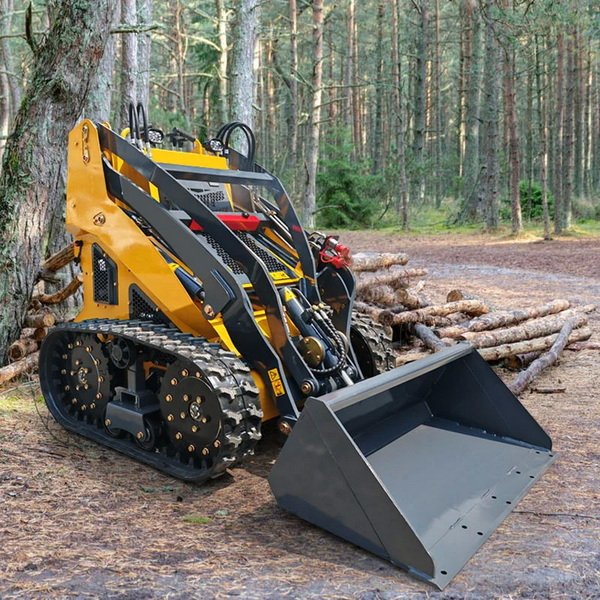
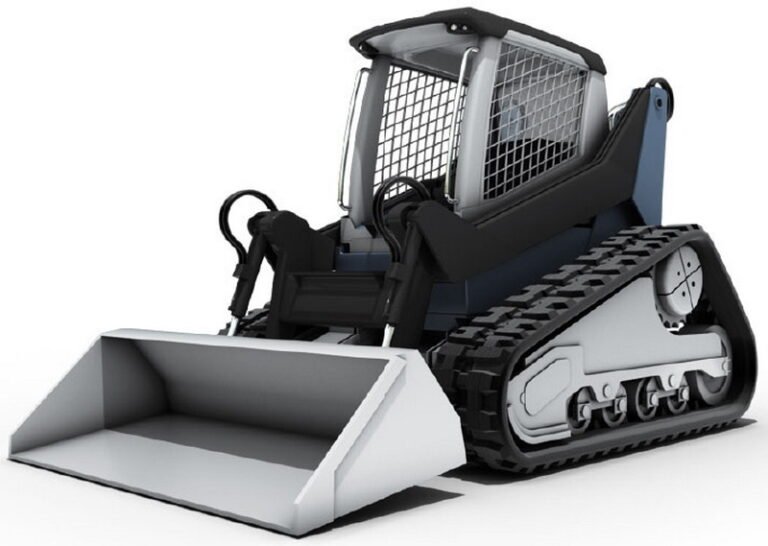
| Compact track loader | Soft, muddy or uneven terrain youtube | Superior traction, lower ground pressure, better stability on slopes | Earthmoving, landscaping, forestry, road shoulders |
Tracked loaders excel on soft ground and slopes, where low ground pressure prevents rutting and improves safety. Wheeled skid steers remain ideal for paved jobsites, concrete yards and high‑speed material handling where tire wear and fuel consumption are easier to control. For OEMs like Certeg that supply both formats, the ability to match machine type to regional ground conditions — from North American roadworks to European construction and Asian industrial projects — is a major competitive advantage. [ideahills]
Practical Steps to Select the Right High‑Flow Loader
Based on industry best practices and my work with equipment buyers, contractors can follow these steps when specifying a high‑flow skid steer or track loader:
1. Define primary attachments. List current and planned tools (mulchers, cold planers, trenchers, grading boxes) and note their hydraulic requirements in psi and gpm. [webfx]
2. Match hydraulic horsepower. Ensure the loader’s engine hp, system pressure and high‑flow gpm meet or exceed the most demanding attachment’s specifications. [youtube]
3. Consider ground conditions. Choose wheeled vs tracked platforms based on typical jobsite soil, climate and slope conditions. [nine]
4. Evaluate cab comfort and safety. Prioritize one‑piece cabs, isolation, visibility, grade‑control readiness and view systems if operators spend full days in the machine. [raddinteractive]
5. Check transport and access. Confirm that machine length, width and weight fit existing trailers, ramps and site access constraints. [youtube]
For international buyers, partnering with a manufacturer like Certeg that understands both local ground conditions and global attachment trends ensures these decisions are made with real‑world data, not just catalog specs. [ideahills]
Partner with Certeg for High‑Flow Skid Steer Solutions
If your projects demand reliable hydraulic horsepower, comfortable cabs and tailored wheeled or tracked platforms, it’s time to evaluate how Certeg’s skid steer loaders can fit into your fleet strategy. Our engineering and sales teams can help you match machine tier, hydraulic package and attachment lineup to your regional ground conditions and regulatory requirements, ensuring you get a loader that performs like a larger machine while retaining compact agility. [ideahills]
Contact Certeg today to discuss your specific applications, request detailed specifications or schedule a demo, and start building a more versatile, attachment‑ready fleet for upcoming projects. [ideahills]
FAQs
Q1: What is “hydraulic horsepower,” and why does it matter for skid steers?
Hydraulic horsepower combines engine output, system pressure and flow rate to describe how much usable power is available at the attachment, directly affecting cutting, milling and grading productivity. [webfx]
Q2: When should I choose a compact track loader over a wheeled skid steer?
Choose a track loader for soft, muddy or uneven terrain and slopes where low ground pressure and traction are critical; opt for a wheeled skid steer on firm, paved surfaces and high‑speed material handling. [nine]
Q3: How does a PCLS hydraulic system improve operator experience?
PCLS systems automatically adjust pump output to attachment demand, delivering smoother multi‑function operation, reduced noise and better fuel efficiency compared to open‑center systems tied to engine RPM. [youtube]
Q4: What are the key cab features that impact operator comfort and safety?
One‑piece cab designs with improved sealing, larger rubber isolators, enhanced glass areas, ergonomic joysticks, heated/vented seats and advanced view systems all reduce fatigue and help operators work more safely. [raddinteractive]
Q5: How can equipment manufacturers improve E‑E‑A‑T in their product content?
Manufacturers should combine detailed technical specifications with real‑world case studies, expert author profiles, clear safety and maintenance information and transparent citations to authoritative industry sources. [robertsiegers]
References
1. Compact Equipment – “Machine Heads Video: John Deere’s Big New 334 P‑Tier Skid Steer and 335 P‑Tier Track Loader.” [Link] [youtube]
2. IdeaHills – “SEO & GEO for the Heavy Machinery & Construction Industry.” [Link] [ideahills]
3. QuickCreator – “E‑E‑A‑T for Technical Content: 2025 Best Practice Guide.” [Link] [quickcreator]
4. WebFX – “How Heavy Equipment Buyers Use SEO.” [Link] [webfx]
5. Nine – “The Complete Guide to Heavy Equipment Marketing.” [Link] [nine]
6. Radd Interactive – “Construction Heavy Equipment Marketing & Advertising.” [Link] [raddinteractive]
7. Roberts Siegers – “SEO for Manufacturers: Strategies to Dominate Search in 2025.” [Link] [robertsiegers]
8. WebFX – “Machinery SEO Guide: Best Practices for Manufacturers.” [Link] [webfx]
9. Gushwork – “Manufacturing SEO Strategy: 5‑Phase SEO Strategy for Manufacturing.” [Link] [gushwork]
10. Gushwork – “SEO Strategy for Heavy Equipment Sales.” [Link] [gushwork]
Hot Tags: Skid Steer Loader, Manufacturers, Customized, Custom, Suppliers, Buy, Cheap, Quality, Advanced, Durable, in Stock, Made in China, Price, Quotation