
Get Mowing: Maximize Efficiency with Sickle Bar Mowers (2025 Guide)
Content Menu
● Why Sickle Bar Mowers Are Still the Smart Choice in 2025
>> How Sickle Bar Mowers Work: The Cutting Mechanism
● Where Sickle Bar Mowers Shine: Best Applications
>> 1. Hay and Forage Production
>> 2. Roadside and Ditch Bank Maintenance
>> 3. Pastures and Light Field Mowing
● Sickle Bar Mower vs. Rotary vs. Flail: Choosing the Right Tool
>> Sickle Bar Mower: Precision and Efficiency
>> Rotary Mower (Brush Hog): Speed and Power
>> Flail Mower: Versatility and Finish
>> Quick Decision Guide: Which Mower Type?
● How to Choose the Right Sickle Bar Mower for Your Tractor
>> 1. Match Tractor Horsepower and Hitch
>> 2. Select the Right Cutting Width
>> 3. Consider Terrain and Ground Conditions
>> 4. Key Features That Improve Efficiency
● Real‑World Efficiency: How Sickle Bar Mowers Save Fuel and Time
>> Fuel Savings Compared to Rotary Mowers
>> When Speed vs. Efficiency Matters
● Expert Tips to Maximize Sickle Bar Mower Efficiency
>> 1. Proper Setup and Adjustment
>> 2. Operating Techniques for Maximum Productivity
>> 3. Avoiding Common Mistakes
● Sickle Bar Mower Maintenance Checklist (2025)
>> Seasonal/Long‑Term Maintenance
● Is a Sickle Bar Mower Right for You? A Quick Decision Framework
>> Choose a Sickle Bar Mower If:
>> Consider a Rotary or Flail Mower If:
● How to Get Started: Next Steps for Your Operation
>> Ready to Maximize Your Mowing Efficiency?
● Frequently Asked Questions (FAQ)
>> 1. What size sickle bar mower do I need for a 25 HP compact tractor?
>> 2. Can a sickle bar mower handle thick brush or small trees?
>> 3. How often should I sharpen the blades on a sickle bar mower?
>> 4. Why is my sickle bar mower clogging?
>> 5. How do I reduce fuel consumption when using a sickle bar mower?
For landowners, farmers, and municipal crews, a reliable, fuel‑efficient mowing solution is essential for managing hay fields, roadside vegetation, ditches, and conservation areas. Among compact tractor attachments, the sickle bar mower stands out as a precision tool that delivers a clean, scissor‑like cut while minimizing soil disturbance and fuel use.
This comprehensive 2025 guide explains exactly when a sickle bar mower is the right choice, how it compares to rotary and flail mowers, and how to select, operate, and maintain one for maximum efficiency and ROI. We’ll also share real‑world tips and a practical buyer’s checklist so you can confidently choose the best sickle bar mower for your tractor and terrain.

Why Sickle Bar Mowers Are Still the Smart Choice in 2025
Despite advances in disc and drum mowers, the sickle bar mower remains a top choice for many small to mid‑size operations. Its core advantage is a reciprocating cutting action: triangular blades move back and forth against stationary guards, creating a scissor‑like cut that:
– Preserves plant health and forage quality in hay and pasture.
– Minimizes soil disturbance and compaction on sensitive or sloped ground.
– Reduces dust and debris thrown into the air, which is critical for clean hay and safe roadside work.
For compact tractors (typically 15–45 HP), sickle bar mowers are often the most fuel‑efficient option. They require significantly less horsepower per foot of cutting width than rotary or disc mowers, which translates directly into lower fuel consumption and longer operating hours per tank.
How Sickle Bar Mowers Work: The Cutting Mechanism
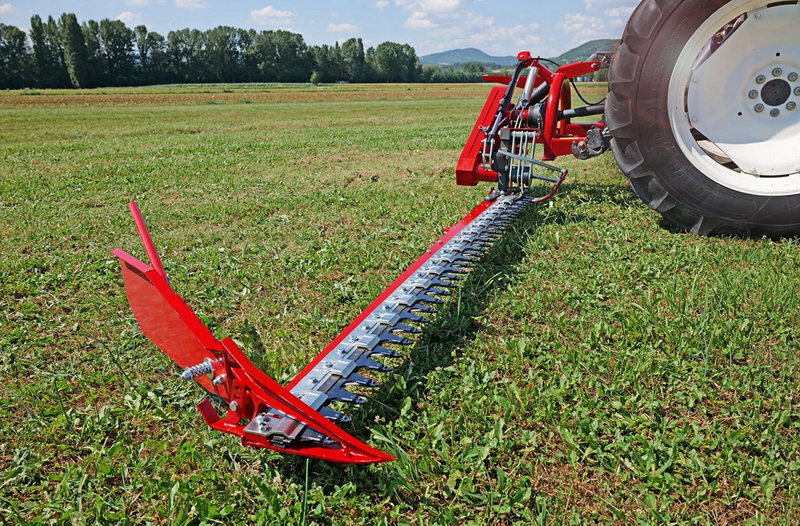
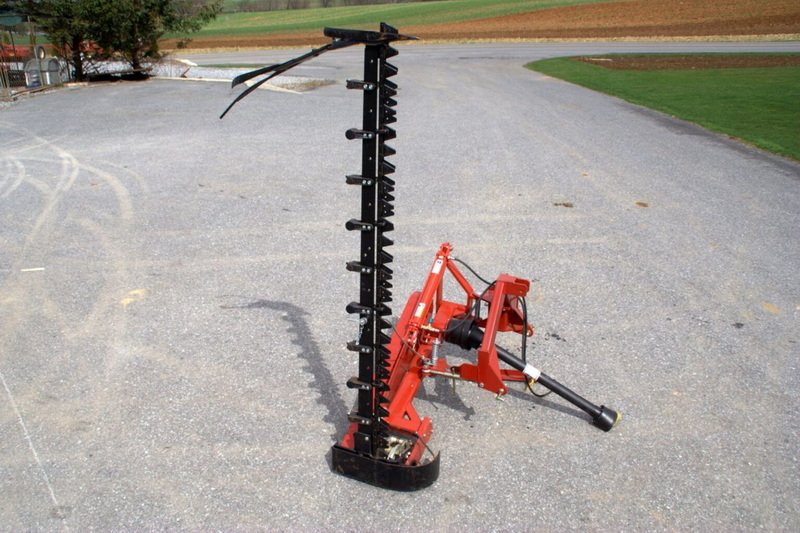
A sickle bar mower uses a long, horizontal bar with a series of triangular blades (the “sickle”) that slide back and forth inside a guard section. As the bar oscillates, each blade cuts against the serrated edge of the guard, producing a clean, precise cut similar to a pair of scissors.
Key components:
– Cutter bar: The main frame that holds the blades and guards.
– Blades (sections): Replaceable triangular steel pieces that do the cutting.
– Guards: Stationary pieces that the blades cut against; they also protect the bar from rocks and stumps.
– Drive system: Usually PTO‑driven, with a gearbox and pitman arm that converts rotary PTO motion into reciprocating bar motion.
Because the cutting action is low‑speed and low‑impact, sickle bar mowers are ideal for:
– Hay and forage crops where leaf retention and quality matter.
– Light to medium grass, weeds, and brush along ditches, embankments, and fence lines.
– Conservation areas and wildlife habitats where minimal ground disturbance is required.
Where Sickle Bar Mowers Shine: Best Applications
Not every job calls for a sickle bar mower. Knowing its strengths helps you match the right tool to the task and avoid costly inefficiencies.
1. Hay and Forage Production
Sickle bar mowers are still widely used on small to mid‑size hay farms because they:
– Deliver a clean, scissor‑like cut that preserves leaf area and reduces stem damage.
– Minimize soil disturbance, which helps maintain stand health over multiple cuttings.
– Are compatible with smaller tractors (often 15–30 HP), making them ideal for small acreage or Amish/low‑input operations.
For hay, a sickle bar mower is best when:
– Fields are relatively flat or gently rolling.
– Crops are not extremely thick or lodged (flattened by wind/rain).
– Quality and leaf retention are more important than raw speed.
2. Roadside and Ditch Bank Maintenance
Municipal crews and landowners frequently use sickle bar mowers for:
– Mowing along roadsides, ditches, and embankments.
– Clearing vegetation under trees, around signs, and near fences.
– Maintaining conservation strips and wildlife corridors.
Advantages in this role:
– The bar can be angled up or down to follow slopes and ditches.
– Low ground pressure and minimal soil disturbance reduce erosion risk.
– Less dust and debris thrown into the road compared to high‑speed rotary mowers.
3. Pastures and Light Field Mowing
For routine pasture maintenance and light field mowing, a sickle bar mower offers:
– A precise cut that keeps grass healthy and encourages regrowth.
– Good performance on tall grasses with minimal scalping or soil disruption.
– Lower fuel consumption than rotary mowers, especially on smaller tractors.
It’s a strong fit for:
– Small to medium pastures (1–50 acres).
– Properties with irregular shapes, trees, or obstacles.
– Operators who prioritize fuel savings and equipment longevity.
Sickle Bar Mower vs. Rotary vs. Flail: Choosing the Right Tool
To maximize efficiency, it’s critical to understand how sickle bar mowers compare to rotary and flail mowers. Each has distinct strengths and ideal use cases.
Sickle Bar Mower: Precision and Efficiency
Best for:
– Hay and forage crops
– Roadside and ditch bank mowing
– Light to medium grass on compact tractors
Pros:
– Clean, scissor‑like cut that preserves plant health.
– Lower horsepower requirement → less fuel, longer run time.
– Minimal soil disturbance and compaction.
– Excellent for angled cutting on slopes and ditches.
– Less dust and debris thrown into the air.
Cons:
– Slower forward speed (typically 2–4 mph vs. 5+ mph for rotary).
– More vulnerable to damage from rocks, stumps, and heavy brush.
– Requires more frequent blade sharpening and lubrication.
– Can clog in very dense, lodged, or already‑cut material.
Rotary Mower (Brush Hog): Speed and Power
Best for:
– Large, open fields
– Heavy brush, thick weeds, and light saplings
– Fast clearing of overgrown areas
Pros:
– High cutting speed and large swath width.
– Handles thick, tough vegetation that would clog a sickle bar.
– More robust construction; less likely to be damaged by debris.
Cons:
– Higher horsepower and fuel consumption.
– More soil disturbance and scalping on uneven ground.
– Throws more rocks and debris, increasing safety risk.
– Rougher cut; not ideal for high‑quality hay.
Flail Mower: Versatility and Finish
Best for:
– Finish mowing in parks, estates, and public spaces
– Rough cutting on slopes and uneven terrain
– Areas where a fine, even cut is needed
Pros:
– Excellent mulching and finish quality.
– Handles rough, uneven ground and light brush well.
– Safer than rotary mowers; debris is contained by the housing.
Cons:
– Higher initial cost and maintenance.
– Higher horsepower and fuel requirements.
– Not ideal for large‑scale hay production.
Quick Decision Guide: Which Mower Type?
Use this simple flow to choose:
– Need a clean, precise cut for hay or light grass on a compact tractor? → Sickle bar mower.
– Need to clear large, open fields or heavy brush quickly? → Rotary mower.
– Need a fine, even finish on slopes, parks, or rough ground? → Flail mower.
How to Choose the Right Sickle Bar Mower for Your Tractor
Selecting the wrong sickle bar mower can lead to poor performance, excessive wear, and wasted fuel. Use this 2025 buyer’s checklist to match the mower to your tractor and job.
1. Match Tractor Horsepower and Hitch
– Compact tractors (15–30 HP): Look for narrow sickle bars (5–7 ft) designed for low‑HP tractors.
– Mid‑size tractors (30–50 HP): Can handle wider bars (7–9 ft) and heavier models.
– Hitch compatibility: Ensure the mower fits your tractor’s hitch category (e.g., Cat 1 or Cat 2) and PTO speed (typically 540 or 1000 RPM).
Rule of thumb:
– A 15–25 HP tractor → 5–6 ft sickle bar.
– A 25–40 HP tractor → 6–8 ft sickle bar.
– A 40+ HP tractor → 8–9 ft or larger, if terrain allows.
2. Select the Right Cutting Width
– Small properties (1–10 acres): 5–6 ft bar is usually sufficient.
– Medium properties (10–50 acres): 6–8 ft bar balances speed and maneuverability.
– Larger operations or commercial mowing: 8–9 ft or wider, but only if the tractor has enough power and the terrain is relatively flat.
Wider bars reduce the number of passes but require more power and can be harder to maneuver in tight spaces.
3. Consider Terrain and Ground Conditions
– Flat, open fields: Any sickle bar can work; prioritize width and efficiency.
– Rolling hills, ditches, and slopes: Choose a model with good ground‑following ability (e.g., swivel joints, adjustable skid shoes).
– Rocky or debris‑prone areas: Be cautious; sickle bars are more vulnerable to damage than rotary or flail mowers.
If the ground is very rough or full of hidden obstacles, a flail or rotary mower may be a safer, more durable choice.
4. Key Features That Improve Efficiency
Look for these features to maximize productivity and reduce downtime:
– Adjustable skid shoes: Allow fine‑tuning of cutting height and protect the bar from rocks.
– Breakaway or shear bolt system: Protects the drive train if the bar hits an obstacle.
– Hydraulic folding (on larger models): Makes transport and tight turns much easier.
– Easy‑access grease points and maintenance design: Reduces downtime and keeps the mower running smoothly.
Real‑World Efficiency: How Sickle Bar Mowers Save Fuel and Time
While sickle bar mowers are slower than rotary mowers, they can be more efficient overall when fuel, labor, and equipment life are considered.
Fuel Savings Compared to Rotary Mowers
Studies and field reports consistently show that sickle bar mowers:
– Require about 30–50% less horsepower per foot of cutting width than rotary mowers.
– Consume significantly less fuel per acre, especially on smaller tractors.
– Are ideal for operators who prioritize low operating costs over raw speed.
For example, a 6‑ft sickle bar on a 25 HP compact tractor may use 2–3 gallons per acre, while a similarly sized rotary mower on the same tractor might use 3–5 gallons per acre, depending on conditions.
When Speed vs. Efficiency Matters
– High‑acreage, time‑sensitive jobs (e.g., large hay fields): A disc or drum mower may be more efficient overall, despite higher fuel use.
– Smaller acreage, quality‑focused jobs (e.g., hay, roadside, conservation): A sickle bar mower’s lower fuel consumption and gentler cut often make it the more efficient choice.
The key is matching the tool to the job: a sickle bar mower is not about being the fastest, but about being the most cost‑effective and sustainable option for many common mowing tasks.
Expert Tips to Maximize Sickle Bar Mower Efficiency
Even the best sickle bar mower won’t perform well if it’s not set up and operated correctly. Follow these expert tips to get the most from your equipment.
1. Proper Setup and Adjustment
– Register the knife: Ensure blades are properly aligned with the guards; misalignment causes poor cutting and rapid wear.
– Set cutting height: Use skid shoes to maintain a consistent height (typically 2–4 inches for hay, higher for pasture).
– Adjust PTO speed: Run at the manufacturer’s recommended RPM; too fast can cause vibration and wear, too slow reduces cutting quality.
2. Operating Techniques for Maximum Productivity
– Overlap passes slightly (about 6–12 inches) to avoid missed strips.
– Mow at a steady, moderate speed; pushing too fast leads to clogging and poor cut quality.
– On slopes and ditches, angle the bar to follow the contour and avoid scalping or missing areas.
– Avoid mowing extremely wet or lodged material, which increases clogging and wear.
3. Avoiding Common Mistakes
– Hitting rocks, stumps, or hidden obstacles: Inspect the area before mowing; use a breakaway system if available.
– Running with dull blades: Dull blades increase power demand, reduce cut quality, and accelerate wear.
– Neglecting lubrication: A dry cutter bar will wear quickly and may seize.
Sickle Bar Mower Maintenance Checklist (2025)
Regular maintenance is the single biggest factor in extending the life of a sickle bar mower and keeping it running efficiently.
Daily/Pre‑Use Checks
– Inspect blades and guards for damage, wear, or missing pieces.
– Check that all bolts and fasteners are tight.
– Ensure the PTO shaft and driveline are in good condition and properly greased.
– Verify that safety shields and guards are in place.
Weekly/After Each Use
– Clean the cutter bar and guards to remove grass, mud, and debris.
– Lubricate all grease points (pivot points, bearings, etc.) according to the manual.
– Check and adjust skid shoe height as needed.
– Inspect the breakaway system or shear bolts for damage.
Seasonal/Long‑Term Maintenance
– Sharpen or replace worn blades; follow the manufacturer’s pattern and clearance specs.
– Replace damaged guards and sections as a set to maintain proper registration.
– Inspect and service the gearbox and bearings.
– Store the mower clean, dry, and supported off the ground; apply light oil to unpainted metal parts to prevent rust.
A well‑maintained sickle bar mower can last decades, while a neglected one may need major repairs after just a few seasons.
Is a Sickle Bar Mower Right for You? A Quick Decision Framework
Use this simple framework to decide if a sickle bar mower is the best fit for your operation:
Choose a Sickle Bar Mower If:
– You primarily mow hay, pasture, or light grass.
– You work on slopes, ditches, or roadside areas where precision and low ground pressure matter.
– You have a compact or mid‑size tractor and want to minimize fuel consumption.
– You prioritize plant health, forage quality, and low soil disturbance.
Consider a Rotary or Flail Mower If:
– You regularly clear heavy brush, thick weeds, or overgrown fields.
– You need maximum speed and large swath width on open, flat ground.
– Your terrain is very rough, rocky, or full of hidden obstacles.
– You need a fine, even finish for lawns, parks, or public spaces.
If you’re still unsure, many dealers offer test mowing or rental options so you can compare performance on your own property.
How to Get Started: Next Steps for Your Operation
Now that you understand the strengths, limitations, and best uses of sickle bar mowers, here’s how to move forward:
1. Audit your mowing needs:
– How many acres do you mow?
– What type of vegetation (hay, pasture, roadside, brush)?
– What is your tractor’s horsepower and hitch type?
2. Define your priorities:
– Is speed or fuel efficiency more important?
– Do you need maximum durability or maximum precision?
3. Talk to a trusted dealer or manufacturer:
– Share your tractor specs and typical jobs.
– Ask for a recommendation on cutting width, features, and maintenance support.
4. Consider a demo or trial:
– Many brands offer test mowing on your property so you can see performance firsthand.
Ready to Maximize Your Mowing Efficiency?
If you’re looking for a fuel‑efficient, precise, and durable sickle bar mower that’s perfectly matched to your compact tractor and terrain, we can help. Our team specializes in helping landowners, farmers, and municipal crews select the right mowing solution for their specific needs.
Contact us today for a free consultation and equipment recommendation tailored to your operation.
Frequently Asked Questions (FAQ)
1. What size sickle bar mower do I need for a 25 HP compact tractor?
For a 25 HP compact tractor, a 5–7 ft sickle bar is typically ideal. This provides a good balance of cutting width and power demand, allowing efficient mowing of hay, pasture, and roadside areas without overloading the tractor.
2. Can a sickle bar mower handle thick brush or small trees?
Sickle bar mowers are designed for grass, hay, and light brush, not heavy brush or small trees. For thick brush, a flail or rotary mower is a better choice, as sickle bars are more vulnerable to damage from stumps and saplings.
3. How often should I sharpen the blades on a sickle bar mower?
Blades should be inspected before each use and sharpened or replaced when they show significant wear or damage. In heavy use, this may be every 10–20 hours; in light use, every 20–40 hours. Always follow the manufacturer’s sharpening pattern and clearance specs.
4. Why is my sickle bar mower clogging?
Common causes include: dull or damaged blades, mowing too fast or in very thick, wet, or lodged material, improper knife registration (blades not aligned with guards), and excessive overlap or mowing in already‑cut material. Regular maintenance and proper operating technique usually solve clogging issues.
5. How do I reduce fuel consumption when using a sickle bar mower?
To minimize fuel use: match the mower size to your tractor’s horsepower, keep blades sharp and the cutter bar well‑lubricated, mow at a steady, moderate speed (not too fast), and avoid mowing in extremely wet or lodged material.
Hot Tags:Sickle Bar Mower, Tractor Sickle Bar Mower, Sickle Bar Mower Attachment, Tractor Mower Attachments, Sickle Bar Cutter, Agricultural Sickle Mower, PTO Sickle Bar Mower, Farm Tractor Mower, Hay Cutting Equipment, Grass Cutting Attachments