
Compact Track Loader Grade Control: The Ultimate 2026 Buyer’s Guide for Contractors
Content Menu
● What Is CTL Grade Control and Why It Matters
● Why Compact Track Loaders Excel at Precision Grading
● 2D vs 3D Grade Control for Compact Track Loaders
● How to Choose Between 2D and 3D CTL Grade Control
● Essential Buying Checklist for CTL Grade Control Systems
>> 1. Understand Your Typical Jobsites
>> 2. Think Long-Term Scalability
>> 3. Match the System to Your Machine
>> 4. Budget for Training and Support
>> 5. Integrate with Your Survey and Workflow
● Top Grade Control Attachments and Systems for Compact Track Loaders
>> HitchDoc Dual Dozer: Versatile Laser Grading Platform
>> Kubota by Land Pride BB30 Series Box Blades
>> Blue Diamond Land Grader: Precision and Durability
>> Bobcat Grader Attachment with 3D Grading System
>> John Deere SmartGrade Technology for CTLs
>> Caterpillar Smart Grader Blade Attachments
>> SharpGrade QuadGrade 2D Control System
>> Trimble Siteworks Machine Guidance Module
● Step-by-Step Workflow for CTL Grade Control Setup
● ROI and Business Case for CTL Grade Control
● Best Practices for Training and Operator Adoption
● Comparison Table: Key CTL Grade Control Solutions
● Build a Smarter CTL Grading Fleet
● FAQs About Grade Control Attachments for Compact Track Loaders
>> Q1: Is 2D grade control enough for small contractors
>> Q2: When should I invest in 3D CTL grade control
>> Q3: Do these systems work only on compact track loaders
>> Q4: How hard is it to train operators on grade control
>> Q5: Can I retrofit grade control to my existing CTLs
Grade control for compact track loaders (CTLs) has evolved into a must-have technology for contractors who want faster, more accurate and more profitable grading results on compact jobsites. Whether you are building house pads, warehouse floors, parking lots or sports fields, the right combination of CTL, grade control system and grading attachment can rival small dozers and motor graders while keeping costs and transport complexity lower.

What Is CTL Grade Control and Why It Matters
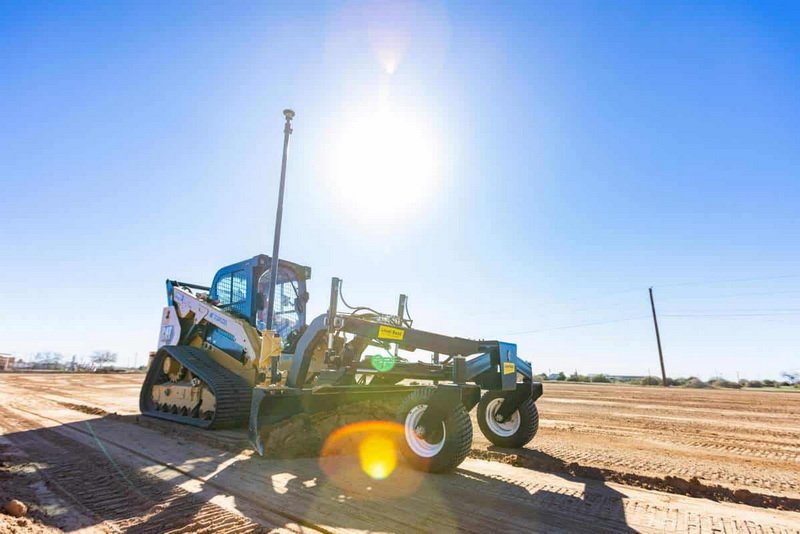
Grade control systems on compact track loaders use sensors, lasers, GPS/GNSS or total stations to automatically maintain target elevation and slope as you move material. Instead of relying on string lines, stakes and the operator’s eye, the system continuously adjusts the blade or grading attachment so you stay on grade in fewer passes.
Key outcomes for contractors include:
– Higher accuracy on flat and sloped surfaces.
– Fewer rework passes and callbacks.
– Reduced dependence on your single “star operator”.
– Better productivity with smaller, more versatile machines.
Why Compact Track Loaders Excel at Precision Grading
Compact track loaders dominate the compact equipment market because their rubber tracks minimize surface damage and provide superior traction on soft or sensitive ground. Tracks spread the machine’s weight over a larger area, boosting stability and pushing power compared with wheeled skid steers of similar size.
For grading-focused contractors, CTLs offer:
– Maneuverability in tight urban or residential sites.
– High-flow hydraulics for demanding attachments.
– A stable platform that works well with laser, 2D and 3D systems.
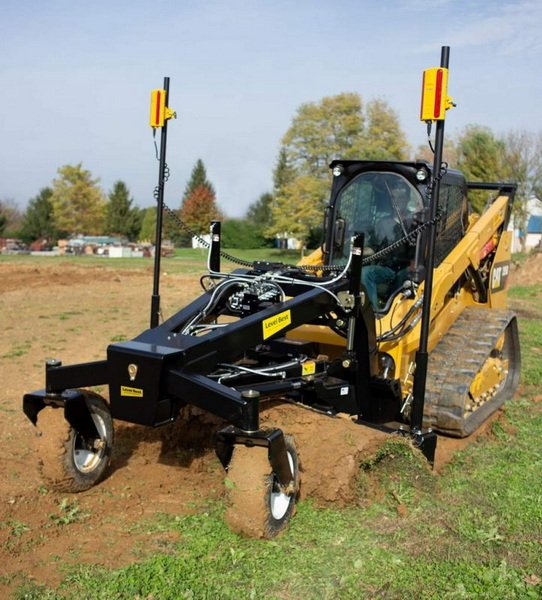
When you add automated grade control attachments for compact track loaders, a single CTL can handle fine grading on pads, driveways, parking lots and even engineered multi-slope designs.
2D vs 3D Grade Control for Compact Track Loaders
Choosing between 2D grade control and 3D grade control is the most important strategic decision before investing in CTL grading technology.
2D Grade Control for CTLs
2D systems rely on laser receivers, slope sensors or sonic tracers to control the elevation and cross-slope of the attachment relative to a reference plane. This makes them ideal for projects where the finished surface is flat or has a single consistent slope.
Typical use cases:
– Residential and light commercial pads.
– Driveways and small road approaches.
– Parking lots with simple cross-fall.
Core advantages:
– Lower cost entry point than 3D systems.
– Easier installation and faster operator training.
– Often upgradeable to 3D later via additional hardware and software.
Requirements and limitations:
– Requires a laser transmitter or physical reference line.
– Not ideal for complex contours or multi-slope designs.
3D Grade Control for CTLs
3D systems integrate GPS/GNSS or robotic total station data with the CTL’s grading attachment so the machine can follow a full digital terrain model. Instead of referencing only a flat plane, the system knows the design elevation at every point in the jobsite.
Best suited for:
– Complex sitework with multiple slopes.
– Engineered pads, drainage structures and retention basins.
– Sports fields, parking complexes and larger commercial projects.
Key benefits:
– Full jobsite coverage from a single digital design file.
– High repeatability across phases and machines.
– More automation and less staking, survey time and rework.
Typical components:
– Base station or network corrections for GNSS.
– Antennas, sensors and cab-mounted display.
– Design software or cloud workflow for importing digital plans.
How to Choose Between 2D and 3D CTL Grade Control
Use this quick framework to match technology to your work mix:
– If most of your jobs are flat pads, driveways and basic parking lots, a 2D system with laser reference is usually sufficient and budget-friendly.
– If you frequently build complex commercial sites with engineered plans, stormwater features or multi-slope designs, 3D is the smarter long-term investment.
Ask yourself:
1. What percentage of my work is complex, engineered grading
2. How often do I rely on external survey crews or heavy staking
3. Will I want to connect multiple machines to the same digital plan in future
Selecting the right level now, with an upgrade path to 3D, protects your investment as your business grows.
Essential Buying Checklist for CTL Grade Control Systems
Before you buy any grade control attachments and systems for compact track loaders, work through these five strategic checkpoints.
1. Understand Your Typical Jobsites
Match the system type to the jobs you actually bid:
– Flat residential pads and simple lots → prioritize robust 2D laser systems.
– Complex commercial or municipal work → plan for 3D GNSS or total station control.
2. Think Long-Term Scalability
Look for platforms where:
– 2D control can upgrade to 3D by adding GNSS or total station modules.
– Software and displays are common across multiple machine types.
– Licenses and subscriptions can support a growing fleet.
3. Match the System to Your Machine
Confirm that your existing or planned CTLs have:
– Adequate hydraulic flow and pressure.
– Compatible mounting interfaces and electrical connections.
– Space for antennas, masts and cab displays without obstructing visibility.
4. Budget for Training and Support
Even the most advanced systems need skilled setup and operation to deliver their full ROI. Plan for:
– Initial operator and foreman training.
– Refresher courses when you add 3D or new attachments.
– Ongoing dealer or manufacturer support.
5. Integrate with Your Survey and Workflow
Verify that the control system:
– Imports the file formats your designers and surveyors already use.
– Can share data with other GNSS-equipped machines on site.
– Allows simple on-site adjustments without waiting for revised plans.
Top Grade Control Attachments and Systems for Compact Track Loaders
The market offers a wide range of grade control attachments for compact track loaders, from laser-based box blades to fully integrated 3D solutions.
HitchDoc Dual Dozer: Versatile Laser Grading Platform
The HitchDoc Dual Dozer is a rugged, compact laser grading system that can integrate with major platforms such as Trimble, Topcon and Leica. Dual cutting edges let operators place material accurately in both forward and reverse directions, reducing cycle time on tight sites.
Notable features:
– Independently articulating blades to follow uneven terrain.
– Rear casters for enhanced maneuverability in confined spaces.
– In-cab controls that make switching between automatic and manual modes simple.
This attachment is ideal for contractors who want robust, laser-based 2D control with the flexibility to connect to advanced 3D and GPS platforms when needed.
Kubota by Land Pride BB30 Series Box Blades
Kubota’s BB30 Series Box Blades are designed for both rough grading and precision finishing work. When paired with a laser system, they deliver pinpoint accuracy for flat-work and fine grading.
Key selling points:
– Dual-plane grader design that floats and angles for superior ground tracking.
– Clean finish on pads and approaches with fewer passes.
– Engineered to match Kubota SSV and SVL compact equipment lines for optimal performance.
For Kubota fleet owners, BB30 blades offer a tightly integrated path into CTL grade control with minimal compatibility risk.
Blue Diamond Land Grader: Precision and Durability
The Blue Diamond Land Grader is built with cutting edges at both the front and rear, giving operators the option to push or pull material depending on site conditions. Rear wheels improve stability and maneuverability, especially when grading near buildings or obstacles.
Highlights:
– Independently articulating blade with generous movement range.
– Standard hydraulic connectors and components to simplify hookup.
– Optional 3D laser receiver for increased accuracy and less rework.
With a universal skid steer mount and durable powder-coat finish, this grader suits contractors who demand both toughness and fine control on mixed-surface jobs.
Bobcat Grader Attachment with 3D Grading System
Bobcat’s grader attachment turns a compact loader into a high-performance grading machine suitable for advanced 3D workflows. Smaller models feature manual side shift, while larger versions offer hydraulic side shift for easier operation near obstacles.
When paired with Bobcat’s 3D Grading System, powered by GPS or UTS, contractors can achieve highly precise results. Users simply upload a digital plan to the control system, which then automates the grading path to match complex designs such as parking lots or sports fields.
John Deere SmartGrade Technology for CTLs
John Deere SmartGrade integrates GPS and sensors directly into compact track loaders such as certain P-Tier models, eliminating much of the add-on complexity. Contractors can choose between 2D and full 3D SmartGrade configurations depending on their project needs.
Key benefits:
– Re-engineered hydraulic platform for more responsive control.
– Onboard diagnostics and upgraded monitors to simplify troubleshooting.
– Reduced guesswork and rework for both experienced operators and newer hires.
This factory-integrated approach appeals to fleets that prefer a single-brand ecosystem and long-term software support.
Caterpillar Smart Grader Blade Attachments
Caterpillar’s smart grader blade attachments give skid steer and CTL operators intuitive access to automated grade control features. These smart attachments are auto-recognized by compatible Cat machines and unlock dedicated interface controls in the cab.
Function modes include:
– Manual, for traditional operator control.
– Assist, where the system supports slope and elevation.
– Full-auto, where the system actively maintains the target grade.
Additional capabilities such as slope memory, mirror mode and return-to-zero reduce operator fatigue and help maintain consistent finish quality across the job.
SharpGrade QuadGrade 2D Control System
The SharpGrade QuadGrade 2D system is engineered for harsh, open-cab environments and high-demand rental applications. With a rugged screen and junction box, the system is highly resistant to dust and water.
Key attributes:
– Auto-recognition of sensors and practical grade adjustment range.
– Smooth joystick integration for intuitive control.
– Upgrade paths to more advanced variants for wireless control and faster machine swaps.
Contractors and rental houses gain an easy-to-train, durable 2D control solution that can scale with fleet requirements.
Trimble Siteworks Machine Guidance Module
The Trimble Siteworks Machine Guidance module brings GNSS-guided precision to both compact track loaders and excavators, using the same ecosystem many surveyors already trust. It connects a GNSS Smart Antenna to a rugged field tablet running Siteworks software.
How it helps:
– Use off-machine for layout and design verification.
– Move the same kit into the CTL cab for 3D guidance and grade checking.
– Reduce dependence on survey crews while improving accuracy on compact sites.
This flexible approach is ideal for contractors who want survey and machine guidance in a single integrated workflow.
Step-by-Step Workflow for CTL Grade Control Setup
To extract maximum value from your compact track loader grade control system, standardize a repeatable workflow.
1. Import or create the design
– For 2D work, set up laser reference and desired slope.
– For 3D work, load the digital terrain model into your control software.
2. Calibrate the machine and attachment
– Verify sensor positions, mast heights and blade offsets.
– Run the system’s built-in calibration routine to ensure accurate readings.
3. Establish site control and safety zones
– Position base stations or verify GNSS corrections.
– Define exclusion zones around utilities, structures and public areas.
4. Perform first test passes
– Start in semi-automatic or assist mode.
– Check actual grade with a rover or level to validate system accuracy.
5. Switch to full automation for production
– Once validated, allow the system to automatically maintain grade while the operator focuses on speed, safety and material flow.
ROI and Business Case for CTL Grade Control
Investing in grade control attachments for compact track loaders is not only a technical decision; it is a strategic business choice that directly affects profit and growth.
Typical ROI drivers include:
– Time savings per pad, driveway or lot, allowing additional jobs per season.
– Lower survey and staking costs, especially on 3D projects.
– Reduced over-cut and material waste by staying closer to design grade.
– Higher bid competitiveness by offering precise tolerances and digital as-built data.
For equipment manufacturers that produce excavators, skid steer loaders, road rollers, forklifts, tractors and crawler dumpers, CTL grade control also creates strong cross-selling opportunities. Customers who adopt CTL automation often look for matching technology on rollers and excavators to complete a connected jobsite.
Best Practices for Training and Operator Adoption
To fully realize the benefits of 2D and 3D CTL grade control, you must invest in people as much as hardware.
Recommended practices:
– Start with pilot operators who are open to technology and can become internal trainers.
– Use simplified HMI layouts and presets so new users are not overwhelmed.
– Document standard operating procedures for calibration, daily checks and troubleshooting.
– Encourage operators to switch between manual, assist and full-auto modes so they understand how the system behaves in each scenario.
Short, focused on-site sessions combined with vendor-supplied e-learning often produce faster adoption and better long-term utilization rates.
Comparison Table: Key CTL Grade Control Solutions
| Solution | Type / Level | Best For | Notable Features |
|---|---|---|---|
| HitchDoc Dual Dozer | 2D laser, compatible with 3D/GPS | Contractors needing flexible laser grading | Dual cutting edges, articulating blades, rear casters, multi‑brand compatibility |
| Kubota BB30 Series Box Blades | 2D laser‑ready | Kubota fleets doing rough + fine grading | Dual‑plane design, performance‑matched to Kubota SSV/SVL loaders |
| Blue Diamond Land Grader | 2D with optional 3D laser | Mixed surface work, push/pull versatility | Front and rear cutting edges, rear wheels, optional 3D receiver |
| Bobcat Grader + 3D System | Full 3D GPS/UTS | Complex designs, parking lots, sports fields | Up to 13 in. hydraulic side shift, digital plan upload, millimeter‑level accuracy |
| John Deere SmartGrade CTLs | Integrated 2D/3D | Deere fleets seeking factory integration | Built‑in sensors, upgraded hydraulics, advanced diagnostics |
| Cat GB120/GB124 Smart Blades | 2D/3D‑ready smart attachments | Cat CTL and skid steer owners | Auto‑recognized attachments, slope memory, mirror mode, return‑to‑zero |
| SharpGrade QuadGrade 2D | 2D laser | Rental and harsh environments | IP67 hardware, auto sensor recognition, upgradeable to Pro/Power Pro |
| Trimble Siteworks Guidance | 3D GNSS | Contractors needing survey + machine workflow | SPS986/R780 antenna, field tablet, off‑machine and in‑cab guidance |
Build a Smarter CTL Grading Fleet
If you are ready to turn grading into a faster, more accurate and more predictable part of your business, now is the time to equip your compact track loaders with the right mix of 2D or 3D grade control systems and purpose-built attachments. Define your typical projects, set a clear budget and decide how quickly you want to move from basic laser control to fully digital jobsite workflows. Then talk with a specialist supplier or manufacturer partner to configure a complete solution that includes CTLs, compatible attachments and matching technology for your excavators, rollers and support machines. By acting now, you position your company to win more bids, finish jobs with greater confidence and deliver consistent finished grades that keep clients coming back.
Contact us to get more information!
FAQs About Grade Control Attachments for Compact Track Loaders
Q1: Is 2D grade control enough for small contractors
In many cases, 2D systems are ideal for smaller contractors who focus on flat pads, driveways and simple parking lots because they cost less and are easier to learn while still delivering major gains in speed and accuracy.
Q2: When should I invest in 3D CTL grade control
You should consider 3D grade control when you regularly build engineered sites with multiple slopes, drainage requirements or complex contours, or when you want to share a single digital model across several machines on the same project.
Q3: Do these systems work only on compact track loaders
Many grade control platforms are designed to work on multiple machine types, including CTLs and excavators, so you can standardize hardware and workflows across your fleet.
Q4: How hard is it to train operators on grade control
Modern systems emphasize user-friendly interfaces and assist modes, and some manufacturers specifically design rugged, simple controls that shorten the learning curve even for rental users and new operators.
Q5: Can I retrofit grade control to my existing CTLs
Yes, many attachments and systems are built to integrate with existing CTLs, provided your machines meet basic hydraulic and mounting requirements. Retrofitting can be a cost-effective way to upgrade fleet capability without replacing core machines.
Reference URLs
1. https://compactequip.com/attachments/your-compact-track-loader-can-grade-a-buyers-guide-to-grade-control-attachments-and-systems/
Hot Tags: Gps Grading System for Skid Steer, Skid Steer Gps Grading, Skid Steer Gps, Compact Track Loader Grading, Grade Control Attachments, Grade Control Systems, Compact Track Loader Attachments, Skid Steer Grade Control, Machine Control Grading Systems, Laser Grading Attachments, Gps Grade Control Systems