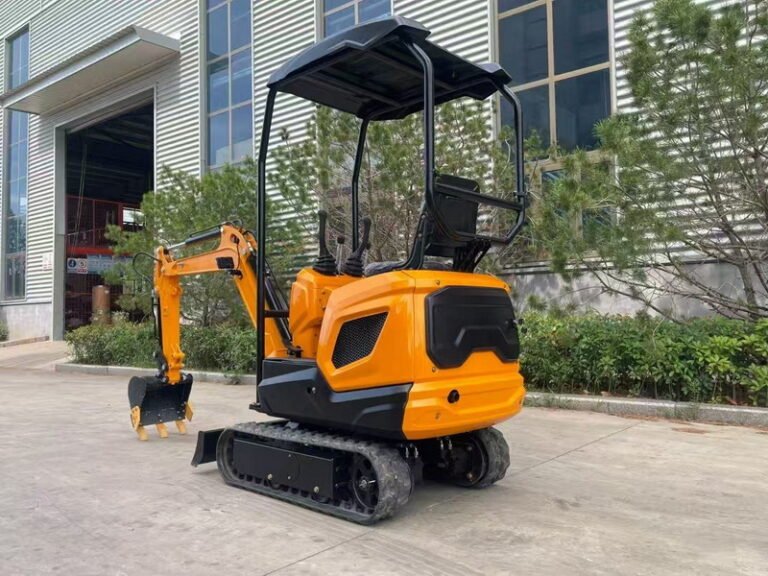

Best Excavator Coupler Systems: Complete Guide to Attachment Interfaces, Performance and Safety
Content Menu
● What Is an Excavator Coupler System?
● Main Categories of Excavator Coupler Systems
● Pin-On System: Maximum Power, Minimal Complexity
>> How the pin-on system works
>> Advantages of the pin-on system
>> Limitations and compatibility considerations
● Mechanical X-Type Coupler: Faster Manual Changes with Optimized Geometry
>> Operating principle of mechanical X-type couplers
>> Compatibility and constraints
● Hydraulic X-Type Coupler: In‑Cab Changes for High-Productivity Work
>> Operating principle of hydraulic X-type couplers
>> Performance and usability advantages
>> Compatibility and typical applications
● Mechanical Pin-Grabber Coupler: Cost-Effective Versatility on Small Machines
>> How mechanical pin-grabber couplers operate
>> Strengths of the mechanical pin-grabber layout
>> Where mechanical pin-grabber couplers work best
● Hydraulic Pin-Grabber Coupler: Familiar Quick Coupler with In‑Cab Control
>> Operating principle of hydraulic pin-grabber couplers
>> Key advantages for demanding applications
>> Compatibility range and upgrade paths
● Hydraulic Tilt Coupler: Precision Positioning and Reduced Repositioning
>> Operating principle of hydraulic tilt couplers
>> Benefits on complex jobsites
>> Ideal applications and machine pairings
● Performance and Feature Comparison of Coupler Systems
● Practical Selection Guide for Excavator Couplers
● Best Practices for Implementation and Training
● Maintenance and Safety Checklist for Coupler Reliability
● Action-Oriented Conclusion and Targeted Call to Action
● FAQ: Excavator Couplers and Attachment Systems
>> Q1: Which excavator coupler offers the highest breakout force? (1)
>> Q2: When should a hydraulic X-type coupler be chosen over a mechanical X-type? (2)
>> Q3: What is the primary benefit of a hydraulic pin-grabber coupler? (3)
>> Q4: Do hydraulic tilt couplers significantly reduce excavator performance? (4)
>> Q5: Can any attachment be used with any coupler system? (5)
Choosing the right excavator attachment coupler system directly affects machine productivity, operator safety, and total cost of ownership. This fully optimized guide delivers clear structure, deep practical insight, and user‑friendly formatting to support better decisions across construction, utility, and landscaping applications.
What Is an Excavator Coupler System?
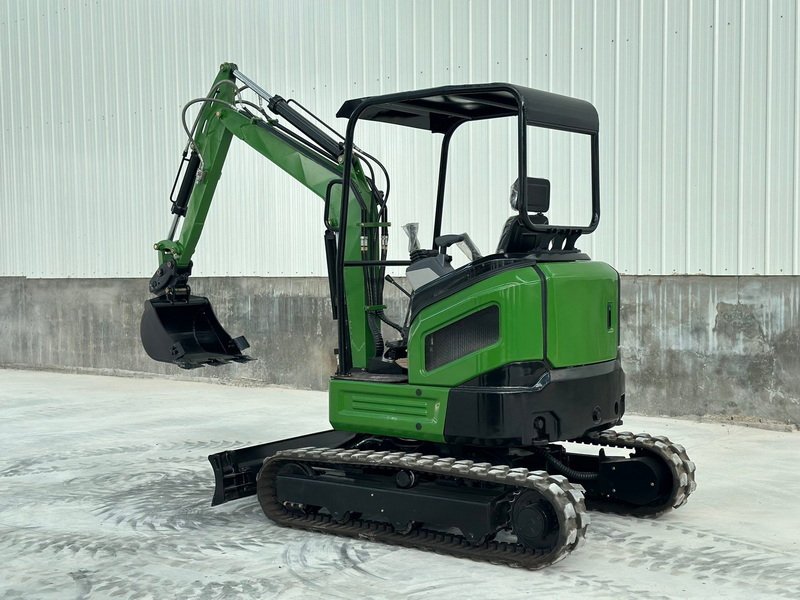
An excavator coupler, also called a quick coupler, is the mechanical interface between the excavator arm and the attachment, enabling secure connection and rapid switching of tools. The chosen coupler design influences breakout force, digging geometry, range of motion, and the number of times operators must leave the cab each day.
Core functions of a coupler system:
– Connect buckets and attachments safely to the boom and stick.
– Enable faster, repeatable attachment changes on the jobsite.
– Preserve or improve breakout force, dump height, and material retention.
Main Categories of Excavator Coupler Systems
Excavator coupler systems can be grouped into several key categories, each balancing cost, speed, compatibility, and operator convenience. Understanding these categories helps match the system to the machine type and task demands.
Primary coupler categories:
– Pin‑on systems.
– Mechanical X‑type couplers.
– Hydraulic X‑type couplers.
– Mechanical pin‑grabber couplers.
– Hydraulic pin‑grabber couplers.
– Hydraulic tilt couplers for advanced rotation.
Pin-On System: Maximum Power, Minimal Complexity
The pin‑on system secures attachments directly to the machine arm and linkage with steel pins inserted through the attachment ears and the excavator end. This direct connection is mechanically efficient and typically provides the highest breakout force.
How the pin-on system works
– Operators manually position and align the attachment with the arm.
– Pins are inserted and removed with tools to lock or unlock the attachment.
– The process becomes more demanding as machine and attachment size increase.
Advantages of the pin-on system
– Full breakout force because there is no additional coupler body extending the bucket tip radius.
– Simple, robust, and economical design with few added components.
– A strong choice where a single bucket or tool is used for long periods with infrequent changes.
Limitations and compatibility considerations
– Slower attachment changes due to manual pin handling and alignment.
– Only works with pin‑on style attachments and is not compatible with X‑type interfaces.
– Commonly installed as standard on multiple compact and large excavator models.
Mechanical X-Type Coupler: Faster Manual Changes with Optimized Geometry
The mechanical X‑type coupler is engineered to simplify and speed up manual attachment changes while maintaining favorable digging geometry and breakout characteristics. It is widely used on compact excavators that frequently swap buckets and tools.
Operating principle of mechanical X-type couplers
– A pin and hook design allows the operator to pick up attachments and automatically align the pin hole.
– The operator exits the cab to drive a single retaining pin in or out to secure or release the attachment.
– Hook‑up and detachment typically require only one cab exit each.
Key performance benefits
– Maintains optimal bucket radius and digging geometry, supporting strong breakout force compared with couplers that push the bucket farther from the arm.
– Helps preserve a bucket angle that supports reliable material retention near maximum dump height.
– Provides a superior range of motion for digging vertical walls compared with many pin‑grabber layouts.
Compatibility and constraints
– Does not allow reverse mounting of buckets or other tools.
– Requires operators to leave the cab but reduces manual alignment effort compared with full pin‑on.
– Frequently supplied as standard on compact excavator models in the small‑to‑mid size class.
Hydraulic X-Type Coupler: In‑Cab Changes for High-Productivity Work
The hydraulic X‑type coupler is designed for operations that change non‑hydraulic attachments many times per shift, providing fast in‑cab switching without sacrificing performance geometry.
Operating principle of hydraulic X-type couplers
– Uses the same pin and hook concept as mechanical X‑type couplers.
– Retention pins extend and retract hydraulically when the operator activates a cab switch.
– Attachments can be picked up, locked, and released while the operator stays inside the cab for non‑hydraulic tools.
Performance and usability advantages
– Eliminates manual tools and pin hammering for regular bucket changes.
– Keeps the bucket radius and breakout force close to that of the mechanical X‑type design.
– Ideal for multi‑attachment workflows such as trenching, grading, and backfilling on the same site.
Compatibility and typical applications
– Does not support reverse mounting of attachments.
– Offered as an option on various compact excavator models with the hydraulic circuit required for coupler actuation.
– Well suited to contractors who prioritize cycle time, operator comfort, and reduced ground‑level exposure.
Mechanical Pin-Grabber Coupler: Cost-Effective Versatility on Small Machines
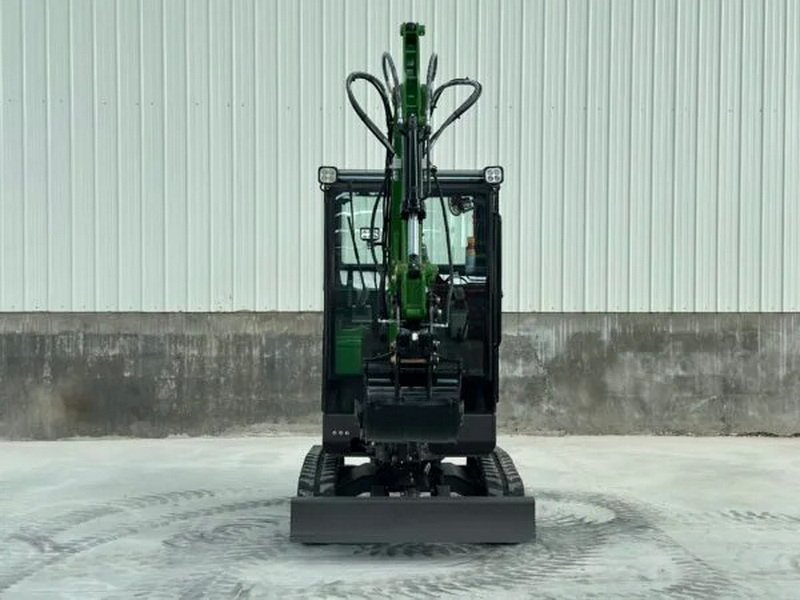
The mechanical pin‑grabber coupler provides a simple, economical solution for quick changes on smaller excavators while offering high attachment versatility. It is particularly useful where frequent tool changes are required but budgets are tight.
How mechanical pin-grabber couplers operate
– Use a dedicated release tool to unlock the current attachment.
– Require only a single exit from the cab to disengage the tool.
– The next compatible attachment is automatically locked into place without installing loose pins.
Strengths of the mechanical pin-grabber layout
– Much easier than traditional pin‑on systems because there is no need to manually align and drive pins through the bores.
– Supports reverse bucket mounting (shovel mode), which helps when digging under obstacles or utilities.
– Compatible with a wide range of attachments, similar to X‑type systems, while trading off a small amount of breakout force, dig depth, and range of motion.
Where mechanical pin-grabber couplers work best
– Smaller compact excavators that operate in constrained spaces and switch frequently between buckets.
– Jobs where reverse digging capability offers a clear productivity advantage.
– Fleets seeking a balanced compromise between cost and ease of use.
Hydraulic Pin-Grabber Coupler: Familiar Quick Coupler with In‑Cab Control
The hydraulic pin‑grabber coupler combines a familiar quick coupler design with hydraulically activated locking, allowing operators to change non‑hydraulic attachments from the cab. It is increasingly popular on both mini and large excavators.
Operating principle of hydraulic pin-grabber couplers
– An on‑off and intent switch in the cab commands the locking clasps.
– Hydraulically powered components clamp onto the attachment pins without manual tools.
– Operators switch compatible attachments quickly while remaining in the cab.
Key advantages for demanding applications
– Enables rapid, repeatable non‑hydraulic attachment changes with minimal downtime.
– Feels intuitive for operators accustomed to traditional pin‑grabber systems.
– Allows easy bucket reversibility, making it ideal for pipe and utility work, digging beneath structures, and working around obstructions.
Compatibility range and upgrade paths
– Compatible with a broad set of attachments similar to X‑type systems, with a slight reduction in breakout force compared with direct pin‑on.
– Available on selected compact and large excavator models, including those used in heavy civil and infrastructure projects.
– Can be combined with tilt capability on certain machines using a dedicated hydraulic tilt coupler configuration.
Hydraulic Tilt Coupler: Precision Positioning and Reduced Repositioning
The hydraulic tilt coupler integrates tilt functionality into a pin‑grabber style coupler, delivering enhanced attachment rotation for high‑precision jobs. It is particularly effective on sites where machine repositioning is difficult or time‑consuming.
Operating principle of hydraulic tilt couplers
– Uses a hydraulically activated locking mechanism similar to a hydraulic pin‑grabber.
– Adds one or more tilt cylinders to rotate the bucket or tool up to roughly 134 or 180 degrees, depending on the specific model.
– Controlled from the cab via switches that govern both locking and tilt movement.
Benefits on complex jobsites
– Allows operators to adjust attachment angle without repositioning the excavator, saving fuel and time.
– Reduces operator effort and machine wear by minimizing travel and slewing during fine grading.
– Supports reverse bucket mounting and a wide attachment range, with a modest trade‑off in pure breakout performance versus a pin‑on configuration.
Ideal applications and machine pairings
– Precision grading, contouring, landscaping, and detailed trench shaping near utilities.
– Jobs on slopes or confined urban sites where movement is restricted.
– Dealer‑installed configurations on selected medium excavator models that combine power with the need for fine control.
Performance and Feature Comparison of Coupler Systems
The table below highlights typical performance trade‑offs across the main coupler types to support fast specification decisions.
Practical Selection Guide for Excavator Couplers
Choosing the most suitable coupler requires balancing job requirements, machine capability, and operator workflow. The following guidelines help narrow down options.
Key decision factors:
– Attachment change frequency per shift.
– Required breakout force, dig depth, and reach.
– Need for reverse digging or shovel mode near pipes and foundations.
– Preferred level of in‑cab control versus manual involvement.
Typical selection patterns:
– Rare changes and maximum digging power → pin‑on.
– Frequent changes on compact machines → mechanical or hydraulic X‑type.
– Jobs that rely on reverse bucket mounting and familiar quick couplers → mechanical or hydraulic pin‑grabber.
– High‑precision grading and complex terrain → hydraulic tilt coupler with rotation capability.
Best Practices for Implementation and Training
Well‑chosen couplers reach full potential only when operators follow consistent procedures and training. Clear guidelines help reduce risk and downtime.
Implementation best practices:
1. Define standard operating steps for attachment connection, visual verification, and test movement.
2. Train operators on the specific locking mechanisms, indicator positions, and alarms associated with the coupler type.
3. Match attachments to the correct coupler family (pin‑on, X‑type, or pin‑grabber) to avoid poor fit or performance loss.
4. Record preferred configurations for common jobs to simplify future setup.
Maintenance and Safety Checklist for Coupler Reliability
Regular inspection and maintenance preserve attachment security, component life, and operator safety. A structured checklist reduces oversights.
Suggested maintenance and safety checklist:
– Inspect pins, hooks, clasps, and coupler body for wear, cracks, or deformation.
– Clean and lubricate pin bores and moving joints according to the recommended interval.
– Check hydraulic hoses, cylinders, and fittings for leaks or damage on hydraulic couplers.
– Confirm that locking indicators, safety latches, and audible or visual alerts function correctly before work.
– Document issues and schedule repairs or component replacement before high‑load jobs.
Action-Oriented Conclusion and Targeted Call to Action
Selecting the right coupler system is crucial to leverage the full capability of modern excavators, skid steer loaders, road rollers, forklifts, tractors, and crawler carriers. Matching coupler type, attachment set, and machine power ensures safer operations, higher productivity, and lower lifecycle costs across diverse projects.
Ready to optimize your fleet performance? Partner with Certeg to configure the most suitable coupler systems and construction machinery package for your next project, from compact utility work to large‑scale earthmoving. Contact the team today to discuss your applications, compare configuration options, and receive a tailored solution that aligns with your productivity, safety, and budget targets.
FAQ: Excavator Couplers and Attachment Systems
Q1: Which excavator coupler offers the highest breakout force? (1)
In most cases, a pin‑on configuration delivers the highest breakout force because it connects the attachment directly to the arm without adding extra distance or components.
Q2: When should a hydraulic X-type coupler be chosen over a mechanical X-type? (2)
A hydraulic X‑type coupler is preferable when non‑hydraulic attachments are changed frequently, since operators can stay in the cab and avoid manual pin driving, saving time and reducing fatigue.
Q3: What is the primary benefit of a hydraulic pin-grabber coupler? (3)
The main advantage is the combination of familiar quick‑coupler operation with in‑cab hydraulic locking and easy bucket reversibility, which is particularly valuable for pipe, utility, and under‑obstacle digging.
Q4: Do hydraulic tilt couplers significantly reduce excavator performance? (4)
Hydraulic tilt couplers may slightly reduce breakout force and dig depth compared with direct pin‑on setups, but they substantially improve attachment positioning, which often increases overall productivity on complex grading and contouring tasks.
Q5: Can any attachment be used with any coupler system? (5)
No, attachments must be compatible with the specific coupler family and pin dimensions, so confirming coupler type, machine model, and attachment design is essential before purchase or installation.
Hot Tags:Bobcat Mini Excavator Quick Coupler, Mini Excavator Quick Attach, Excavator Quick Attach, Mini Excavator Quick Connect, Rotating Excavator Coupler, Attachment Excavator, Excavator Coupler, Coupler Excavator, Bobcat Excavator Attachments, Bobcat Attachment Systems