
Skid Steer Loader Buying and Operating Guide: Expert Manufacturer Advice for Choosing the Right Machine
Content Menu
● Why Skid Steer Loaders Still Matter in 2026
● What Manufacturers Want Buyers to Consider
● Choosing the Right Skid Steer Loader
>> 1. Match the machine to the job
>> 2. Select the correct lift path
>> 3. Review hydraulics before attachments
>> 4. Think about tire and ground contact
● Safety Should Shape Every Purchase
● Maintenance Access and Total Cost
● Operator Comfort Drives Productivity
● Practical Selection Checklist
● FAQs
>> 1. What is the main advantage of a skid steer loader?
>> 2. Should I choose radial lift or vertical lift?
>> 3. Why is hydraulic flow important?
>> 4. What safety features matter most?
>> 5. How do I reduce lifetime operating cost?
>> 6. Why is tire selection so important?
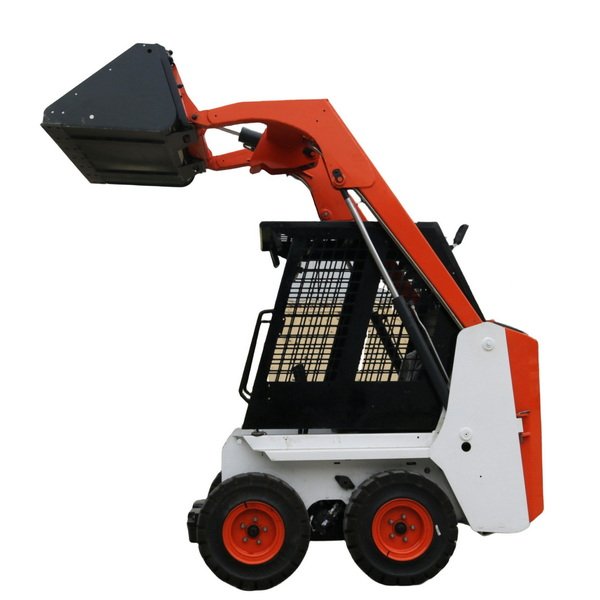
Skid steer loaders remain one of the most versatile machines in construction, agriculture, landscaping, rental fleets, and material handling. As CERTEG, we know that buyers today want more than horsepower and price; they want the right skid steer loader for the terrain, duty cycle, attachment plan, and operator expectations. [developers.google]
The challenge is that no two jobsites are the same. A machine that performs well in demolition may be the wrong choice for snow removal, warehouse work, or muddy ground conditions, which is why smart buyers should evaluate application fit, hydraulic needs, safety systems, and serviceability before they make a purchase. [incident-prevention]
Why Skid Steer Loaders Still Matter in 2026
Skid steers remain a cornerstone of compact equipment fleets because they combine maneuverability, attachment flexibility, and relatively low acquisition cost. Compact Equipment’s original article also shows that major manufacturers still see skid steers as essential machines across construction, landscaping, farming, and rental markets. [compactequip]
For buyers, the real value is flexibility. One machine can power dozens of attachments, from augers and stump grinders to brooms, forks, and grading tools, which makes the skid steer loader a productivity platform rather than a single-purpose asset. [compactequip]
At CERTEG, we see demand rise whenever customers need a compact machine that can work in tight spaces, adapt to changing jobs, and serve both light-duty and heavy-duty cycles. That is why choosing the correct configuration matters as much as choosing the brand. [compactequip]
What Manufacturers Want Buyers to Consider
Industry manufacturers consistently point to a few decision factors that separate a good purchase from an expensive mistake. John Deere emphasizes tire choice and ground conditions, while Caterpillar highlights maintenance access and total cost of ownership. Bobcat focuses on matching machine size to the work, and Kubota stresses versatility and future business growth. [compactequip]
Those recommendations point to a simple rule: buy for the work you do most, not the work you do once a year. If your operation spends more time on paved yards, your tire and undercarriage priorities will differ from a fleet working in mud, snow, or demolition debris. [compactequip]
The same logic applies to hydraulics, cab comfort, lift path, and attachment compatibility. A smarter spec sheet usually leads to better uptime, lower operating stress, and a faster return on investment. [compactequip]
Choosing the Right Skid Steer Loader
Before comparing brands, define your operating environment and performance requirements. That starts with size, lift path, hydraulic flow, visibility, and service access, then moves into operator comfort and attachment strategy. [equipmentworld]
1. Match the machine to the job
Use a compact frame for narrow access, tight turning, and indoor or urban work. Choose a larger machine when you need greater breakout force, higher lift capacity, or the ability to move heavy materials efficiently. [compactequip]
2. Select the correct lift path
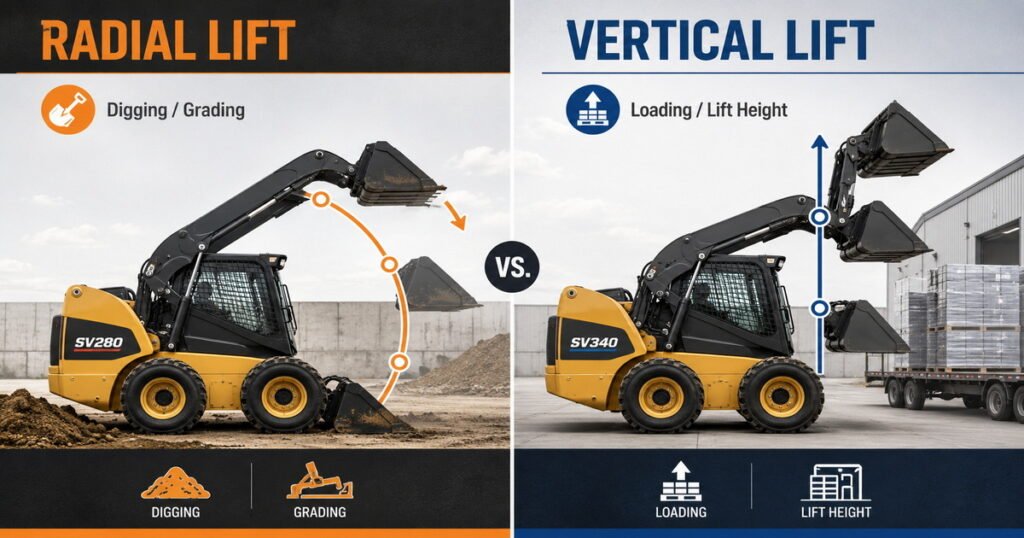
Radial lift models are often suitable for digging and ground-level work, while vertical lift models are typically preferred for loading trucks and handling materials at height. Wacker Neuson’s guidance in the original article notes that vertical lift machines can offer more hinge pin height and lift capacity, which helps productivity in loading applications. [compactequip]
3. Review hydraulics before attachments
If the loader will run high-flow attachments, hydraulic capacity becomes a key decision point. Buyers should confirm flow, pressure, cooling, and attachment compatibility early in the selection process rather than after the machine arrives on site. [compactequip]
4. Think about tire and ground contact
Tire selection affects traction, wear, ride quality, and durability. John Deere’s advice in the source article is especially important: softer or more aggressive tread may help in mud and snow, while harder surface work may call for a different tread pattern or even solid tire options in severe-duty settings. [compactequip]
Safety Should Shape Every Purchase
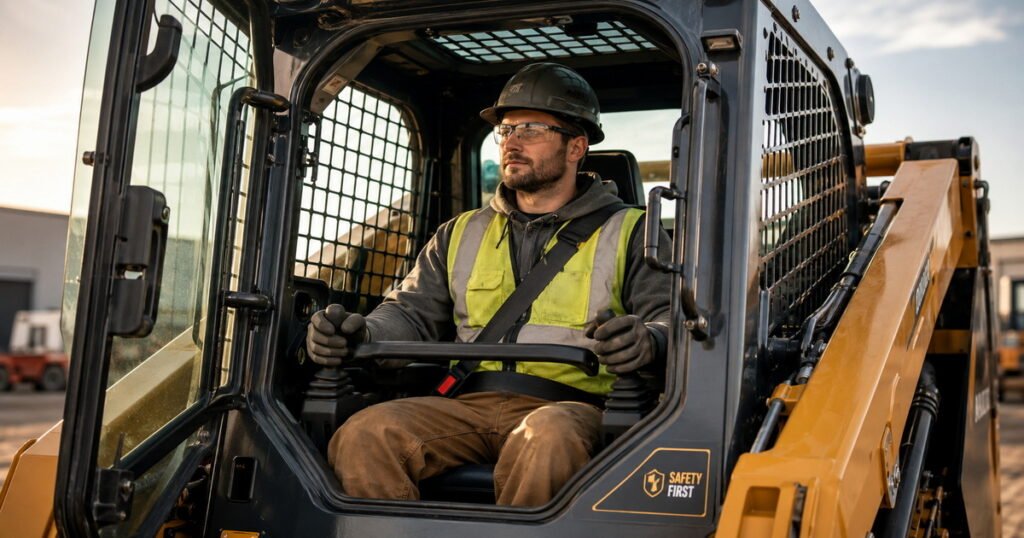
Safety is not a separate buying criterion; it is part of the machine specification. OSHA and NIOSH both stress that properly functioning seat belts, control interlocks, lift-arm supports, and protective structures are critical to safe operation. [kysafe.ky]
NIOSH-linked guidance also highlights that many serious incidents involve crushing or pinning hazards between the bucket, lift arms, and frame, which means the operator environment and safety systems deserve serious attention at purchase time. [clinician]
Before committing to a machine, buyers should verify these points:
– Seat belt system is easy to use and comfortable enough that operators will actually wear it. [osha]
– Control interlocks are reliable and not easily bypassed. [osha]
– ROPS/FOPS protection is included where required for the application. [cdc]
– Lift-arm support devices are available and practical for maintenance. [kysafe.ky]
– Entry, exit, and visibility support daily safe use. [clinician]
A machine that is easy to operate safely will usually deliver better uptime than a machine that requires constant workarounds. [incident-prevention]
Maintenance Access and Total Cost
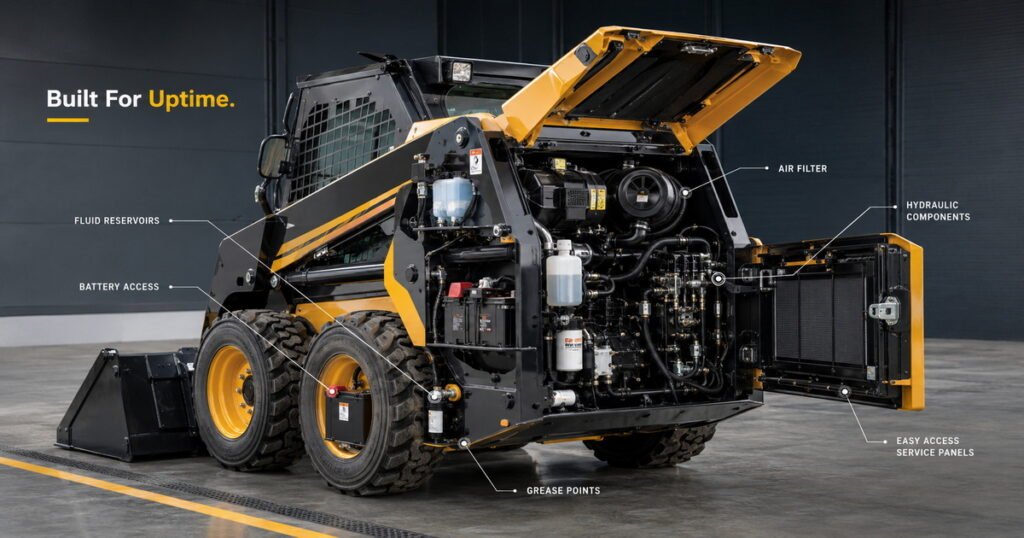
Caterpillar’s advice in the source article is highly practical: buyers should inspect how easy it is to reach service points, check fluids, and replace filters. That matters because maintenance friction often becomes a hidden cost over the life of the machine. [compactequip]
This is one of the most overlooked purchase factors in compact equipment. A loader with awkward service access can increase downtime, reduce preventive maintenance compliance, and create unnecessary labor cost, especially in fleets with multiple operators. [osha]
For CERTEG customers, this is where a well-designed machine can stand out. Good access to daily checks, clean routing of service components, and logical maintenance intervals can materially improve ownership experience. [compactequip]
Operator Comfort Drives Productivity
Operator comfort is not a luxury feature. It affects fatigue, accuracy, and end-of-day productivity, especially for contractors using the same machine across long shifts or changing weather conditions. [compactequip]
ASV’s advice in the original article points toward roomy cabs, easy entry and exit, Bluetooth-ready controls, and suspended seats as practical productivity features. New Holland similarly emphasizes simplicity and control layout so multiple operators can use the machine confidently. [compactequip]
A better cab experience can reduce training time and encourage consistent use. That is particularly valuable in rental fleets and contractor fleets where the operator may change from one day to the next. [compactequip]
New Data and Market Insight
The original article dates from 2022, so a modern rewrite should account for how buyer expectations have evolved. In 2025 and 2026, compact equipment buyers increasingly compare machines on uptime, digital controls, service friendliness, and attachment versatility rather than on basic lift specs alone. [compactequip]
That shift matters because the market has become more application-driven. Buyers are now more likely to ask: Can this machine handle multiple power classes, support more attachment types, and stay productive in harsh conditions with less downtime? [compactequip]
For manufacturers like CERTEG, that means the best product story is not just “strong machine,” but “right machine, right configuration, right jobsite outcome.” [compactequip]
Practical Selection Checklist
Use this checklist before you ask for a quotation or compare models:
1. Define your main job types and surface conditions.
2. Confirm lift height, lift capacity, and machine width.
3. Match hydraulic flow to your planned attachments.
4. Decide between radial and vertical lift.
5. Review tire or track strategy for the ground conditions.
6. Inspect service access and maintenance intervals.
7. Verify safety systems, visibility, and cab ergonomics.
8. Ask whether the machine can grow with your business. [osha]
This framework keeps the buying process practical and prevents spec-sheet confusion. It also helps the buyer compare brands on performance and ownership cost instead of brand reputation alone. [compactequip]
CERTEG’s Perspective
At CERTEG, we believe a skid steer loader should be built around application reality, not just catalog statistics. A machine for a rental yard, a municipal contractor, and a demolition crew will not need the same setup, even if they all sit in the same horsepower class. [compactequip]
That is why our approach is to align power, hydraulics, working conditions, and durability with the customer’s actual operating pattern. In global markets, this is especially important because climate, fuel quality, attachment preference, and jobsite surfaces vary widely. [compactequip]
Our recommendation is simple: choose a loader that is easy to maintain, safe to operate, and capable of adapting as your business changes. That is what turns a purchase into a long-term asset. [osha]
Conclusion and CTA
The best skid steer loader is not the one with the longest spec sheet; it is the one that fits the job, the operator, and the maintenance plan. If your goal is to improve uptime and lower lifetime operating cost, start with application fit, then evaluate hydraulics, safety, service access, and comfort. [osha]
CTA: Contact CERTEG to discuss the right skid steer loader configuration for your power, terrain, and attachment needs, and request a tailored recommendation for your target market. [compactequip]
FAQs
1. What is the main advantage of a skid steer loader?
A skid steer loader offers compact size, strong maneuverability, and the ability to use many attachments, making it highly versatile for construction, agriculture, landscaping, and material handling. [compactequip]
2. Should I choose radial lift or vertical lift?
Choose radial lift for more ground-level digging and general work, and vertical lift when your job depends on loading trucks or placing material at height. [compactequip]
3. Why is hydraulic flow important?
Hydraulic flow determines whether the loader can run high-demand attachments effectively, so it should match the tools you plan to use. [compactequip]
4. What safety features matter most?
Seat belts, control interlocks, ROPS/FOPS where applicable, and lift-arm support devices are among the most important safety features for skid steer operation and maintenance. [cdc]
5. How do I reduce lifetime operating cost?
Choose a machine with easy maintenance access, strong parts support, the right tire or track setup, and the correct configuration for your application. [osha]
6. Why is tire selection so important?
Tires affect traction, wear, durability, and performance across different ground conditions, so the wrong tire can reduce productivity and increase costs. [compactequip]
References
1. – Compact Equipment. “Expert Advice from Every Skid Steer Manufacturer in the Industry.” [https://compactequip.com/skid-steers/expert-advice-from-every-skid-steer-manufacturer-in-the-industry/] [compactequip]
2. – Google Search Central. “SEO Starter Guide.” [https://developers.google.com/search/docs/fundamentals/seo-starter-guide?hl=zh-cn] [developers.google]
3. – OSHA. “Hazards Associated with Operating Skid-Steer Loaders with Review of Fatality and Injury Data.” [https://www.osha.gov/sites/default/files/publications/SHIB011209.pdf] [osha]
4. – CDC/NIOSH. “Preventing Injuries and Deaths from Skid-Steer Loaders.” [https://www.cdc.gov/niosh/docs/2011-128/pdfs/2011-128.pdf] [cdc]
5. – Kentucky SAFE. “Skid-Steer Loader Hazard Alert.” [https://kysafe.ky.gov/Documents/Hazard%20Alert%20-%20Skid-Steer%20Loaders.pdf] [kysafe.ky]
6. – Compact Equipment. “Video: 2025 Skid Steer Buying Guide: Models, Features, and Key Comparisons.” [https://compactequip.com/skid-steers/video-2025-skid-steer-buying-guide-models-features-and-key-comparisons/] [compactequip]
7. – Equipment World. “What’s New for Skid Steers? Buyer’s Guide 2025.” [https://www.equipmentworld.com/construction-equipment/compact-equipment/skid-steer-loaders/article/15740000/skid-steer-buyers-gu…] [equipmentworld]
Hot Tags: Skid Steer Loader, Manufacturers, Customized, Custom, Suppliers, Buy, Cheap, Quality, Advanced, Durable, in Stock, Made in China, Price, Quotation