
Skid Steer Hydraulic Maintenance Guide For Maximum Uptime
Content Menu
● How Skid Steer Hydraulic Systems Really Work
● Key Specs You Must Understand (psi, gpm, Hydraulic HP)
● Why Hydraulic Maintenance Is Mission Critical
● Daily, Weekly And Seasonal Maintenance Checklist
>> Daily Checks Before You Start A Shift
>> Weekly And 250–500 Hour Tasks
>> Seasonal And 500–1,000 Hour Intervals
● Keeping Hydraulic Oil Clean: Your No.1 Priority
● Choosing The Right Hydraulic Fluid For Your Skid Steer
● Cooling And Overheating: How To Keep Hydraulics In The Safe Zone
● Matching Skid Steer And Attachment Hydraulics
● Storage, Cleanliness And Long‑Term Attachment Care
● Oil Sampling, Predictive Maintenance And Data
>> Oil Sampling And Condition Monitoring
>> Integrating Telemetry And Maintenance Scheduling
● Real‑World Operator Tips From The Field
● When To Call The OEM Or Dealer
● Call To Action – Design Your Hydraulic Maintenance Plan With Certeg
● FAQ: Skid Steer And Track Loader Hydraulic Maintenance
>> Q1: How often should I change my skid steer’s hydraulic filter?
>> Q2: Can I run a high‑flow attachment on a standard‑flow skid steer?
>> Q3: What are the most common signs of hydraulic contamination?
>> Q4: How do I prevent overheating in my compact track loader’s hydraulic system?
>> Q5: Is it safe to mix different brands or types of hydraulic oil?
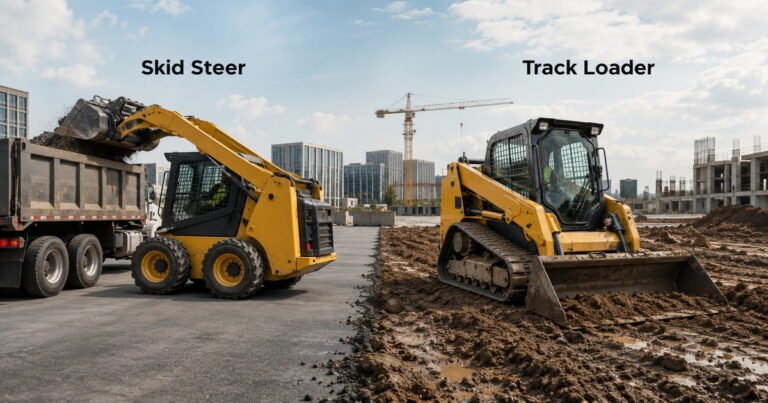
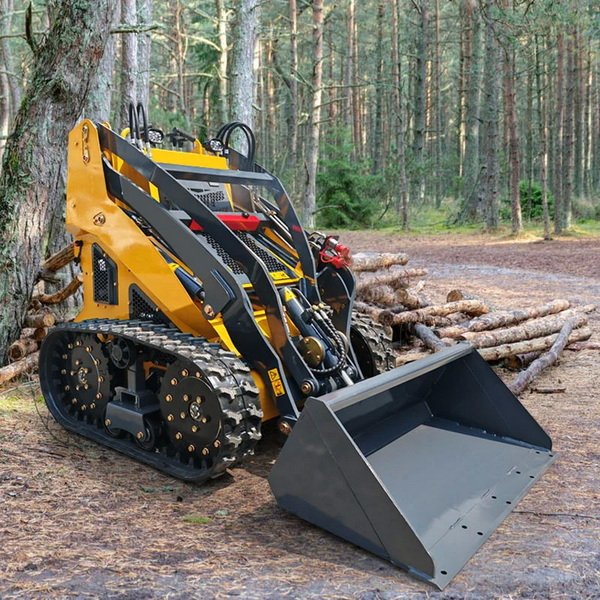
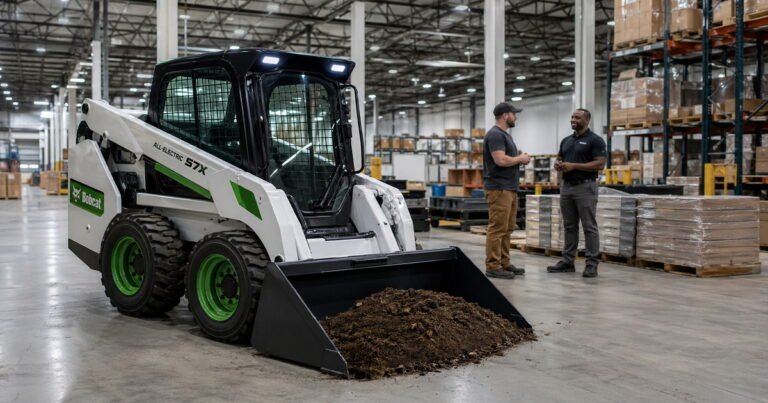
Skid steer and track loader hydraulics are the real heart of your machine — and if you run fleets like we do at Certeg, you quickly learn that hydraulic health decides your uptime, attachment performance and total cost of ownership. In this guide, I’ll walk you through how to maintain skid steer and compact track loader hydraulic systems from a practitioner’s and OEM supplier’s perspective, combining field experience, recent industry guidance and our own best practices as a manufacturer of both wheeled and tracked skid steer loaders. [mclarenindustries]
If you operate skid steers or compact track loaders in construction, landscaping, agriculture or rental, your hydraulic system is your profit center. It powers the boom, bucket, tracks and every high-value attachment you own, from cold planers to brush cutters. A single failure in that circuit can take a machine offline for days, damage expensive attachments and blow up your maintenance budget. [mclarenindustries]
How Skid Steer Hydraulic Systems Really Work
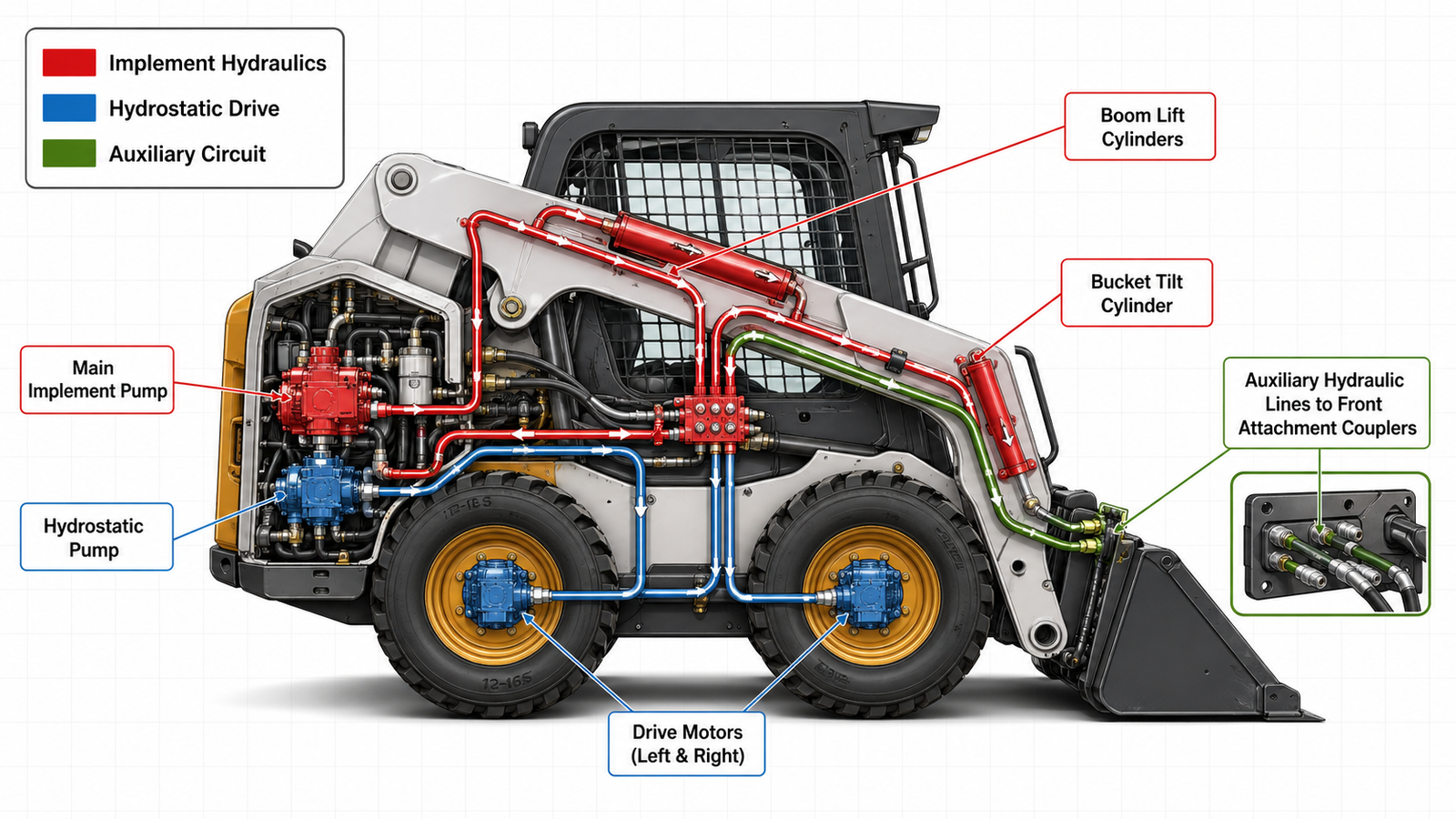
Most operators think first about the diesel engine, but the machine actually has three to four hydraulic “hearts” doing the real work.
– Pump sets power boom lift, bucket curl and auxiliary attachments.
– A hydrostatic pump powers the wheels or tracks for travel and steering.
– Additional pumps support fan cooling, charge pressure and high-flow options.
On modern skid steers and track loaders, this usually breaks into two main subsystems:
1. Implement hydraulics:
– Main hydraulic pump for boom, bucket and auxiliary circuit
– Charge pump for control pressure, cooling and fan drive
– Optional high‑flow pump for demanding attachments such as mulchers and cold planers [mclarenindustries]
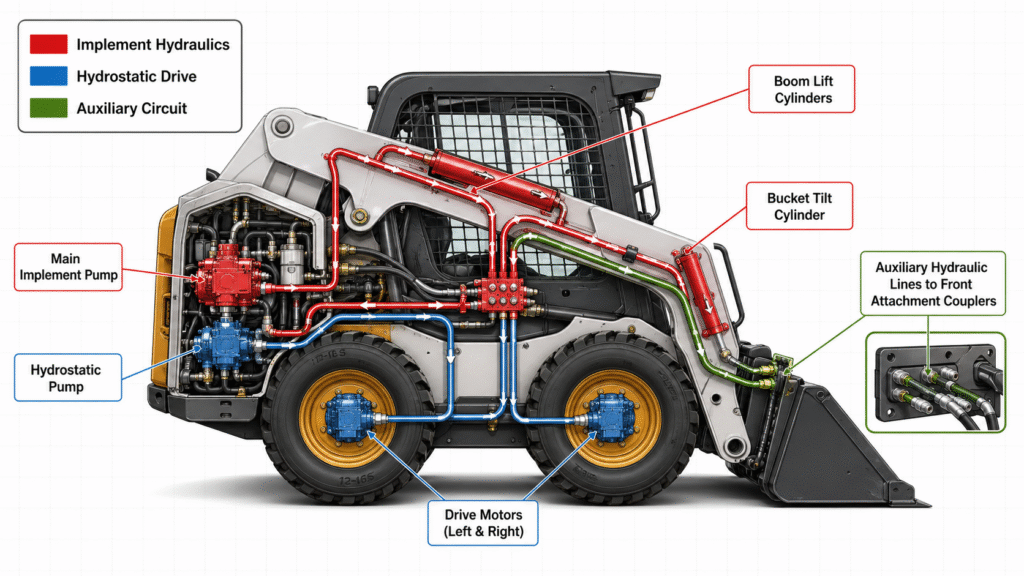
2. Hydrostatic drive:
– A tandem or back‑to‑back axial piston pump feeding left and right drive motors
– System pressures often around 6,000 psi in the transmission circuit, with 3,000–5,000 psi common on implements, depending on brand and geometry [yanceybros]
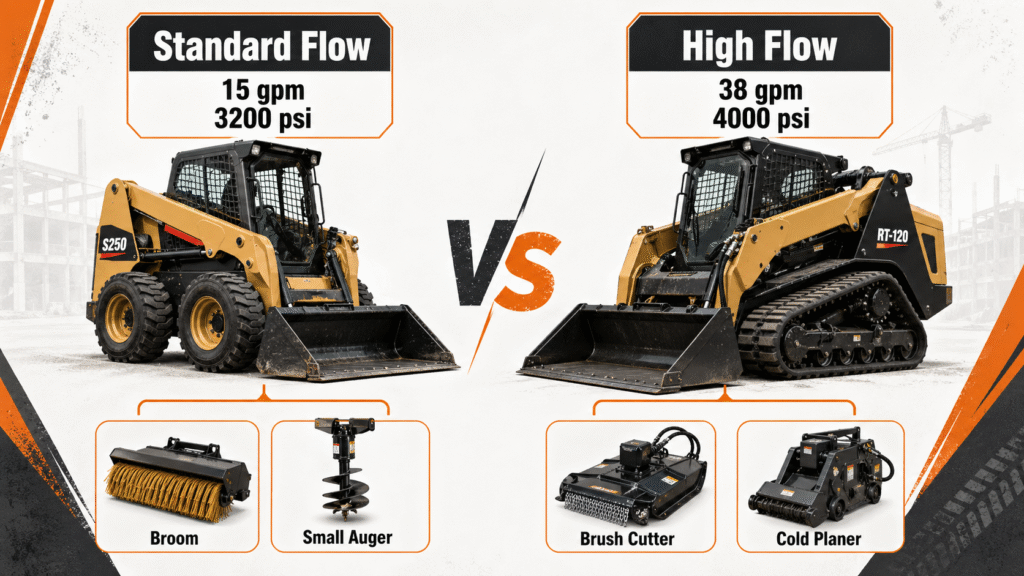
From a fleet owner’s perspective, these specs matter because they define what your machine can safely power: small units may deliver under 10 gpm, while the largest compact track loaders can deliver 40+ gpm with high-flow options. [mclarenindustries]
Key Specs You Must Understand (psi, gpm, Hydraulic HP)
When we evaluate skid steers for customers globally, we always look at three hydraulic numbers first: [mclarenindustries]
– System pressure (psi) – how much force you can generate at the cylinders and motors.
– Flow rate (gpm) – how fast you can move attachments and implements.
– Hydraulic horsepower – the combined effect of pressure and flow that determines real‑world productivity.
Typical patterns you will see in the field: [yanceybros]
| Spec | Typical Range (Compact Equipment) | Why It Matters |
|---|---|---|
| Implement pressure | 3,000–5,000 psi | Defines breakout force and cylinder sizing. |
| Hydrostatic pressure | Up to ~6,000 psi | Supports traction, speed and gradeability. yanceybros |
| Standard-flow gpm | ~9–25 gpm | Covers most buckets, small brooms, light attachments. mclarenindustries |
| High-flow gpm | ~30–45 gpm | Required for heavy brush cutters, cold planers, high‑torque mulchers. mclarenindustries |
Why Hydraulic Maintenance Is Mission Critical
As an OEM and maintenance partner, we see the same pattern across markets: most catastrophic failures start as preventable hydraulic issues. Contamination, overheating and neglect of OEM service intervals sit at the top of the root-cause list. [woosterhydrostatics]
Well‑maintained hydraulic systems deliver:
– Longer component life for pumps, motors, valves and cylinders [woosterhydrostatics]
– Better attachment performance and smoother control response [mclarenindustries]
– Reduced downtime and lower lifetime cost per operating hour [fieldinsight]
– Safer operation on high‑pressure circuits and high‑inertia attachments [yanceybros]
The good news: most of this comes down to consistent checks, clean oil and correct cooling, which you can systematize in your shop or rental yard.
Daily, Weekly And Seasonal Maintenance Checklist
Daily Checks Before You Start A Shift
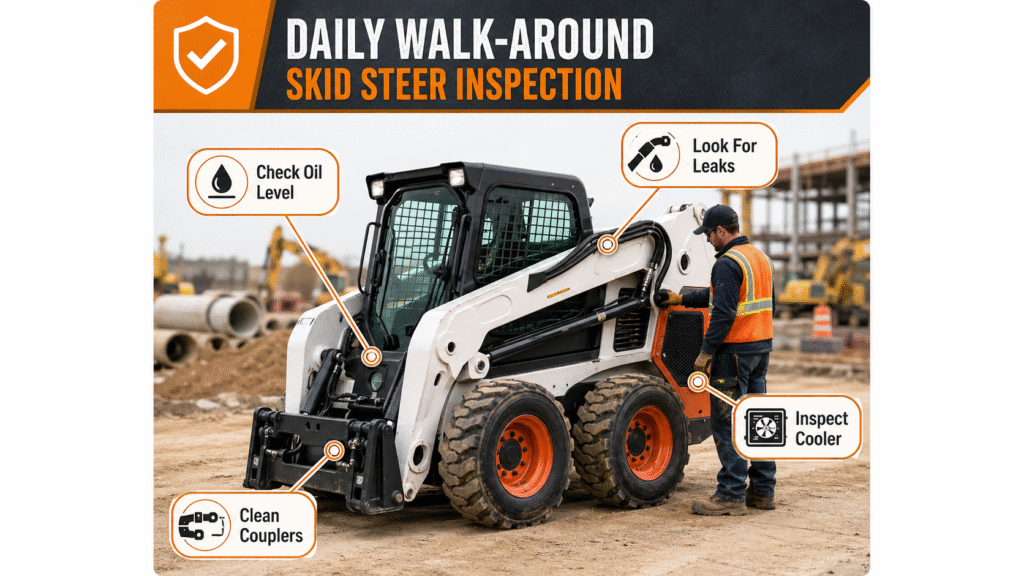
From both the original expert guidance and our own field experience, the daily walk‑around is your first line of defense. Focus on: [virnigmfg]
1. Hydraulic oil level
– Check on level ground with boom fully down and bucket flat.
– Confirm level in sight glass matches OEM marks; investigate any drop before operating. [yanceybros]
2. Leaks and hose condition
– Walk both sides of the machine and undercarriage.
– Look for wet fittings, rubbed hoses, cracked jackets or oil at quick couplers. [virnigmfg]
3. Quick couplers and attachment ports
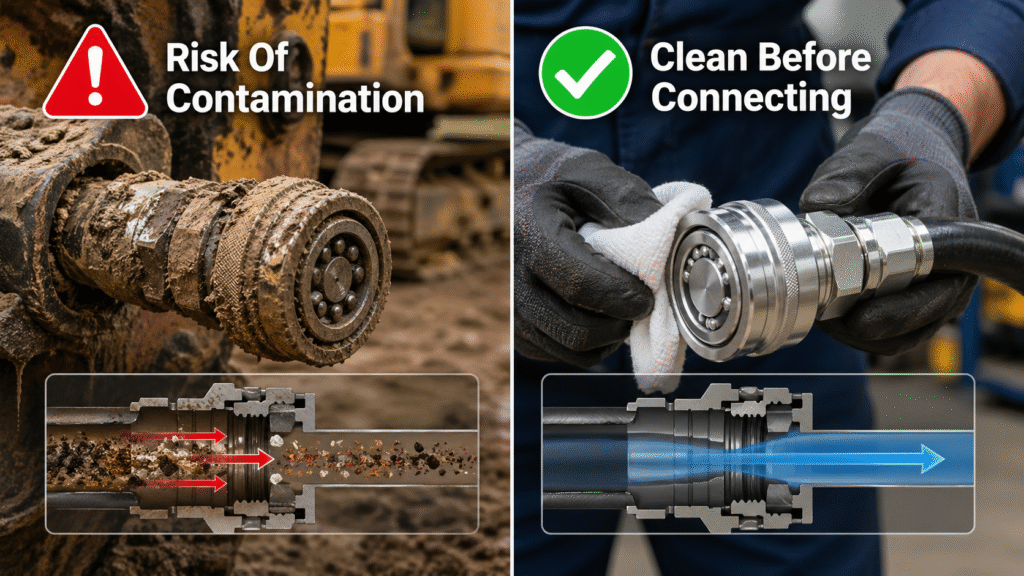
– Wipe coupler faces clean before connecting any attachment.
– Check for mechanical damage or debris that could be forced into the circuit. [virnigmfg]
4. Temperature and warning lights
– After warm‑up, monitor the hydraulic temperature gauge or indicator.
– Stop immediately if you see warning lights, abnormal noise or sluggish operation. [yanceybros]
Weekly And 250–500 Hour Tasks
OEMs differ, but you will generally see guidance like: [virnigmfg]
– Inspect and clean around the hydraulic reservoir cap before opening.
– Blow out or wash debris from the cooler and engine compartment.
– Check torque on key attachment hardware and high‑stress connection points.
– Grease all recommended points on boom, coupler and high‑load linkages.
For medium‑ to high‑duty fleets, we strongly advise formalizing these into a checklist with sign‑off rather than leaving them to memory. This creates a usable audit trail and reinforces E‑E‑A‑T from an operator safety perspective.
Seasonal And 500–1,000 Hour Intervals
Most OEMs recommend replacing hydraulic filters between 500 and 1,000 hours, depending on conditions and filter type. In harsh applications (quarries, forestry, demolition), shorten that interval and introduce oil sampling as standard. [woosterhydrostatics]
Seasonal tasks should include:
– Switching to all‑season or cold‑weather oil if ambient temperatures demand it. [yanceybros]
– Inspecting the cooler, fan controls and reversing function if equipped. [mclarenindustries]
– Reviewing high‑flow attachment usage and adjusting maintenance for those units.
Keeping Hydraulic Oil Clean: Your No.1 Priority
Hydraulic components in modern compact equipment run with tolerances below 0.001 in, which makes them highly sensitive to particles and varnish. Contamination is a leading cause of valve sticking, premature pump failure and random downtime. [woosterhydrostatics]
Key contamination control practices:
– Clean before you open anything:
– Wipe the area around the reservoir cap before removing it.
– Clean hose fittings before disconnection and plug lines when open. [virnigmfg]
– Protect against dirty attachments:
– Rental or shared attachments can carry contaminated oil from other machines.
– Consider routine fluid sampling when connecting unknown attachments to your fleet. [virnigmfg]
– Follow filter change intervals:
– Replace filters on time; a clogged filter can cause pressure drops, overheating and cavitation damage. [woosterhydrostatics]
– Use OEM‑spec or equivalent high‑quality filters; cheap substitutions often lack the correct beta rating. [woosterhydrostatics]
From a UX standpoint, this is where you should use bold call‑outs on your web page, such as:
– Never open a hydraulic system without cleaning the surrounding area first.
– Never connect a dirty coupler. Always wipe before you plug.
These short, emphatic lines perform well both for readability and featured‑snippet style search results.
Choosing The Right Hydraulic Fluid For Your Skid Steer
Hydraulic fluid is not just “oil” — it is a precision‑formulated component of the system. OEMs often specify proprietary fluids with specific viscosity and additive packages for: [woosterhydrostatics]
– Wear protection and anti‑scuff performance at high pressure
– Oxidation resistance and sludge control under high temperature
– Compatibility with seals, hoses and coatings in that particular machine
Industry guidance and OEM manuals emphasize: [virnigmfg]
– Always use the OEM‑recommended grade or an approved equivalent.
– Match viscosity to ambient temperature range; cold climates may require low‑temperature or synthetic blends.
– Never mix incompatible oils; when switching types, drain and flush according to OEM instructions.
As a manufacturer supplying machines worldwide, we typically recommend a global all‑season fluid plus an extreme cold‑weather option, so fleets in Canada, Scandinavia or high altitude regions can operate reliably year‑round. [yanceybros]
Cooling And Overheating: How To Keep Hydraulics In The Safe Zone
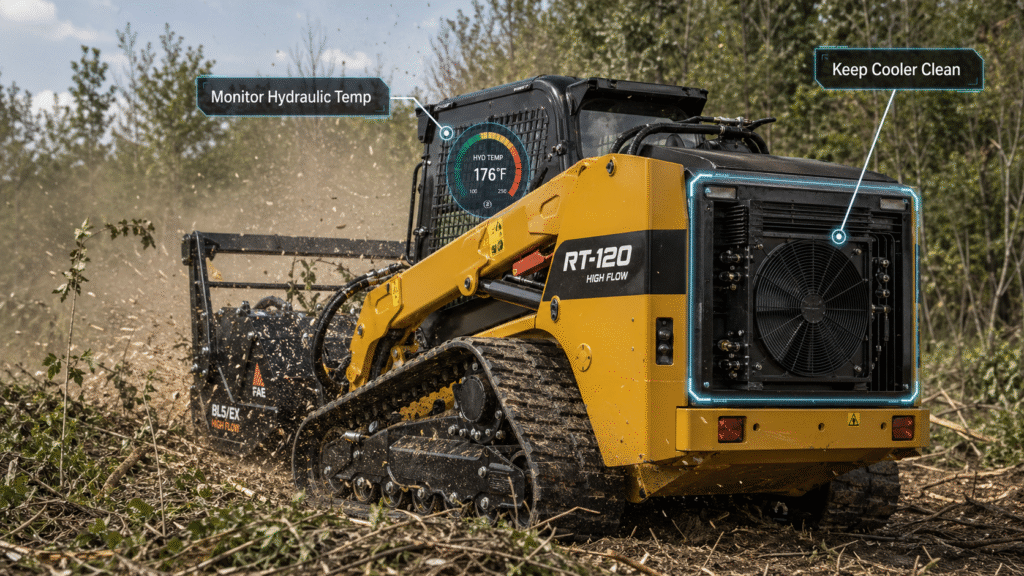
Continuous high‑demand attachments like brush cutters, trenchers and cold planers can push your hydraulic system to its thermal limits. Excessive heat thins the oil, accelerates oxidation and destroys seals. [fieldinsight]
Best practices to avoid overheating:
– Keep coolers clean
– Remove debris from cooler fins and shrouds daily in dusty work like brush cutting.
– Straighten bent fins carefully to restore airflow. [fieldinsight]
– Use smart fan systems when available
– Some modern machines use electronically controlled fans that adjust speed to cooling demand and automatically reverse to blow debris out of the cores. [yanceybros]
– Match attachment gpm to machine gpm
– An attachment with a higher flow requirement than the carrier can deliver causes constant bypassing, heat buildup and early pump failure. [fieldinsight]
– Manage duty cycles
– Do not run high‑torque attachments at full load for extended periods without breaks.
– Use “sweet spot” engine rpm where the engine pulls slightly below peak but does not bog, which often yields maximum productivity with safer oil temperatures. [mclarenindustries]
In extreme applications, dedicated hydraulic coolers — including roof‑mounted units — can add a layer of protection and are increasingly used on forestry packages and high‑flow cold planer setups. [woosterhydrostatics]
Matching Skid Steer And Attachment Hydraulics
From an industry and user perspective, one of the most expensive mistakes is mismatching attachment demand with carrier capability. [fieldinsight]
To avoid that:
1. Compare gpm ratings
– Attachment’s required flow must be within the machine’s continuous flow range.
– Example: a heavy‑duty brush cutter requiring 20–30 gpm should not be run on a 15 gpm standard‑flow machine. [fieldinsight]
2. Check pressure limits
– Ensure both attachment and carrier are compatible in maximum pressure so you do not overstress motors and hoses. [virnigmfg]
3. Consider hose length and routing
– Overlong hoses can snag and cause dangerous failures.
– Hoses that are too short limit movement and can fatigue prematurely. [mclarenindustries]
4. Design for operator visibility and safety
– Some manufacturers place couplers on one side of the boom to improve sight lines and reduce trip hazards, which is worth considering in your purchasing decisions. [mclarenindustries]
As a Certeg customer, we typically help you spec the entire hydraulic package — skid steer, attachment group and maintenance plan — so you’re not buying “on paper” only to discover mismatch issues in the field.
Storage, Cleanliness And Long‑Term Attachment Care
Cleanliness does not stop with the carrier. Attachments are a major pathway for contamination and corrosion. [virnigmfg]
Best practices our customers follow include:
– Clean after every use
– Wipe or blow off debris from attachment frames and couplers.
– Remove packed mud, wood chips and aggregate from around motors and housings. [fieldinsight]
– Store under cover
– Protect from standing water, freeze‑thaw cycles and UV exposure on hoses.
– Use stands or racks so hoses are not kinked or crushed. [mclarenindustries]
– Cap hydraulic ports
– Always replace dust caps or plug couplers when the attachment is disconnected.
– Keep spare caps in the service truck or shop as standard consumables. [virnigmfg]
These simple practices dramatically reduce corrosion at couplers, improve hookup speed and cut down on operator injuries related to forced engagement of dirty fittings. [virnigmfg]
Oil Sampling, Predictive Maintenance And Data
To push uptime and reliability further, more fleets now treat hydraulic data like a diagnostic lab, not an afterthought. [woosterhydrostatics]
Oil Sampling And Condition Monitoring
Periodic fluid analysis allows you to detect:
– Wear metals from pumps and motors
– Contaminants such as silica, water or coolant
– Oxidation byproducts that indicate overheated oil [woosterhydrostatics]
Sampling is especially valuable if:
– You run high‑flow attachments at or near rated capacity.
– You rent out machines to third parties.
– You share attachments across brands and models. [woosterhydrostatics]
Integrating Telemetry And Maintenance Scheduling
Paired with telematics or at least hour‑meter tracking, you can:
– Schedule filter and oil changes on actual hours instead of guesswork.
– Identify machines frequently exceeding safe temperature ranges.
– Prioritize proactive service for high‑utilization units. [fieldinsight]
Real‑World Operator Tips From The Field
Over the years, we have collected simple but powerful habits from operators and service techs that consistently run low‑downtime fleets:
– Always read the operator’s manual — not as a formality, but as a tool. Many manuals now include QR codes, maintenance intervals and safety diagrams designed for quick reference on job sites. [mclarenindustries]
– Standardize attachment labeling — mark required gpm, psi and weight on each attachment so operators can self‑check compatibility without calling the shop.
– Set clear “stop” rules — e.g., “If you see hydraulic warning lights, feel excessive heat at couplers, or notice sluggish response, stop and call service.”
– Train on feeding speed — operators should learn to keep the engine a few hundred rpm below peak while maintaining attachment rpm, instead of pushing until the machine bogs. [woosterhydrostatics]
These practices are not complex, but they separate high‑performing fleets from those constantly chasing breakdowns.
When To Call The OEM Or Dealer
There is a clear line between routine maintenance and specialist intervention. Call your OEM or authorized dealer when you see:
– Persistent overheating despite clean coolers and proper load management
– Sudden loss of speed or power on one side of the machine
– Repeated filter plugging or abnormal noise from pumps and motors
– Visible foaming or milky hydraulic oil (potential water ingress) [yanceybros]
As a manufacturer, we strongly recommend that any work involving pump replacement, major valve block repairs or hydrostatic system calibration be carried out by trained technicians using OEM diagnostic tools. This reduces the risk of unsafe operating conditions and invalidated warranties.
Call To Action – Design Your Hydraulic Maintenance Plan With Certeg
If your current maintenance approach is reactive and you’re facing unplanned downtime, now is the moment to formalize a hydraulic care plan for your skid steers and track loaders.
At Certeg, we help contractors, rental houses and agricultural operations:
– Select the right wheeled or tracked skid steer loaders and hydraulic configurations for their work profile.
– Standardize oil types, filters and inspection intervals across mixed fleets.
– Match high‑flow attachments to carriers and cooling packages that can run them reliably.
Contact our team to review your fleet’s hydraulic specifications, duty cycles and failure history, and we’ll help you design a practical, step‑by‑step maintenance program that keeps your machines productive and your operators safe.
FAQ: Skid Steer And Track Loader Hydraulic Maintenance
Q1: How often should I change my skid steer’s hydraulic filter?
Most OEMs recommend changing hydraulic filters between 500 and 1,000 operating hours, but severe conditions may justify shorter intervals; always follow the specific guidelines in your operator’s manual. [yanceybros]
Q2: Can I run a high‑flow attachment on a standard‑flow skid steer?
No — running a high‑flow attachment on a standard‑flow machine can cause heat buildup, poor performance and potential damage; the machine’s gpm and pressure ratings must match the attachment’s requirements. [fieldinsight]
Q3: What are the most common signs of hydraulic contamination?
Slow or jerky operation, noisy pumps, repeated filter blockages and visible particles or discoloration in the oil sample are typical signs that contamination may be present. [virnigmfg]
Q4: How do I prevent overheating in my compact track loader’s hydraulic system?
Keep coolers clean, match attachment flow to machine capacity, manage duty cycles, and ensure fans and reversing functions work correctly; in extreme applications, dedicated coolers may be needed. [fieldinsight]
Q5: Is it safe to mix different brands or types of hydraulic oil?
Mixing is risky because viscosity and additive packages can differ; if you need to change oil type, follow OEM procedures for draining, flushing and refilling with the correct, approved fluid. [yanceybros]
References
1. Compact Equipment – “Properly Maintain Your Skid Steer/Track Loader’s Hydraulic System.” [Link]
2. Compact Equipment – “Hydraulic Health: Tips for Maintaining a Skid Steer and Track Loader’s Hydraulic Systems.” [Link] [mclarenindustries]
3. Yancey Bros – “Hydraulic System Care 101: A Compact Equipment Owner’s Guide.” [Link] [yanceybros]
4. FieldInsight – “Skid Steer Maintenance Guide: Preventive and Scheduling Best Practices.” [Link] [fieldinsight]
5. Virnig Manufacturing – “Hydraulic Maintenance for Your Skid Steer Attachment.” [Link] [virnigmfg]
6. Wooster Hydrostatics – “Best Practices for Maintaining Hydraulic Systems in Harsh Environments.” [Link] [woosterhydrostatics]
7. Foremost Media – “Google’s E‑E‑A‑T Algorithm Rewards Quality Content.” [Link] [foremostmedia]
8. Idea Hills – “SEO & GEO for the Heavy Machinery Industry.” [Link] [ideahills]
9. WebFX – “SEO Tips for Industrial Dealers.” (Forklift SEO page, applicable to heavy equipment.) [Link] [webfx]
Hot Tags: Skid Steer Loader, Manufacturers, Customized, Custom, Suppliers, Buy, Cheap, Quality, Advanced, Durable, in Stock, Made in China, Price, Quotation