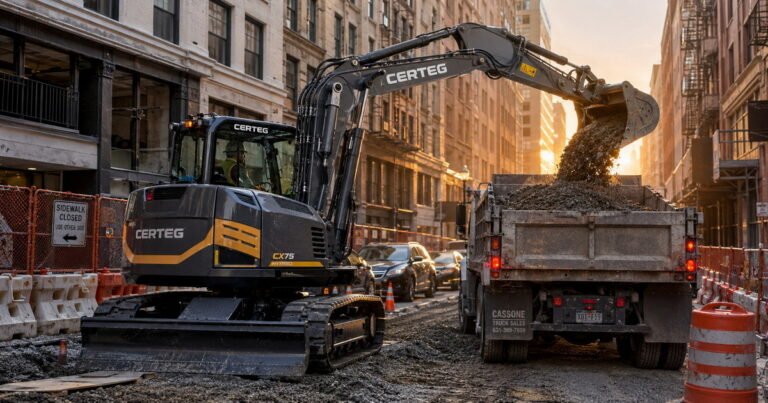

Mini Skid Steer Case Study: How Southern Classic Cuts Labor Costs With a Compact Tool Carrier
Content Menu
● Southern Classic Landscape Management: Company background
● Why Southern Classic needed a mini skid steer
● Mechanized solution: mini skid steer
>> Key specifications and footprint
>> How it changes daily operations
● Measurable labor savings: From wheelbarrows to pallets
>> Impact on crew productivity and morale
● Working in tight spaces while protecting turf
● Attachments that maximize utilization
>> Drainage and irrigation work
>> Final grading with the Harley rake
● Ease of transport and fleet logistics
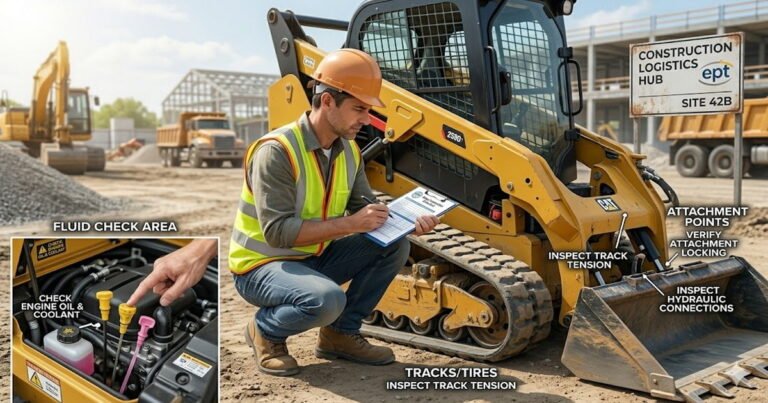
● Operator training and safety practices
● Mini skid steer vs. full-size skid steer on landscape jobs
>> Practical differences on site
● Practical checklist: When a mini skid steer makes sense for your landscaping business
● Turn labor into horsepower on your next project
● FAQ: Mini skid steers and landscape labor savings
>> 1. How much labor can a mini skid steer really save?
>> 2. Is a mini skid steer worth it for a small landscape company?
>> 3. Will a mini skid steer damage lawns?
>> 4. What attachments are most useful for landscape contractors?
>> 5. How hard is it to train new operators on a mini skid steer?
Mini skid steers are transforming landscaping businesses by replacing wheelbarrow-based workflows with efficient, compact tool carriers that reduce labor costs and operator fatigue. This case study of Southern Classic Landscape Management shows how one mini skid steer reshaped crew productivity, project quality and hiring appeal.
Southern Classic Landscape Management: Company background
Southern Classic Landscape Management is a leading landscape contractor in the north metro Atlanta area, serving residential homes, commercial properties, office parks, retail buildings, retirement communities, townhome developments and healthcare facilities. The company delivers turnkey landscape installation and maintenance services, covering design, construction, planting, carpentry, irrigation, drainage and comprehensive maintenance programs.
Founder Todd Brown brings 37 years of landscaping industry experience and focuses on high-quality products and designs that keep long-term maintenance in mind so landscapes look good now and in the future. Vice President of Operations Brad Brown leads installation and maintenance crews, manages hardscape and construction work, and oversees the company’s maintenance program.
Why Southern Classic needed a mini skid steer
Southern Classic’s crews were handling large volumes of heavy materials using traditional wheelbarrows and shovels, which made labor a daily bottleneck. Typical projects involve:
– Moving pallets of pavers for patios and retaining walls
– Handling pallets of sod for full yard renovations
– Performing drainage and irrigation trenching
– Preparing large areas for new turf or planting beds
On a current project, for example, the team is building a 48-ft circular paver patio with a 120-ft wall, which demands continuous material handling over extended distances. With a four- to five-person installation crew and a three-person maintenance crew, finding and retaining quality employees is an ongoing challenge, and fewer people are willing to push wheelbarrows all day.
The mini skid steer became a key selling point during hiring, as prospective employees see mechanized help as an attractive part of the job.
Mechanized solution: mini skid steer
Key specifications and footprint
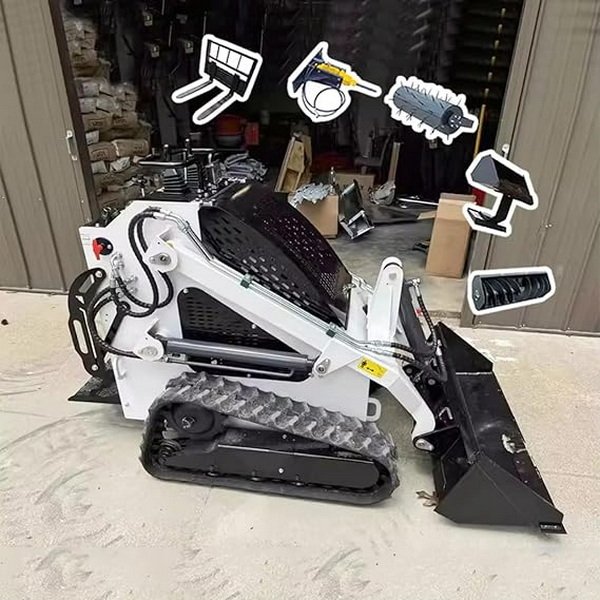
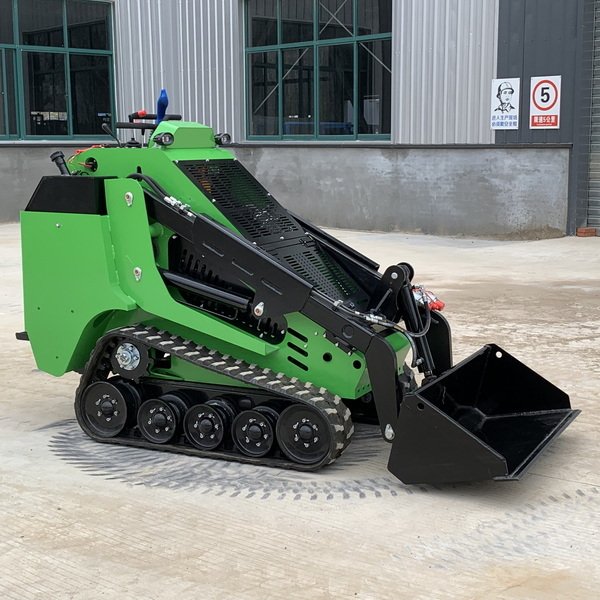
Southern Classic selected the mini skid steer as its primary compact tool carrier for landscape projects. Key specs include:
– Vertical lift path with a rated lift capacity of 1,600 lb in a compact frame
– Overall width of 42 in. with 9-in. tracks, allowing entry through residential gates and tight access points
– Tracked undercarriage that spreads ground pressure to reduce turf damage compared with heavier full-size skid steers
The mini skid steer is considered the company’s “bread and butter” and largest piece of equipment, used whenever possible to take over heavy lifting from manual labor.
How it changes daily operations
Before adopting the mini skid steer, crews spent years in the field working with wheelbarrows and shovels. Since adding the mini skid steer:
– Wheelbarrow use has dropped significantly across crews
– Crews rely on the machine’s lift capacity to move most heavy materials instead of handling them multiple times by hand
– Jobs that previously required repeated manual trips can now be handled with fewer machine moves and less rehandling of material
Measurable labor savings: From wheelbarrows to pallets
Pavers and sod handling
One of the clearest examples of labor savings is moving pallets of pavers.
– A single pallet of pavers used to represent roughly 10–12 wheelbarrow loads.
– With mini skid steer, the crew splits the pallet into two half-pallet loads using forks and carries each half directly to the installation area.
This approach eliminates multiple steps of loading, transporting and dumping material by hand, while also reducing fatigue and risk of injury for crew members.
The same workflow applies to pallets of sod:
– Crews split the pallet into two more manageable loads.
– The mini skid steer then places each half pallet at the exact point of installation, reducing the need for repeated wheelbarrow trips.
If adjustments are needed, the operator simply backs up slightly and repositions the pallet, keeping sod close to the installation area instead of scattered across the site.
Impact on crew productivity and morale
By mechanizing material movement:
– Crews handle far fewer wheelbarrow loads per day.
– Physical strain is reduced, which helps keep workers fresher throughout the day.
– The mini skid steer becomes a visible sign that the company invests in equipment to make jobs easier, which supports recruiting and retention.
These changes help the company complete more work with the same crew size while making field roles more attractive.
Working in tight spaces while protecting turf
Southern Classic frequently works in tight backyards and constrained residential spaces where large skid steers are impractical. For many of these jobs:
– The compact 42-in. width of the mini skid steer allows access through standard gates and narrow side yards.
– The smaller footprint is easier to maneuver in confined spaces than full-size machines.
Ground disturbance is another critical concern. The company:
– Lays plywood sheets to protect sensitive turf and surfaces from repeated machine travel.
– Tries to vary travel paths so no single route gets overused, which reduces the need for sod repair.
With these practices, the tracked mini skid steer can often complete jobs without creating excessive ruts or damage, minimizing restoration work after the project is done.
Attachments that maximize utilization
Current attachment setup
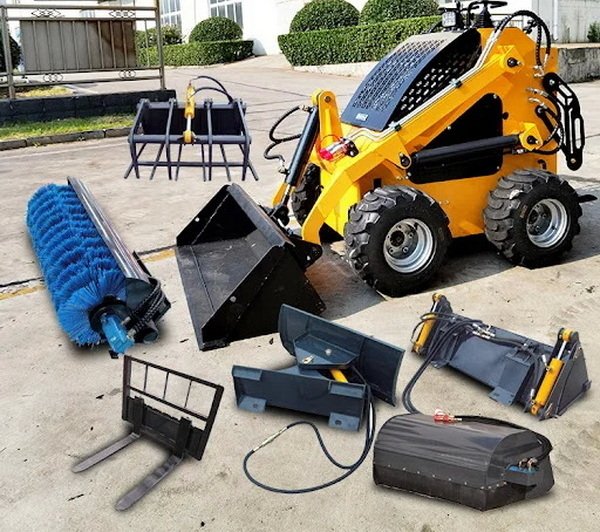
To fully leverage the mini skid steer, Southern Classic uses a range of attachments:
– Pallet forks for moving pavers, sod, bulk materials and pallets in the yard and on jobsites
– Tooth bucket for digging, moving soil, mulch and debris
– 36-in. trencher for drainage and irrigation work
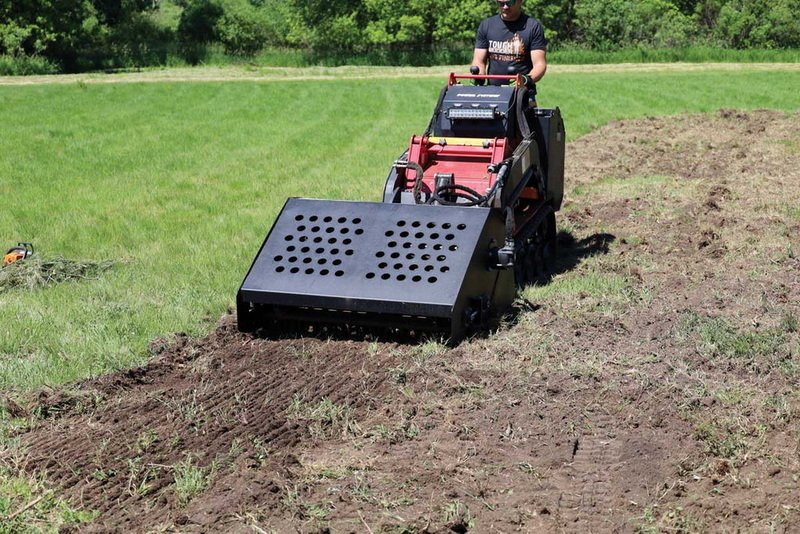
– Harley rake for final grading and soil preparation
The team particularly appreciates the ease of hydraulic hookups, which makes it fast to switch between attachments during the day.
Drainage and irrigation work
Drainage is a consistent part of Southern Classic’s project scope. The 36-in. trencher attachment is used to:
– Install large amounts of 4-in. drainpipe for water management
– Cut trenches for irrigation lines on new or renovated landscapes
This setup allows one machine and operator to handle tasks that would otherwise require multiple laborers with shovels, delivering more precise trench depth and alignment in less time.
Final grading with the Harley rake
For finishing work, the Harley rake attachment helps crews:
– Prepare a clean, even grade that is ready for sod in a single pass
– Replace extended manual raking and soil preparation with mechanized grading, further reducing manual labor hours
Back-dragging with the Harley rake leaves the soil smooth and consistent, which speeds up sod installation and improves final appearance.
Ease of transport and fleet logistics
Southern Classic maintains a material yard at its shop where it stores leftover pavers and materials from previous jobs for reuse. When crews need materials from the yard:
– They load the mini skid steer onto a trailer, secure it with chains and transport it back to the shop.
– At the shop, the machine quickly loads the needed materials onto the truck.
– The crew then returns to site with both the machine and materials ready to go.
The entire loading process onto the trailer takes about seven to ten minutes, and the team has refined it into a repeatable routine that lets them respond quickly when conditions change on site. This agility ensures the mini skid steer is available wherever it can reduce manual labor most on any given day.
Operator training and safety practices
All members of Southern Classic’s crew are trained to properly operate the mini skid steer. Key benefits of this approach include:
– No one has to stand around waiting for a single designated operator
– Crews can keep the machine working continuously while others focus on complementary tasks
The atures pilot-operated ground drive controls designed for smooth joystick operation, which helps new operators learn the machine faster. One crew member became proficient within a week of focused training, and the company ensures everyone knows where the machine is and how to use it safely on each jobsite.
Mini skid steer vs. full-size skid steer on landscape jobs
Southern Classic occasionally rents full-size skid steers for very large projects, but for most landscaping work, the mini skid steer is a better fit.
Practical differences on site
– Access and maneuverability: Mini skid steers fit through residential gates and work comfortably in small backyards and tight corners where full-size machines cannot operate.
– Ground protection: Lighter machines with tracks distribute weight more evenly, reducing rutting and turf damage.
– Labor replacement: A mini skid steer is sized for the material volumes common on landscape jobs, making it an ideal replacement for wheelbarrows rather than an oversized earthmover.
Comparison overview
| Factor | Mini skid steer | Full-size skid steer |
|---|---|---|
| Typical lift capacity | Around 1,600 lb in a compact frame | Higher, often 2,000–3,000+ lb |
| Machine width | Approx. 42 in. with 9-in. tracks | Much wider, often too large for gates and tight yards |
| Primary use on landscape jobs | Replacing wheelbarrows, material handling, trenching, grading | Bulk earthmoving, large commercial grading |
| Ground disturbance | Lower, especially with careful travel patterns | Higher; often requires extensive turf repair |
| Best fit | Residential and light commercial landscapes | Large sites and heavy construction |
This balance of capacity, access and turf protection is why Southern Classic considers the CTX160 their core machine rather than a supplemental tool.
Practical checklist: When a mini skid steer makes sense for your landscaping business
For landscape contractors evaluating whether a mini skid steer or compact tool carrier is a smart investment, consider the following questions:
1. Do crews move heavy materials daily?
– Pavers, sod, stone, mulch and soil all benefit from palletized handling with forks and buckets instead of wheelbarrows.
2. Are labor shortages affecting schedules?
– If it is hard to recruit workers willing to do heavy manual tasks, a mini skid steer can make roles more attractive while keeping production up.
3. Do most jobs involve tight access?
– If many projects are in residential backyards and narrow side yards, a compact tracked machine with a 40–44 in. width range is often ideal.
4. Is drainage and irrigation work common?
– A trencher attachment on a mini skid steer can replace days of manual trenching on drainage and irrigation projects.
5. Is turf repair eating into profit?
– A tracked mini skid steer with careful travel management can reduce turf damage versus heavier full-size machines, saving time and materials at the end of the job.
If several of these points match your workflow, a mini skid steer will likely drive both labor savings and higher crew satisfaction.
Turn labor into horsepower on your next project
If your landscaping or construction crews still push wheelbarrows for most material handling, this is the moment to let a mini skid steer or compact tool carrier take over the heavy lifting. Review your last month of jobs, estimate how many wheelbarrow loads were moved by hand and map where a compact tracked carrier could replace that effort.
Talk with your equipment dealer or preferred manufacturer about a mini skid steer with suitable lift capacity, width and attachments for your core services, and schedule a demo on a real jobsite. A single well-chosen machine can shift your team from manual hauling to productive, revenue-generating work, helping you complete more profitable projects with the same or smaller crew.
Contact us to get more information!
FAQ: Mini skid steers and landscape labor savings
1. How much labor can a mini skid steer really save?
On projects with heavy materials, a mini skid steer can replace roughly 10–12 wheelbarrow loads per pallet of pavers by moving split pallets directly to the installation area. Over multiple pallets and days, this translates into substantial time savings and reduced crew fatigue.
2. Is a mini skid steer worth it for a small landscape company?
Yes, even small landscape firms benefit when crews frequently move pavers, sod, stone or soil, or perform regular drainage and irrigation work. A compact tracked machine with the right attachments can reduce manual labor hours, improve morale and help smaller teams handle bigger jobs more efficiently.
3. Will a mini skid steer damage lawns?
Tracked mini skid steers spread weight over a larger area, reducing ground pressure compared with heavier wheeled skid steers. When crews use plywood paths and vary travel routes, they can often complete projects with minimal turf repair afterwards.
4. What attachments are most useful for landscape contractors?
For most landscaping businesses, essential attachments include pallet forks for material handling, a tooth bucket for digging and loading, a trencher for drainage and irrigation, and a soil-preparation tool like a Harley rake for final grading. This combination turns a mini skid steer into a multi-purpose compact tool carrier that stays busy across diverse jobs.
5. How hard is it to train new operators on a mini skid steer?
Modern mini skid steers feature intuitive joystick controls, and many operators become proficient within days or weeks of structured training. Training all crew members to operate the machine safely ensures it is always productive and no one stands idle waiting for a single designated operator.
References:
1. https://compactequip.com/compact-tool-carriers/mini-skid-steer-minimizes-labor-for-southern-classic-landscape-management/
2. https://www.constructionequipment.com/earthmoving/skid-steer-loaders/article/10715921/mini-skid-steers-reduce-labor-costs
3. https://monstertires.com/landscaping-projects-in-tight-spaces-mini-skid-steers/
Hot Tags: Mini Skid Steer Landscaping, Mini Skid Steer Labor Savings, Landscape Management Equipment, Mini Skid Steer Applications, Compact Tool Carrier Landscaping, Mini Skid Steer Productivity, Landscaping Mini Skid Steer, Mini Skid Steer Efficiency, Stand-On Mini Skid Steer, Walk-Behind Mini Skid Steer