
Six Leading Stand-On and Walk-Behind Compact Tool Carrier Brands in 2026: Specs, Use Cases and Buying Tips
Content Menu
● What Are Stand-On and Walk-Behind Compact Tool Carriers?
● Why Contractors Choose Compact Tool Carriers
● Overview of the Six Popular Brands in This Guide
● Ditch Witch Stand-On Skid Steers: Mini and Full-Size Power
● Toro Dingo TX 1300: Reach and Operator-Friendly Controls
● Wacker Neuson SM100 Utility Track Loader: Compact and Turf-Friendly
● Kubota SCL1000: High-Speed, Narrow-Body Stand-On Track Loader
● Kanga Loaders: The Original Stand-On Loader Concept
● Vermeer S925TX Mini Skid Steer: Lift Capacity and Dual Hydraulics
● Comparing the Six Brands Head-to-Head
● Practical Use Cases for Stand-On and Walk-Behind Tool Carriers
● How to Choose the Right Compact Tool Carrier
● Stand-On vs Walk-Behind – Which Is Better?
● Connecting Compact Tool Carriers to a Broader Equipment Fleet
● Take the Next Step: Turn Research into Action
● FAQs: Stand-On and Walk-Behind Compact Tool Carriers
>> 1. Are compact tool carriers and mini skid steers the same thing?
>> 2. How much do stand-on compact tool carriers typically cost?
>> 3. Are tracks better than wheels for compact tool carriers?
>> 4. Can one compact tool carrier replace several laborers?
>> 5. What should I look for in a dealer when buying a compact tool carrier?
Stand-on and walk-behind compact tool carriers (also called mini skid steers, compact utility loaders or stand-on track loaders) deliver big power in a small footprint for landscaping, construction, rental and property maintenance work. Compared with larger skid steers, these compact tool carriers are easier to transport, faster to hop on and off, and ideal for tight sites where every inch of maneuvering room matters.
What Are Stand-On and Walk-Behind Compact Tool Carriers?
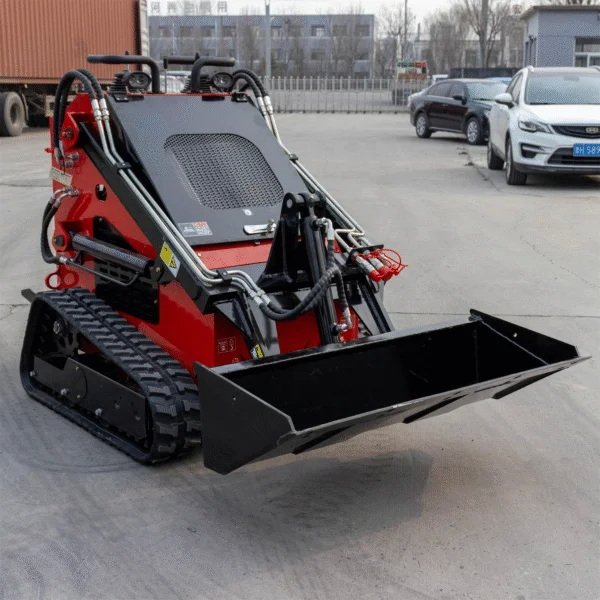
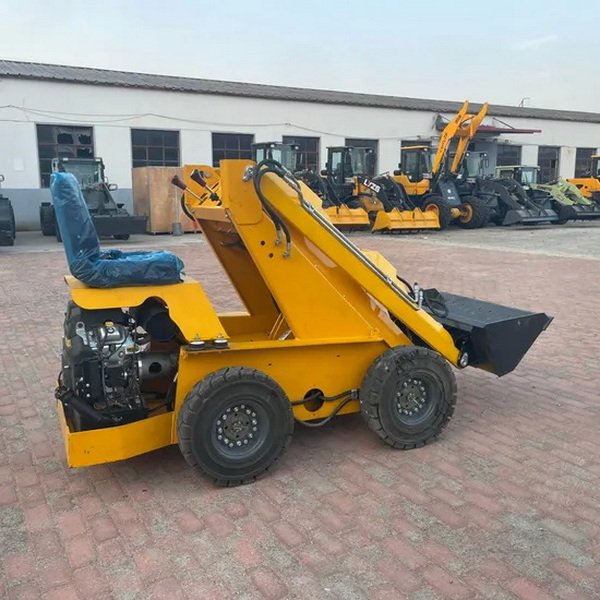
Compact tool carriers are small, engine-powered machines that use a universal quick-attachment plate to drive a wide range of hydraulic tools. Many models share attachments and operating concepts with full-size skid steers but remove the cab, keeping the operator standing on a platform or walking behind the machine instead.
Key characteristics include:
– Power options: gas, diesel and, increasingly, electric engines.
– Travel platforms: stand-on rider platforms or pure walk-behind operation.
– Undercarriages: wheeled or dedicated rubber tracks for low ground pressure.
– Attachments: buckets, breakers, brooms, blades, backhoes, trenchers, augers, pallet forks and more.
These machines often feature zero turning radius, allowing sharp pivot turns inside narrow backyards, urban alleys and interior demolition areas.
Why Contractors Choose Compact Tool Carriers
Over the last 20+ years, compact tool carriers have evolved from small, wheeled helpers into track-driven, high-spec project leaders with growing sales worldwide. Contractors and rental houses value them because they can replace manual labor on repetitive materials handling and light earthmoving tasks.
Typical benefits:
– Productivity: move more material per hour than a crew with wheelbarrows.
– Versatility: one power unit, dozens of attachments.
– Transportability: most models fit on small trailers and through residential gates.
– Lower turf damage: wide, low-pressure tracks minimize lawn repair time.
A landscaping crew, for example, can load mulch with a bucket, switch to an auger for planting holes and finish with a grading blade, all without changing machines.
Overview of the Six Popular Brands in This Guide
Below is a quick snapshot of the six compact tool carrier brands covered in this article, with their flagship models or series highlighted.
| Brand | Representative model/series | Key strengths |
|---|---|---|
| Ditch Witch | SK600–SK1550 mini class, SK3000 | Broad lineup, high attachment horsepower. |
| Toro | Dingo TX 1300 | Intellescope loader arm, SmartLoad control. |
| Wacker Neuson | SM100 utility track loader | Compact width, turf-friendly tracks. |
| Kubota | SCL1000 stand-on track loader | High travel speed, integrated track design. |
| Kanga | Kanga stand-on loaders (5 models) | Long history, remote-control option. |
| Vermeer | S925TX mini skid steer | Strong lift, dual auxiliary hydraulics. |
Ditch Witch Stand-On Skid Steers: Mini and Full-Size Power
Ditch Witch offers a two-class family: mini stand-on skid steers (SK600, SK800, SK900, SK1050, SK1550) and the full-size SK3000. The mini class uses engines from 24.8 to 44 hp, with high attachment horsepower that is critical for tools such as trenchers and cold planers.
Key highlights:
– Mini SK series (SK600–SK1550):
– Designed for landscaping, irrigation, utility and construction support tasks.
– Narrow frames that pass through confined spaces while still delivering solid lift capacities.
– SK3000 full-size stand-on:
– Around 59 hp, with significant power directed to the attachment for demanding tools.
– Delivers skid-steer-level performance on a stand-on platform without a cab.
This lineup suits contractors who need maximum hydraulic horsepower and want stand-on convenience instead of a traditional seated skid steer.
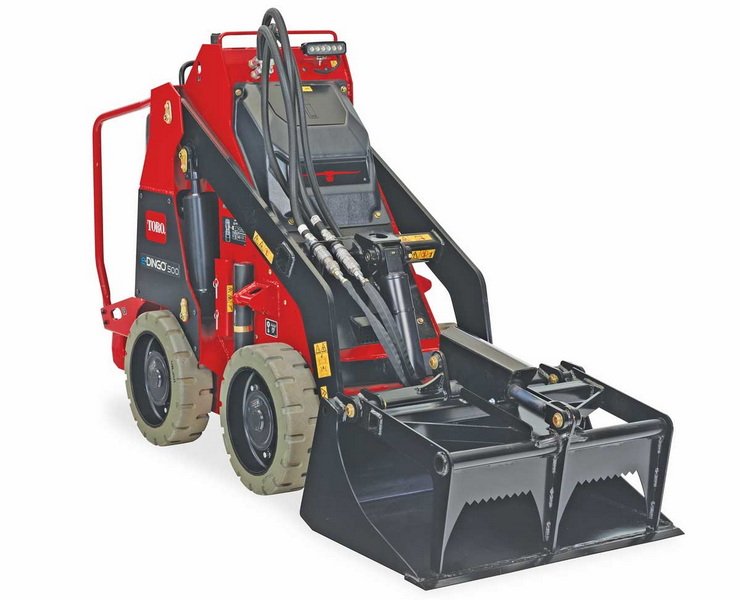
Toro Dingo TX 1300: Reach and Operator-Friendly Controls
The Toro Dingo TX 1300 is a tracked compact tool carrier built around an exclusive Intellescope loader arm with SmartLoad technology. This design provides an additional 26 in of reach and a hinge-pin height of 109 in, making it easier to load over the sides of trucks and dumpsters.
Notable features:
– Intellescope loader arm: extra vertical and horizontal reach for stacking and truck loading.
– SmartLoad: designed to make material handling faster and more intuitive for operators.
– Single thumb-operated controller that integrates hydraulics and loader functions, leaving the other hand free for traction controls.
These ergonomics help reduce operator fatigue and make it easier for less-experienced users to control lift, tilt and travel at the same time.
Wacker Neuson SM100 Utility Track Loader: Compact and Turf-Friendly
The Wacker Neuson SM100 is the company’s first stand-on utility track loader, focused on compact size and turf protection. Standard 9 in wide tracks spread machine weight, lowering ground pressure and reducing yard damage.
Key specifications and advantages:
– Machine width: about 35.5 in, so it fits through most residential gates and doorways.
– Engine: 24.7 hp Yanmar turbocharged diesel for reliable power.
– Rated operating capacity: 1,000 lb at 35 percent of tipping load, with a tipping load around 2,857 lb.
– Radial-lift path optimized to provide near-vertical lift performance and a hinge-pin height of 85.7 in.
For landscapers and rental fleets that frequently work on lawns and in backyards, this model balances capacity, reach and minimal turf repair.
Kubota SCL1000: High-Speed, Narrow-Body Stand-On Track Loader
Kubota entered the stand-on track loader market with the SCL1000, designed around a narrow frame and strong travel speed. The machine is just 36 in wide, yet uses a 9.8 in wide track for stability and low ground pressure.
Major features:
– Engine: 24.8 hp turbocharged Kubota diesel, known for quiet operation and high-altitude performance.
– Emissions: no diesel particulate filter required, simplifying maintenance.
– Rated operating capacity: 1,000 lb.
– Hinge-pin height: 84.7 in, with 25.9 in of reach at a 45 degree dump angle for truck loading.
– Travel speed: around 4.9 mph, which helps with cycle times on spread-out jobsites.
The integrated track design, welded to the mainframe, is engineered to improve durability and reduce undercarriage flex in tough terrain.
Kanga Loaders: The Original Stand-On Loader Concept
Kanga is widely credited with inventing the stand-on compact utility loader in the early 1980s and is now actively rebuilding its brand presence in North America. Originally developed in Australia as a motorized wheelbarrow in 1978, Kanga machines evolved into fully capable stand-on loaders.
Brand highlights:
– Heritage: over 40 years of experience in stand-on loader design.
– Product range: five different models, including a remote-control loader for hazardous or hard-to-reach tasks.
– Construction: all-steel frames and multiple integrated safety features.
– Network: machines imported under various names for more than 20 years; now Kanga is building its own U.S. distribution network via an Iowa-based center.
Contractors who value proven durability and remote-control capability should pay close attention to Kanga’s expanding dealer coverage.
Vermeer S925TX Mini Skid Steer: Lift Capacity and Dual Hydraulics
The Vermeer S925TX stand-on mini skid steer focuses on strong lift performance and versatile hydraulic power for attachments. With a tip capacity of 2,643 lb and a rated operating capacity of 925 lb, it can lift and transport heavy materials on demanding jobsites.
Key specs:
– Lift path: radial design tuned to give vertical-lift-like performance for better truck loading.
– Maximum hinge-pin height: 84.5 in, enough for most standard trucks and dumpsters.
– Dual auxiliary hydraulics: operators can switch between high-flow mode for ground-engaging tools and low-flow mode for precise control of more delicate attachments.
This combination of lift power and hydraulic flexibility makes the S925TX a solid choice for contractors who rely heavily on attachments such as trenchers, augers and grapples.
Comparing the Six Brands Head-to-Head
To choose the right compact tool carrier, it helps to see how these six brands differ by role, power and standout features.
| Brand | Typical hp range | Notable feature | Ideal user type |
|---|---|---|---|
| Ditch Witch | ~24.8–59 hp | Full-size SK3000 stand-on option. | Utility, irrigation, heavy attachments |
| Toro | Mid-hp range | Intellescope arm, SmartLoad control. | Contractors needing extra reach |
| Wacker Neuson | ~24.7 hp | Very narrow width, low turf impact. | Landscapers, rental yards |
| Kubota | ~24.8 hp | Fast travel, integrated track frame. | Contractors covering larger jobsites |
| Kanga | Various | Long heritage, remote-control model. | Specialty, high-safety applications |
| Vermeer | Mid-hp range | Dual auxiliary hydraulics. | Attachment-intensive contractors |
Use this table as a starting point and then refine your choice based on attachments, typical terrain and transport limits.
Practical Use Cases for Stand-On and Walk-Behind Tool Carriers
Across brands, stand-on and walk-behind compact tool carriers fit similar real-world tasks. While each model has unique specs, their core value lies in how they streamline everyday work.
Common applications:
– Landscaping and hardscaping: grading yards, moving mulch and soil, transporting pavers and blocks.
– Utility and irrigation installation: trenching for pipe and cable, backfilling lines, handling spoil.
– Construction support: interior demolition debris removal, slab prep, material handling on tight sites.
– Property and facility maintenance: snow removal, sweeping and light site cleanup with brooms and blades.
Rental fleets often favor models with simple controls and rugged undercarriages because they see frequent operator changes and mixed jobsite conditions.
How to Choose the Right Compact Tool Carrier
When evaluating Ditch Witch, Toro, Wacker Neuson, Kubota, Kanga and Vermeer models, focus on matching machine capability to your daily workload. A structured selection process helps avoid under- or over-specifying your machine.
Step 1: Define your primary tasks
– Digging and trenching vs light material handling.
– Turf-sensitive lawn work vs rough construction terrain.
– Short local jobs vs large, spread-out projects.
Step 2: Prioritize undercarriage and size
– Choose tracks for wet, soft or landscaped surfaces and all-weather traction.
– Choose wheels where paved surfaces, speed and lower purchase cost dominate.
– Confirm overall width fits through your narrowest gate or doorway.
Step 3: Match power and hydraulics to attachments
– Check engine horsepower and auxiliary hydraulic flow.
– High-flow tools like trenchers and cold planers require stronger hydraulic systems.
– Dual auxiliary systems increase attachment flexibility.
Step 4: Consider operator comfort and controls
– Test stand-on platforms for suspension and vibration.
– Evaluate control layouts such as thumb-operated joysticks and traction controls.
Step 5: Evaluate dealer support and total cost of ownership
– Nearby parts availability and service response time.
– Resale value and brand reputation in your region.
This process makes it easier to compare multiple quotes and prevent surprises after delivery.
Stand-On vs Walk-Behind – Which Is Better?
Many compact tool carriers are stand-on, but some are operated purely as walk-behind machines. Both approaches have advantages depending on jobsite constraints and operator preference.
Stand-on advantages:
– Higher travel speeds on larger sites.
– Better visibility over the attachment and surroundings.
– Less operator fatigue compared with walking long distances.
Walk-behind advantages:
– Potentially lower purchase price on smaller machines.
– Very compact footprint for extremely tight spaces and indoor tasks.
– Easier for occasional operators to use briefly and park.
On big, repetitive jobs, stand-on platforms usually offer better productivity, while walk-behind units shine in short-duration tasks and ultra-tight work zones.
.
Connecting Compact Tool Carriers to a Broader Equipment Fleet
If you already operate excavators, skid steer loaders, road rollers, forklifts, tractors or tracked transporters, compact tool carriers can complement your fleet by filling the gap between hand tools and larger machines. For example, a compact tool carrier can handle early-stage site prep and material placement before larger excavators and rollers arrive, improving overall workflow efficiency.
Fleet managers often see the best results when they standardize on compatible attachments and ensure training covers both compact tool carriers and larger machines. This approach simplifies maintenance, improves safety and maximizes equipment utilization across all projects.
Take the Next Step: Turn Research into Action
Before your next season starts, translate this information into concrete actions that move your business forward. Begin by listing your most common jobs that still rely heavily on manual labor or oversized equipment, then match those tasks to the strengths of the six brands discussed here. Reach out to trusted local dealers, schedule on-site demos and compare not only prices but also attachment packages, service support and operator feedback.
When you are ready to upgrade your fleet, choose a compact tool carrier configuration that aligns with your ground conditions, transport limits and attachment strategy, and make sure every operator receives proper training. Taking these steps now will help you secure a reliable, versatile compact tool carrier that delivers measurable gains in productivity, safety and profitability on every job.
Contact us to get more information!
FAQs: Stand-On and Walk-Behind Compact Tool Carriers
1. Are compact tool carriers and mini skid steers the same thing?
In many contexts, yes: manufacturers and contractors use terms like compact tool carrier, mini skid steer, compact utility loader and stand-on track loader somewhat interchangeably for these small, attachment-capable machines. Always confirm attachment plate style and hydraulic specifications before assuming compatibility.
2. How much do stand-on compact tool carriers typically cost?
Most new compact tool carriers fall roughly in the USD 14,000–40,000 price range, depending on brand, power, undercarriage type and features. Adding multiple hydraulic attachments will increase total investment but also dramatically expands what the machine can do on site.
3. Are tracks better than wheels for compact tool carriers?
Tracks provide lower ground pressure, better traction and less turf damage, which is why many modern models favor rubber track undercarriages. However, wheeled units can be more affordable and work well on firm, paved or gravel surfaces with less concern about lawn repair.
4. Can one compact tool carrier replace several laborers?
On repetitive tasks like moving soil, rock or mulch, a compact tool carrier with a bucket or grapple can often replace several workers using wheelbarrows, especially over an entire day. That said, you still need trained operators and helpers for tasks like fine grading, layout and quality control.
5. What should I look for in a dealer when buying a compact tool carrier?
Look for dealers that offer fast parts availability, experienced service technicians, demo units and operator training. A strong dealer relationship often has more impact on long-term uptime and return on investment than small differences in published machine specifications.
References:
1. https://compactequip.com/compact-tool-carriers/lets-take-a-look-at-six-brands-of-stand-on-walk-behind-compact-tool-carriers/
2. https://compactequip.com/compact-tool-carriers/everything-you-need-to-know-about-stand-on-walk-behind-tool-carriers-including-expert-advice-from-nine-manufacturers/
3. https://compactequip.com/compact-tool-carriers/industry-inventory-compact-tool-carrier-category/
Hot Tags: Skid Steer Walk Behind, Walk-Behind Compact Tool Carriers, Compact Tool Carrier Brands, Mini Skid Steer Brands, Stand-On Mini Skid Steer, Walk-Behind Mini Skid Steer, Compact Tool Carrier Comparison, Compact Tool Carrier Machines, Mini Skid Steer Manufacturers, Compact Tool Carrier Selection